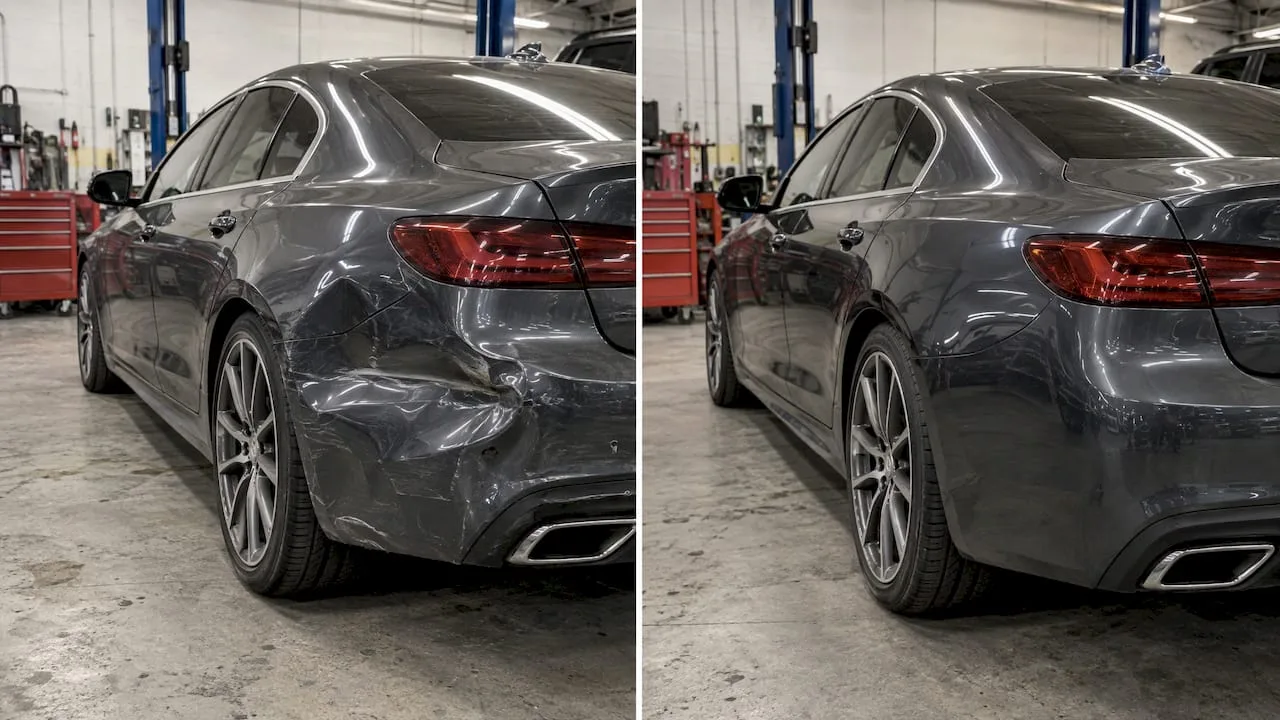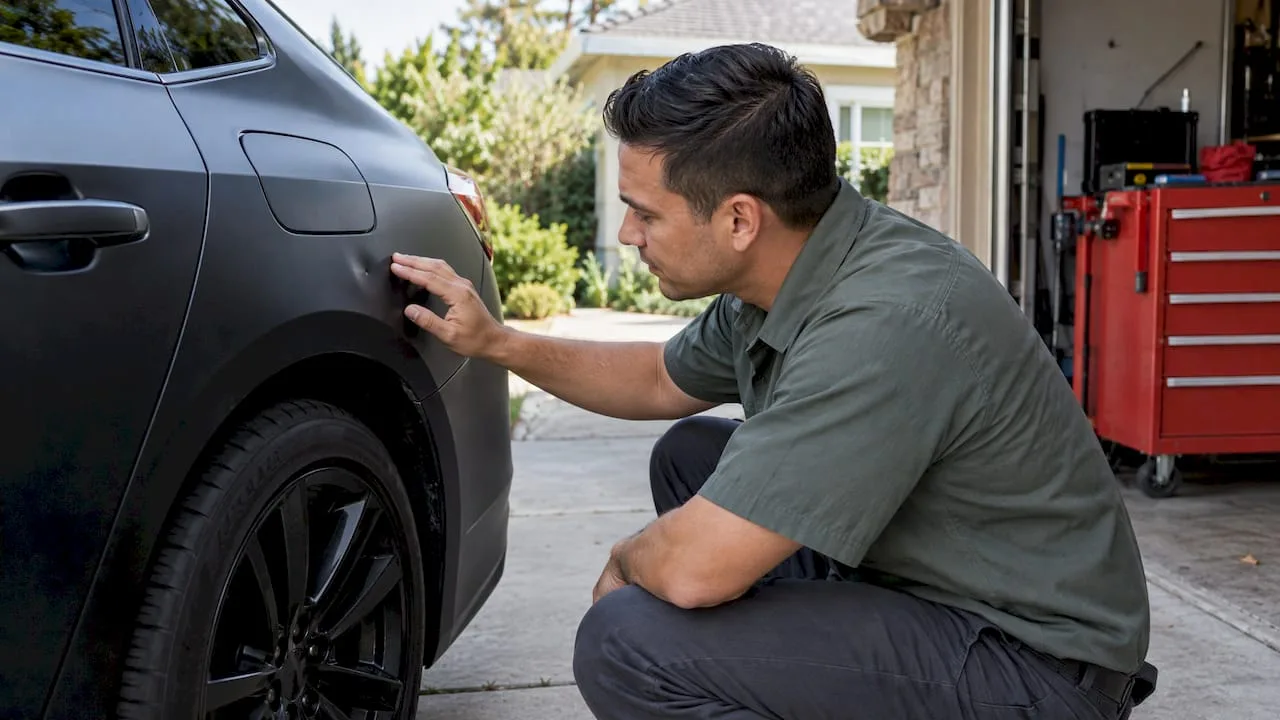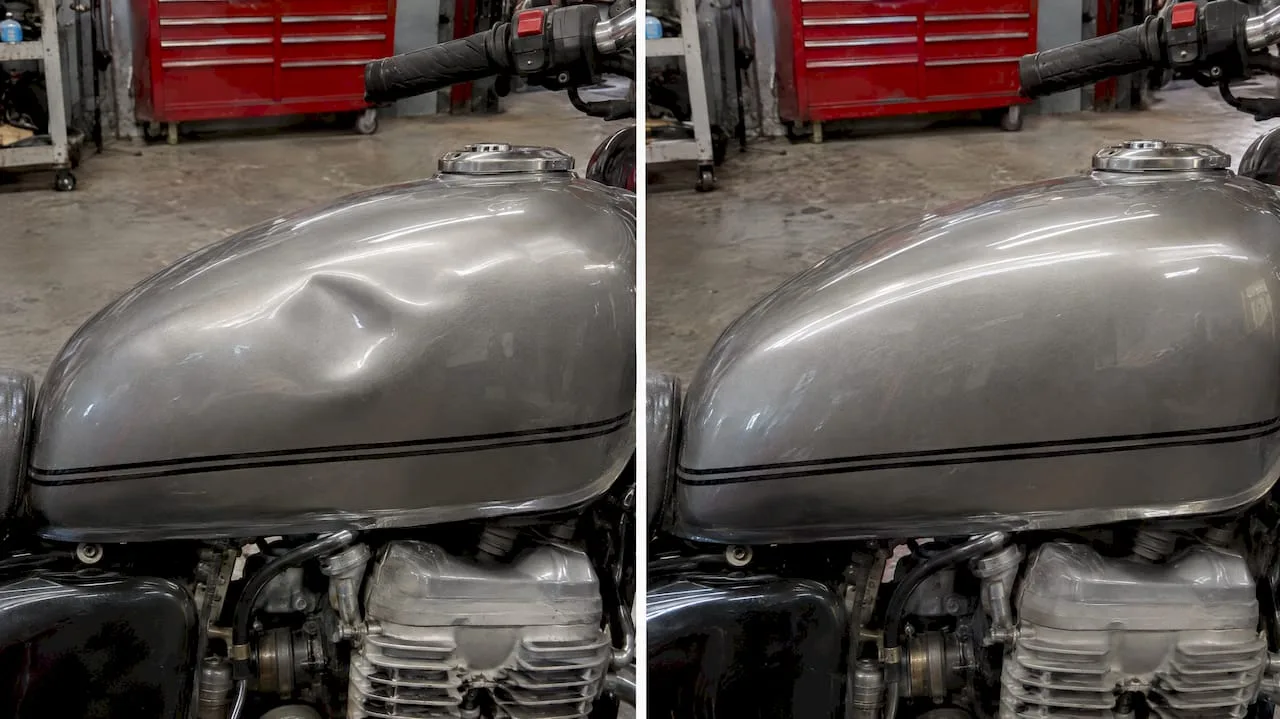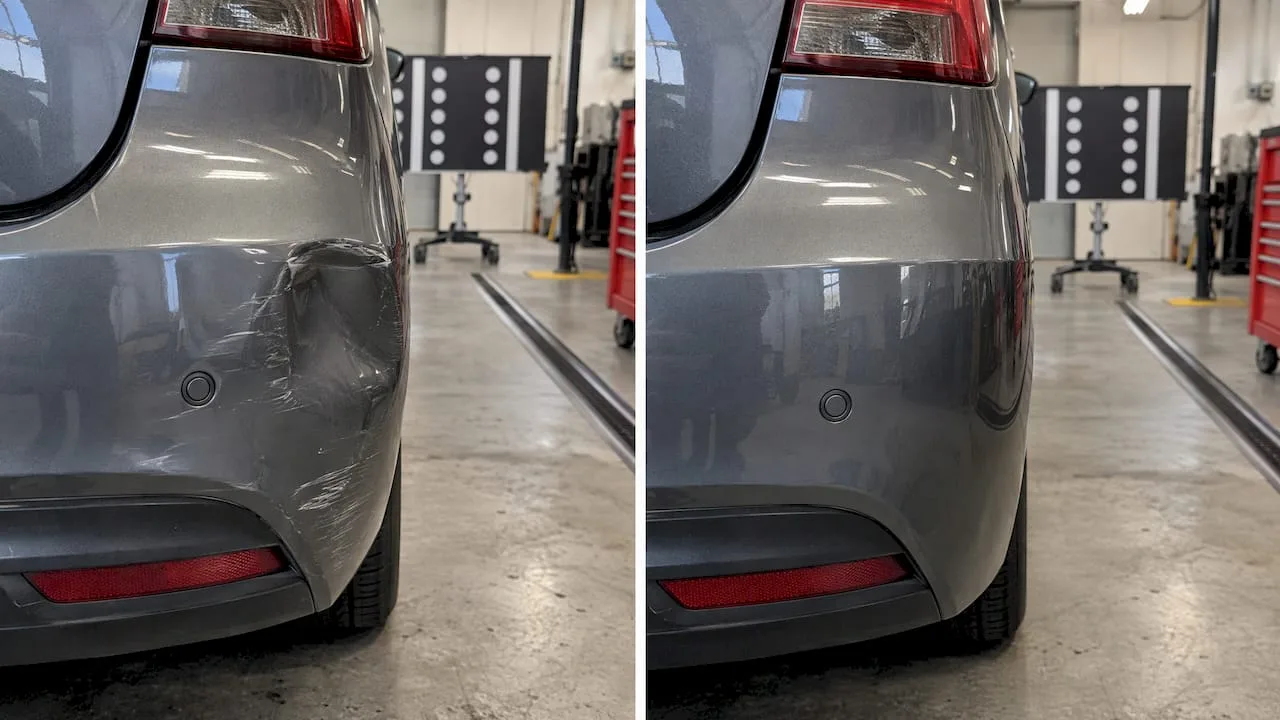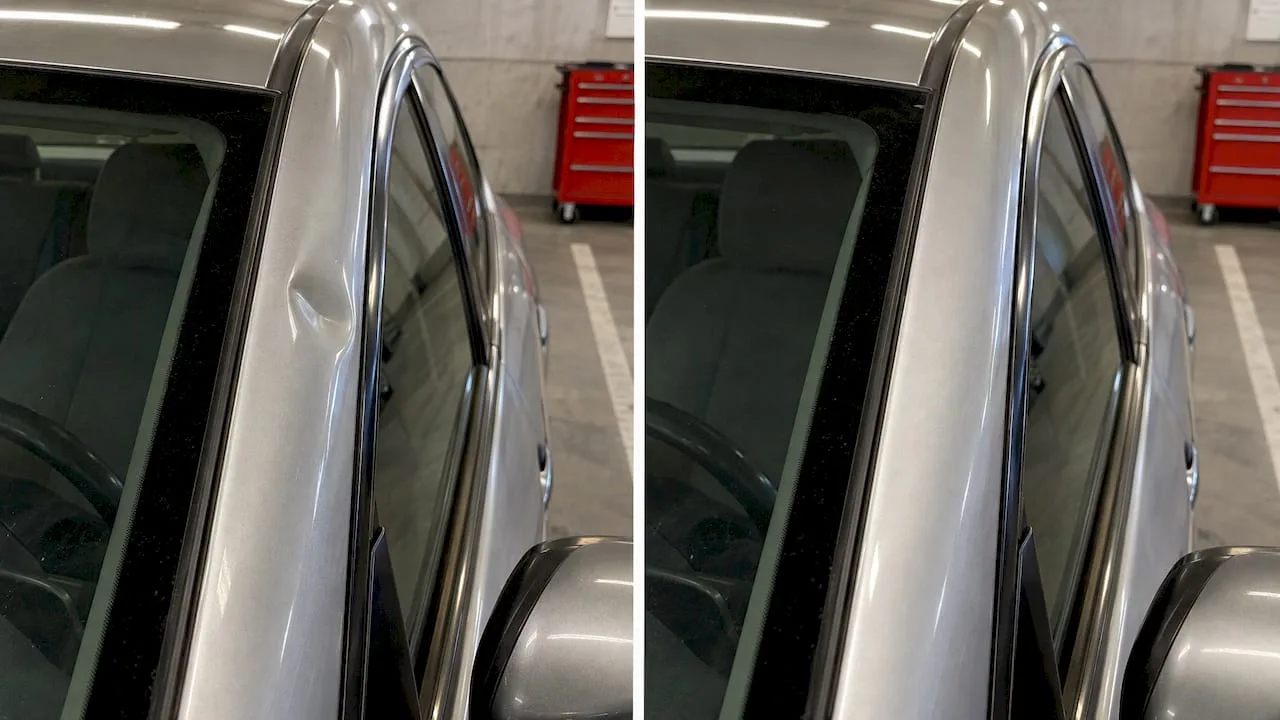
A dented A-pillar, the post on either side of your windshield, can sometimes be repaired without repainting, but only if the paint is intact and the metal has not creased. Where the damage goes deeper, the repair is structural and follows the automaker’s procedure. Here at Dent Erasers LLC, we look at the dent first, then tell you which path you’re on, and we come to you in Contra Costa County to do it.
TL;DR
- Paintless dent repair (PDR) suits pillar dents with unbroken paint, soft shapes and no sharp crease.
- Cracked paint, kinked metal or inner reinforcement damage points to body shop or structural work.
- Pillars hold up the roof and affect airbags, so factory repair procedures come first.
- Minor and large dent repair with us is published at $100–$500 and $150–$1,500, depending on the dent.
- Doors that stick, uneven gaps or a car that pulls to one side after a hit call for a professional inspection.
Table of Contents
- Why pillars are different from a door panel
- When paintless repair is a good fit
- When it becomes a structural repair
- B-pillar and C-pillar dents
- Signs the damage goes beyond the dent
- What pillar dent repair costs
- Why a mobile repair fits this job
- Our view on pillar dents
- Get your pillar dent looked at
- FAQ
- Sources
Why pillars are different from a door panel
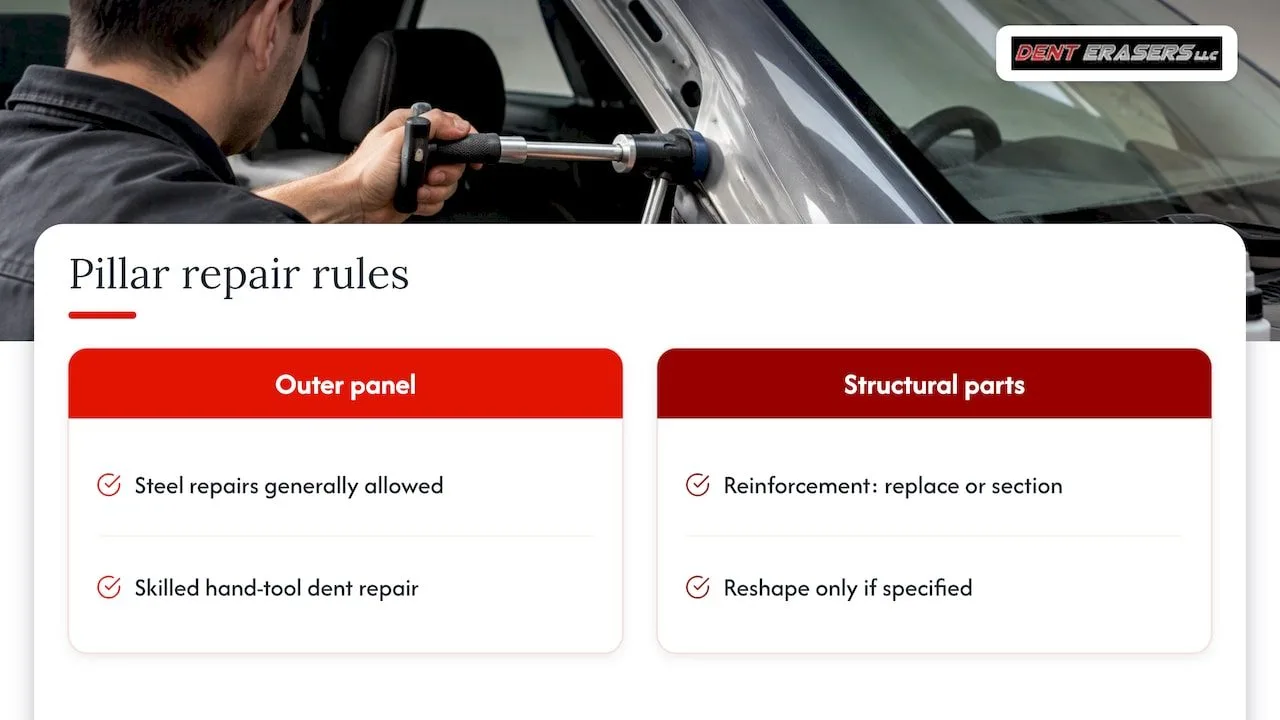
A-pillars frame the windshield. B-pillars sit between the front and rear doors. C-pillars run beside the rear window. Pillars are classed as structural because they absorb collision energy, carry the vehicle’s weight and affect airbag timing. That is why the outer skin and the inner reinforcement are treated differently.
On steel pillars, repairs to the outer panel are generally allowed. Reinforcements and inner components generally need replacement or sectioning, if the automaker allows it, according to the same industry paper. Tesla’s own body repair documentation says that many non-structural dents can be repaired without panel replacement by a skilled technician with hand tools, while structural components may not be reshaped unless specified.
When paintless repair is a good fit
GM’s July 2023 service bulletin, published through NHTSA, describes where paintless dent repair is appropriate:
- dents with no broken paint
- soft dents in body lines and contoured areas where there is reasonable access behind the panel
- dents that don’t require removing a structural part
The same bulletin lists cracked paint, drilled holes, structural part removal and sharp dents on panel edges or zero-clearance areas as poor candidates. Dents over 3 inches and up to 6 inches may still need conventional paint repair.
The trade association NAPDRT says the two biggest factors are depth and location. Even dinner-plate-size dents can be fixed if they are not too deep.
Pillars are tight. Access behind them is often limited, so technicians commonly lift the low spots with glue-pull tools from the outside and tap down the high spots. A shallow, rounded dent from a door swinging into the pillar or a stray shopping cart is the kind of damage that responds well.
When it becomes a structural repair
Two things push a pillar dent out of PDR territory.
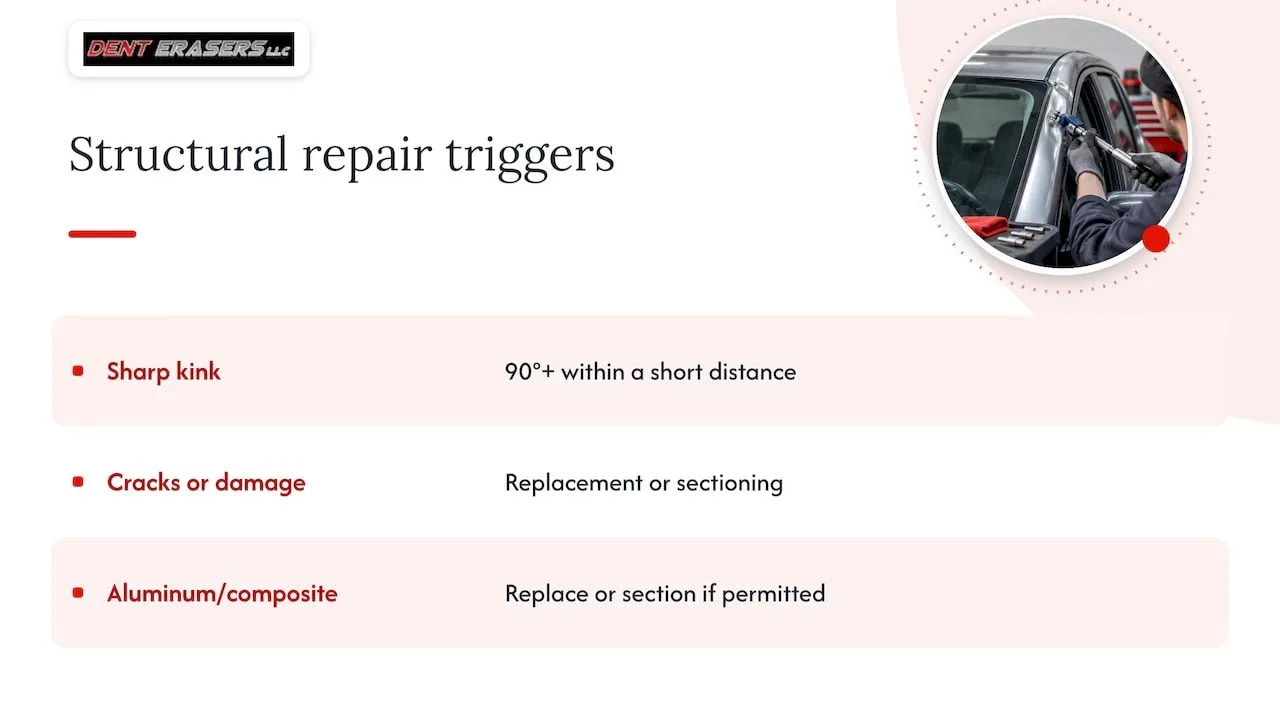
A sharp kink. I-CAR’s rule, as explained in Fender Bender, treats a kink as a sharp bend of 90 degrees or more within a short distance. Cracks or breaks during straightening, or hidden damage to the inner reinforcement, tip the decision toward replacement or sectioning.
Aluminum or composite pillars. Deformed pillars made of these materials generally require replacement or sectioning if the automaker permits it, per the industry paper cited above.
If your dent came with a collision, a structural repair belongs in a body shop under the automaker’s procedure. Our auto body and collision repair service covers collision damage, so the same team can assess whether your pillar needs one or the other.
B-pillar and C-pillar dents
The same logic applies. A B-pillar dent from a door ding on the outer skin is a surface repair if the paint is whole. A B-pillar that has been pushed in during a side impact is a structural matter, since it sits right beside the occupants. C-pillars usually give better access from the trunk or rear trim, and shallow dents there are common PDR candidates.
Signs the damage goes beyond the dent
After any hit hard enough to dent a pillar, check for these signs of unibody or frame trouble:
- Doors that stick, sag or won’t latch cleanly.
- Hood or trunk gaps that are wider on one side than the other.
- The car pulling to one side, or a steering wheel that sits off-center on a straight road.
- Tires wearing unevenly, or an alignment that won’t hold.
- Creaks or new wind noise near the door and windshield seals.
- Paint cracking along a body line near the pillar.
Any of these means a technician should measure the structure before you decide on cosmetic work. Airbag warning lights after an impact also need a professional look. A single sign can have simple causes, so treat the list as a reason to get it inspected, not as a diagnosis.
What pillar dent repair costs
Prices vary by dent size, depth, access and vehicle. One cost guide puts pillar dent repairs at $150 to $2,000, averaging $450 to $900, with paintless repair usually the cheapest route and paint or structural work costing more.
Our published ranges, read from our site, are:
| Service | Published price |
|---|---|
| Minor dent repair | $100–$500 |
| Paintless dent repair | $150–$500 |
| Large dent repair | $150–$1,500 |
Pricing for body and collision work is quoted after we see the damage. Costs rise with aluminum panels, luxury vehicles, sensor areas and multi-panel damage. For a deeper look at repainting costs, see our guide to dent and paint repair costs.
Why a mobile repair fits this job
Pillar dents are often small, and a trip to a shop can cost you a day. We repair at your home or workplace, which suits busy professionals, and our mobile dent repair keeps your factory finish intact when the paint is unbroken. We also handle lease return dents, fleet vehicles and insurance claim assistance, plus luxury, classic and motorcycle work through our specialty services.
What we need from you is simple: a few photos in daylight, from straight on and from an angle, and the make, model and year. That tells us a lot about whether the paint is cracked and how sharp the dent is.
Once the repair is done, a ceramic coating or good paint protection helps the finish last. This guide on keeping your paintwork protected covers the basics.
Our view on pillar dents
Pillar dents scare people because the pillar looks important, and it is. But most of the pillar dents owners bring to us start as a simple question: is the paint still whole, and is the metal still smooth?
With more than 27 years of experience, we believe in looking at the dent honestly and choosing the least invasive repair that restores the vehicle. When the paint is intact, preserving your factory finish is the goal, and it is a quick, eco-friendly way to erase a dent.
When the damage is bigger, our auto body and collision team is there for that too, so you don’t have to chase a second provider.
Brian Blanc
Get your pillar dent looked at
Send us photos and we’ll tell you what the repair looks like and what it should cost. Our PDR work covers dents on pillars, doors, fenders and roof rails, and we work onsite across Contra Costa County.
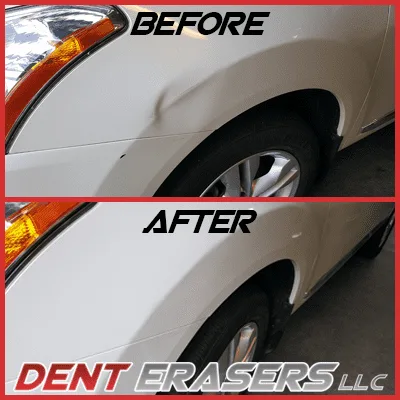
Get a free dent quote or learn more about our paintless dent repair.
FAQ
Can you repair a dented A-pillar?
Yes, in many cases. Shallow dents with intact paint and no sharp crease can often be lifted with paintless methods. Kinked metal, cracked paint or damaged inner reinforcement requires body shop or structural repair under the automaker’s procedure.
How much does it cost to repair an A-pillar dent?
It depends on the damage. One guide lists a range of $150 to $2,000 for pillar dents. Our published minor dent range is $100–$500 and large dent repair is $150–$1,500. Send photos for a quote on your vehicle.
What dents can’t be fixed without paint?
Dents with cracked or chipped paint, creased or folded metal, and sharp dents on panel edges are typically outside PDR. Dents larger than 3 inches may also need conventional repair, according to GM’s bulletin.
How do I know if my car’s frame is damaged?
Look for sticking doors, uneven panel gaps, pulling to one side, uneven tire wear and a steering wheel that sits off-center. If you see any of these after a collision, have the structure measured by a professional before cosmetic repairs.
Sources
- GM service bulletin 99-08-51-001F (NHTSA)
- About Paintless Dent Repair, NAPDRT
- A-pillar ABC’s, Fender Bender
- Tesla Model S body structure materials and allowed operations
- Pillar Dent Repair Cost Guide 2026, Cost Insider