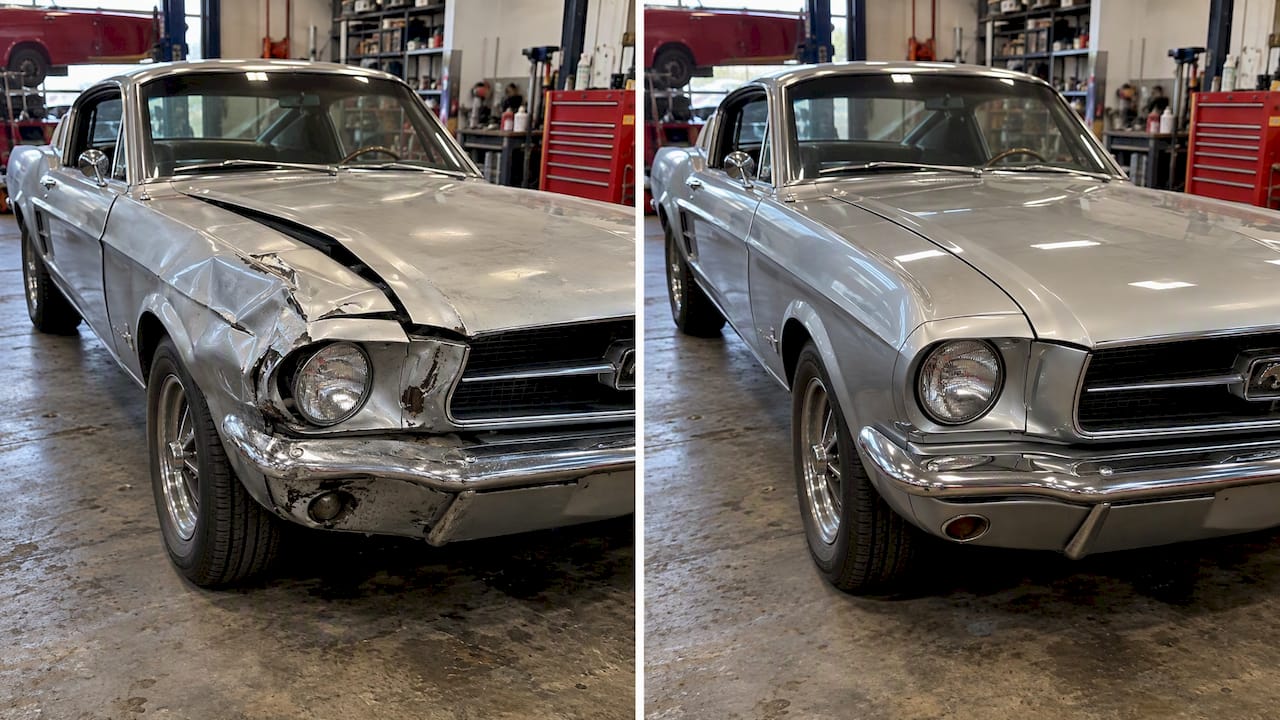
Classic car collision repair has no single price. A small door ding can cost a few hundred dollars. A damaged quarter panel on a car with rust and rare trim can cost many thousands. The final number depends on the type of damage, the age of the metal, whether parts exist and what the local shop charges per hour.
Below, we break down the pieces of a classic-car repair bill, show where costs jump, and explain which damage can be fixed without paint.
TL;DR
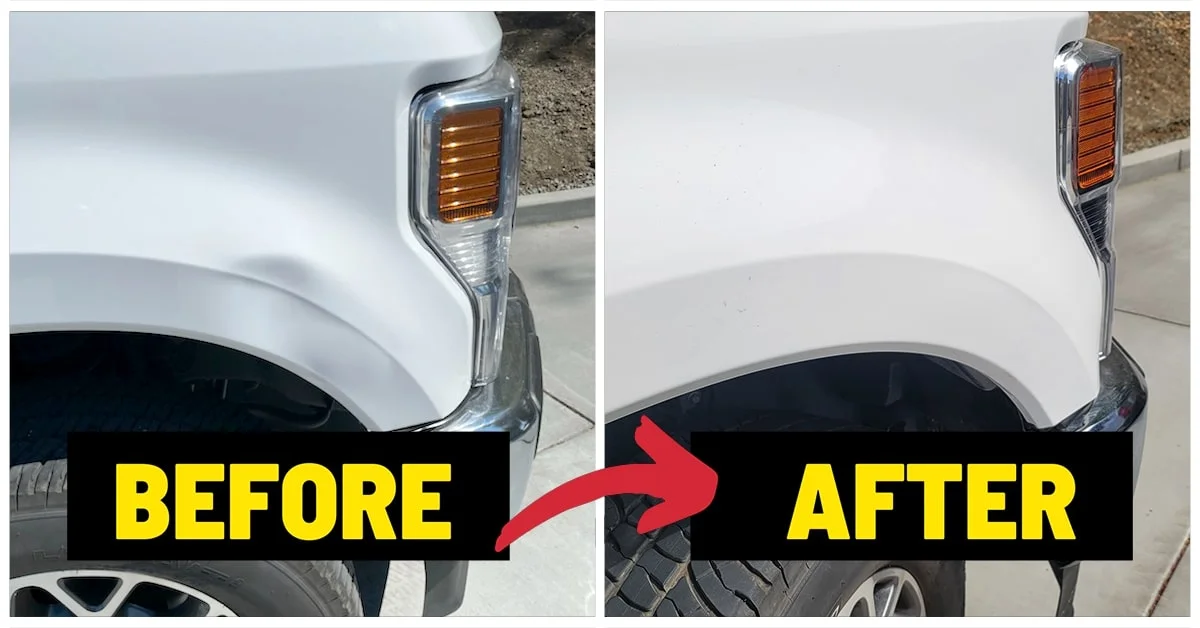
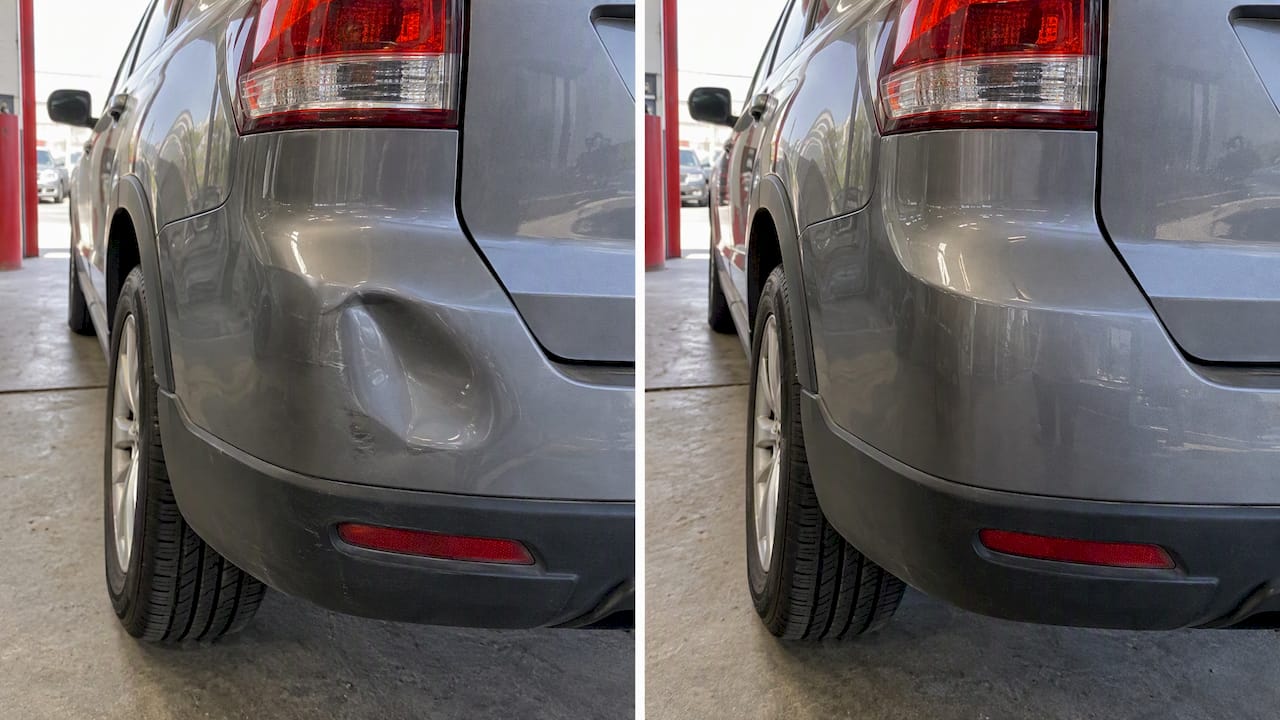
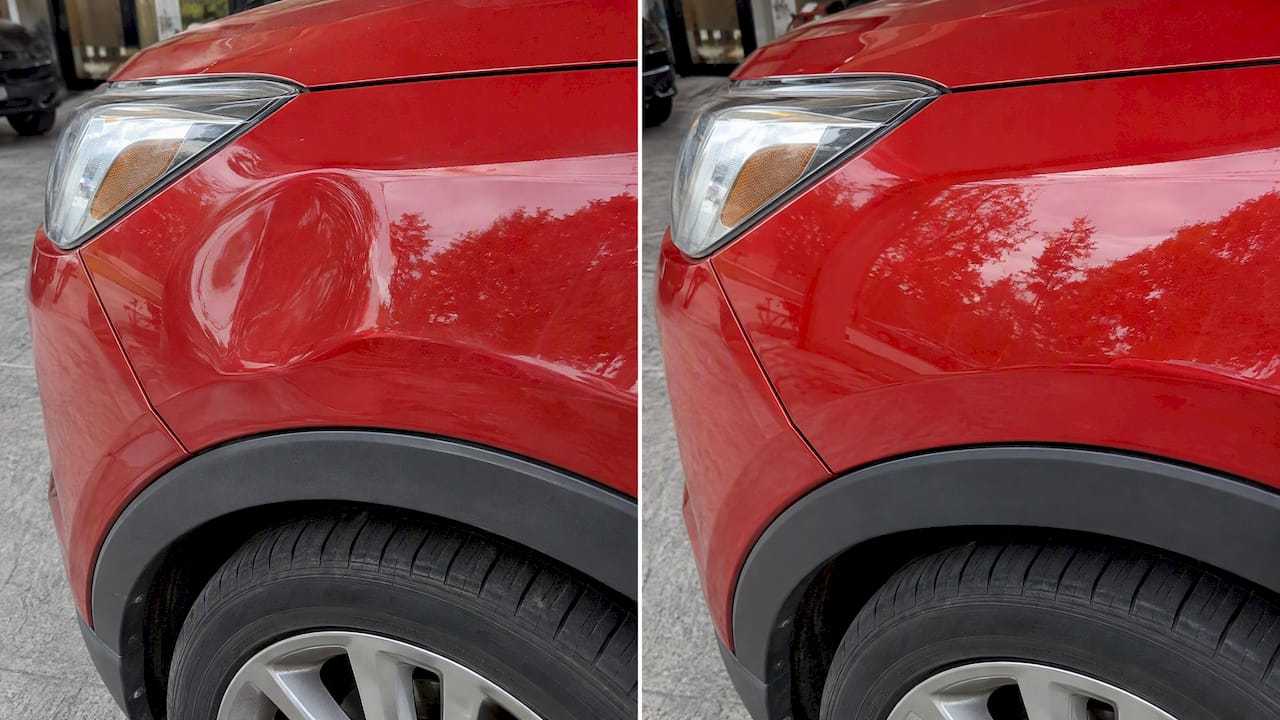
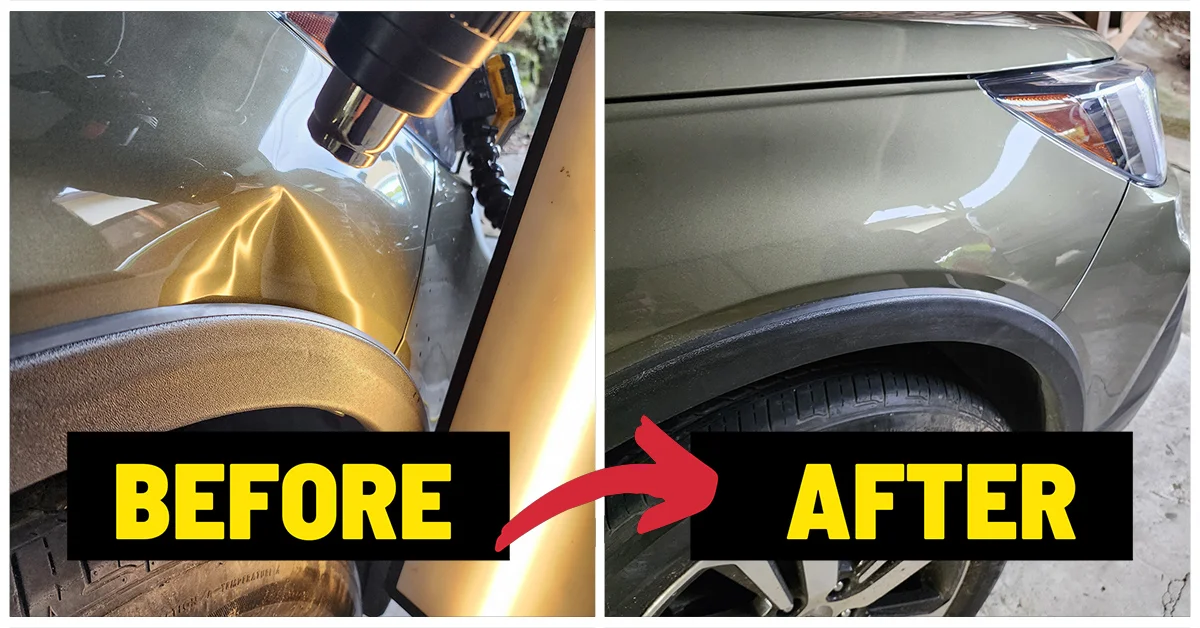
- Dents that haven’t broken the paint can often be fixed with paintless dent repair. We publish ranges of $100–$500 for minor dents and $150–$1,500 for large ones.
- Classic-car repairs cost more than repairs on newer cars because parts may be rare, paint matching is complex and the work is slow.
- Rust and structural damage change the budget fast. Surface rust runs roughly $300–$800 per panel, and frame-rail repair can reach $5,000–$15,000.
- Expect the first estimate to move. The scope is usually agreed after the car is physically inspected.
- Hourly labor rates vary by region, and a specialist may charge more than a general body shop.
Table of Contents
- What drives the cost of a classic car repair
- Typical cost ranges by type of damage
- Dents versus rust: where the budget splits
- Why the estimate often changes
- How long repairs take
- Insurance, deductibles and total loss
- Perspective: protect the original finish first
- Get your classic assessed where it sits
- FAQ
- Sources
What drives the cost of a classic car repair
Modern cars have parts catalogs and standard labor times. Most collector vehicles don’t. According to a Claims Journal report on collector-car claims, there is usually no readily accessible database of parts, pricing and labor for them, so the appraiser and the repairer negotiate the scope and cost of the repair. That report also notes that parts and labor can be costly, rare parts may have to be fabricated by hand, and matching an original paint finish can be complex.
Those points show up on every estimate in four ways:
- Parts. Original-equipment parts for vintage vehicles have become harder to find, and SEMA notes that reproduction parts may need modification or re-engineering. A part that doesn’t fit can turn an hour of labor into five or more.
- Labor. One classic-car insurance provider reports labor rates of about $60 to $70 per hour in parts of the Midwest, against $130 to $150 in California and New York.
- Paint. Original finishes, older paint chemistry and blending into adjacent panels add steps.
- Hidden damage. What you see on the surface is rarely everything once panels come off.
General repair inflation matters too. SEMA research found motor vehicle repair costs rose 7.3% in the 12 months before October 2024, so an old quote may not hold.
Typical cost ranges by type of damage
Use these as planning ranges, not quotes. Only the first three rows are prices we publish. The rest come from third-party guides, and the real figure depends on your car.
| Type of damage | Typical range | Notes |
|---|---|---|
| Minor dent, paint intact | $100–$500 | Our published range for minor dent repair |
| Paintless dent repair | $150–$500 | Our published range, factory finish preserved |
| Large dent, paint intact | $150–$1,500 | Our published range for large dent repair |
| Surface rust, per panel | $300–$800 | Restoration cost guide |
| Frame-rail repair | $5,000–$15,000 | Same guide, structural work |
| Full paint job | $2,000–$20,000 | Restoration shop guide, depends on prep and finish |
The spread in that last row is wide for a reason. Rust and earlier poor-quality work can push preparation well beyond the first estimate.
Dents versus rust: where the budget splits
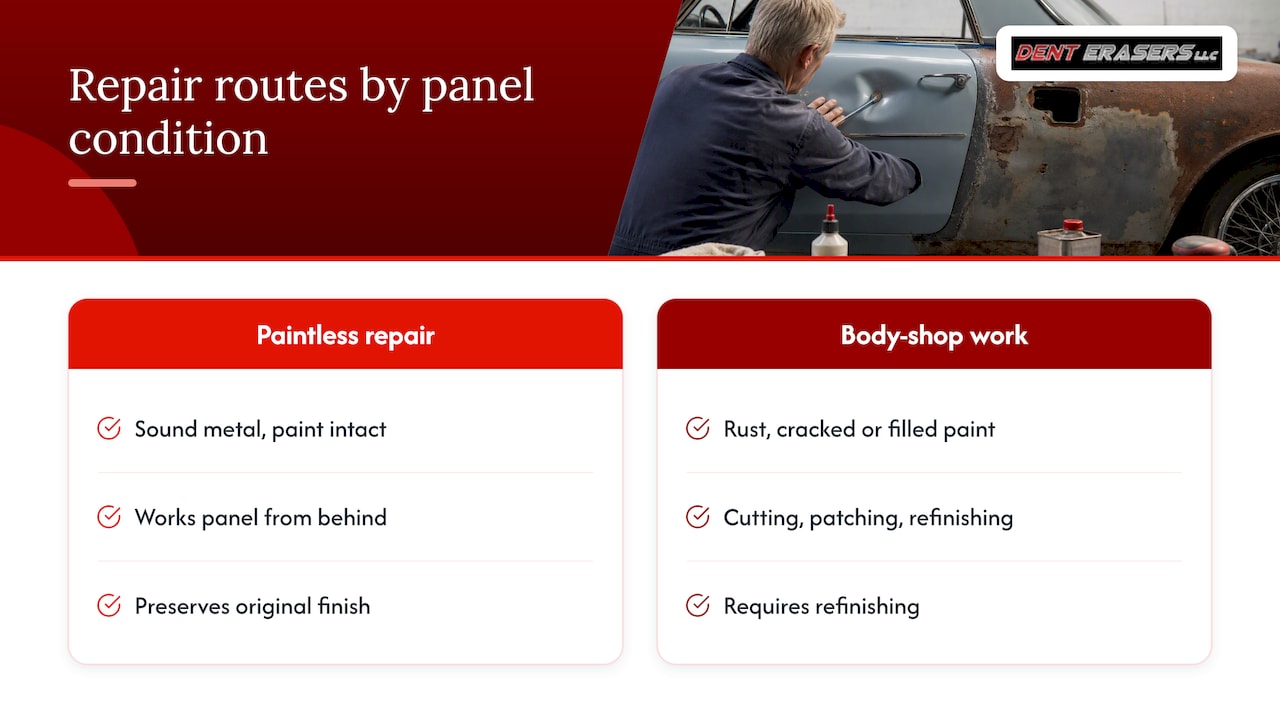
The single biggest question is whether the metal is just pushed in or actually compromised. A dent in sound steel with no cracked paint is a candidate for paintless repair. The technician works the panel back from behind, and your original finish stays on the car. For many collectors that matters as much as the price.
Rust is different. Corroded metal needs cutting, patching and refinishing, which is shop work. We cover this line in more detail in our guide to classic car bodywork, where rust needs a shop and dents may not.
A practical rule: if the paint is cracked, bubbled or the panel has been filled before, expect a traditional body shop estimate. If the paint is intact and the panel is solid, ask about paintless repair first.
Why the estimate often changes
For all but the smallest damage, the vehicle is physically inspected and the appraiser and repairer agree on the scope and cost. The same claims report says the initial estimate often is not the final cost. On a classic, panels come off, old filler appears and fasteners fail.
A good estimate lists:
- Each damaged panel and the repair method for it
- Parts, with whether they are original, reproduction or fabricated
- Labor hours and the hourly rate
- Paint steps, including blending into neighboring panels
- How the shop will handle extra damage found during teardown
Our page on auto repair estimates explained walks through how to read each line. If you want to see how smaller jobs price out, see minor collision repair cost. For a sense of how repair pricing works elsewhere on a car, this engine repair price guide shows how diagnosis and labor drive a bill.

How long repairs take
Hagerty’s claims guide puts typical repairs at one to three weeks, longer when parts are hard to find. California’s Bureau of Automotive Repair warns that parts delays can add several weeks or months to collision repairs. For a classic, the parts search is usually the slowest step, not the labor.
Paintless repair on intact panels is much quicker, and we come to your home or workplace, so you don’t lose days without the car.
Insurance, deductibles and total loss
How much you pay out of pocket depends on your policy. A classic policy such as Hagerty’s New York form pays for direct and accidental loss, less any deductible, only when collision or other-than-collision coverage is shown in the declarations. Check that first.
Two other points from the Insurance Information Institute:
- Coverage should be adjusted as a classic appreciates, unlike everyday cars that depreciate.
- A good classic policy lets you choose a specialist, even if their rates run two or three times those of a traditional body shop.
Total-loss thresholds vary by state and insurer, typically around 70%–80% of actual cash value, per the Hagerty guide above. Classic policies may instead pay an agreed value. Read your declarations page. If you are filing a claim, we offer insurance claim assistance on our specialty services page.
Repairs can also affect resale. Our guide to how collision repairs affect value covers that.
Perspective: protect the original finish first
On a classic, the cheapest repair is often the one that removes the least original material. Repainting a panel can be necessary, but it also changes the car. We have worked on dents for more than 27 years, and our approach with luxury and vintage owners is simple: look at the paint first. If it is intact, a paintless repair keeps the factory finish, takes less time and usually costs less than a refinish.
We are also honest about limits. Rust, cracked paint and structural damage belong in a body shop, and we would rather tell you that on the first visit than have you pay for a repair that won’t hold. For rare cars, our rare vehicle repair considerations explain what to ask any technician before they touch the panel.
— Brian Blanc
Get your classic assessed where it sits
We bring mobile paintless dent repair to you across Contra Costa County and nearby areas, including luxury and classic car repairs. For damage beyond dents, see our auto body and collision repair service. Send photos through our free dent quote form and we will tell you whether paintless repair fits. Collision and specialty work is quoted individually, since we don’t publish a price for it.
FAQ
How much does a classic car paint job cost?
One restoration guide puts paint jobs at $2,000 to $20,000, depending on preparation and finish. Rust and earlier poor work can push prep beyond the first estimate. If only a dent needs fixing and the paint is intact, paintless repair avoids repainting.
How long do most collision repairs take?
A U.S. claims guide gives one to three weeks, longer when parts are hard to find. Classics often fall at the long end because parts may need to be sourced or made by hand. Paintless dent repair on intact panels is much faster.
Is $4,000 a lot for a car repair?
On a classic, not necessarily. Surface rust at $300–$800 per panel, or a full repaint, can reach that figure quickly. For a dent with intact paint, $4,000 would be far above our published $100–$1,500 ranges, so get a second opinion.
Does insurance cover classic car collision repair?
Only if your policy includes collision coverage, and a deductible applies. Check your declarations page for coverage type and whether your policy lets you pick a specialist shop.
Sources
- Claims Journal: A Different Breed, Best Claims Practices for Collector Cars
- SEMA: Best Practices for Restoration Businesses
- SEMA: 2025 Future Trends research
- Classic Insurance: Inflation and insurance claims for classic vehicles
- Classic Car Authority: Restoration cost guide
- Hillbank: How much does it cost to restore a classic car
- Hagerty: Is my car totaled?
- California Bureau of Automotive Repair: Supply chain disruptions
- Hagerty classic automobile policy, New York
- Triple-I: Insuring your classic car
- Express Lube: How much does engine repair cost