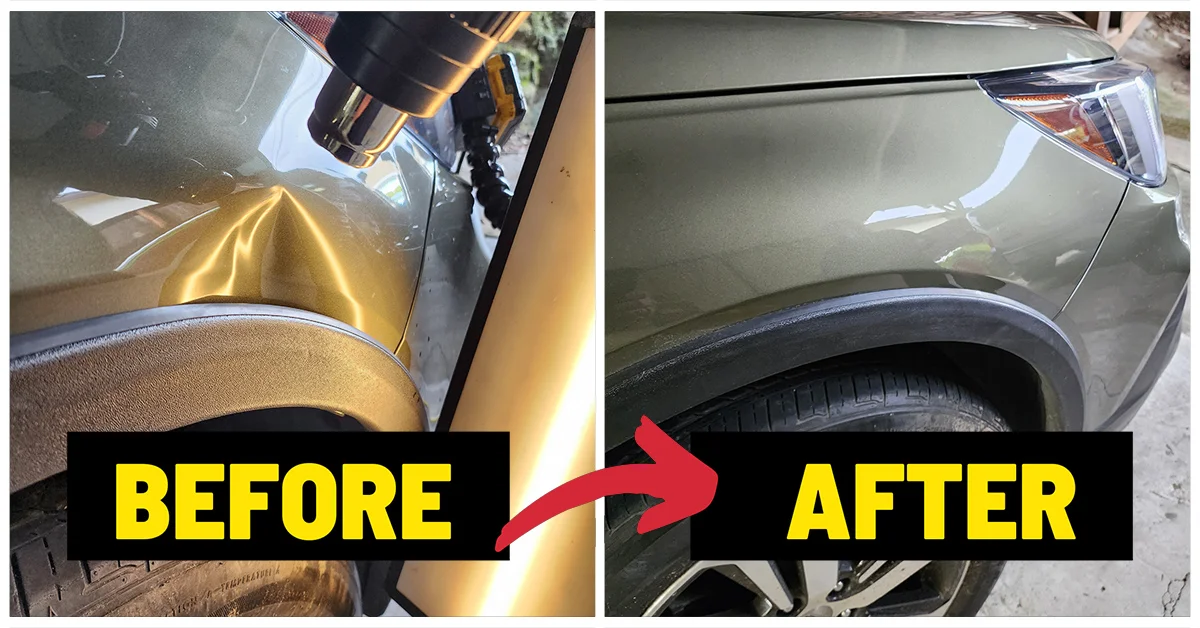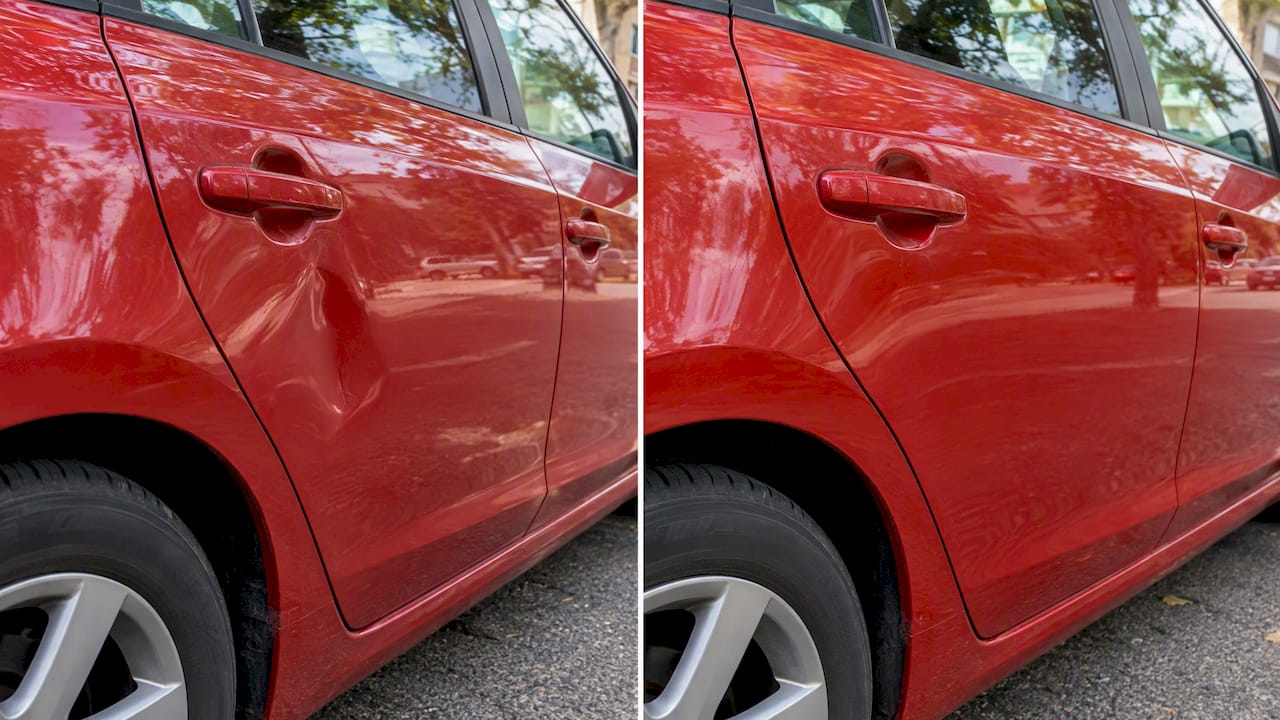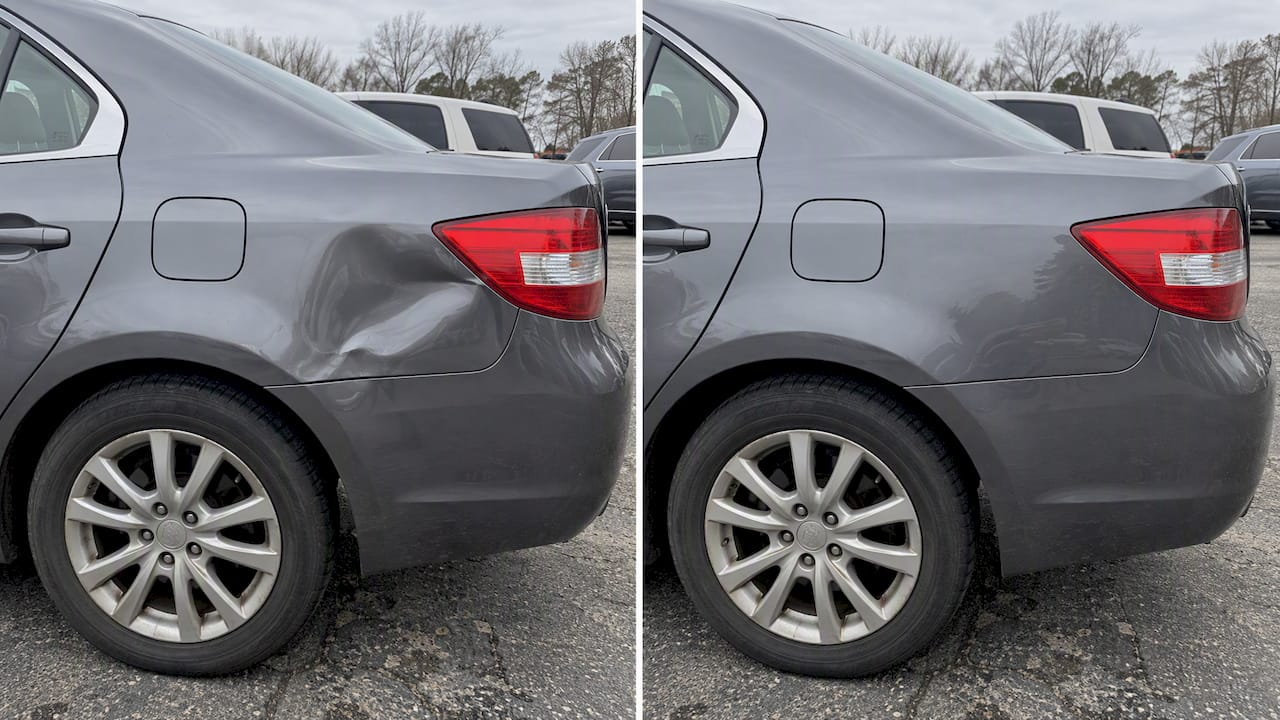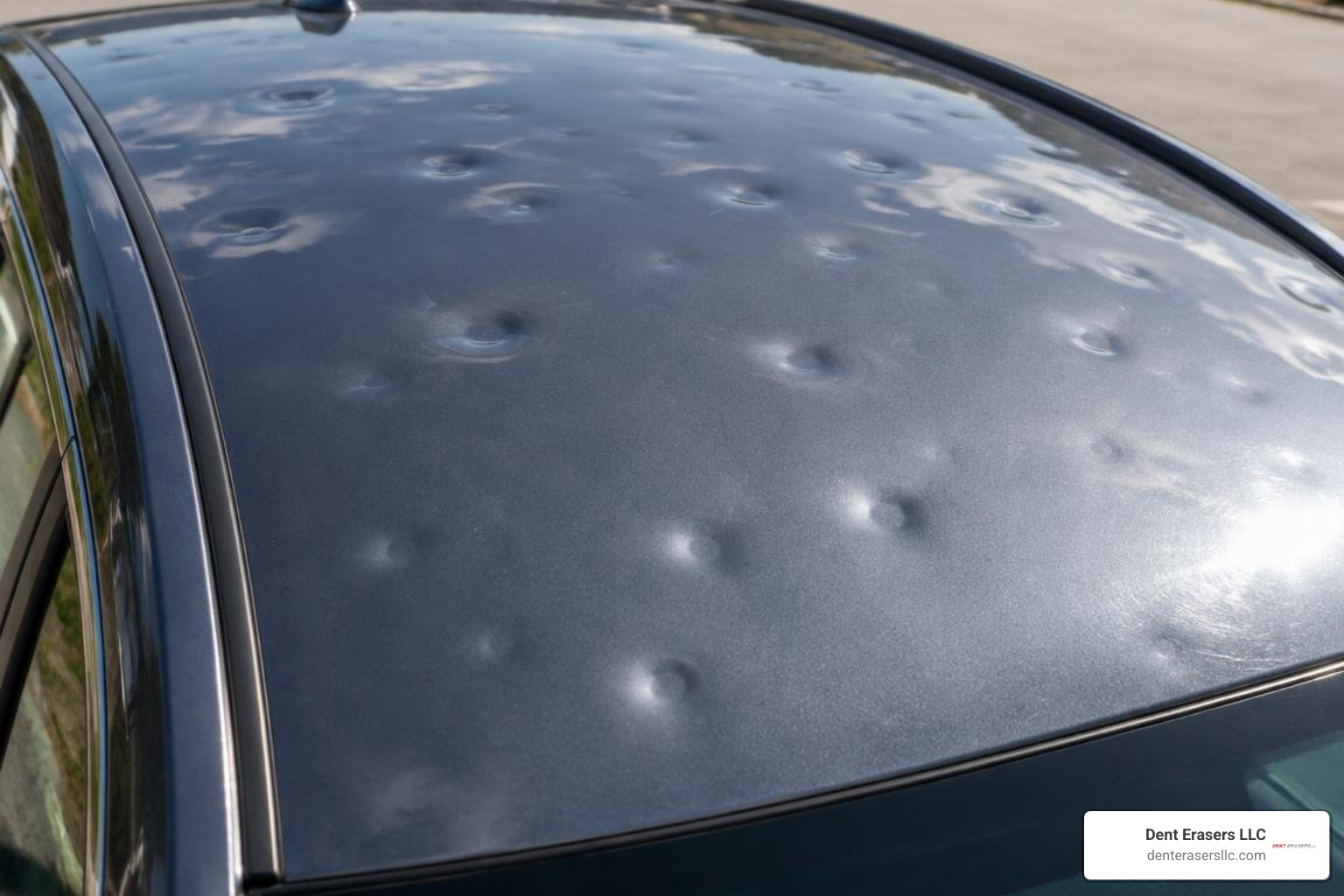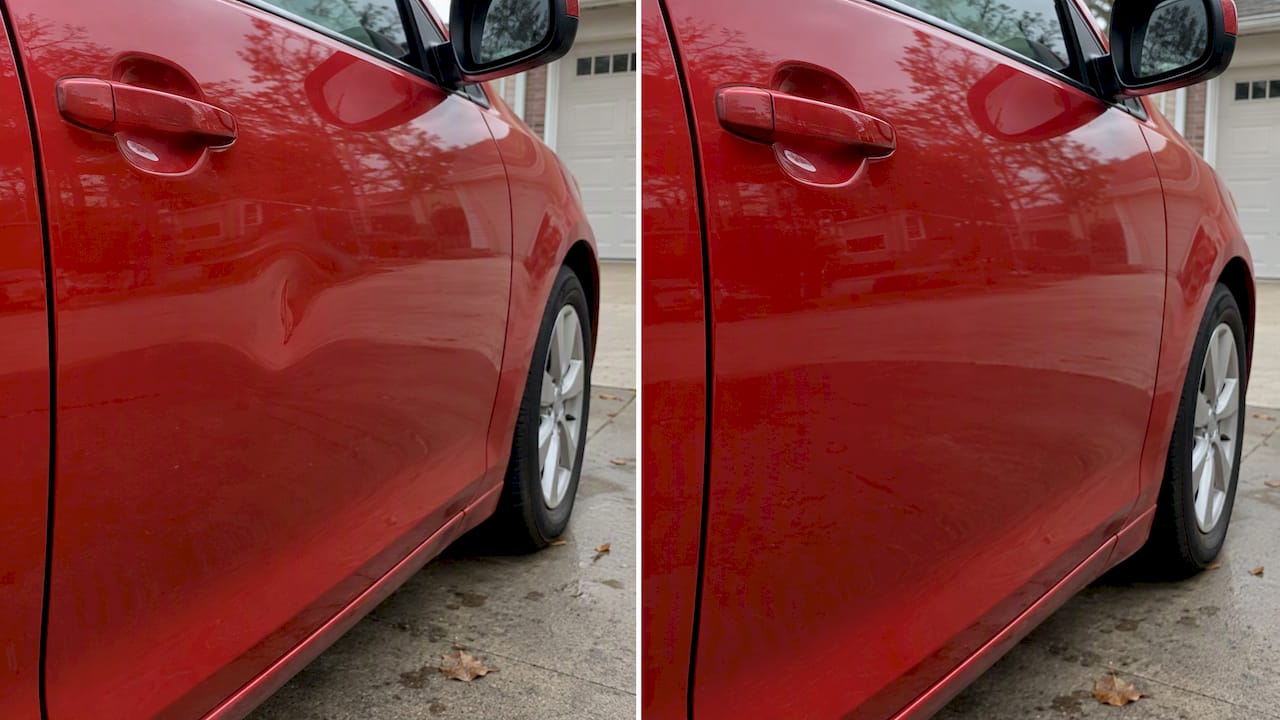
Yes, many dents can be repaired right in your driveway, but only if three things line up: the paint is intact, the metal hasn’t stretched past its “memory,” and a technician can reach the dent. I’m Brian Blanc, and in this guide I’ll show you how to judge feasibility before you spend a dime. I’ll also explain what a mobile technician needs from your driveway.
TL;DR
- Feasibility depends on the dent, not the location. If the paint is not cracked and the metal is not badly stretched, paintless dent repair (PDR) usually works fine at your home.
- Sharp creases, cracked paint and dents on panel edges or seams are the most common reasons a dent can’t be fixed paintlessly.
- Never accept a plan that involves drilling holes for access. Glue-pull repair is the better route when the backside is blocked.
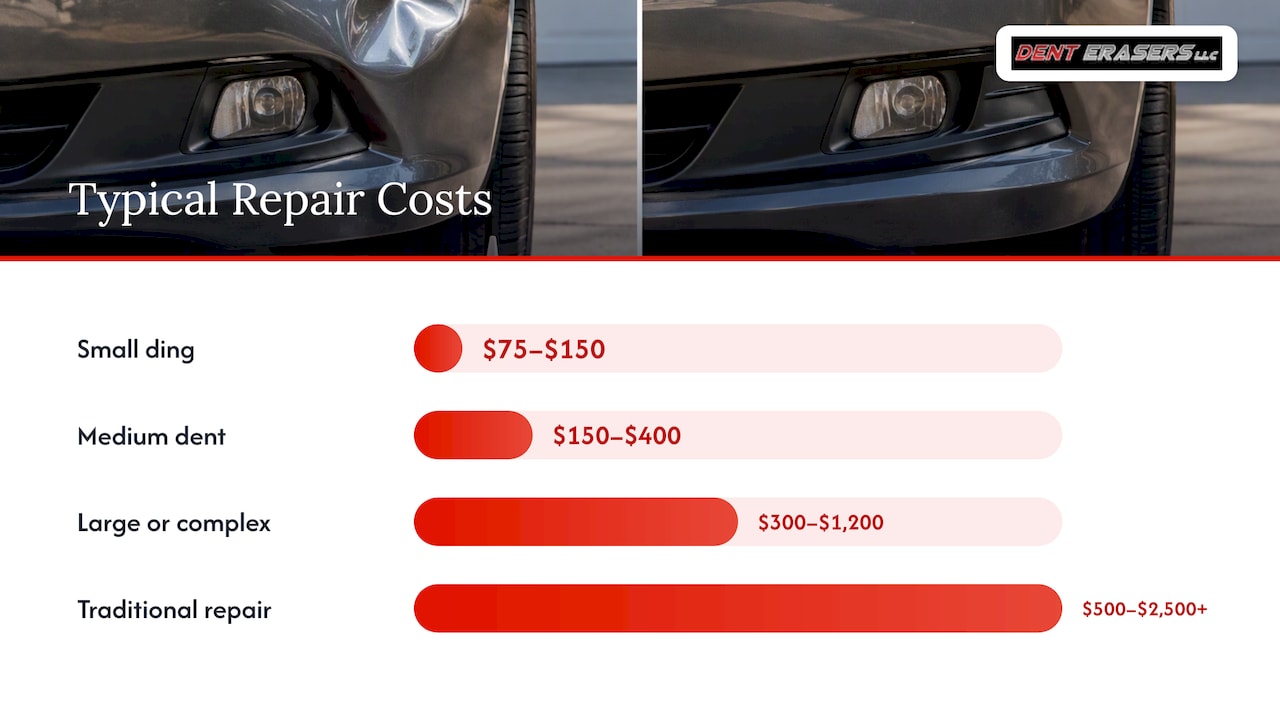
- A rough budget: $75–$150 for small dings, $150–$400 for medium dents, and $300–$1,200 for large or complex ones.
- Send photos first. A good mobile tech can tell you a lot before ever visiting.
Table of Contents
- What “feasible” really means
- Dents that usually work in a driveway
- Dents that rule it out
- What your driveway needs to provide
- What the backside tells you
- How much it costs
- Insurance: file or pay out of pocket?
- Our perspective
- Get a free assessment before you decide
- FAQ
- Sources
What “feasible” really means
People often assume feasibility is about where the work happens. It isn’t. Mobile PDR uses the same rods, glue-pull tools and reflection lights a shop uses. What decides the outcome is the condition of the panel.
The key concept is metal memory. Steel and aluminum can flex and return to shape up to a point. Experts at AAA explain that once a dent has stretched the metal too far, it loses its ability to return to its original shape, and PDR won’t work no matter how skilled the technician is. In shop terms, that metal is work-hardened.
When I look at a dent, I’m asking four questions:
- Is the paint intact, with no cracks, chips or flaking?
- Is the dent shallow and rounded, or does it have a sharp crease?
- Is it on a flat or gently curved part of the panel, away from edges and body lines?
- Can I reach the backside, or can I pull from the outside?
Three or four yeses is a strong candidate. Two or fewer means we should talk about other options.
Dents that usually work in a driveway
- Door dings and parking-lot dents. Round, shallow and away from the edge. This is our bread and butter.
- Hail damage. Lots of small dents, intact paint. Time-consuming but well suited to PDR.
- Shopping cart and basketball dents on hoods, roofs and trunk lids.
- Larger soft dents without a sharp fold in the metal. These can take longer, but the finish stays factory.
One owner tip from the Rivian community sums it up well: a dent with no sharp creases usually repairs excellently, while one crossing a seam or with a defined crease may not. That matches what we see in the field.
Dents that rule it out
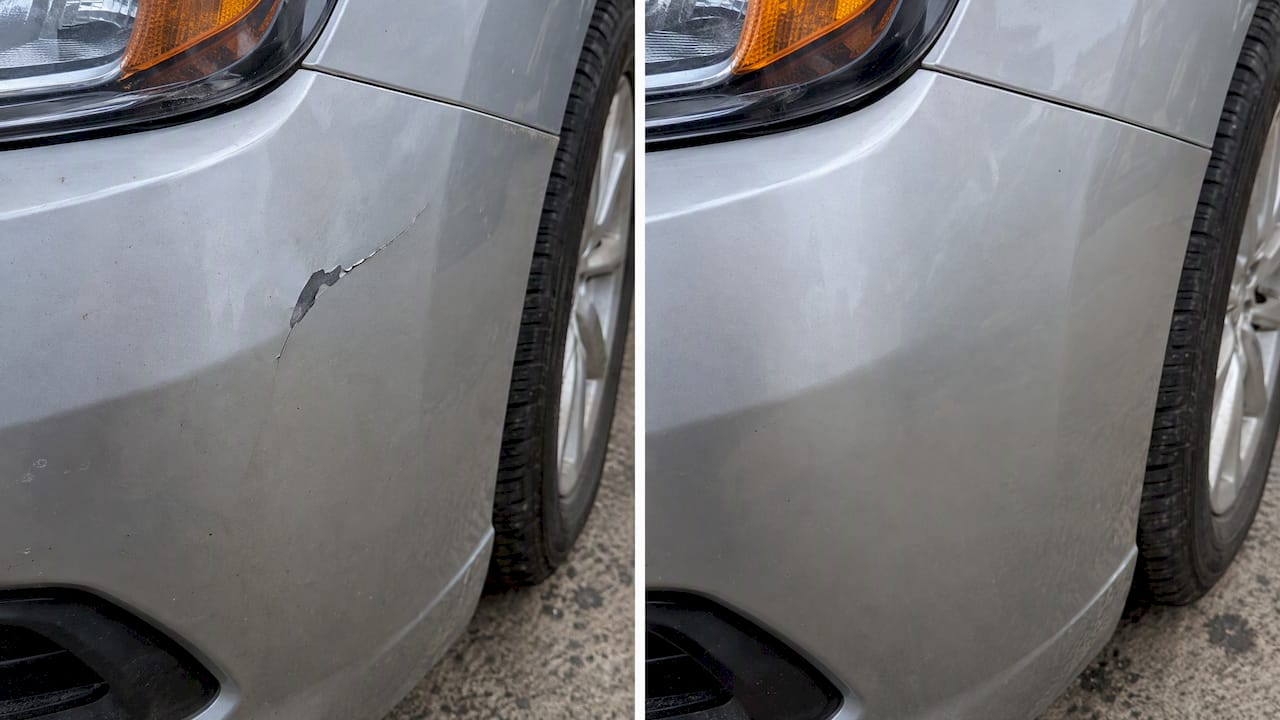
Cracked or chipped paint
PDR keeps your original paint, so it needs paint that’s still in good shape. If the paint is cracked, a conventional repair is usually needed. That means sanding, filling and refinishing, which is where costs jump. Traditional repairs start around $500 and can pass $2,500.
Micro-cracks you can’t see
This one catches owners off guard, especially on newer, luxury and vintage cars. A finish can look perfect and still have tiny cracks. Rivian’s published position suggests inspecting the finish with a 30x magnifying glass before and after the repair. If micro-cracks are present, the panel needs refinishing to prevent later failure, and PDR isn’t the right fix.
Sharp creases and stretched metal
A crease means the metal has been folded, not just pushed. We can sometimes improve these a great deal, but a perfect result isn’t guaranteed. I would rather tell you that up front than oversell.
Panels with no backside access
Double-layered panels, braces and sealed areas used to be a dead end. Now glue-pull repair (GPR) lets a technician pull the dent from the outside without drilling, which keeps factory paint and avoids damaging the internal structure. That matters on lease returns and high-value cars.
Here’s a firm red flag: if anyone proposes drilling holes to reach the dent, walk away. I-CAR’s guidance says that if holes must be cut to reach the panel backside, PDR is not an acceptable option, and added holes in a structural part can alter its integrity.
What your driveway needs to provide
The driveway itself is rarely the problem. Mobile technicians bring their own lights, tools and equipment. What helps:
- Space. Room to open the doors and walk around the car.
- Shade or a garage. Direct sun on a hot panel makes it harder to read reflections. A garage bay, carport or shady side of the house is ideal.
- Dry weather. Rain interferes with glue-pull work and with seeing the dent clearly.
- A clean car. Dirt hides the fine line of the dent and can scratch the paint.
If your driveway is cramped or has no cover, tell us when you book. We can often work in an office lot or any spot that suits you. Our mobile dent repair service is built around coming to wherever the car is parked.
What the backside tells you
Intact paint on the outside doesn’t mean the job is simple. Pushing on a panel from behind can scratch or remove the E-coat or wax-based coating that protects the inside. I-CAR notes that the backside coating may need to be restored even when the front doesn’t need refinishing. Skip that and rust can start from the inside out. A professional checks this. A quick DIY fix usually doesn’t.
How much it costs
PDR is generally the cheaper route when paint is intact. AAA’s Mid States club puts it at roughly 65% cheaper than traditional repair, since you skip sanding, filling and painting. Independent estimates give the ranges below.
| Dent type | Typical PDR range | Source |
|---|---|---|
| Small ding (under 1 inch) | $75–$150 | Car Repair Estimator |
| Medium dent (1–4 inches) | $150–$400 | Car Repair Estimator |
| Large or complex | $300–$1,200 | Car Repair Estimator |
| Traditional body shop repair | $500–$2,500+ | Car Repair Estimator |
Our own published ranges are $100–$500 for minor dent repair and $150–$1,500 for large dent repair. Your actual price depends on dent size, depth, location and access.
The same repair-versus-replace logic shows up elsewhere on your car. If you’re curious, this breakdown of windshield repair versus replacement costs shows how catching damage early keeps a bill small. For a deeper dive on our side, see our dent and paint cost guide.
Insurance: file or pay out of pocket?
Comprehensive coverage usually applies to non-accident damage like hail or vandalism, while collision coverage applies to accident dents, according to AAA. Compare the estimate with your deductible first. For minor dings under roughly $200 to $300, paying out of pocket is often the smarter move. If you aren’t sure how your policy treats a dent, this explainer on common insurance and repair misconceptions is a helpful read, and your insurer is the final word on your own coverage. We also offer insurance claim assistance on larger jobs.
Our perspective
After 27+ years in this trade, the most common mistake we see is owners deciding feasibility from the driveway side of things. They worry the work can’t be done at home, when the real question is what the metal and paint can take. We’ve fixed plenty of dents on luxury, vintage and lease-return vehicles right where the owner parked.
We also tell people no. If the paint is cracked or the metal is too work-hardened, we’d rather explain your options than promise a perfect finish. Honest assessment is the best way to protect your wallet and your factory paint. We’d suggest sending photos in good light from two angles, and we’ll tell you what we see.
— Brian Blanc
Get a free assessment before you decide
If you’re in Contra Costa County or nearby, we come to your home or workplace. Send us photos through our free dent quote form and we’ll tell you whether paintless repair is realistic. You can also see how our paintless dent repair and auto body and collision repair services fit different damage.
FAQ
What dents cannot be fixed with paintless repair?
Dents with cracked or chipped paint, sharp creases that stretched the metal, and dents on tight panel edges are the usual problem cases. Panels with micro-cracks in the finish also need refinishing instead. A professional assessment is the only reliable way to tell.
Why is paintless dent repair sometimes expensive?
Price follows labor and skill, not materials. Large, deep or multiple dents take hours of careful work, and blocked access may call for glue-pull tools. Even so, it is typically far less than a repaint, and our published ranges show the span from minor to large dents.
What are the downsides of paintless dent repair?
It can’t help with cracked paint or badly stretched metal, and sharp creases may only improve rather than vanish. Bad weather can also delay an outdoor job. If the repair fits your dent, though, you keep your factory finish.
Can I do this myself in my driveway?
Suction cups and hair-dryer tricks might help a very shallow dent, but they can also crack paint or stretch the metal further. Backside coatings can be damaged by amateur tools as well. For anything beyond a faint dimple, get a professional opinion first.
Sources
- Paintless Dent Repair Cost: Door Dings to Large Dents (2026)
- Ding Dong the Dent is Dead, AAA Mid States
- Rivian Position Statement: Paintless Dent Repair, I-CAR
- Glue Pull Repair (GPR), I-CAR
- Drilling holes to perform PDR repairs, I-CAR
- Corrosion protection after PDR, I-CAR