Email Now
Call Us Today

A minor collision repair costs anywhere from about a hundred dollars to well over a thousand, and the difference almost always comes down to one question: is the paint still intact? If it is, paintless dent repair can fix many dings and creases for $100 to $500 on our price list. If the paint is cracked, the bumper is split, or a sensor sits behind the damage, you’re in body shop territory, and the estimate climbs. Here is how to tell which side of that line your car is on.
Minor usually means cosmetic damage with no frame, suspension or structural involvement: a parking-lot door ding, a creased quarter panel, a scuffed or dented bumper cover, a hail-pocked hood. You can drive the car, and the panels still line up.
The label can be misleading, though. A small-looking bumper tap can still knock a radar sensor out of position. We’ll cover that below, because it’s the most common reason a “cheap” fix turns expensive.
These are the ranges we publish for paintless work on our own services. Every car is different, so treat them as a starting point, not a quote.
| Type of damage | Typical repair method | Our published range |
|---|---|---|
| Small door ding or minor dent | Paintless dent repair | $100 to $500 |
| Standard dent, paint intact | Paintless dent repair | $150 to $500 |
| Large dent or broad panel damage | Paintless dent repair | $150 to $1,500 |
| Cracked, torn or scraped plastic bumper | Plastic bumper repair | Quoted per job |
| Paint damage, creases, panel replacement | Auto body and collision repair | Quoted per job |
We don’t publish a flat price for bumper or body work because the range is too wide. Scuffs, gouges, sensor mounts and paint blending each change the labor.
For more detail on specific repairs, our guide to plastic bumper repair costs and our breakdown of common auto body repairs and average costs go deeper.
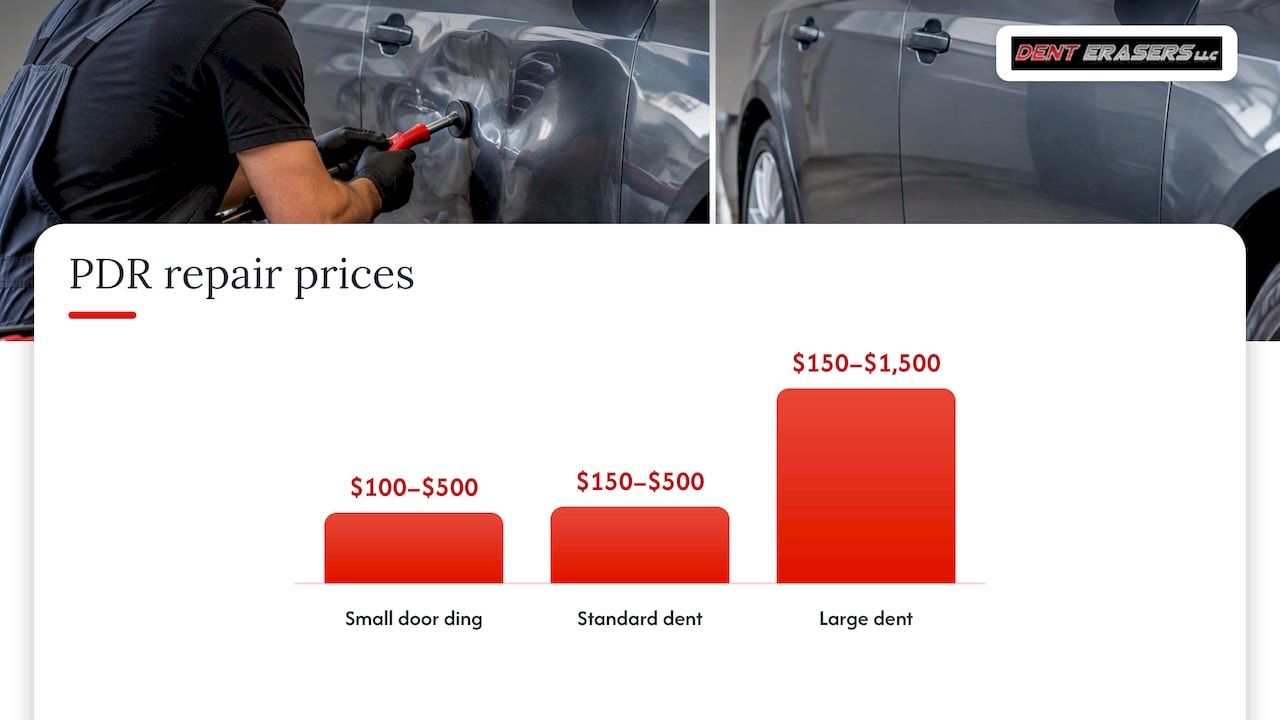
Paintless dent repair (PDR) means we work behind the panel with specialized tools and slowly massage the metal back to its original shape. No bondo filler, no sanding, no repaint, and your factory finish stays on the car. AAA’s Mid States club points out that PDR can cost roughly 65% less than traditional body shop methods, and recommends considering it before booking a body shop for small dents.
There are limits, and I’d rather tell you now than after you’ve driven out to see us:
That last point is why technician skill moves the price more than people expect. A dent that looks identical in two photos can be a 45-minute job or a half-day one.
The moment paint is involved, you’re paying for prep, primer, color matching, clear coat and drying time, and often for blending into the neighboring panel so the color doesn’t look patchy. Tri-coat pearls and some luxury finishes cost more to match.
If what you’re looking at is only light swirls or hazing in the clear coat, not a dent or a gouge, a polish may be all you need. This walkthrough on removing swirl marks from paint explains the basics, and it’s worth ruling out before you pay for a repair.
This is the big one on newer cars. Cameras and radar units often sit behind plastic bumper covers. Consumer Reports notes that claims on vehicles with these systems can run more than $100 higher than on cars without them, largely because sensors must be replaced and recalibrated.
A proper repair checks for diagnostic trouble codes and performs the manufacturer-specified calibration, which can require a dealership-level scan tool or special targets. Thick filler or a poor aftermarket part can even block a sensor and disable features like automatic emergency braking or blind-spot monitoring. I-CAR, the collision industry’s training body, says recalibration is critical after replacing or repairing bumpers.
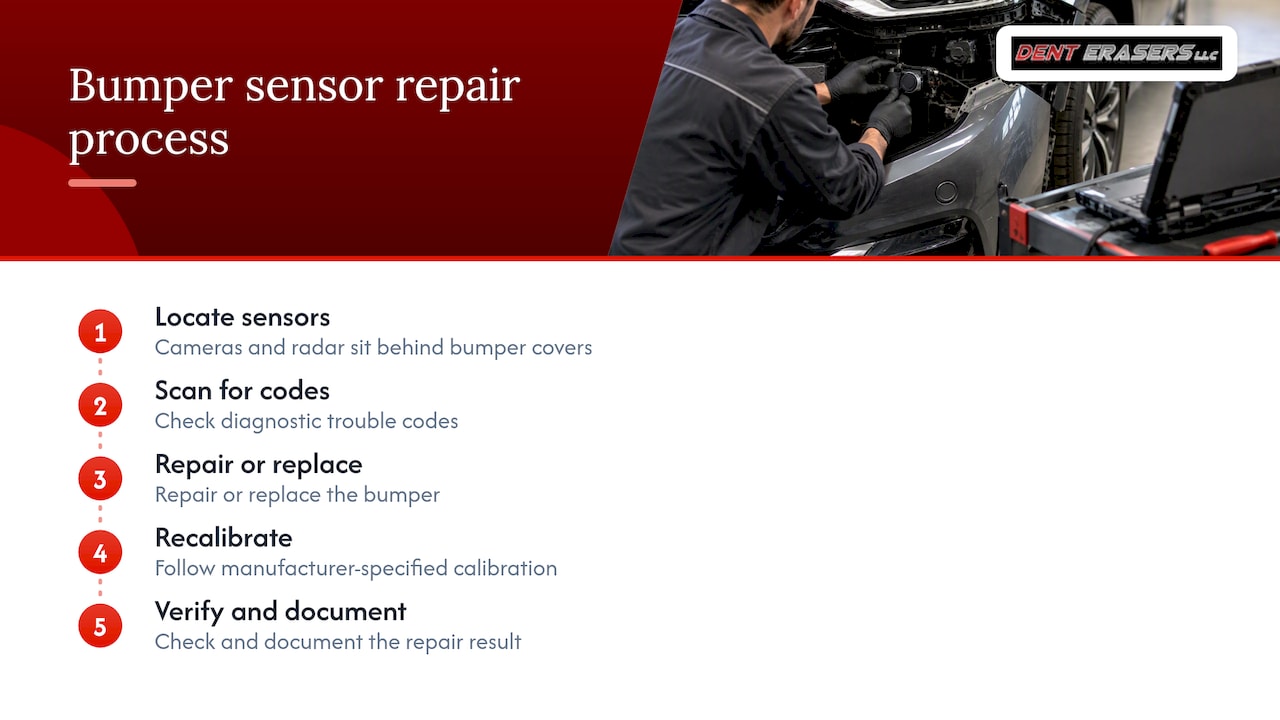
So a very low quote on a bumper isn’t automatically a bargain. Ask whether the shop scans the car and documents the result. Our five-check guide to bumper sensors lists what to ask.
Luxury, vintage and motorcycle repairs cost more because panels are often aluminum or hand-formed, parts are scarce, and the tolerance for a visible flaw is lower. Aluminum, for example, is less forgiving than steel and takes more time.
OEM, aftermarket and reconditioned parts differ in price and fit. Whichever type a shop uses, it should say so on the estimate.
An estimate based on visible damage is a starting point. “Supplements” are extra costs discovered after a car is taken apart, and they’re a normal part of collision work. The practical move: ask the shop up front what hidden damage is likely and how extra charges get approved before work continues.
The California Department of Insurance’s Auto Repair Consumer Bill of Rights is a good model of what to expect. In California, you choose the shop, insurers can’t require a specific one, you’re entitled to an itemized written estimate, and a registered shop can’t exceed it by more than 10% without your approval. Rules differ by state, so check yours, but the habit of getting everything in writing applies anywhere.
If the total is near your deductible, a claim may cost you more than it saves, since it can affect your premiums. AAA’s guidance is to contact your insurer if you have comprehensive coverage, but not to rush into a body shop appointment when a simpler paintless fix may do. Call your insurer, get a quote on the repair, and compare the two before deciding. If you do file, we can help with the paperwork side through our insurance claim assistance.
In our shop’s 27-plus years, the most expensive repairs I see aren’t the ones with the biggest damage. They’re the ones that were fixed twice. Someone picks the cheapest quote, a quick filler job lets go within a year, or a bumper goes back on with a sensor aimed at the pavement. Then the owner pays again.
My rule is simple. If the paint is intact and the metal is reachable, fix it the paintless way, because nothing beats the factory finish. If it isn’t, say so honestly and quote the right repair. A customer who hears “this one can’t be done paintless” from us usually trusts the rest of the quote.
And please send photos before you drive anywhere. Half the time, I can tell you the category of repair and a realistic range from three clear pictures.
— Brian Blanc
We come to your home or office in Contra Costa County and the surrounding area, so you don’t lose a day at a shop. Start with our free dent quote form, or read about mobile dent repair, minor dent repair, plastic bumper repair and auto body and collision repair. Lease return or fleet vehicles are covered on our specialty services page.
For dents with intact paint, our published ranges are $100 to $500 for minor dents and $150 to $500 for standard paintless repair. Bumper repairs, paint work and panel replacement are quoted per job because the labor varies widely. Photos usually let us give you a realistic range.
Many paintless repairs are done in a single visit, often within a few hours, since there’s no paint to cure. Body work with paint takes longer because of prep and drying time. We’ll tell you the timeline when we quote.
Usually, yes. AAA’s Mid States club says paintless repair costs roughly 65% less than traditional methods, but it only works when the paint is unbroken and the metal hasn’t been stretched too far.
Yes. Sensors and cameras behind the bumper cover can be knocked out of alignment or blocked by filler. Ask for a diagnostic scan and calibration if your car has features like automatic emergency braking.