Email Now
Call Us Today

You don’t need to do much to get ready for a mobile dent repair visit. Park on a level spot with room to open every door, wash the car lightly the day before, clear out the cabin and trunk, and keep a few photos and your paperwork handy. That’s about 20 minutes of effort, and it helps the technician see the damage clearly and finish in one visit.
I’m Brian Blanc. After 27+ years of repairing dents, I can tell you that the owners who prepare a little have the smoothest appointments. Here is exactly what I’d ask you to do.
Mobile repair works because we bring the tools to you. The spot you choose does a lot of the work for us.
If you’re booking at your office, check with your building manager that a technician’s vehicle can park near yours. Most workplace lots are fine. Our guide on why mobile service suits busy professionals covers how this works in practice.
A dirty car hides dents. Road film scatters light, and dried water spots can look like tiny dings. A quick wash the day before lets us see the true size and depth of each dent and spot the small ones you didn’t know about.
Keep it gentle:
If you’re short on time, don’t cancel or delay the appointment over a wash. A dusty car is fine. We can wipe the panel down on site.
Skip the automatic brush wash. If the paint is chipped or the edges of the panel are lifting, a pressure wash or brushes can make it worse. Chipped paint also matters for another reason, which I’ll cover below.
We don’t usually need the interior empty, but some areas must be accessible. For many dents we work from the inside of the panel, which can mean removing a door panel, trunk liner or headliner trim.
For motorcycles, we’ll want the bike clean, with luggage, covers and accessories removed from the damaged area.
A few minutes with your phone saves confusion later.
If you’re filing an insurance claim or returning a lease, this record matters even more. Take wide shots that show the whole panel, then close-ups. For lease returns, check your lease’s wear-and-tear guidelines first so we know the standard to repair to.
Paintless repair is ideal when the paint isn’t cracked, chipped or deeply creased. We massage the metal back to its original shape from behind the panel, so the factory finish stays intact. When the paint is broken, or the metal is stretched and work-hardened, we may need traditional body work, filler or refinishing, and the car may need to come to a shop rather than a driveway.
Independent mechanics make a similar point about mobile service in general: confirm your repair is suitable for mobile work, because the phrase doesn’t mean a whole shop fits in the back of a van.
Here is how our services line up with what you might be dealing with:
| Your situation | What to book | Published range |
|---|---|---|
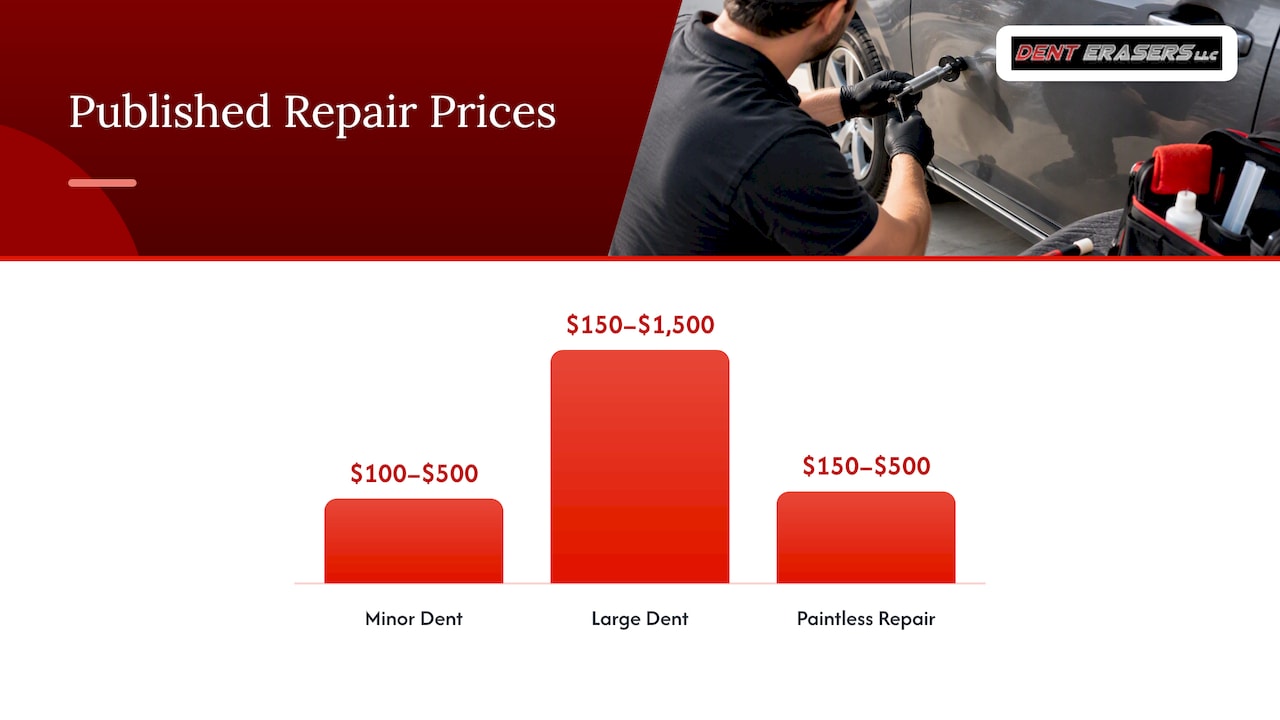
| Door ding, shopping cart dent, small crease | Minor Dent Repair | $100–$500 |
| Larger dents, hail-sized damage, bigger panels | Large Dent Repair | $150–$1,500 |
| General paintless repair on your driveway | Paintless Dent Repair | $150–$500 |
| Scuffed or cracked plastic bumper | Plastic Bumper Repair | Quote on request |
| Collision damage, broken paint | Auto Body & Collision Repair | Quote on request |
Final price depends on the size, depth, location and number of dents, and on how accessible the panel is. If you’d like to see how pricing logic works, we break down how technicians price mobile dent repair.
Before any work starts, ask for a written estimate that lists what will be done and what it will cost. Consumer guidance from the California Department of Insurance says the same thing in its Auto Repair Consumer Bill of Rights: you’re entitled to a written estimate before work begins. That applies whether the car is in a bay or your driveway. Rules differ by state, so check your own state’s consumer protection office if you’re outside California.
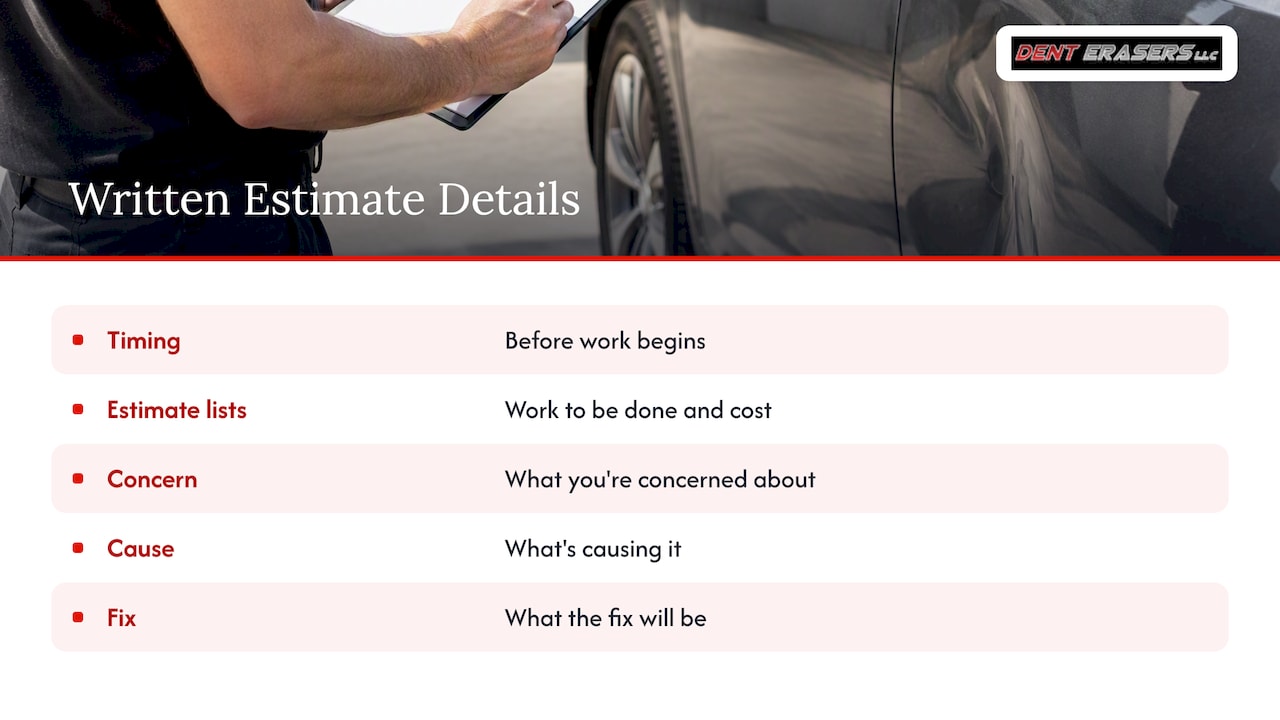
A good estimate answers three things: what you’re concerned about, what’s causing it, and what the fix will be. If you can’t tell from the paper what’s being repaired, ask.
If you’re not sure whether to make a claim or pay out of pocket, compare the estimate to your deductible first. Small paintless repairs often cost less than a deductible.
We built Dent Erasers LLC around a simple idea: you shouldn’t have to give up half a day and a rental car to get a dent fixed. Mobile repair is our bread and butter, and over 27+ years we’ve learned that the repair itself is only half the experience. The other half is a calm, predictable appointment.
The owners who get the best results aren’t the ones with the cleanest cars. They’re the ones who tell us what they want fixed, choose a spot with decent light and room, and ask for the estimate in writing. We’d rather have a straight conversation about whether a dent is a paintless job than promise something the metal can’t deliver. When the damage calls for body work, we say so up front, and if it’s right for a mobile visit, we’ll do it where you park.
Preserving the factory paint is what we care about most. It’s better for the car’s value, better for the environment, and usually quicker and cheaper than repainting.
— Brian Blanc
We serve Contra Costa County and surrounding areas, coming to your home or workplace. Send us a few photos and we’ll tell you whether your dent is a good candidate for paintless repair. Get your free dent quote, or read about our mobile dent repair service first. If you’re weighing the convenience of onsite service, this guide on repairs without a rental car may help.
It depends on the damage. A single minor dent is often quicker than a car with several dents or one large crease. Ask us for a time estimate when you get your quote, and plan to be reachable but not necessarily standing by the car.
Usually you only need to be there at the start to confirm the work and at the end to inspect it. If you’re at work, make sure we have access to the car and your keys, and agree on how you’ll approve the estimate.
No. Wash and dry it, but skip wax, sealant and detail spray. A slick coating can reduce the contrast in reflections we use to read the dent. You can wax afterward once the repair is complete.
No. Paintless repair works best when the paint is intact. Cracked paint, stretched metal or collision damage may need body work. We’ll tell you after reviewing photos or inspecting the car, so you know what to expect before you commit.