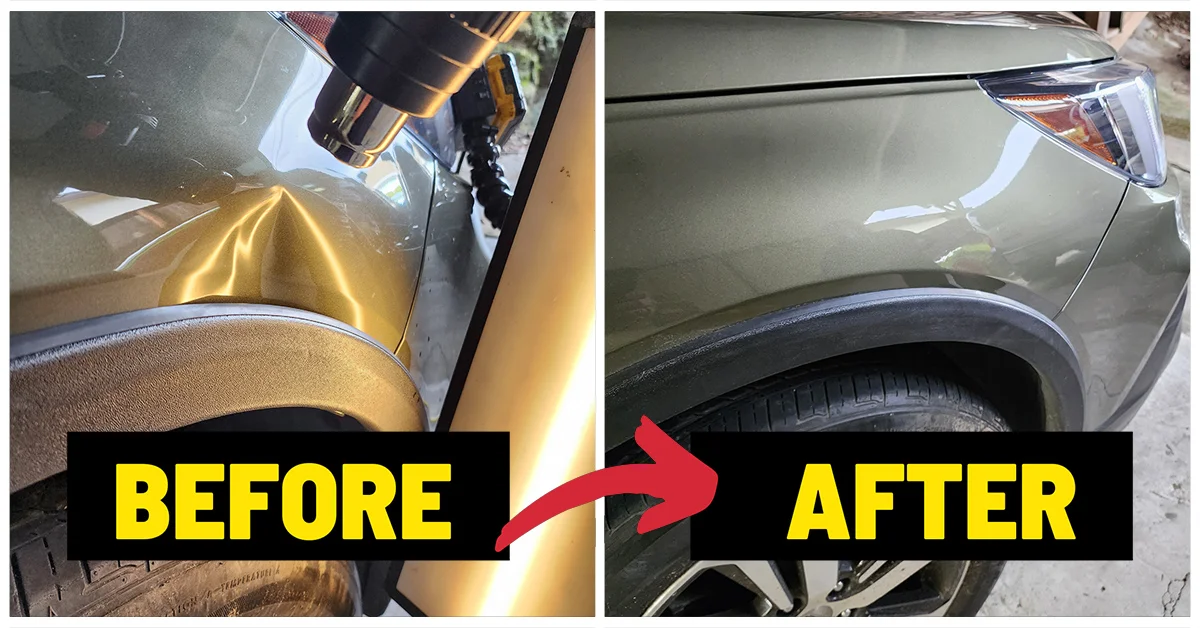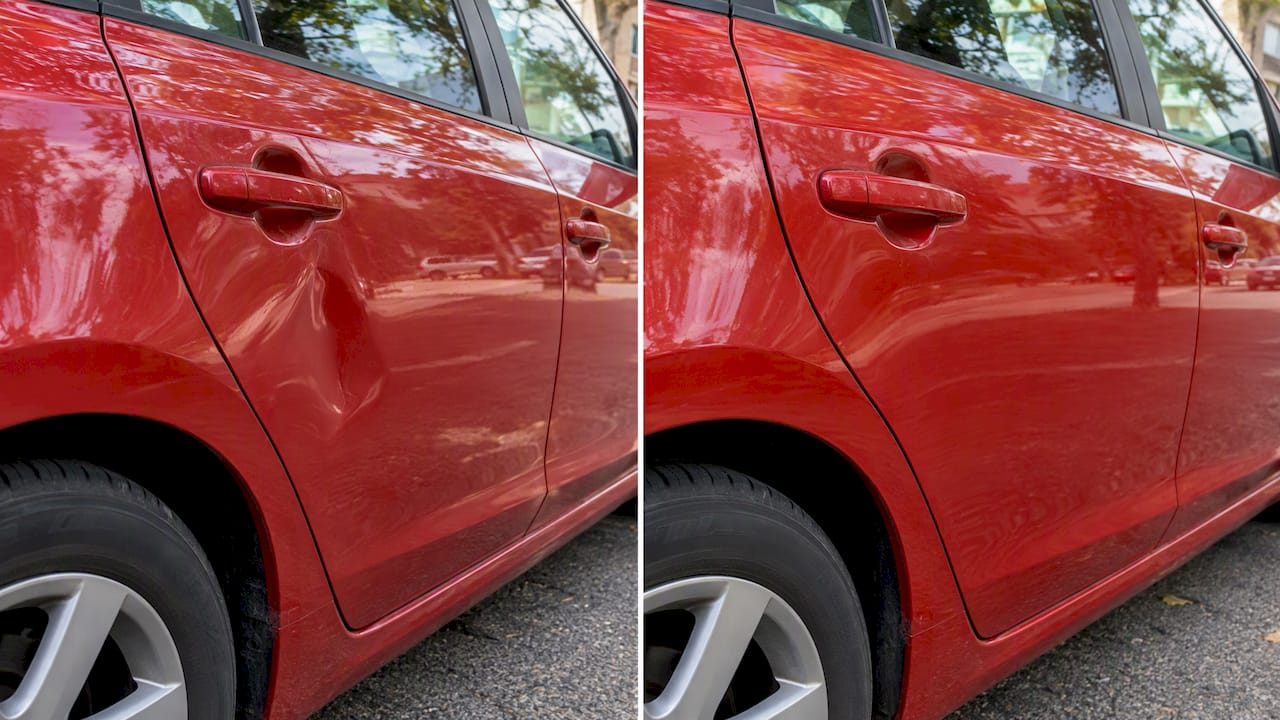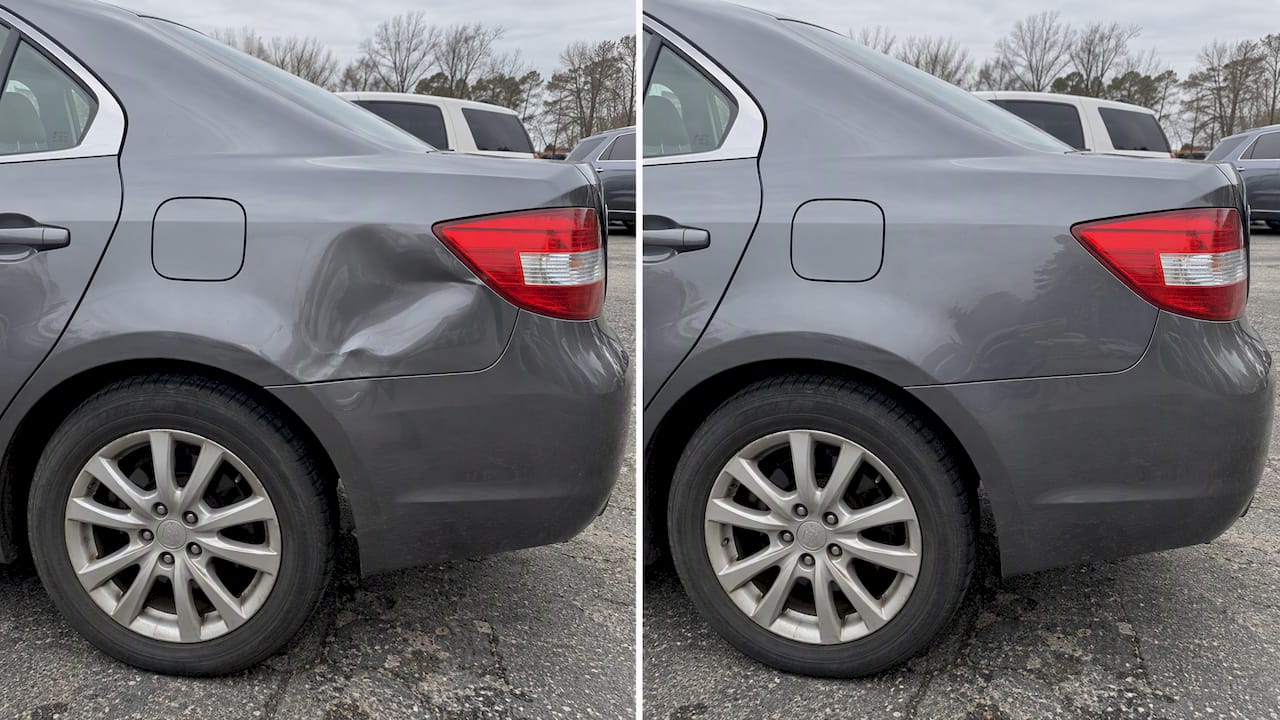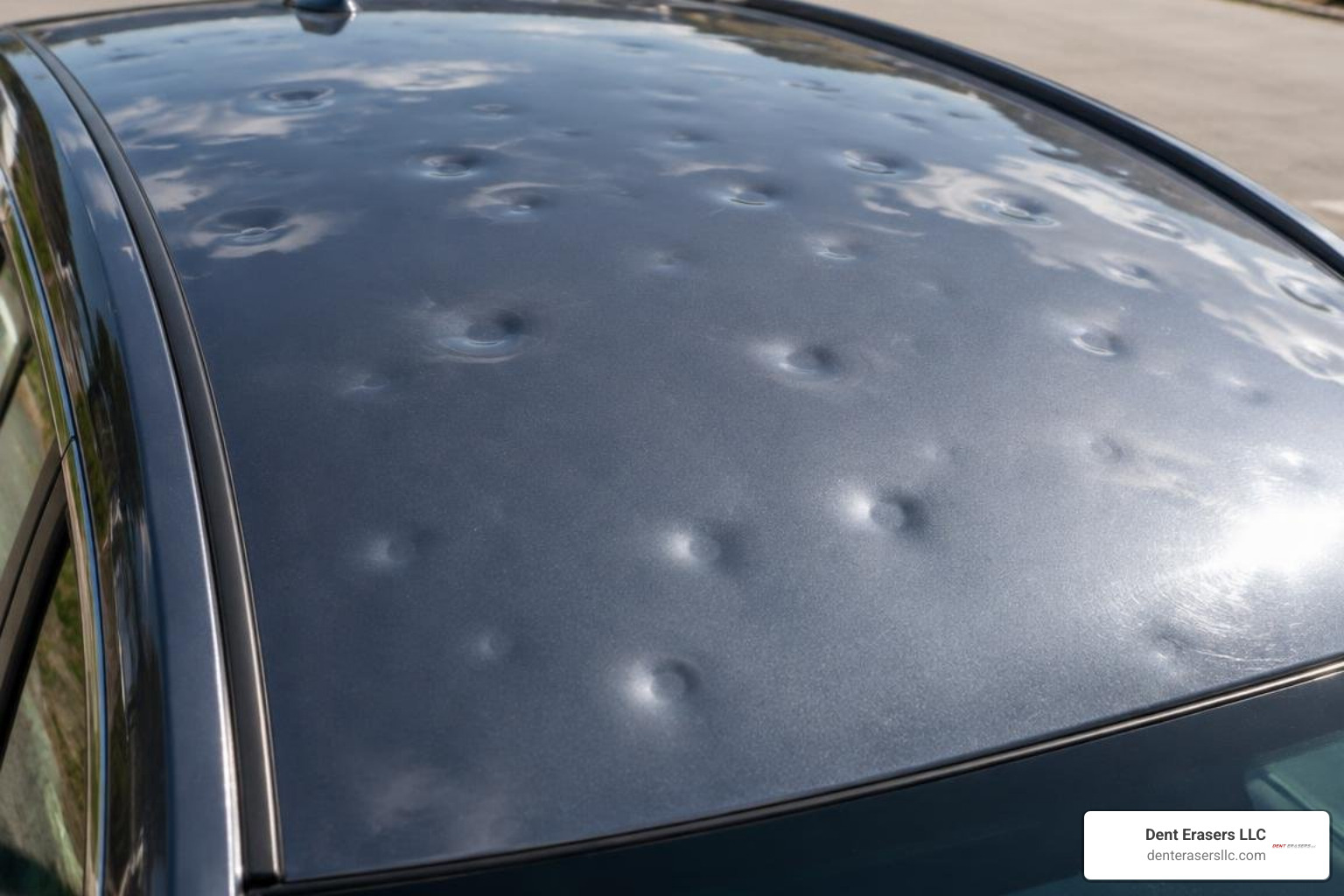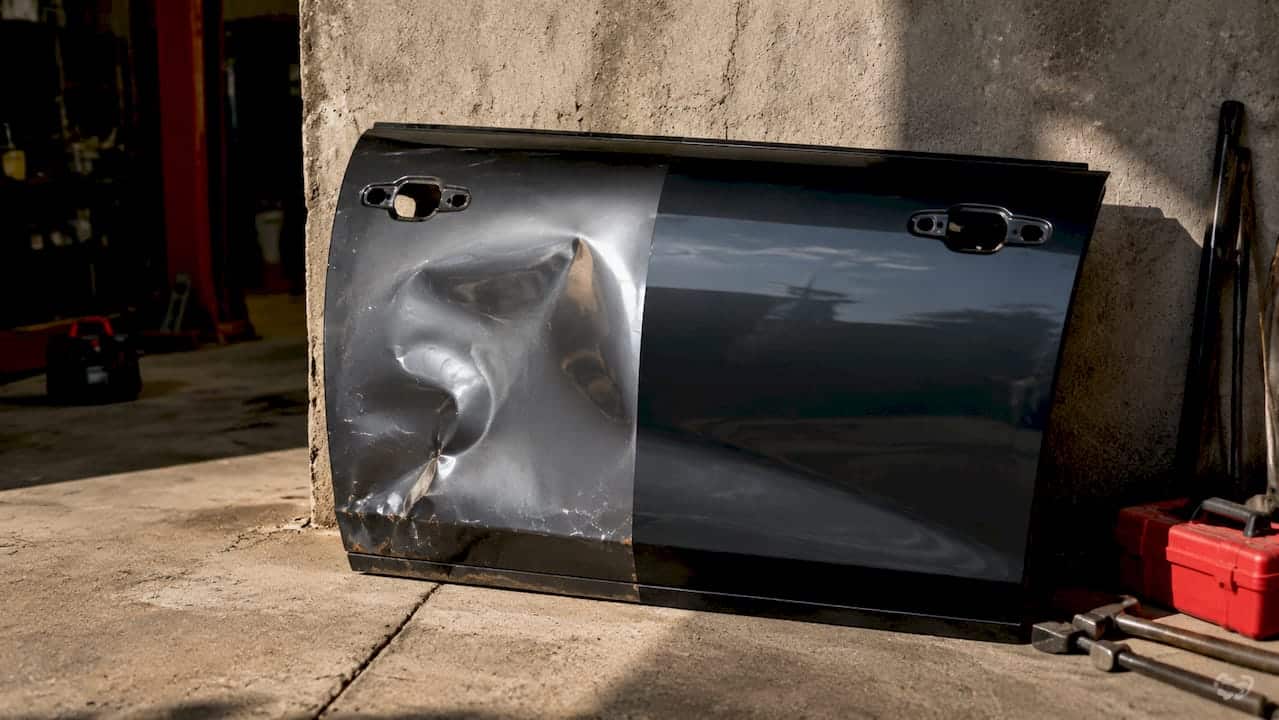
Paint cracking around dents is defined as the fracturing of a vehicle’s clear coat and base coat layers when metal deforms under impact or improper repair pressure. Left untreated, even a small dent can compromise your paint’s protective barrier, allowing moisture and road salt to reach bare metal. Rust can begin forming within days or weeks once the clear coat is breached. The good news is that you can prevent paint cracking around dents with the right assessment, preparation, and repair approach.
How to prevent paint cracking around dents: assess your dent first
The single most important step is knowing whether your paint is still intact before you touch the dent. Approximately 80–90% of automotive dents qualify for paintless dent repair (PDR) when the paint shows no chips or cracks. That statistic matters because PDR preserves your factory finish completely, while conventional repair requires sanding and refinishing that introduces new cracking risk.
Signs your paint is intact
- The dent surface feels smooth with no rough or flaking edges
- Color is consistent with no white or gray stress marks
- No visible chips, spiderweb cracks, or lifted clear coat
- The dent has a gradual, rounded shape rather than a sharp crease
Signs your paint is already compromised
- Visible hairline cracks radiating from the dent center
- Chipped or missing paint exposing primer or bare metal
- A chalky or cloudy appearance around the impact zone
- Sharp creases where metal has folded rather than flexed
OEM guidelines specify that micro-cracking in the clear coat disqualifies a dent from PDR. When micro-cracks are present, conventional repair including sanding and refinishing is required. Skipping this assessment and forcing PDR on compromised paint causes further cracking and peeling.
Pro Tip: Run your fingernail lightly across the dent edge in good natural light. If you feel or see any roughness, take the vehicle to a professional for a proper paint inspection before any repair attempt.
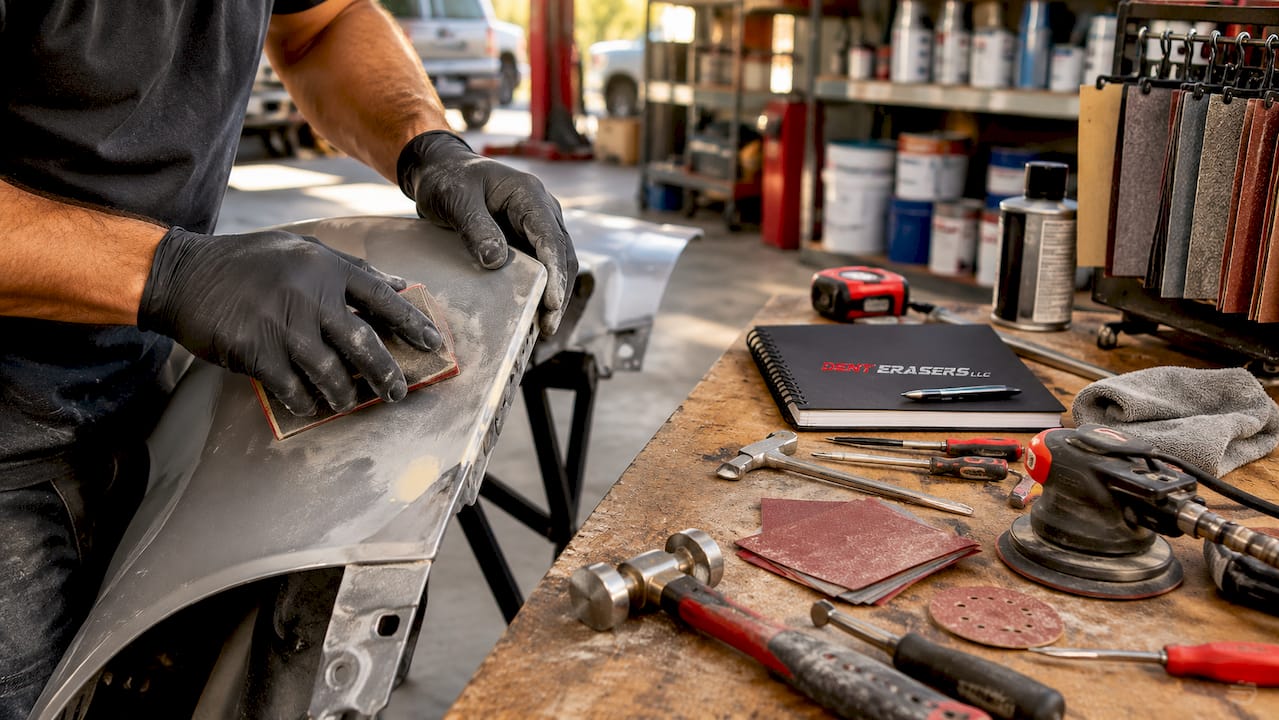
Surface prep steps that stop paint from cracking during repair
Proper surface preparation is the most overlooked factor in preventing paint damage. Skipping prep is the leading cause of paint flaking and cracking after a repair.
- Wash and degrease the panel. Use a pH-neutral automotive soap and a clean microfiber cloth. Road grime and wax residue prevent adhesion and hide micro-cracks.
- Inspect under bright light or a paint inspection lamp. Angle the light across the surface to reveal any stress marks invisible in flat lighting.
- Sand only if refinishing is required. Use 400-grit wet sandpaper on damaged areas, feathering edges outward at least two inches beyond the damage zone. Never sand over intact paint you plan to preserve.
- Apply a self-etching primer to bare metal. Primer seals exposed metal and creates a bonding layer for new paint. Skipping primer causes paint to lift within weeks.
- Allow full drying time between coats. Rushing layers traps solvents, which causes bubbling and cracking as the paint cures. Follow the paint manufacturer’s specified flash time between coats.
- Never paint over cracked paint. Cracked paint must be removed before refinishing. Painting over it locks in the damage and guarantees the new coat will crack in the same spots.
Pro Tip: Temperature matters more than most car owners realize. Apply paint and primer only when ambient temperature is between 60°F and 80°F. Cold paint becomes brittle; heat causes it to dry too fast and crack.
What repair techniques actually fix dents without cracking paint?
Paintless dent repair is the gold standard for maintaining paint after dents when conditions allow it. PDR technicians use specialized metal rods and picks to massage the metal back from behind the panel, restoring its original shape without touching the paint surface at all. The result is a factory finish with zero refinishing risk.
- PDR works best on: shallow, rounded dents with intact paint on steel panels
- PDR does not work on: sharp creases, dents with cracked or chipped paint, or severely work-hardened metal
- Tap-down technique: Controlled tapping from the front of the panel balances metal tension while the technician pushes from behind, preventing paint stress and cracking
- Heat induction: Magnetic induction heating applied to metal at 140–170°F softens aluminum and high-strength steel panels, reducing the force needed and lowering paint fracture risk
Modern automotive paint is flexible but not elastic. Sharp creases cause brittleness in the paint film, and forcing the metal back too aggressively will crack the paint regardless of the technician’s skill. This is why professional evaluation of crease depth and paint condition is non-negotiable before any repair begins.
“The key to fixing dents without cracking paint is managing metal tension gradually and deliberately. Rushing the process, whether with a DIY suction cup kit or an undertrained technician, transfers stress directly to the paint film. Once that film cracks, you’ve turned a simple PDR job into a full refinish.”
DIY dent repair kits carry real risk. Suction cups and bridge pullers apply uneven force that can crack paint at the dent edge. If your paint is intact and the dent qualifies for PDR, a skilled PDR technician is always the safer choice.
Post-repair care to maintain paint health around repaired areas
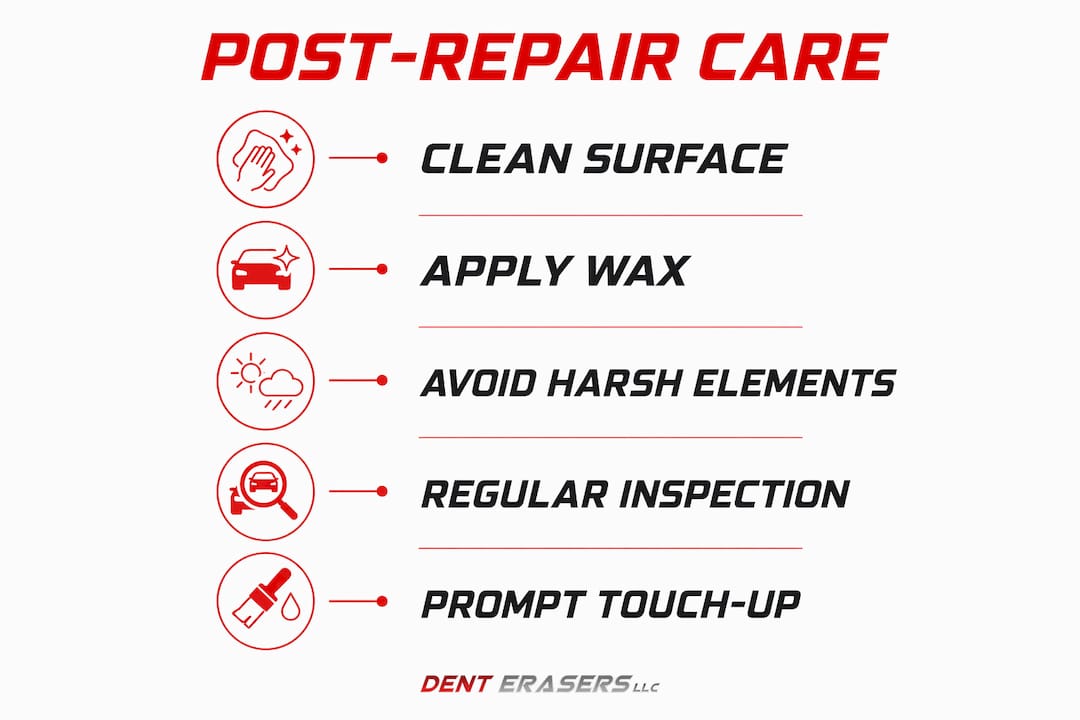
Protecting your paint after repair is just as important as the repair itself. Repaired areas are temporarily more vulnerable, especially in the first 30 days.
- Keep the repaired panel dry for at least 48 hours after any refinishing work to allow full paint cure
- Avoid automatic car washes with stiff brushes for 30 days post-repair; hand wash with a microfiber mitt instead
- Apply a paint sealant or carnauba wax over the repaired area after 30 days to seal the surface against moisture and road salt
- Inspect the area monthly for early signs of cracking, bubbling, or rust spots, especially along panel edges
- Avoid harsh chemical cleaners like degreasers or solvent-based products near the repaired zone
- Address any new chips immediately. A small chip left untreated can allow moisture under the paint, causing the surrounding paint to lift and crack outward
Good car maintenance practices extend the life of any repair significantly. Regular waxing and prompt attention to new paint damage are the two most effective long-term strategies for keeping repaired panels looking factory fresh.
Key takeaways
Preventing paint cracking around dents requires early assessment, correct repair method selection, and consistent post-repair care to protect your vehicle’s factory finish.
| Point | Details |
|---|---|
| Assess paint condition first | Check for micro-cracks or chips before choosing PDR or conventional repair. |
| PDR preserves factory finish | Up to 80–90% of dents qualify for PDR when paint is fully intact. |
| Prep prevents cracking | Proper cleaning, priming, and drying between coats stops paint from lifting or cracking. |
| Heat and tension control matter | Induction heating and tap-down techniques reduce paint stress during professional repair. |
| Post-repair care extends results | Sealants, gentle washing, and monthly inspections protect repaired areas long-term. |
What I’ve learned about paint cracking after years in the field
After years of repairing dents across Contra Costa County, the pattern I see most often is this: car owners wait. They see a small dent, figure it’s cosmetic, and decide to deal with it later. By the time they call, the clear coat has micro-cracked, moisture has gotten underneath, and what was a $150 PDR job has become a $600 refinish.
Early intervention is the single most effective strategy for protecting factory paint. The longer a dent sits, the more the paint film around it fatigues from temperature cycling and UV exposure.
I’ve also found that older and darker paint colors crack far more easily during repair. Dark metallic paints absorb more heat, which makes the clear coat brittle over time. On a ten-year-old black sedan, I approach every dent with more caution than I would on a three-year-old white crossover. Understanding your vehicle’s paint age and color is not just trivia. It directly changes how aggressively a technician can work the metal.
The uncomfortable truth is that no repair method is zero-risk. PDR done well on the right dent is as close to risk-free as you can get. But the moment someone skips the assessment step, the odds of cracking go up sharply. My advice: get eyes on the dent within the first week, and let a professional tell you what you’re actually dealing with.
— Brian Blanc
Professional dent repair that protects your vehicle’s paint
When a dent puts your paint at risk, the repair method you choose determines whether your factory finish survives.

Denterasersllc provides mobile paintless dent repair and auto body services across Contra Costa County, bringing professional-grade tools directly to your location. Whether you need plastic bumper repair that keeps your bumper’s finish intact, or specialty dent repair for luxury, vintage, or motorcycle vehicles, the team at Denterasersllc evaluates paint condition before touching the metal. You get an honest assessment, the right repair method, and results that hold up. Contact Denterasersllc for an inspection or estimate and protect your paint before a small dent becomes a bigger problem.
FAQ
What causes paint to crack around a dent?
Paint cracks around dents when the clear coat or base coat is stressed beyond its flexibility limit, either by the initial impact or by improper repair pressure. Micro-cracks in the clear coat allow moisture to penetrate, accelerating the damage.
Can paintless dent repair cause paint to crack?
PDR does not crack paint when performed correctly on intact paint by a trained technician. The risk increases significantly on older, darker, or already micro-cracked paint surfaces.
How soon should I repair a dent to avoid paint damage?
Repair a dent as soon as possible, ideally within the first week. Rust can begin forming within days once the clear coat is compromised by moisture or road salt.
Does DIY dent repair damage paint?
DIY suction and bridge puller kits apply uneven force that frequently cracks paint at the dent edge. Professional PDR tools and techniques distribute pressure gradually to avoid paint stress.
How do I know if my dent qualifies for PDR?
A dent qualifies for PDR when the paint shows no chips, cracks, or micro-fractures and the metal has not creased sharply. A professional inspection is the most reliable way to confirm eligibility before any repair begins.