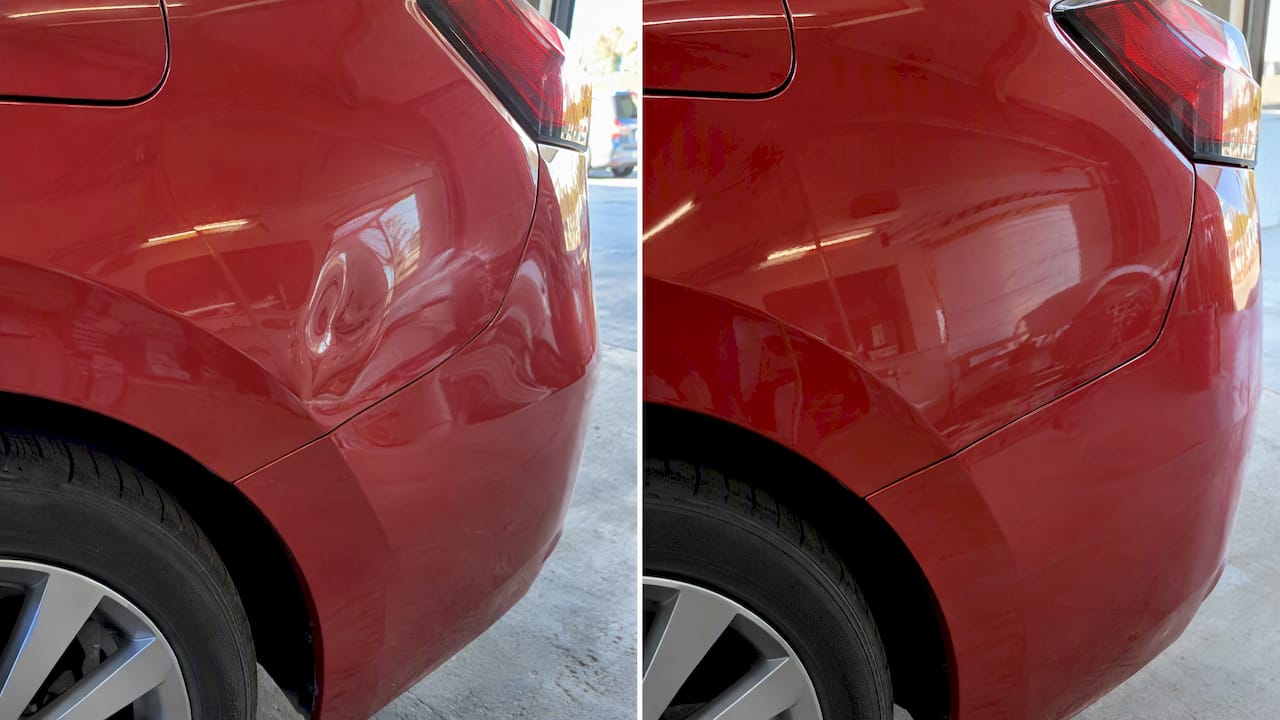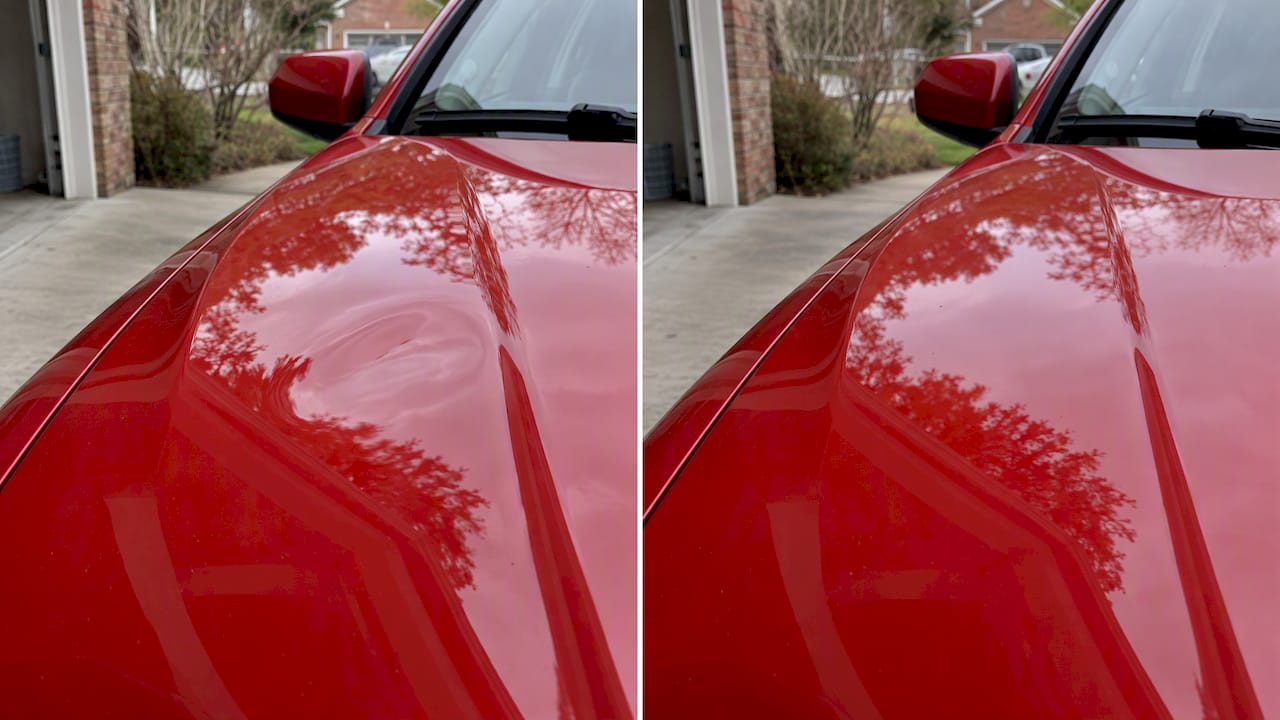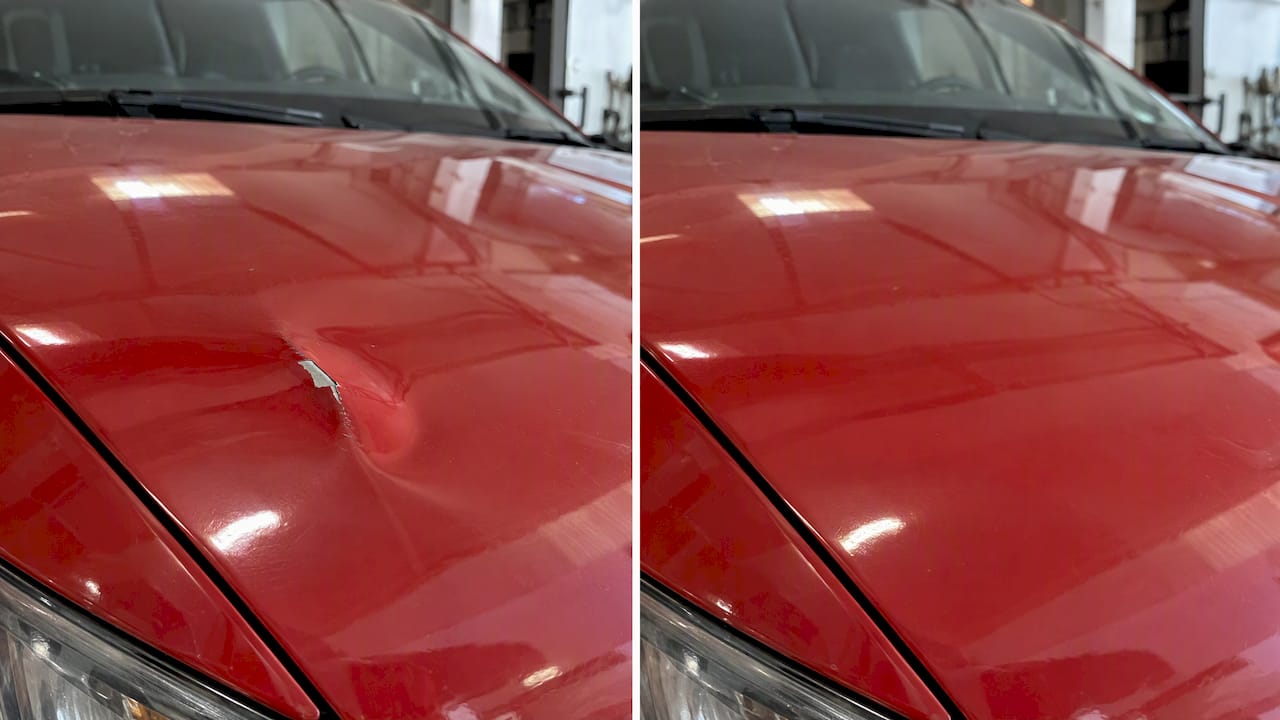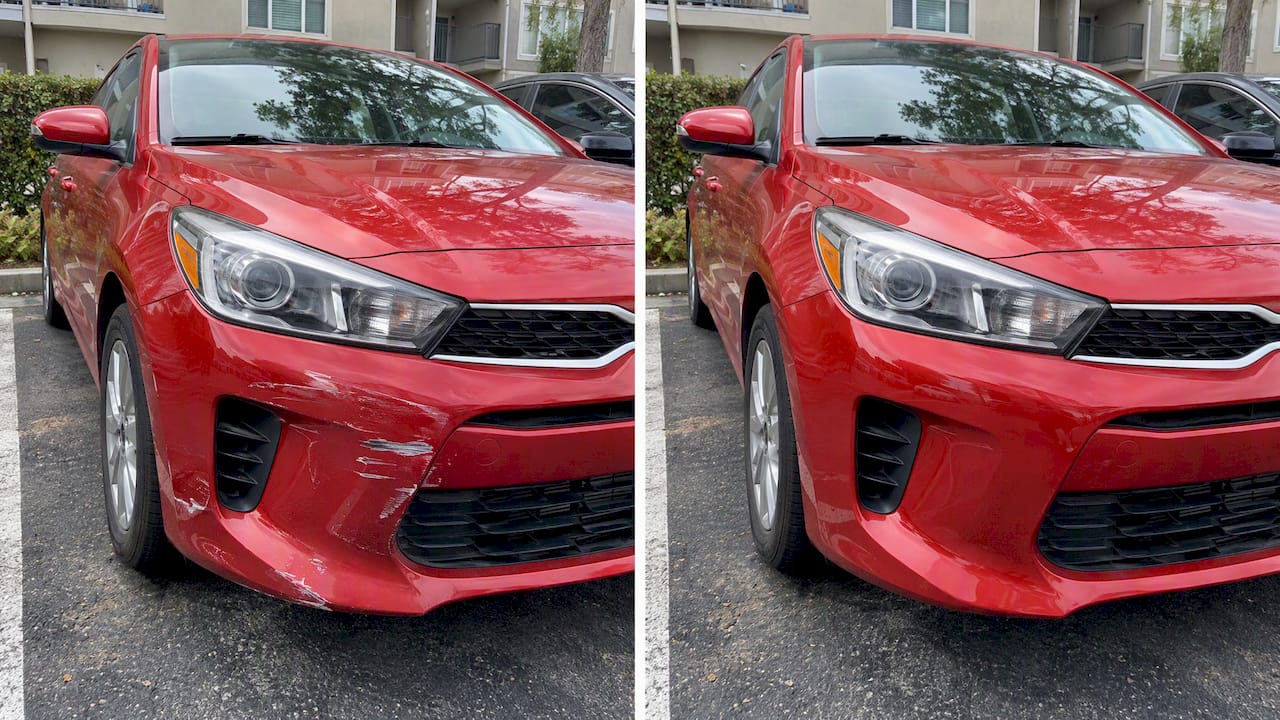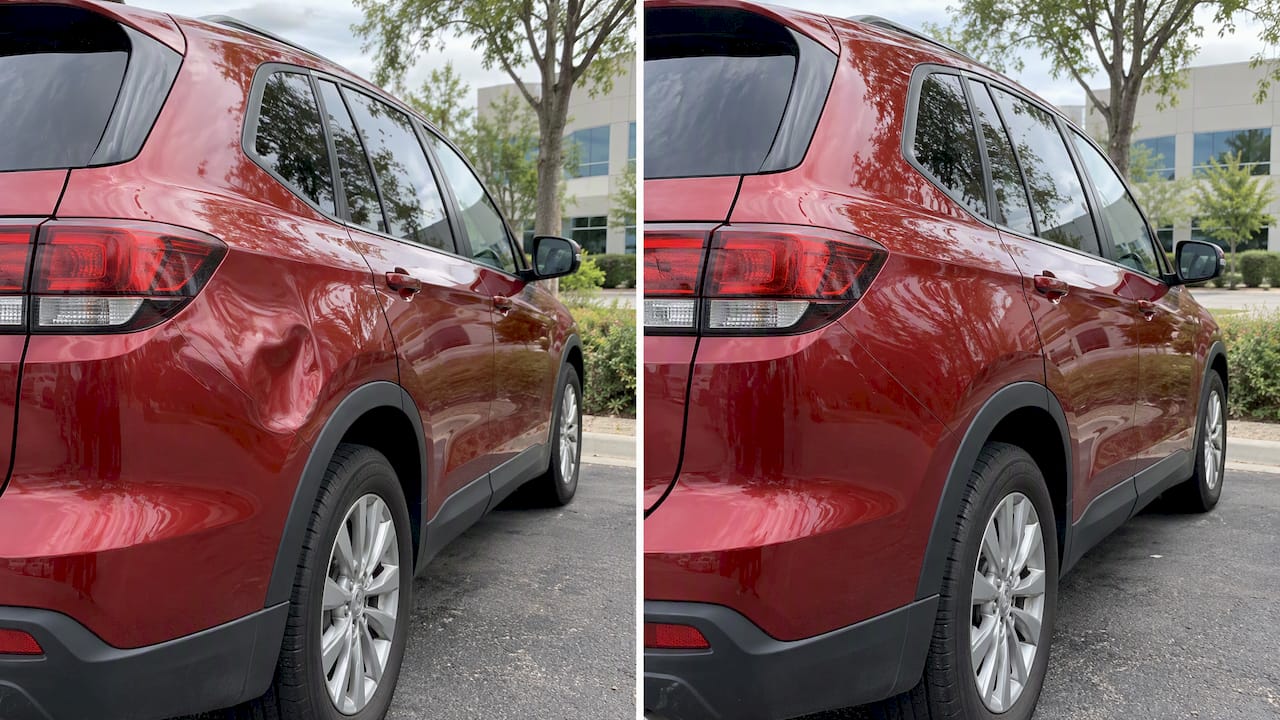
Mobile collision repair works best for cosmetic damage: dents with intact paint, scuffed or cracked plastic bumpers, and minor panel damage. A technician comes to your home or workplace and fixes it there. Structural damage, sensor-related repairs and heavy paint work still belong in a shop. This guide sorts your options so you know which path fits your car before you book.
TL;DR
- Mobile repair suits paint-intact dents, minor panel damage and plastic bumper repair. Structural or sensor-related damage needs a shop.
- Paintless dent repair (PDR) keeps your factory finish. Our published ranges are $100 to $500 for minor dents and $150 to $1,500 for large dents.
- Your insurer’s estimate is a benchmark, and you can choose your own repair provider.
- Luxury, vintage and leased vehicles need a method matched to the panel, the finish and the lease terms.
Table of Contents
- What mobile collision repair includes
- Paintless dent repair vs. mobile body repair
- Damage a mobile technician can usually handle
- When the damage needs a shop
- What mobile repair costs and how long it takes
- How insurance works with mobile repair
- Luxury, vintage and leased vehicles
- Our perspective
- Get a quote for on-site repair
- FAQ
- Sources
What mobile collision repair includes
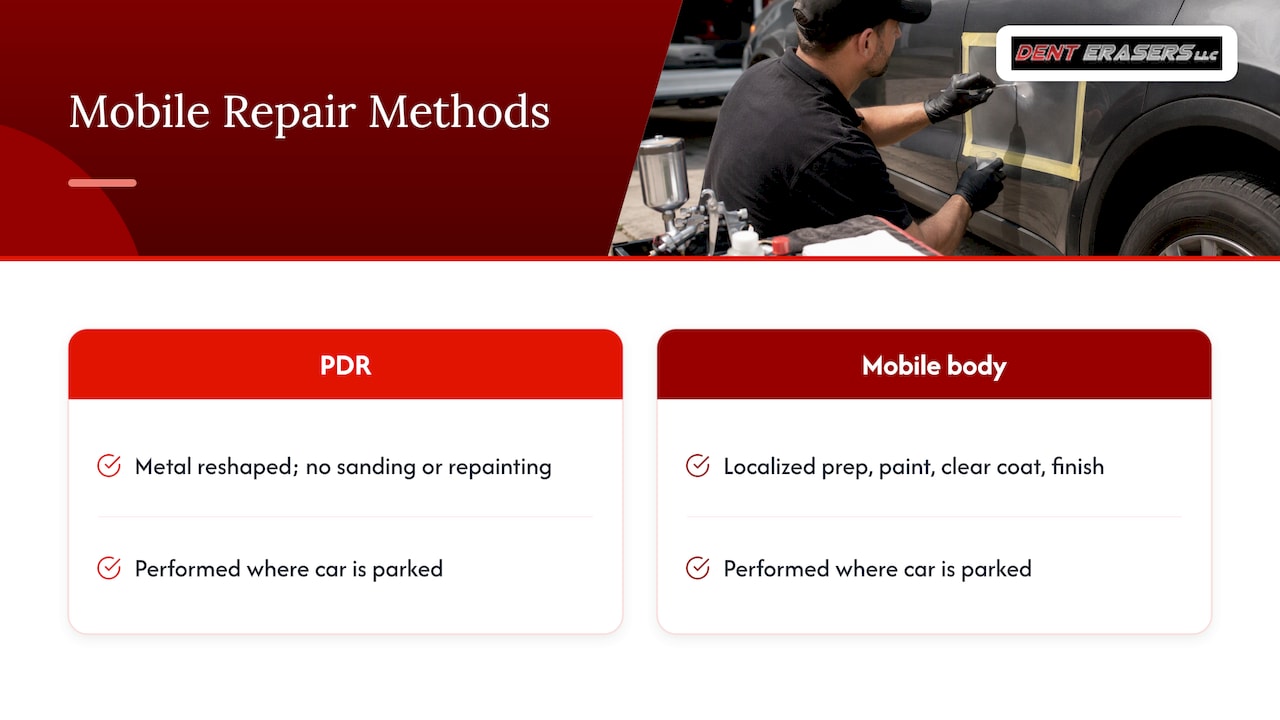
The term covers two kinds of work. The first is paintless dent repair, where a technician reshapes the metal without sanding or repainting. The second is conventional mobile body repair, which handles localized preparation, paint, clear coat and finishing for cosmetic damage. Both happen where your car is parked, so you skip the drop-off, the rental car and the days without a vehicle.
There is a clear limit. Capital One’s guide to mobile car services notes that paint work, accident restoration and jobs needing bulky equipment, such as alignment, generally need a shop. The practical question is not “mobile or shop” in general. It is which kind of damage your car has.
The same logic applies to routine car care. If you only need maintenance, mobile mechanic services show how much can be done at a vehicle’s location, from batteries to brakes. Collision work is where the equipment gap shows up.
Paintless dent repair vs. mobile body repair
The table below shows how the two approaches differ.
| Paintless dent repair | Conventional mobile body repair | |
|---|---|---|
| What happens | Metal is pushed, massaged or pulled back into shape | Area is prepped, painted, clear coated and finished |
| Paint | Original factory finish stays | New paint is applied locally |
| Best for | Door dings, hail, rock and door-impact dents | Scrapes, scratches, cosmetic paint damage |
| Not suited to | Cracked paint, stretched metal, sharp creases | Structural and heavy collision damage |
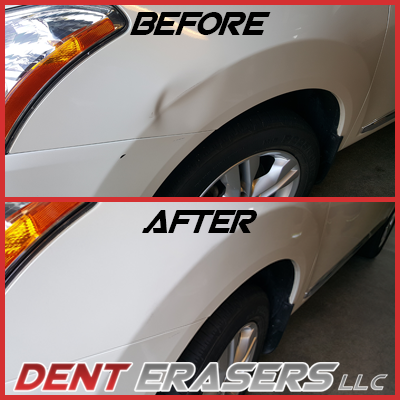
According to Capital One’s PDR explainer, PDR technicians work the metal back into shape without sanding, painting or replacing the panel. It is commonly used for minor dings on accessible hood, trunk, roof, door and fender panels. The same guide says stretched metal, creases or cracked paint can rule PDR out.
AAA adds that small hail dents and dings that leave the paint intact are cosmetic and can generally be corrected without damaging the paint. It also says chipped paint needs preparation and repainting to prevent rust.
Want the basics of the method? Our guide to the benefits of paintless dent repair walks through it, and this comparison with traditional methods explains when each wins.
Damage a mobile technician can usually handle
You are most likely a good mobile candidate if your damage looks like one of these:
- A door ding or parking-lot dent where the paint is not cracked.
- Hail damage with intact paint.
- A shallow crease-free dent on a hood, roof, trunk lid or fender.
- A scuffed, scraped or cracked plastic bumper cover. See our plastic bumper repair service.
- A larger dent that is accessible from behind the panel. See large dent repair.
A photo estimate often tells a technician most of what they need. Send clear photos in daylight from several angles, then confirm in person. Our mobile auto body repair estimate guide explains what to include.
When the damage needs a shop
Some damage should go to a full collision facility, and knowing the signs saves you a wasted appointment.
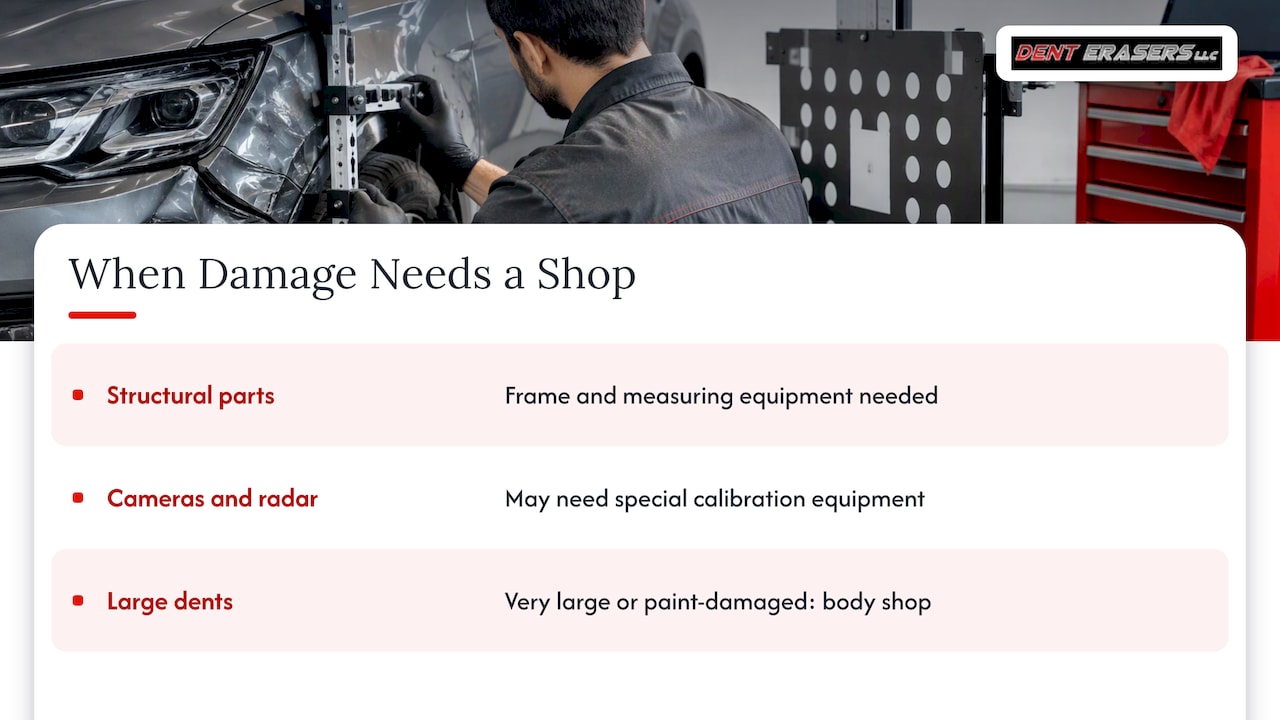
Structural damage. Industry guidance defines structural damage as anything beyond minor cosmetic abrasions to welded, riveted or bonded unibody parts, bumper reinforcements, door intrusion beams or bolt-on front bulkheads. If the impact reached any of those, the car needs a shop with frame and measuring equipment.
Sensors and driver-assistance systems. Many modern cars carry cameras and radar in bumpers and behind the windshield. Consumer Reports says recalibration after crash repair may need special equipment and is best suited to a dealership. One automaker’s pre- and post-repair scan statement warns that collision repairs can damage cameras, sensors and control units without an obvious warning light. If your bumper hides sensors, ask before any repair what scanning or calibration your make requires.
Very large or paint-damaged dents. Synchrony’s repair guide says very large or paint-damaged dents generally need an auto-body shop, as may very deep dents if body damage is a concern.
Our own auto body and collision repair page lists what we handle on site. A good technician will tell you honestly which side of the line your car falls on.
What mobile repair costs and how long it takes
Cost depends on the vehicle, the location of the damage, its size and the provider. Our published ranges are:
| Service | Published price |
|---|---|
| Minor dent repair | $100-$500 |
| Paintless dent repair | $150-$500 |
| Large dent repair | $150-$1,500 |
Bumper, collision and specialty work is quoted per job, so ask for an estimate. Industry reporting cited by Capital One puts mobile repair services at roughly 20% to 30% less than traditional body shops on average, thanks to lower overhead. That is a general figure, not a quote for your car.
Turnaround follows the same logic as cost. A simple fender repair can take a few hours, while complex collision repairs can take several days, depending on the damage, equipment and weather, according to one industry write-up. Outdoor work also depends on light and dry conditions, so ask about a covered spot such as a garage or carport.
How insurance works with mobile repair
You do not have to use the shop your insurer suggests. The Insurance Information Institute says you may choose your own repair shop and get your own estimate rather than use a direct repair program shop.
A few points to know before you file:
- Report promptly. The III claims guide recommends notifying your insurer even when damage looks minor, and keeping organized records of claim communications and bills.
- Know which coverage applies. Collision coverage generally pays for damage from hitting an object or overturning, minus your deductible. Comprehensive covers causes such as hail, falling objects and vandalism.
- Treat the adjuster’s number as a starting point. The III calls the adjuster’s figure a benchmark. Compare it with your own repair estimate and negotiate if it looks too low.
- Watch the parts. Insurers cannot require only one type of replacement part, but you may owe the difference if you prefer a part that costs more than the policy or estimate allows, per the III.
If the repair costs less than your deductible, paying out of pocket for a dent repair may be simpler. We also offer insurance claim assistance through our specialty services.
Luxury, vintage and leased vehicles
These cars need extra checks before any on-site repair:
- Luxury and classic cars: Ask how the technician will work the specific panel. Aluminum, older steel and original paint all behave differently, and preserving a factory or period-correct finish matters to value.
- Leased vehicles: Read your lease for what counts as excess wear and what parts or methods are allowed. A dent repaired before return, with the original paint kept, is often cheaper than a charge at turn-in.
- Fleets: Repairs at your lot keep vehicles on the road. Our fleet dent repair page explains how we work with businesses in Contra Costa County.
Our perspective
After more than 27 years in dent repair, we have seen the same pattern. Most of the damage people worry about is cosmetic, and most of it does not need a shop visit, a rental car or a repaint.
That is why we built our business around mobile work. We come to your driveway or parking lot, look at the panel, and tell you straight whether paintless methods can restore it. When they can, your factory paint stays intact, the repair is quick, and the result is designed to be hard to spot.
We also treat luxury, vintage and motorcycle owners as a specialty, not an afterthought. Those vehicles deserve a technician who matches the method to the metal and finish. If damage goes beyond what we can fix on site, we say so up front. Our goal is a repair done right the first time.
Brian Blanc
Get a quote for on-site repair
If you are in Contra Costa County or nearby, we repair dents and bumper damage where you park. Send photos and we will tell you what is possible and what it should cost.
Get your free dent quote or learn more about our mobile dent repair service.
FAQ
Can mobile collision repair fix a bumper?
Often yes, for scuffs, scrapes and cracks in a plastic bumper cover. If the damage reaches the bumper reinforcement behind it, or the bumper hides sensors, a shop may be needed. Ask what scanning your vehicle requires after any bumper work.
Is paintless dent repair safe for my paint?
When the paint is intact, PDR is designed to keep the factory finish because nothing is sanded or repainted. Cracked paint or stretched metal can rule it out, so the technician should inspect the dent first.
Will my insurance cover a mobile repair?
You can generally choose your own repair provider, and coverage depends on your policy, the cause of damage and your deductible. Call your insurer promptly and compare their estimate with your own.
How long does a mobile repair take?
A simple dent or fender repair may take a few hours. Complex work can take several days. Weather and the size of the damage are the main factors.
Sources
- Capital One: mobile car services
- Capital One: paintless dent repair
- AAA: hail damage
- I-CAR: structural damage definition
- Consumer Reports: car repair shops
- Pre- and post-repair scan statement
- Synchrony: how car dents are repaired
- Collision repair turnaround
- III: direct repair programs
- III: how to file a claim
- III: collision and comprehensive coverage
- III: cost of repair