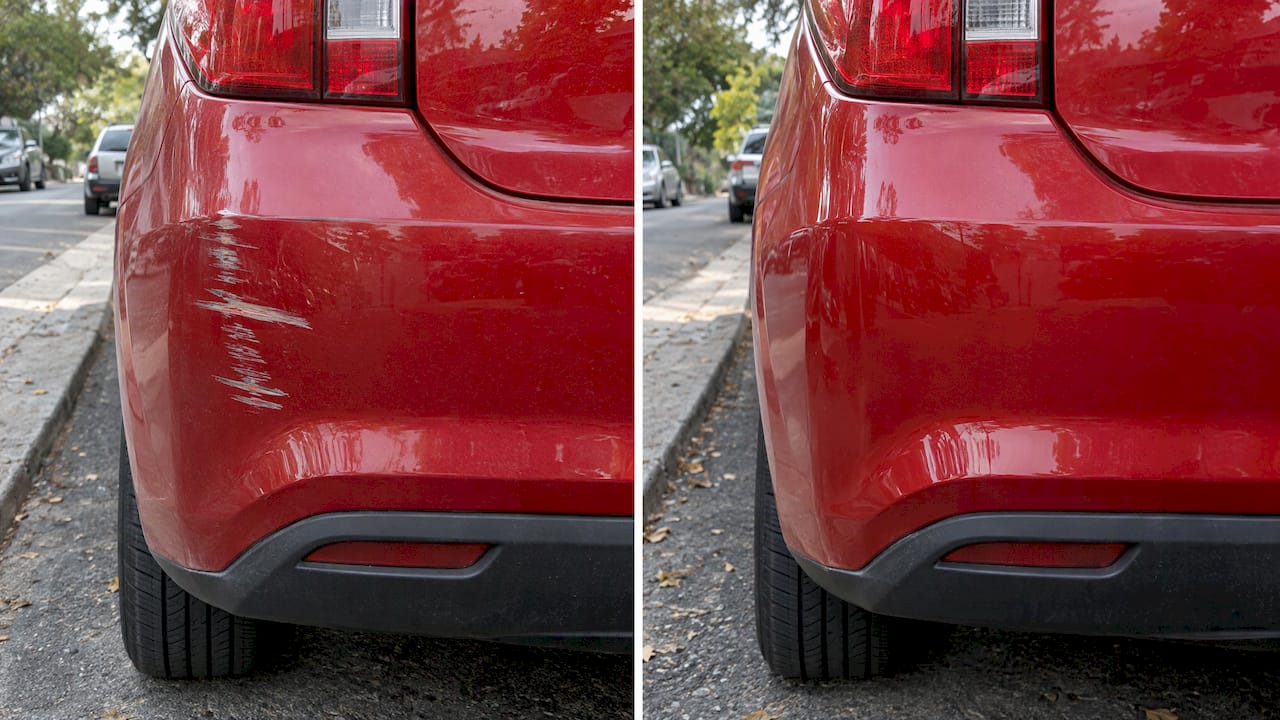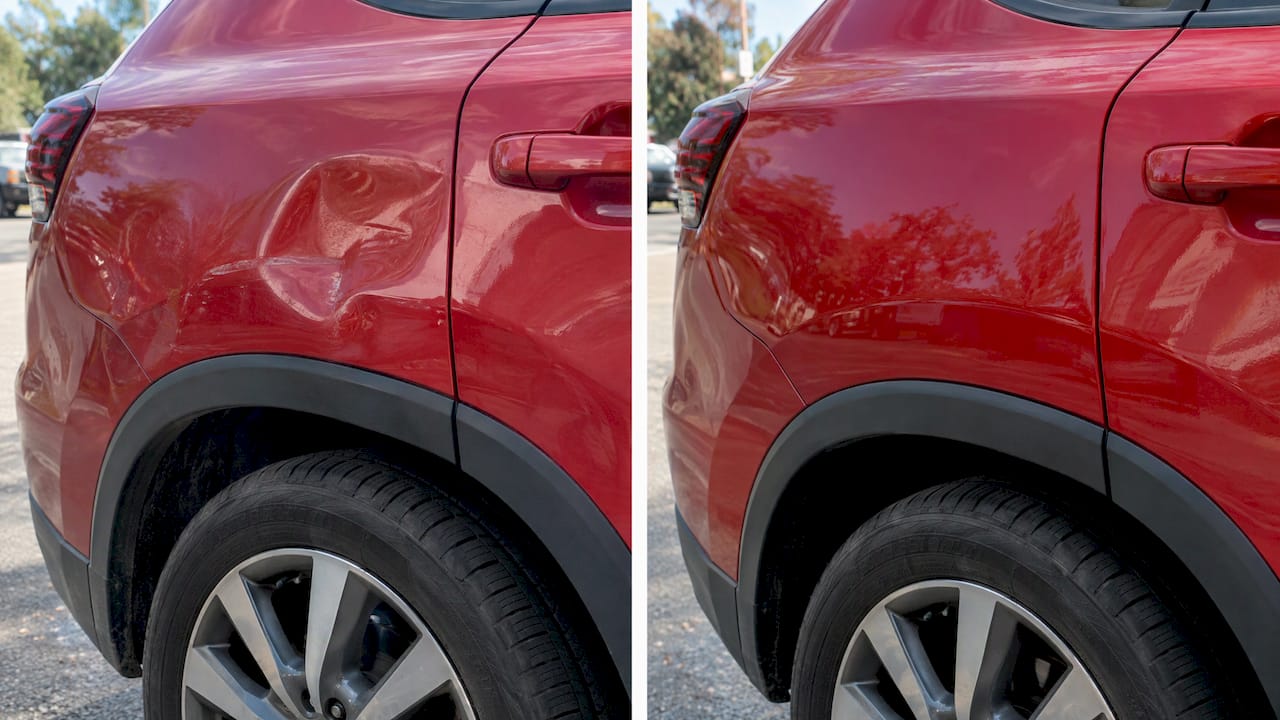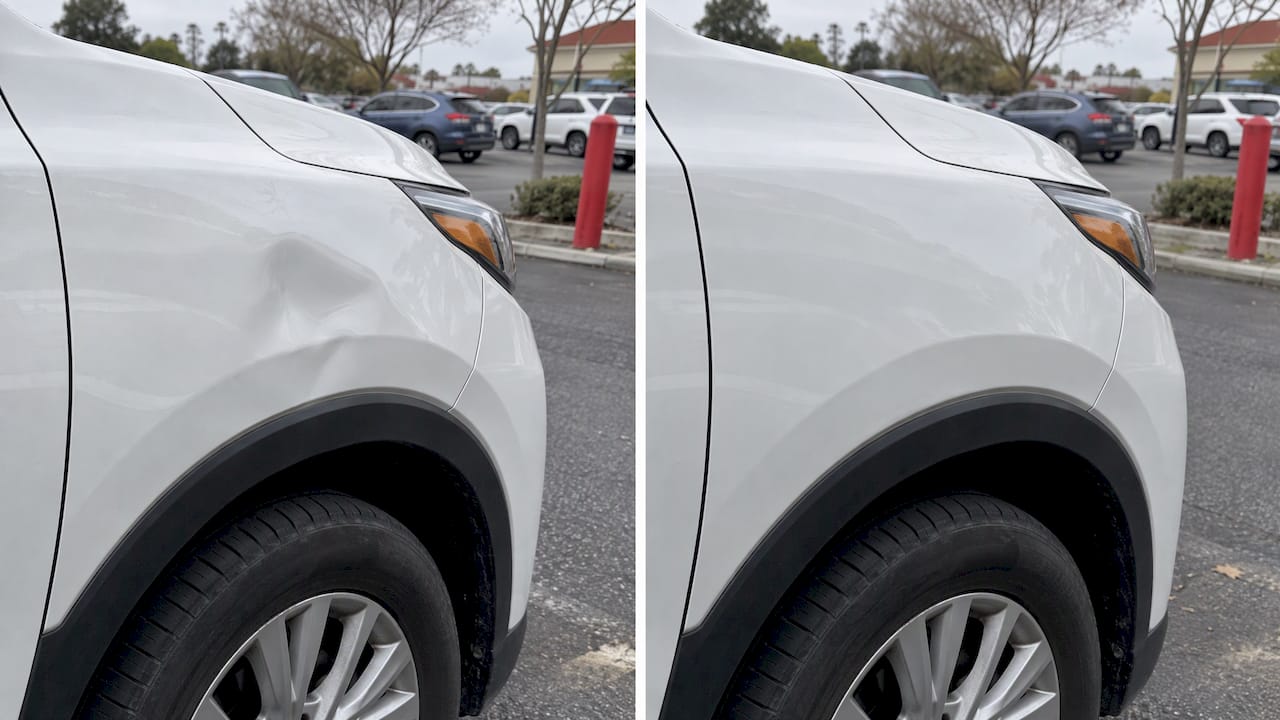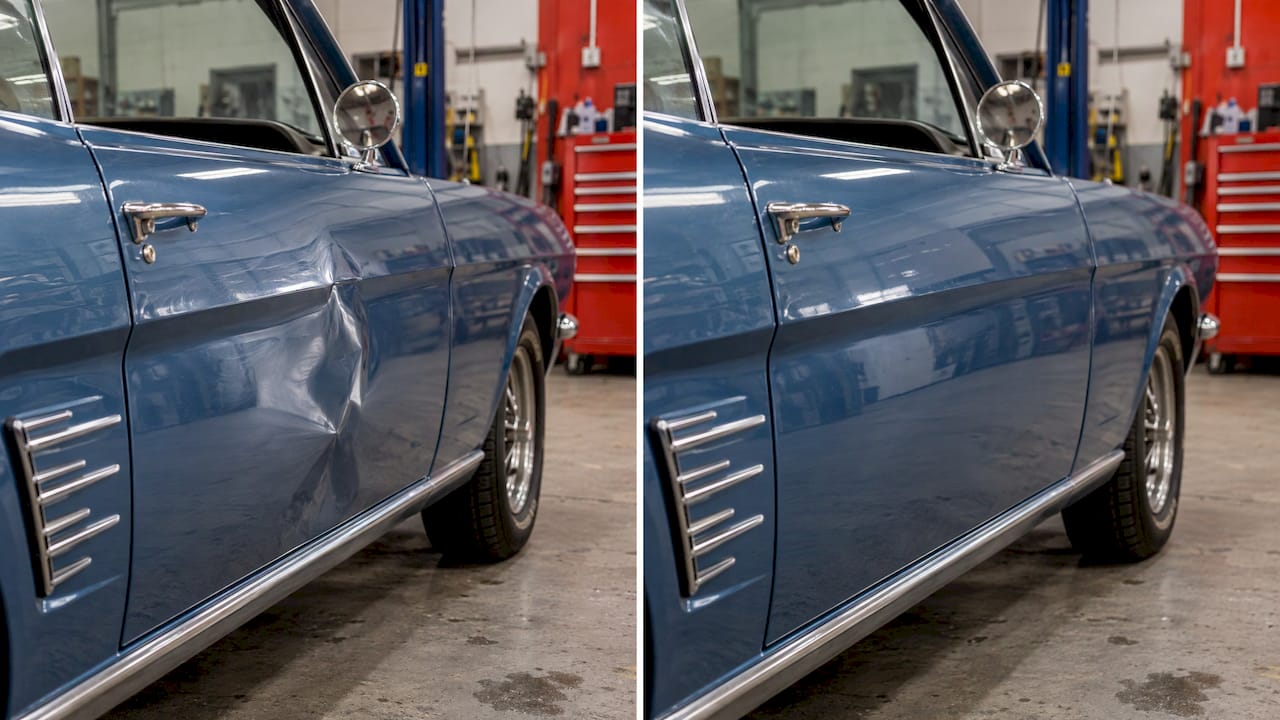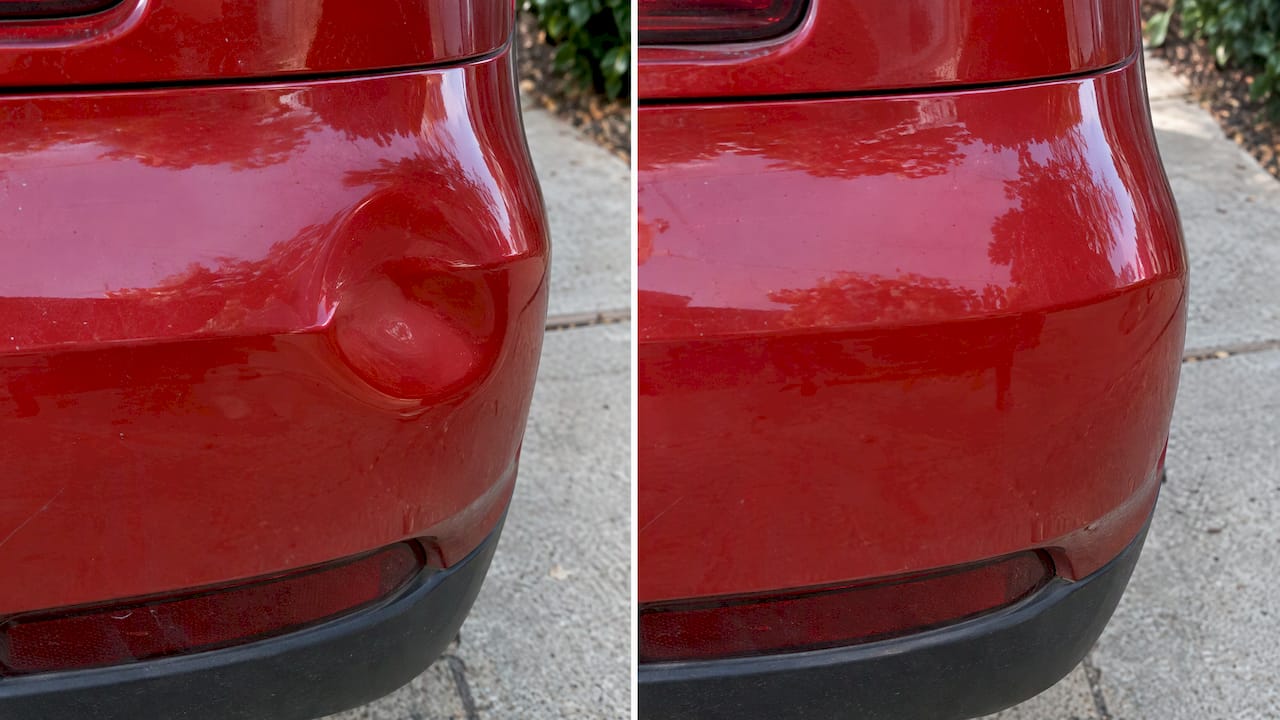
Many dents in a plastic bumper can come out without sanding, filler or a new paint job. It works when the paint is intact, the plastic is not cracked, and a technician can reach the back of the dent. Heat, patience and the right tools do the job. We bring that repair to your driveway or workplace, so you don’t have to leave the car at a shop for days.
Plastic behaves differently from sheet metal. It remembers its shape and wants to return to it, but only if it is warmed and pushed in a controlled way. Done well, the factory finish stays. Done badly, the bumper cracks or the paint blisters.
TL;DR
- A dent in a plastic bumper can often be removed without repainting if the paint is intact and the plastic has not cracked or stretched.
- The key step is controlled heat. Too little and the plastic will not move, too much and it turns brittle and can split.
- Cracks, tears, broken mounting tabs and damage around parking sensors or radar need a different repair or an inspection first.
- Onsite repair means the work happens where you park, which suits busy owners, fleets and lease returns.
- Our published dent repair ranges run from $100 to $1,500 depending on dent size. Bumper repair is quoted per vehicle.
Table of Contents
- Can a plastic bumper dent be removed without repainting?
- How the plastic bumper dent repair process works
- Why controlled heat matters
- When dent removal is not the right repair
- What onsite plastic bumper repair looks like
- Cost and turnaround
- Protect the bumper after the repair
- Book plastic bumper dent repair onsite
- Our view on bumper dents
- FAQ
- Sources
Can a plastic bumper dent be removed without repainting?
Often, yes. What decides it is the condition of the bumper, not just the size of the dent. These are the factors that matter:
- Paint condition. If the paint has not split, flaked or detached, there is nothing to refinish.
- Plastic condition. A dent that has not cracked, torn or been permanently stretched can usually be reshaped.
- Depth and sharpness. A broad, shallow dimple moves easily. A sharp crease is much harder to return to its shape.
- Access. A technician needs to reach behind the damaged area to push it back out.
- Bumper design. Textured finishes, thin covers and different plastics all react differently to heat.
A push-out repair is usually the first thing we look at for a clean dimple on a bumper cover. It is the same paintless approach we use on metal panels, adapted for plastic. You can read more on what works and when with PDR on a plastic bumper.
How the plastic bumper dent repair process works
The process is simple to describe and hard to do well.
1. Inspect the damage
The technician looks at the dent from the front and the back. They check the paint for hairline cracks, the plastic for stress marks or tears, and the mounting points for damage. This decides whether the repair is a push-out, a plastic repair or a replacement.
2. Warm the plastic evenly
When a bumper is dented, the plastic is stressed in the dent and in the area around it. Trade guidance from Fender Bender explains that all of that stress has to be released with the right amount of heat and pressure. The technician heats the dent plus roughly four to six inches around it. The heat source stays close and keeps moving, so the surface does not melt and the paint does not bubble.
3. Push the dent out
Once the plastic is pliable, pressure from behind (or a controlled pull from the front where access is limited) works the dent back toward its original contour. The work is gradual. Pushing hard on cold plastic is how bumpers crack.
4. Let it settle and check the finish
The plastic is allowed to cool in its restored shape. The technician then checks the surface under light for leftover low spots, creases or paint stress before the car goes back to you.
Why controlled heat matters
Heat is the whole trick, and it is also where repairs go wrong. Fender Bender warns that overheated plastic loses strength and flexibility and becomes more brittle after it cools. Working a dent in brittle plastic can crack and split it, which is worse than the original dent.
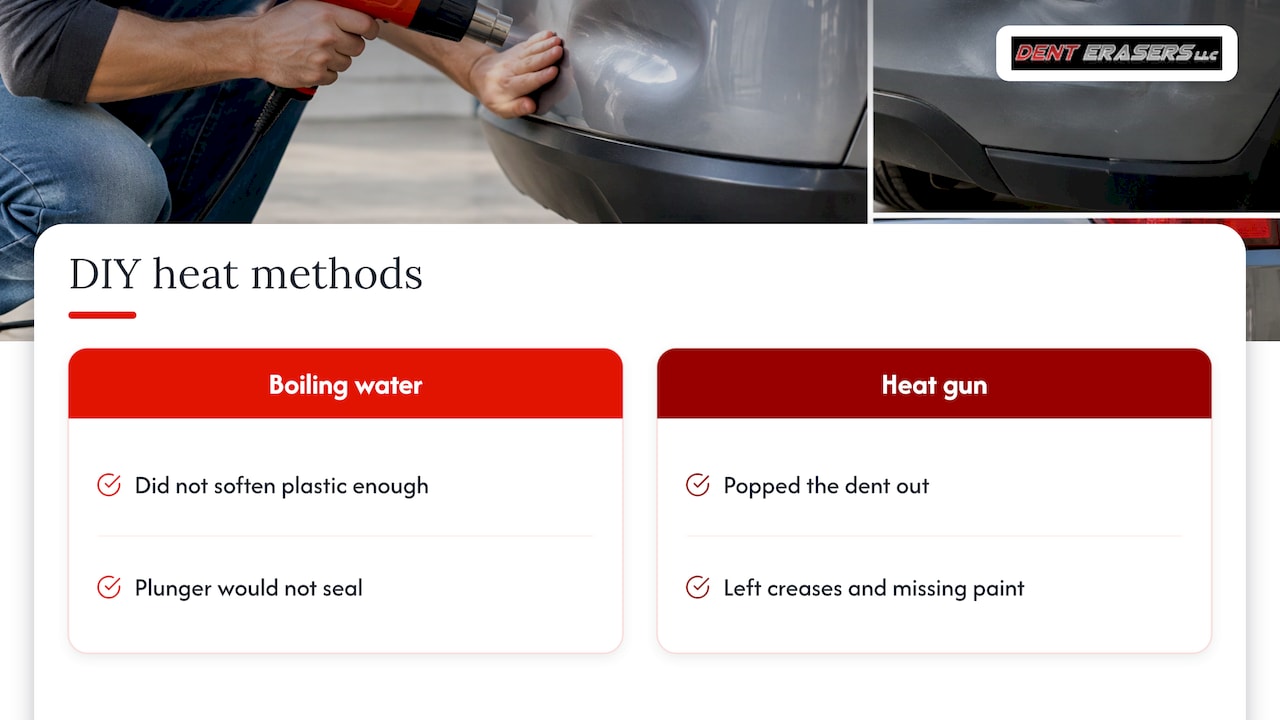
The popular boiling-water-and-plunger trick shows the same problem from the other side. Family Handyman tested it on a Toyota Sienna and found it did not work: the water did not soften the plastic enough and the plunger would not seal. A stronger heat-gun attempt did pop the dent out, but it left creases and missing paint. An I-CAR representative quoted in the same piece warned that attempts like this can make a proper repair harder.
If the dent is on a car you care about, a leased vehicle or a luxury model, a measured repair protects the finish you are paying to keep.
When dent removal is not the right repair
Some bumper damage needs more than a push-out. Know the signs before you book, so you can describe the damage accurately.
| Damage you see | What it usually means |
|---|---|
| Smooth dimple, paint intact | Good candidate for paintless dent removal |
| Sharp crease or stretched plastic | May need plastic repair and refinishing |
| Crack or tear through the plastic | A two-sided plastic repair, as 3M’s collision repair guidance describes it |
| Broken or missing mounting tab | Tab rebuild, or the bumper may otherwise need replacing |
| Split or lifted paint | Refinishing needed |
| Damage near sensors or radar | Check the manufacturer’s repair rules first |
Shallow scratches, bubbling and minor spider cracking that does not go through the plastic are classed by 3M as one-sided cosmetic repairs. Cracks and tears that penetrate the bumper are two-sided repairs. A broken tab does not always mean a new bumper either: our guides explain bumper tab repair with adhesive or plastic welding and how plastic welding compares with epoxy.
Sensors, radar and driver-assistance systems
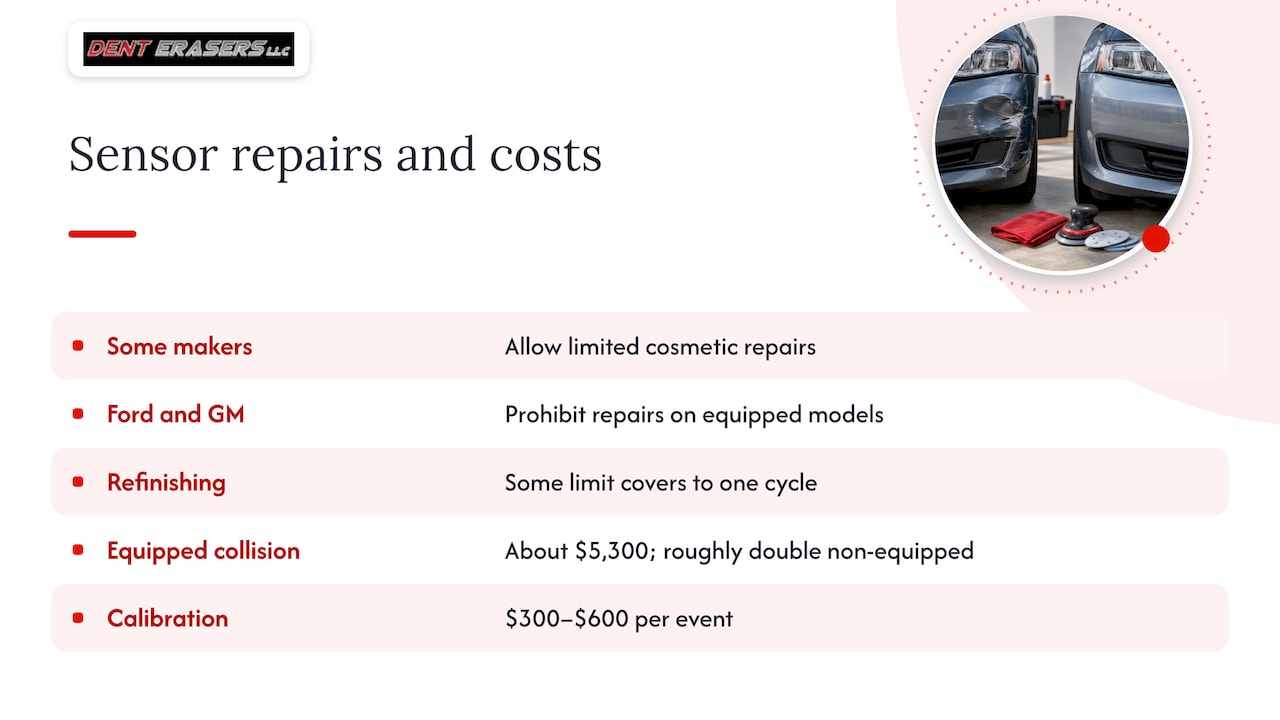
Newer cars often hide parking sensors or radar behind the bumper cover. According to Tomorrow’s Technician, some manufacturers allow limited cosmetic bumper repairs, while Ford and GM prohibit bumper cover repair on models with driver-assistance systems because of potential impact on radar performance. Some makers also limit a bumper cover to one refinishing cycle, since too many paint layers can interfere with radar.
That is a reason to tell us your make, model and where the dent sits when you ask for a quote. A paintless repair that leaves the original paint alone avoids adding paint layers, which is part of why it appeals on sensor-equipped cars. Check your owner’s manual or dealer for your manufacturer’s bumper repair rules.
Costs can climb quickly when systems are involved. Good Car Bad Car, citing AAA, reports that the average minor collision repair on a driver-assistance equipped vehicle is about $5,300, roughly double a non-equipped vehicle, with each calibration event running $300 to $600. Keeping a simple dent a simple dent is worth it.
What onsite plastic bumper repair looks like
A mobile repair removes the biggest hassle of bumper work: being without your car. We come to your home, office or lot in Contra Costa County and the surrounding area, and the repair is done where the car sits. For many owners that means a lunch break or a workday, not a rental car.
Onsite work suits:
- Dimples and dents where the bumper can be accessed from behind.
- Light plastic bumper repair on a cover that is still attached and sound.
- Fleets, where several vehicles can be done in one visit. See our fleet dent repair.
- Lease returns, where you want dents handled before inspection.
If an inspection shows the bumper needs shop-level work, such as a cracked cover or collision damage beyond the dent, our auto body and collision repair service covers that side of the job, so you stay with one provider.
Cost and turnaround
Our published ranges, as listed on our site, are:
- Minor dent repair: $100 to $500
- Paintless dent repair: $150 to $500
- Large dent repair: $150 to $1,500
Plastic bumper repair has no published price because the work depends on the damage, the plastic and the paint. Send photos for a quote on the plastic bumper repair page. Paintless repairs are typically faster than a refinish because there is no sanding, filler or curing time.
If you file an insurance claim, we offer insurance claim assistance, so you do not have to work through the paperwork alone.
Protect the bumper after the repair
Once your bumper is back in shape, protection keeps it that way. A clear film is one option for the areas that take the most scuffs, and this overview of pro paint protection film for rear bumpers explains what it does for a bumper’s finish.
Book plastic bumper dent repair onsite
We have more than 27 years of experience in dent repair, including luxury and vintage vehicles and motorcycles. Our repairs are mobile and paintless where the damage allows, which preserves your factory finish. Tell us what happened to the bumper, and we will say whether it is a push-out or needs more.
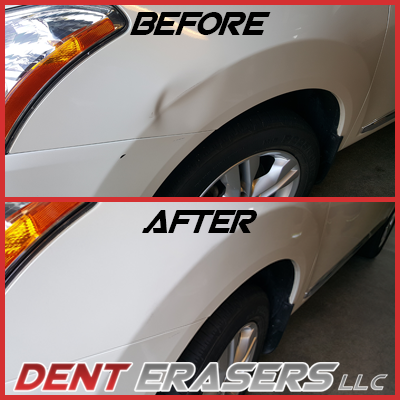
Start with a free dent quote or read about our mobile dent repair. For luxury and classic cars, see our specialty repairs.
Our view on bumper dents
Most bumper dents we see are not disasters. They are a parking lot nudge, a tight garage or a low curb. The mistake owners make is treating them as either nothing or a reason to replace the whole cover.
Our approach is to preserve what the factory gave you. Original paint is hard to match perfectly, and every refinish adds layers. When a dent can be worked out with controlled heat and patient pressure, that is the best result for the car and for your wallet.
When it cannot, we say so plainly and fix it properly, from plastic repair to full collision work. Doing it at your location saves you the trip and the downtime, and that is why we built our work around mobile service.
Brian Blanc
FAQ
Can you remove a dent from a plastic bumper without painting?
Yes, when the paint is intact and the plastic is not cracked or stretched. The technician warms the area and works the dent out from behind, so the factory paint stays. Cracks, tears and split paint need a different repair.
Does hot water fix a dent in a plastic bumper?
Not reliably. Family Handyman’s test of the hot-water-and-plunger method on a Toyota Sienna found it did not work. The water did not soften the plastic enough and the plunger would not seal. Controlled heat applied by a technician gives a far better result.
Can plastic bumper repair be done at my location?
Yes, for most dents and light bumper damage. We repair onsite in Contra Costa County and nearby areas. If the bumper is cracked or the damage is extensive, we will tell you after seeing photos or the car.
How much does plastic bumper dent repair cost?
Our published dent repair ranges are $100 to $500 for minor dents, $150 to $500 for paintless dent repair and $150 to $1,500 for large dents. Bumper repair is quoted per job. A free quote is the fastest way to get your number.
Sources
- Plastic Repair: Materials, Methods and Why it Matters, Tomorrow’s Technician
- How to remove dents from plastic car bumpers, Fender Bender
- Can You Remove Dents in Your Car with a Plunger and Hot Water, Family Handyman
- Collision Bumper Repair and Plastic Tab Resources, 3M
- Fewer Crashes, Bigger Bills: The ADAS Paradox, Good Car Bad Car