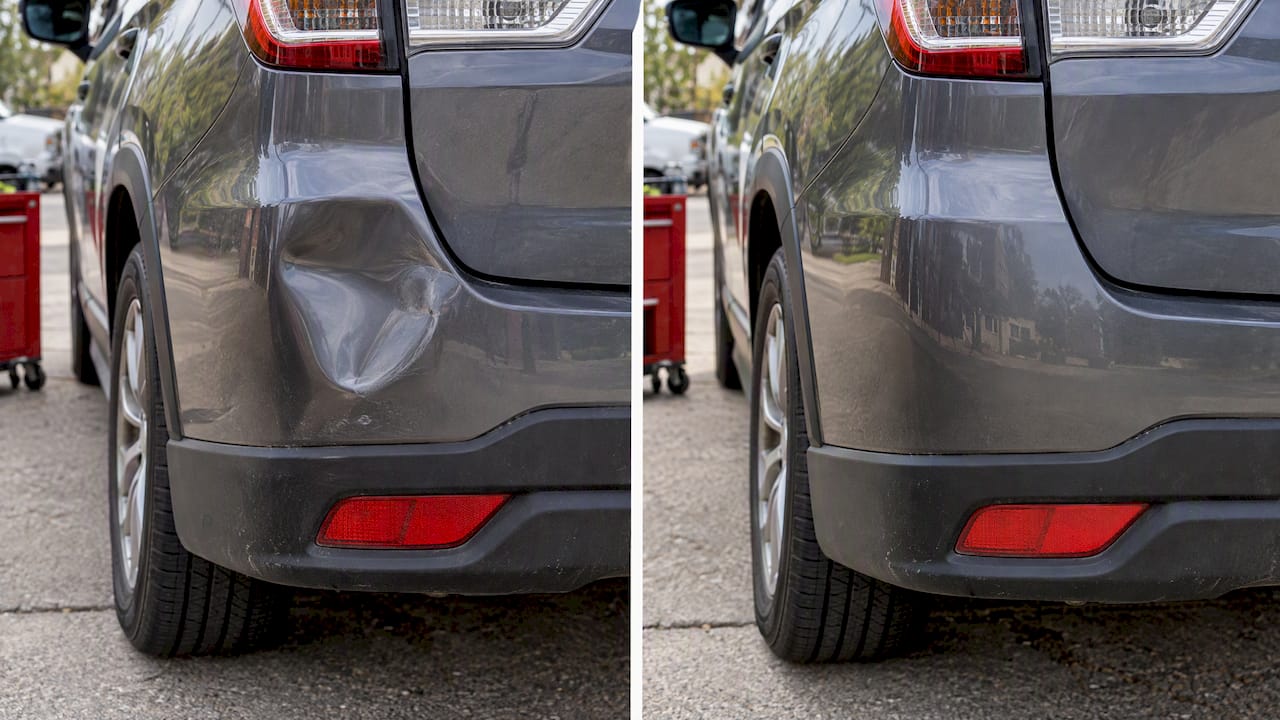
A single small ding typically runs $50 to $150 for mobile paintless dent repair, while a moderate dent usually lands between $150 and $500 or more, according to Chase’s consumer cost guidance. The biggest swing factor is access: a dent tucked near a body line, a sensor, or a hard-to-reach panel edge pushes the price up fast. If you want a number specific to your vehicle, a photo estimate or on-site quote gets you there in minutes.
TL;DR:
- Small dents under one inch typically cost between $50 and $150, depending on access and location, with easier access reducing the final price.
- Moderate dents or creases usually range from $150 to $500, with complex access or paint damage significantly increasing costs.
- Dent location near body lines, sensors, or behind trim can push prices higher due to additional labor or disassembly needs.
- Repairs on vehicles with cracked paint or stretched metal may require refinish work, which can substantially raise the total cost.
- Small repairs often cost less than insurance deductibles, making out-of-pocket payment preferable unless the damage involves sensitive components or extensive damage.
Table of Contents
- Typical price ranges for mobile dent repair
- What determines your mobile PDR quote
- How a technician estimates your repair price
- Insurance or out of pocket: how to decide
- Is your dent a good fit for mobile PDR?
- How to save money and avoid low-quality repairs
- What a mobile dent repair looks like from the driver’s seat
- Getting a mobile quote through Denterasers LLC
- FAQ
- Sources
Typical price ranges for mobile dent repair
Most mobile paintless dent repair quotes fall into a few predictable bands. A single small ding, the kind left by a shopping cart or a neighboring car door in a parking lot, typically sits at the lower end of that range because it takes less time and rarely involves removing trim. A moderate crease, like a hood dent from a dropped branch or a stray rock, usually costs more because the metal has stretched further and the technician needs more precise access to push or pull it back into shape.
- Single small ding (around 1 inch): generally $50 to $150, often booked as a quick mobile visit.
- Multiple small dents on one panel: priced per dent but often discounted as a bundle, since the technician is already on site.
- Moderate crease or dent: commonly $150 to $500 or more, depending on depth and paint condition, per Chase.
- Complex panel access (behind trim, near a sensor, or on a curved body line): priced at the higher end because of extra labor and sometimes partial disassembly.
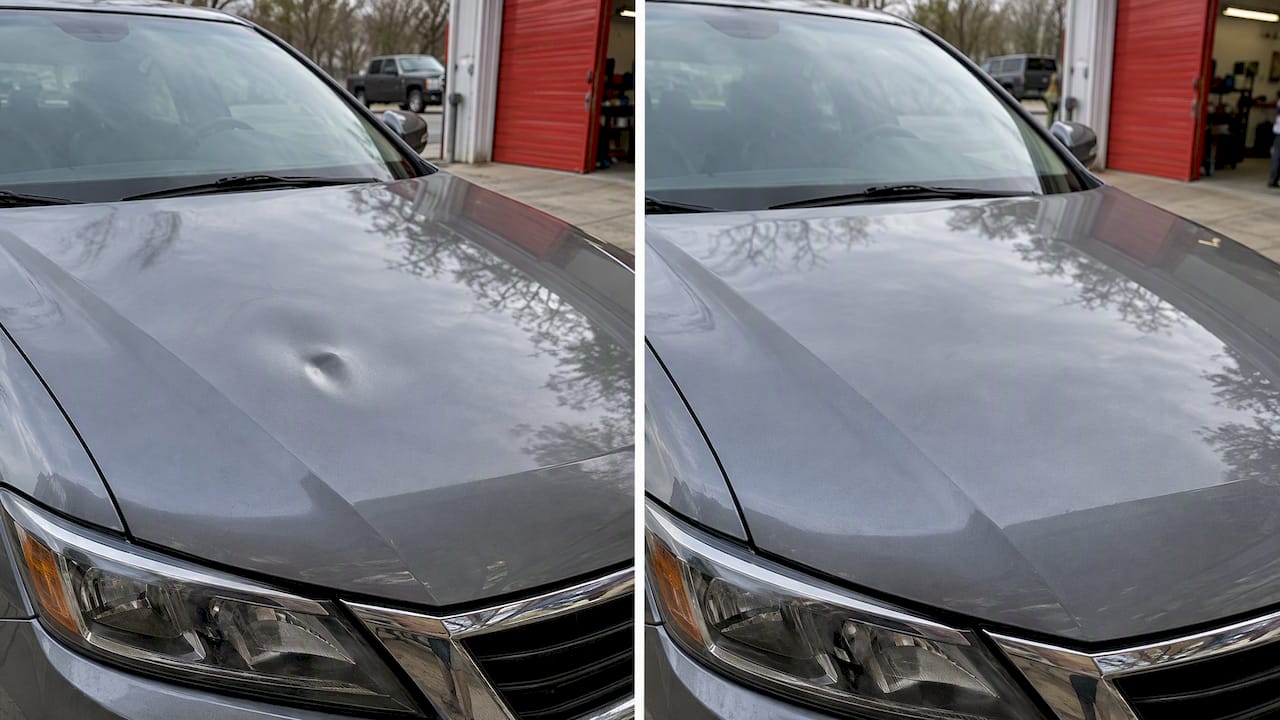
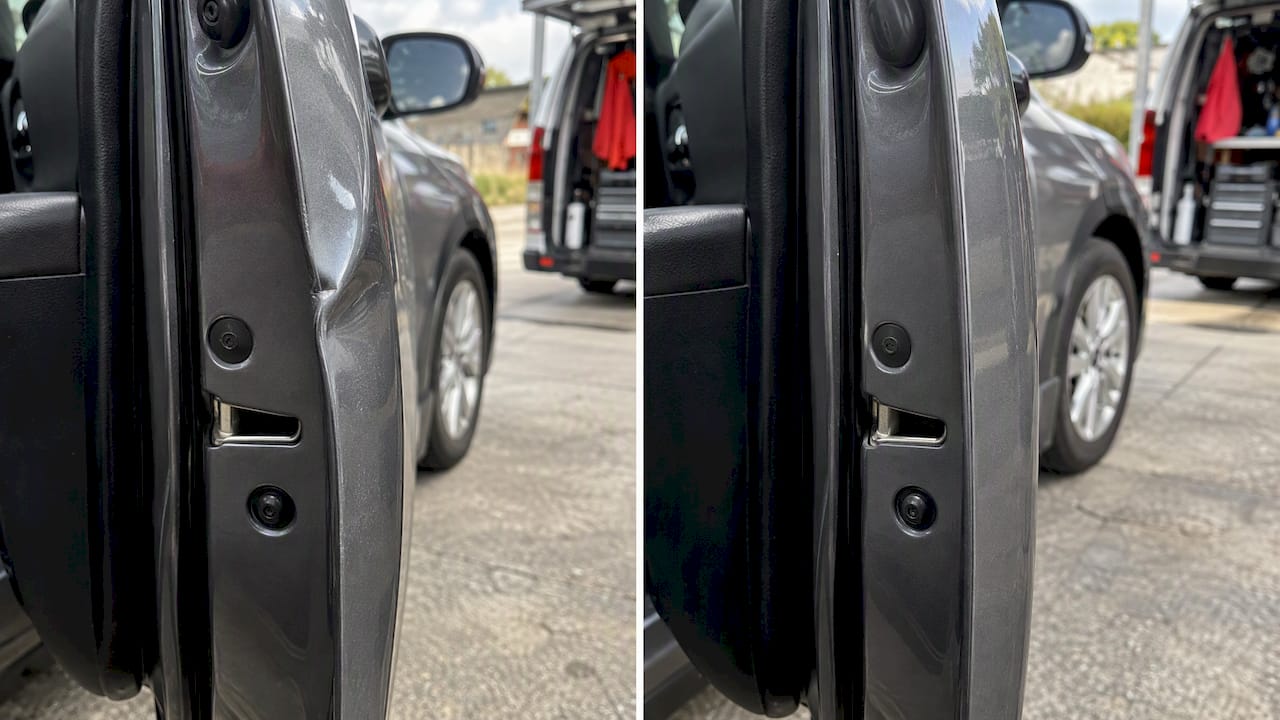
A door ding from a tight parking spot usually prices near the lower end of the mobile PDR range, while a hood dent from a falling branch often lands in the moderate band once the technician accounts for the stretch in the metal.
Preserving factory paint matters for resale value. Chase notes that the true cost of a dent includes potential resale loss if the original paint gets damaged, which is part of why professional PDR is worth it even on a small ding you could technically ignore.
Keep in mind that mobile convenience sometimes adds a modest travel or scheduling fee compared with driving to a fixed shop, though for many owners the time saved more than covers it.
What determines your mobile PDR quote
No two dents price the same way, even when they look similar at a glance. Technicians weigh several factors before quoting a job, and understanding them helps you make sense of why one estimate is higher than another.
- Size and shape: a longer crease or a dent with a sharp edge takes more time to work than a shallow, rounded ding of the same diameter.
- Location and access: dents near a body line, a door edge, or behind interior panels often require trim removal, which adds labor time.
- Panel material: newer high-strength steel and aluminum panels can be more resistant to simple push techniques, sometimes requiring specialized tools or glue-pull methods.
- Paint condition: if the paint has cracked or chipped at the dent site, the job shifts from pure PDR into refinish territory, which raises the price significantly.
- Vehicle type: luxury, vintage, and rare vehicles often cost more to service carefully, since technicians take extra time to avoid damaging trim or original factory finishes.
Behind-panel access is one of the trickiest variables. When a technician can’t reach the back of a dent directly, they may use a glue-pull method from the outside instead of removing interior panels, a practice noted in I-CAR’s technical guidance on PDR technique. That choice can save you labor cost while protecting factory anti-corrosion coatings underneath.
Pro Tip: Ask whether your dent needs interior panel removal before you book. If it doesn’t, you’re likely looking at the lower end of the quote range.
How a technician estimates your repair price
A fair mobile quote follows a consistent process, even when it happens in your driveway in under fifteen minutes.
- Visual inspection: the technician checks the dent under angled light to see the true depth and spread, sometimes using magnification to look for paint micro-cracking.
- Measurement: they measure the dent’s diameter or length, which drives most of the base price.
- Access check: they determine whether the back of the panel is reachable or whether a glue-pull approach is needed.
- Technique selection: based on access and metal type, they choose push tools, glue-pulling, or a combination.
- Time estimate: labor time, not just dent size, often determines the final number.
A trustworthy estimate should be itemized, separating labor from any access or travel fees and from paint or refinish costs if those apply. ASE’s collision estimating guidance outlines the kind of documentation, including VIN and damage photos, that supports accurate, defensible estimates. Look for a written estimate with clear warranty terms rather than a verbal number scribbled on a business card.
Insurance or out of pocket: how to decide
Collision coverage typically applies to dents from accidents, while comprehensive coverage handles non-collision events like hail or a shopping cart. Either way, your deductible usually determines whether filing makes sense.
- Deductibles commonly range across a wide spectrum, according to Progressive, so many small repairs cost less than the deductible itself.
- If the repair quote is below your deductible, paying out of pocket almost always makes more financial sense than filing a claim.
- Some insurers offer optional vehicle protection plans with a $0 deductible specifically for minor dings, as Progressive describes.
- Filing small claims can sometimes affect your premium at renewal, which is part of why many owners reserve claims for larger, costlier damage.
Is your dent a good fit for mobile PDR?
Mobile paintless dent repair works best on dents that haven’t broken the paint or stretched the metal too far. AAA recommends PDR for hail and similar minor dents specifically because the paint stays intact, and cautions against DIY attempts on this kind of damage.
- Good mobile PDR candidates: small, shallow dents with no paint damage, located on accessible panels like doors, hoods, or fenders.
- Signs you need a shop instead: visible paint cracking, stretched or work-hardened metal that springs back only partway, or a crease so sharp it creates a ridge.
- Structural or sensor concerns: dents near bumper-mounted sensors or cameras can affect ADAS calibration, which sometimes turns a cosmetic repair into a job requiring shop-based recalibration equipment.
If your dent checks the first box, a mobile visit is often the faster, cheaper route. If it checks the second or third, expect a referral to a shop for refinishing or calibration work.
How to save money and avoid low-quality repairs
A few habits keep your repair cost reasonable without cutting corners on quality.
- Bundle multiple dents into one visit; many technicians discount per-dent pricing when they’re already on site.
- Request an itemized quote before work begins, not a single flat number with no breakdown.
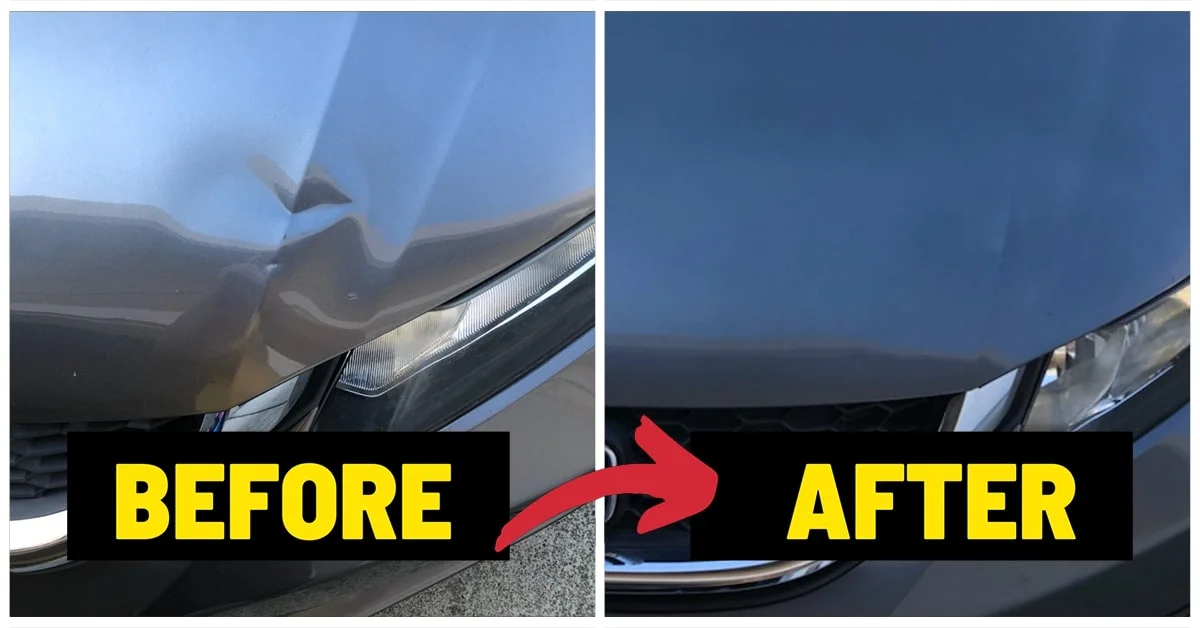
- Ask for before-and-after photos and a written warranty on the repair.
- Check for ASE or factory training credentials, which ASE’s own guidance ties to fewer post-repair issues and higher first-time-fix rates.
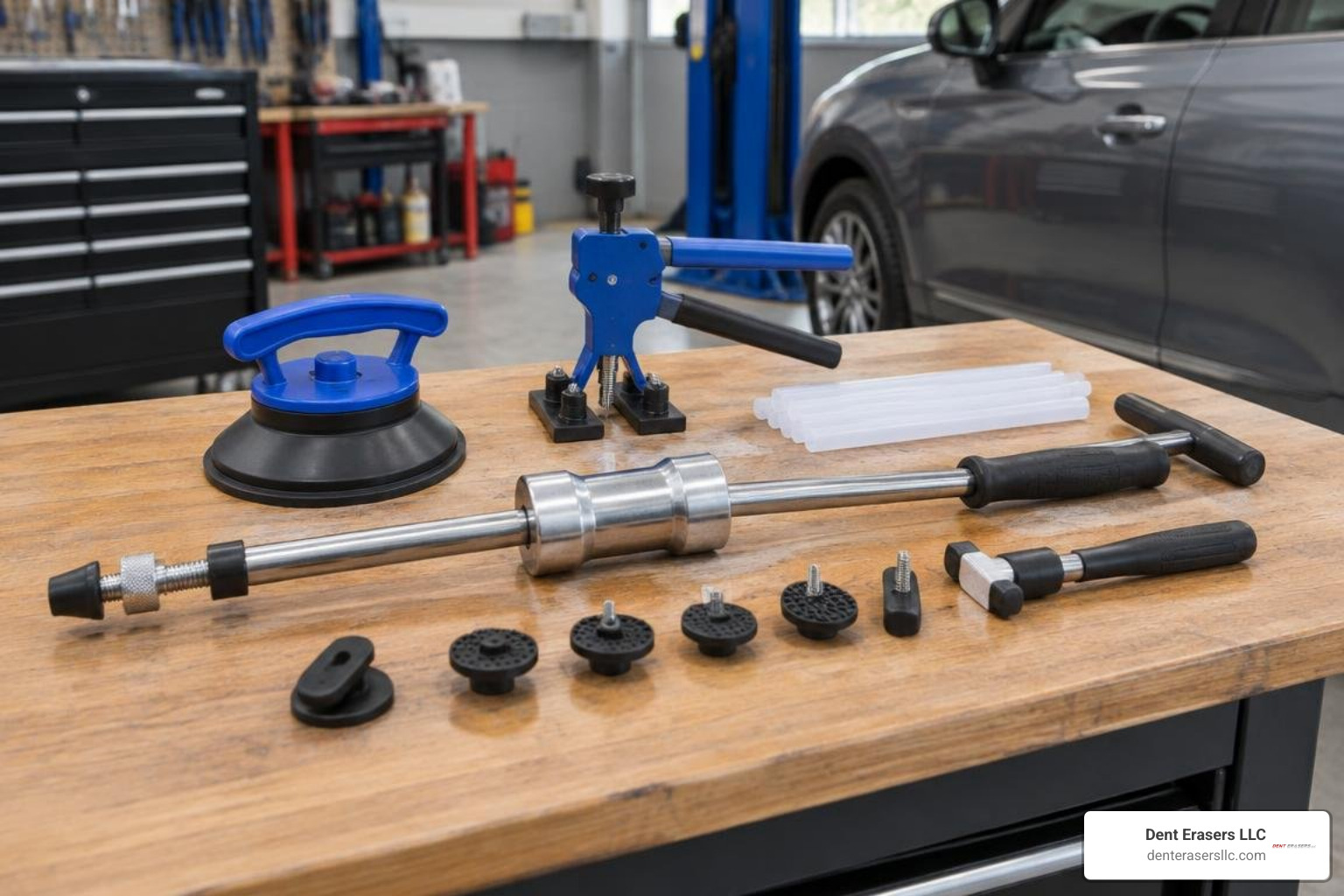
Watch for red flags like a flat rate quoted for every dent regardless of size, a technician who refuses to inspect the car in person, or no invoice at all. DIY dent removal kits can seem tempting, but Chase’s guidance on DIY risk notes that improper technique can chip factory paint and raise your long-term repair cost. If paint correction becomes necessary, industry pricing for that work runs well beyond typical PDR costs, which is another reason to get it right the first time.
Pro Tip: If a quote sounds too low for a dent with cracked paint, ask directly whether refinishing is included. It usually isn’t, and that’s where hidden costs show up.
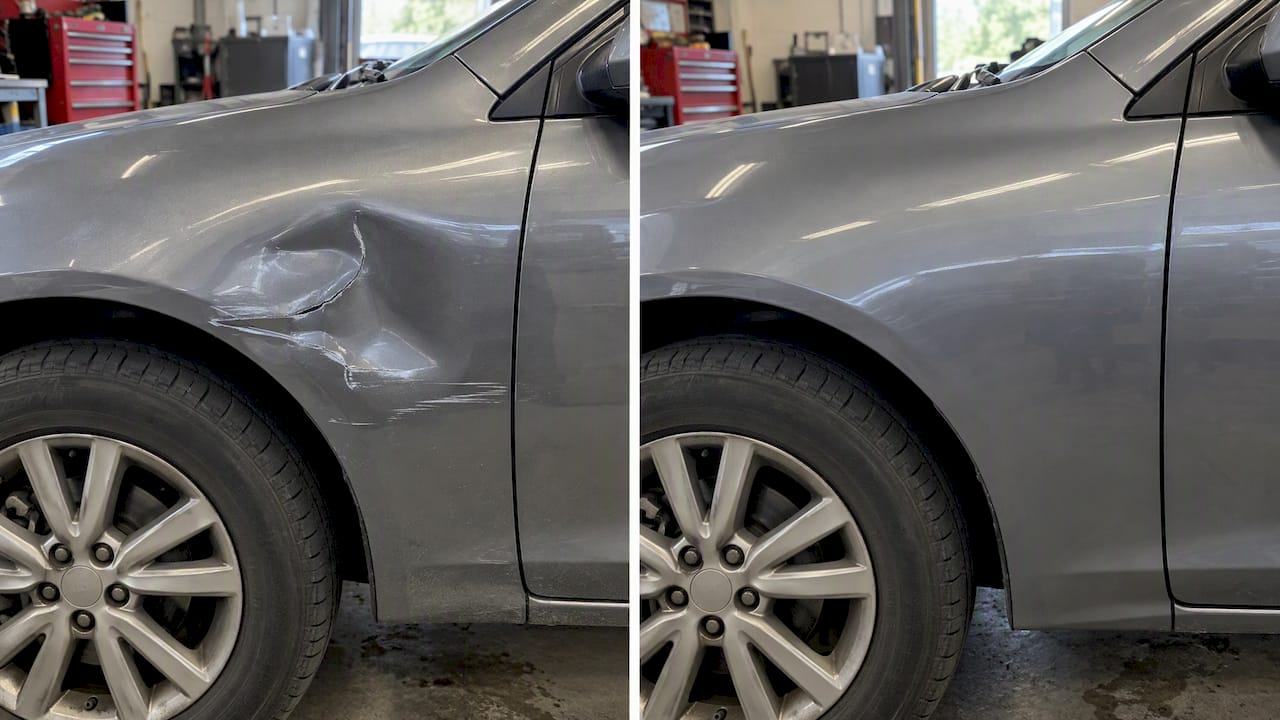
What a mobile dent repair looks like from the driver’s seat
Most of the calls we get start the same way: someone wants to know what a dent will cost before they commit to anything. In our experience, the answer almost always falls inside the ranges above, and the biggest relief for most owners is seeing the factory paint stay untouched. We’d rather give you a straight number from a photo than have you guess.
— Brian Blanc
Getting a mobile quote through Denterasers LLC
We handle mobile paintless dent repair the way most owners wish every estimate worked: a quick look at your dent, a straight number, and no drive to a shop. We can often price a job from photos alone, and we’ll confirm it on site before any work starts, whether that’s a Minor Dent Repair or a larger job through our Mobile Dent Repair service.
To speed up your quote, have these ready:
- Your vehicle’s year, make, and model (VIN helps too)
- Clear photos of the dent from a couple of angles
- The dent’s rough location on the panel
| What you send us | Why it helps |
|---|---|
| Photos of the dent | Lets us estimate size and depth before we arrive in |
| Dent location on the vehicle | Helps us judge access and likely technique |
| Vehicle make and model | Flags any luxury or specialty handling needed |
Get your free dent quote now and we’ll get back to you with a real number, not a guess.
FAQ
How much does dent repair usually cost?
Most small dents run $50 to $150 professionally, while moderate dents typically cost $150 to $500 or more, according to Chase’s cost guidance. Paint damage, access difficulty, and vehicle type can push costs toward the higher end.
How much do mobile dent repairs cost?
Mobile paintless dent repair pricing follows the same general ranges as shop-based PDR, since the technique is the same wherever it happens. You may see a modest travel or convenience fee added, but the savings in time often outweigh it for owners who’d otherwise need to drop off their car.
Is mobile dent repair as good as a shop?
For dents that qualify as PDR candidates, meaning the paint hasn’t cracked and the metal hasn’t stretched too far, mobile repair uses the same tools and techniques a shop would use. AAA recommends PDR specifically because it preserves the factory finish, which mobile technicians can do just as effectively on site.
Sources
- Chase — How Much Does It Cost to Fix a Dent in a Car
- Progressive — vehicle protection plan
- Progressive — Does car insurance cover scratches and dents?
- AAA — Hail damage to your car: everything you need to know
- ASE — Collision estimating and study guide