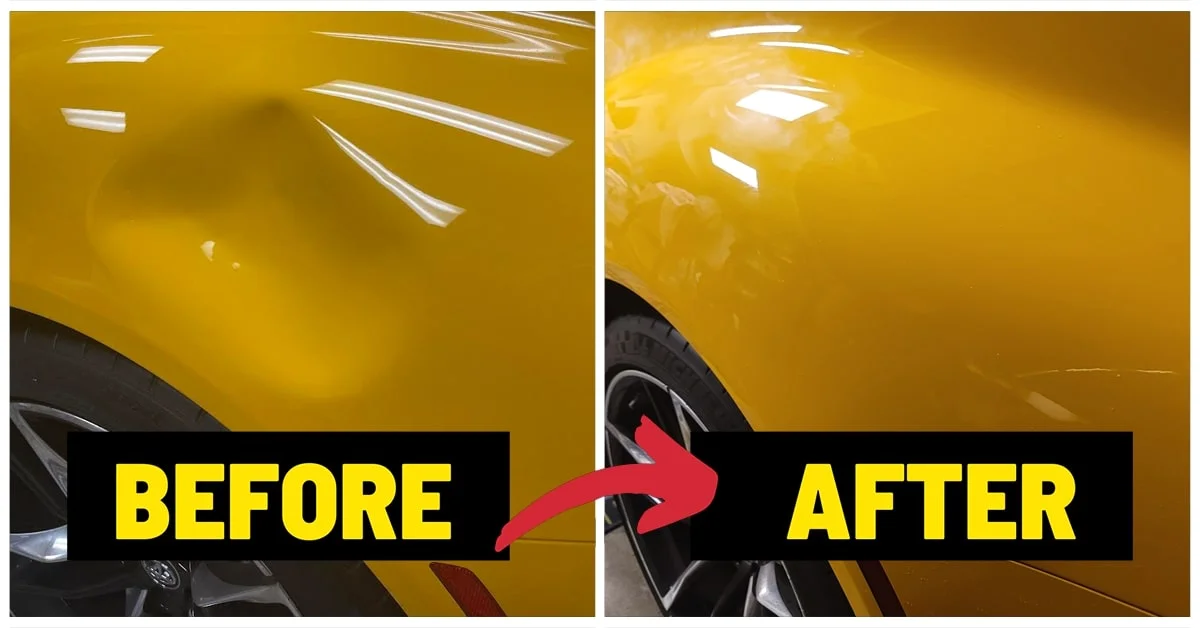
That Dent Is More Fixable Than You Think
Automotive paintless dent removal is a repair technique that pushes or pulls dented metal back into shape — without sanding, fillers, or repainting.
Here’s the quick answer most people need:
- What it fixes: Door dings, hail damage, parking lot dents, minor creases
- How it works: Specialized tools massage the metal from behind, preserving your factory paint
- Cost: Typically one-quarter to one-third the cost of traditional body shop repair
- Time: Many repairs take less than an hour; some same day
- Is it permanent? Yes — properly repaired dents don’t come back
- Who it’s for: Any vehicle with an intact paint surface and a dent that hasn’t stretched the metal beyond repair
You walk out to your car and there it is — a fresh ding right in the door panel. No note. No apology. Just a dent that wasn’t there this morning.
It’s one of the most frustrating everyday experiences for vehicle owners. And with roughly 1.7 million fender benders reported every year in the US alone — plus countless parking lot encounters with shopping carts and careless doors — most drivers will face this situation more than once.
The good news? About 80–90% of all dents are repairable using paintless dent removal. No body shop. No repainting. No guessing if the new color matches.
I’m Brian Blanc, and for nearly three decades I’ve specialized in automotive paintless dent removal, building Dent Erasers LLC into a trusted mobile PDR service in the East Bay that brings factory-finish restoration directly to your driveway or workplace. In this guide, I’ll walk you through everything you need to know — from how the process works to what it costs and when it’s the right call.
What is Automotive Paintless Dent Removal?
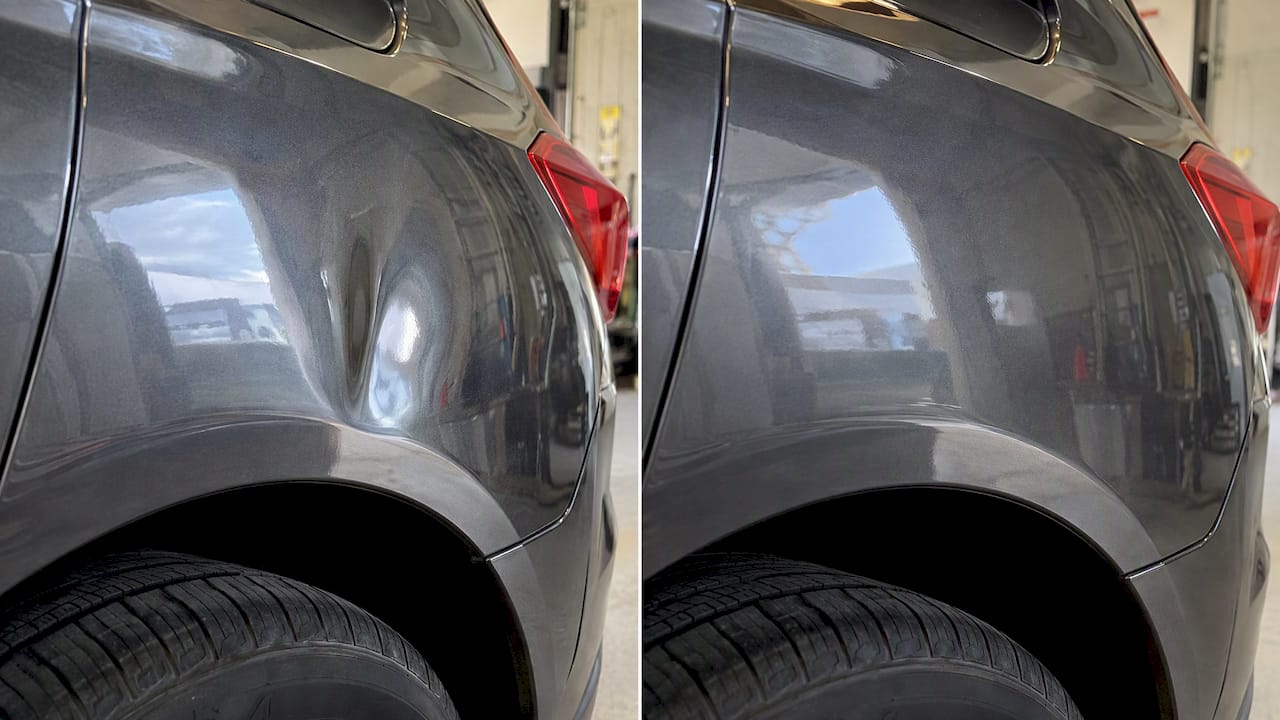
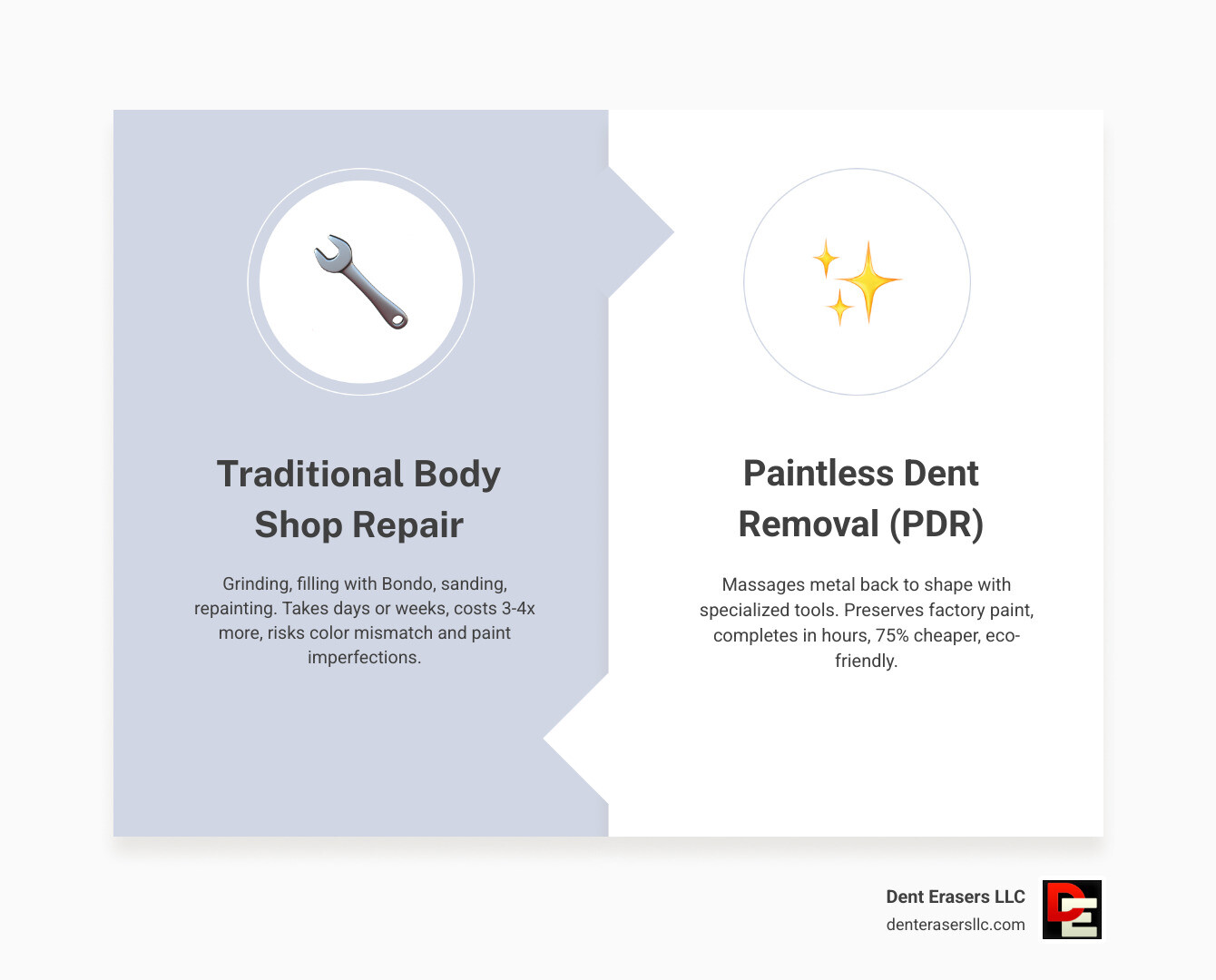
At its core, automotive paintless dent removal (PDR) is a highly specialized craft. It is the art of removing dings, dents, and creases from a vehicle’s exterior while keeping the original factory paint intact. Unlike a traditional body shop that might “grind and fill,” PDR focuses on metal manipulation.
We don’t use Bondo. We don’t use sandpaper. We don’t use spray guns. Instead, we use a series of specialized tools to gently “massage” the metal back to its original form. As long as the paint hasn’t been cracked or scratched, your car is likely a candidate for paintless dent removal. This method is widely considered the “cleanest” repair possible because it addresses the damage at the source—the metal itself—without introducing foreign materials like fillers or aftermarket paint. To get a deeper look at the fundamentals, you can read our guide on Understanding Paintless Dent Repair.
The History and Evolution of PDR
While it feels like modern magic, PDR has been around for decades. The history of automotive paintless dent removal is often traced back to the 1960 New York International Motor Sports Show. A Mercedes-Benz employee named Oskar Flaig is credited with the discovery.
During the trade show, attendees would often leave small dings in the display cars. To avoid repainting the cars every night, Flaig used a hammer handle to gently push the dents out from the inside. He realized that with enough finesse, the metal would return to its original shape without damaging the finish. This was the birth of the industry. Since those early days, the Paintless dent repair field has evolved from simple hammer handles to high-tech LED light boards and precision-engineered carbon fiber rods.
How Automotive Paintless Dent Removal Works
The process is a blend of physics and patience. When we arrive at your location in Concord or elsewhere in Contra Costa County, we follow a precise sequence:
- Assessment: We inspect the dent’s size, depth, and location. We also check the paint’s integrity to ensure it can withstand the manipulation.
- Gaining Access: To push a dent out, we usually need to get behind the panel. This might involve removing a taillight, an interior door panel, or accessing the “skin” of the hood.
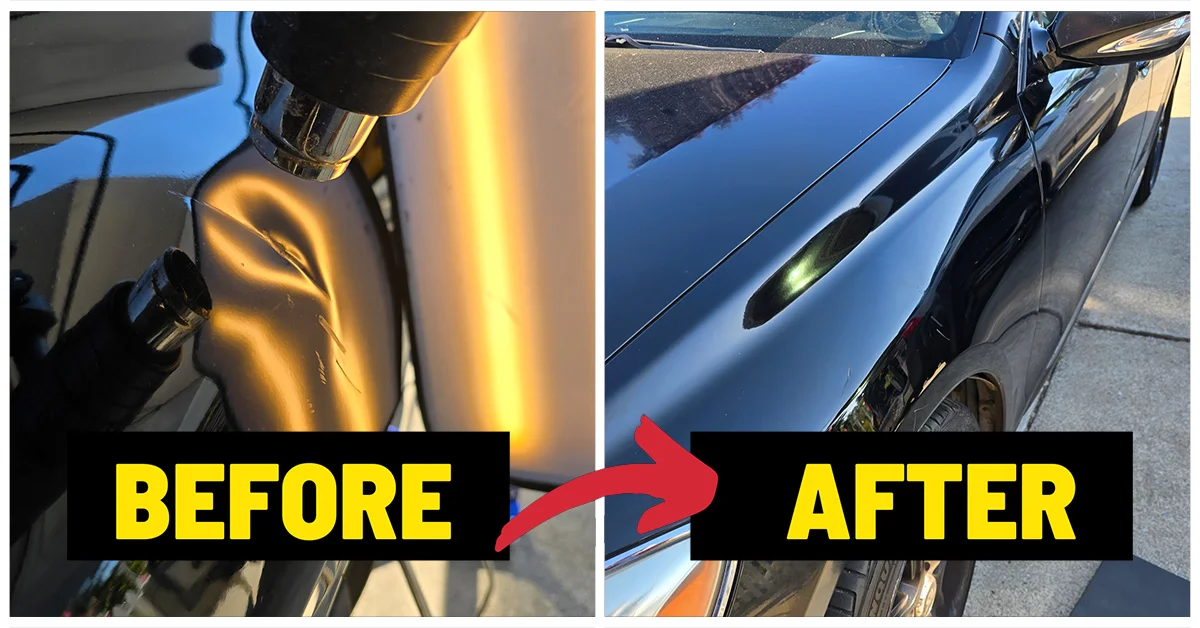
- Lighting: This is the secret weapon. We use specialized LED light boards that cast a reflection onto the dent. This allows us to see even the microscopic “high” and “low” spots in the metal.
- The Massage: Using specialized rods and picks, we apply slow, steady pressure to the backside of the dent. For areas where backside access is impossible, we use “glue pulling.” This involves adhering a specialized tab to the exterior of the dent and using a slide hammer to pull it outward.
By the time we’re done, the metal is flat again, and the reflection in the paint is perfectly straight. For a more detailed breakdown, check out What is Paintless Dent Repair? Understanding the Benefits of Your Vehicle.
Benefits of Choosing PDR Over Traditional Methods
Why choose PDR? In 2026, vehicle owners are more concerned than ever with efficiency and value. Traditional body shops often require you to leave your car for several days—or even weeks—while they wait for paint to dry and clear coats to cure.
With automotive paintless dent removal, the benefits are immediate:
- Cost: It is significantly more affordable. Because we aren’t buying expensive paint or paying for hours of sanding labor, we pass those savings to you.
- Time: Most repairs are completed in 1 to 3 hours, not days.
- Eco-Friendly: PDR is 100% “green.” There are no toxic chemicals, no paint fumes, and no hazardous waste involved.
We’ve compiled a list of 8 Reasons to Choose Paintless Dent Removal Over Traditional Methods to help you decide.
PDR vs. Traditional Body Shop Repair
| Feature | Paintless Dent Removal (PDR) | Traditional Body Shop |
|---|---|---|
| Paint | Preserves Original Factory Paint | Sanded and Repainted |
| Fillers | None Used | Bondo / Plastic Fillers |
| Time | 1–4 Hours (Usually Same Day) | 3–10 Days |
| Cost | $150 – $500 (Average) | $1,000+ (Average) |
| Value | Maintains Resale Value | Can Lower Resale Value |
| Environment | Eco-Friendly / No Chemicals | High VOCs / Chemical Waste |
Preserving Resale Value and Factory Paint
One of the biggest “hidden” benefits of PDR is how it protects your investment. Your car’s factory paint is the best finish it will ever have. It is applied in a controlled environment and baked at high temperatures that a standard body shop simply cannot replicate.
When you repaint a panel, you run the risk of color mismatch or “orange peel” texture. Furthermore, a Carfax report showing bodywork and paint can decrease your vehicle’s resale value. Because PDR is non-invasive, it keeps the factory finish intact, meaning your car stays “original.” Learn more about these 5 Benefits of Paintless Dent Removal for Car Owners.
What Kind of Damage Can Automotive Paintless Dent Removal Fix?
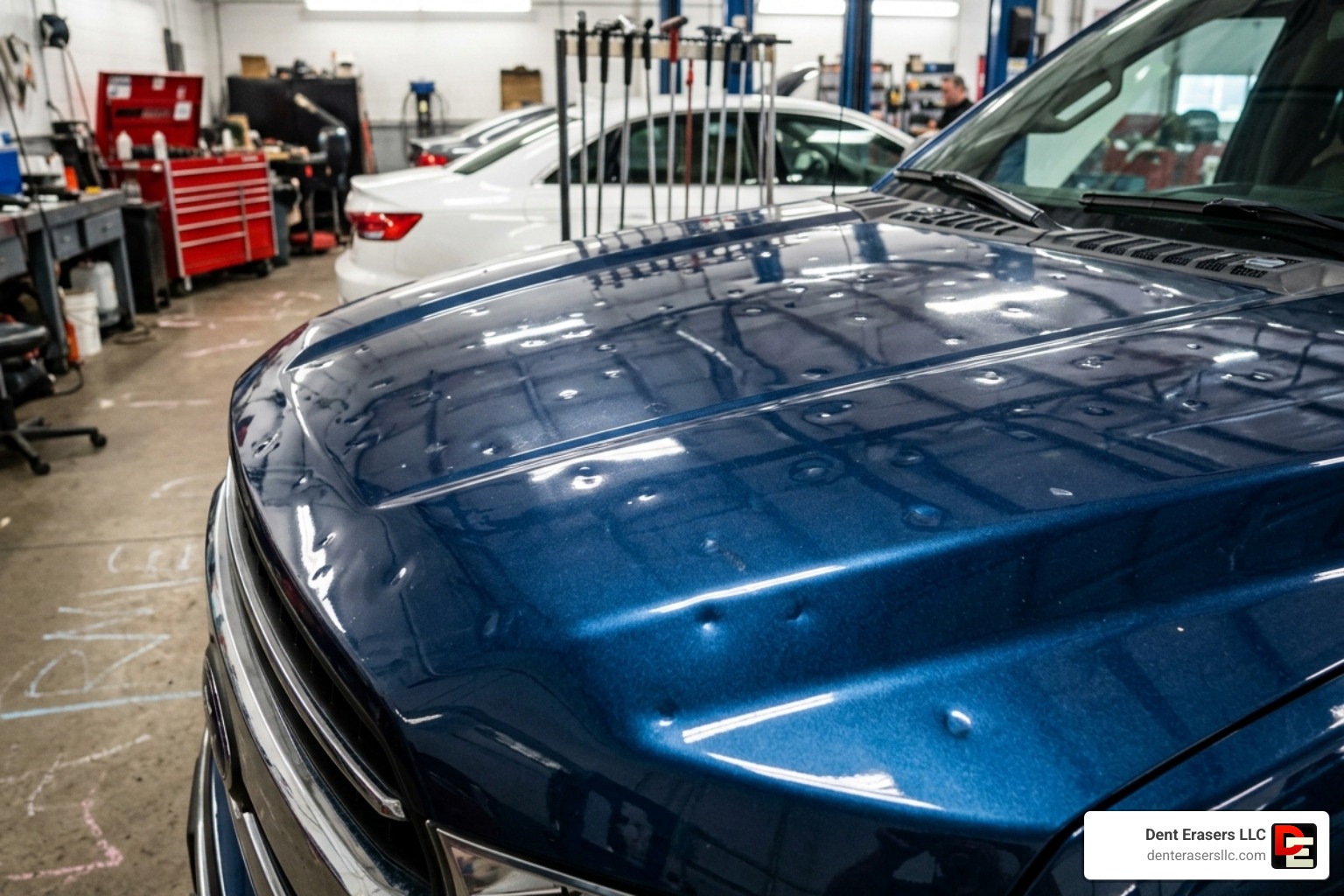
Statistics show that 95% of minor dents and 80-90% of all dents are candidates for PDR. While we excel at Minor Dent Repair, modern techniques have allowed us to tackle much larger issues than we could a decade ago. Even Large Dent Repair is often possible if the metal hasn’t been “stretched” past its elastic limit.
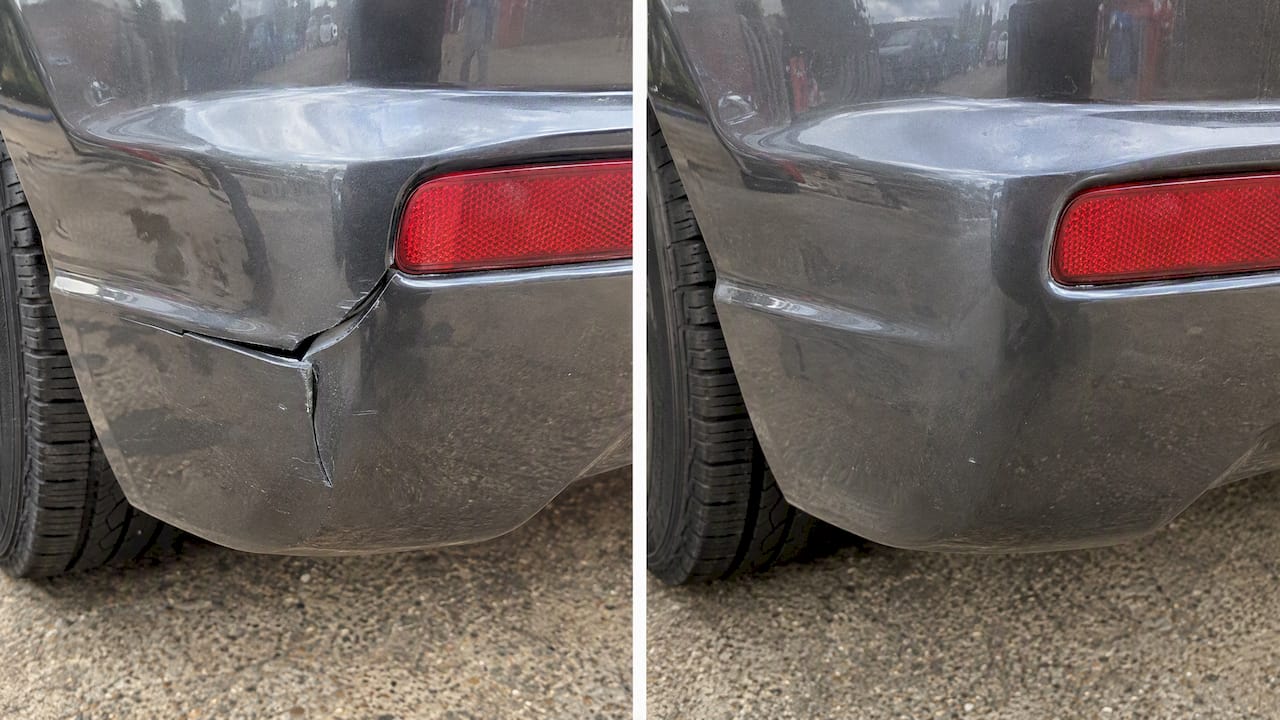
Hail Damage, Door Dings, and Creases
The most common enemies we face are:
- Door Dings: The classic parking lot mishap. These are usually the easiest to fix.
- Hail Damage: This is where PDR truly shines. Instead of replacing every panel on a car after a storm, we can massage out hundreds of tiny dimples, saving the vehicle from being totaled.
- Creases: These are long, narrow dents often caused by a shopping cart or a bicycle handlebar. While more technical, they are still very repairable.
Whether it’s Vehicle Roof Dent Repairs Near You or Rear Door Dent Correction for Your Car, we have the tools to handle the job.
PDR for Aluminum Panels and Electric Vehicles
In 2026, more vehicles than ever are made with aluminum panels or are fully electric (EVs). Aluminum is stiffer and less “forgiving” than steel, meaning it requires a technician with more experience and specialized heat application to avoid cracking the paint.
Electric vehicles also present unique challenges, as we must be mindful of high-voltage battery systems when accessing certain panels. We specialize in both Fixing Aluminum Panel Dents with PDR and Dent Repair for Electric Vehicles, ensuring your Tesla, Rivian, or aluminum-bodied Ford F-150 is in safe hands.
Professional Service vs. DIY Kits

You’ve probably seen the “as seen on TV” dent pullers or the $40 kits online. While they look easy, automotive paintless dent removal is a skill that takes years to master.
The risks of DIY include:
- “High Spots”: Pushing too hard and creating a “pimple” in the metal that is harder to fix than the original dent.
- Cracked Paint: Without proper temperature control and tool knowledge, you can easily crack your clear coat, turning a $200 PDR job into a $1,000 repainting job.
- Incomplete Repairs: Most DIY kits only include glue pullers, which won’t work on 50% of dents that require backside manipulation.
Before you try it yourself, read The Complete Paintless Dent Removal Checklist: What You Should Know. If you decide to hire a pro, follow these 7 Tips for Finding the Right Paintless Dent Repair Service.
Frequently Asked Questions
How much does automotive paintless dent removal cost in 2026?
Pricing for PDR is based on the size, depth, and location of the dent, as well as the material (aluminum vs. steel). Most repairs we perform at Dent Erasers LLC fall between $150 and $500.
When you consider that most insurance deductibles are now $500 or $1,000, PDR often costs less than your deductible. This means you can get your car fixed without ever involving your insurance company or risking a premium increase. For a more detailed look at pricing in our area, see Precision Dent Pulling Price Contra Costa.
Is paintless dent removal permanent?
Yes. One of the biggest myths is that the dent might “pop back in” during a hot day. This simply isn’t true. Metal has “memory.” Once we massage the molecules back into their original flat state, they stay there. According to the NAPDRT FAQ, a properly repaired dent will never return.
What are the limitations of PDR?
While PDR is powerful, it isn’t magic. There are three main reasons a dent might not be a candidate:
- Paint Damage: If the paint is missing, chipped, or badly cracked, PDR won’t fix that. You’ll need a traditional body shop for paint.
- Stretched Metal: If the dent is extremely deep and sharp, the metal may have “stretched” too far. Even if we push it flat, there will be “extra” metal that creates a ripple.
- Location: Dents on the very edge of a panel or directly over a thick structural brace can sometimes be impossible to reach.
We always aim for a Paintless Bodywork Non-Invasive Repair, but we will be honest with you if the damage requires a traditional shop.
Conclusion
At Dent Erasers LLC, we know that your vehicle is more than just a way to get from point A to point B. Whether it’s a daily driver in Antioch, a luxury EV in San Ramon, or a classic car in Walnut Creek, a dent can be a major eyesore.
We provide expert, mobile automotive paintless dent removal throughout Contra Costa County, including Concord, Pittsburg, Brentwood, and beyond. We bring the tools, the lighting, and the 30 years of experience directly to you, saving you time and preserving your car’s factory finish.
Don’t let that dent drive you crazy any longer. Book Paintless Dent Repair for Your Car today and let us erase the damage like it never happened.