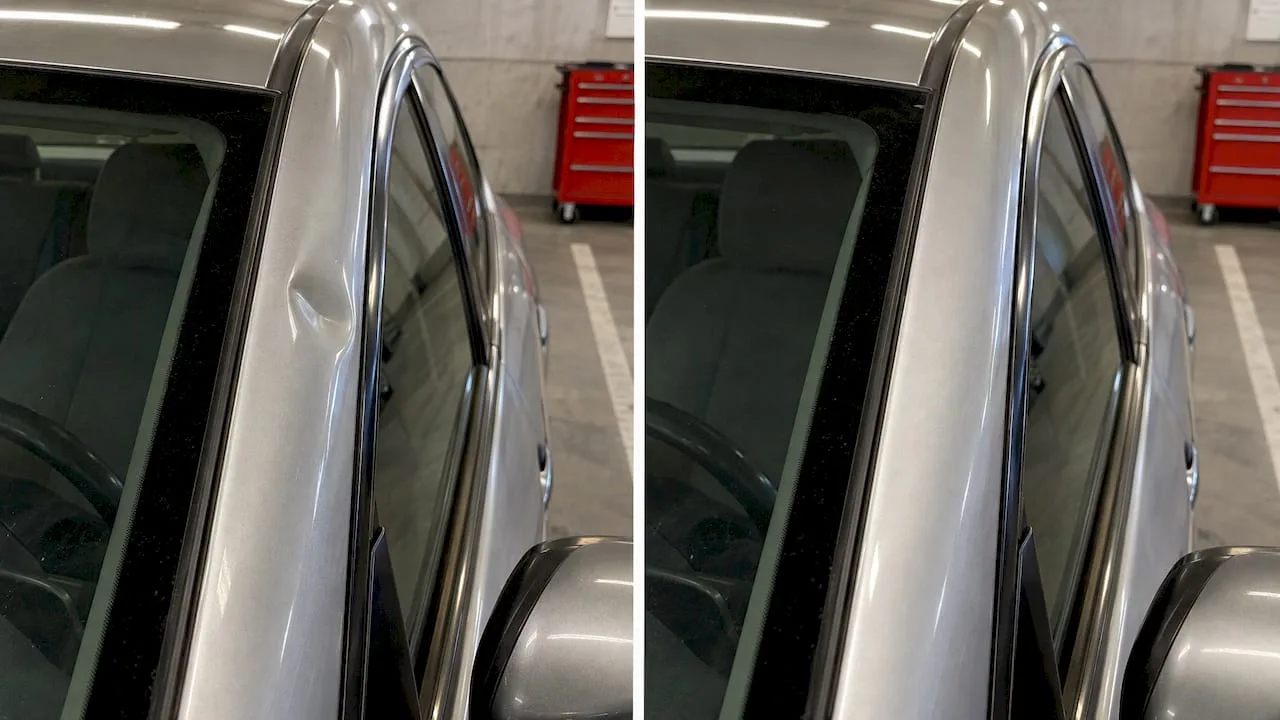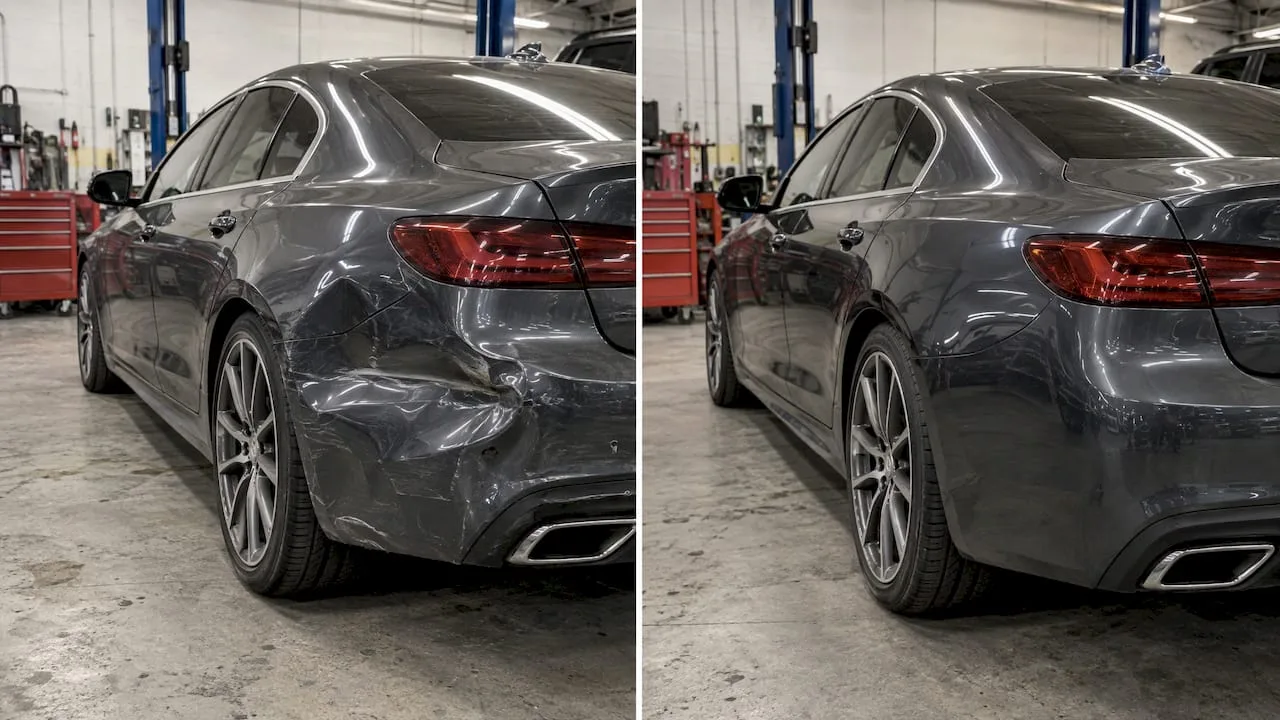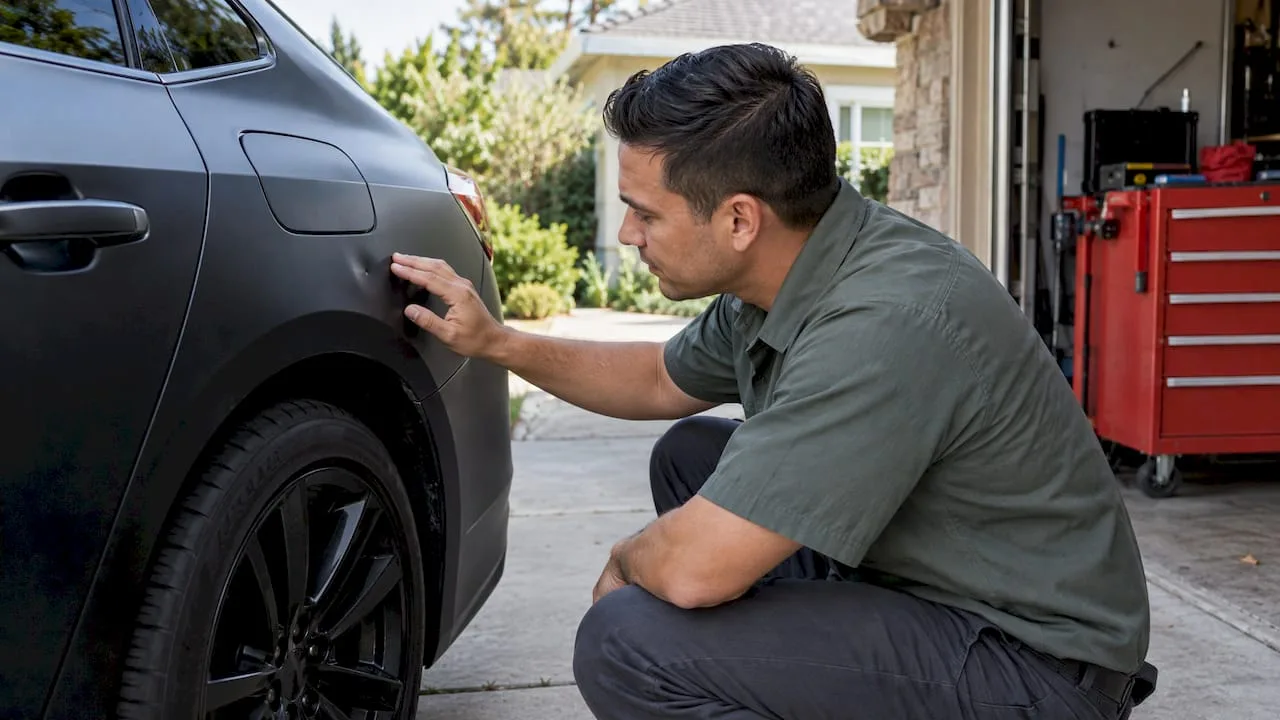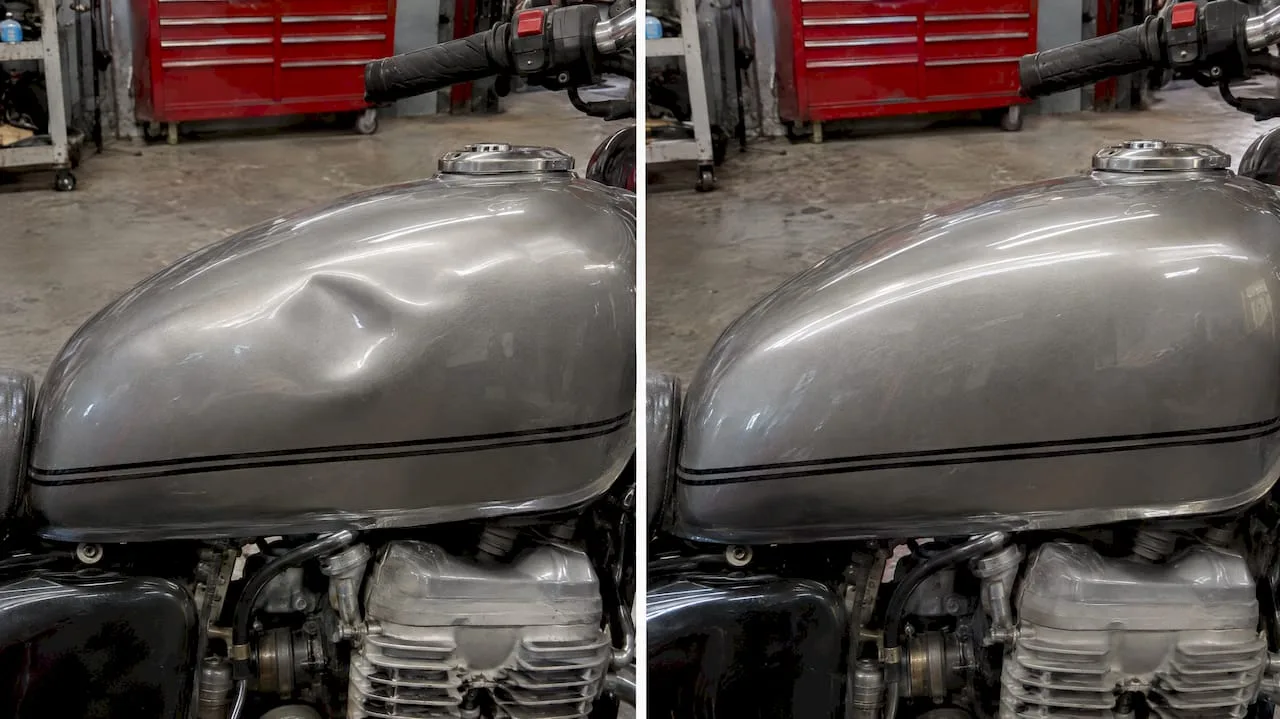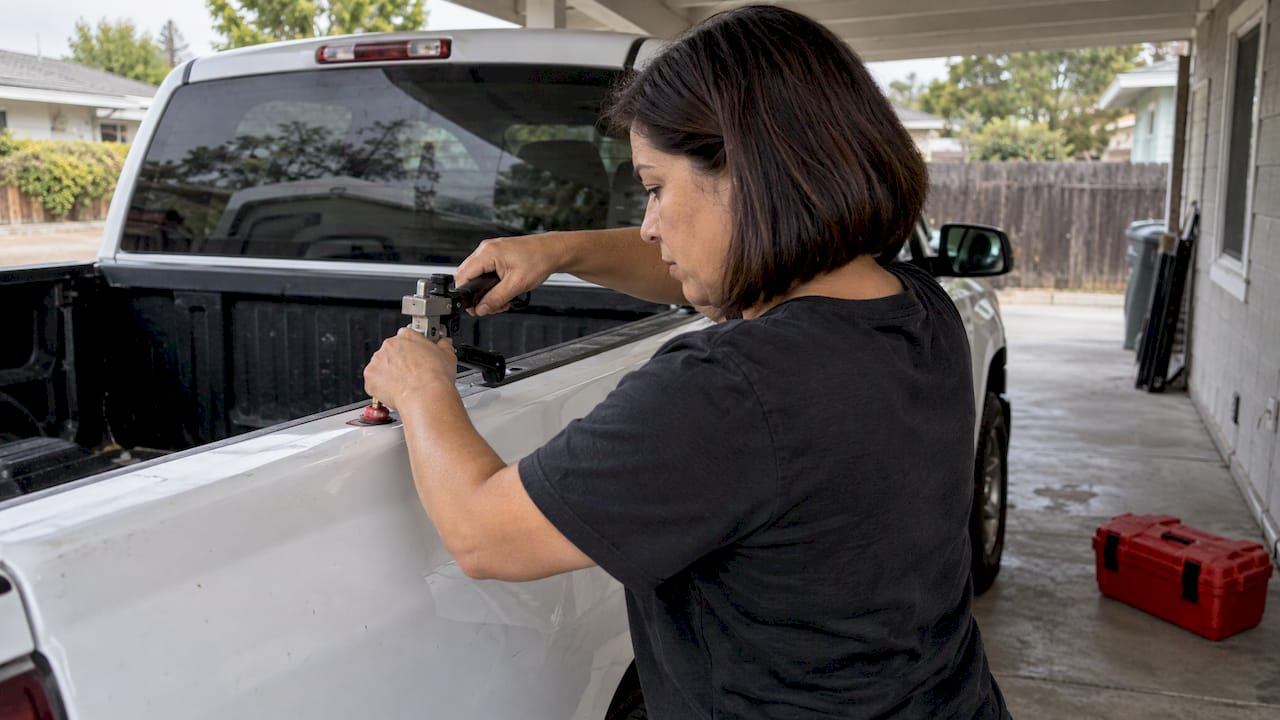
Most truck bed dents do not need a new panel. Bedside, bed rail and cab corner dents with unbroken paint can often be pushed or pulled back to shape with paintless dent repair (PDR), which keeps your factory finish. We do this work onsite in Contra Costa County, so the truck stays with you while it is repaired. Here is how to tell which dents qualify, what the work costs and what to check before you book.
TL;DR
- Dents with no cracked paint, including many bedside and bed rail dents, are good candidates for PDR instead of panel replacement.
- Access behind the panel decides difficulty. Tail lamps, bed rail caps and trim may come off to reach it.
- Published estimates put PDR for a bed dent at roughly $130 to $680, versus $2,300 to $4,800 for a bed side replacement on a Ram 1500.
- Sharp creases, panel edges and cracked paint may need body and paint work, which we also handle.
- Photos are enough to start: request a free dent quote.
Table of Contents
- Can a truck bed dent be fixed without replacing the panel?
- Which dents qualify for PDR
- How PDR works on bedsides and cab corners
- What truck bed dent repair costs
- When the damage needs body and paint work
- Onsite repair, estimates, insurance and lease returns
- Get your truck bed looking right again
- Our perspective
- FAQ
- Sources
Can a truck bed dent be fixed without replacing the panel?
Yes, in many cases. GM’s own service bulletin on paintless repair for its steel-bodied light-duty trucks recommends PDR and describes “glue stick” removal from the outside for pickup box bed rails, where there is little or no way to reach the back of the panel. The bulletin says the process was thoroughly evaluated with no negative impact found on repaired parts. It also warns that drilling holes or removing structural parts can affect the corrosion warranty, which is one more reason to keep the repair outside-in and paintless.
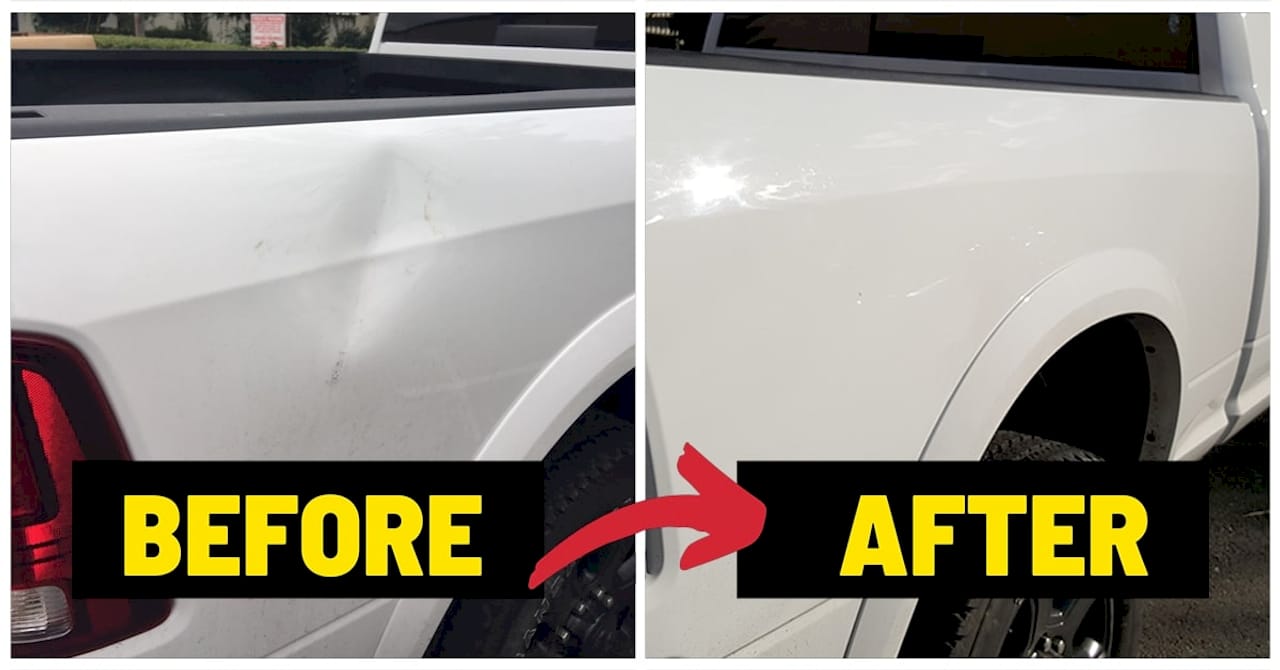
That matters on a truck. A bed is a work surface, and bedsides are double-walled steel. A repair that never touches the paint also never touches the factory corrosion protection.
Which dents qualify for PDR
The same GM bulletin describes good candidates as dents with no broken paint, soft dents in body lines and contoured areas where there is reasonable access behind them, and dents that can be released without removing structural parts.
In practice, here is how common truck dents sort out:
| Dent type | Usually a PDR candidate? |
|---|---|
| Door ding or shallow dent in a bedside | Yes, when the paint is intact |
| Dent from cargo or a tailgate swing on a bed rail | Often, using glue-pull methods |
| Dent in a body line or contoured area with access | Often |
| Dent at a cab corner or panel edge | Case by case, based on access and metal |
| Sharp crease with cracked paint | Needs body and paint work |
Size matters too. GM’s bulletin notes that dents over 3 inches and up to 6 inches across may still call for conventional paint repair. An industry training article reports that 80 to 90 percent of small dents can be repaired with PDR, and that a simple dent can take as little as 15 minutes while a larger one can take more than an hour.
Edges are the exception to watch. Where metal is rolled over and double thick, as at a panel edge, the same article says PDR cannot resolve the dent. A technician who knows your truck’s construction can usually tell you this from photos.
How PDR works on bedsides and cab corners
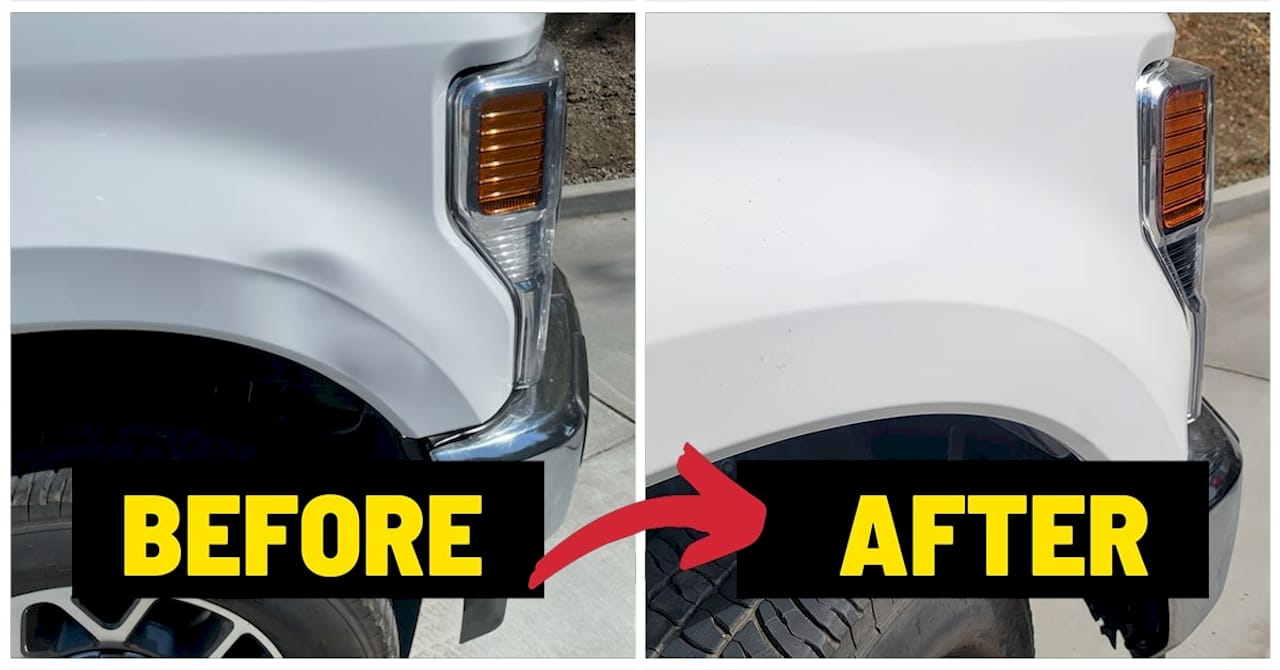
Getting behind the panel is the hard part. The National Association of Paintless Dent Repair Technicians (NAPDRT) says the vehicle should first be inspected for access difficulty, and that a panel with little or no direct access is considered heavily braced or double. Items that may need to come off to reach it include the tail lamp, bed rail caps, a tonneau cover or camper shell, the rear wheel, wheel-opening trim, a headache rack, a toolbox and the bumper. The cab corner is listed among the areas where parts may be removed and reinstalled.
When access is tight, technicians use glue tabs and controlled pulling from the outside, plus heat and fine tapping. The training article above says drilling a hidden access hole is a last resort, and that if it is done, the bare metal must be coated with rust-inhibiting primer and sealed with a tight-fitting plug. Ask any technician how they plan to reach the dent before the work starts.
Experience shows here. According to the same article, seasoned technicians learn the internal structure of popular models and often know in advance when a dent sits in an area that rules out PDR. It also says that competently removing even a simple dent takes at least three months of full-time practice, with a year or more for complex damage. Our team brings 27+ years of experience to dents like these.
What truck bed dent repair costs
PDR is priced by labor, not parts, so it stays far below replacement. One Ram 1500 repair cost guide lists PDR for dents in the bed, doors or hood at $130 to $680, about half an hour to two hours of labor. The same guide puts a bed side panel replacement at $2,300 to $4,800 in total, with 8 to 16 labor hours plus parts and paint. A Silverado 1500 guide shows a similar gap: $120 to $650 for PDR against $2,200 to $4,500 for a full bed side replacement.
Our own published ranges, for onsite work:
- Minor dent repair: $100 to $500
- Paintless dent repair: $150 to $500
- Large dent repair: $150 to $1,500
What moves a quote up or down: how many dents, their size and depth, and how hard the back of the panel is to reach. Estimating guidance from a PDR training company lists double or heavily braced panels, poor access, high-strength steel, aluminum, sound-deadening barriers and corner or edge dents as the things that lengthen a repair. Aluminum has less metal memory than steel, so newer aluminum-bodied pickups take more time. Photos from a few angles, with the whole panel in view, let us price it accurately.
When the damage needs body and paint work
If the paint is cracked, the metal is stretched or the dent is on a sharp edge, the panel needs conventional body repair: filling, priming and painting. Our auto body and collision repair service covers that, so you do not have to split one truck between two providers. If a plastic bumper or step is damaged too, plastic bumper repair is part of the same visit to plan.
Once a panel has been repainted, treat the fresh finish gently and keep it clean. A panel by panel spray and rinse coating approach to washing helps avoid streaks while you care for the new paint. Follow the painter’s advice on how long to wait before waxing or sealing.
Onsite repair, estimates, insurance and lease returns
PDR needs no paint booth, so it travels well. Our mobile dent repair comes to your home, jobsite or office parking lot. For a straightforward bedside dent, that usually means you keep working while the truck is repaired. Larger or more involved jobs take longer, and we will tell you so in the quote.
Before you accept any estimate, check four things:
- Method. It should say whether the repair is PDR or body and paint work, and why.
- Parts to be removed. Tail lamps, rail caps and covers may need to come off and go back on.
- Every dent. The quote should list each dent, not one lump sum.
- Paint condition. Cracked paint changes the method, so it should be noted.
For insurance, whether a dent falls under comprehensive or collision coverage depends on what caused it. Our guide on when mobile PDR works for comprehensive versus collision damage explains the difference, and we offer insurance claim assistance. For fleets, we do fleet dent repair. Leased trucks can be handled through our lease return dent repair, best done before the inspection so the dent does not show up as a charge.
Get your truck bed looking right again
We repair bed dents, bedsides, bed rails and cab corners onsite, using paintless methods that preserve your factory paint wherever the damage allows. Send a few photos and we will tell you whether PDR will do the job and what it should cost. Get your free dent quote.
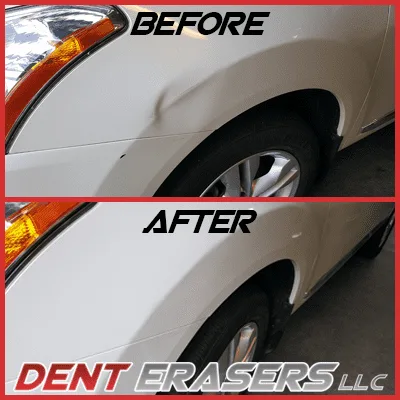
We also work on luxury, classic and motorcycle dents, and you can see finished jobs in our gallery, such as a fender repair on a new truck.
Our perspective
A truck bed takes abuse every day, so owners often assume a dented bedside means a new panel and a paint job. In our experience that is the wrong starting point. The right first question is whether the paint is intact and whether we can get to the metal.
When both answers are yes, paintless repair keeps the factory finish, avoids the cost of replacement and gets the truck back to work sooner. That is why we built our service around coming to you, with 27+ years of experience behind each repair.
When a dent does need body work, we handle that as well, so you get one honest recommendation instead of a sales pitch for whichever method a shop happens to offer.
Brian Blanc
FAQ
Can I pop a truck bed dent out myself?
Bedsides are often double-walled, so there is usually no way to reach the back of the dent without removing parts. Pushing from inside with a hammer can stretch the metal and crack the paint. Our technicians use controlled pulling and glue methods designed to protect the finish. Send photos for a free quote.
How long does truck bed dent repair take?
A simple dent can take as little as 15 minutes, according to an industry training article, and larger dents take an hour or more. Bed rails and cab corners with tight access take longer because parts may need to come off. We give you a time estimate with your quote.
Does PDR work on cab corner dents?
Often, yes, when the paint is intact and the metal is not creased at the edge. Cab corners are an area where parts may be removed to reach the back of the panel. Photos let us tell you quickly whether PDR is the right method.
Will PDR hurt my truck’s warranty or paint?
PDR keeps the original paint and does not require drilling in most cases. GM’s bulletin on paintless repair says it found no negative impact on repaired parts and warns that drilling or structural removal can affect corrosion warranty.
Sources
- GM service bulletin 99-08-51-001F, paintless dent repair (NHTSA)
- Automotive Technology Update: Paintless Dent Repair
- NAPDRT PDR procedure page
- Ram 1500 repair cost guide
- Chevrolet Silverado 1500 repair cost guide
- PDR estimating guidelines