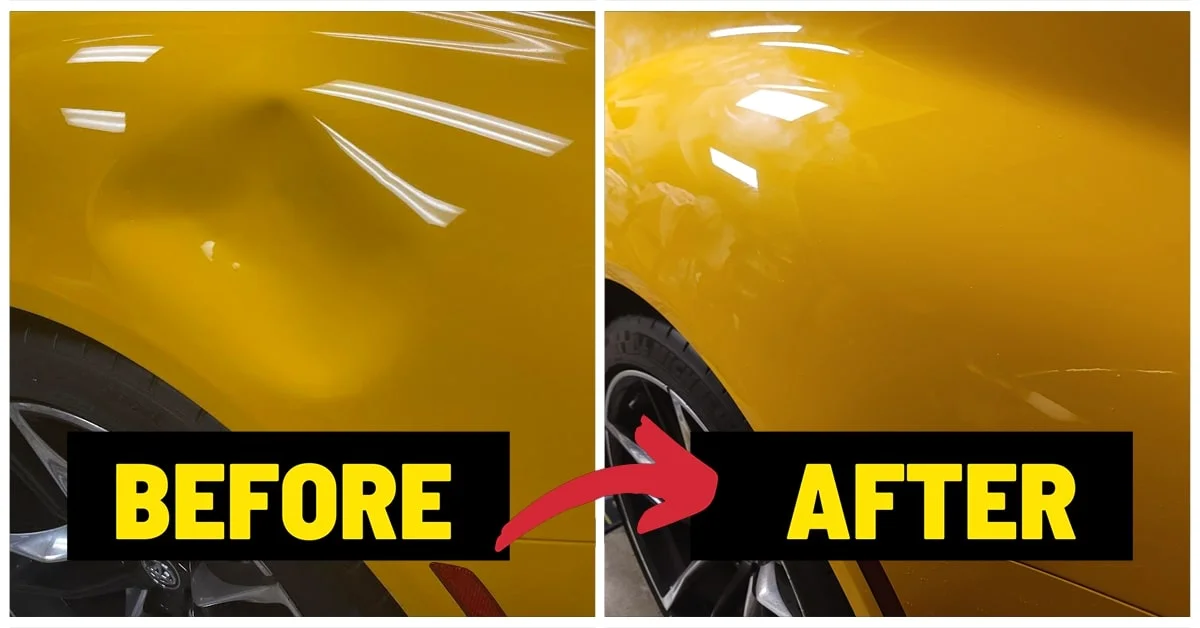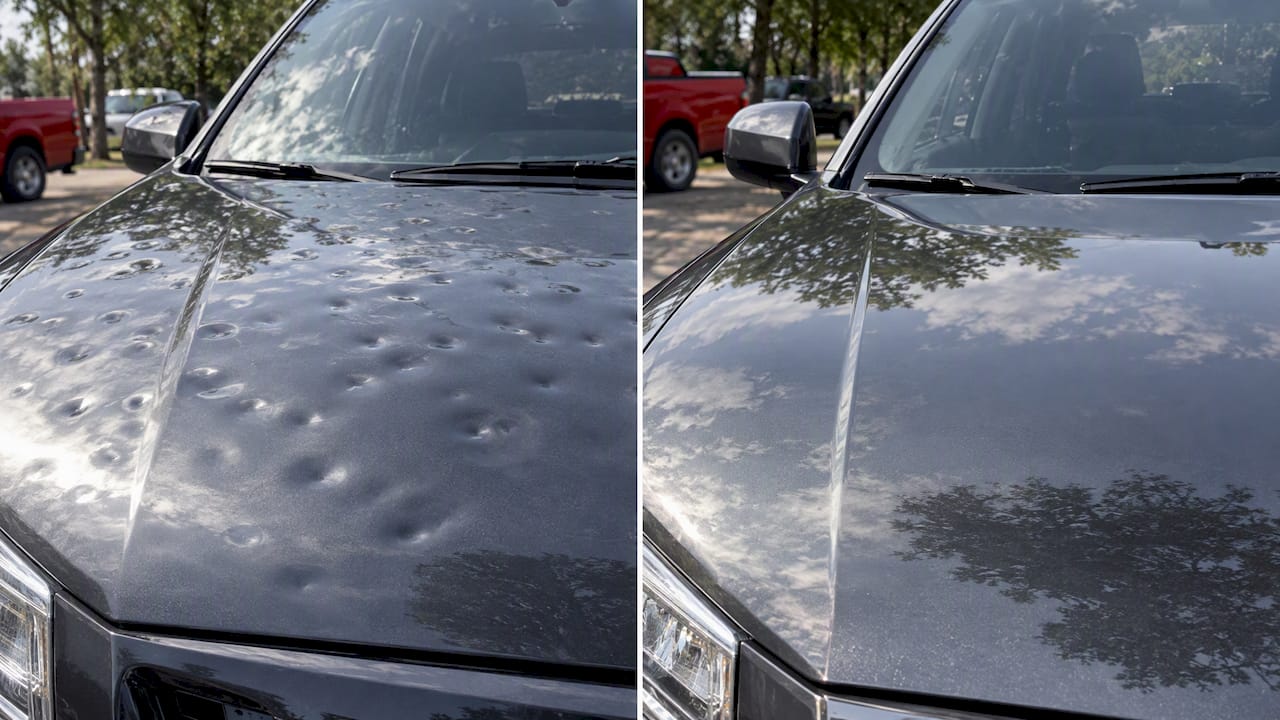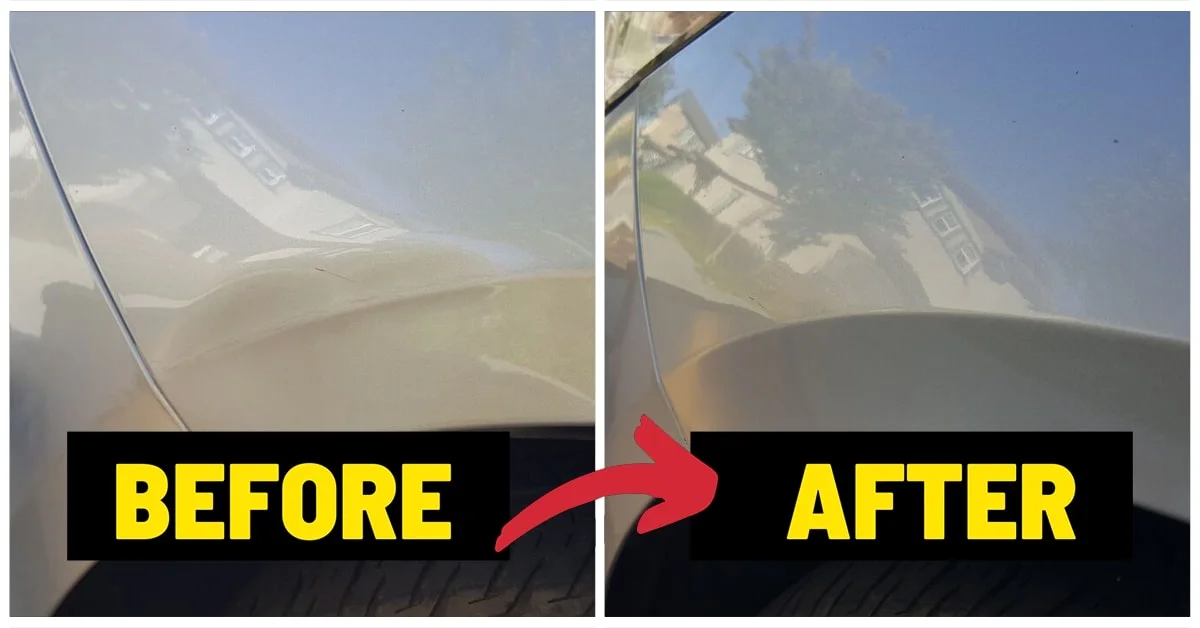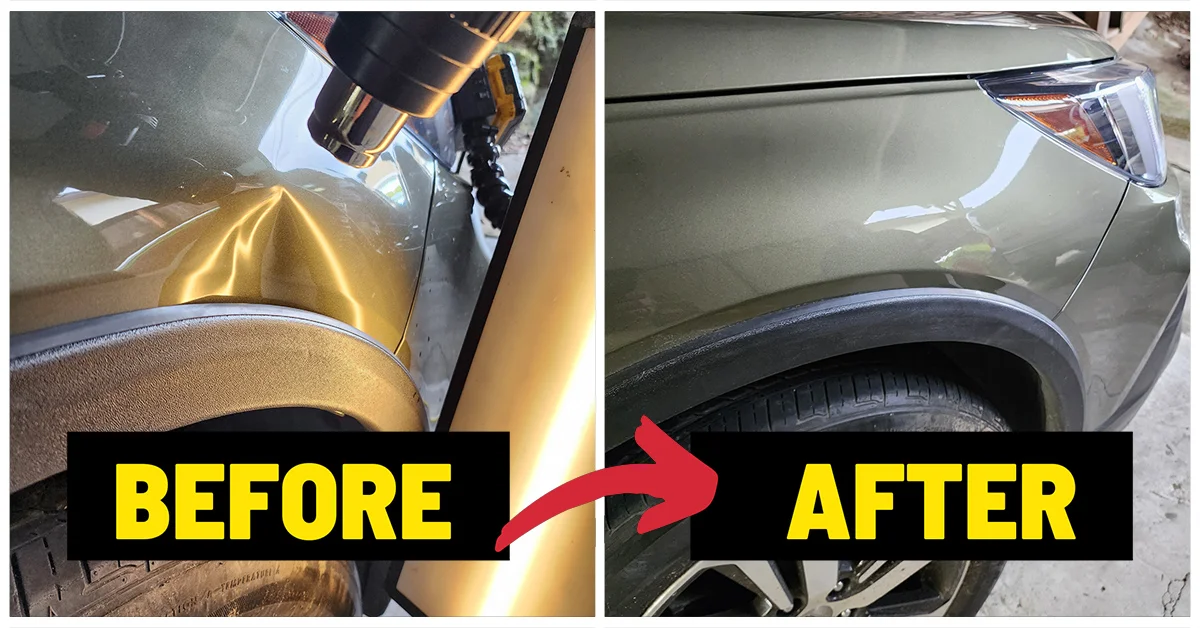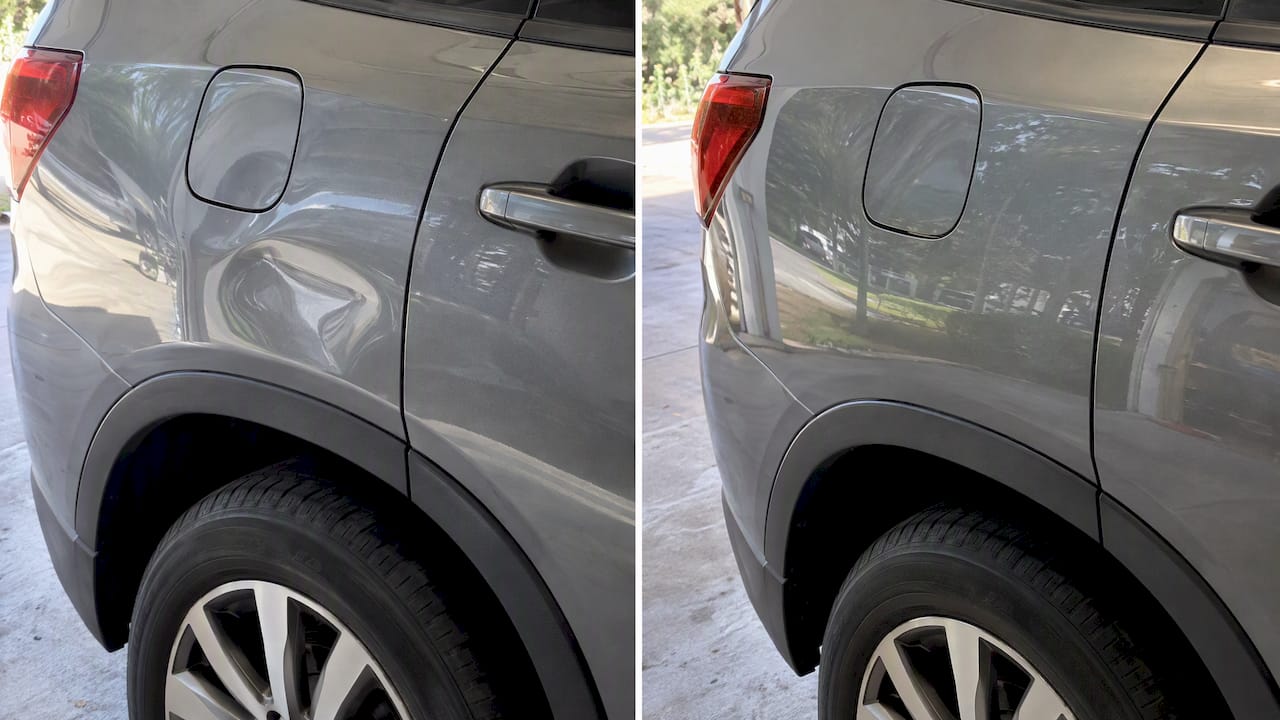
Paintless dent repair restores a dented panel to its factory shape without filler or paint, provided the paint itself never cracked and a technician can reach the back of the dent or use a glue-pull setup. It will not work on every dent. This article walks through the phases a technician follows, the tools involved, and the specific situations where PDR hits its limit.
TL;DR:
- Paintless dent repair is limited to dents with intact paint and accessible from behind or with glue pull techniques, excluding sharp creases and heavily stretched panels.
- Tools vary from hand rods and picks to glue-pull setups and heat shrinking, with access points often dictated by panel type and location, affecting repair duration and complexity.
- Repairs on steel and aluminum differ due to their material properties, with aluminum requiring special handling to prevent galvanic corrosion and avoid work hardening.
- Small, accessible dents can be fixed in under an hour with costs ranging from $150 to $500, while larger or complex damage requires longer, more expensive work.
- DIY kits suit superficial dings but are risky on crowns or body lines; professional assessment ensures proper technique, material handling, and quality results.
Table of Contents
- The Step-by-Step PDR Process
- Which Tools Do Technicians Actually Use?
- How Technicians Get to the Back of a Dent
- When Is a Dent Not a Good Fit for PDR?
- How Long Does It Take and What Does It Cost?
- Should You Try a DIY Kit or Call a Professional?
- Who Is Behind This Process Guide
- Caring for Your Panel After a PDR Repair
- Staying Safe During a PDR Repair
- Getting the Panel Ready Before Work Begins
- Where PDR Fits in Modern Repair Work
- Get a Professional PDR Assessment Near You
- Sources
- FAQ
The Step-by-Step PDR Process
Every paintless dent repair follows the same basic sequence, whether it is a shopping cart ding or a hail-peppered hood. What changes from job to job is the time each phase takes and the tools needed to get there.
- Assess the damage. The technician measures the dent’s size and depth, checks the paint for any cracking, and inspects the surrounding metal for creases or stretching that might rule out PDR entirely.
- Plan the access route. Depending on where the dent sits, the technician decides between reaching it through an existing opening with a rod, or pulling it from the front with glue tabs when there is no way to get behind the panel.
- Manipulate the metal. Working from behind with steady, controlled pressure, or pulling from the front, the technician brings the low point up while tapping down any high spots, called crowns, that form as the metal moves.
- Detail and inspect. The final pass uses fine pushing and light taps to smooth out any texture, followed by a check under a directional light, often a PDR lamp with reflective lines, to spot anything the eye alone would miss.
This process is described in detail by industry training resources, which note that PDR works on both steel and aluminum panels as long as the paint stays intact throughout. That last condition matters more than most people realize: once paint cracks, the metal underneath has usually stretched past the point where pushing it back will hide the damage. A broader overview of the method, including its history and common limitations, is also summarized in the Wikipedia entry on paintless dent repair, which is a useful reference if you want the short version before digging into technique.
Which Tools Do Technicians Actually Use?
The tools a technician reaches for depend entirely on where the dent sits and how much room there is to work.
- Hand rods and picks come in dozens of shapes and lengths, each suited to a different angle or depth of access, and the final strokes with a fine-tipped tool are what smooth out texture after the bulk of the dent is pushed out.
- Glue-pull setups use adhesive tabs, a specialized collision glue, and a lifter or slide hammer to pull the dent toward the front when there is no way to get a rod behind it.
- Hammer-and-dolly work and heat shrinking come into play when metal has moved unevenly and needs to be blended back to a consistent crown, rather than simply pushed.
Glue pulling is not simply PDR by another name. As Fender Bender’s trade coverage points out, it is its own process with its own failure points, and getting consistent results depends heavily on temperature and cleanliness control for the tabs, the glue, and the panel itself. For a closer look at what that preparation involves before you consider a glue-pull job yourself, see our glue pull dent repair checklist.
Pro Tip: Keep tabs, glue, and the panel surface at a consistent room temperature, and wipe the bonding area with isopropyl alcohol right before applying glue. A cold panel or a greasy surface is the most common reason a glue pull fails to hold.
How Technicians Get to the Back of a Dent
Access is often the deciding factor in whether a dent is a quick fix or a multi-hour job. Door panels, wheel wells, and trunk linings are the most common entry points, and trim removal is routine when the dent sits near an edge or seam.
- Double-skin panels and welded reinforcements (common on roofs, rocker panels, and structural pillars) can block rod access entirely, forcing a shift to glue pulling or ruling PDR out altogether.
- Steel and aluminum behave differently under the same pressure. Steel tends to work harden, meaning it resists further movement the more it is manipulated, while aluminum requires separate tools to avoid galvanic corrosion from cross-contamination with steel residue.
- Mobile repairs favor straightforward access. A dent reachable through a door panel or wheel well liner is well suited to an onsite appointment, while anything requiring structural disassembly is better handled in a shop setting.
When Is a Dent Not a Good Fit for PDR?
Not every dent is a PDR candidate, and spotting the signs early saves time and avoids a repair that has to be redone.
- Cracked or flaking paint almost always rules out PDR, since the metal underneath has typically stretched beyond what reshaping can fix.
- Sharp creases, severe stretching, or what techs sometimes call fjords (long, narrow, deep dents) resist the gradual push-and-pull that PDR relies on.
- Heavy structural reinforcement or double-skin construction can block tool access even when the damage itself looks mild.
- Insurance or OEM repair procedures sometimes specify conventional methods regardless of whether PDR would physically work.
Industry guidance consistently draws this line between PDR-appropriate dents and ones that need traditional filler and paint work. If a technician attempts PDR and the metal does not cooperate, the panel usually ends up needing filler and a full repaint anyway, which is why an honest assessment upfront matters more than optimism.
How Long Does It Take and What Does It Cost?
A single, isolated dent on an easily accessed panel often takes under an hour, and many of these jobs are finished same-day. Hail damage or multiple dents across several panels can stretch into several hours or, in heavier cases, multiple days.
- Small, single dents sit at the lower end of the cost range.
- Dent count, access difficulty, and panel material (aluminum often takes longer than steel) all push the price up.
- Luxury or specialty panels can carry higher costs due to more careful handling and finishing work.
Denterasers LLC’s paintless dent repair service lists a price range of $150 to $500 per job, which reflects how much variation exists even within a single repair category. Getting an actual estimate for your specific dent is the only reliable way to know where your job falls in that range.
Should You Try a DIY Kit or Call a Professional?
A shallow, isolated dent on a flat panel is about the best case for a DIY windshield repair kit, and plenty of owners have had success with simple dings. Crowns, body lines, and anything near an edge are a different story.
- DIY kits often lack the finesse needed to blend a crown back smoothly, and an inexperienced pull can stretch the metal further instead of fixing it.
- Paint damage is a real risk if a tab is pulled at the wrong angle or the glue bonds somewhere it should not.
- Professionals bring tool access, trained technique, and correct tool selection for the specific panel and metal type, along with the convenience of a mobile appointment.
A reasonable approach: give the dent a visual check yourself first, and if it sits on a crown, body line, or a vehicle you care about keeping pristine, bring in a professional rather than risk a second repair on top of the first.
Who Is Behind This Process Guide
This guide draws on standard collision repair training, including curriculum used in courses like the Collision Repair Technology program at Utah Valley University, which covers PDR alongside hammer-and-dolly work, heat shrinking, and corrosion protection. Denterasers LLC performs mobile paintless dent repair, plastic bumper repair, and specialty work for luxury, vintage, and motorcycle vehicles, with before-and-after photo galleries available for readers who want to see the process results firsthand.
Caring for Your Panel After a PDR Repair
Once a dent is pushed back into shape, the repaired area needs the same care as the rest of the panel, nothing more and nothing less, since no filler or new paint was applied.
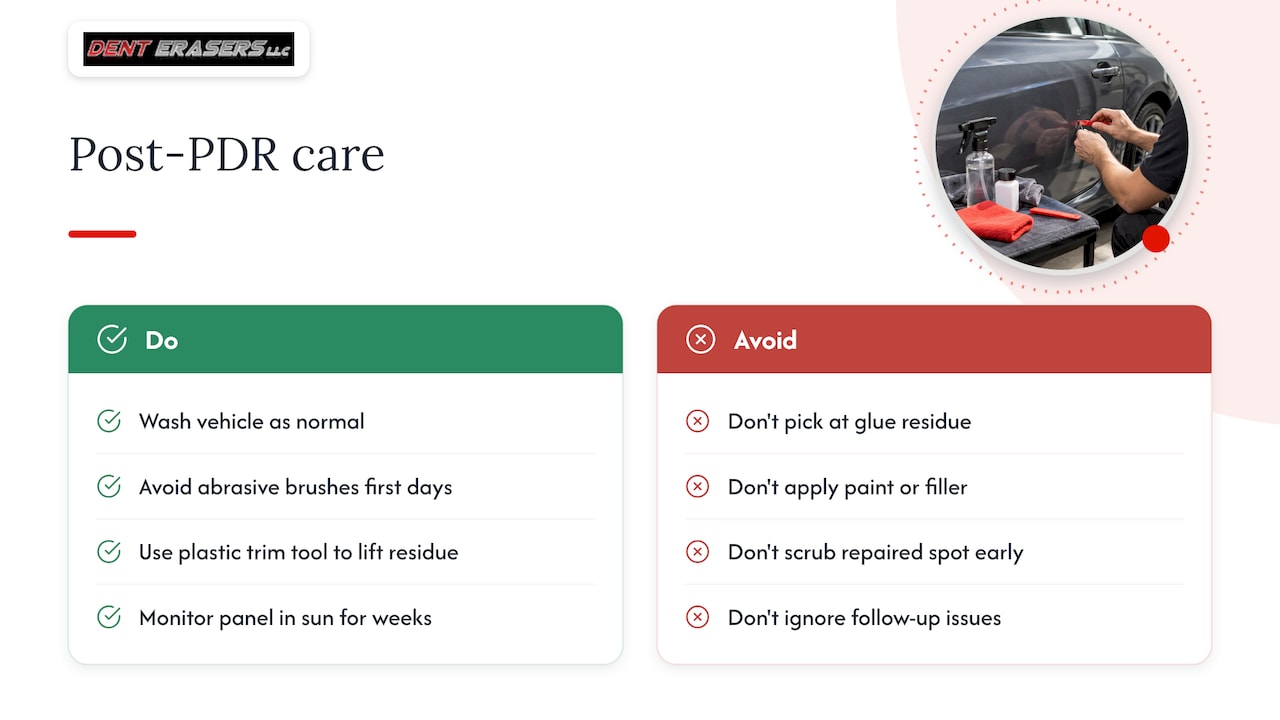
Wash the vehicle as you normally would, avoiding abrasive brushes directly over the repaired spot for the first few days while any glue residue fully cures and is removed. If a glue-pull tab left a slight residue ring, a plastic trim tool and a bit of adhesive remover will lift it without touching the clear coat.
Keep an eye on the panel in direct sunlight over the following weeks. Metal that has just been manipulated can occasionally show a faint high or low spot once temperature changes cause it to settle, and this is the kind of thing a follow-up visit can usually correct quickly. There is no special wax, sealant, or maintenance schedule required beyond your normal car care routine, since the factory finish was never disturbed.
Staying Safe During a PDR Repair
PDR is a hands-on, tool-intensive process, and a few precautions keep both the technician and the vehicle safe throughout. Rods and picks are under constant tension against the metal, so a slipped tool can mark a panel or catch a hand that is not positioned carefully.
Glue-pull work introduces its own hazards. The adhesives used can bond skin as readily as metal, and the heat used to soften tabs for removal needs to stay controlled to avoid scorching paint or warming adjacent panels unevenly. Eye protection is standard when using slide hammers or lifters, since a tab that releases suddenly can send small parts flying.
Mobile repairs add one more variable: weather and lighting. A reliable light source for inspecting the finish and a stable, level work area matter just as much on a driveway as they do in a shop bay.
Getting the Panel Ready Before Work Begins
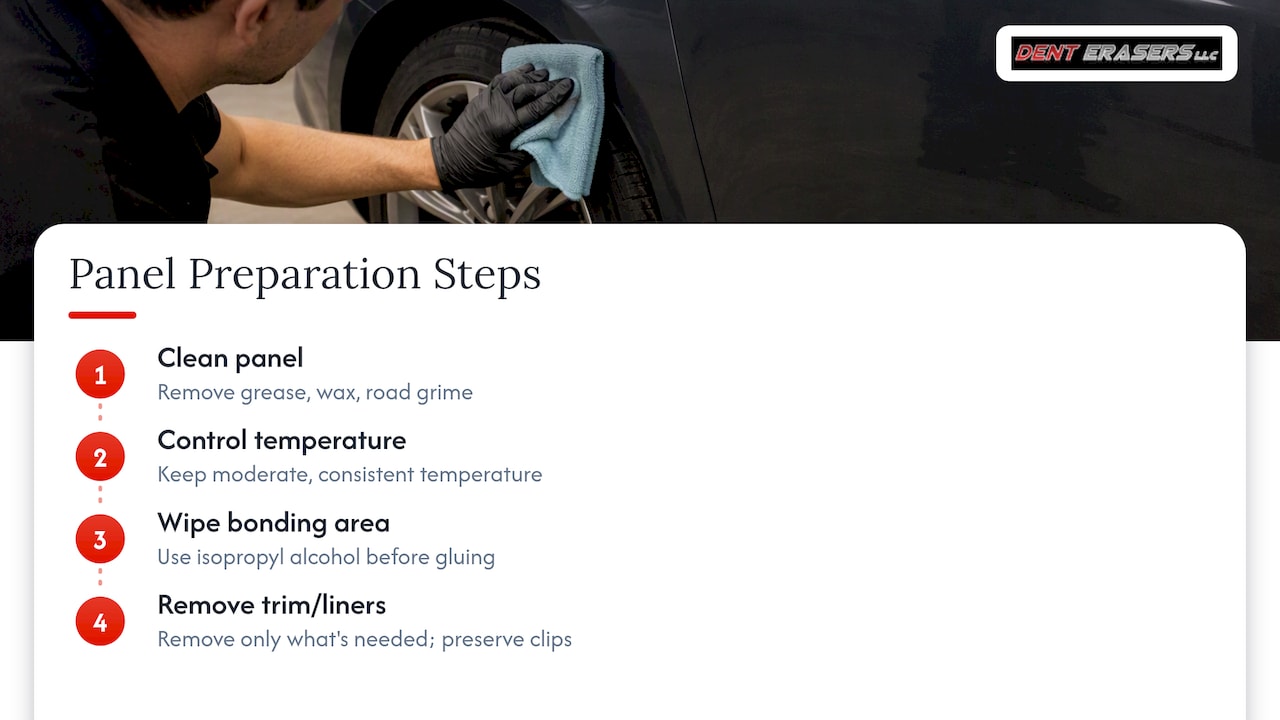
Preparation sets up everything that follows. The panel needs a thorough cleaning first, since any grease, wax, or road grime left on the surface will interfere with glue adhesion and can mask small surface imperfections that matter for a clean repair.
Temperature control is just as important. Glue pulls in particular depend on a consistent, moderate temperature for the tabs, the adhesive, and the panel itself, and cold weather can slow curing enough to cause a tab to release mid-pull. A quick wipe with isopropyl alcohol right before applying glue removes any residual film the initial wash missed, giving the adhesive the clean surface it needs to bond properly.
For rod access, preparation also means removing the right trim pieces or panel liners without damaging clips or fasteners that are often reused. Taking the extra few minutes here avoids a rushed, incomplete setup that leads to a sloppier repair later.
Where PDR Fits in Modern Repair Work
PDR earns its place by using less material and less time than filler and repaint work, while keeping the factory finish intact. Glue pulling is a genuinely useful complement to that process, not a replacement for it, and the skill of the technician still matters more than the tool in hand.
— Brian Blanc
Get a Professional PDR Assessment Near You
A DIY kit can handle a shallow ding, but a crown, a body line, or a panel you actually care about deserves a trained eye and the right tools the first time. Mobile paintless dent repair services often include large and small dent repair, plastic bumper repair, and specialty services for luxury, vintage, and motorcycle vehicles, sometimes performed onsite to avoid the need for a shop queue.

If you want to see what a finished repair actually looks like before booking, browse the paintless dent repair and specialty vehicle services page for before-and-after examples, then request an onsite assessment to get a real estimate for your dent.
Sources
- Paintless Dent Removal | What is Paintless Dent Removal?
- Why glue pulling doesn’t work for you (and how to fix it) | Fender Bender
- Paintless dent repair – Wikipedia
FAQ
How much does PDR normally cost?
Cost depends on dent size, count, and how hard the panel is to access, so there is no single flat rate. Denterasers LLC lists paintless dent repair starting between $150 and $500 per job, with large or complex dents running higher within that range.
Is glue-pull repair the same thing as paintless dent repair?
No. Glue pulling is a separate technique that pulls a dent from the front using adhesive tabs, often used when there is no access to push from behind, and it depends heavily on temperature and cleanliness control to work reliably, as Fender Bender’s coverage explains. It is often used alongside traditional rod-based PDR rather than instead of it.
Does paintless dent repair come with a warranty?
Warranty terms vary by provider, so check with the technician or company performing the work for their specific policy. Ask what the warranty covers, such as the repaired panel reverting or a crown reappearing, before the job starts.
Can PDR fix a dent with cracked paint?
Generally no, since cracked paint usually means the metal underneath has stretched past the point where reshaping will hide it. In that case, the panel typically needs filler and a repaint instead, a distinction covered in the paintless dent removal overview.
How long does a typical PDR repair take?
A single, easily accessed dent often takes under an hour and can be finished same-day. Multiple dents or widespread hail damage can take several hours or, in more involved cases, more than a day.