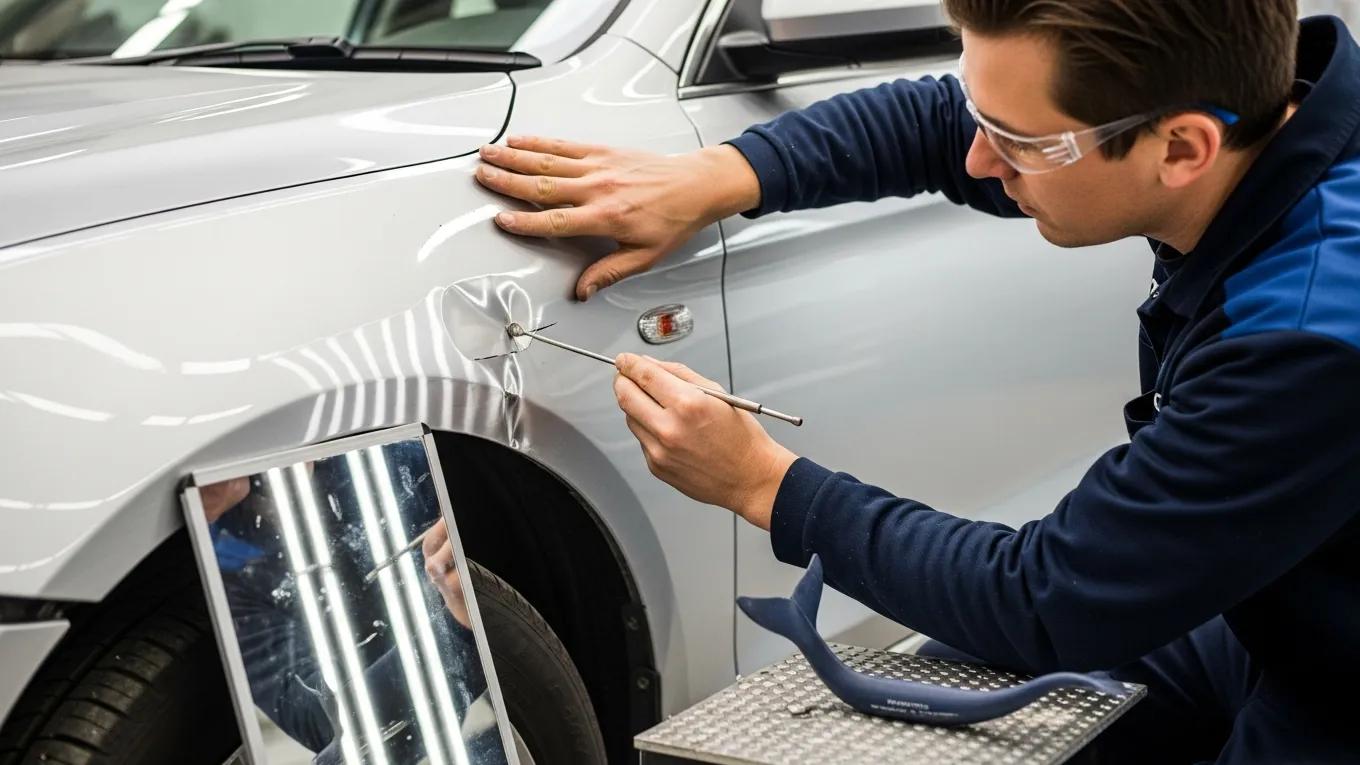
Best Practices for Aluminum Panel Paintless Dent Repair
By Brian Blanc, Dent Erasers LLC
Aluminum panel repair requires understanding the metal’s properties and proper restoration techniques. This guide covers paintless dent removal (PDR) best practices for aluminum panels, including common challenges, which dents suit PDR, the tools used, a concise step-by-step workflow, and benefits of preserving the original finish.
Key Takeaways
- Aluminum is more malleable than steel and can stretch or crack if mishandled.
- PDR works best for shallow, round dents that do not break the paint.
- Typical PDR methods include glue-pulling, heat-assisted work, and push tools.
- Proper tools — PDR rods, glue tabs, and controlled heat sources — are essential.
- A clear process (assess, prepare, repair, polish) yields consistent results.
- Access and complex creases are common technician challenges.
- PDR preserves factory paint, is eco-friendlier, and helps retain resale value.
- Costs vary by size; PDR is usually cheaper for small-to-medium dents.
Understanding Aluminum Panel Repair Challenges
Aluminum behaves differently than steel: it is lighter and more malleable, so dents can stretch the metal and alter its shape. Many aluminum panels are thinner and therefore more prone to cracking when overworked. Technicians must account for these traits and use low-force, controlled techniques to avoid additional damage.
Ideal Dents for PDR
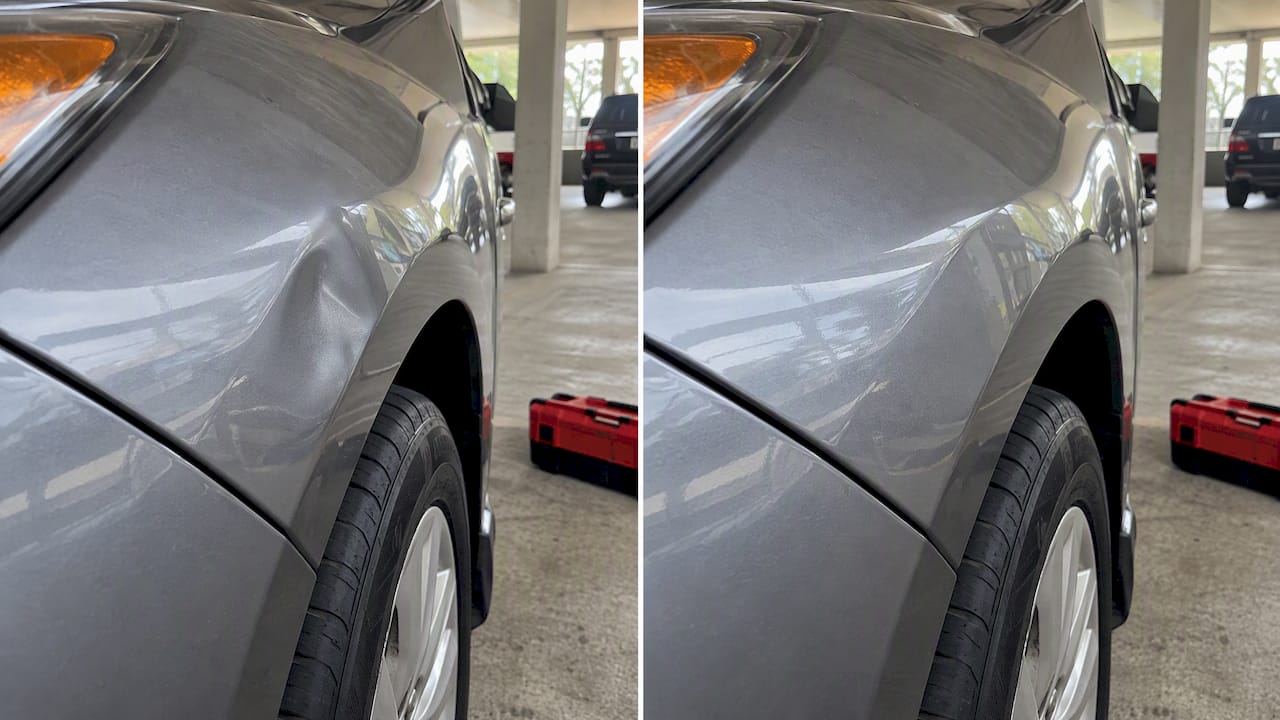
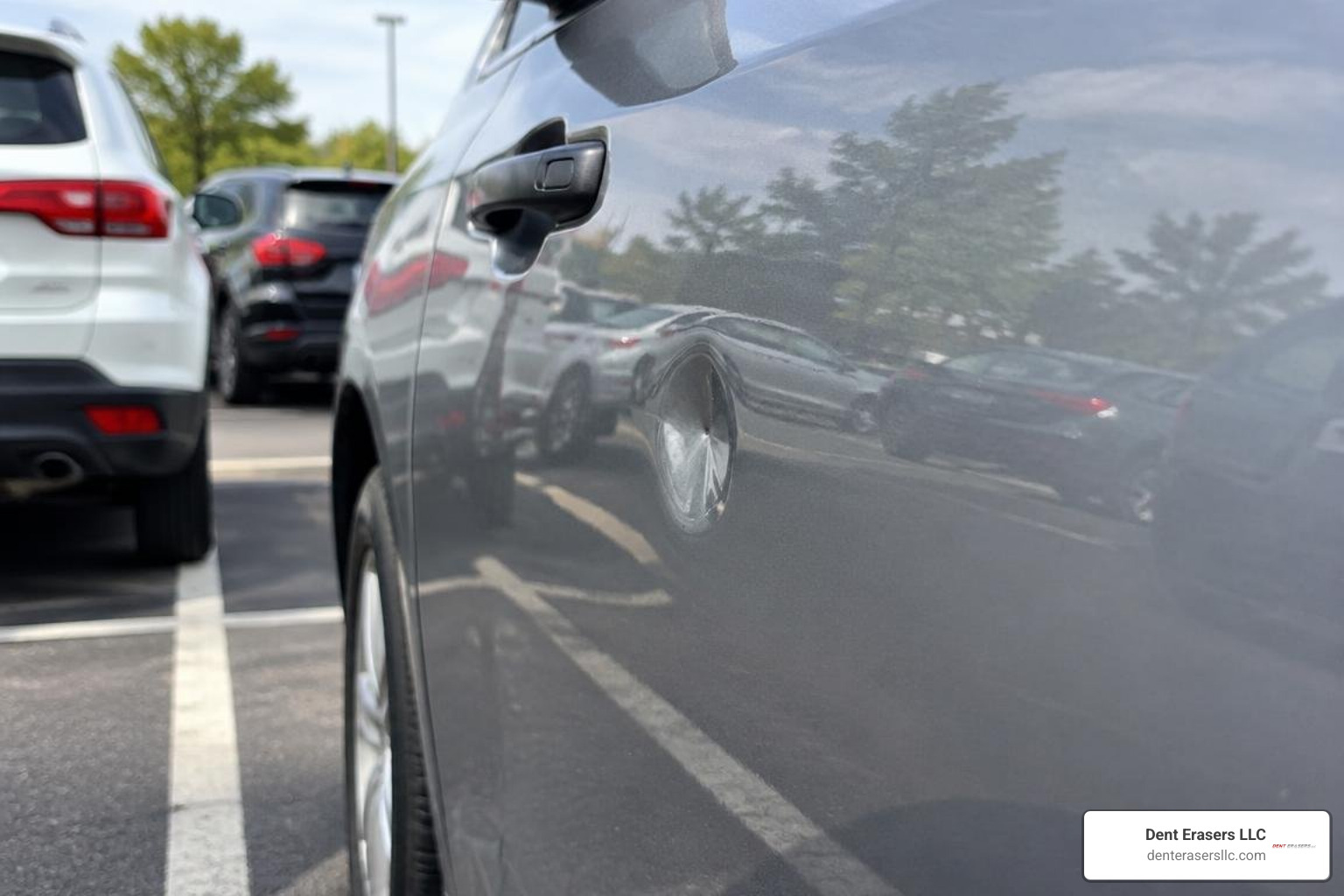
Not every dent qualifies for PDR. The best candidates are shallow, round dents accessible from behind the panel and with intact paint.
- Shallow Dents: Dents that do not penetrate paint and are small in diameter.
- Round Dents: Circular or oval dents that allow controlled reshaping.
- Dents with Smooth Edges: No sharp creases or significant metal stretch.
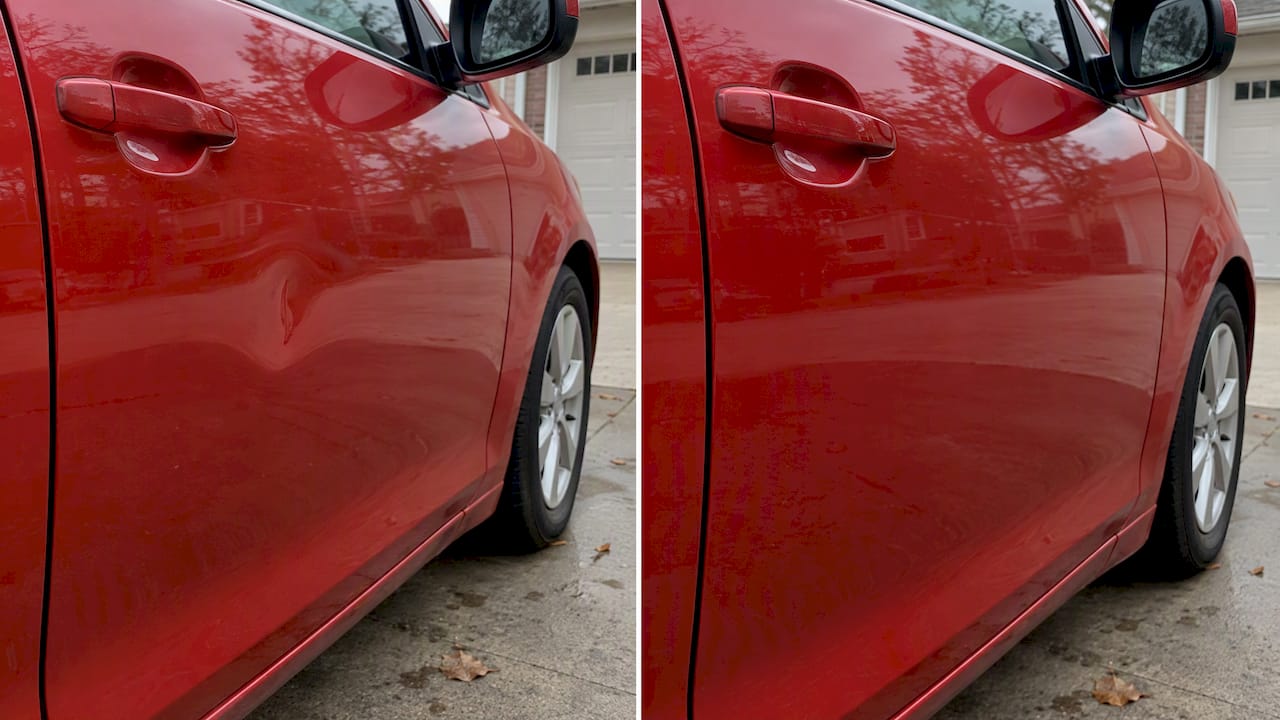
When these conditions are met, a technician can restore the panel without repainting.
PDR Techniques for Aluminum Dents
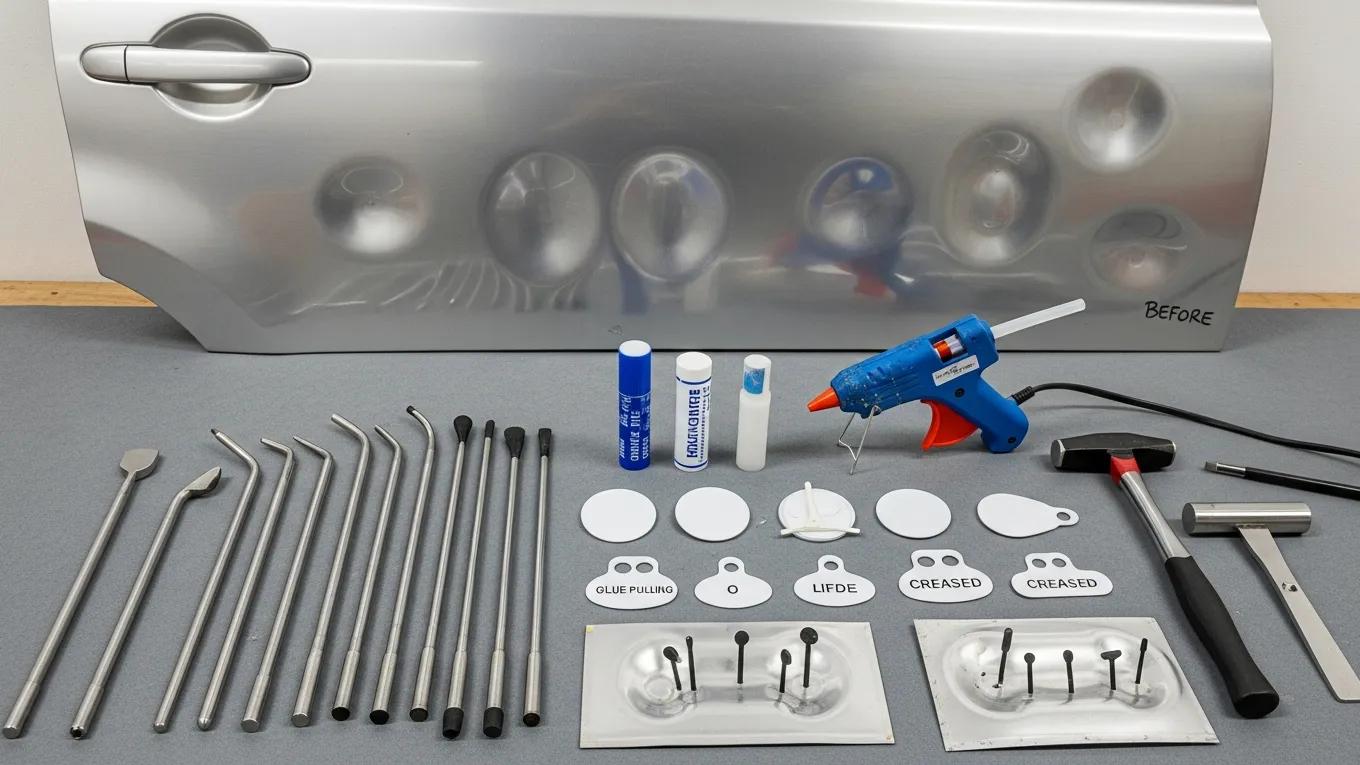
Technicians select the technique that matches the dent’s size, shape, and access.
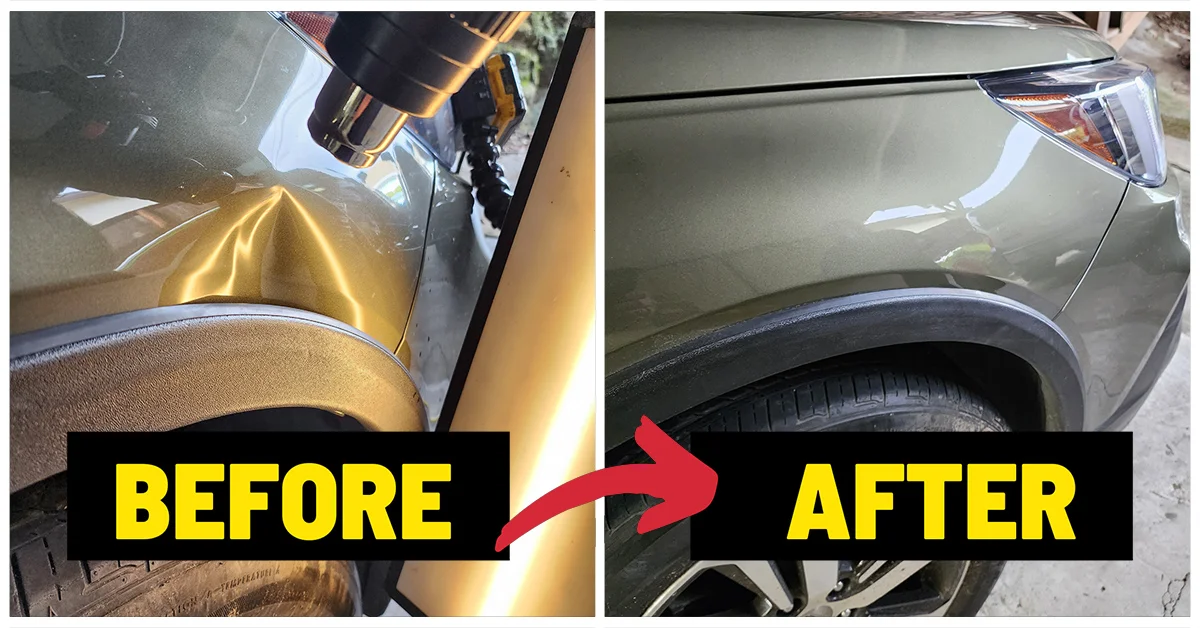
- Glue-Pulling Technique: Adhesive tabs are pulled outward to lift the dent.
- Heat-Assisted PDR: Controlled heat makes aluminum more pliable for adjustment.
- Traditional Push Techniques: PDR rods push from behind to restore contour.
All methods require skill and measured force to avoid stretching or cracking the metal.
Specialized Tools for PDR
Aluminum repairs demand the right tools for precision and control.
- PDR Rods: Various shapes and lengths to reach and push dents from behind.
- Glue Pulling Kits: Tabs and pullers sized for different dent profiles.
- Heat Guns: Low-temperature control to soften aluminum without damaging paint.
Using appropriate tools reduces repair time and improves finish quality.
Step-by-Step PDR Approach
A consistent sequence helps produce predictable, quality results.
- Comprehensive Dent Assessment: Evaluate size, depth, paint condition, and access.
- Preparation: Clean area, protect surrounding panels, and arrange tools.
- Applying Techniques: Use glue pulling, heat, or push tools as appropriate.
- Final Polishing and Quality Check: Blend, polish, and verify surface alignment.
This organised approach keeps repairs efficient and reduces risk of rework.
Common Challenges Encountered
Technicians often face limited access and complex dent shapes that require staged or hybrid techniques.
- Access Issues: Tight cavities, inner structures, or brackets can block tool entry.
- Complex Dent Challenges: Creases or stretched metal may need specialized strategies or partial traditional repair.
Identifying these constraints during assessment helps determine whether PDR alone is viable.
Benefits of PDR for Aluminum Panels
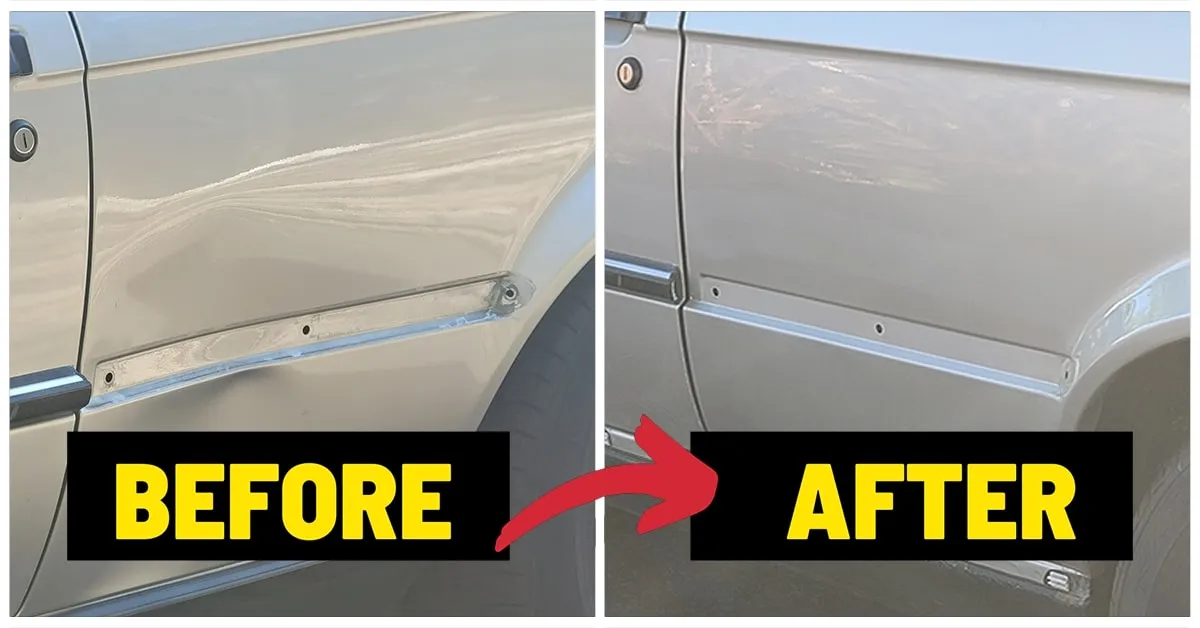
PDR offers clear advantages when applicable.
- Cost-Effectiveness: Less labor and materials than full panel replacement or repainting.
- Eco-Friendliness: No filler or repainting reduces waste and emissions.
- Preservation of Vehicle Value: Maintains factory paint and finish for resale appeal.
Dent Erasers LLC provides PDR services tailored to aluminum panels, combining appropriate tools with experienced technique selection.
The table summarises typical repair pathways and cost ranges; PDR is generally the more affordable option for small to medium dents.
By focusing on PDR when suitable, technicians preserve finish and reduce repair time compared with traditional bodywork.
Frequently Asked Questions
What types of vehicles benefit most from paintless dent removal?
PDR is ideal for modern vehicles with aluminum panels—luxury, sports, and many electric models—because their thinner sheets respond well to non-paint repairs.
How long does a typical PDR job take?
Small to medium dents often take 1–3 hours. Complex dents, poor access, or multiple repairs can extend work to most of a day.
Can paintless dent removal be performed on all types of dents?
No. PDR is for shallow, non-creased dents with intact paint. Deep, sharp, or paint-damaged dents usually require traditional repair.
Is paintless dent removal safe for my vehicle’s finish?
Yes. When performed correctly, PDR preserves the original paint because it reshapes metal without sanding or repainting.
What should I do if my vehicle has multiple dents?
Consult a PDR technician. Multiple dents are often handled in one session, which can reduce overall cost and time.
Are there any limitations to paintless dent removal?
Limitations include severe creasing, paint failure, stretched metal beyond its elastic limit, and areas with no rear access. Technicians will recommend the appropriate approach.
How can I maintain my vehicle to prevent dents?
Park in protected areas, use a car cover if needed, avoid tight parking spaces, and keep the finish clean and waxed to reduce dent risk and aid early detection.
Conclusion
Paintless dent removal is an efficient, value-preserving option for many aluminum panel repairs when dents meet PDR criteria. With proper assessment, the right tools, and experienced technicians, panels can be restored without repainting. Contact a professional PDR provider to determine the best repair plan for your vehicle.