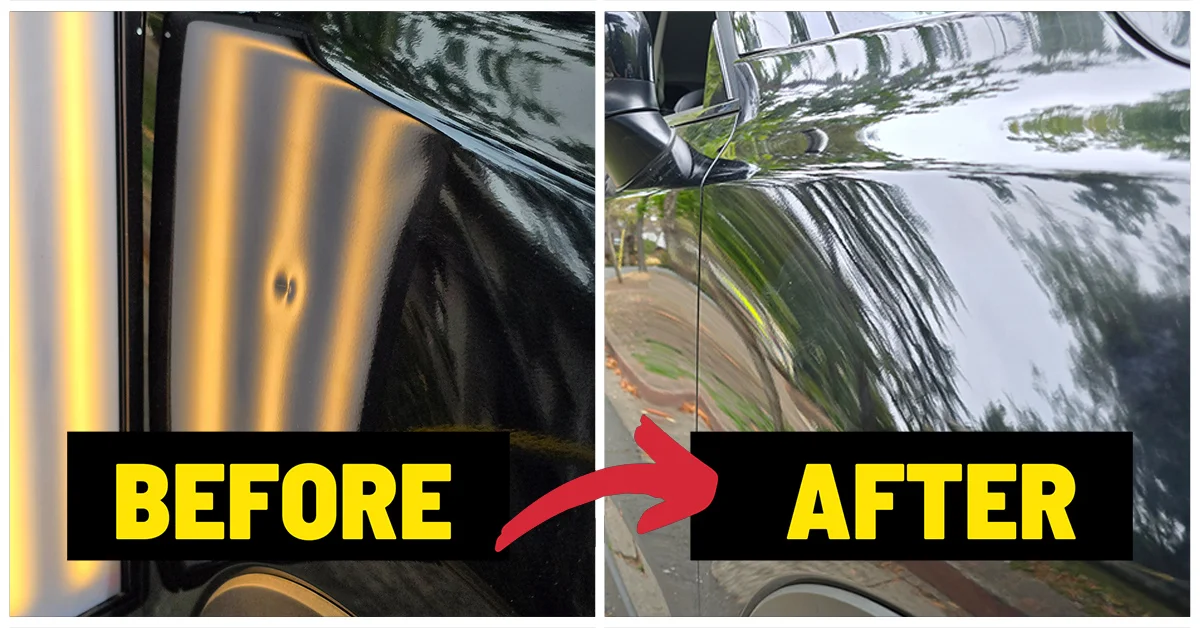
How to Fix Hail Damage Using Paintless Dent Removal
What Hail Does to Your Car (And Why PDR Is the Smartest Fix)
Paintless dent removal for hail damage is one of the most effective ways to restore your vehicle after a storm — without repainting, without body filler, and without wrecking your resale value.
Here’s a quick summary of what you need to know:
- What it is: A technique where specialized tools massage dents out from behind the panel, leaving factory paint intact
- Best for: Dents with no paint cracking, on accessible panels like hoods, roofs, doors, and trunks
- Not suitable for: Deep creases, crinkled metal, or dents with chipped or cracked paint
- Cost: DIY kits run $17–$86; professional repairs vary by dent count and severity
- Time: A single dent takes about an hour professionally; full hail repair may take a few days
- Key benefit: Preserves your factory finish and can prevent a 10–20% drop in resale value
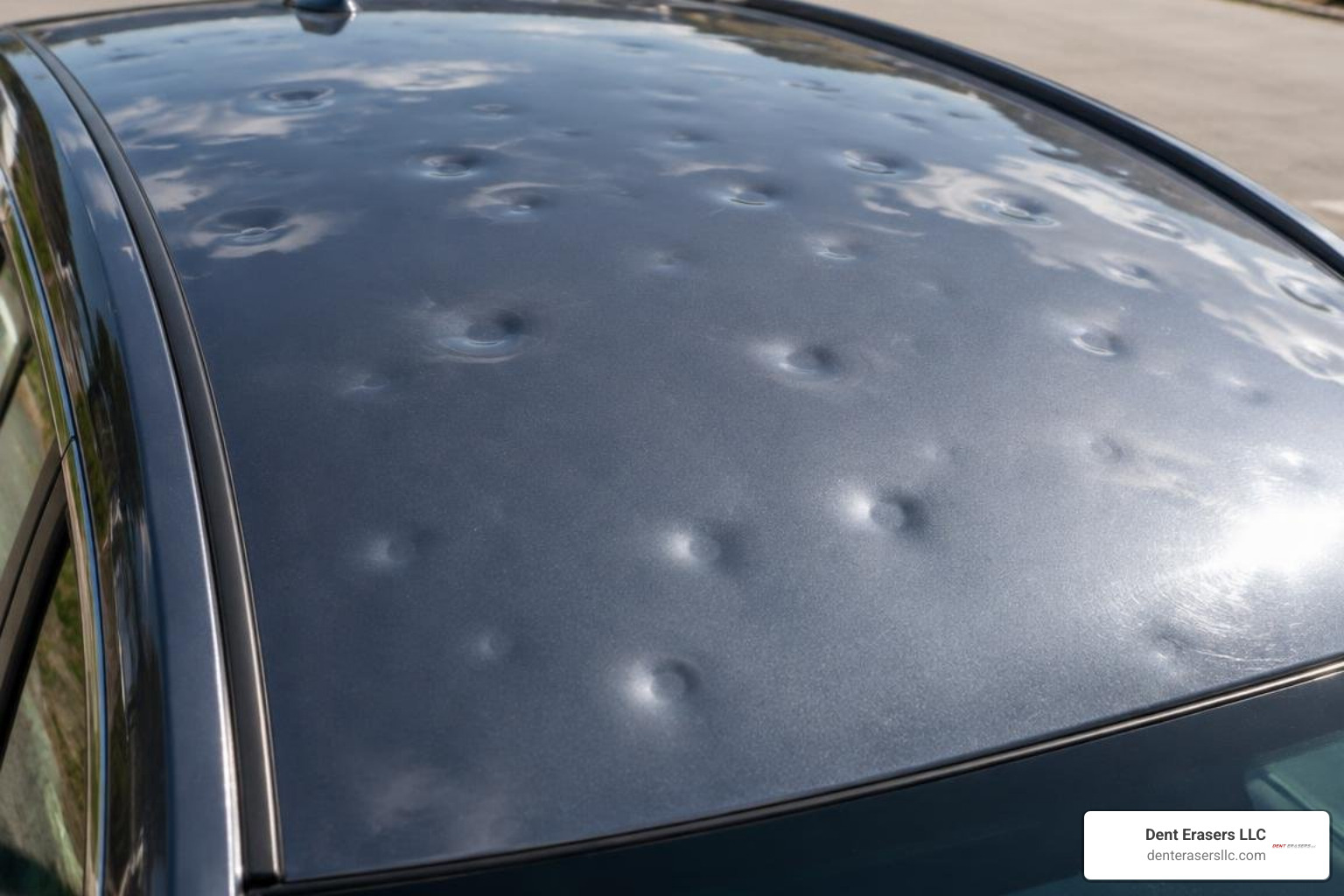
One moment your car looks fine. The next morning, you’re washing it and notice dozens of small craters across the hood and roof — the unmistakable calling card of a hail storm.
It’s a frustrating discovery. And your first instinct might be to call a body shop and brace for a hefty bill. But in most cases, you don’t need paint or filler at all.
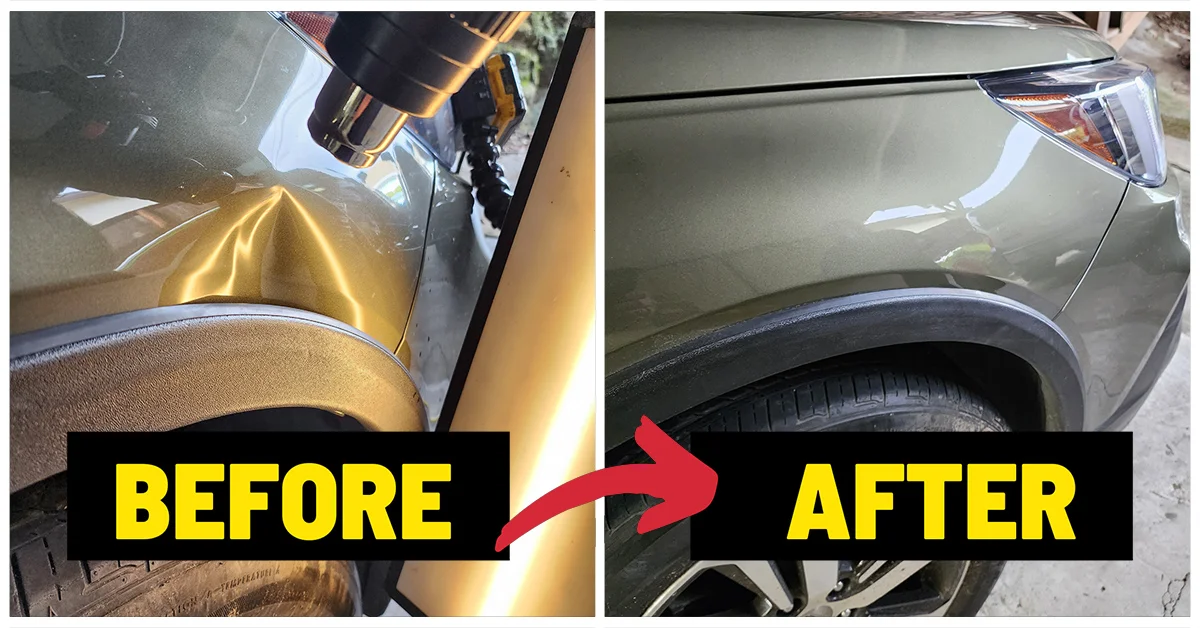
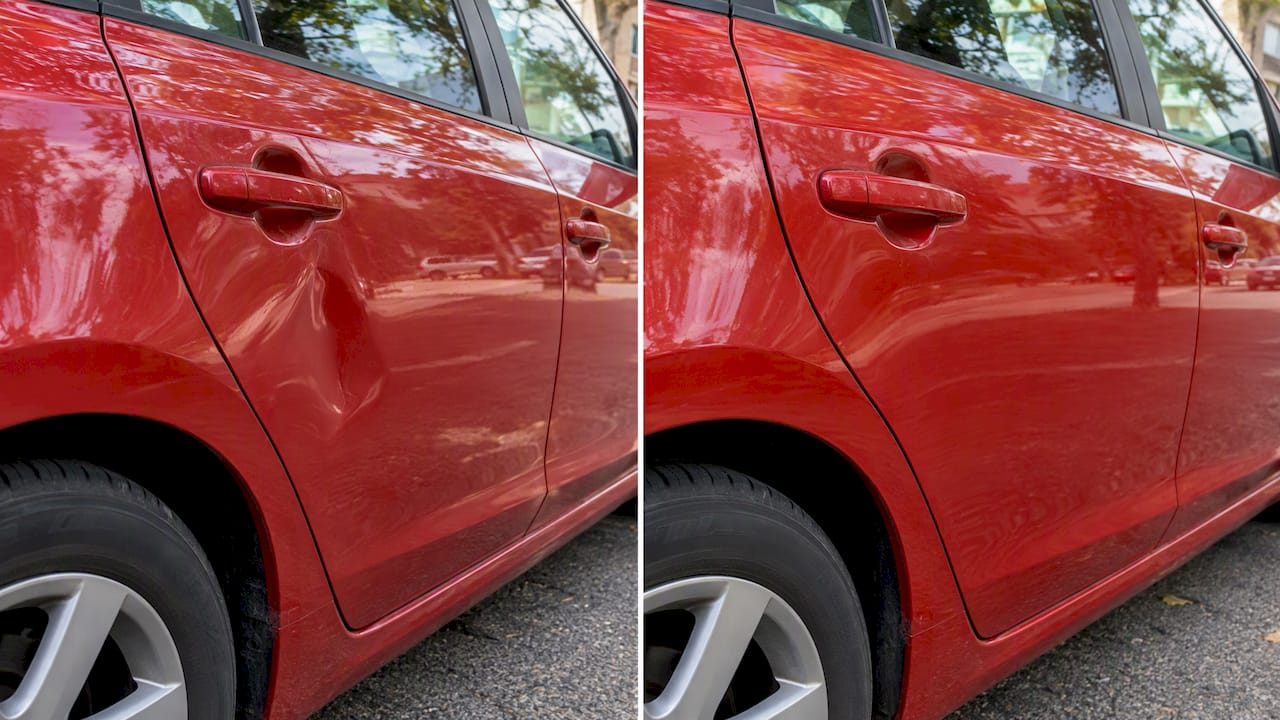
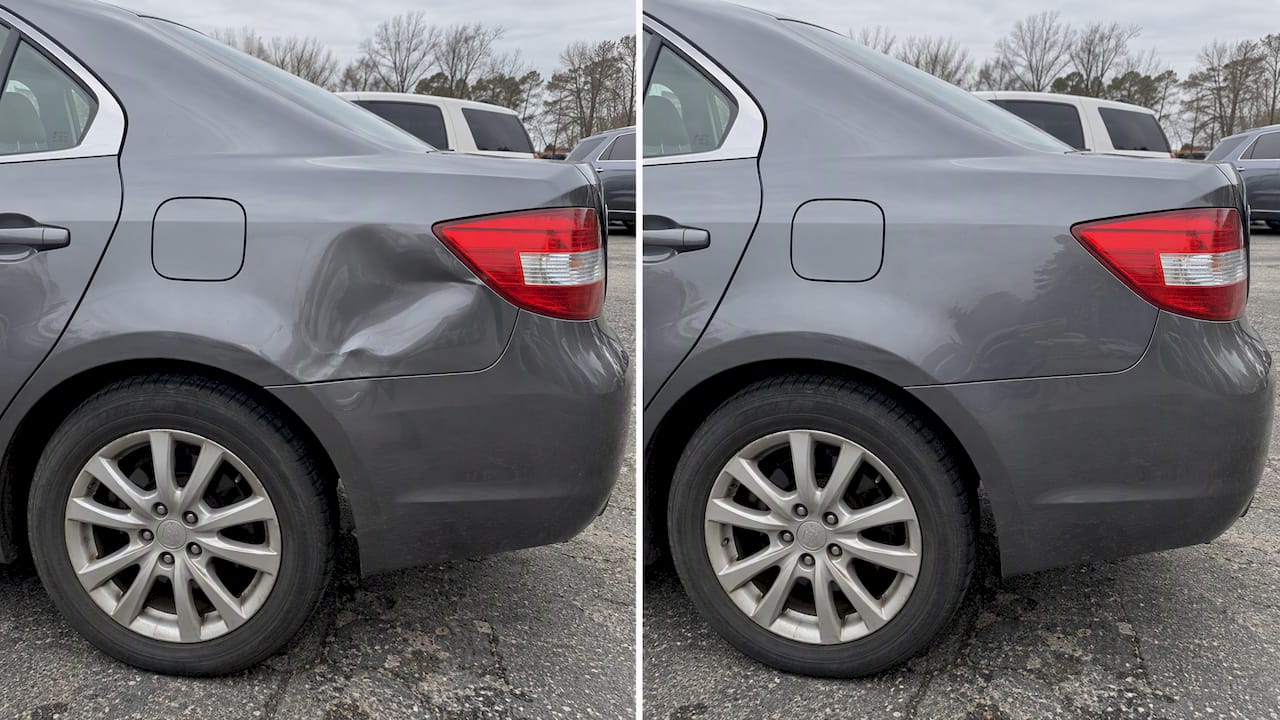
Paintless dent removal works by using the metal’s natural “memory” — its tendency to want to return to its original shape. When done correctly by a skilled technician, the results are virtually invisible. The paint stays intact. The factory finish is preserved. And your car looks like the storm never happened.
Neglecting hail damage, on the other hand, can lead to bigger problems: water intrusion, rust, mold, voided warranties, and a car worth significantly less when it’s time to sell.
This guide walks you through everything — how PDR works, when it’s the right call, what tools are involved, and how to decide between doing it yourself or calling a pro.
I’m Brian Blanc, owner of Dent Erasers LLC and a master PDR technician with 28 years of hands-on experience in paintless dent removal for hail damage across the East Bay Area. I’ve restored everything from minor door dings to vehicles covered in hundreds of hail dents — and I’m here to share exactly what works.
What is Paintless Dent Removal for Hail Damage?
When we talk about paintless dent removal for hail damage, we are describing a highly specialized craft. Unlike a traditional body shop that might sand down your car’s hood, slather it in “bondo” (body filler), and spray a new layer of paint, PDR is non-invasive. We work with the metal, not against it.
At its core, Understanding Paintless Dent Repair means recognizing that your car’s exterior panels have “memory.” Modern automotive steel and aluminum are designed to hold a specific shape. When a hailstone strikes, it creates a localized area of high surface tension. We use specialized tools to get behind that panel and gently massage the metal back to its original flat or curved state.
Because we aren’t using fillers or aftermarket paint, the factory finish remains 100% original. This is crucial for the long-term health of your vehicle. Factory paint is applied in a controlled environment and baked at high temperatures, making it far more durable than any “repainted” surface. By choosing PDR, you ensure your car’s exterior stays as tough as the day it left the assembly line.
How PDR Works for Hail Dents
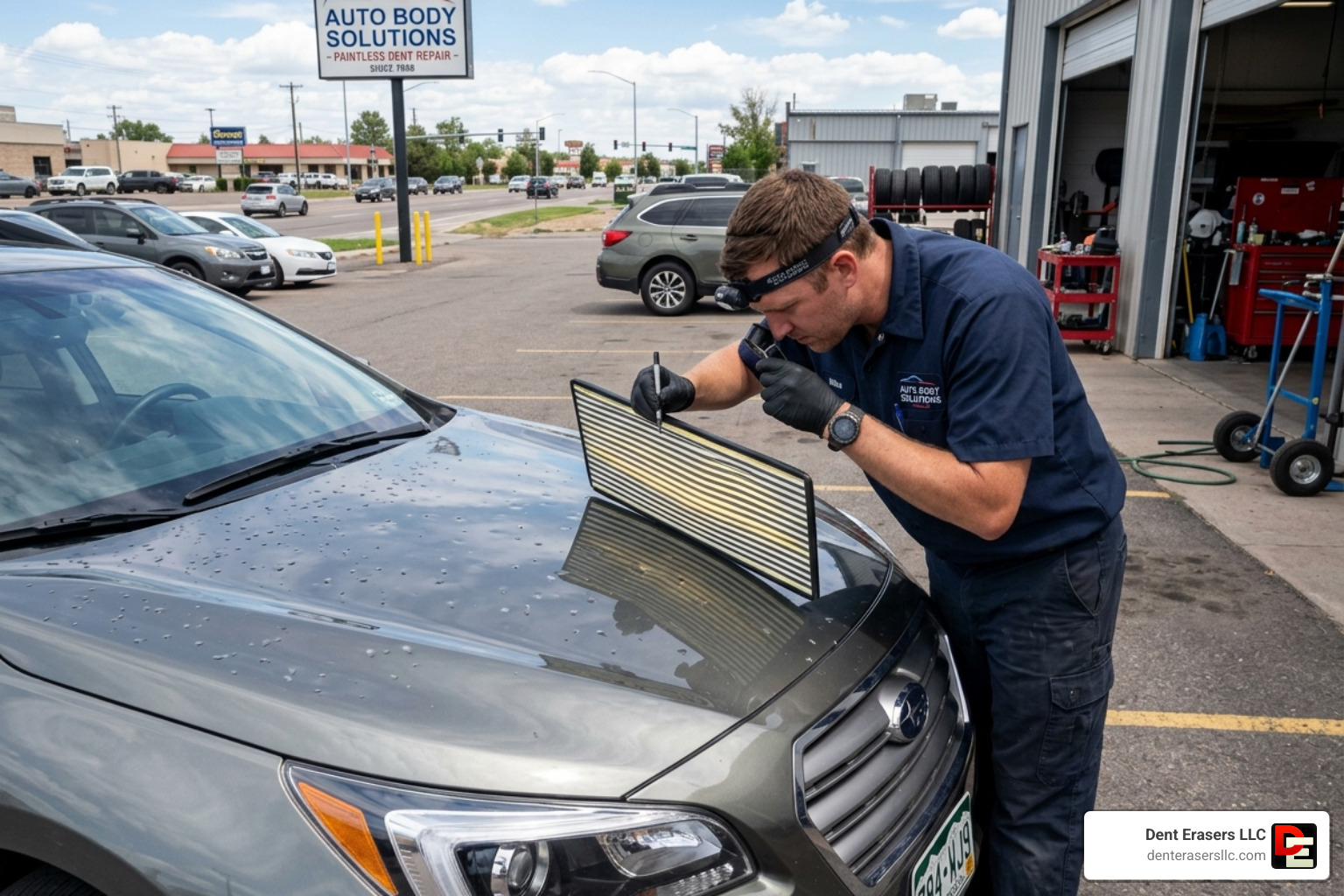
The process is a bit like reverse-engineering the impact. We start by using reflection boards or LED lights to “map” the damage. These lights project straight lines onto the car’s surface; where there is a dent, the lines curve.
There are 8 Reasons to Choose Paintless Dent Removal Over Traditional Methods, but the primary one is the precision of the technique. We typically use two main methods:
- Pushing: We slide long, stainless steel rods through existing access points (like window openings or manufacturing holes) to apply “micro-pushes” to the underside of the dent.
- Glue Pulling: If we can’t get behind the panel—such as on a reinforced roof rail—we bond a specialized plastic tab to the outside of the dent and use a pulling tool to lift the metal.
In both cases, we are releasing the “trapped pressure” caused by the hailstone. By tapping down the high spots and pushing up the lows, we restore the panel’s equilibrium.
When is PDR Suitable for Hail Damage?
While we love PDR, it isn’t a magic wand for every single type of damage. To be a candidate for Paintless Dent Repair in Contra Costa, your vehicle’s damage usually needs to meet these criteria:
- Paint Integrity: The paint must be intact. If the hail was large enough to chip, crack, or “spider-web” the paint, PDR alone won’t fix it because the moisture-barrier is broken.
- Metal Condition: The metal shouldn’t be “stretched” to the point of being sharp or creased. If the hailstone was the size of a tennis ball and left a deep, sharp crater, the metal might have lost its “memory.”
- Access Points: We need to be able to reach the back of the dent or have a clean surface for glue pulling. Most hoods, trunks, and roofs are prime candidates for PDR.
Whether your car is made of traditional steel or modern, lightweight aluminum, PDR is often the preferred method by insurance companies because it is faster and preserves the vehicle’s original parts.
Essential Tools and Kits for Repairing Hail Dents
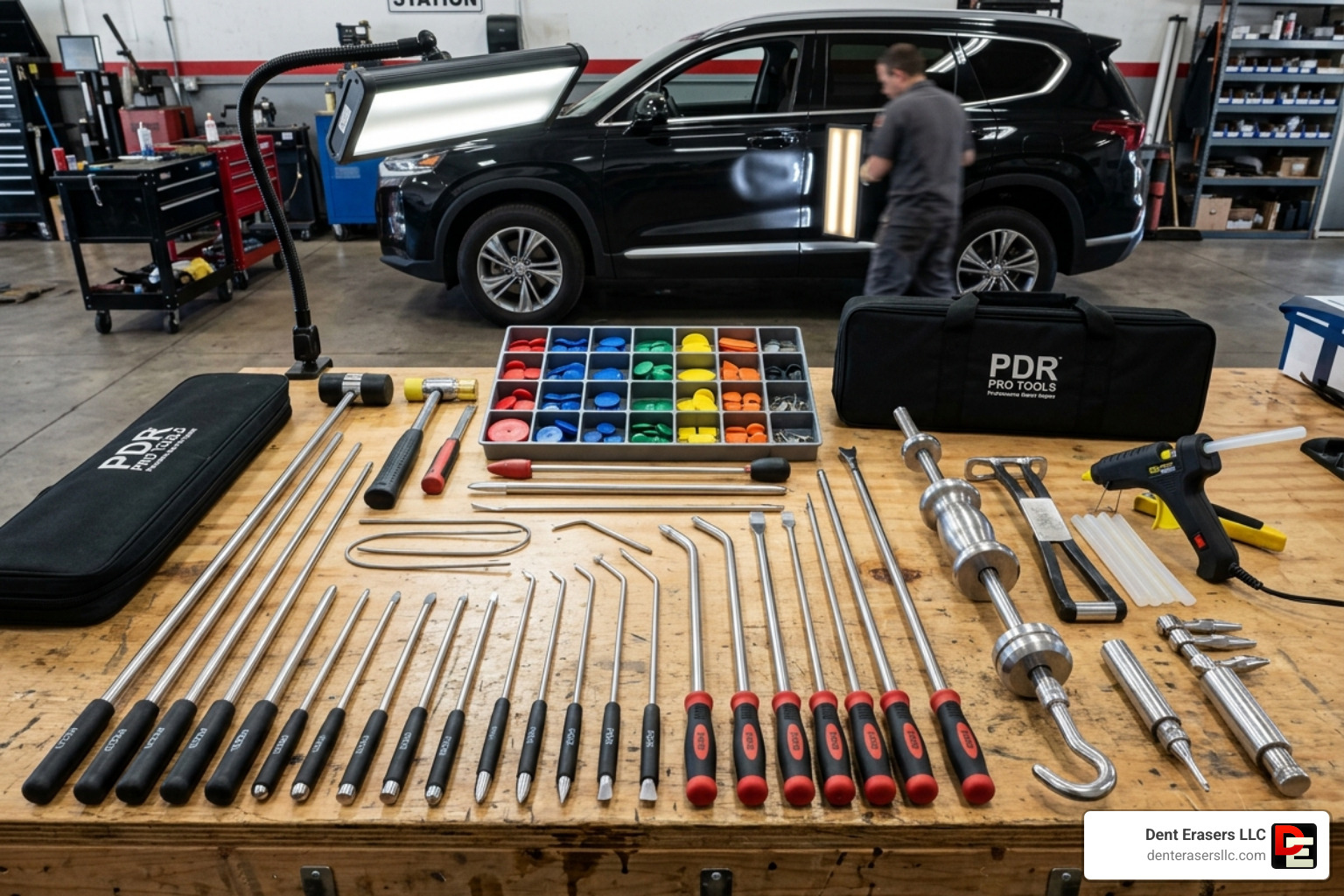
If you’ve ever browsed for a “hail damage repair kit” on Amazon, you’ve likely seen a dizzying array of colorful plastic tabs and metal rods. While professional kits can cost thousands of dollars, beginner kits are surprisingly affordable. However, the tool is only as good as the hand holding it.
Common tools in a PDR kit include:
- Dent Lifters and Bridge Pullers: Used for glue pulling.
- Slide Hammers: For stubborn dents that need a bit more “oomph” to pull out.
- Glue Tabs: Various shapes and sizes designed to fit different dent diameters.
- LED Reflection Lights: Absolutely essential. You cannot fix what you cannot see clearly.
- Knockdown Tools: Often made of delrin or plastic, these are used to gently tap down “high spots” or ridges.
Choosing the Best PDR Kit for Beginners vs. Professionals
There is a massive gap between a $40 Amazon kit and the professional-grade gear we use at Dent Erasers LLC. If you are a beginner, The Complete Paintless Dent Removal Checklist should be your first stop.
Beginner kits are usually focused on glue pulling because it’s safer for a novice than shoving a metal rod behind a door panel where you might accidentally snip a side-impact airbag wire or scratch the interior. However, beginner tools often lack the durability and precision needed for a “perfect” finish. Professional tools are made of high-carbon steel that doesn’t flex, allowing us to feel the metal through the tool—a sensation known as “reading the metal.”
Step-by-Step Process of Paintless Dent Removal for Hail Damage
When we arrive for a Mobile Dent Repair appointment in Concord or Walnut Creek, we follow a strict protocol to ensure the repair is flawless.
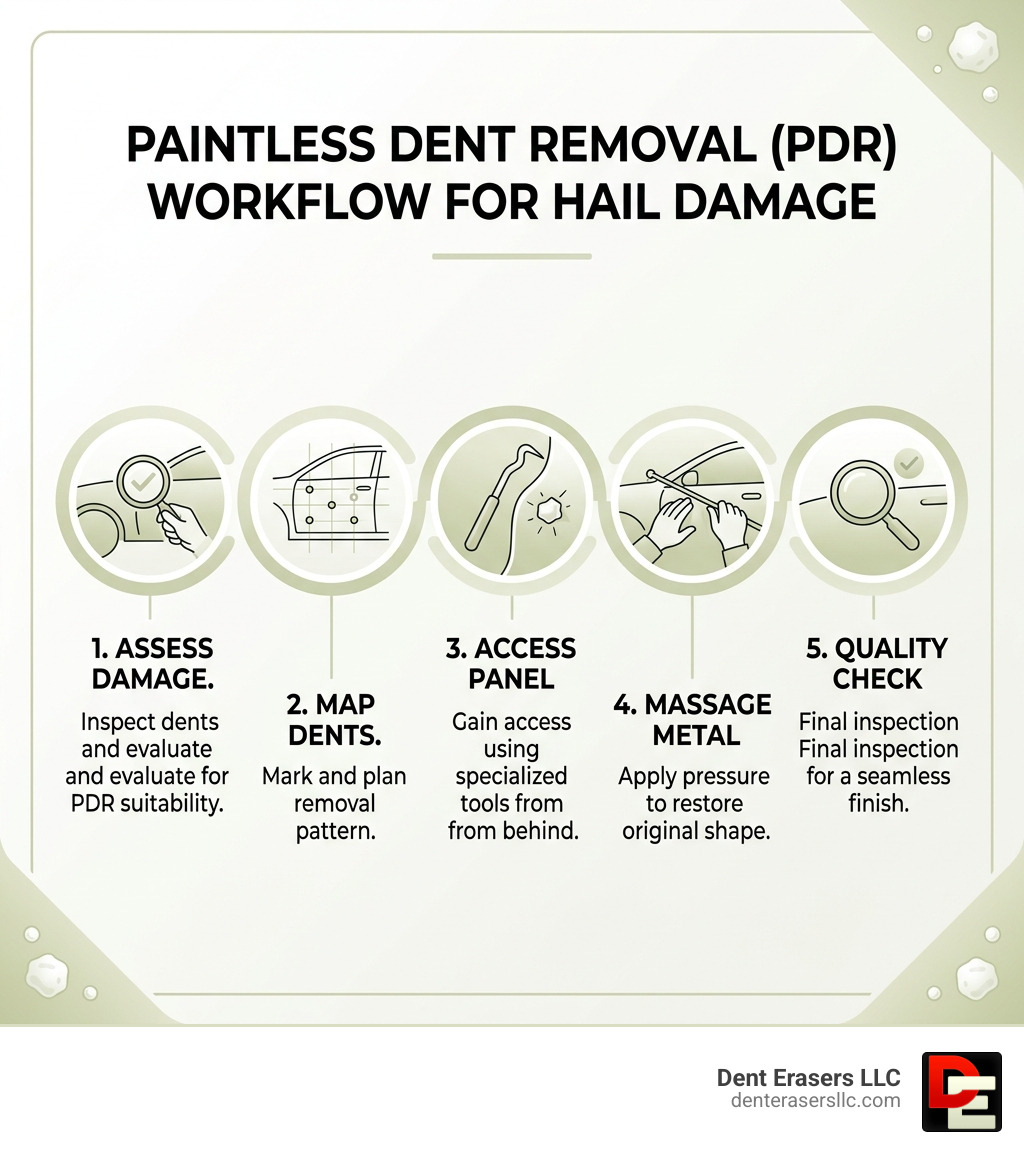
- Thorough Cleaning: We start by cleaning the panel. Any dirt or wax will prevent the glue from sticking or hide small “micro-dents.”
- Mapping the Damage: We set up our LED lights. In a hail storm, a car might have 50 to 200 dents. We use a water-soluble marker to circle every single one. This is vital for insurance documentation!
- Gaining Access: For hoods, we use prop rods. For roofs, we may carefully lower the headliner.
- The Repair (Pushing or Pulling):
- If pushing, we find the exact center of the dent with the tip of our tool. We apply tiny, controlled pulses of pressure.
- If pulling, we apply hot glue to a tab, wait for it to set (about 2-5 minutes depending on temperature), and use a lifter to pull the metal slightly “past” flat.
- Blending and Knocking Down: This is where the artistry happens. After a pull or a push, there is often a tiny “high spot.” We use a knockdown tool and a hammer to tap the metal back down to the level of the surrounding panel.
Advanced Techniques for Success with Paintless Dent Removal for Hail Damage
Experienced technicians use a process called Paintless Bodywork: Non-Invasive Repair to ensure the texture of the repair matches the rest of the car. Every car has “orange peel”—the natural, slightly bumpy texture of factory paint. If we push too hard, we smooth out that texture, making the repair visible to the naked eye.
We also use heat guns to warm the metal in cooler weather. Cold paint is brittle and can crack during a repair. By keeping the panel at a warm temperature, the paint remains flexible, allowing it to stretch along with the metal.
DIY vs. Professional PDR: Costs and Considerations
It is tempting to try a DIY kit, especially when you see them for under $50. But before you start gluing tabs to your BMW in San Ramon, consider the risks.
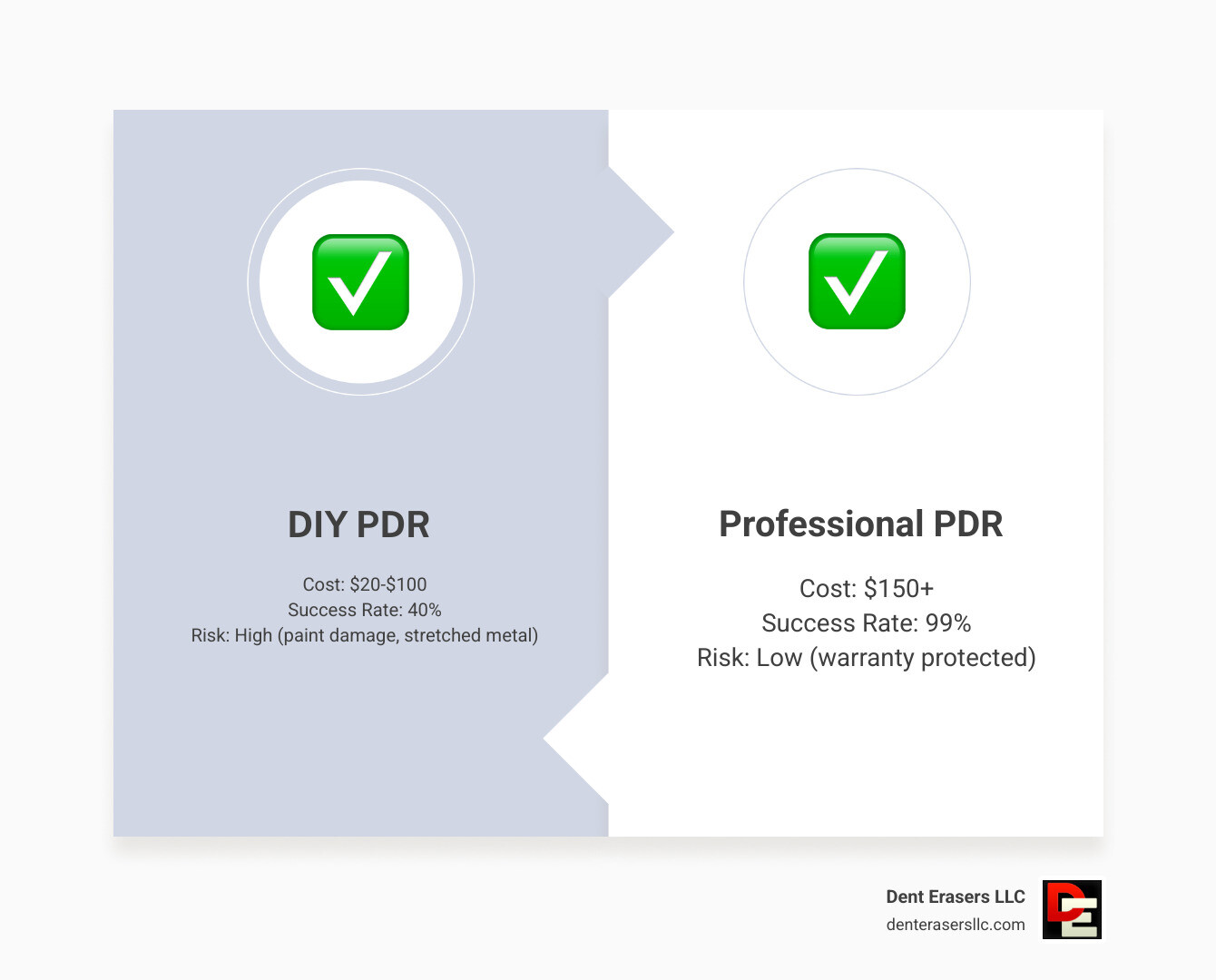
There are 5 Benefits of Paintless Dent Removal for Car Owners when handled by a pro, and the biggest is warranty protection. At Dent Erasers LLC, our repairs come with the peace of mind that we won’t damage your paint. A DIYer often ends up with “stretched” metal or “pulled paint” (where the glue pulls the paint right off the car), which then requires a trip to a traditional body shop for a $1,000+ repainting job.
Furthermore, if you have a modern vehicle with a loan or lease, you are often contractually obligated to maintain its value. A botched DIY repair can actually decrease your car’s resale value by more than the original hail damage!
Frequently Asked Questions about Hail Repair
How much does PDR typically cost for hail damage?
Professional PDR for a single, simple dent typically ranges from $150 to $500. However, hail damage is rarely just one dent. For a full vehicle hit by a storm, costs are usually calculated per panel. The total can range from a few hundred dollars for minor “peck marks” to several thousand for a car that looks like a golf ball. The good news? Hail is an “act of nature,” meaning filing a claim usually won’t raise your insurance rates, and many specialists (including us) work directly with your insurance provider.
Will hail repair show up on a vehicle history report?
It depends on how the claim is filed. However, PDR is the “cleanest” repair on a vehicle history report. Because no parts are replaced and no painting is done, it doesn’t carry the same “red flag” as a major collision repair. In fact, preserving the factory paint is the best way to keep your CARFAX or AutoCheck report looking favorable.
Can I fix hail damage myself with a kit?
You can, but it is difficult. Hail dents are often small and numerous, requiring extreme patience and a very “trained eye” to see the subtle distortions in the metal. The most common mistake beginners make is over-pulling, creating a “volcano” (a high spot) that is much harder to fix than the original dent. If your car is a “daily driver” with older paint, a DIY kit might be a fun weekend project. If it’s a vehicle you care about or plan to sell, professional service is the way to go.
Conclusion
A hailstorm doesn’t have to be the end of your car’s pristine look. Whether you are in Antioch, Pittsburg, or right here in Concord, paintless dent removal for hail damage offers a fast, affordable, and high-quality solution that keeps your car original.
At Dent Erasers LLC, we specialize in making those stressful storm memories disappear. We offer mobile service across Contra Costa County, bringing our 28 years of expertise directly to your driveway. We take pride in our quick turnaround and our ability to save your vehicle’s factory finish.
Don’t let those dents sit and devalue your investment. If you’ve been hit by a storm, Paintless Dent Repair is the most reliable way to get your car back to its pre-storm condition. Give us a call, and let’s get those dents erased!