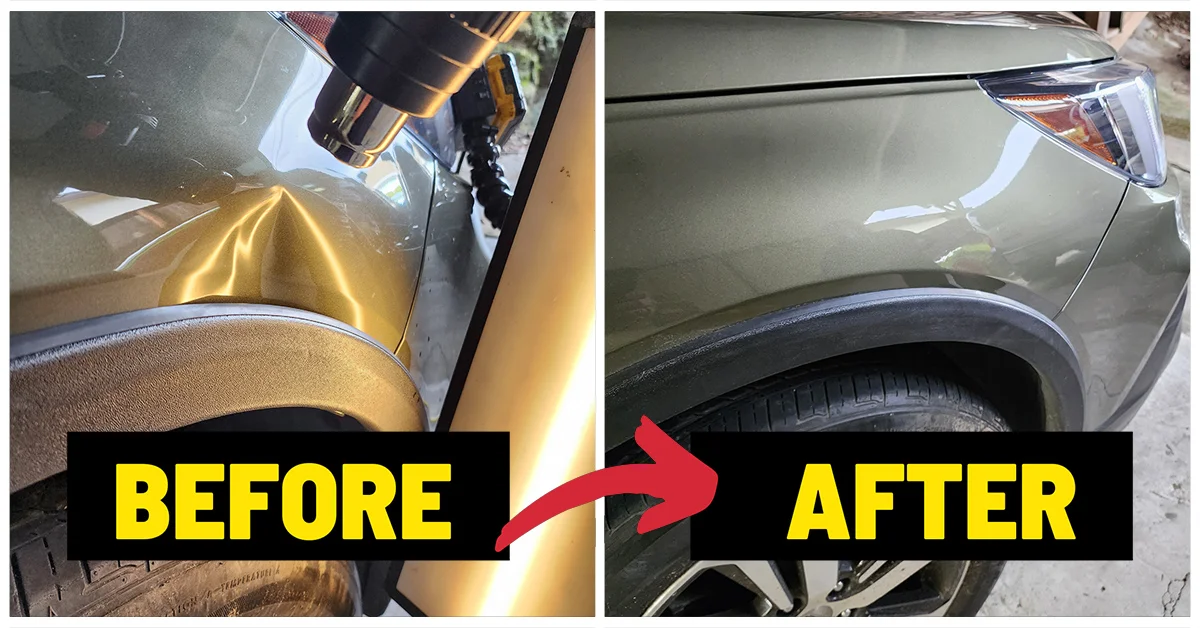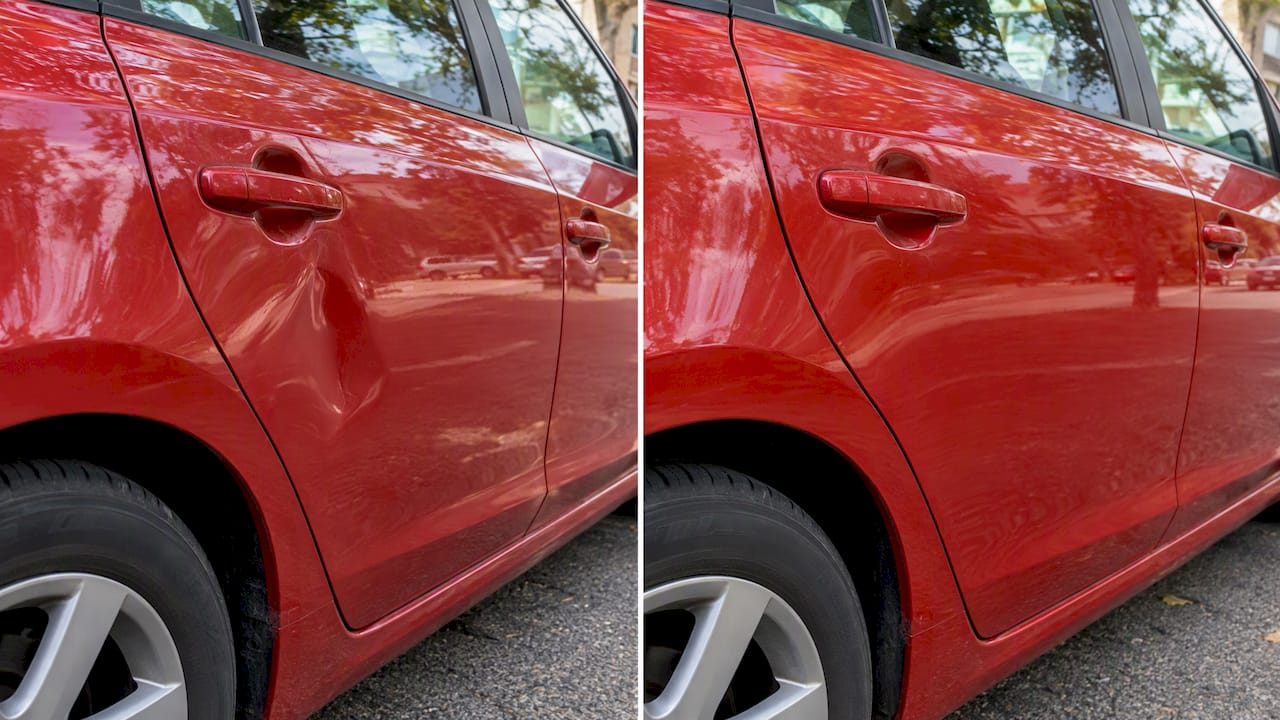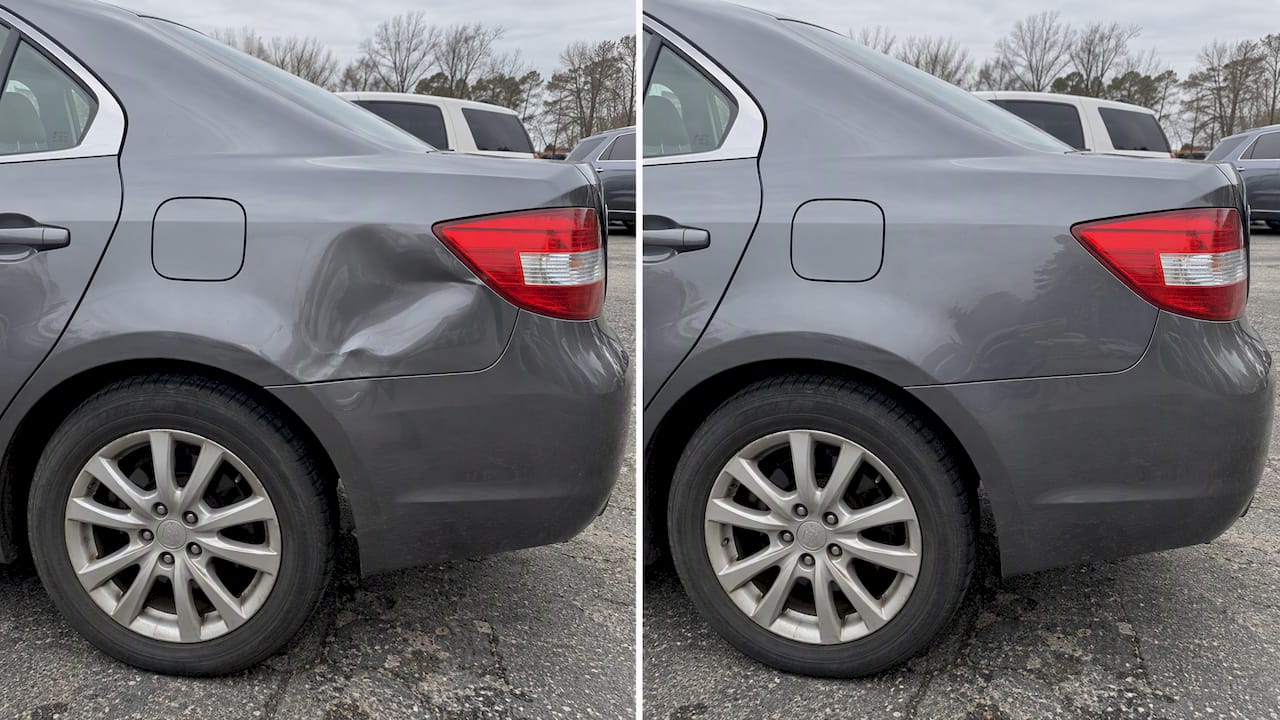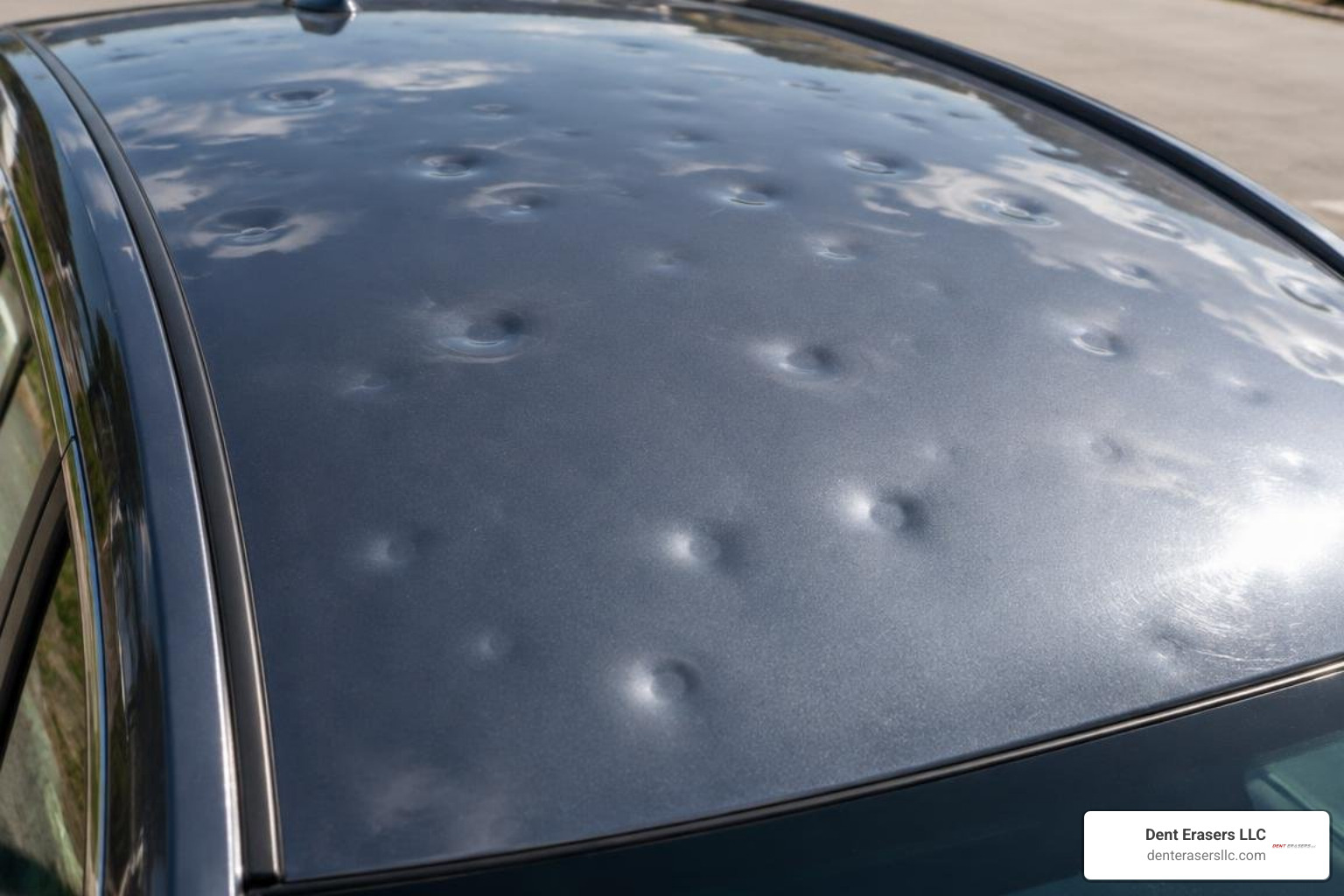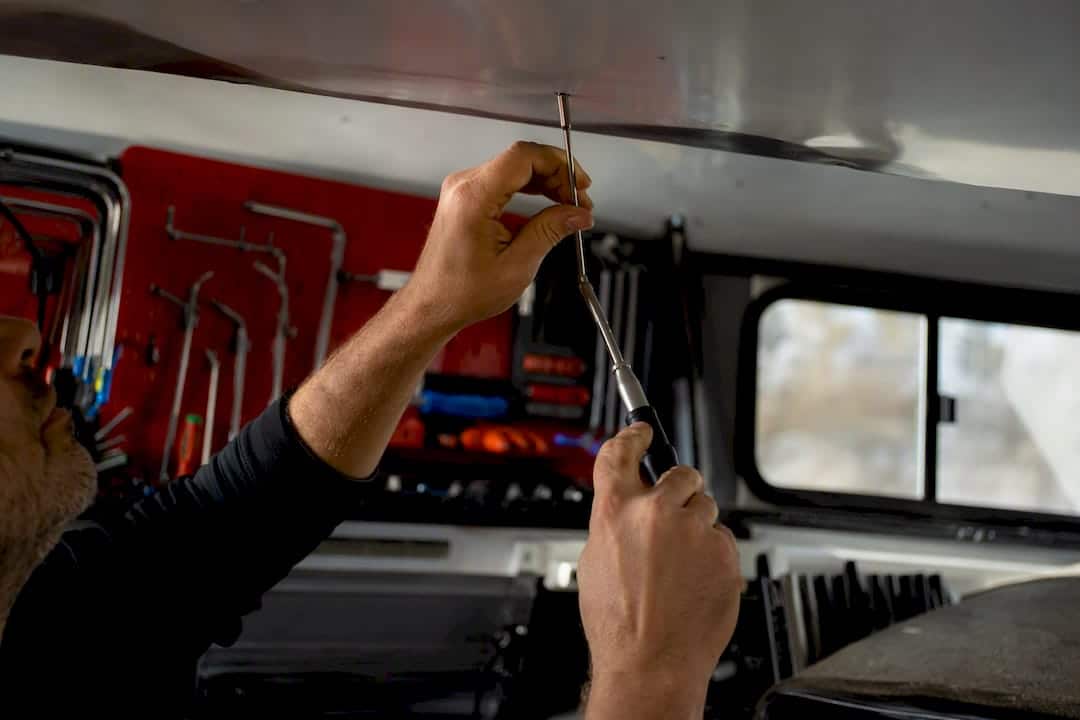
Yes, most roof dents can be fixed with paintless dent repair when the factory paint is intact and a technician can reach the backside of the panel. That is the verdict. But roof panels come with more disqualifiers than doors or fenders, and knowing them before you book anyone saves you a wasted estimate.
Paint that has cracked or micro-fractured, visible under the industry-standard 30x magnification inspection, takes PDR off the table immediately. So does damage in ultra-high-strength steel (UHSS) or boron zones, a dent sitting within an inch of a hem flange, a sharp crease instead of a rounded ding, or a panel that already has body filler hiding what the metal underneath is really doing. I-CAR, the industry’s collision-repair training standard, teaches exactly this kind of pre-repair screening, and it is the same discipline OEMs like Rivian require before any dent work touches the roof.
Before you call anyone, run through this:
- Photograph the damage in good light from three angles.
- Check the paint under a bright LED or line board for cracks, not just dents.
- Ask whether headliner access is realistic without cutting anything.
- Call a certified PDR technician, or schedule Denterasersllc’s mobile service, for an onsite read before assuming the worst.
Pro Tip: A flashlight held at a low, raking angle across the roof will show you cracked paint faster than staring straight down at it. If you see spiderweb lines, stop and call a professional before touching the dent.
Key Takeaways
Roof dents respond well to PDR when the paint is intact and backside access is achievable, but UHSS zones, cracked paint, hem-flange proximity, and prior filler rule it out.
| Point | Details |
|---|---|
| Check paint first | Inspect under strong light or magnification for cracks before assuming any roof dent qualifies for PDR. |
| Know the disqualifiers | UHSS/boron zones, hem-flange proximity, sharp creases, and prior filler take PDR off the table. |
| Access planning comes first | Map headliner clips and wiring before removing trim to avoid sagging or damage on reassembly. |
| Timeline varies by density | Single dents are often same-day; multi-panel hail jobs can run one to three days. |
| Choose an insured, credentialed vendor | Denterasersllc offers insured mobile PDR with a workmanship warranty and photo documentation for insurance claims. |
Table of Contents
- Which Roof Dents Are Good Candidates for PDR?
- How Do You Plan Access Before Starting Roof PDR?
- What Is the Step-by-Step Process for Roof Dent PDR?
- Tools and Materials You Need for Roof PDR
- What Are the Limits That Rule Out Roof PDR?
- What Does Roof PDR Typically Cost and How Long Does It Take?
- What Should You Expect From a Mobile Roof PDR Service?
- Sources
- FAQ
Which Roof Dents Are Good Candidates for PDR?
Roof PDR works best on shallow, rounded dents from hail or small impacts where the paint has not moved. If you run a fingernail across the edge of the dent and feel a smooth transition rather than a sharp lip, that is a good sign. Center-panel dents are usually the easiest, since they sit farthest from structural reinforcement and often allow tool access from underneath once the headliner is partially lowered.
Poor candidates look different. A sharp crease or fold, paint that shows chips or cracking under magnification, damage within about an inch of a hem flange or crimped edge, and any panel with old polyester filler underneath all point away from PDR. These get flagged before any tool touches the metal.
Size and shape matter too:
- Hail damage tends to be shallow and widespread, which is actually PDR’s strength.
- A single deep impact with a folded crease is a different animal, and often points toward panel replacement instead.
- Multiple overlapping dents in one small zone can stretch the metal past what tap-down and blending can correct.
For a broader look at how hail-specific damage gets triaged, see our guide on fixing hail damage with paintless dent removal.
How Do You Plan Access Before Starting Roof PDR?
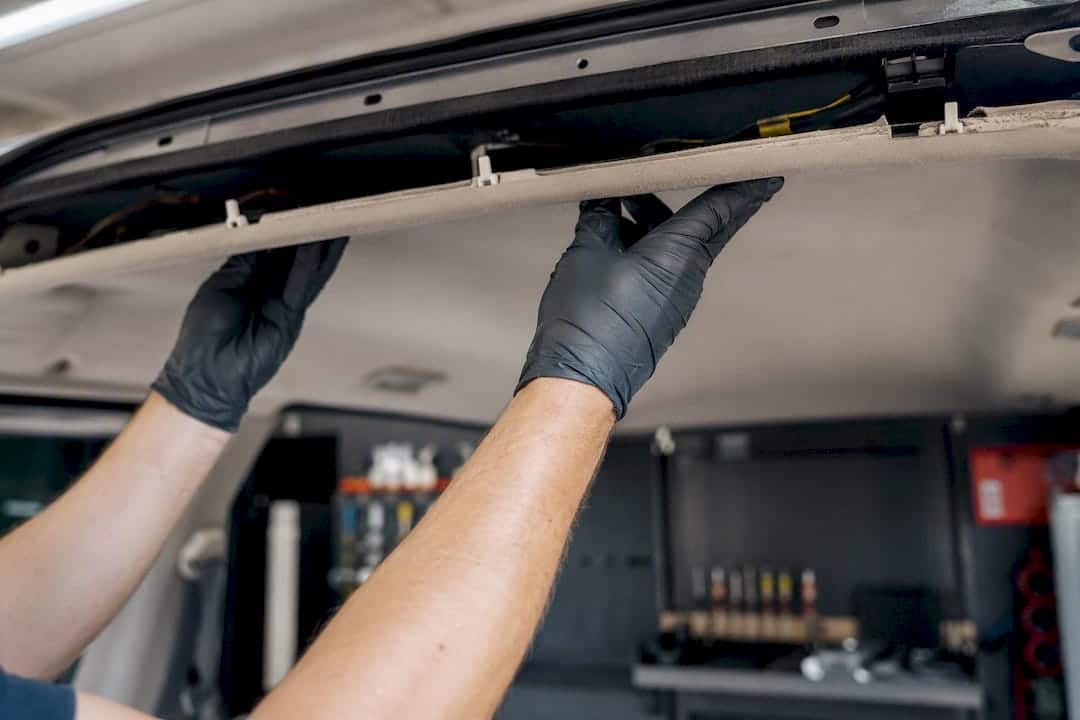
Access planning is the single most important phase of any roof job, more so than the actual metalwork. Map every clip, wire routing point, and A-pillar trim piece before you remove anything. Sun visors, dome lights, grab handles, and A-pillar covers usually need to come loose to allow a localized headliner drop, but a full drop is rarely necessary.
- Disconnect the battery if the roof has wiring near the work zone (dome lights, sunroof motors, or curtain airbags).
- Mask surrounding trim and protect the seats and dash from tool contact.
- Release only the clips needed for a partial headliner lower, and keep them organized by location.
- Inspect for curtain airbag brackets before pulling any panel loose.
- Reseat every clip in its original position once the repair is finished.
Curtain airbags and roof wiring harnesses are not areas to guess in. If you are not confident which clips are safe to release, stop and get a second opinion.
Pro Tip: When lowering a headliner, work from the center outward and support the board loosely rather than letting it hang from one or two clips. A headliner that sags on reinstall is almost always caused by rushing this step.
What Is the Step-by-Step Process for Roof Dent PDR?
Diagnosis comes first, always. A technician runs an LED line board across the panel to reveal every low spot and high spot before any metal gets touched, marking the map with grease pencil or tape.
- Prep the panel. Clean the surface, confirm paint integrity again under the line board, and warm the area gently if the shop temperature is cold enough to stiffen the clear coat.
- Glue-pull the no-access zones. Roof rail sections and reinforced perimeter areas are often boxed in with no backside reach, so glue-pull tabs and slide hammers do the work that rods can’t.
- Push from behind. Once the headliner is partially dropped, long roof rods and whale-tail tools push the dent up from the interior side, which is how most paintless dent repair actually restores the panel without disturbing the paint.
- Tap down the highs. As metal comes up, small high spots get knocked back down progressively rather than all at once, then blended into the surrounding steel or aluminum.
- Final inspection. Back under the line board, checking every angle for remaining low spots or waviness before calling the job done.
A few things separate a clean roof repair from a sloppy one:
- Round tabs suit round dents; crease tabs handle linear damage where a single glue point won’t hold.
- Mini-lifters and lifter jigs give finer control on shallow dents than a full slide hammer.
- Thermal cycling, controlled heating followed by cooling, helps mobilize aluminum and some high-strength steel panels where OEM guidelines permit it.
Pro Tip: Alternate small pulls with small pushes rather than committing fully to one direction. Over-pulling a high spot stretches the metal, and once that happens, tap-down alone often can’t fix it.
Never let clear coat temperature climb past what the panel can safely take — following best practices as detailed in the UK owner’s guide to matte paint ceramic coating — and always isolate steel tools from aluminum work to avoid galvanic contamination between metals.
Tools and Materials You Need for Roof PDR
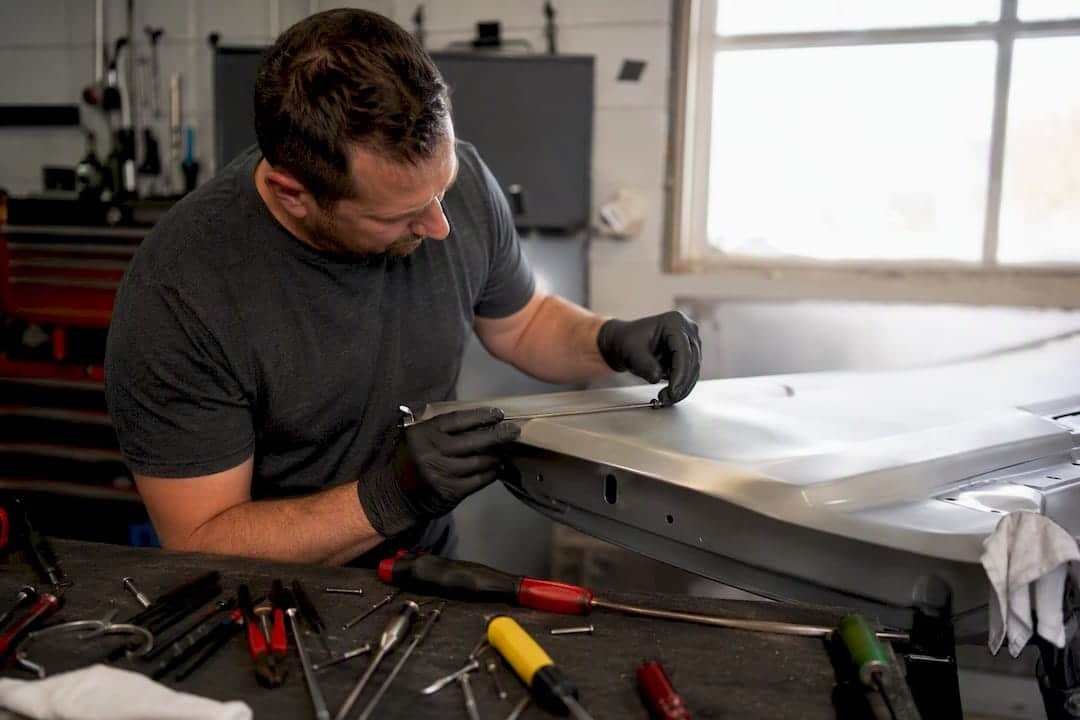
A roof job draws on a slightly different tool set than door or fender work, mostly because of the reach and access involved.
- Long roof bars and whale-tail rods for pushing from deep inside the cavity.
- Knockdown hammers with polished heads, plus an LED line board or fog board for finish checks.
- Glue tabs in multiple sizes, hot-melt glue in both heavy-pull and finishing grades, mini-lifters, a slide hammer, and alcohol for clean tab removal.
- An induction heater or heat gun paired with an infrared thermometer to monitor panel temperature.
- Interior protection: seat covers, trim masking, and fender covers, plus standard PPE.
Keep steel and aluminum tools physically separate. Cross-contamination between the two metals can trigger corrosion down the road, and it is one of the easier mistakes to avoid with basic shop discipline.
What Are the Limits That Rule Out Roof PDR?
Some roof dents simply cannot be fixed with PDR, and pretending otherwise wastes everyone’s time and risks damage that makes the repair worse.
- UHSS and boron-reinforced zones, common in modern roof rails and pillar structures, resist the kind of controlled flexing PDR depends on; pushing them can crack the metal instead of reshaping it.
- Paint that shows micro-cracking under 30x magnification is disqualified outright, since the clear coat has already lost its ability to flex with the metal.
- Damage within about an inch of a hem flange or edge crimp sits in a zone that is too rigid to move without tearing the panel.
- Sharp creases fracture the metal’s internal grain structure in a way rounded dents never do, and tap-down alone won’t restore that.
- Any panel with prior polyester body filler hides the real condition of the metal underneath and typically disqualifies the panel for PDR.
Some roofs also carry ADAS components, rain sensors, or antenna mounts tied into the panel. When repair work risks disturbing those systems, post-repair scans and calibration become mandatory, not optional.
Insurers and shops sometimes land on a hybrid approach: PDR handles the bulk of the dents, with light filler reserved for the one or two spots that fall outside PDR’s reach. When the damage crosses too many of these lines at once, panel replacement gets written instead, and that is the right call.
What Does Roof PDR Typically Cost and How Long Does It Take?
A single, accessible roof dent can often be finished same-day. Multi-panel hail damage is a different timeline, usually running one to three days depending on dent density and whether the roof is steel or aluminum.
Several factors drive the final price:
- Access difficulty. A job that requires headliner removal and reinstallation costs more in labor time than one with clean backside reach.
- Material. Aluminum roofs generally take longer and cost more, since thermal-assist techniques add time to the process that steel doesn’t need as often.
- Dent density. A hail-damaged roof with 40 small dents takes longer than one large dent, even though hail is often PDR’s best-case scenario.
- ADAS calibration. If sensors or antennas sit near the repair zone, scanning and recalibration add to both cost and timeline.
Many insurers actually prefer PDR for hail claims because it skips repaint costs entirely, and managed correctly, PDR remains commercially viable even for high-density hail events.
When you’re building an estimate for an insurer, bring line-board photos, a clear labor and parts breakdown, notes from the pre-repair paint inspection, and proof of the vendor’s insurance and warranty coverage.
What Should You Expect From a Mobile Roof PDR Service?
A vendor showing up to your driveway should do more than pull out a rod and start pushing. The visit should open with line-board photos, a written assessment of whether your roof dent actually qualifies for PDR, and a transparent estimate before any work begins.
Look for technicians who carry insurance, offer a documented workmanship warranty, and hold credentials like I-CAR training or equivalent hands-on certification. The workspace should stay tidy, with your interior and paint protected throughout. Ask upfront how much time the visit will take and whether you need to clear a specific parking spot or move the car to better light.
- Confirm insurance coverage and warranty terms before the tech starts.
- Ask to see a before-and-after gallery of comparable roof repairs.
- Request photos of your own vehicle from multiple angles, both before and after.
Pro Tip: Keep your own photo record even if the technician provides one. If a claim dispute comes up later, having independent timestamps on your phone works in your favor.
Balancing what PDR can do vs. when to walk away
The best PDR work is invisible, and preserving factory paint and e-coating beats any repaint job on quality alone. But I’ve seen enough shop discussions to know the real skill isn’t pulling metal, it’s knowing when to stop. A technician who keeps pushing on a cracked-paint panel or a UHSS zone because the customer wants to avoid a repaint is trading a short-term save for a long-term liability. Respect the limits, and the craft holds up.
How Denterasersllc Handles Roof Dent Repairs
If your roof dent checks out as a PDR candidate, Denterasersllc brings the shop to your driveway instead of the other way around, which means no drop-off, no rental car, and no repaint that risks mismatching your factory finish.

Every mobile visit includes insured coverage, a documented workmanship warranty, and access to a before-and-after photo gallery so you can see the kind of finish work we stand behind. Scheduling is fast, and most roof jobs that qualify for PDR get resolved onsite without a shop visit at all. If your damage falls outside PDR’s limits, our plastic bumper and auto body repair services cover the rest of the vehicle too. Reach out for a mobile roof PDR estimate and find out whether your dent qualifies before you commit to anything else.
Sources
- PDR limitations guide — DentAdvisor
- Roof Rail Dent Repair | Paintless Dent Removal — LearnPDROnline
- How does paintless dent repair work? — Hail Solutions
- Rapidrepair
FAQ
How Much Does PDR Cost Per Dent?
Cost varies by access difficulty, panel material, and dent size, but small, accessible roof dents are typically far cheaper than repairs requiring headliner removal or aluminum thermal work. Denterasersllc provides a transparent, itemized estimate before any work starts.
Will Insurance Pay for PDR?
Many insurers prefer PDR for hail damage because it avoids repaint costs, though coverage depends on your policy and the extent of the damage. Bring line-board photos and a documented estimate to support your claim.
How Much Does It Cost to Fix a Dented Roof?
Roof repair costs depend heavily on accessibility, dent density, and whether the panel is steel or aluminum, with same-day single-dent jobs on the lower end and multi-panel hail damage running higher. A written estimate from an insured vendor is the only reliable way to know your actual cost.
Does PDR Dent Removal Work?
Yes, when the paint is intact and the metal hasn’t cracked or creased, PDR restores the panel to its original shape without repainting. It fails on UHSS zones, sharp creases, hem-flange damage, and panels with prior body filler.