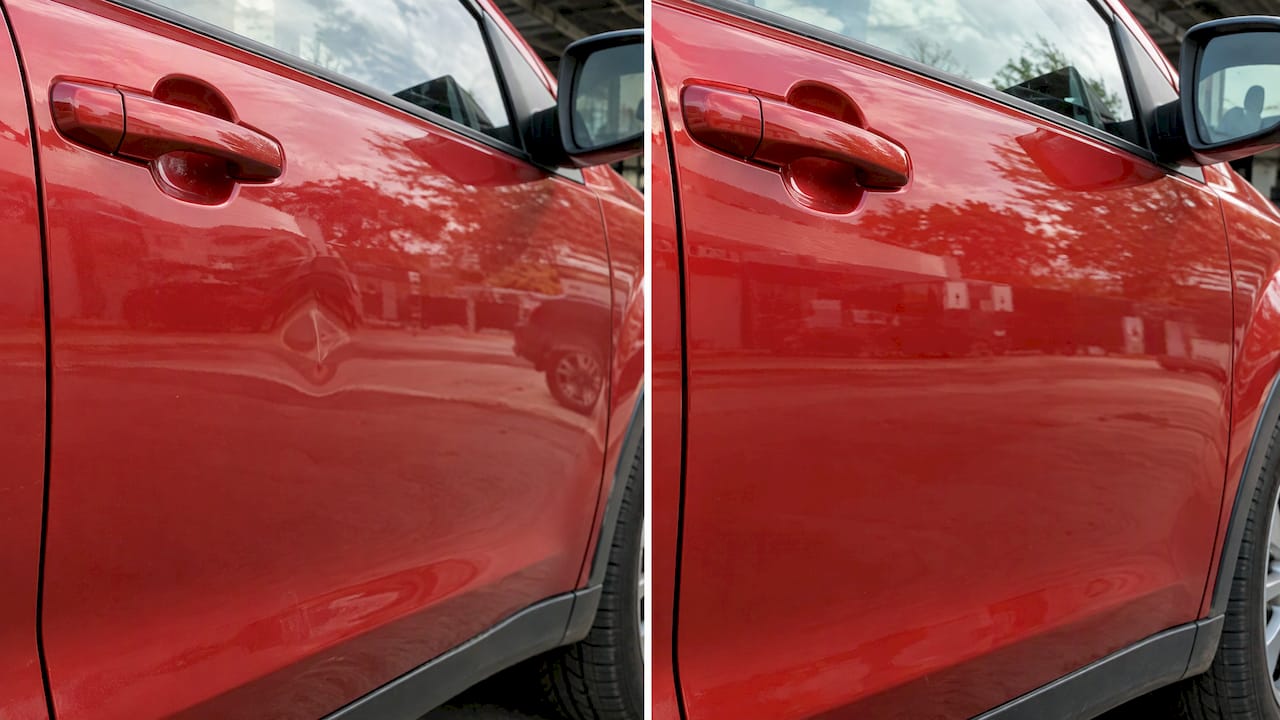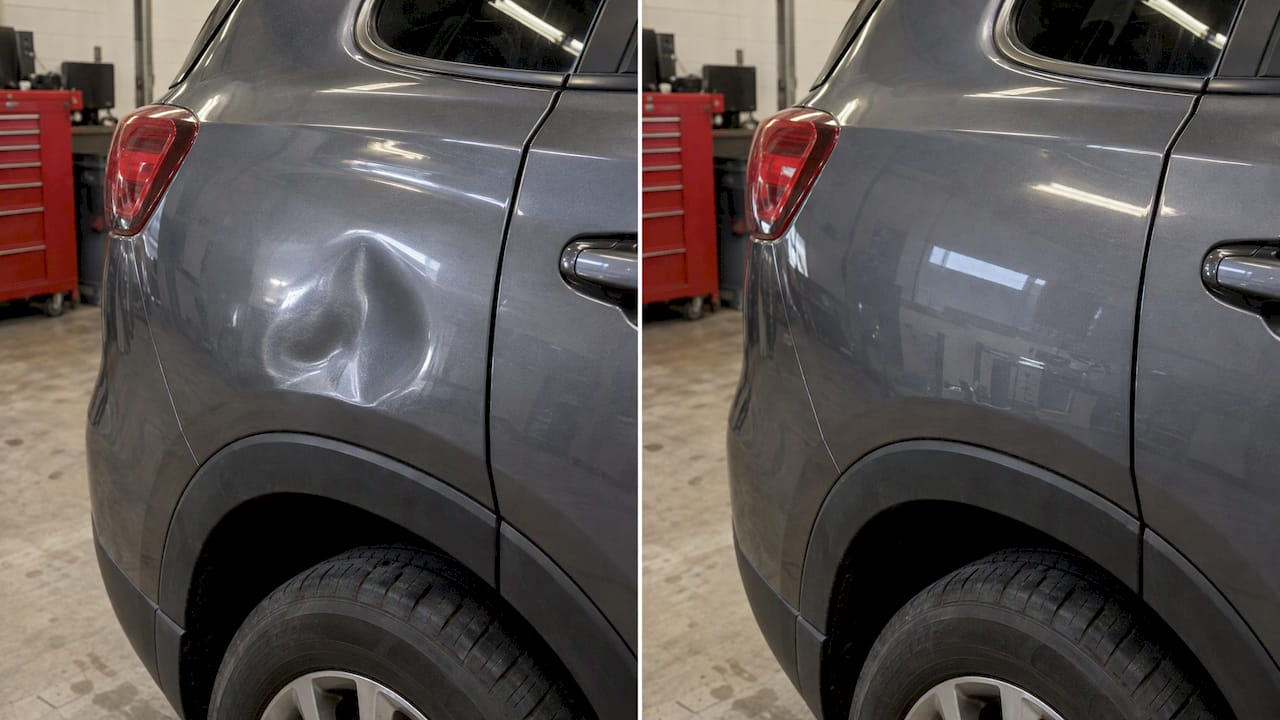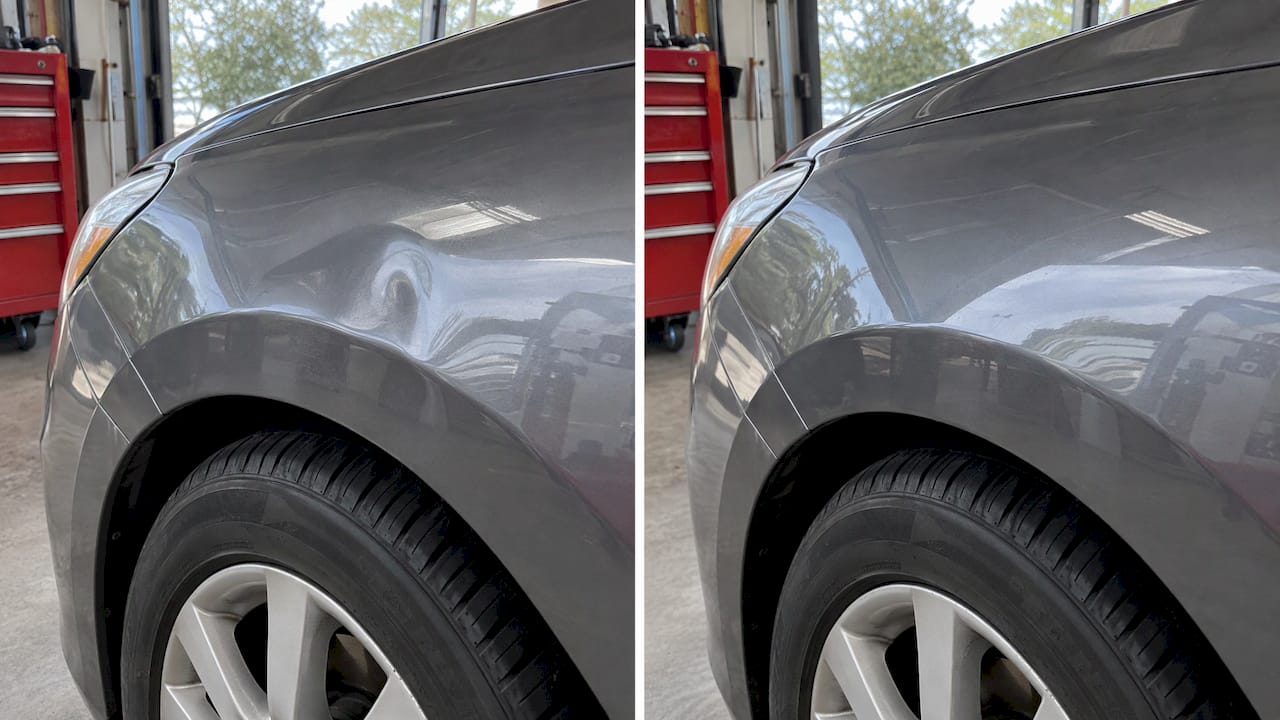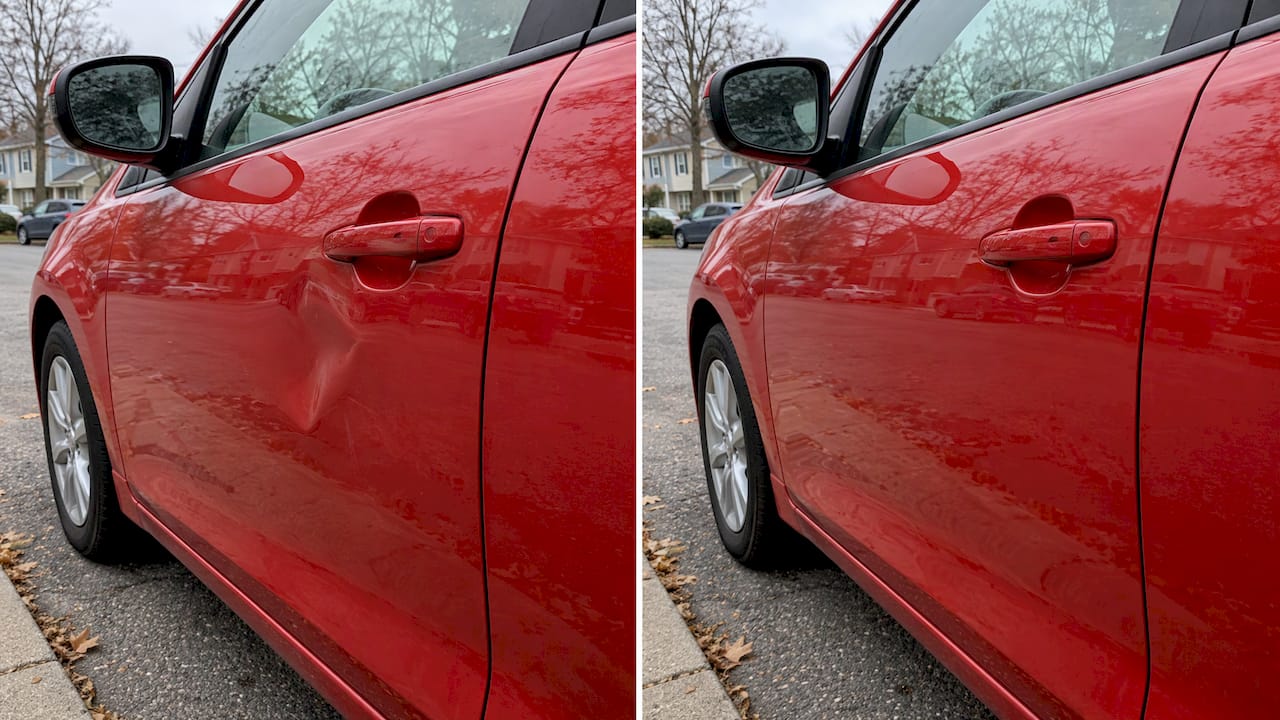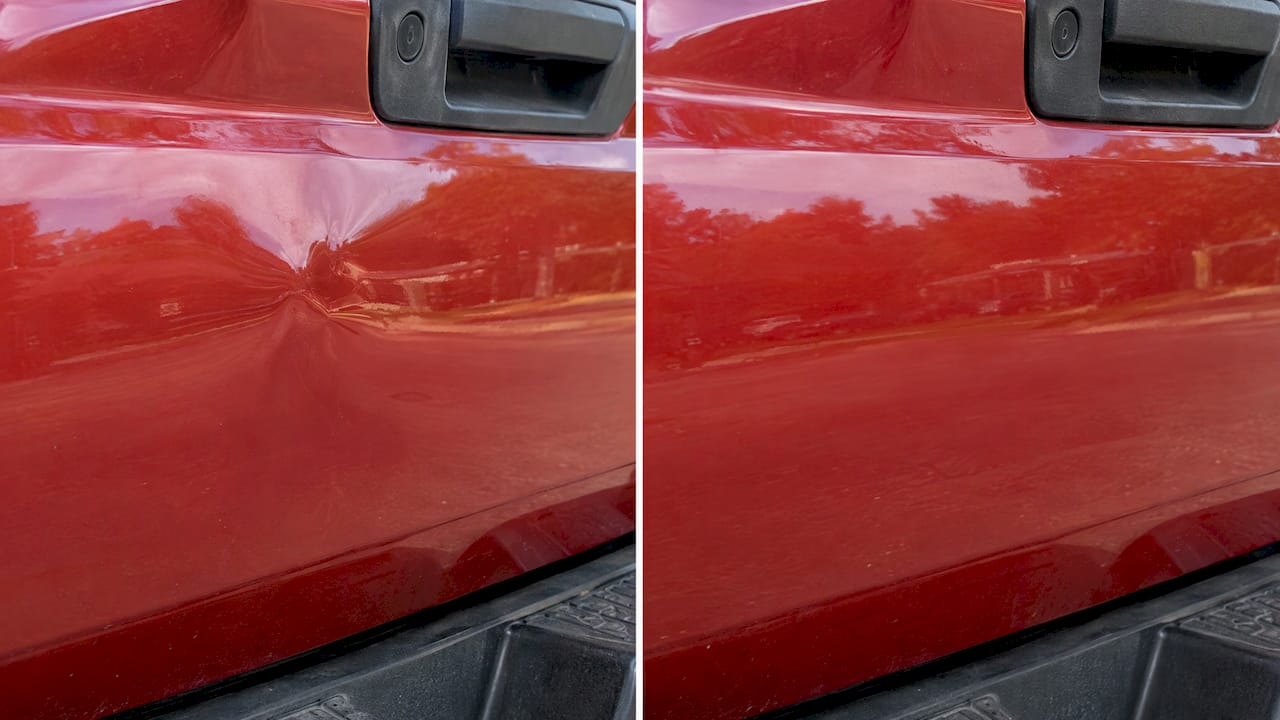
A stretched metal dent is one where the impact pulled the panel beyond its original shape, so the metal has extra surface area and won’t sit flat on its own. Paintless dent repair (PDR) can often handle these dents. The result depends on how deep the dent is, where it sits and how far the metal has stretched. A technician has to look at the panel in person to say for sure.
TL;DR
- Stretched metal is thinner and has more surface area than the panel’s shape needs. That is why some dents pop, flex or won’t settle.
- Depth and location matter more than size. A shallow, wide dent can be easier than a small, sharp one.
- Heat and shrinking are specialist steps. Too much heat or force can create new problems, so leave them to a trained technician.
- If the paint is cracked, the finish needs more than PDR. Panels that can’t be restored by PDR alone go to body repair.
- After any repair, check the panel under reflected light from several angles.
Table of Contents
- What “stretched metal” actually means
- Can PDR fix a stretched metal dent?
- How a technician approaches a stretched dent
- Heat, shrinking and what can go wrong
- When a stretched dent needs more than PDR
- Cost and timing
- What to check after the repair
- Get a stretched dent looked at
- FAQ
- Sources
What “stretched metal” actually means
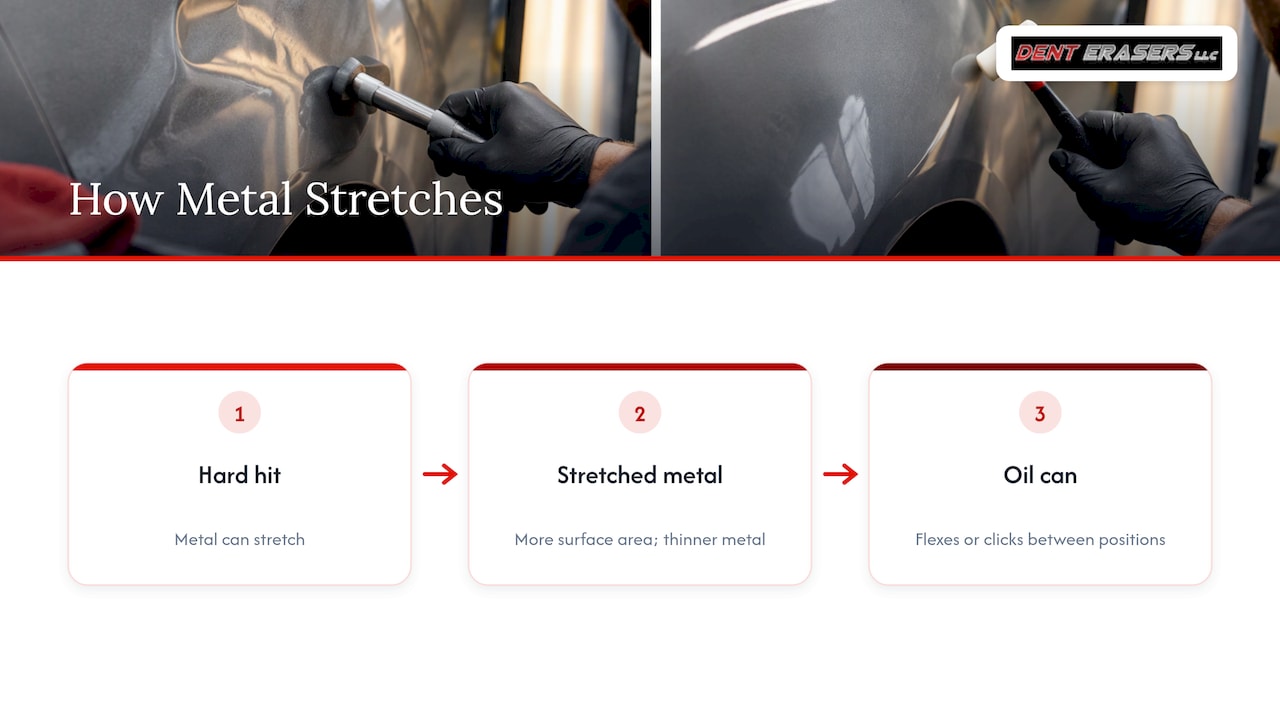
When a panel takes a hard hit, the metal doesn’t just move inward. In a sharp or deep impact it can stretch. Stretched metal has more surface area than the panel’s geometry calls for and is thinner in the stretched area, so it may not lie flat until that extra area is dealt with.
You can often feel this at home. Press lightly near the dent and the panel flexes or clicks between two positions. Metalworking writer Ron Covell describes an oil can as a sheet-metal area that is out of shape but unstable, where pushing one portion in makes it pop back, often with a sound. That oil-can behavior is a common sign that metal has stretched.
Can PDR fix a stretched metal dent?
Often, yes, but it is a case-by-case call. PDR keeps your original finish because it uses no grinding, filler, primer or repainting. The same industry association also says no dent is automatically repairable, so every panel gets assessed first.
What decides the outcome:
- Depth. The National Alliance of Paintless Dent Repair Technicians notes that a dinner-plate-sized dent can be repairable if shallow, while a deep dime-sized dent may be too stretched.
- Location. Dents near body lines, edges or braced areas behave differently from dents in open, flat areas.
- Creases. Capital One’s car-buying guide notes that stretched-thin metal or a crease makes PDR harder. Harder is not the same as impossible. It means more time and more skill.
- Paint condition. Cracked paint has to be resprayed, so PDR alone won’t restore that finish.
- Panel material. Steel and aluminum respond differently. Aluminum has less give and needs a careful, patient hand.
Our honest take: stretched dents are where technician experience counts most. The tools are the same as for any dent. The judgment is not.
How a technician approaches a stretched dent
PDR relies on the metal’s shape memory. Technicians selectively push, massage, prod and sometimes pull the panel so it returns toward its original contour. With stretched metal, the process usually follows a pattern:
- Assess the whole damage field. Size, depth, location, access behind the panel and any prior repairs all shape the plan.
- Relieve the highs and lows in order. Covell advises restoring peaks and troughs first and using broad, slow contact rather than concentrated force. Jabbing at a stretched area tends to add more stretch.
- Work in small steps. Small movements let the technician read how the panel responds and avoid overcorrecting into a high spot.
- Check the reflection often. Light lines on the panel show tiny highs and lows long before you can see them.
- Decide if the panel needs shrinking. If the metal still won’t settle, controlled heat may be part of the plan.
Heat, shrinking and what can go wrong
Shrinking removes the excess metal area. It is delicate work, and the margin for error is thin. Covell notes that overheating shrinks more metal, and overshrinking can create further oil-canning. The flatter the panel, the more sensitive it is.
Two practical points for owners:
- Heat has limits on aluminum. Volkswagen’s repair guidance says stretched aluminum can be corrected with heat and retracting, but heat must not exceed 150°C (302°F) and the part must be replaced if a tear forms. That is a good reason not to improvise with a heat gun at home.
- Quenching depends on the method. Covell says quenching torch-shrunk metal hardens it, while it is essential in a shrinking-disc process. Method decides technique, which is another reason to hand this to a professional.
Related reading: what to check when paint is cracked explains why the finish matters as much as the metal.
When a stretched dent needs more than PDR
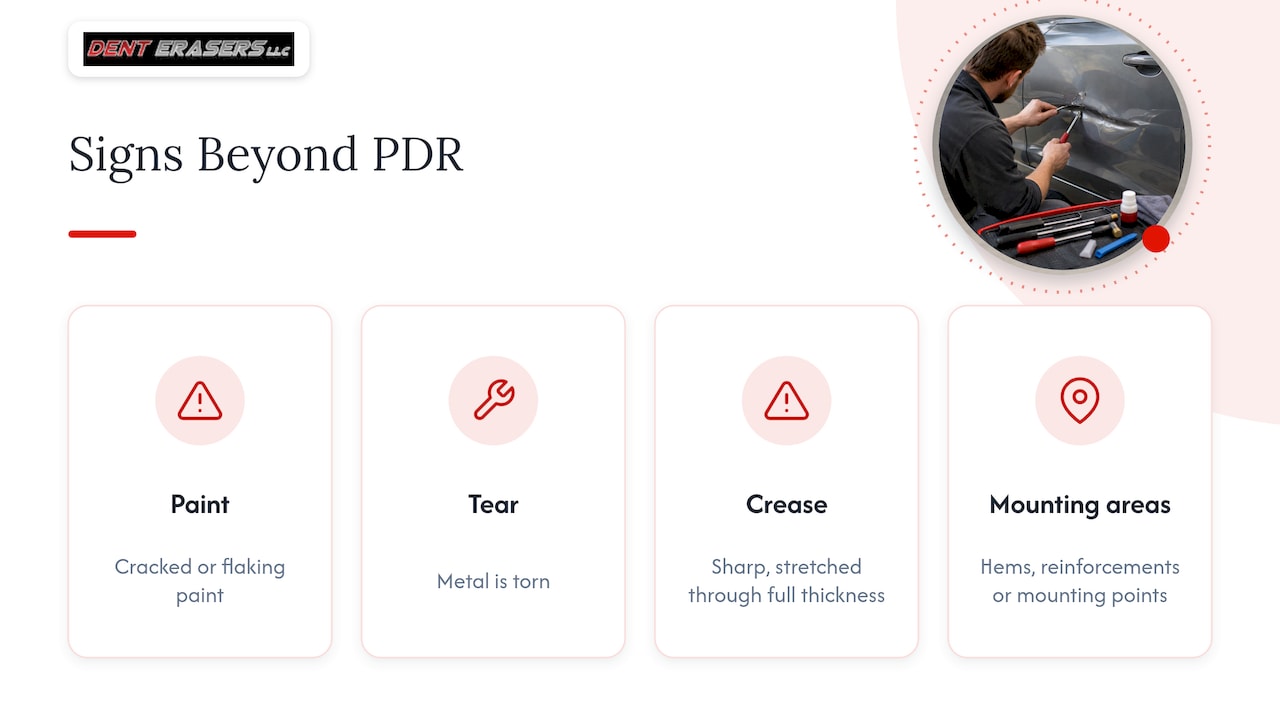
Some stretched dents are past what pushing and shrinking can restore without touching the paint. Typical signs are cracked or flaking paint, a tear in the metal, a sharp crease that has stretched the metal through its full thickness, or damage that reaches hems, reinforcements or mounting points.
In those cases, conventional repair is the right route, and it is the better route for the car. We also handle auto body and collision repair, so you don’t have to find a second provider. Cracked or scuffed plastic is a separate job, covered by plastic bumper repair.
If you are weighing the options, our guide on keeping factory paint with onsite dent repair lays out how we think about the choice.
Cost and timing
Stretched dents rarely have a one-size price, because the work depends on depth, location and how much the metal has moved. These are the prices published on our site:
| Service | Published price |
|---|---|
| Paintless Dent Repair | $150 to $500 |
| Minor Dent Repair | $100 to $500 |
| Large Dent Repair | $150 to $1,500 |
A deep, stretched dent usually falls toward the upper end of a range or into large dent repair, since it takes more time and care. Photos help us give a realistic quote before we arrive. Insurance claims and lease returns follow the same assessment. See specialty services for those.
What to check after the repair
Walk around the panel in good light and look at it from several angles:
- Reflections. Lines in a window, garage door or fluorescent light should run straight across the repaired area, not wobble.
- Oil-canning. Press gently near the repair. The panel should feel firm and not pop between positions.
- Paint. Look for cracks, lifting or tool marks in the finish.
- Edges and body lines. These should look crisp and match the other side of the car.
- Surrounding panels and trim. Gaps and trim should look as they did before.
A stable, flat panel with intact paint is the goal, and a good technician will walk you through it before leaving.
Our perspective
Stretched metal separates experienced technicians from beginners. Over 27 years of dent work, we have learned that the skill is not about forcing metal back. It is about reading the panel, working slowly and knowing which dents will respond.
That is why we start every job with a close look at depth, location and paint. Many deep dents that owners assume need a body shop can still be restored while keeping the factory finish. When a panel does need conventional repair, we handle that too, so the advice you get is based on what is best for your car, not what we happen to offer.
We bring the work to you, at home or at the office, so you don’t have to give up a day to fix a door or fender.
Brian Blanc
Get a stretched dent looked at
If your dent has a crease, a deep center or a panel that flexes when pressed, send us photos and we will tell you what we see. We serve Contra Costa County and surrounding areas with mobile dent repair that comes to your location.
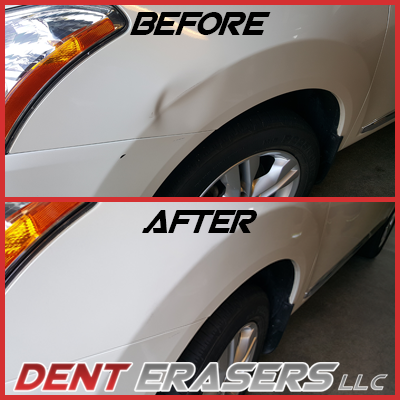
Ready to find out what your panel needs? Get your free dent quote today.
FAQ
Can PDR fix a dent where the metal is stretched?
Sometimes, and often with good results. The outcome depends on depth, location and whether the paint is intact. A technician needs to see the panel to confirm.
How do I know if my dent has stretched metal?
The panel may flex or pop when pressed, a sharp crease may form, or the dent may not settle after light pressure. These are signs of an unstable panel. A professional assessment tells you how far it goes.
Will the paint survive the repair?
PDR is designed to keep the original paint because it involves no filler or repainting. If the paint is already cracked, the finish needs separate repair.
Should I try to fix a stretched dent myself?
We advise against applying heat or hard pressure at home. Too much of either can add stretch or create new oil-canning, and aluminum has strict heat limits. A short photo review with a technician is the safer first step.
Sources
- Professor Hammer’s Metalworking Tips, Hot Rod
- Fixing Oil Can Dents in a Vintage Truck Door, Hot Rod
- About Paintless Dent Repair, NAPDRT
- What to Know About Paintless Dent Repair, Capital One Auto Navigator
- Straightening and Heat: Volkswagen, I-CAR RTS
- How to Remove a Dent from Sheet Metal with a Shrinking Disc, Proshaper