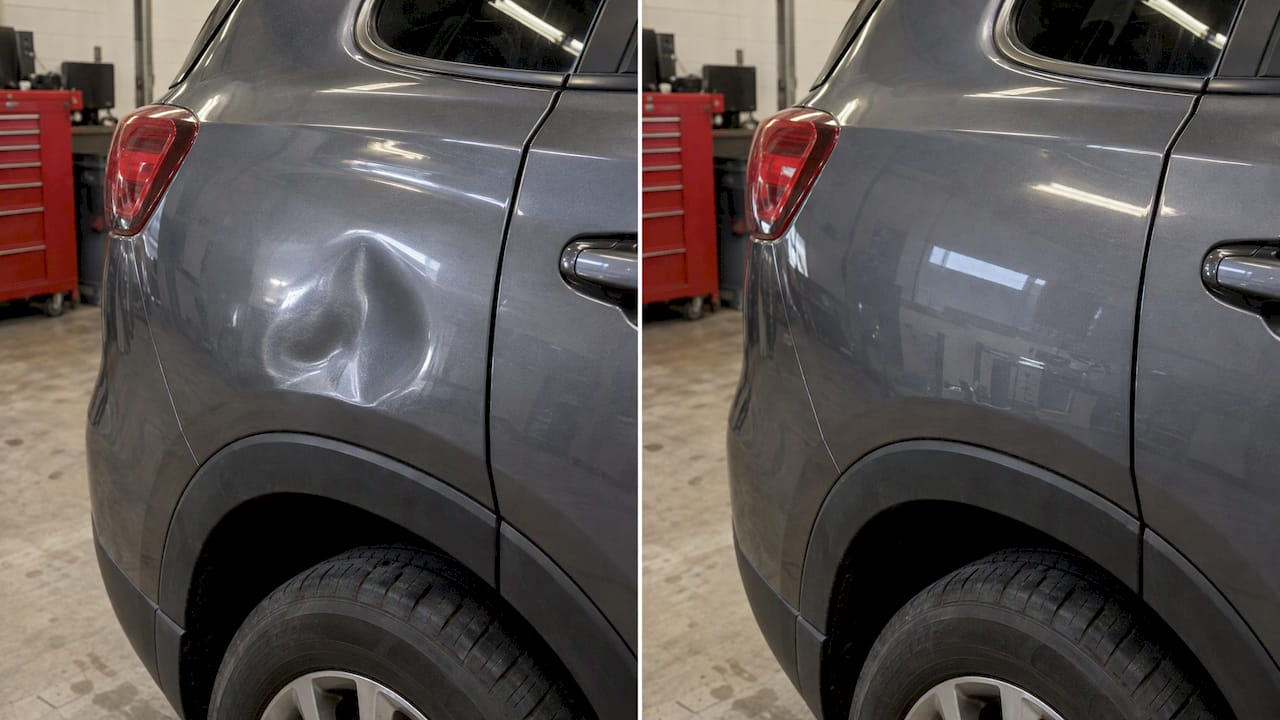
An excess wear waiver (also sold as lease-end or wear-and-use protection) pays or waives the charges for dents, scratches and interior wear when you return a leased vehicle. A vehicle protection plan is a different product: it covers mechanical repairs, much like an extended warranty. If your worry is the bill at lease end, the waiver is the one that matches. If your worry is a breakdown, you want the protection plan.
The two names get mixed up at the dealer desk, so here is how they differ, what the limits look like, and how to prepare your car either way.
TL;DR
- An excess wear waiver deals with lease-end charges for cosmetic damage. A vehicle protection plan deals with repair costs for covered components.
- Waivers usually cap the total (often $5,000) and the amount per item (often $1,000). Excess mileage and the disposition fee are typically separate.
- Some plans exclude repairs made before lease termination, and claims may need advance approval. Read your contract before you fix anything.
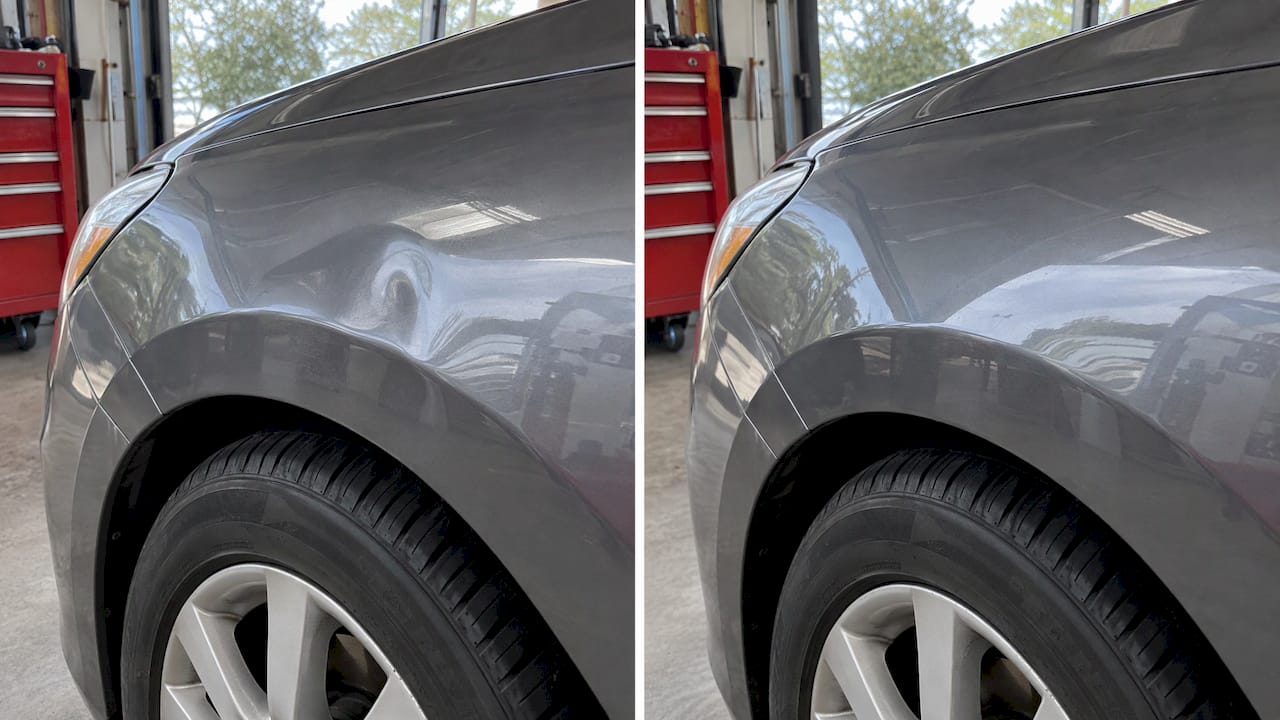
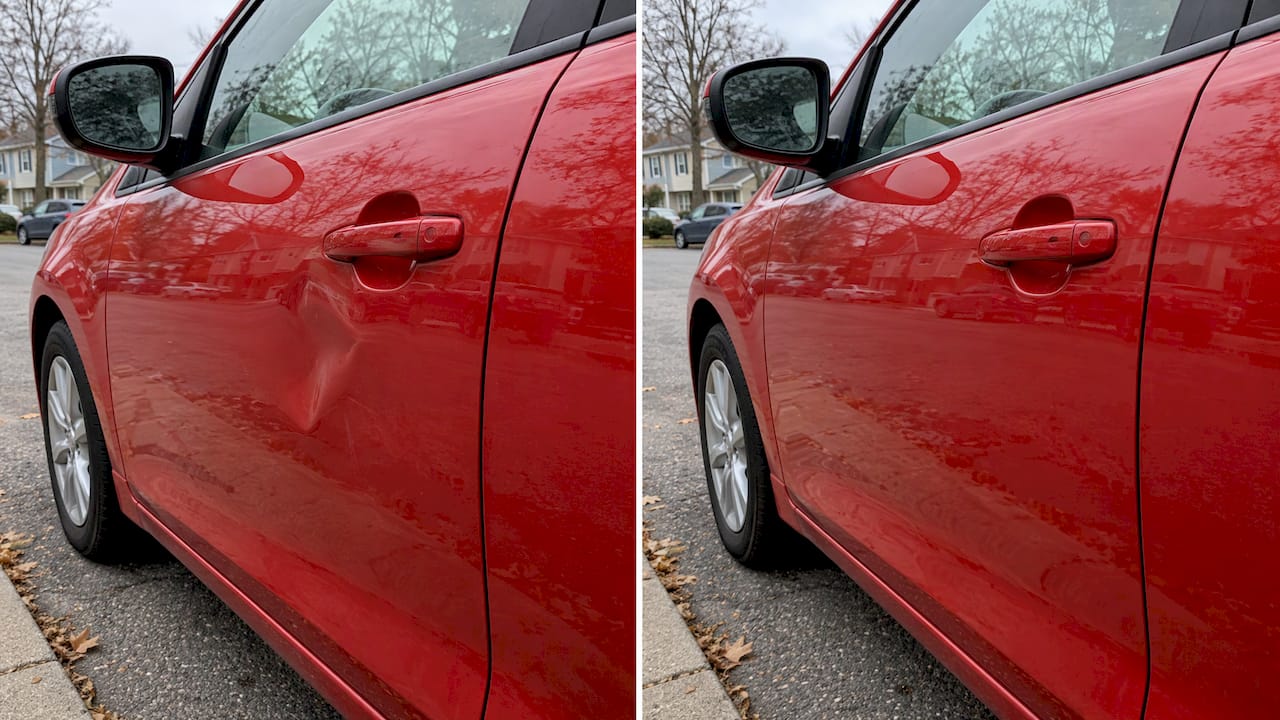
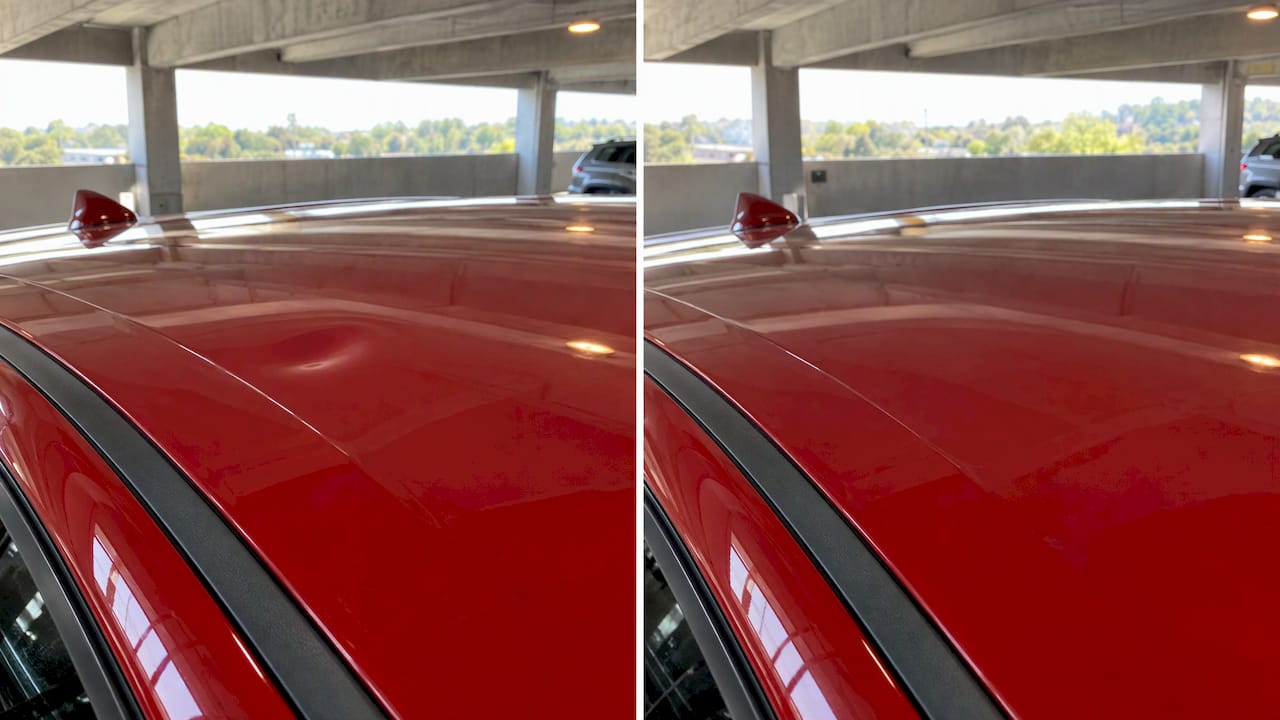
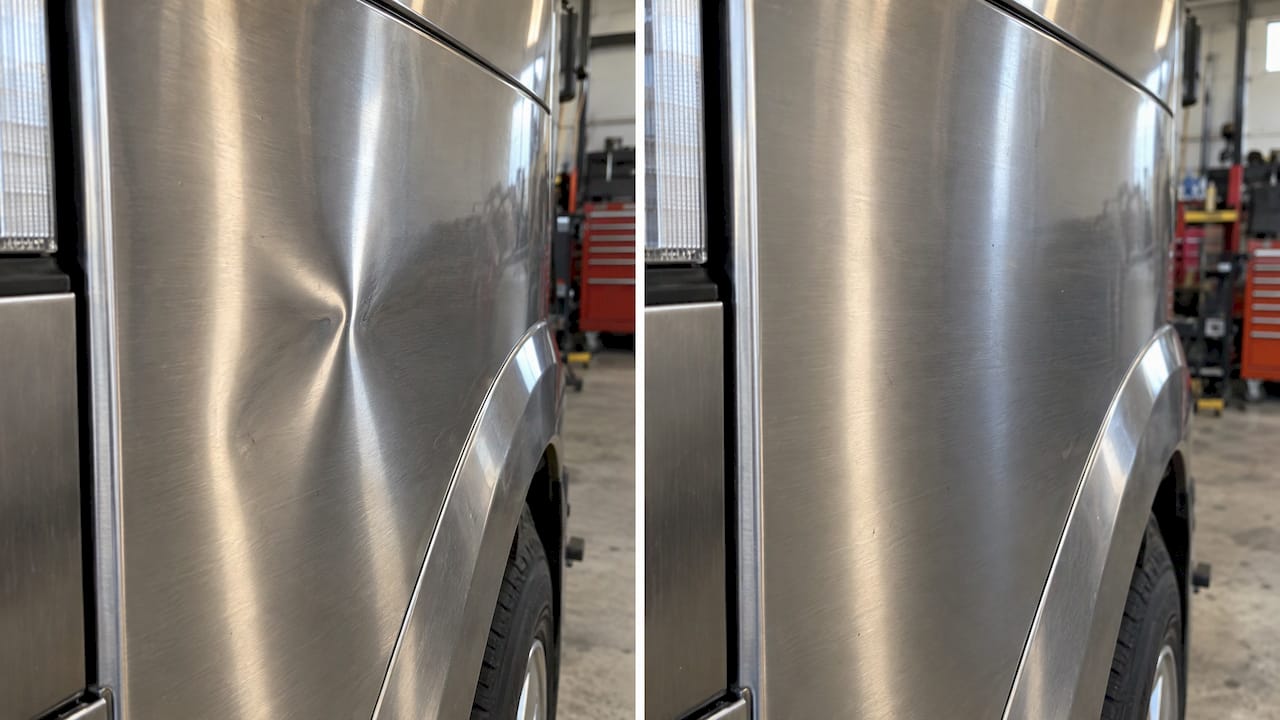
- Small dents are the most common reason for lease-end bills. Mobile paintless dent repair can take care of them at your home or office before inspection.
Table of Contents
- What each product actually covers
- What the limits look like in real contracts
- Exclusions to read before you sign
- Is the waiver worth it for you?
- How lease-end inspections and claims work
- Where dent repair fits in
- Get your car ready for turn-in
- FAQ
- Sources
What each product actually covers
Excess wear waiver. This is a paid add-on, offered at signing or sometimes mid-term, that caps or waives the charges a lessor would otherwise bill for dents, scratches and interior wear at lease end. It does not cover excess mileage charges or the disposition fee, which are separate line items.
Vehicle protection plan. Automoblog explains that only the manufacturer can technically offer a warranty. A protection plan can cover nearly the same components, but a third party administers it. Think engine, transmission and electrical parts, not a door ding or a stained seat.
So the comparison is less “which is better” and more “which risk are you paying to cover.” Plenty of lessees care about both, and the products do not overlap.
| Excess wear waiver | Vehicle protection plan | |
|---|---|---|
| Covers | Cosmetic and wear charges at lease return | Mechanical and component repairs |
| Pays out when | The lessor bills you at turn-in | A covered part fails |
| Typical limits | Total cap and per-item cap | Per-contract terms, exclusions for wear items |
| Mileage overage | Usually not covered | Not relevant |
| Best for | Street parking, kids, pets, gravel driveways | Long-term ownership or out-of-warranty driving |
What the limits look like in real contracts
Limits vary by lessor, so treat these as examples, not a promise for your lease.
- GMC: the XS Wear plan waives up to $5,000 of covered charges, up to $1,000 per item, plus up to $400 of covered excess mileage and up to $150 for missing parts.
- Mopar: its lease product covers up to $5,000 in total, with no deductible, and up to $200 in excess mileage.
- Ford Credit: WearCare waives Excess Wear and Use charges up to $5,000 in most cases.
- Toyota Financial Services: its plan waives each single event valued at $1,000 or less, up to $5,000 total, and does not cover excess mileage.
- Porsche: Lease-end Protection waives up to $7,500 with no deductible, with tire-related charges limited to $1,000 total.
The pattern is consistent: a total cap, a per-item cap, and mileage handled separately. A large dent that is billed as one line item above the per-item cap may not be covered in full. That is why the size and repair route of each dent matter.
Exclusions to read before you sign
The exclusions repeat across plans. Common ones include:
- Charges for alterations or modifications.
- Vehicles used for competitive driving or racing.
- Damage from wrongful, reckless or intentional acts.
- Any single item above the per-item cap.
- Repairs performed before lease termination. GMC, Mopar and Porsche all list this exclusion in their terms.
- Certain commercial use. Ford Credit’s WearCare terms exclude uses such as delivery, taxi and rental.
The repairs-before-termination point deserves attention. If you have a plan, find out how your contract treats repairs you make yourself before turn-in. If you have no plan, repairing before return is simply the way to avoid the charge.
Is the waiver worth it for you?
The answer depends on how strict your lessor is and how your car lives day to day.
Complete Car Lease notes the product tends to make more sense when wear risk is predictable: kids, pets, a gravel driveway or regular street parking. It also matters more under a strict dent threshold, such as a 1.5-inch limit, than under a forgiving 4-inch allowance.
The same source says Honda builds a $500 excess wear waiver into every lease at no extra charge, so ask whether your lessor already includes some protection before you pay for more.
A quick way to decide:
- Find the wear standards in your lease. Our guide on what lessees must check in lease excess wear standards walks through them.
- Walk around the car in daylight and note dents, door dings, bumper scuffs and wheel damage.
- Compare your likely charges with the plan’s per-item and total caps.
- Ask whether the plan, or the lessor, already includes any built-in waiver.
How lease-end inspections and claims work
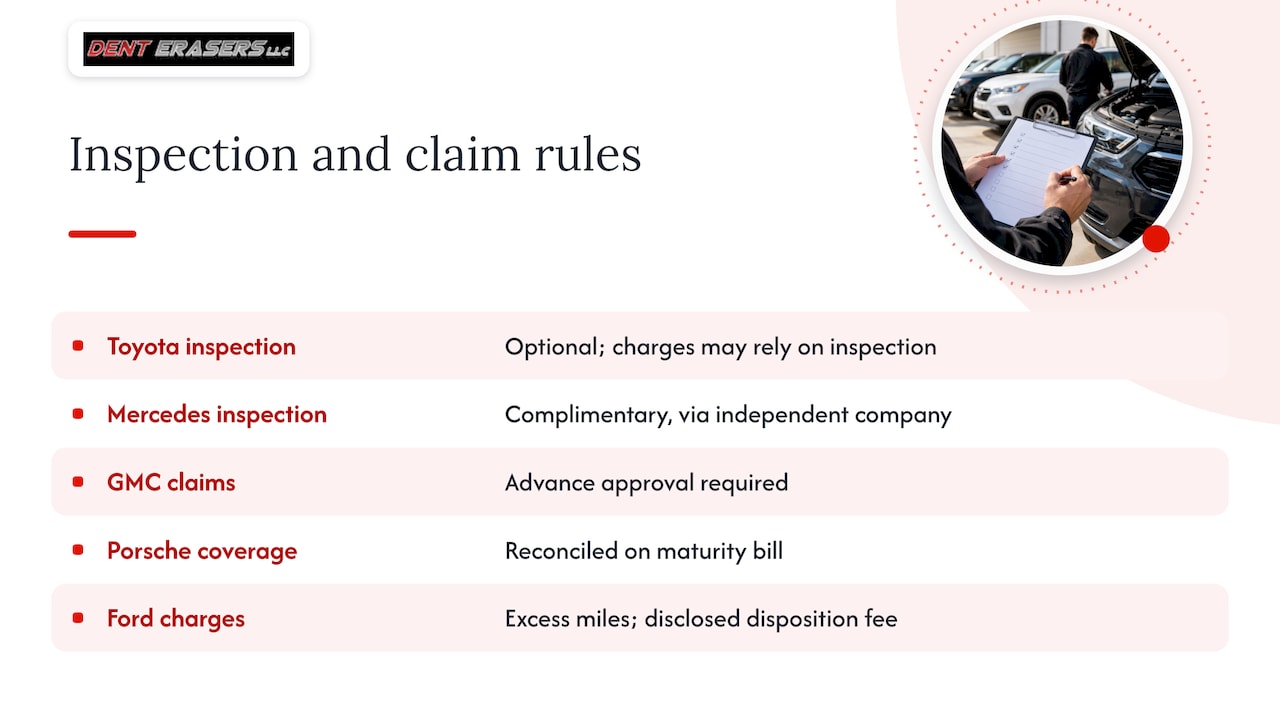
Most lessors offer a pre-inspection. Toyota Financial Services recommends the optional pre-lease-end inspection, where inspectors can meet you at home or work, and notes that charges may be based solely on that inspection. Mercedes-Benz Financial Services offers a complimentary pre-inspection through an independent inspection company.
Claims differ by plan. With GMC, you contact the dealer or the Claims Team, and claims must be approved in advance or they could be denied. Keep your Customer Agreement handy. With Porsche, coverage applies on return, and benefits are reconciled automatically on the maturity bill.
Waivers also leave some bills untouched. Ford Credit states that you are responsible for excess miles and that a disposition fee applies when disclosed in your lease agreement.
Where dent repair fits in
Whether or not you have a waiver, dents are the charge most lessees can control. A cap of $1,000 per item still leaves you paying the difference on a bigger problem, and a plan may not apply at all if the damage falls outside its terms.
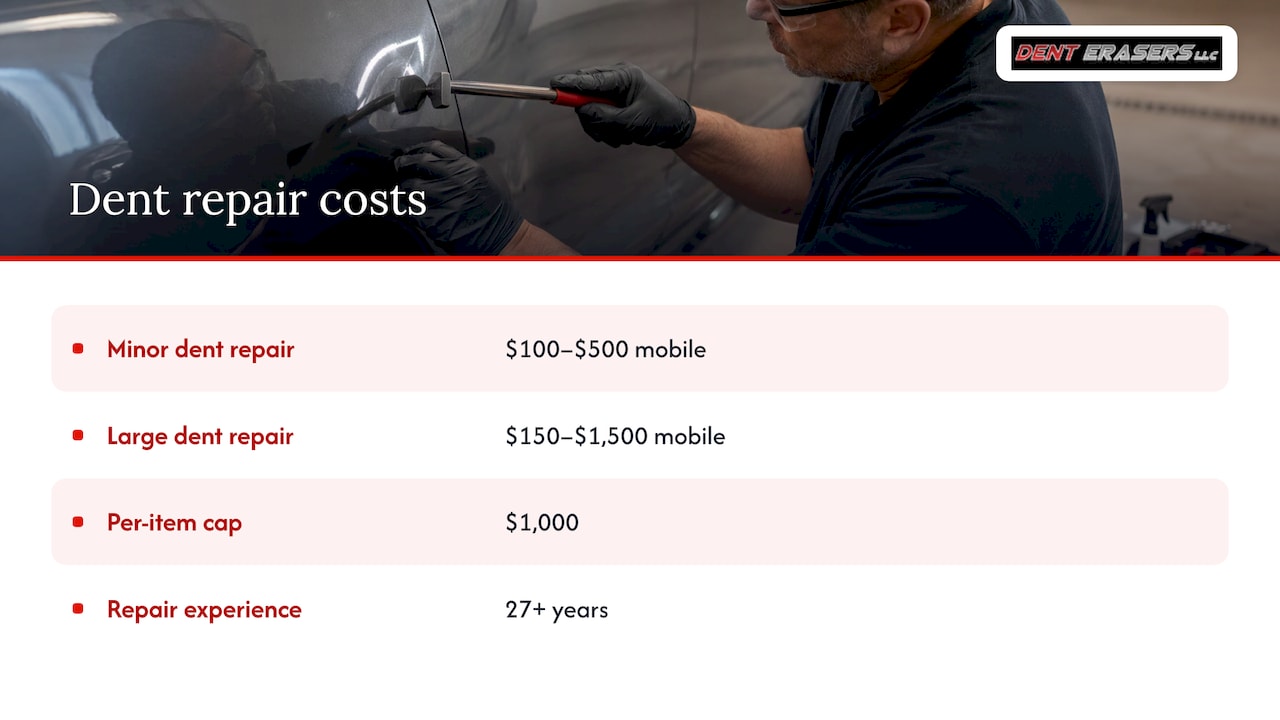
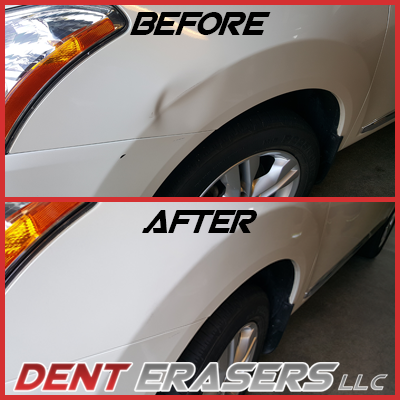
Our typical published ranges for mobile work are $100 to $500 for minor dent repair and $150 to $1,500 for large dent repair. Paintless dent repair preserves your factory finish, and we come to you, so you do not lose a day at a shop.
Paint condition counts at inspection too. A sound finish is easier to present, and choosing between a sealant and a ceramic coating is one way to keep paint protected between inspections.
What we see on lease returns
In our 27+ years of repair work, the lease-end surprise is almost always a handful of small dings: door edges, a parking-lot crease, a hail-style dimple on a hood. Each one looks minor. Added up on a condition report, they become a real bill.
Our view: a waiver and a quality repair work together. The waiver gives you a safety net for the unexpected. Paintless dent repair removes the damage you already know about, while keeping the original factory finish. We do it onsite, at your home or workplace, so the repair fits around your schedule.
If your plan requires approval before repairs, get it first. Then bring us the inspection report and we will tell you what can be done.
Brian Blanc
Get your car ready for turn-in
If you are returning a lease in Contra Costa County or nearby, our lease return dent repair service is built for exactly this. We handle door dings, creases and bumper damage at your location, and we can help with insurance claim paperwork when that applies.
Send photos for a no-obligation estimate through our free dent quote page. For a broader look at the method, read our paintless dent repair overview.
FAQ
Is an excess wear waiver the same as a vehicle protection plan?
No. A waiver covers cosmetic and wear charges at lease return. A vehicle protection plan covers repairs to listed components, much like an extended warranty. Some lessors sell both, so check which one is on your paperwork.
Does a waiver cover excess mileage?
Usually not, though a few plans add a small mileage allowance. GMC’s plan includes up to $400 of covered mileage, while Toyota’s plan does not cover excess mileage. The disposition fee is normally billed separately.
Can I buy a waiver after I sign the lease?
Sometimes. Complete Car Lease says protection is offered at signing or sometimes mid-term. Ask your lessor or dealer what is available for your lease and whether the vehicle’s mileage affects eligibility.
Should I repair dents before returning a leased car?
If you have no plan, repairing is the way to avoid the charge. If you do have one, read its terms first, because some plans exclude repairs made before termination. Ask your plan administrator before you book any work.
Sources
- Is Excess Wear-and-Tear Protection Worth Buying?
- What Is a Vehicle Protection Plan?
- XS Wear Lease Protection Plan, GMC
- File a Protection Plan Claim, GMC
- Lease Wear and Tear, Mopar Vehicle Protection
- Vehicle Wear and Use, Ford Credit
- Ford Credit Vehicle Protection Plans
- Excess Wear & Use, Toyota Financial Services
- Your Lease End Guide, Toyota Financial Services
- Porsche Lease-end Protection
- End of Lease Options, Mercedes-Benz Financial Services
- Sealant vs Ceramic Coating