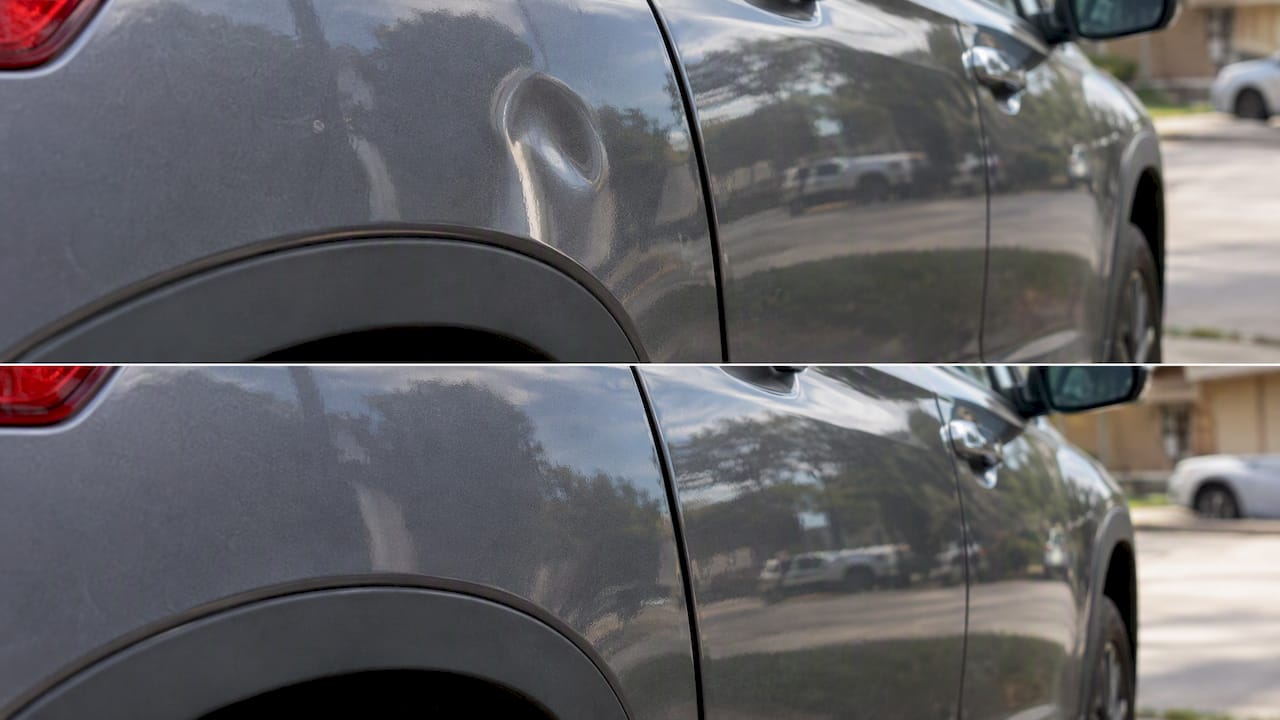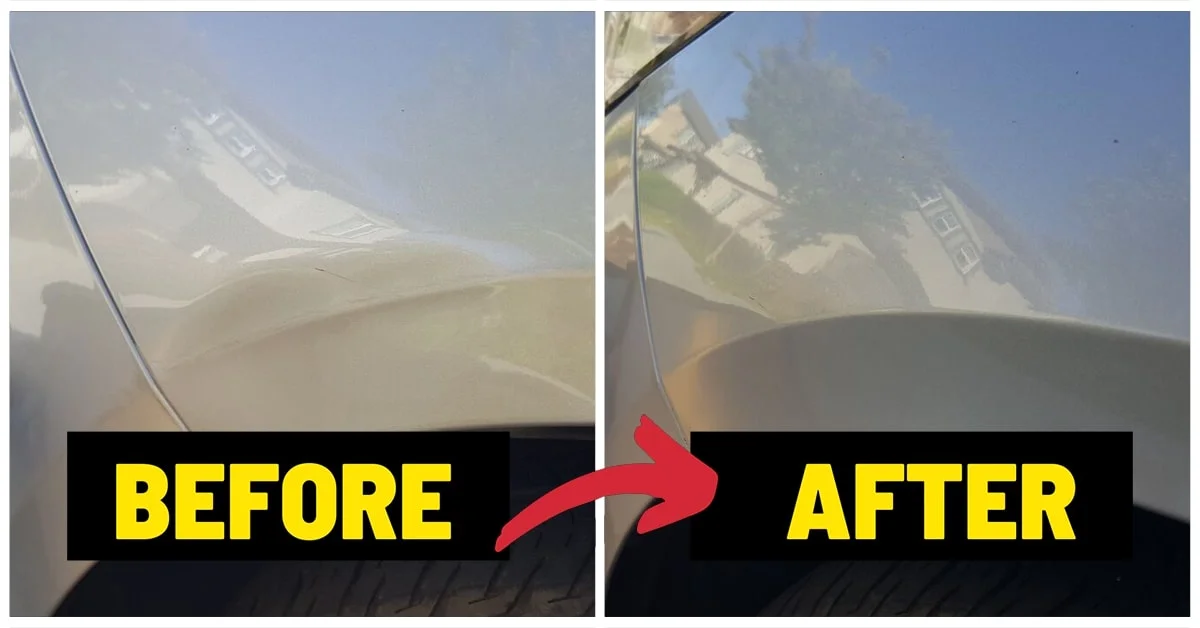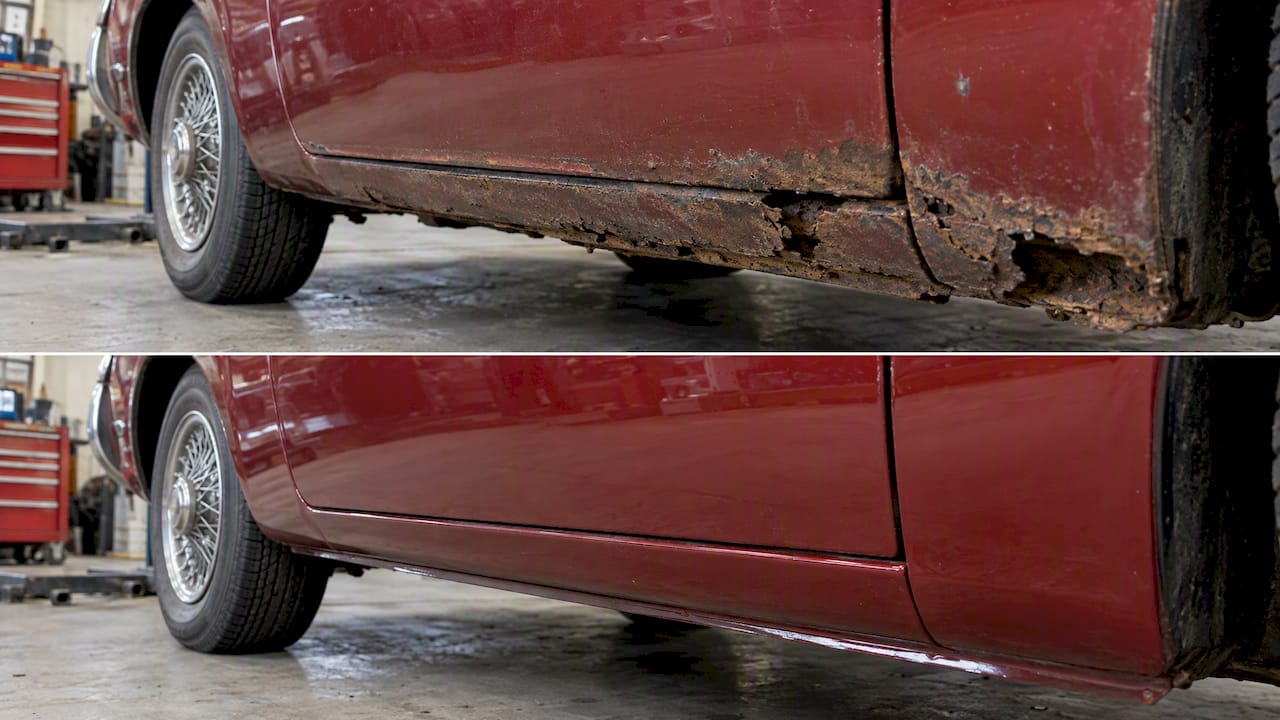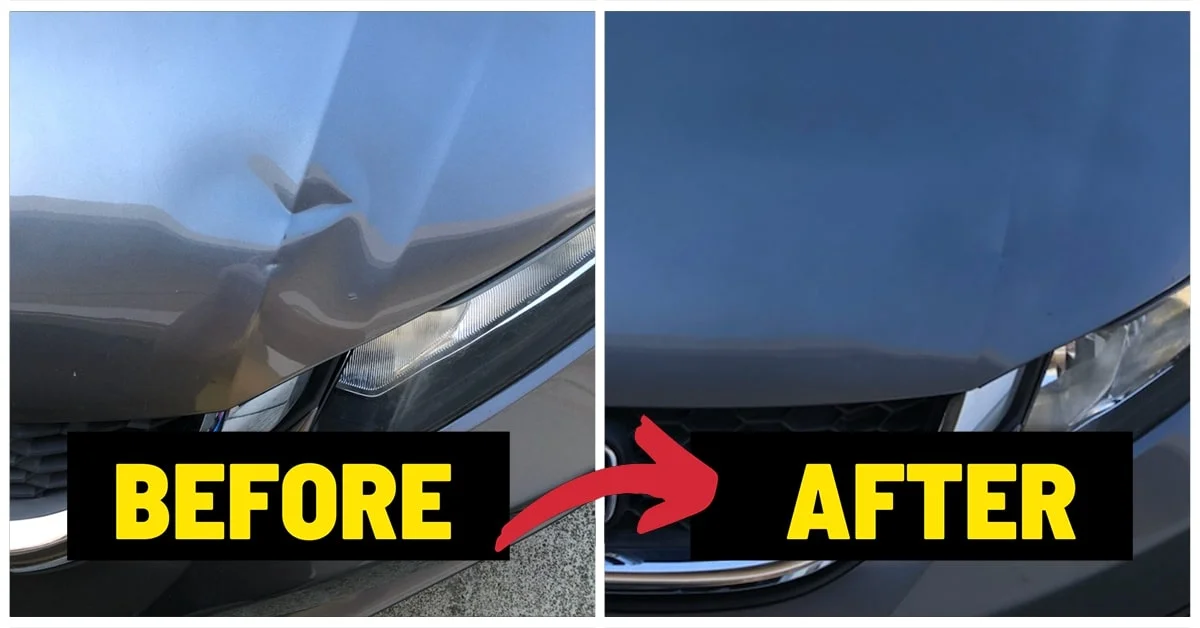
How Much Does Car Door Dent Repair Actually Cost?
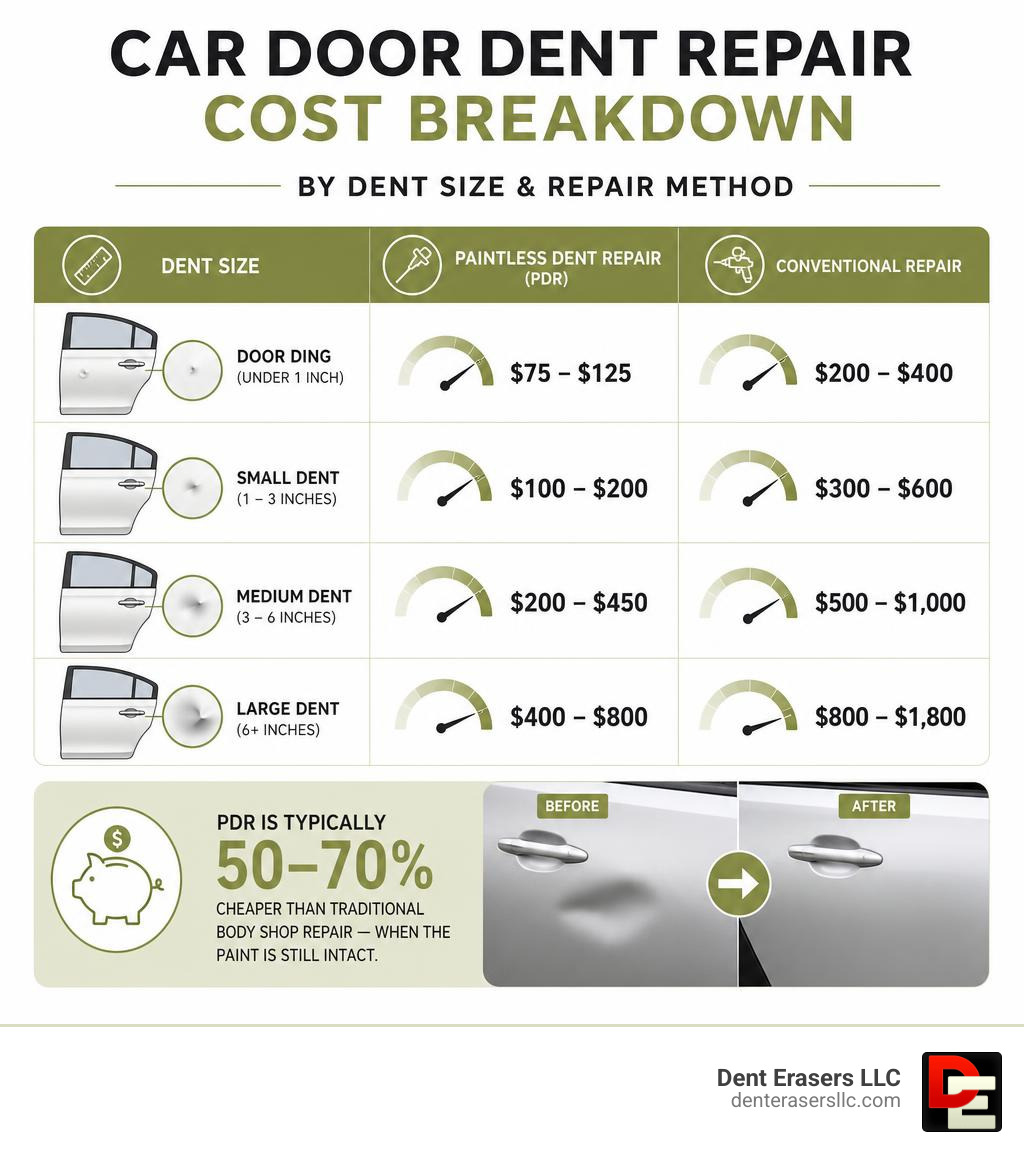
The cost of dent repair on a car door depends mostly on dent size, paint condition, and the repair method used. Here’s a quick breakdown:
| Dent Size | Paintless Dent Repair (PDR) | Conventional Repair |
|---|---|---|
| Door ding (under 1 inch) | $75 – $125 | $200 – $400 |
| Small dent (1 – 3 inches) | $100 – $200 | $300 – $600 |
| Medium dent (3 – 6 inches) | $200 – $450 | $500 – $1,000 |
| Large dent (6+ inches) | $400 – $800 | $800 – $1,800 |
PDR is typically 50–70% cheaper than traditional body shop repair — when the paint is still intact.
Most car door dents fall into the small-to-medium range and can be repaired without any repainting. A rogue shopping cart or a careless door slam in a parking lot doesn’t have to mean a big bill.
That said, costs can climb fast. Cracked paint, deep creases, aluminum panels, or limited access behind the door can all push the price higher. Knowing what drives the number helps you avoid surprises.
I’m Brian Blanc, founder of Dent Erasers LLC and a mobile PDR specialist with nearly 30 years of hands-on experience estimating and repairing the cost of dent repair on car door panels across the East Bay. I’ll walk you through everything that moves the price — and how to keep it as low as possible.
What is the Cost of Dent Repair on Car Door Panels?
When you discover a fresh blemish on your otherwise pristine car door, your immediate reaction is probably to wonder how much of your hard-earned cash is about to vanish. The truth is that the cost of dent repair on car door panels varies significantly based on how the damage occurred and the repair method you choose.
Generally, a project can range anywhere from a quick $75 fix for a minor door ding to upwards of $1,000 to $3,000+ if you require a complete door panel replacement and paint matching at a traditional body shop.
To help you visualize where your vehicle’s damage fits, let us break down the primary elements that shape your final bill:
- Dent Size and Depth: A shallow, quarter-sized ding requires far less precision work than a deep, six-inch crease running across a body line.
- Paint Condition: If your paint is completely intact, you are an ideal candidate for Paintless Dent Repair (PDR), which saves you the expense of primers, fillers, and color matching. If the paint is chipped, cracked, or scraped, traditional bodywork is required.
- Panel Material: Modern vehicles use different metals. Steel is highly forgiving and easier to shape, while aluminum is stiffer, work-hardens quickly, and requires specialized heat-assisted techniques.
- Repair Method: Choosing PDR over conventional body filler and repainting will keep your costs down by 50% to 70% while preserving your car’s factory finish.
Average Cost of Dent Repair on Car Door by Size
The physical footprint of the dent is the starting point for any estimate. Let’s look closer at how scale translates to dollars:
- Small Door Dings (Under 1 inch): These are your classic parking lot battle scars, usually caused by a stray shopping cart or another car door. If you opt for PDR, a small door ding typically costs between $75 and $150. If you take this to a conventional body shop, they will often quote $200 to $400 because they factor in sanding, filling, and blending the paint across the panel.
- Small to Medium Dents (1 to 3 inches): Slightly larger impacts, like a kicked-up road rock or a low-speed bicycle bump, fall here. PDR ranges from $100 to $200, whereas conventional repairs jump to $300 to $600.
- Medium Dents (3 to 6 inches): A baseball-sized impact falls into this category. PDR specialists can often massage these out for $200 to $450. A traditional body shop will charge $500 to $1,000 because of the extensive labor required to smooth out the metal and respray the door.
- Large Dents (6 inches or more): Softball-sized dents or long, deep creases are highly complex. PDR for large dents can range from $400 to $800 depending on accessibility. If the metal is badly stretched or the paint is compromised, conventional repair will cost anywhere from $800 to $1,800+. If the door skin is severely warped, you may even need a full door replacement, which typically runs between $500 and $2,500 for standard commuter cars.
For a broader perspective on how these door repairs stack up against other common automotive mishaps, read our guide on 10 Common Auto Body Damage Repairs and Their Costs.
How Panel Material and Paint Condition Impact the Cost of Dent Repair on Car Door Panels
Beyond size, the physical attributes of your car door heavily dictate the labor involved.
Steel vs. Aluminum Panels
Most older vehicles and entry-level modern cars feature steel door panels. Steel has “elastic memory,” meaning it wants to return to its original shape when massaged correctly.
However, many modern manufacturers — particularly on trucks like the Ford F-150, electric vehicles like Teslas, and luxury brands — now use aluminum panels to shed weight. Aluminum is much stiffer than steel, has no shape memory, and is highly prone to cracking if worked too fast. Repairing aluminum requires specialized training, dedicated tools, and the careful application of heat to make the metal pliable. Because of these challenges, expect a 30% to 60% upcharge for aluminum door panels. Learn more about how different panel designs and materials affect your repair budget in our detailed post, The Price of a Panel and What Fixing Your Hood Really Costs.
Paint Integrity and the “Fingernail Test”
The state of your paint is the ultimate fork in the road. If the paint is completely intact, we can use PDR. But how do you know if your paint is truly undamaged?
We recommend the fingernail test: gently run your fingernail across the dent. If your nail catches on a scratch or groove, the clear coat or paint layer has been broken. If the paint is cracked or chipped, PDR alone won’t suffice; the panel will need to be repaired, primed, and repainted to prevent future rust. Untreated paint damage in coastal or high-humidity regions can lead to costly corrosion issues down the road.
Paintless Dent Repair (PDR) vs. Traditional Body Shop Costs

To understand why there is such a massive price gap between PDR and traditional body shops, you have to look at what goes on behind the scenes of each process.
Traditional auto body repair is a multi-step, material-heavy process. First, the technician pulls the dent as close to flat as possible. Then, they apply plastic body filler (often called Bondo) to smooth out the remaining imperfections. Once the filler cures, it is sanded flat, followed by layers of primer, base paint, and clear coat.
Because matching paint perfectly is incredibly difficult due to sun fading and paint batch variances, the technician must also “blend” the paint into the adjacent panels (like the front fender or rear door). This requires hours of labor, expensive paint materials, and days of drying time.
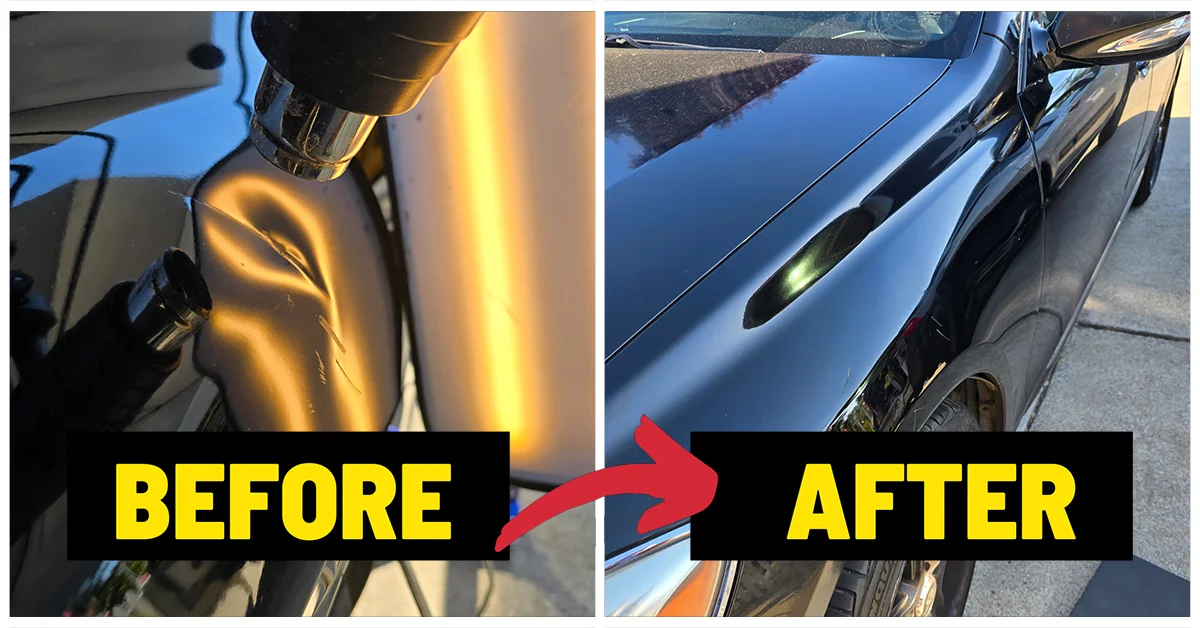
Paintless Dent Repair, on the other hand, is an art of pure craftsmanship. Technicians use specialized metal rods, LED lights, and glue-pulling systems to slowly massage the metal back into its original shape from the inside out. There is no filler, no sanding, and absolutely no painting.
Because PDR bypasses the need for costly paint materials and intensive refinishing labor, it typically costs 50% to 70% less than a traditional body shop. For a complete side-by-side cost analysis, check out our resource on Save on Repairs: Paintless Dent Repair vs Traditional Costs.
When to Choose PDR for Door Dings
PDR is the superior choice for the vast majority of everyday door dings. If your paint is not cracked or chipped, PDR should be your go-to option.
- Preserves Factory Value: Your car’s original factory paint is its best protection against the elements and is highly valued by future buyers. Once a car has been repainted, its resale value drops because repainted panels are easier for appraisers to spot.
- Incredible Speed: While a body shop might keep your car for three to five days, a mobile PDR specialist can complete most door ding repairs in one to two hours right in your driveway.
- Eco-Friendly: PDR uses no toxic chemicals, body fillers, or paint sprays, making it the greenest auto body repair method available.
If the damage is on your rear door, the structural bracing inside can sometimes make access tricky, but an experienced technician can navigate these inner channels. You can read more about this in our guide to Rear Door Dent Correction for Your Car.
When PDR is Not an Option
While we love PDR for its efficiency and affordability, it is not a magic wand. There are times when conventional auto body repair is your only choice:
- Cracked or Chipped Paint: If the impact was sharp enough to break the paint film, PDR cannot fix the paint. Massaging the metal would only cause the paint to flake off further.
- Severely Stretched Metal: When a dent is extremely deep or has a sharp, needle-like point, the metal stretching can exceed its elastic limit. The metal becomes “baggy” and loses its structural integrity, meaning it will pop back in like an oil can.
- Dents Near the Very Edge of the Panel: If a dent sits directly on the hemmed edge of the door (where the outer skin folds over the inner frame), there is usually no way to get tools behind it, and the double-walled metal is too stiff to pull with glue.
- Previous Poor Repairs: If the door panel has already been repaired with thick body filler in the past, attempting to pull or push a new dent in that area will cause the old filler to crack and release.
Key Factors That Influence Your Repair Estimate
If you request a quote for the cost of dent repair on car door panels, you might notice that two identical-looking dents can have different prices. That is because several hidden factors affect the difficulty of the repair:
- Access Limitations: PDR works primarily by getting tools behind the dent. To access the inside of a door panel, a technician must slide a thin window guard down the glass channel or remove interior trim pieces. If the dent is blocked by internal safety crash bars, window regulator motors, or sound-deadening material, the technician must use “glue pulling” from the outside or spend hours disassembling the door.
- Advanced Driver Assistance Systems (ADAS): Modern car doors are packed with technology. They house blind-spot monitoring sensors, side-impact airbags, and proximity sensors. If a dent is close to these sensors, or if the door must be removed for repair, these safety systems may require professional recalibration, which can add $1,500+ to a body shop bill.
- Electric Vehicles (EVs): Working on EVs like Teslas requires extra caution. High-voltage battery systems run throughout the vehicle, requiring specific safety protocols and power-down procedures before certain panels can be worked on. To understand how this affects your repair bill, read our specialized guide on Dent Repair for Electric Vehicles.

Geographic Location and Labor Rates
Where you live plays a major role in what you pay. Standard body shop labor rates across the country range from $60 to $120+ per hour, but high-cost-of-living areas naturally see higher rates.
Here in California, and specifically within Contra Costa County, highly skilled labor and strict environmental regulations mean local repair costs skew slightly higher than the national average. In 2026, the national average for a single PDR repair sits around $125, but in California, the average ranges closer to $169 (with simple dings starting around $75 and highly complex repairs reaching $400+).
To learn more about local pricing dynamics and how we calculate rates for our neighbors, check out our guide on Precision Dent Pulling Price Contra Costa.
If you are shopping around or looking for local reviews, you can check out what neighbors are saying on Yelp’s Best 10 Mobile Dent Repair in Concord, CA or explore options via Yelp’s Best 10 Mobile Dent Repair in Antioch, CA. For those located slightly further south and west, you can also browse Yelp’s Best 10 Mobile Dent Repair in Walnut Creek, CA or Yelp’s Best 10 Mobile Dent Repair Near Brentwood, CA.
Frequently Asked Questions about Car Door Dent Repair
Does car insurance cover dent repair on car doors?
Yes, but whether you should file a claim is a matter of simple math.
If your car door was dented by a runaway shopping cart, a falling tree branch, or hail, this falls under your comprehensive coverage. If you swerved into a pole or another vehicle hit your door, it falls under collision coverage.
Most insurance policies carry a deductible of $500 or $1,000. If a mobile PDR technician can fix your door ding for $150 to $350, it is much smarter to pay out of pocket. Filing a claim for an amount below or just slightly above your deductible can risk raising your premium, costing you more over time. However, for major hail damage (which often ranges from $1,500 to $5,000) or severe collision damage, filing a claim is absolutely worth it.
How long does it take to repair a dent on a car door?
One of the greatest benefits of Paintless Dent Repair is its speed.
- PDR Turnaround: A standard door ding (1 to 2 inches) typically takes 45 minutes to 2 hours to repair. Even a complex, multi-dent repair can be finished in a single afternoon.
- Mobile Convenience: Because we operate as a mobile service, we bring our tools directly to your home or office in Concord, Walnut Creek, or Antioch. You don’t have to worry about arranging a rental car or losing your vehicle for days.
- Traditional Body Shop Turnaround: If your car requires traditional panel beating, filling, and repainting, expect to leave your car at the shop for 3 to 5 days minimum to allow proper curing times between paint layers.
Can all car door dents be fixed with PDR?
No. While PDR can resolve about 80% to 90% of common parking lot dents, it has limitations. If your paint is cracked, if the metal is sharply creased or double-walled with zero tool access, or if the door panel is made of plastic or composite materials (like some Saturns or exotic sports cars), traditional bodywork is required.
The best way to know for sure is to get a professional assessment. You can easily text a few clear photos of your dent from a 45-degree angle in natural daylight to a trusted technician to receive an accurate estimate within minutes.
Conclusion
A dented car door can be incredibly frustrating, but fixing it doesn’t have to be a stressful, multi-day ordeal that breaks the bank. By understanding the factors that influence the cost of dent repair on car door panels — from the size and material of the panel to the condition of your paint — you can make an informed decision that preserves both your vehicle’s factory finish and its resale value.
At Dent Erasers LLC, we specialize in providing top-tier mobile paintless dent repair services across Contra Costa County, including Concord, Antioch, Walnut Creek, Brentwood, and surrounding East Bay communities. Our expert, on-site service is designed to preserve your car’s original paint with a quick turnaround and highly affordable pricing (typically ranging from $150 to $500).
Whether you have a minor door ding from a shopping cart or a more complex crease on an electric vehicle, we are here to help. Skip the hassle of the traditional body shop and let us bring the repair shop directly to your driveway.
Ready to get that door looking brand new again? Schedule professional dent repair with us today, or send us a few photos of your damage for a fast, free estimate!