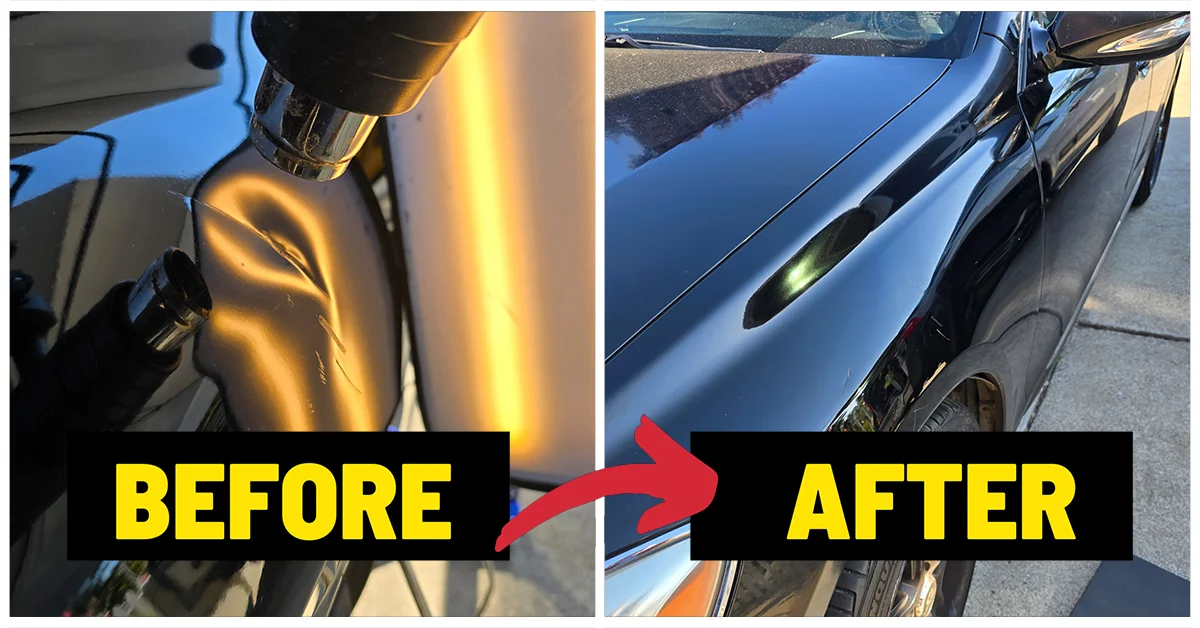
Why Choosing the Right Auto Body Shop Can Save You Time, Money, and Headaches
Finding a reliable auto body shop is one of the most stressful parts of dealing with vehicle damage — whether it’s a parking lot ding, a minor fender bender, or hail damage across multiple panels.
Here’s a quick look at what to consider when comparing auto body shops:
| Factor | Why It Matters |
|---|---|
| Certifications (I-CAR, ASE, OEM) | Ensures technicians are trained to current standards |
| Repair method (PDR vs. traditional) | Affects cost, time, and whether your factory paint is preserved |
| Warranty offered | Protects you if the repair fails down the road |
| Insurance coordination | Reduces paperwork and delays for you |
| Free estimates | Lets you compare shops before committing |
| Customer reviews | Reveals real-world quality and communication |
Not every shop is the right fit for every type of damage. A major structural collision needs different expertise than a door ding or hail dent. Choosing the wrong shop can mean unnecessary repainting, longer wait times, and costs you didn’t need to pay.
Only about 20% of auto body shops in the U.S. hold I-CAR Gold Class certification — the industry’s top training standard. That gap in quality is real, and it matters when your vehicle’s finish, safety, and resale value are on the line.
I’m Brian Blanc, founder of Dent Erasers LLC and a mobile PDR specialist with nearly three decades of experience restoring vehicles at auto body shops, dealerships, and directly at customers’ homes and workplaces across the East Bay. In this guide, I’ll walk you through exactly what separates a great shop from a costly mistake.
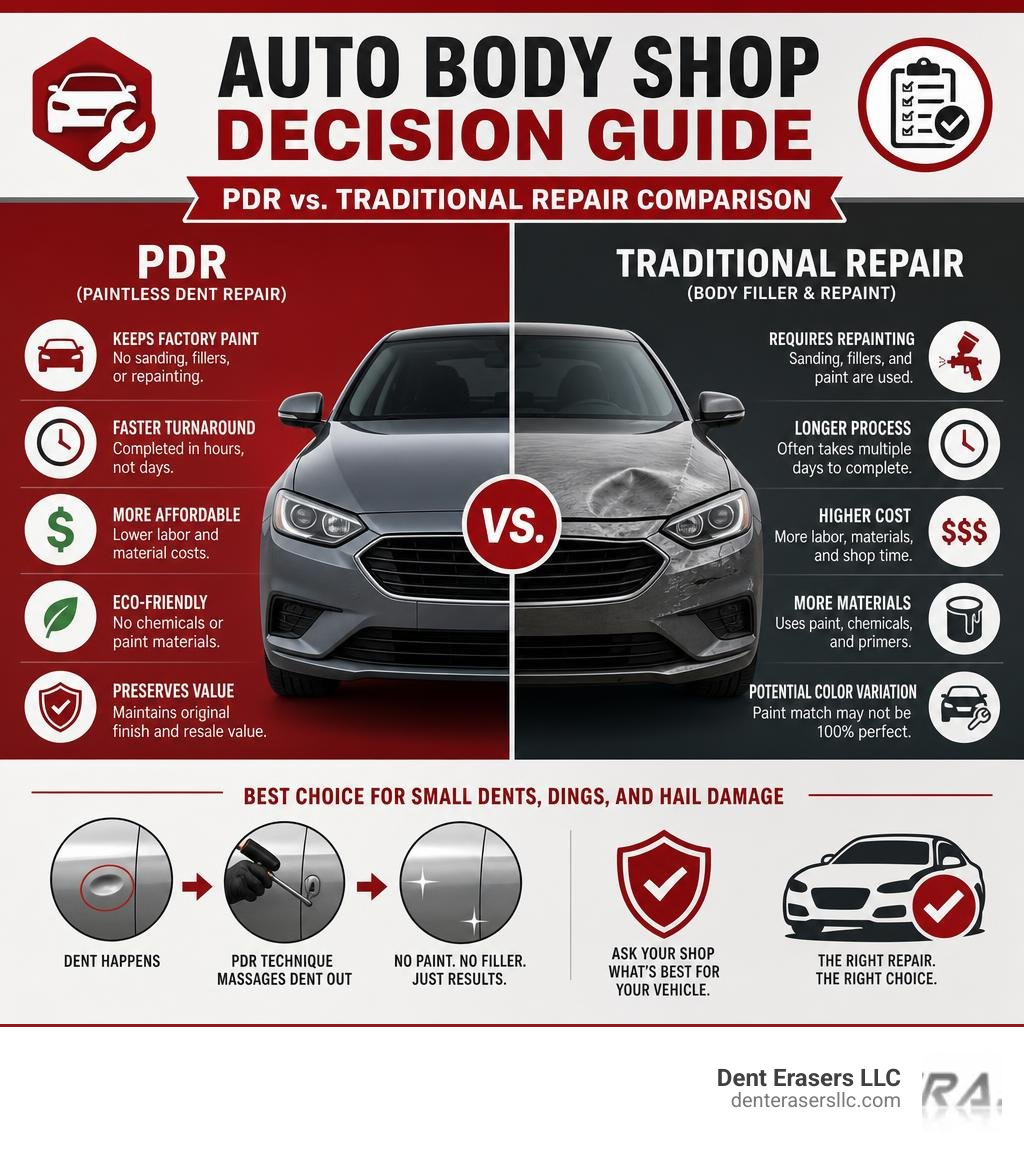
Auto body shop definitions:
What to Look For When Choosing an Auto Body Shop
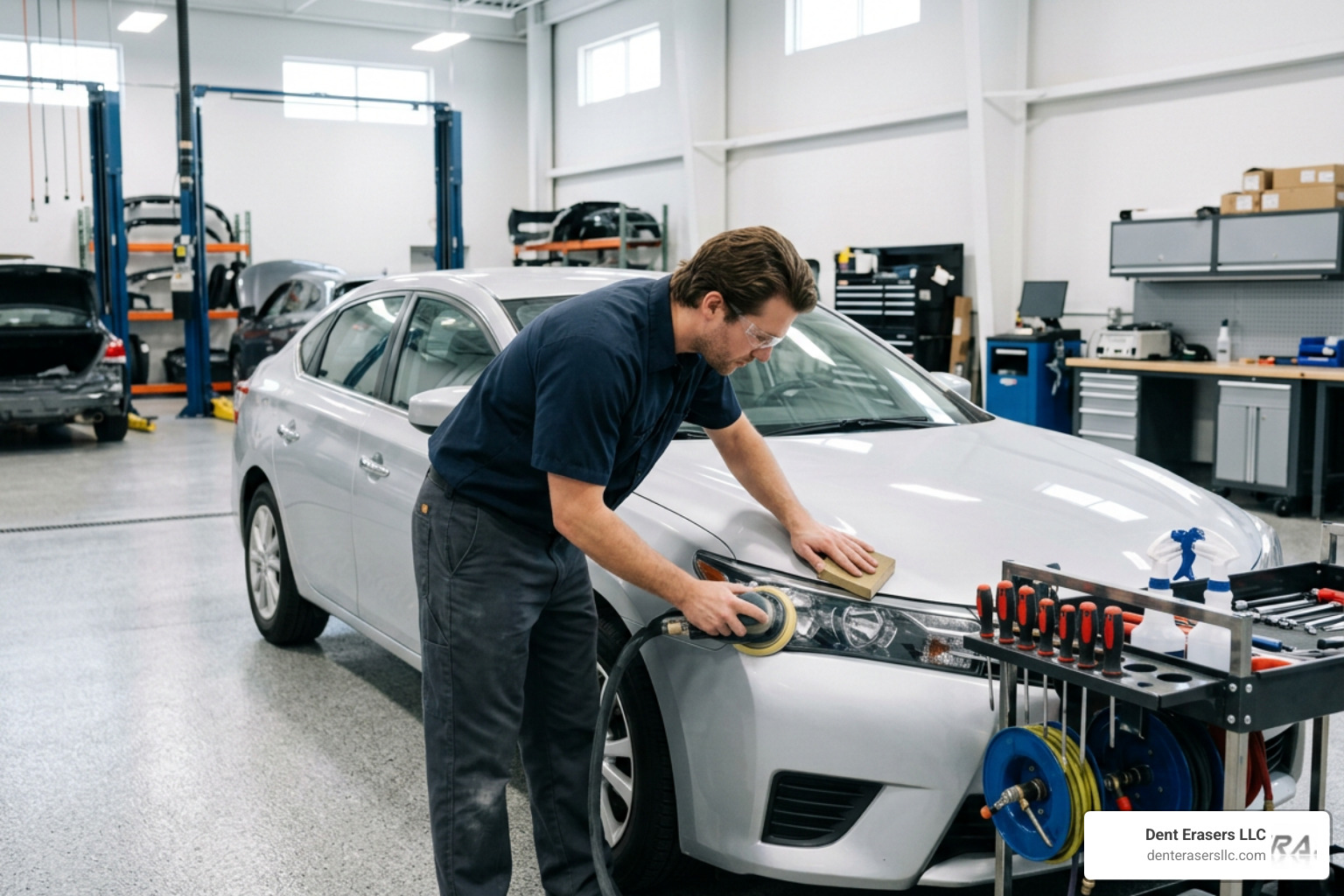
When your vehicle has been damaged, finding the right auto body shop in Contra Costa County can feel like searching for a needle in a haystack. With so many options scattered across cities like Concord, Walnut Creek, and Richmond, how do you distinguish a premium service center from a corner-cutting operation?
First and foremost, a shop’s reputation is built on transparency, specialized equipment, and verifiable customer feedback. When comparing shops, look beyond the shiny office and focus on the shop floor.
A high-quality facility will display its credentials openly, maintain a clean and organized work environment, and utilize modern repair technologies. When looking for the best local options, tools like THE BEST 10 BODY SHOPS IN CONCORD, CA can help you cross-reference real-world customer reviews to see how a shop handles communication, insurance claims, and unexpected delays.
Industry Certifications That Matter
The absolute baseline for any reputable auto body shop is its technical certifications. Modern vehicles are incredibly complex, built with advanced high-strength steels, aluminum alloys, and intricate safety sensors. Technicians cannot rely on outdated methods to fix 2026-model vehicles.
- I-CAR Gold Class Certification: This is the gold standard of the collision repair industry. Only about 20% of shops nationwide achieve this status. It requires continuous, rigorous training on the latest vehicle technologies and safety systems. If a shop isn’t I-CAR certified, your vehicle’s structural integrity could be at risk.
- ASE (Automotive Service Excellence) Certification: This ensures that individual technicians have passed strict exams verifying their mechanical and structural repair capabilities.
- Manufacturer-Specific (OEM) Certifications: These prove that a shop has been officially authorized by brands like Tesla, Honda, or Ford to repair their vehicles using exact factory specifications and specialized tooling.
To see how local shops stack up, you can read our Detailed Reviews of the Top 10 Collision Repair Shops to understand which certifications truly translate to superior workmanship on the road.
OEM-Certified Repairs vs. Standard Repairs
When an auto body shop repairs your vehicle, they generally choose between two pathways: OEM-certified repairs or standard (often aftermarket-heavy) repairs.
- OEM-Certified Repairs: This process strictly adheres to Original Equipment Manufacturer guidelines. Technicians use genuine factory parts designed specifically for your vehicle model. This is critical for preserving your vehicle’s safety systems, advanced driver assistance systems (ADAS) calibrations, and factory warranty.
- Standard Repairs: Standard repairs often rely on aftermarket, rebuilt, or salvage parts to keep costs low. While this may satisfy an insurance company looking to minimize a claim payout, it can compromise the precise fit, finish, and structural performance of your vehicle in a subsequent accident.
If you are looking for certified collision work in our local communities, facilities in Antioch or Richmond emphasize factory specifications to ensure vehicles are returned to pre-accident safety standards.
The Importance of a Lifetime Warranty
A reliable auto body shop stands behind its work. If a shop does not offer a written lifetime warranty on its structural repairs, bodywork, and paint refinishing, you should take your business elsewhere.
A lifetime warranty guarantees that as long as you own the vehicle, any defects in workmanship — such as paint peeling, clearcoat failure, or shifting body panels — will be corrected at no cost to you. This level of protection builds long-term trust and gives you complete peace of mind that the shop did not take shortcuts during the repair process.
Understanding Auto Body Repair Options and Timelines
The path from a damaged vehicle to a flawless factory finish involves a highly structured, technical workflow. Understanding this process helps demystify what happens behind closed doors at a major collision center.
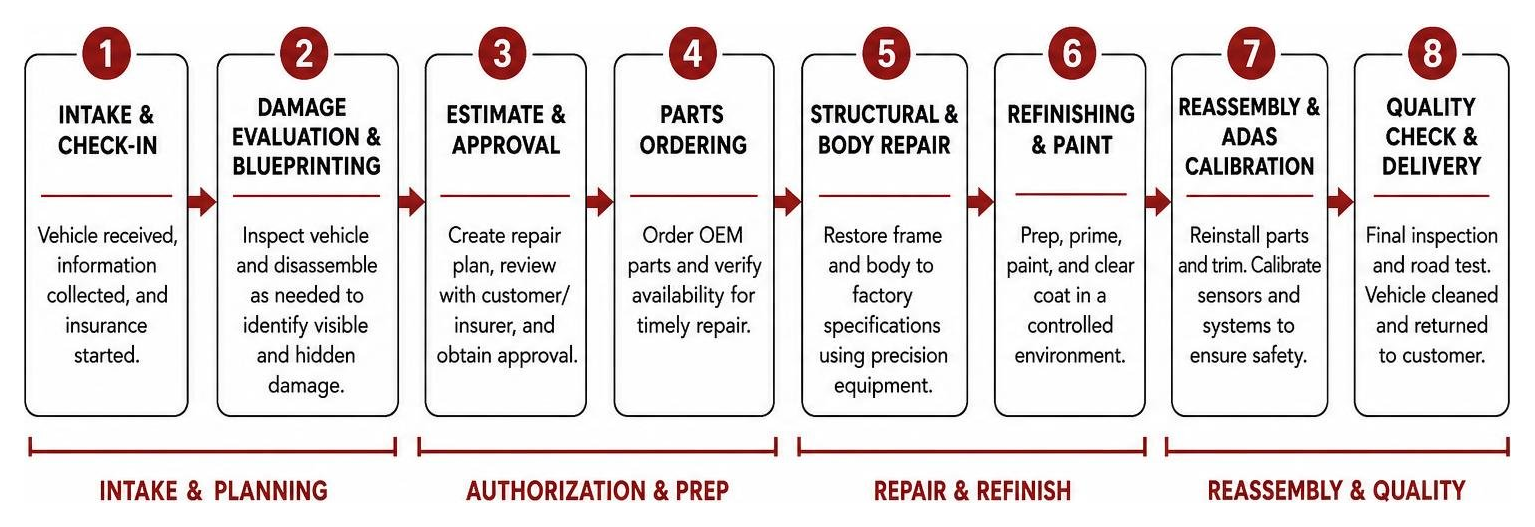
Key Steps in the Auto Body Repair Process
- Damage Evaluation & Digital Blueprinting: The vehicle is checked in, and a certified estimator performs a thorough inspection. In modern shops, this often involves “disassembly” or “blueprinting” — taking apart the damaged area to find hidden structural issues or broken safety sensors before ordering parts.
- Structural & Body Repair: If the frame or unibody is compromised, technicians use computerized laser measuring systems and heavy-duty frame pullers to restore the metal to within 1mm of factory specifications.
- Refinishing & Paint: For traditional repairs, the panels are prepped, primed, and painted in a climate-controlled downdraft paint booth. Professional shops use advanced computerized color-matching tech to blend the new paint seamlessly with your car’s existing coat. If you are exploring paint services, check out our guide on how to Don’t Brush It Off and Choose the Best Body Paint Car Services.
- Reassembly & ADAS Calibration: Body panels, lights, and trim are reassembled. Crucially, any safety sensors, cameras, or radar units housed in the bumpers or windshield must undergo precise ADAS calibration.
- Quality Assurance & Detail: The vehicle is thoroughly cleaned, detailed, and subjected to a multi-point safety inspection before being handed back to the owner.
How to Get a Free Estimate From an Auto Body Shop
Getting an estimate should be simple and pressure-free. Most reputable shops in Contra Costa County offer free, no-obligation estimates.
To make the process even faster, many modern shops let you submit photos of the damage online to receive a preliminary digital estimate. However, keep in mind that a photo estimate is just a starting point. A final, binding estimate requires an in-person inspection where a technician can look beneath the surface. For a deeper look into budgeting for these services, read The Complete Guide to Auto Body Repair Costs.
Typical Timelines for Auto Body and Dent Repairs
One of the most common questions we hear is, “How long will my car be in the shop?” The timeline varies dramatically based on the severity of the damage and the repair method chosen:
- Traditional Collision Repair: For major bodywork, frame straightening, and painting, the industry average cycle time is roughly 10 business days. This timeline can stretch if there are parts backorders or complex insurance delays at major local centers in Pittsburg or Walnut Creek.
- Mobile Paintless Dent Repair (PDR): If your paint is unbroken and the metal is structurally sound, mobile PDR completely bypasses the traditional shop timeline. Instead of losing your car for a week or more, we complete most PDR repairs on-site at your home or office in Concord, Walnut Creek, or Brentwood in just 1 to 3 hours.
Paintless Dent Repair (PDR) vs. Traditional Bodywork
When dealing with dings, dents, and hail damage, you don’t always need to leave your car at a traditional auto body shop for expensive panel replacement and painting. Let’s compare your two primary options:
| Feature | Paintless Dent Repair (PDR) | Traditional Auto Body Shop |
|---|---|---|
| Primary Method | Gentle metal manipulation from behind the panel | Sanding, body filler (Bondo), repainting, or panel replacement |
| Factory Paint Preservation | 100% Preserved (Original finish remains untouched) | Repainted (Risk of color mismatch and clearcoat failure) |
| Average Cost | $150 – $500 (Highly affordable) | $1,000 – $5,000+ (Includes paint, labor, and materials) |
| Average Turnaround | 1 – 3 Hours (Done on-site at your location) | 3 – 10+ Days (Requires rental car logistics) |
| Environmental Impact | Eco-Friendly (No chemicals, primers, or toxic paints) | Heavy chemical use, paint overspray, and discarded body panels |
| Vehicle Resale Value | Maintained (Clean vehicle history report, no paint work) | Depreciated (Reported paint/bodywork can lower value) |
What is Paintless Dent Repair (PDR)?
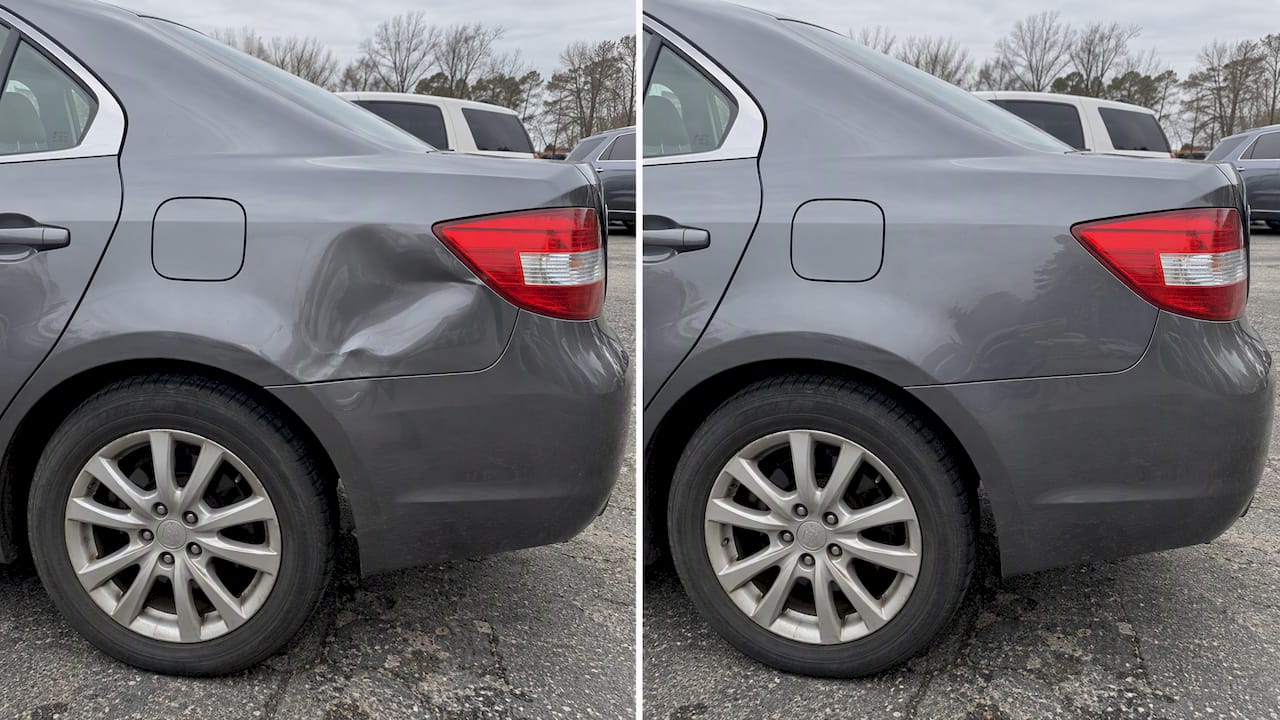
Paintless Dent Repair is a highly specialized, non-invasive craft. Instead of grinding off your car’s original paint, filling the dent with plastic body filler, and spraying aftermarket paint, PDR technicians access the backside of the damaged panel.
Using specialized metal rods, LED reflective light boards, and precise hand-eye coordination, we gently massage the metal back into its exact original shape. For areas where backside access is restricted, we utilize advanced glue-pulling systems that safely bond to the exterior paint finish to lift the dent without causing damage.
By keeping your vehicle’s factory paint intact, you preserve the original clearcoat and protect your car from future rust or paint peeling. You can learn more about how this advanced artistry works in our guide on how to Get Your Car Looking New Again with Expert Dent Removal.
When is PDR the Best Option?
PDR is the absolute best option for:
- Door Dings & Shopping Cart Dents: Typical parking lot mishaps where the paint is scuffed but unbroken.
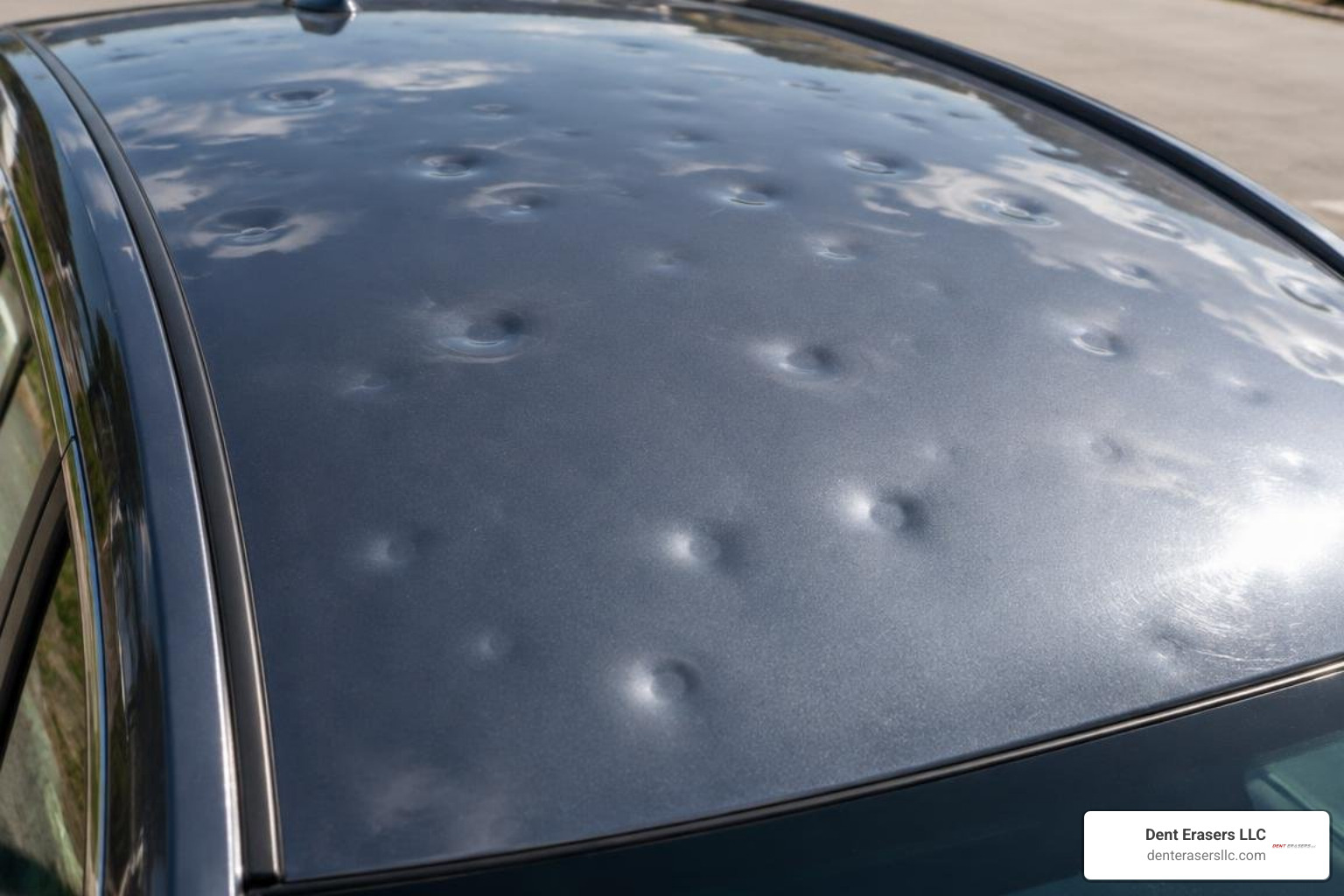
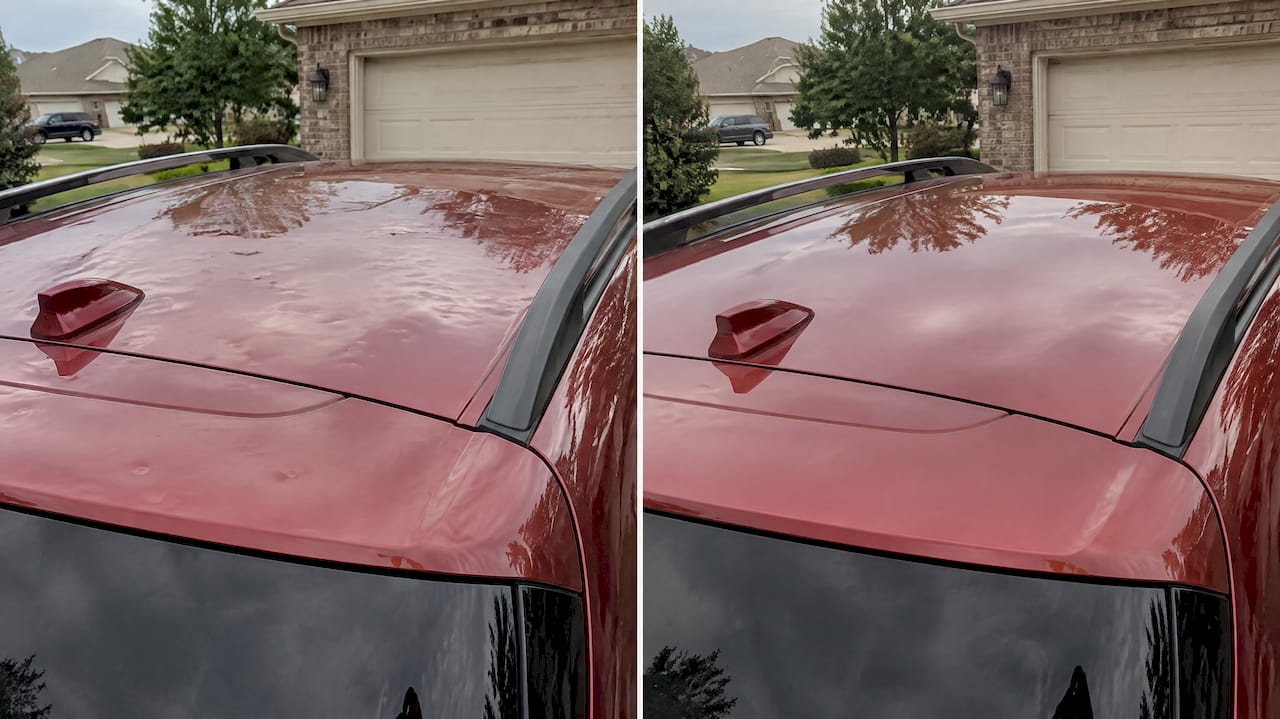
- Hail Damage Repair: Restoring hundreds of tiny dings across hoods, roofs, and trunks without destroying the car’s original finish.
- Creases and Large Dents: As long as the metal is not severely stretched or torn, and the paint is intact.
If your vehicle meets these criteria, choosing PDR will save you thousands of dollars and days of wasted time. Discover how to find these services right in your neighborhood by reading The Best Places to Get Your Dings and Dents Fixed Nearby and explore budgeting tips in our guide on How to Find Affordable Dent Removal for Your Car.
Navigating Insurance Claims and Coverage After an Accident
Dealing with insurance after an accident can feel like navigating a maze. Understanding your rights and policy details before you contact your carrier is key to avoiding out-of-pocket surprises.
How to Know If Your Insurance Covers the Repairs
Whether your repairs are covered depends on your auto insurance policy and who was at fault:
- Collision Coverage: If you were at fault or involved in a single-vehicle accident, your collision coverage will pay for the repairs, minus your deductible.
- Comprehensive Coverage: If your car was damaged by hail, falling tree branches, vandalism, or an animal, this falls under comprehensive coverage. Fortunately, comprehensive claims rarely cause your insurance rates to rise.
- Third-Party Liability: If another driver hit you and was found at fault, their insurance company is legally responsible for covering 100% of your repair costs and providing you with a rental car.
To understand how repair costs influence your insurance decisions, check out our Step-by-Step Guide to Car Body Repair Price.
Steps to Handle the Insurance Claims Process
- Document the Scene: Take clear, well-lit photos of both vehicles, the surrounding area, and any road hazards.
- File a Claim Promptly: Contact your insurance provider to report the incident. Make sure to get a claim number.
- Choose Your Repair Shop: Your insurance company may try to “steer” you toward their preferred direct-repair program (DRP) shops in areas like Brentwood or Concord. However, you have the legal right to choose any repair shop you trust.
- Schedule the Assessment: Let your chosen shop coordinate directly with the insurance adjuster to ensure all damage — including hidden structural issues — is fully documented and paid for.
Frequently Asked Questions About Auto Body Repairs
Do I have to use the repair shop recommended by my insurance?
No. Under California law, you have the absolute right to choose whichever auto body shop repairs your vehicle. Insurance companies cannot force you to use their “preferred” or “network” shops. They may warn you that choosing an independent shop will delay the process, but reputable shops work directly with all major insurance carriers to make the claims process seamless.
Can you match the exact paint color of my car?
While high-end collision shops use computerized spectrophotometers to match paint, aftermarket paint is rarely a 100% perfect match to factory-baked paint.
This is why Paintless Dent Repair (PDR) is superior for minor dents. Because PDR does not use any paint, fillers, or primers, there is zero risk of color mismatch, overspray, or clearcoat failure. Your vehicle retains its original, flawless factory paint finish.
How much does car dent and scratch repair cost?
Traditional auto body shop repairs that require sanding, painting, and panel blending typically start at $1,000 and can easily exceed $3,000 for minor bumper and fender damage.
In contrast, our mobile Paintless Dent Repair services generally cost between $150 and $500, depending on the size, depth, and location of the dent. For a detailed breakdown of what to expect on your final bill, read our article Car Dent Scratch Repair Cost What to Expect at the Shop.
Conclusion
Selecting the right auto body shop is about finding a team that prioritizes safety, transparency, and preserving your vehicle’s long-term value. While traditional collision centers are essential for major structural accidents, they are often an expensive, time-consuming choice for everyday door dings, minor creases, and hail damage.
At Dent Erasers LLC, we specialize in expert, mobile Paintless Dent Repair (PDR) that comes directly to you. Serving Concord, Walnut Creek, Antioch, Richmond, and communities throughout Contra Costa County, we restore your vehicle’s metal panels on-site at your home or office.
By utilizing advanced PDR techniques, we preserve your car’s original factory paint, complete most repairs in just 1 to 3 hours, and keep your costs incredibly affordable — typically ranging from $150 to $500.
Don’t let minor dents and dings ruin your vehicle’s look and resale value. Contact us today to get a quick, free estimate, and let us get your car looking brand new again!
Ready to get started? Visit our Dent Erasers LLC Auto Body Repair Service Page to request your free mobile estimate today.