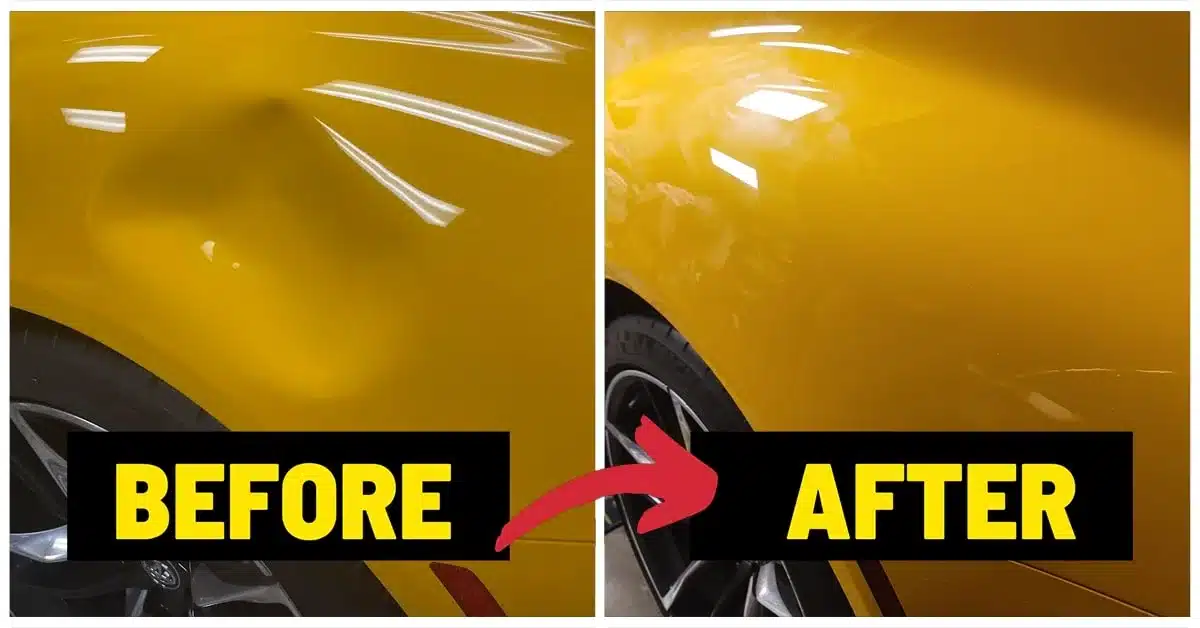
What to Know Before Choosing a Body Paint Car Service
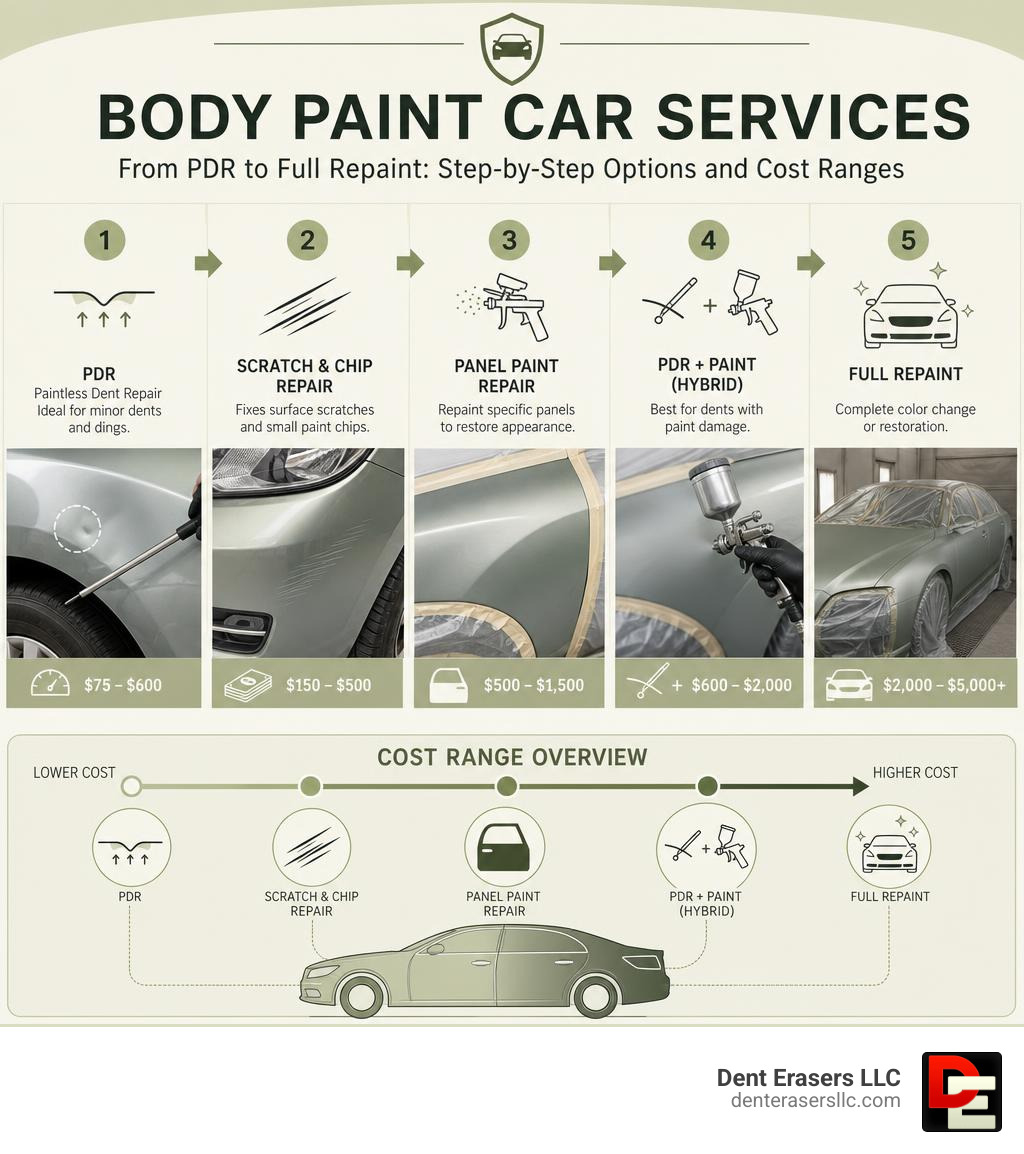
Quick answer: Looking for the right body paint car service? Here’s what matters most:
- Minor dents and dings — Paintless Dent Repair (PDR) is often faster, cheaper, and preserves your factory finish
- Scratches, chips, or larger damage — Traditional body paint repair or a hybrid PDR + paint approach works best
- Full repaint — Best for severe damage, faded paint, or a custom color change
- Mobile services — Available for many repairs, so you don’t have to visit a shop
- Cost range — DIY materials can run under $1,000; professional full repaints can cost several thousand dollars
Your car’s paint does more than look good. It protects the metal underneath from rust, weathering, and daily wear. But parking lots are ruthless. One careless door slam or a stray shopping cart can leave a ding that nags you every time you look at it.
The good news? Not every dent needs a full repaint. And not every scratch means a costly body shop bill.
Knowing which service fits your damage — and which shops actually deliver — can save you hundreds, sometimes thousands, of dollars.
I’m Brian Blanc, founder of Dent Erasers LLC, and I’ve spent nearly three decades repairing body paint car damage across the East Bay using mobile paintless dent repair techniques that protect factory finishes and preserve resale value. In this guide, I’ll walk you through everything you need to make a smart, confident decision for your vehicle.
The Science of Automotive Refinishing: Paint Systems and Preparation
When you look at a beautifully restored vehicle cruising down the highway in Walnut Creek or parked near the waterfront in Richmond, you are not just looking at color. You are looking at a highly engineered, multi-layered chemical shield.
Automotive refinishing is a meticulous science. Unlike house paint, which is designed to sit quietly on a stationary wall, a body paint car finish must withstand extreme temperature swings, highway speeds, flying gravel, UV radiation, and acidic bird droppings.
Achieving a flawless, durable finish requires strict adherence to original equipment manufacturer (OEM) standards. In the collision repair industry, the quality of the final product is entirely dependent on the quality of the foundation. That is why finding the right help is crucial. If you are looking for local structural restoration, you can check out the Top Rated Auto Body Shops Serving Contra Costa County, CA to see certified professionals who understand these high standards.
Understanding the Layers of a Body Paint Car Finish
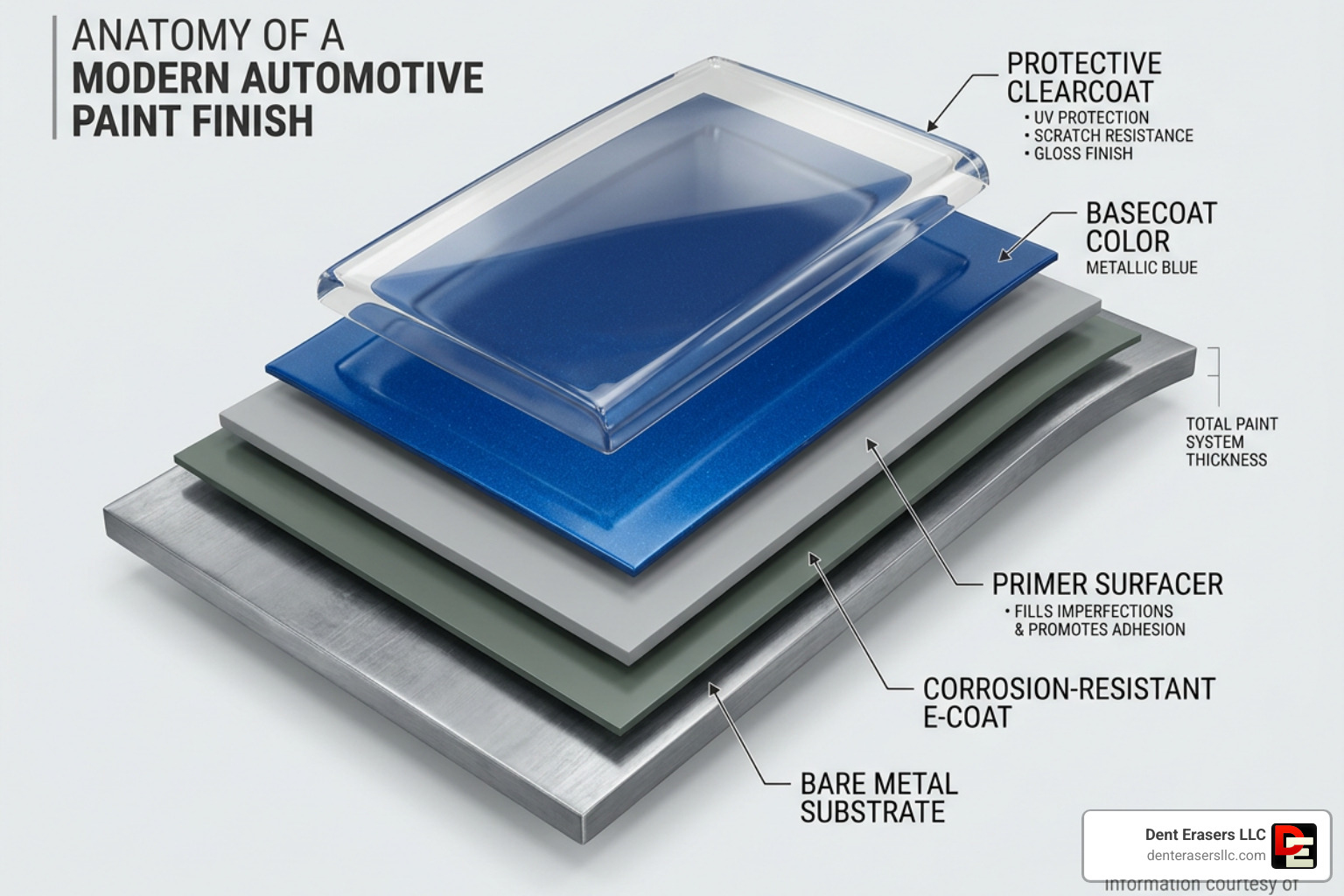
To appreciate what goes into a high-quality finish, we must break down the anatomy of modern automotive paint. Today’s vehicles generally use a multi-stage paint system, which consists of several distinct layers applied over the raw body panel:
- The Substrate (Steel, Aluminum, or Composite): The bare metal or plastic panel of your vehicle.
- The E-Coat (Electro-deposition Primer): Applied at the factory, this is an anti-corrosion bath that bonds to the bare metal using electrical currents.
- The Primer Surfacer: This layer fills in minor imperfections from manufacturing or repair work. It acts as the “glue” that binds the color to the vehicle while providing a smooth surface for sanding.
- The Basecoat (Color Layer): This is where the aesthetic magic happens. The basecoat contains the pigments, metallics, or pearl flakes that give your vehicle its unique hue. It is purely cosmetic and has no built-in shine or weather protection on its own.
- The Clearcoat: A transparent, high-solids urethane layer that acts as the shield. It provides the deep, glossy shine and contains vital UV inhibitors to prevent the color underneath from fading.
While most modern vehicles use this two-stage (basecoat/clearcoat) system, older classics or budget-friendly commercial paint jobs sometimes utilize a “single-stage” paint. In a single-stage system, the color pigment and the protective gloss agents are mixed together into one single formula. While faster to apply, single-stage paint lacks the depth, durability, and scratch-resistance of a dedicated clearcoat.
When your vehicle sustains deeper structural damage that penetrates these protective layers, a comprehensive Auto Body Repair is required to rebuild these layers from the metal up.
Key Steps in the Professional Prep Process
If you ask any seasoned painter in Concord or Antioch what the most important part of a paint job is, they will all give you the same answer: preparation. The actual spraying of the paint takes up a fraction of the time; it is the hours of sanding, masking, and cleaning that determine whether the paint will stick or peel off in a year.
The prep process is a rigorous, step-by-step journey:
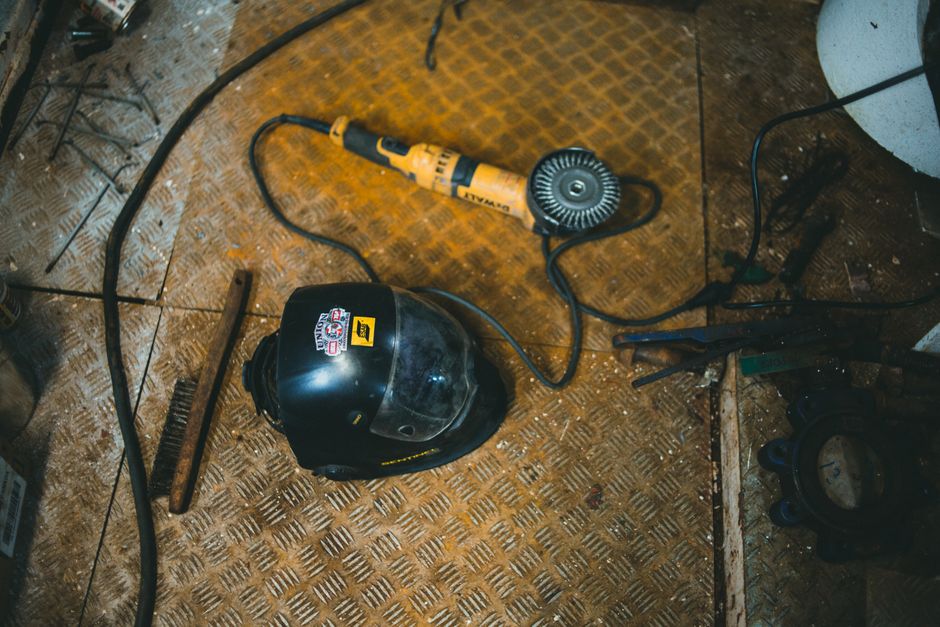
- Sanding and Stripping: Painters must remove the old, damaged clearcoat and paint. This is often done mechanically using a dual-action (DA) sander. For heavily damaged panels, stripping the paint down to bare metal using 36-grit sand discs followed by 80-grit refinement is necessary to build a clean foundation.
- Chemical Stripping: Sometimes used for complex curves, though painters must exercise extreme caution to keep chemical strippers away from tight seams and body panel cracks where they can hide and ruin the new paint later.
- Body Filler and Metalwork: If the metal is stretched or dented, technicians use specialized hammers and dollies to get the metal as close to its original shape as possible before applying a thin layer of polyester body filler. Keeping the filler thin is vital; thick filler shrinks over time, leading to unsightly cracks and ripples.
- Masking: Every window, trim piece, door handle, and wheel must be meticulously taped off using automotive-grade masking paper and tape to prevent overspray.
- Dust Control: The tiniest speck of airborne dust can ruin a fresh wet coat. Professional shops paint inside specialized downdraft spray booths that pull air through heavy filtration systems.
For minor dings where the paint is still intact, you can bypass this invasive, dusty process entirely. Opting for Paintless Bodywork: Non-Invasive Repair keeps your vehicle’s factory layers completely undisturbed.
Integrating Paintless Dent Repair with Traditional Bodywork
For decades, car owners assumed that any dent, no matter how small, required dropping the car off at a body shop for a week of filling, sanding, and repainting. Today, the automotive repair landscape is much more advanced. By integrating Paintless Dent Repair (PDR) with traditional painting, we can achieve faster, cleaner, and more affordable results.

This modern integration is often referred to as a “hybrid repair.” It allows us to fix complex damage by utilizing the best of both worlds: reshaping the metal non-invasively first, and then applying paint only where it is absolutely necessary.
How Paintless Dent Repair Preserves Factory Paint
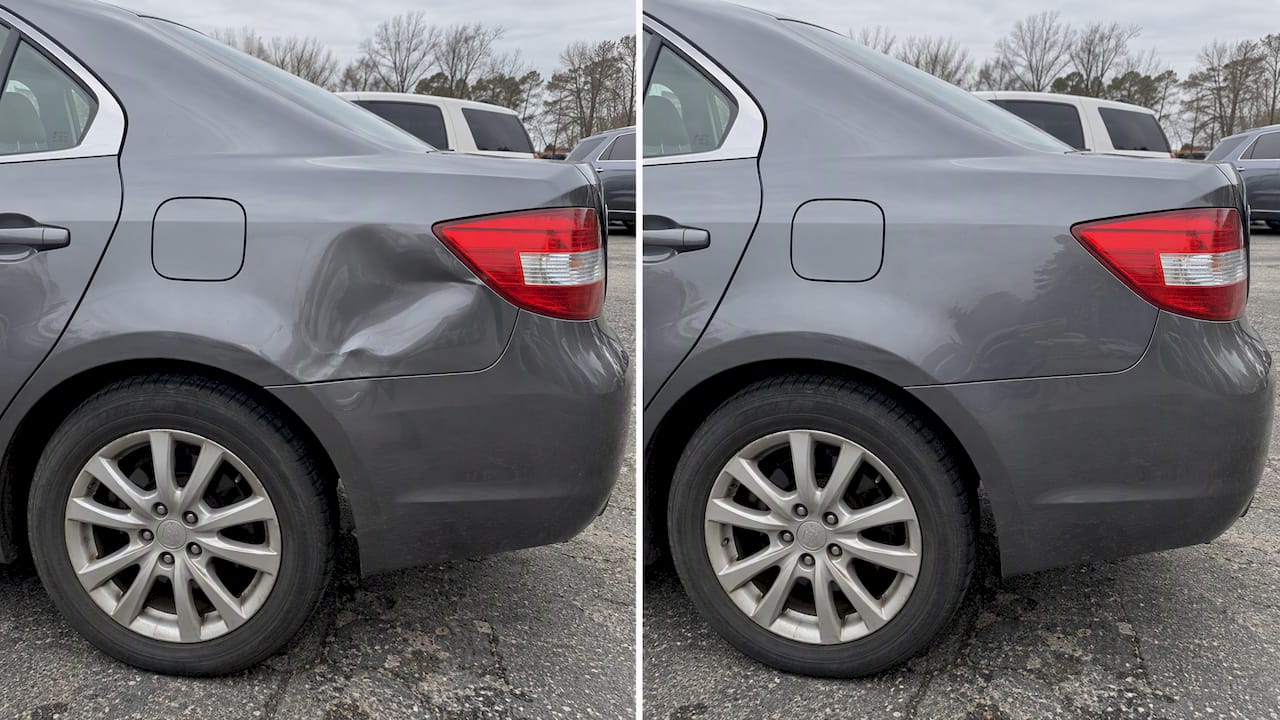
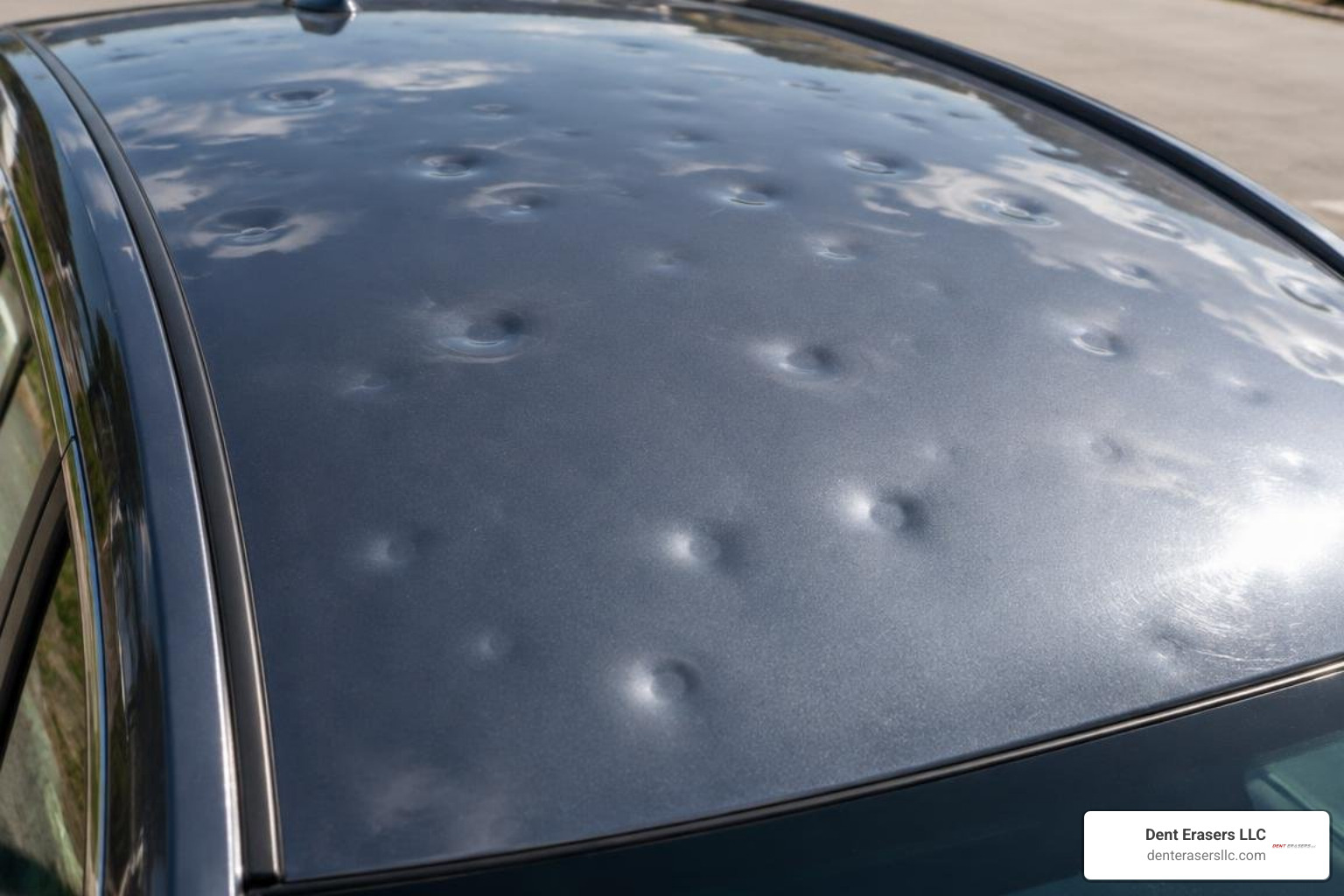
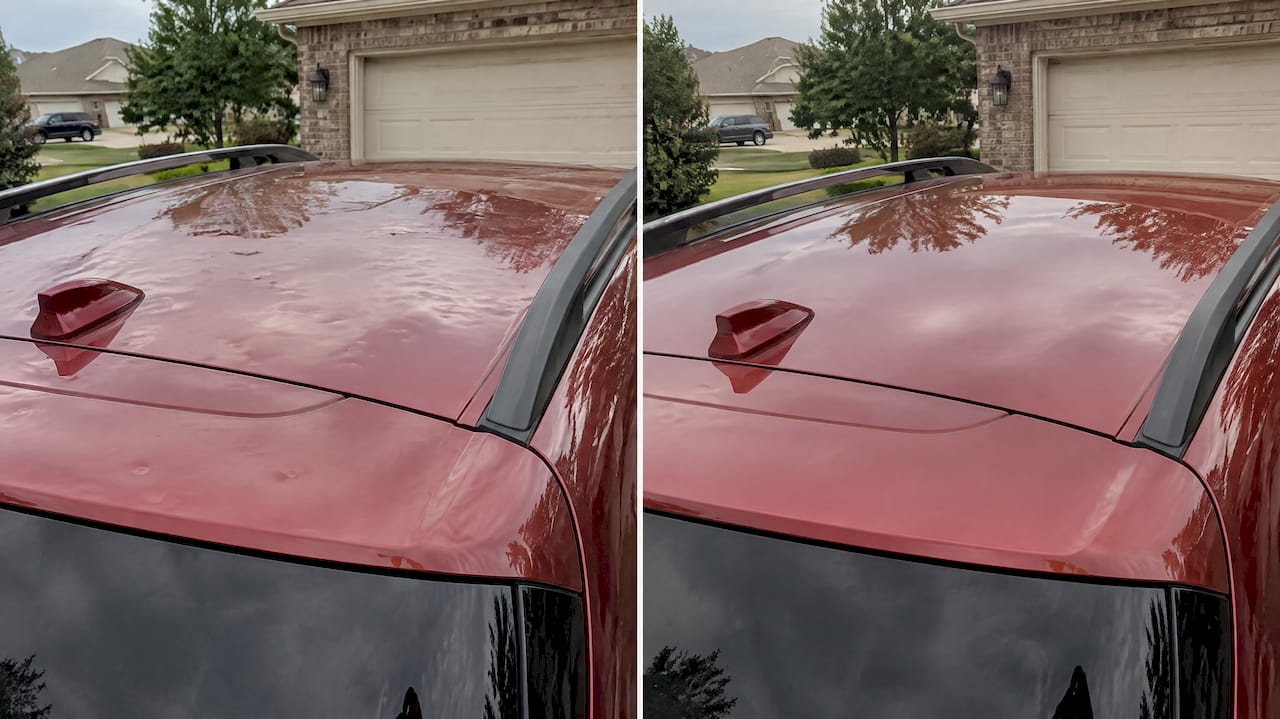
Paintless Dent Repair is the art of massaging stretched metal back into its original shape without disturbing the factory clearcoat. Because your original finish remains untouched, PDR is the absolute best way to preserve your car’s factory paint and maintain its long-term resale value.
At Dent Erasers LLC, we use two primary methods to accomplish this:
- Specialized Metal Rods: We access the backside of the damaged panel through factory access points (like window openings or inner fender liners). Using highly polished, custom-curved steel rods, we apply micro-pressure to slowly “massage” the dent flat.
- Glue Pulling: When there is no access to the back of the panel—such as on double-walled roof pillars or certain door frames—we use specialized hot or cold glue tabs. We apply the tab to the front of the dent, let it bond, and use a slide hammer or mini-lifter to pull the metal back into alignment.
To learn more about how this works, you can read our detailed breakdown on Paintless Dent Repair.
Because PDR does not require body filler, sanding, or color matching, it offers massive advantages over traditional body shops. If you want to understand why this technique has revolutionized the industry, check out What is Paintless Dent Repair? Understanding the Benefits for Your Vehicle and discover the 5 Reasons to Choose Paintless Dent Repair Over Traditional Methods.
The Hybrid Repair Process: Combining PDR and Paint
What happens when you have a large, deep dent that also has a deep scratch running through it? This is where the hybrid repair process shines.
Instead of slapping a thick layer of body filler over the entire dent, a hybrid technician will first use PDR and glue pulling to pull the metal back to 95% to 99% of its original shape. Once the metal is flat, the painter only needs to perform light feather-edging and block sanding on the scratched area, applying a microscopic amount of glaze or primer before paint.
| Step | Hybrid Repair Action | Traditional Repair Action |
|---|---|---|
| Metal Correction | Massaged flat using PDR rods and glue pulling | Pulled roughly, then filled with thick body filler |
| Sanding | Minimal feather-edging restricted to the scratch | Heavy block sanding across a wide area |
| Primer Application | Micro-application to seal the bare metal | Heavy primer surfacer applied over filler |
| Baking & Curing | Baked at 122°F to 140°F for 25 minutes | Extended drying times for thick layers of filler and primer |
By keeping the metal flat and the filler non-existent (or incredibly thin), the repair is far more stable. It will not shrink, crack, or sink over time.
If you want to dive deeper into the mechanics of this process, read our article Understanding Paintless Dent Repair, or explore the 8 Reasons to Choose Paintless Dent Removal Over Traditional Methods to see why hybrid repairs are becoming the preferred choice for modern vehicle owners.
Choosing the Right Body Paint Car Finish and Color
Selecting the right color and finish is the most exciting part of any automotive painting project. Whether you want to match your vehicle’s original factory shade or completely transform your ride with a custom look, understanding your options is key.
Modern paints come in a wide array of finishes:
- Solid Colors: Classic, clean, and straightforward. Solid colors contain no metallic or pearl flakes. They are the easiest to match and spot-repair.
- Metallic Finishes: These paints contain tiny aluminum flakes that catch the light, giving the vehicle a brilliant sparkle and highlighting its body lines.
- Pearl Pigments: Utilizing ceramic crystals or synthetic mica, pearl finishes reflect and refract light in unique ways, creating a deep, multi-toned luster that shifts depending on your viewing angle.
- Custom Finishes (ColorShift & Matte): For the bold, custom color-shifting pearls can make a car look green from one angle and purple from another. On the other end of the spectrum, satin or matte finishes offer a stealthy, non-reflective look.
To help you decide which paint system is right for your goals and budget, let’s compare the two primary application systems:
| Feature | Single-Stage Paint | Two-Stage Paint (Base + Clear) |
|---|---|---|
| Composition | Color and gloss mixed together | Separate color basecoat and protective clearcoat |
| Depth & Shine | Moderate, classic look | Deep, high-gloss, wet-looking finish |
| UV Protection | Low to moderate (requires frequent waxing) | High (clearcoat contains heavy UV blockers) |
| Ease of Repair | High (can be sanded and buffed directly) | Moderate (requires blending and reclearing) |
| Ideal For | Budget repaints, classic restorations, utility trucks | Modern daily drivers, luxury cars, custom projects |
Professional vs. DIY Body Paint Car Applications
With high-quality automotive paint supplies now easily accessible online, many car enthusiasts wonder: Can I paint my car myself?
While DIY automotive paint kits can cost under $1,000 in materials, achieving a professional finish at home is incredibly difficult. Painting a car is not like painting a bedroom. It requires highly specialized safety gear, including charcoal-filtered respirators or supplied-air hoods to protect you from toxic isocyanates found in modern clearcoats.
Furthermore, professional shops use specialized, climate-controlled spray booths to eliminate airborne dust, maintain proper humidity, and bake the paint at exact temperatures to ensure a proper chemical cure. If you try to paint in an open garage, you will inevitably end up with dust nibs, bugs, and orange peel textured paint.
If your schedule is busy and you want a convenient, professional repair without the hassle of a traditional paint shop, utilizing our Mobile Dent Repair service is a fantastic way to get flawless results right in your own driveway.
Factors Influencing Paint Job Cost and Durability
The cost of a body paint car service can vary wildly, ranging from a few hundred dollars for a quick spot touch-up to $10,000+ for a show-quality, bare-metal repaint.
Several key factors drive these prices:
- Labor Hours: Prep work is labor-intensive. Stripping old paint, block sanding panels, and masking off trim accounts for up to 80% of the total cost.
- Paint Quality: Premium paint brands offer superior color pigments and high-solids clearcoats that resist fading and scratching far better than budget-grade options.
- Vehicle Size: A large SUV requires significantly more material and masking time than a compact sedan.
- Environmental and Geographic Factors: Local environmental regulations in the San Francisco Bay Area require shops to use eco-friendly waterborne paint systems, which require specialized spray booths and drying equipment.
If you are dealing with minor dents in the East Bay, choosing PDR is the most cost-effective route. Learn more about local solutions by visiting our page on Paintless Dent Repair Contra Costa.
The Artistic Side: From Art Cars to Human Canvas Sculptures
Automotive paint is not just about protection and repair; it is also a powerful medium for creative expression. Over the decades, cars have served as the ultimate canvas for world-renowned artists, blending the boundaries between industrial design and fine art.
From the iconic BMW Art Car program—which recently saw its 20th iteration debut with a stunning design by artist Julie Mehretu—to street-level custom graphics, cars and art have always shared a deep cultural connection. You can read more about this incredible intersection in the article detailing how Julie Mehretu’s BMW Art Car Debuts Today | Observer .
Automotive Art and Cultural Masterpieces
Some artists choose to push the boundaries of automotive art by modifying the very metal of the vehicle itself. A prime example of this is the ground-breaking tattooed Lexus UX, where tattoo artist Claudia De Sabe used a handheld Dremel tool to carefully etch away the factory paint, exposing the bare metal underneath to create a stunning, permanent design of a koi carp.
She then filled the etched lines with vibrant protective car paints and highlighted the artwork with hand-applied gold leaf accents to give the design incredible 3D depth. To discover more about this mind-blowing project, check out the Ground-breaking Tattooed Lexus UX Offers the Chance to “Ink Big” – Lexus USA Newsroom .
Human Body Paint Art and Automotive Design
In a fascinating reversal of this concept, some artists use human models as a canvas to recreate the flowing lines of classic and modern cars. World-renowned body paint artist Trina Merry has gained global acclaim for her ability to create astonishing optical illusions using human bodies.
In a famous collaboration for ESPN Magazine, she positioned 20 carefully painted contortionists and circus performers to form the perfect, realistic shape of a Fiat 500 Abarth Cabrio. You can view this mind-bending human vehicle sculpture by visiting ESPN Body Paint Fiat Made from 20 bodies — Trina Merry .
She brought this unique performance art to a live audience at the Javits Center as well, which you can read about in Bodypaint Art Activation at New York Auto Show — Trina Merry . These projects highlight just how deeply the curves, shapes, and spirit of automotive design are woven into our cultural imagination.
Frequently Asked Questions about Automotive Painting
How can I find my vehicle’s exact OEM paint code?
To get a perfect color match, you cannot just look at your car and call it “blue” or “silver.” You need the exact manufacturer paint code.
This code is printed on a metal plate or sticker located on your vehicle. Common locations include:
- Inside the driver’s side door jamb (most common)
- Inside the glove box
- Under the hood, near the radiator support
- Inside the trunk, underneath the spare tire cover
Once you find this alphanumeric code, any professional paint supplier or body shop can look it up in their manufacturer database to mix the exact shade.
Can minor dents be repaired without repainting the car?
Yes, absolutely! If the paint has not been cracked, chipped, or scraped off by the impact, Paintless Dent Repair (PDR) is the ideal solution.
Because PDR is non-invasive, it preserves your original factory finish, takes a fraction of the time of a traditional body shop, and costs significantly less. This paint-preservation method is also highly recommended for modern specialty vehicles. For example, you can learn more about how we handle Dent Repair for Electric Vehicles, which require careful handling around sensitive high-voltage battery systems.
What is the difference between a spot touch-up and a full repaint?
A spot touch-up is designed to repair minor, localized damage like a bumper scuff or a keyed door. The painter repairs only the damaged area, applies color, and then uses advanced clearcoat blending techniques to seamlessly merge the new paint into the surrounding original finish. This is highly cost-efficient and preserves as much factory paint as possible.
A full repaint involves painting the entire vehicle. This is reserved for severe, widespread damage, clearcoat failure (where the clearcoat is peeling off like a sunburn), or when a owner wants to change the vehicle’s color entirely.
Conclusion
Your car is one of your most valuable investments, and keeping its body and paint in pristine condition is essential for maintaining both its beauty and its resale value. Whether you are dealing with a minor parking lot ding or require a more extensive cosmetic repair, choosing the right approach will save you time, money, and stress.
At Dent Erasers LLC, we are proud to serve car owners throughout the East Bay, including Concord, Walnut Creek, Pittsburg, San Ramon, Brentwood, and Richmond. We specialize in high-quality, mobile paintless dent repair that comes directly to your home or office. Our expert, on-site service focuses on paint preservation, quick turnarounds, and highly affordable pricing (typically ranging from just $150 to $500).
Why deal with the hassle of leaving your car at a traditional body shop for days? Let us bring our 30 years of expertise directly to you. Get a Quote for Auto Body Repair today, and let us erase those dings while keeping your factory paint looking flawless!