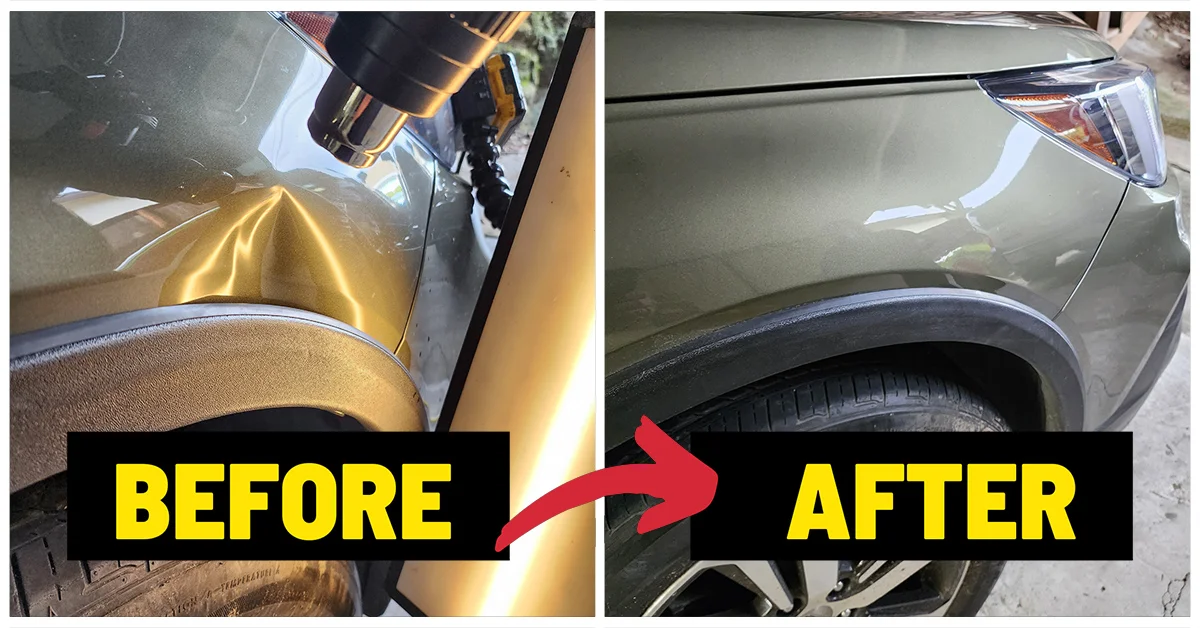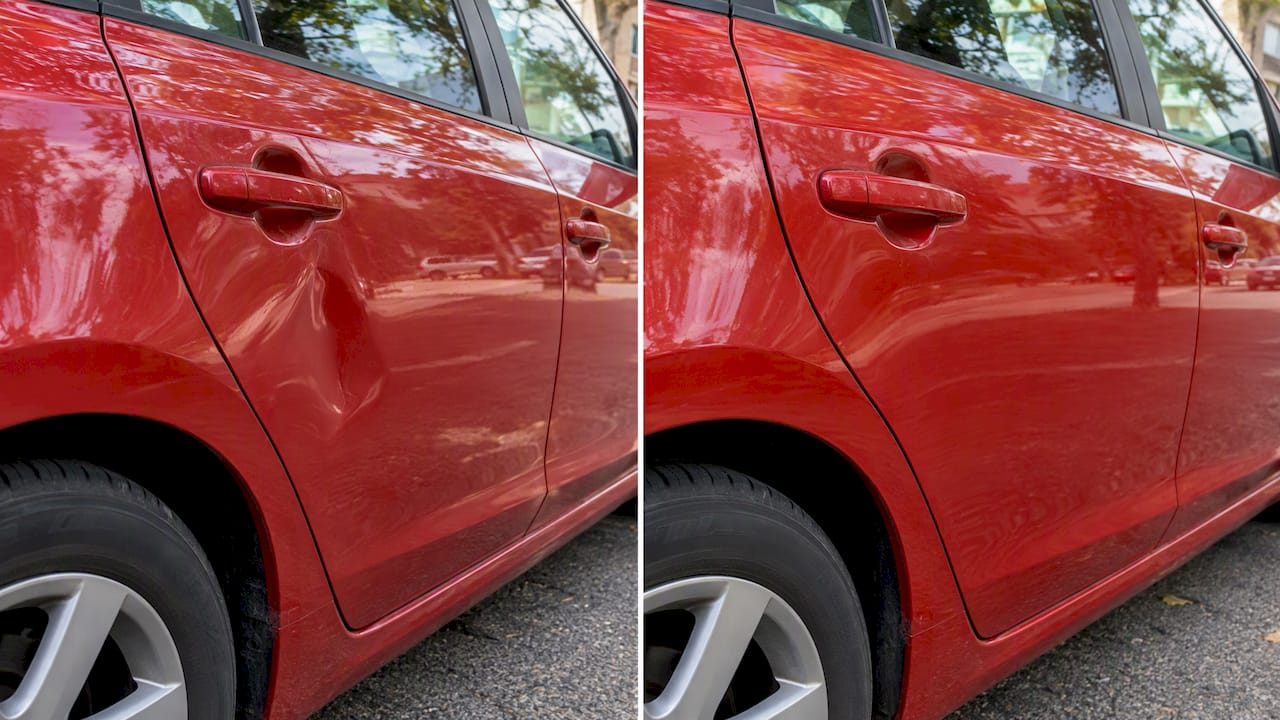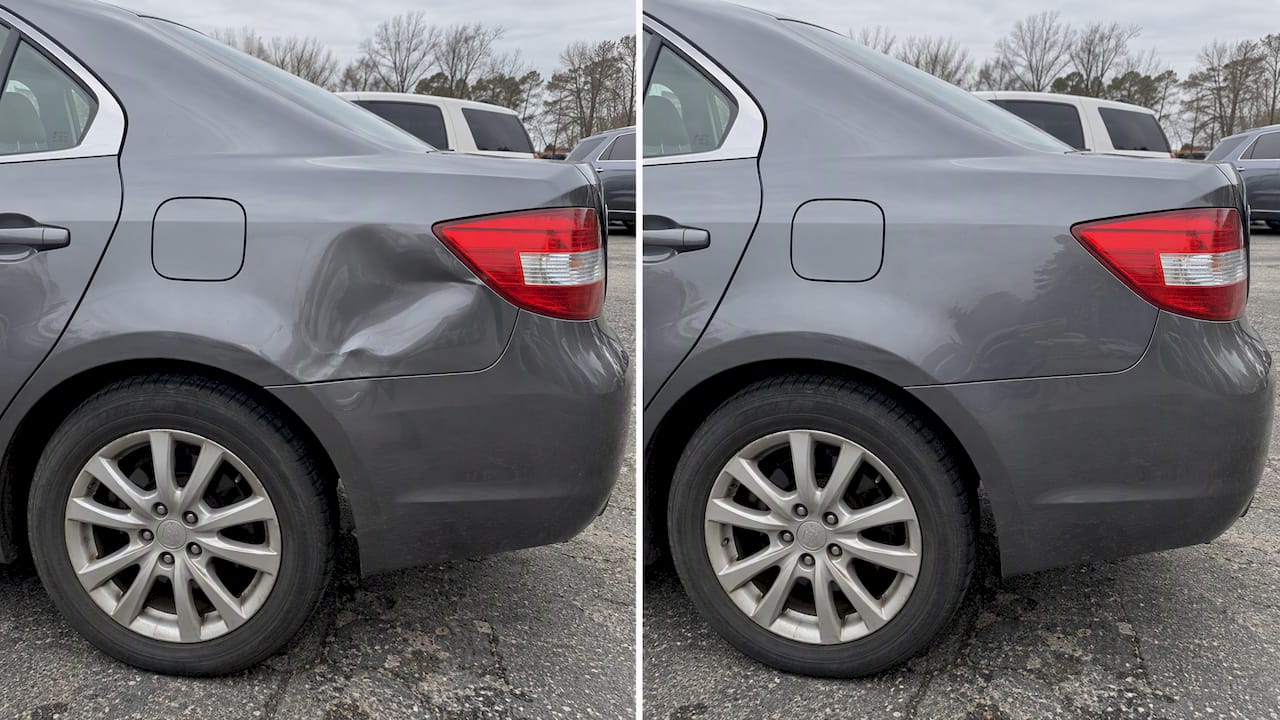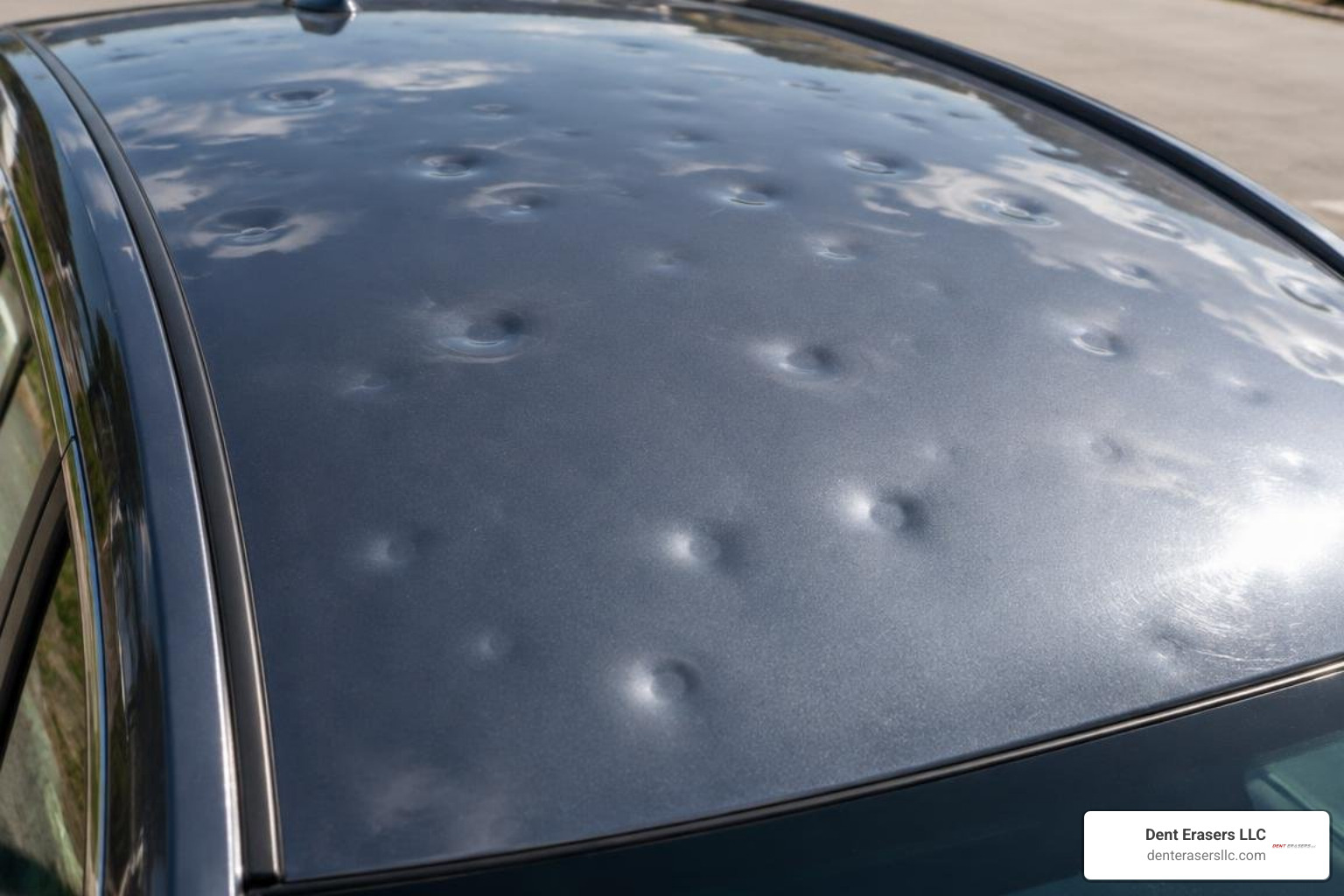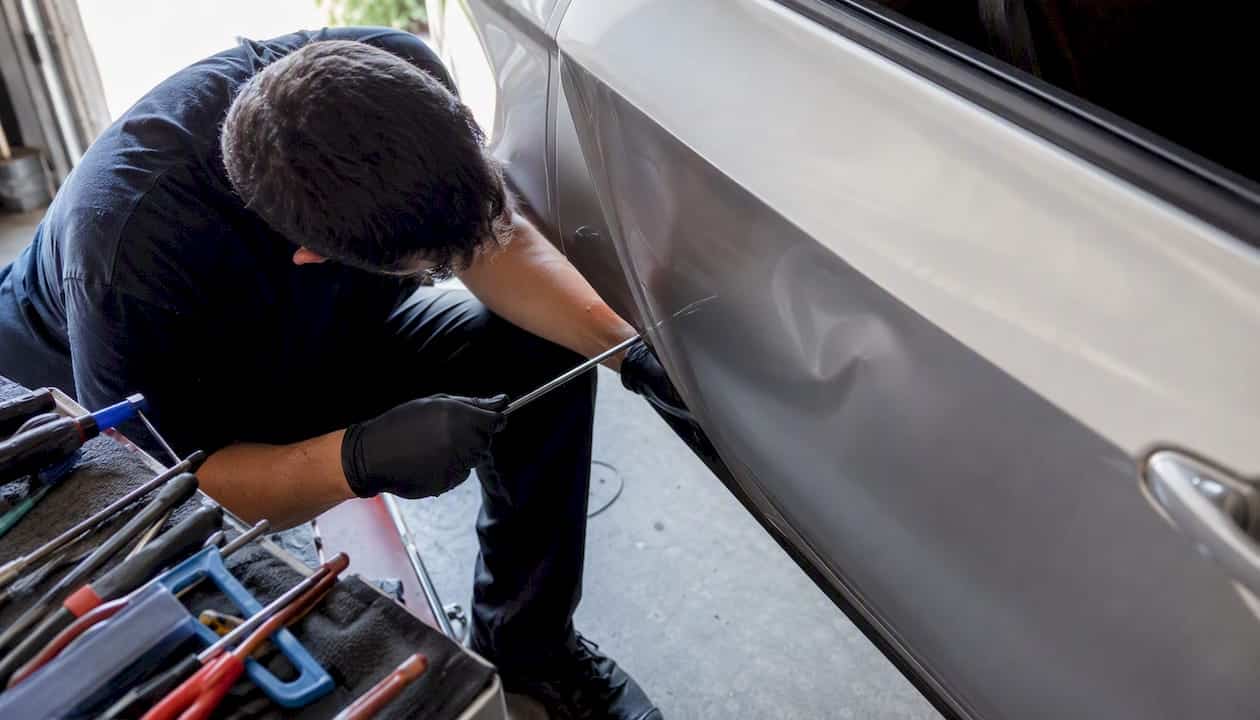
Most small paintless dent repairs take 30–90 minutes. Larger single dents or creases can take several hours, sometimes most of a working day. Multi-panel hail jobs or any work requiring paint usually require multiple days. The single biggest exception: if your paint is cracked, the metal has prior body filler, or multiple panels are involved, you’re looking at a multi-day job regardless of how small the dent appears.
Understanding the dent removal timeframe factors that apply to your specific situation lets you plan drop-off, arrange a rental, and avoid surprises at pickup.
Three things to do right now:
- Photograph every dent in good natural light before calling for an estimate — shops can often give you an accurate time window from photos alone.
- Ask whether a mobile same-day visit is available for single-dent jobs.
- If you’re filing an insurance claim, ask your shop upfront about supplement approvals and how they handle adjuster scheduling.
Key Takeaways
Most dent repairs that qualify for PDR with intact paint are same-day jobs, while any work involving cracked paint, prior filler, or multiple panels typically requires 1–3 days or more.
| Point | Details |
|---|---|
| PDR time ranges | Small dents: 30–90 minutes; larger/crease dents: 1–8 hours; hail/multi-panel: 1–3 days. |
| Biggest timeline drivers | Panel access, paint condition, prior filler, and dent count affect repair time most. |
| Insurance adds calendar time | Adjuster scheduling and supplement approvals commonly add 2–5 days beyond hands-on repair time. |
| Fastest turnaround steps | Send photos before booking, disclose prior repairs, and request mobile same-day for single dents. |
| Denterasersllc mobile service | Onsite PDR in Contra Costa County — single dents often completed in under 90 minutes at your location. |
Table of Contents
- What are the typical dent repair time ranges by method?
- What dent removal timeframe factors matter most?
- Why prior body filler and repaints block or lengthen PDR
- Mobile PDR vs in-shop repair: which gets you back on the road faster?
- What happens during a typical PDR appointment?
- How insurance, adjusters, and supplements add to the calendar
- How to get the fastest realistic turnaround for your dent repair
- What dents PDR typically cannot fix
- What I’ve learned about realistic scheduling expectations
- Denterasersllc brings the shop to you
- Sources
- FAQ
What are the typical dent repair time ranges by method?
The method your technician uses is the single clearest predictor of how long you’ll be without your vehicle. Paintless dent repair (PDR) reshapes metal from behind without sanding or repainting, which is why it’s so much faster than traditional bodywork.
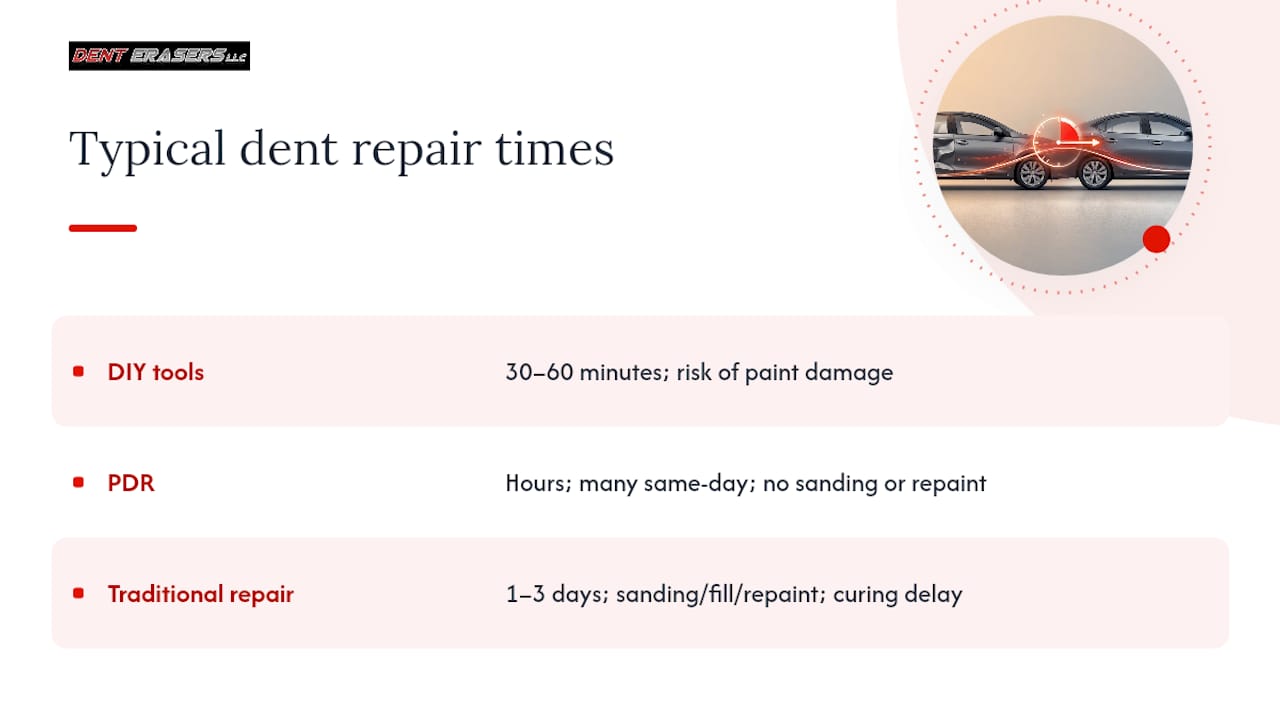
PDR typically completes in hours rather than days because it skips sanding, filling, and repainting entirely. Many small dents are same-day repairs when the paint is intact and access is straightforward. Traditional body filler and repaint work, by contrast, commonly takes 1–3 days — and paint curing is the biggest single bottleneck, since clear coat needs time in a controlled booth environment regardless of how quickly the mechanical work goes.
DIY tools like suction cups and glue-tab kits can handle very small, shallow dents in 30–60 minutes, but they carry real risk. A failed DIY attempt can stretch paint, chip the clear coat, or create a high spot that complicates the professional repair that follows. For anything beyond a tiny door ding, professional PDR is the faster path when you factor in rework.
For a deeper look at why traditional body shops take longer, the finish and cost differences are worth understanding before you book.
What dent removal timeframe factors matter most?
Six variables consistently determine whether a dent takes 45 minutes or three days. Technicians evaluate all of them during the initial inspection, and understanding them helps you give an accurate description when you call for an estimate.
- Dent size and depth. A shallow quarter-sized ding is the bread and butter of mobile PDR — typically 30–60 minutes. A deep dent the size of a fist may require multiple careful passes over several hours to avoid overpushing the metal.
- Panel access and location. Hoods, roofs, and trunk lids are usually open and easy to reach. Doors and quarter panels often require interior trim removal, which adds 30 minutes to several hours before the technician even touches the dent itself.
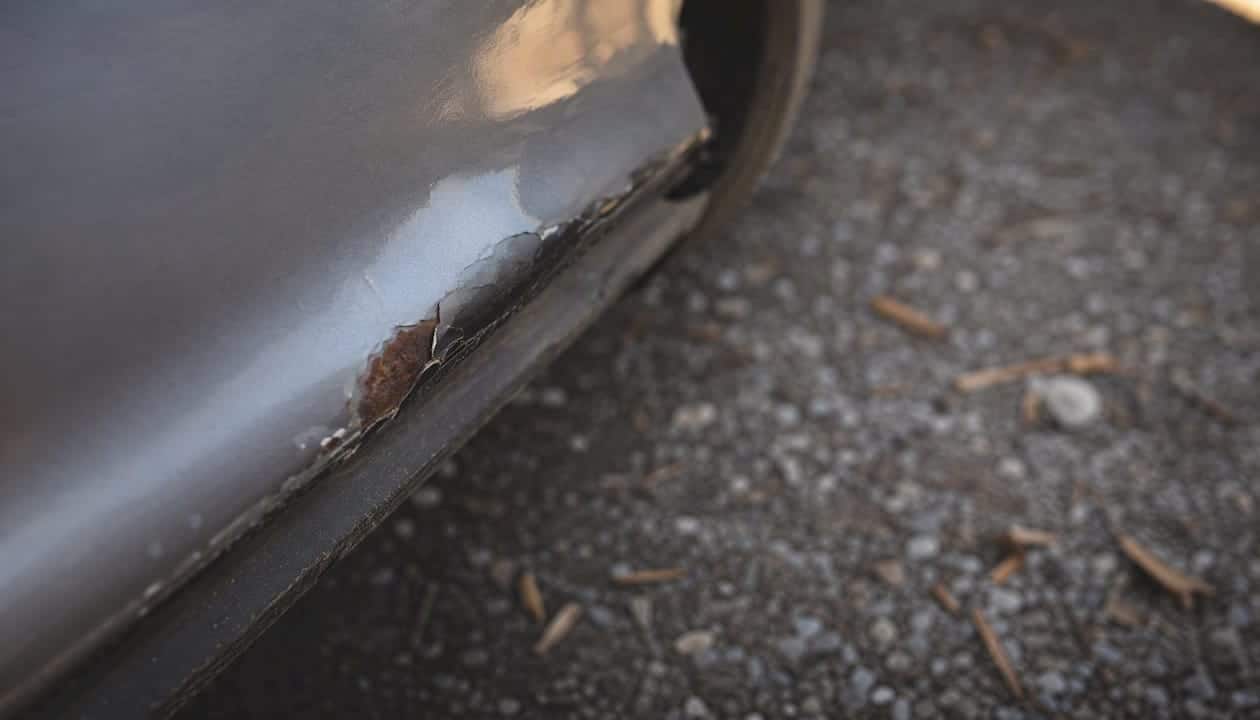
- Paint condition. Cracked or chipped paint is a hard stop for PDR. Pushing behind a dent with broken paint causes the chip to spread, converting a quick PDR job into a painted repair that takes days.
- Metal type. Aluminum panels (common on newer trucks and luxury vehicles) have less “metal memory” than steel. They don’t spring back as predictably, so each pass requires more precision and often more time.
- Dent shape. Round impact dents respond well to PDR. Sharp creases are work-hardened along the fold line, meaning the metal resists movement and requires more careful, slower manipulation to avoid cracking the paint.
- Dent count. A single door ding is a quick job. A hood covered in hail impacts is a multi-day project — each dent needs individual attention, and hail repair planning requires a different scheduling approach entirely.
Pro Tip: When photographing your dent for an estimate, shoot in indirect natural light at a low angle — this creates a shadow that reveals the true depth and edge sharpness of the dent far better than a straight-on flash photo. Include one shot from 3 feet away for context and one close-up from 12 inches.
Why prior body filler and repaints block or lengthen PDR
This is the detail most car owners don’t know until they’re already at the shop. Polyester body filler (commonly called Bondo) is rigid. When a technician pushes a rod behind a panel that has filler on the outer surface, the filler doesn’t flex with the metal — it cracks, separates, or pops off entirely. What looked like a simple PDR candidate becomes a traditional body repair job on the spot.
Industry experts consistently flag prior filler as the most common hidden reason PDR fails. A non-factory repaint is the second red flag: aftermarket paint layers are often thicker or harder than OEM clear coat, and they respond differently to the heat and pressure of PDR tools.
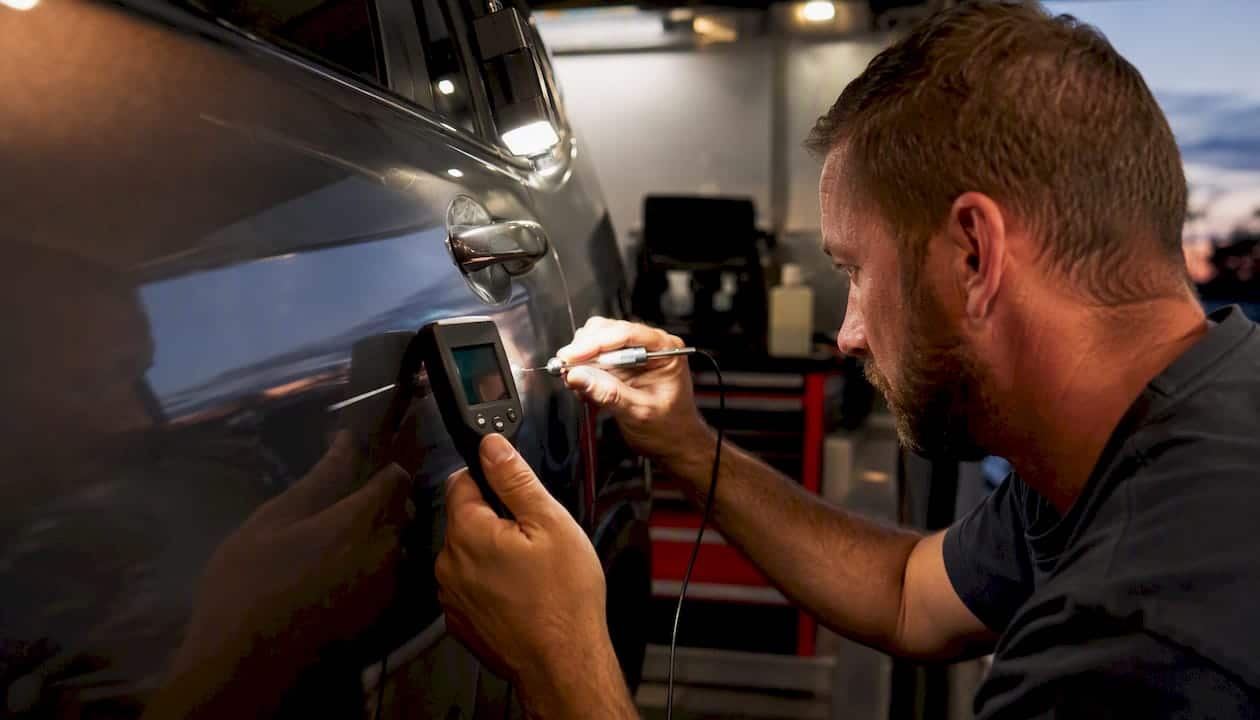
A skilled technician confirms PDR viability in three ways: inspecting under a focused LED or fluorescent light bar to read surface texture, tapping the panel lightly to listen for the hollow sound of metal versus the dull thud of filler, and checking paint thickness with a gauge when available. If any of those steps raise a flag, the honest answer is to quote a painted repair rather than attempt PDR and risk making things worse.
Mobile PDR vs in-shop repair: which gets you back on the road faster?
The answer depends on what you’re repairing, not just where you want it done.
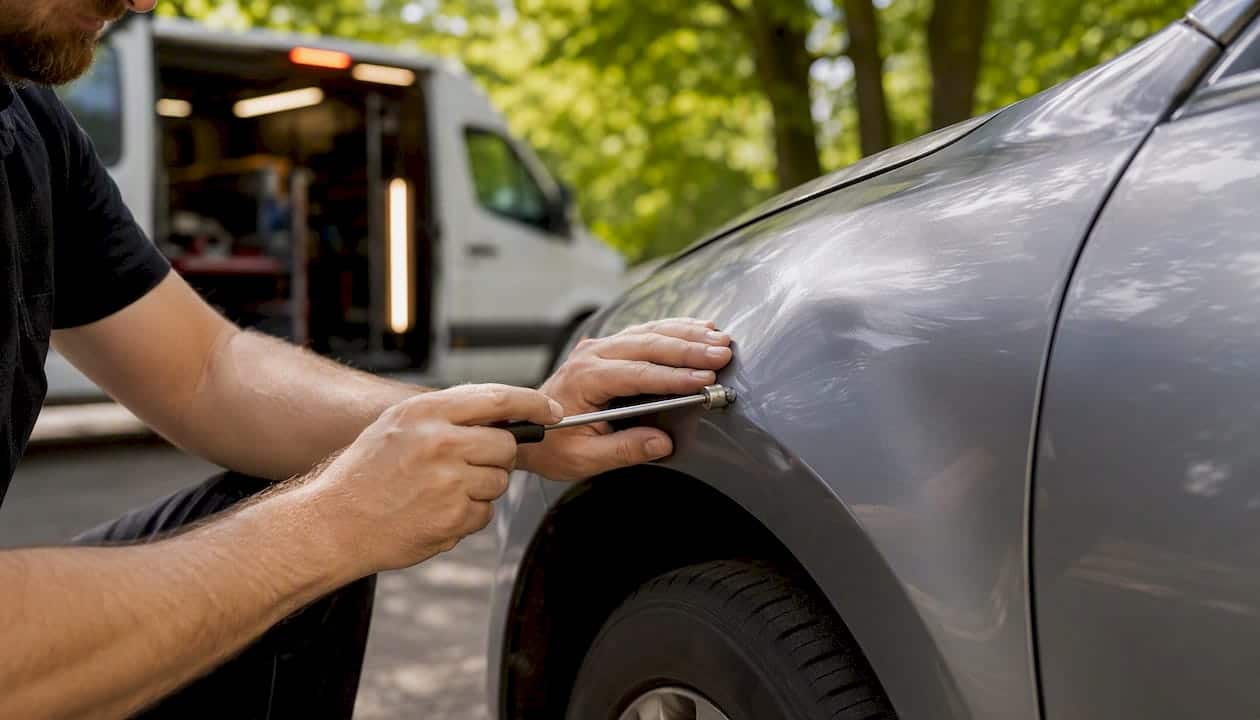
Mobile PDR is genuinely faster for single-dent jobs with intact paint. A technician comes to your home or office, works in your driveway or parking lot, and hands the car back the same day — often within an hour. There’s no drop-off, no waiting room, no arranging a ride. Shops with mobile teams typically reserve same-day windows for exactly these single-dent jobs while routing multi-panel work back to their facility.
In-shop repair has the edge for complex jobs. A shop has a lift, a full lighting rig, disassembly tools, and often an assistant — all of which matter when a door panel needs full trim removal or a crease runs across two body lines. The controlled environment also helps with quality checks. The tradeoff is scheduling: you need an appointment, you need transportation while the car is in, and during hail season, backlogs can push your slot by days.
Total turnaround time is not the same as hands-on repair time. A 90-minute PDR job scheduled three days out still means three days without your car. Booking early in the week, being flexible on drop-off time, and asking specifically about same-day mobile availability are the practical levers you control.
What happens during a typical PDR appointment?
Here’s the order of operations and where the time actually goes:
- Assessment under lighting (15–30 minutes). The technician maps every dent under a specialized light bar, confirms paint integrity, and checks for prior filler. This step sets the entire repair plan.
- Access and disassembly (30 minutes to 3 hours). For panels requiring trim removal — door cards, trunk liners, headliner sections — this is often the longest single step. Hoods and roofs skip it almost entirely.
- Dent manipulation (30 minutes to several hours). The technician works a rod or glue-pull tool behind the metal, applying slow, controlled pressure to massage the metal back toward its original shape. Multiple passes are normal for deeper dents.
- Tap-down and blend (15–45 minutes). High spots left from pushing are tapped down with a knockdown tool. This blending step is what separates a professional finish from a visible repair.
- Quality check (10–20 minutes). The panel goes back under the light bar. Any remaining low or high spots get a final pass before reassembly.
- Reassembly and handoff (15–30 minutes). Trim pieces go back on, the vehicle gets a wipe-down, and you’re done.
Example timelines in practice:
- Single small door ding, intact paint, easy access: Assessment + repair + quality check = 45–75 minutes total.
- Crease on a door panel requiring trim removal: Disassembly alone adds 45 minutes; total job runs 2.5–4 hours.
- Hail damage across hood, roof, and trunk: Multi-panel hail jobs typically run 1–3 days, with each panel worked in sequence.
If an insurance supplement is needed mid-job (a missed dent discovered during disassembly), the technician pauses and contacts the carrier. That approval can add hours or a full day to the calendar.
How insurance, adjusters, and supplements add to the calendar
The repair itself might take two hours. The insurance process can add two to five days on top of that — and most car owners don’t realize this until they’re waiting.
Here’s where the delays typically come from:
- Adjuster scheduling. After you file a claim, the carrier schedules an adjuster inspection. Depending on the carrier and your region, that appointment can be 2–5 business days out.
- Missed-dent supplements. Adjusters often write estimates from photos or a quick walk-around and miss dents hidden under trim or in low-light areas. When the shop discovers additional damage during disassembly, they file a supplement. Carrier approval for supplements typically takes 1–3 business days.
- Approval windows. Some carriers require written approval before any repair begins. Others allow the shop to proceed and submit documentation after. Knowing your carrier’s process before drop-off saves a day.
Insurance tip: Bring your claim number, your adjuster’s contact information, and your own photos to the estimate appointment. Shops that have your documentation in hand can often start the supplement process the same day rather than waiting for you to forward paperwork later. Ask your shop directly: “Do you handle supplement approvals, or do I need to follow up with my carrier?”
How to get the fastest realistic turnaround for your dent repair
Speed comes from preparation, not luck. Here’s what actually moves the timeline:
- Photograph every dent before you call. Shops can give a more accurate time estimate from good photos, which means fewer surprises at drop-off. A pre-estimate with photos and vehicle details helps the shop plan access, tooling, and schedule length.
- Disclose prior repairs honestly. Telling the shop upfront about previous bodywork saves everyone time. A technician who discovers filler mid-job has to stop, reassess, and potentially reschedule.
- Request mobile same-day service for single dents. If your paint is intact and it’s one dent, ask specifically whether a mobile visit is available. Many shops hold same-day slots for exactly this scenario.
- Combine panels when practical. If you have two dents on adjacent panels, repairing them in one visit is faster than two separate appointments.
- Ask about loaner or rental options upfront. For multi-day jobs, knowing your transportation plan before drop-off removes a major source of stress.
- Book early in the week. Monday and Tuesday appointments give the shop the full week to handle any supplement approvals or additional work without pushing your pickup to the following week.
- Be reachable during the repair day. Supplement approvals and unexpected findings require your sign-off. A missed call can add hours to your wait.
Pro Tip: Before a mobile visit, clear heavy cargo from the trunk and back seat, unlock all doors, and lower any cargo covers that block panel access. A technician who can move freely around the vehicle works faster and more accurately.
What dents PDR typically cannot fix
Not every dent is a PDR candidate, and knowing the red flags before you book saves time and money.
PDR is generally not viable when:
- Paint is cracked or chipped at or around the dent. Pushing behind broken paint spreads the damage. Keeping paint intact is the single most important condition for PDR eligibility.
- The metal has a sharp crease. Creases work-harden the metal along the fold. PDR can sometimes soften them, but full restoration is rarely possible without paint.
- The metal is stretched or torn. Stretched metal has no memory to return to. Torn metal needs replacement.
- Prior polyester filler is present. As covered above, filler blocks PDR and risks surface cracking.
- The dent is in an inaccessible location — deep inside a structural pillar, behind a welded brace, or on a panel with no access point.
- ADAS sensors are mounted behind the damaged panel. Radar and camera sensors behind bumper covers or quarter panels require recalibration after any body work, which adds shop time and often requires dealer coordination.
When any of these red flags appear, the honest path is a painted repair or panel replacement. Attempting PDR on an ineligible dent doesn’t save time — it creates additional damage that makes the eventual painted repair more expensive and more time-consuming.
What I’ve learned about realistic scheduling expectations
There’s a gap between what customers hope for and what the calendar actually allows, and I’d rather close that gap upfront than disappoint someone at pickup.
Same-day mobile service is real, and we do it regularly for single dents with intact paint. But during hail season in the Bay Area, our schedule fills within hours of a storm. If you call the day after a major hail event expecting a same-day slot, you’re likely looking at several days out — not because the repair takes that long, but because every other car owner in Contra Costa County had the same idea.
My practice is to give photo-based pre-checks before every appointment so you know exactly what you’re getting into before drop-off. If I see evidence of prior filler in your photos, I’ll tell you before you drive over. If your dent needs a supplement, I’ll handle that communication with your carrier directly. Clear estimates and no surprises — that’s the commitment.
Denterasersllc brings the shop to you
Skip the drop-off, the waiting room, and the rental car scramble. Denterasersllc performs mobile paintless dent repair onsite at your home, office, or anywhere in Contra Costa County — so your car gets fixed while you keep your day moving. Single dents with intact paint are often done in under 90 minutes, right in your driveway.

For plastic bumpers, larger collision dents, or specialty repairs on luxury and vintage vehicles, Denterasersllc handles the full scope — from the initial photo estimate through supplement coordination with your insurance carrier. The same mobile convenience applies to plastic bumper repair and complex multi-panel jobs that need in-shop equipment.
Ready to get a time estimate for your specific dent? Send photos to Denterasersllc for a same-day quote and find out whether your repair qualifies for a mobile visit.
Sources
- How Long Does Paintless Dent Repair Take?
- How Long Does Paintless Dent Repair Take | Mile High Dents
- How Long Does Paintless Dent Repair Take? | H H Ceramic Coatings
- How Long Does Paintless Dent Repair Take – Quick Insights
FAQ
How long does it take to remove a dent from a car?
Most small PDR jobs take 30–90 minutes; larger dents or creases run 1–8 hours; hail or multi-panel repairs typically take 1–3 days. Paint damage or prior body filler pushes any job into the multi-day range.
What dents cannot be removed with PDR?
PDR cannot reliably fix dents with cracked or chipped paint, sharp creases with work-hardened metal, stretched or torn panels, prior polyester filler, or dents in structurally inaccessible locations.
Do car dents get worse over time?
Yes — exposed bare metal from chipped paint around a dent will rust, and a dent that weakens a panel’s structure can spread under road stress. Repairing dents promptly preserves both the paint and the metal.
What are the main limitations of paintless dent repair?
PDR requires intact paint, accessible panel locations, and metal free of prior filler or stretching. Aluminum panels are more difficult than steel, and sharp creases are harder to fully restore than round impact dents.