Dent repair financing is defined as any payment method that lets you cover auto body repair costs without paying the full amount upfront. This guide covers the most practical dent repair financing options available to car owners today, including personal loans, credit cards, shop payment plans, and cash pay discounts. Typical minor dent repairs run anywhere from a few hundred dollars to well over a thousand, and your deductible alone can make insurance a poor choice. Knowing your options before you walk into a shop puts you in control of the final cost.
What financing options are available for dent repair?
Personal loans are the most structured way to finance auto body repair work. Auto repair loans typically range from $500 to $10,000, with funding arriving in 1–3 business days. That speed matters when your car is out of commission. Personal loan APRs range from 7% to 36%, with repayment terms between 2 and 7 years. Fixed monthly payments make budgeting straightforward, which is a real advantage over revolving credit.
Credit cards with 0% APR introductory offers are a strong second option when used carefully. These promotional periods last 12–21 months and charge no interest if you pay the full balance before the period ends. Miss that deadline, and retroactive interest hits the entire original balance. That can turn a $600 repair into a much more expensive problem.
Many body shops and mobile repair providers also offer in-house payment plans. These arrangements vary widely, so always ask upfront about terms, fees, and whether a credit check is required.
- Personal loans: Fixed APR, predictable payments, fast funding
- 0% APR credit cards: Interest-free if paid off within the promo window
- Shop payment plans: Flexible but terms vary by provider
- Cash pay discounts: Shops save on paperwork and pass those savings to you
- Title loans and payday loans: APRs often exceed 300% and risk vehicle repossession. Treat these as a last resort only.
Pro Tip: Ask every shop about a cash-pay discount before you discuss financing. Many shops will reduce the bill by 10% or more because they avoid insurance paperwork and adjuster negotiations.
Should you use insurance, pay cash, or finance dent repairs?
The right payment approach depends on one number: your deductible. For minor repairs near or below your deductible, paying out of pocket is almost always cheaper than filing a claim. Deductibles typically fall between $500 and $1,500. If your repair costs $650 and your deductible is $500, you are only saving $150 by filing, and you risk a rate hike that costs far more over time.
Filing an insurance claim makes sense for major structural damage or repairs that significantly exceed your deductible. For minor cosmetic dents, paying outright keeps your claims record clean and protects your premium. The role of insurance in dent repair is more nuanced than most car owners realize.
| Scenario | Pay Cash | File Insurance Claim |
|---|---|---|
| Repair cost below deductible | Best choice | No benefit |
| Repair cost near deductible | Usually better | Marginal savings, rate risk |
| Repair cost far above deductible | Consider financing | Strong candidate |
| Multiple repairs in one year | Preferred | Risks policy cancellation |
Here is a simple decision process:
- Get a written repair estimate before making any payment decision.
- Compare the estimate to your deductible amount.
- If the repair is below or close to your deductible, pay cash or finance.
- If the repair is well above your deductible, evaluate the long-term premium impact before filing.
Pro Tip: Call your insurer and ask how a claim would affect your rate before you file. That one call can save you hundreds per year in premium increases.
How to secure dent repair financing step by step
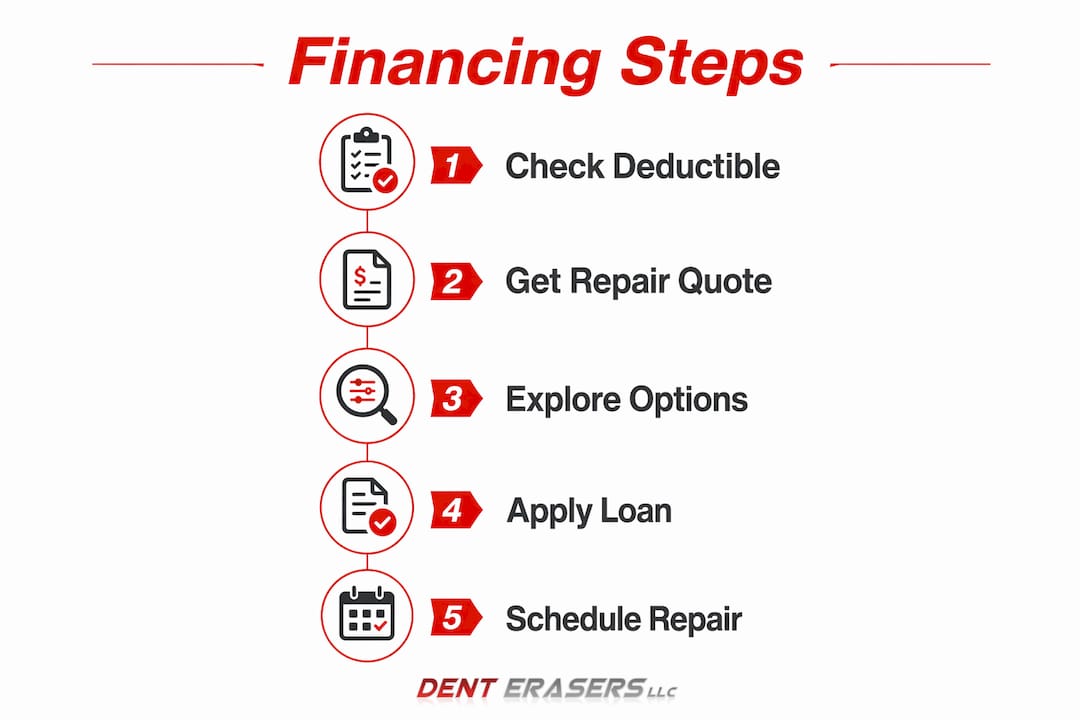
Getting financing right requires preparation. Rushing into the first loan offer you see is the fastest way to overpay. Follow these steps to protect your wallet.
- Get multiple written estimates. Comparing repair estimates prevents overspending and gives you a firm number to finance against. Aim for at least two quotes.
- Check your credit score. Your score determines which loan APRs you qualify for. A score above 670 typically unlocks rates closer to 7%. Below 580, expect rates near the top of the range.
- Shop lenders before you commit. Compare at least three personal loan offers. Look at APR, total repayment cost, and any origination fees.
- Calculate total borrowing cost. Comparing total borrowing costs beyond just the monthly payment is critical. A lower monthly payment with a longer term often costs more overall.
- Ask the shop about payment flexibility. Many repair providers will work with you on timing or offer a discount for cash.
- Watch for red flags. Avoid any lender requiring title collateral for a minor repair loan, charging prepayment penalties, or refusing to provide a written loan agreement.
For car owners who want to reduce repair frequency and costs long term, building a dedicated repair fund is one of the most practical habits you can develop. A car maintenance guide can help you set up that fund alongside other protective habits.
Pro Tip: If you use a 0% APR credit card, divide the repair total by the number of months in the promo period and set that as your automatic monthly payment. That way, you pay it off before interest kicks in.
Common mistakes when financing dent repairs
Most financing mistakes come from moving too fast or not reading the fine print.
- Accepting the first loan offer. One offer gives you no leverage. Three offers give you a real comparison.
- Ignoring the total cost of borrowing. A $800 repair financed at 29% APR over three years costs significantly more than the original bill.
- Misusing 0% APR cards. Failure to pay off the full balance before the promo period ends triggers retroactive interest on the original amount.
- Skipping the cash-pay conversation. Many car owners never ask about discounts. Shops that handle their own billing often pass real savings to customers who pay directly.
- Turning to title or payday loans. Title loans carry APRs that can exceed 300% and put your vehicle at risk of repossession. No minor dent repair is worth that exposure.
Before signing any financing agreement, ask yourself: “Do I know the total amount I will repay, including all fees and interest?” If the answer is no, do not sign until you do.
Funding delays can also create scheduling conflicts with repair shops. If your loan takes 3 business days to fund, book your repair appointment for day four. That simple step prevents you from losing your appointment slot.
Key takeaways
The most cost-effective approach to dent repair financing is to pay cash when the repair falls below your deductible, and to compare at least three personal loan offers before committing to any financing.
| Point | Details |
|---|---|
| Know your deductible first | Compare repair cost to your deductible before deciding between cash, insurance, or a loan. |
| Personal loans offer structure | APRs range from 7% to 36% with fixed payments that make monthly budgeting predictable. |
| Cash pay saves money | Shops often discount repairs for cash customers because it eliminates insurance paperwork. |
| 0% APR cards require discipline | Pay the full balance before the promo period ends or face retroactive interest charges. |
| Avoid title and payday loans | APRs above 300% and repossession risk make these options dangerous for minor repairs. |
My honest take on financing dent repairs
I have worked on hundreds of vehicles across Contra Costa County, and the pattern I see most often is car owners reaching for financing before they have explored simpler options. My honest advice: if the repair costs less than your deductible and you have the cash available, pay for it directly. You will spend less, protect your insurance record, and avoid interest entirely.
When financing is genuinely necessary, a personal loan with a fixed rate beats a credit card in most cases because the payoff timeline is built in. You are not relying on your own discipline to avoid a retroactive interest trap. That said, a 0% APR card is a legitimate tool if you are organized and set up automatic payments from day one.
The biggest mistake I see is car owners skipping the estimate comparison step. Getting multiple repair quotes from reputable shops takes an hour and can save you several hundred dollars. That savings reduces or eliminates the need to finance at all. Treat auto repairs the way you treat any other predictable expense: plan for them, budget for them, and do not let urgency push you into a bad financial decision.
— Brian Blanc
Denterasersllc makes affordable dent repair straightforward
Denterasersllc specializes in mobile paintless dent repair across Contra Costa County, bringing quality repairs directly to you without the overhead of a traditional body shop. That lower overhead translates into more competitive pricing, and the team is always open to discussing payment flexibility for the right customer.
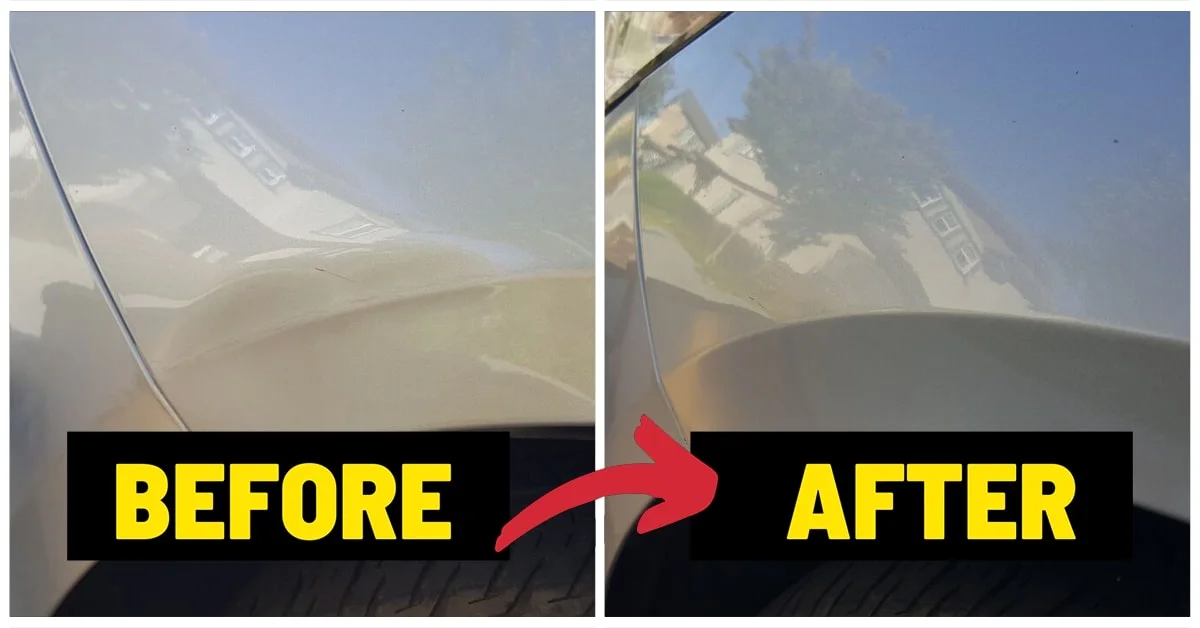
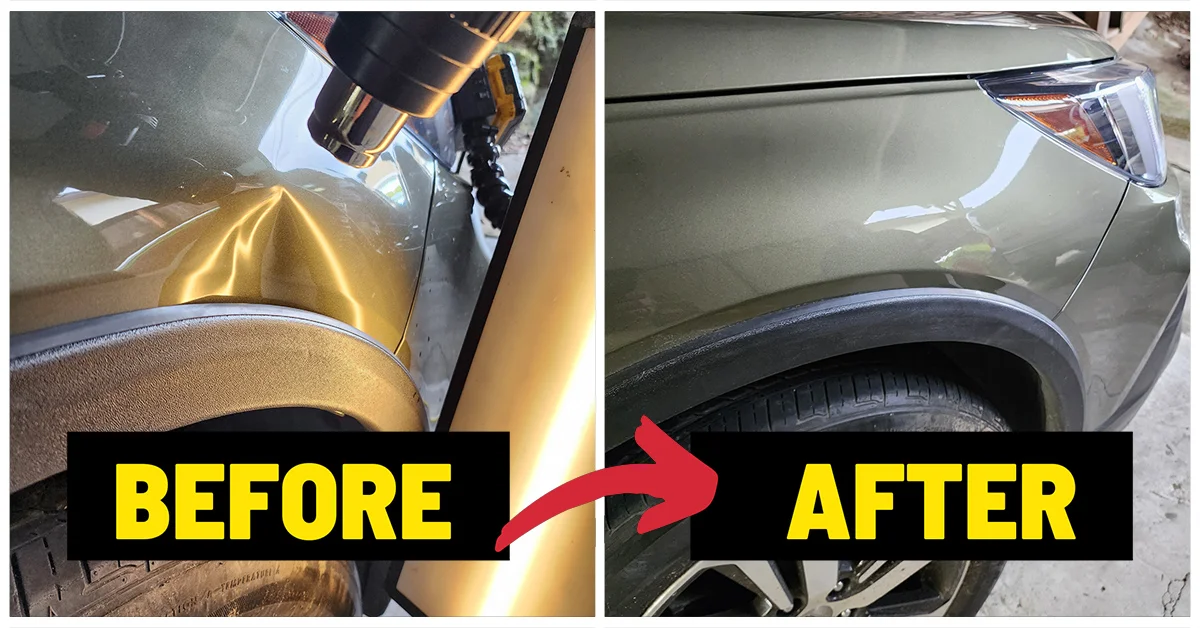
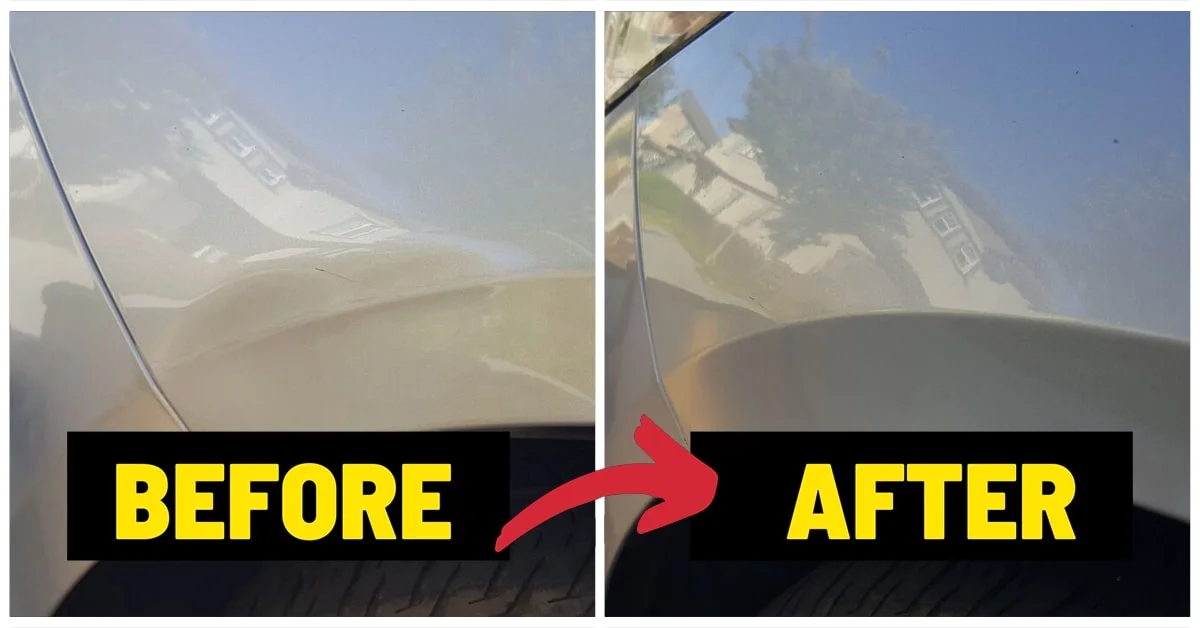
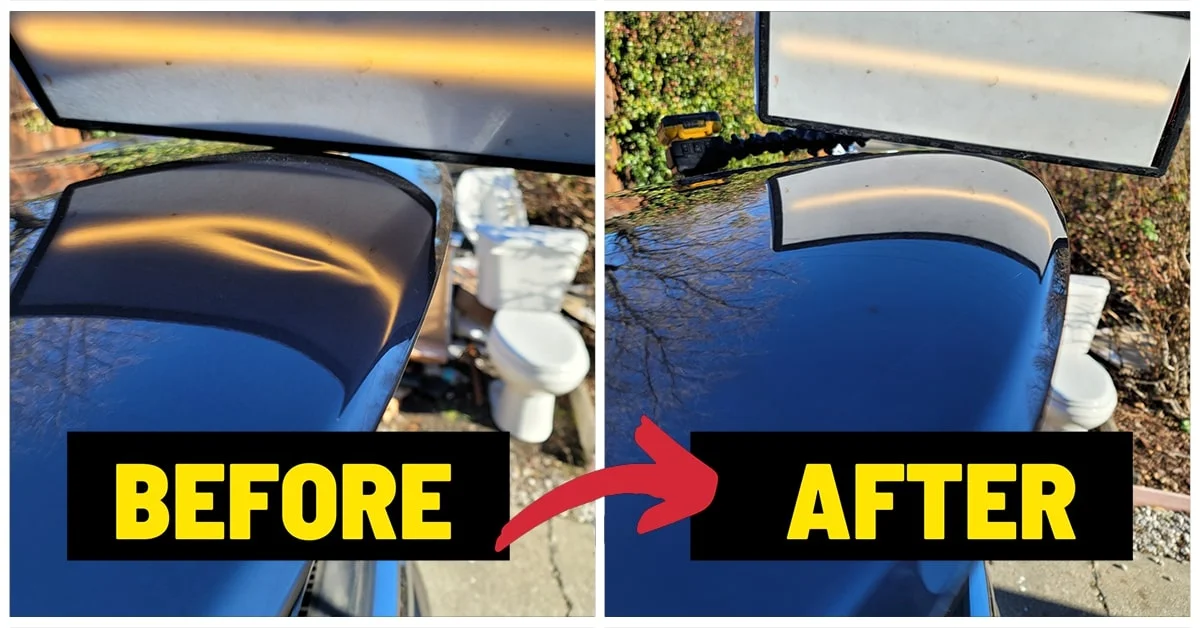
Denterasersllc backs every repair with transparent pricing and a lifetime warranty on paintless dent repair work. You can see the quality firsthand in the gallery, including a seamless fender repair that shows exactly what mobile repair can achieve. Start with a free estimate so you know the exact cost before you decide how to pay. Knowing the number puts you in control of every financing decision that follows.
FAQ
What is the best financing option for minor dent repairs?
Paying cash is the best option when the repair cost falls below your insurance deductible. When cash is not available, a personal loan with a fixed APR between 7% and 36% offers predictable payments and fast funding.
How quickly can I get an auto repair loan?
Auto repair loans typically fund within 1–3 business days after approval. That timeline makes personal loans a practical option for repairs that cannot wait.
Should I file an insurance claim for a small dent?
Filing a claim only makes sense when the repair cost significantly exceeds your deductible, which typically falls between $500 and $1,500. For minor dents near or below that threshold, paying out of pocket avoids premium increases.
Are 0% APR credit cards safe for financing dent repairs?
They are safe when used with a clear payoff plan. Retroactive interest applies if you carry any balance past the promotional period, so set up automatic monthly payments from the start.
Can I negotiate a lower price if I pay cash for dent repair?
Yes. Cash-pay discounts are common because shops avoid insurance paperwork and adjuster negotiations. Always ask before agreeing to any financing arrangement.