If you’re approaching the end of your lease and dreading what the dealer might charge you for every little ding, you’re not alone. Understanding what is lease return dent repair, and knowing your options before you hand over the keys, can save you hundreds of dollars. The industry term for the most common method used is paintless dent repair (PDR). Dealers and leasing companies charge standardized fees that often exceed what independent repair shops cost, so acting early and knowing what you’re dealing with puts the advantage firmly in your corner.
Key Takeaways
| Point | Details |
|---|---|
| PDR is the preferred method | Paintless dent repair preserves factory paint and costs far less than dealer-assessed fees. |
| Not every dent qualifies for PDR | Dents with cracked paint, sharp creases, or stretched metal require traditional bodywork instead. |
| Dealer fees exceed market rates | Lease-end charges often run 25 to 100% higher than independent repair costs. |
| Timing your repairs matters | Schedule an inspection 30 to 60 days before return to allow time for repairs and avoid surprises. |
| Mobile repair is a real option | Mobile PDR technicians bring professional tools to your location, saving you both time and money. |
What is lease return dent repair and how damage is judged
Lease return dent repair refers to the process of fixing dents, dings, and body damage on a leased vehicle before returning it to the dealership or leasing company. The goal is straightforward: avoid the punitive fees charged when your car fails the end-of-lease inspection.
Every leasing company sets its own standard for what counts as “normal wear and tear” versus damage that triggers a charge. Dents smaller than a certain size, often about the diameter of a coin, typically fall within acceptable wear. Anything beyond that gets flagged.
Here’s what inspectors typically assess:
- Dent size: Dents under roughly one inch in diameter are often considered normal wear. Larger dents, especially those exceeding two inches, almost always result in a charge.
- Paint condition: A dent with intact paint is far less costly to address than one with chipped, cracked, or scratched paint. Paint damage adds $100 to $200 on top of standard dent fees.
- Number and location of dents: Multiple dents on a single panel, or damage near edges and character lines, are assessed more harshly.
- Scratches and scuffs: Surface scratches may be overlooked, but deep scratches that cut through the clear coat or base coat are chargeable.
Inspections typically run 20 to 30 minutes and result in a detailed report listing every flagged item along with its projected cost. That report is what you’re trying to avoid getting hit with blind.
PDR vs. traditional body repair
The two main approaches to fixing lease end car damage are paintless dent repair and conventional body repair. Knowing which one applies to your situation determines both the cost and the time involved.
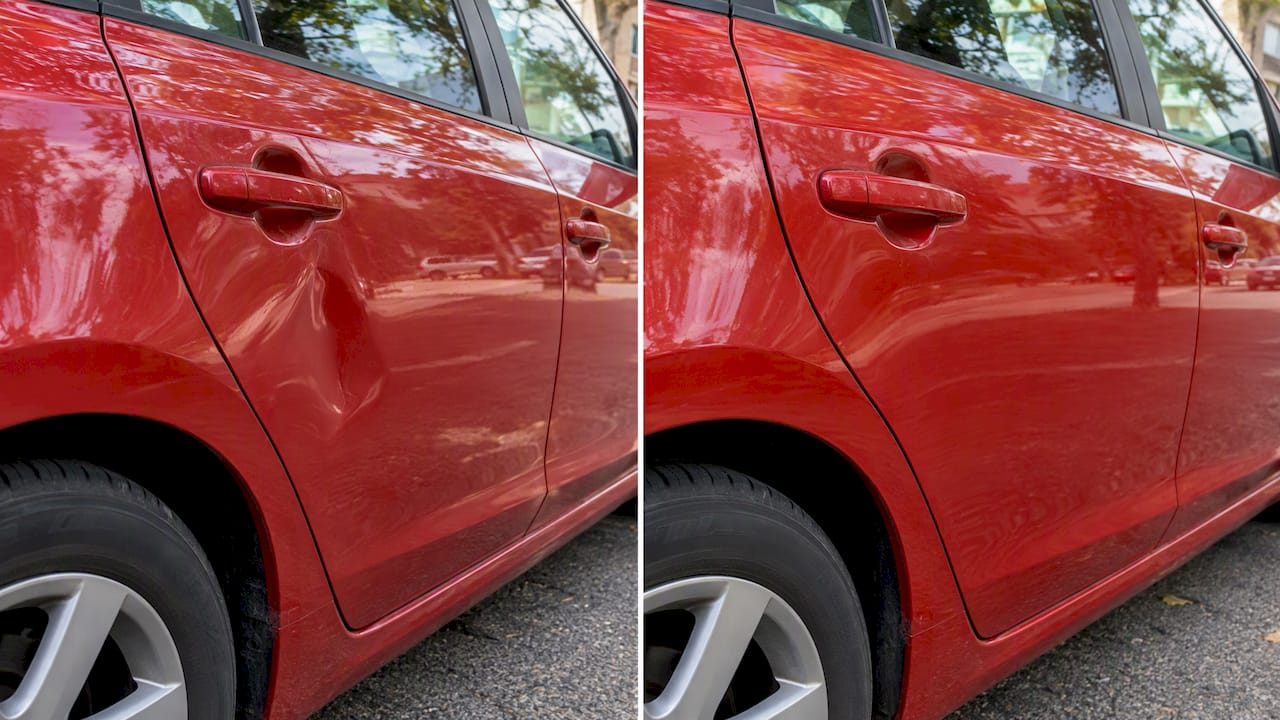
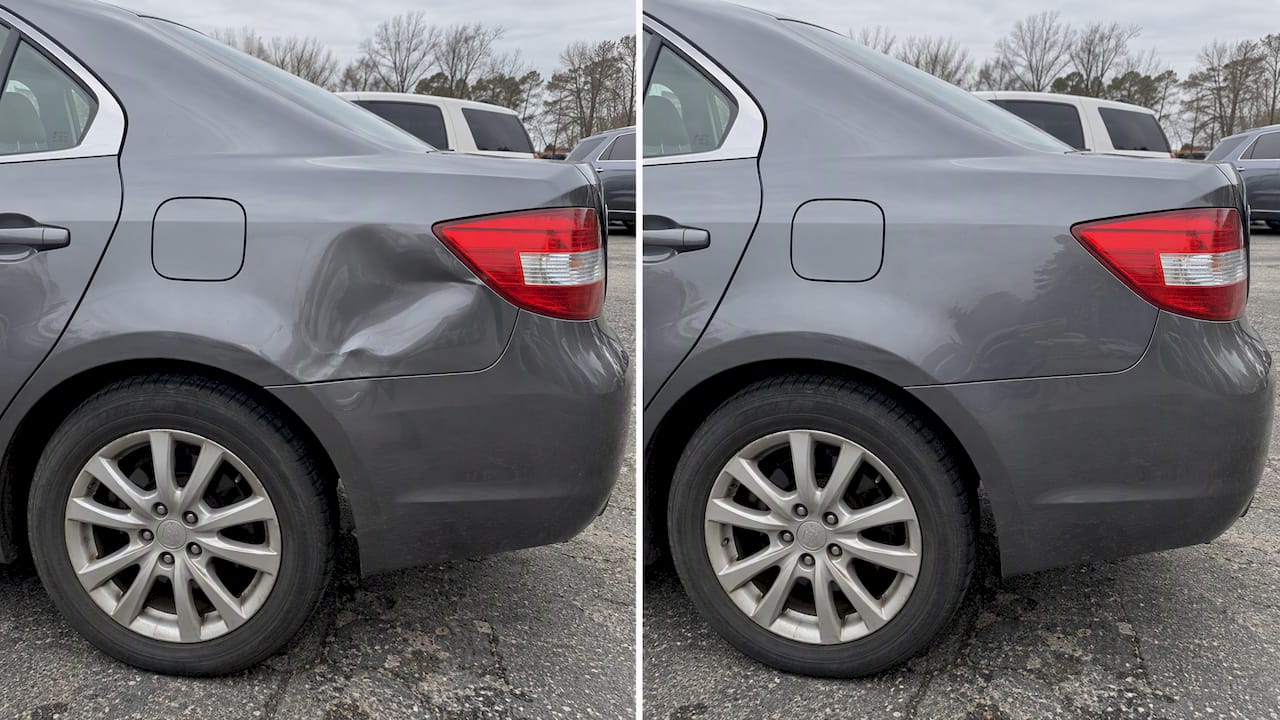
Paintless dent repair is exactly what the name suggests. A certified technician uses specialized metal rods and picks to carefully massage the metal back to its original shape from behind the panel, without touching the paint surface. No fillers, no repainting, no color-matching guesswork. PDR preserves your vehicle’s factory finish, which is critical on a leased car because original paint preservation avoids the risk of mismatched touch-ups that inspectors notice immediately.
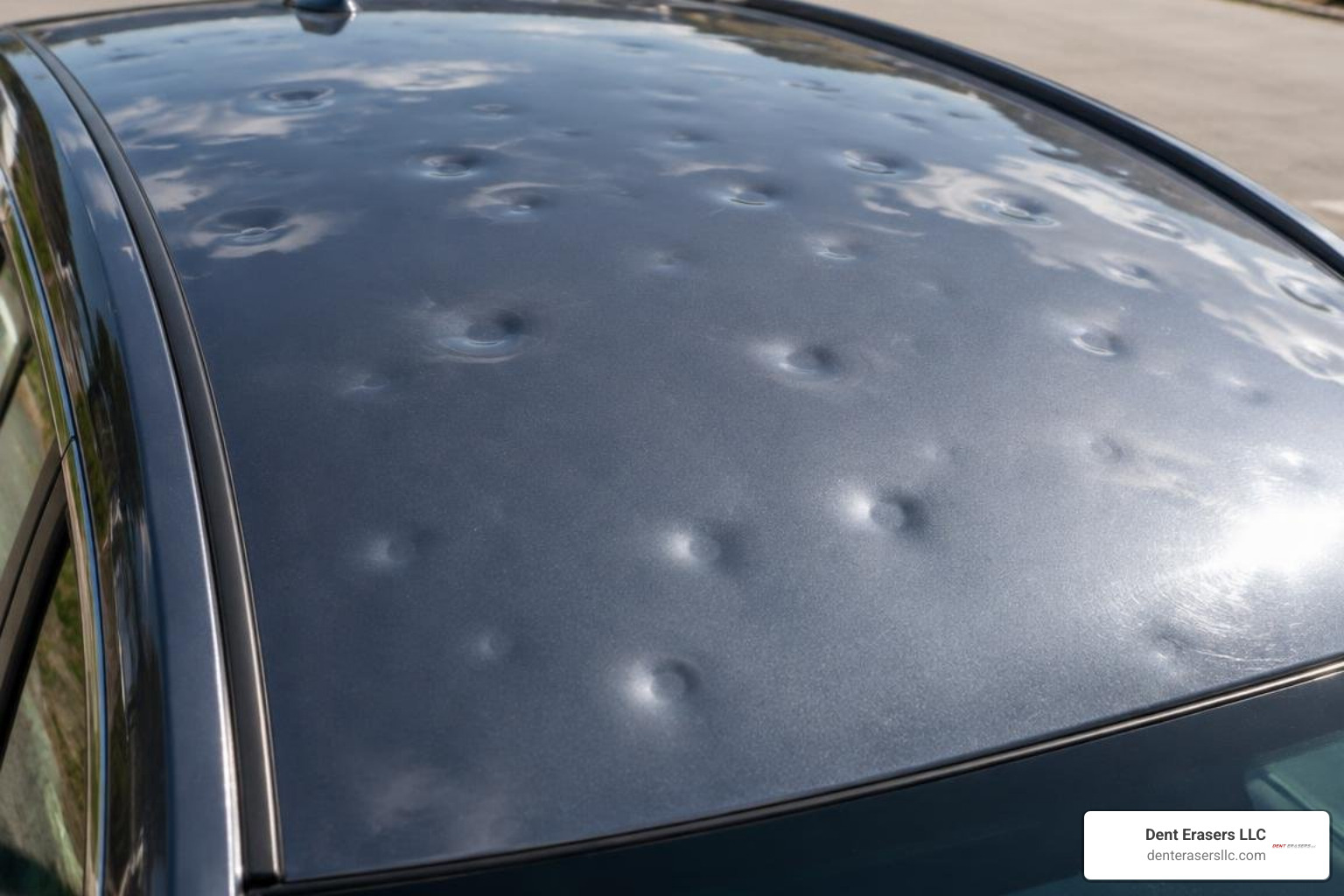
Roughly 80 to 90% of typical dents qualify for PDR, provided the factory paint is intact and the metal has not been stretched. That covers most parking lot door dings, minor hail damage, and small impacts.
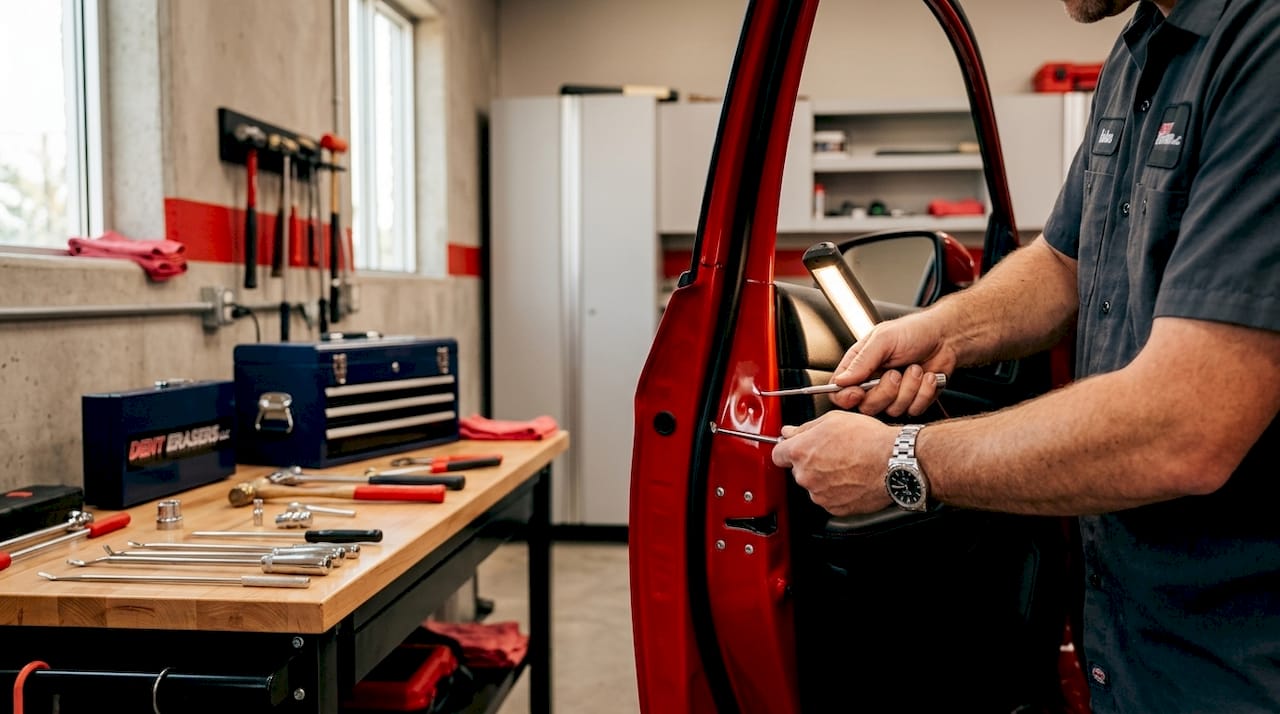
Traditional body repair becomes necessary when the damage is more severe. Sharp door creases involve metal that has been stretched and work-hardened, meaning no amount of massaging will return it cleanly to shape. These require filler, sanding, and a fresh coat of paint. Cracks in the paint surface are another trigger for conventional repair because PDR alone cannot address what happens on the surface.
| Factor | Paintless Dent Repair | Traditional Body Repair |
|---|---|---|
| Paint condition required | Factory paint intact | Paint damaged or cracked |
| Metal condition | Unstreched, flexible | Stretched or severely creased |
| Repair time | 30 minutes to a few hours | Several days |
| Cost range | $75 to $150 (minor) | $300 and up |
| Preserves original finish | Yes | No (repaint required) |
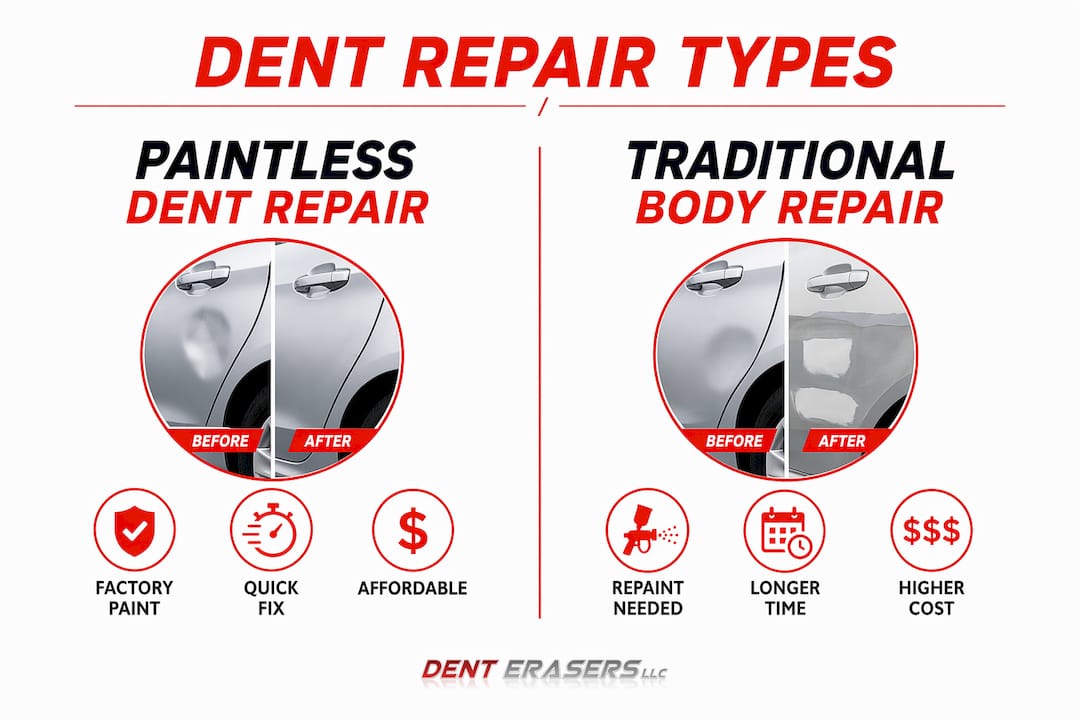
Pro Tip: Always get a PDR assessment before booking a body shop. Many dents that look complicated are actually strong candidates for PDR once a trained eye examines the metal condition and paint integrity.
For a deeper look at what qualifies for PDR, the paint and metal criteria are explained in detail so you can walk into any estimate with confidence.
Costs and repair timelines
The financial case for repairing dents before your lease ends is clear once you see the numbers side by side.
Lease-end dent fees are standardized by leasing companies and tend to run on the high end:
- Minor dents under two inches: $75 to $150
- Moderate dents between two and four inches: $150 to $300
- Large dents over four inches: $300 to $600
- Add $100 to $200 per dent when paint is damaged
Independent PDR for minor dents typically costs $75 to $150, which sounds similar on the surface. But dealer fees stack up fast when multiple panels are involved, and lease-end charges often exceed market repair costs by 25 to 100%. Two moderate dents through a dealer could cost you $600. The same two dents repaired beforehand through an independent PDR technician might run $200 total.
For detailed breakdowns on common auto body repair costs, knowing what different damage levels typically cost helps you prioritize which repairs make financial sense.
Repair timelines matter too, especially if you’re cutting it close to your return date:
- Minor dents, one to three small dings: 30 minutes to 2 hours with PDR
- Sharp creases or larger single dents: 3 to 5 hours
- Extensive panel damage: 1 to 2 days
- Hail damage involving multiple dents: 3 to 10 days
PDR repairs minor damage in as little as 30 minutes, which means you could have your car looking lease-ready in a single afternoon if you catch issues early enough.
Practical steps to prepare your leased car for return
Getting ahead of lease return damage repair is mostly about timing and knowing who to call. Here’s a practical sequence that works:
- Inspect your car 60 days out. Walk around the vehicle in good lighting and photograph every dent, scratch, and scuff you find. Compare what you see against your lease agreement’s wear guidelines.
- Schedule your pre-inspection. Booking a lease inspection 30 to 60 days before return gives you a clear picture of what the leasing company will charge and leaves time to act.
- Get a PDR assessment first. A qualified PDR technician will tell you immediately whether a dent is repairable without paint work. Most minor dents qualify. Do not assume you need a body shop until a PDR specialist has assessed the damage.
- Choose certified technicians. Tips for finding a trusted PDR service include checking for certifications, reviewing before-and-after photos, and asking whether mobile service is available.
- Consider mobile PDR for convenience. Mobile technicians use the same professional tools as a shop and come to your home or workplace. This is a genuine time-saver when you’re juggling a busy schedule.
Pro Tip: Do not attempt DIY dent repair kits on a leased vehicle. Pulling techniques can stretch the metal or damage the paint, turning a straightforward PDR job into a body shop situation.
One pitfall worth calling out: if a dent has any paint chipping involved, address the paint chip repair at the same time as the dent, not separately. Combined repairs are more efficient and prevent inspectors from flagging the area twice.
My honest take on lease return repairs
I’ve assessed hundreds of vehicles heading back to dealers, and the pattern I see most often is this: people wait too long, then panic. They either skip repairs entirely and absorb the fees, or they rush to whoever will take the job fastest. Neither approach ends well.
The dents that haunt leaseholders most are the ones that look simple but aren’t. A sharp crease along a door, for example, often has stretched metal underneath that no amount of PDR will fully correct. Being upfront about that during the assessment is something I always prioritize, because the last thing a customer needs is a surprise outcome a week before their return date.
My consistent advice: get an honest assessment early, fix what makes financial sense, and skip the repairs that won’t clear inspection anyway. Most leased cars I see have three or four minor dings that a skilled PDR technician can address in a couple of hours, saving the owner $400 to $800 in dealer fees. That’s real money. The key is acting with enough time to do the job properly.
— Brian
Get your lease-ready repairs done right with Denterasersllc
At Denterasersllc, we handle lease return dent repairs every week for car owners throughout Contra Costa County and the surrounding Bay Area. We specialize in mobile paintless dent repair, which means we come to you and have your vehicle looking inspection-ready without you spending a day at a shop.
Our certified technicians work on all makes and models, including luxury and high-end vehicles where factory paint preservation matters most. Browse our fender repair gallery to see exactly the kind of results we deliver. We also cover precision fender work on trucks and other vehicles where accuracy makes all the difference. Contact Denterasersllc today for a free estimate before your lease return and know exactly where you stand.
Essential Insights for Successful Lease Returns
What counts as normal wear on a leased car?
Most leasing companies allow dents under one inch in diameter and light surface scuffs as normal wear. Larger dents, paint damage, and multiple dings on the same panel typically result in charges.
How much does independent dent repair cost vs. dealer fees?
Independent PDR for minor dents runs $75 to $150, while dealer lease-end fees for the same damage often range from $150 to $300, sometimes higher when multiple panels are flagged.
Can all dents on a leased car be fixed with PDR?
No. PDR works on roughly 80 to 90% of dents where the factory paint is intact and the metal has not been stretched. Sharp creases and cracked paint require traditional body repair.
When should I schedule repairs before my lease ends?
Schedule a pre-inspection and any needed repairs at least 30 to 60 days before your return date. This gives you time to address flagged damage without rushing and risking a poor repair outcome.
Is mobile dent repair reliable for lease return prep?
Yes. Mobile PDR technicians use the same professional equipment and techniques as shop-based technicians, and mobile repair services offer the added convenience of coming to your home or office.