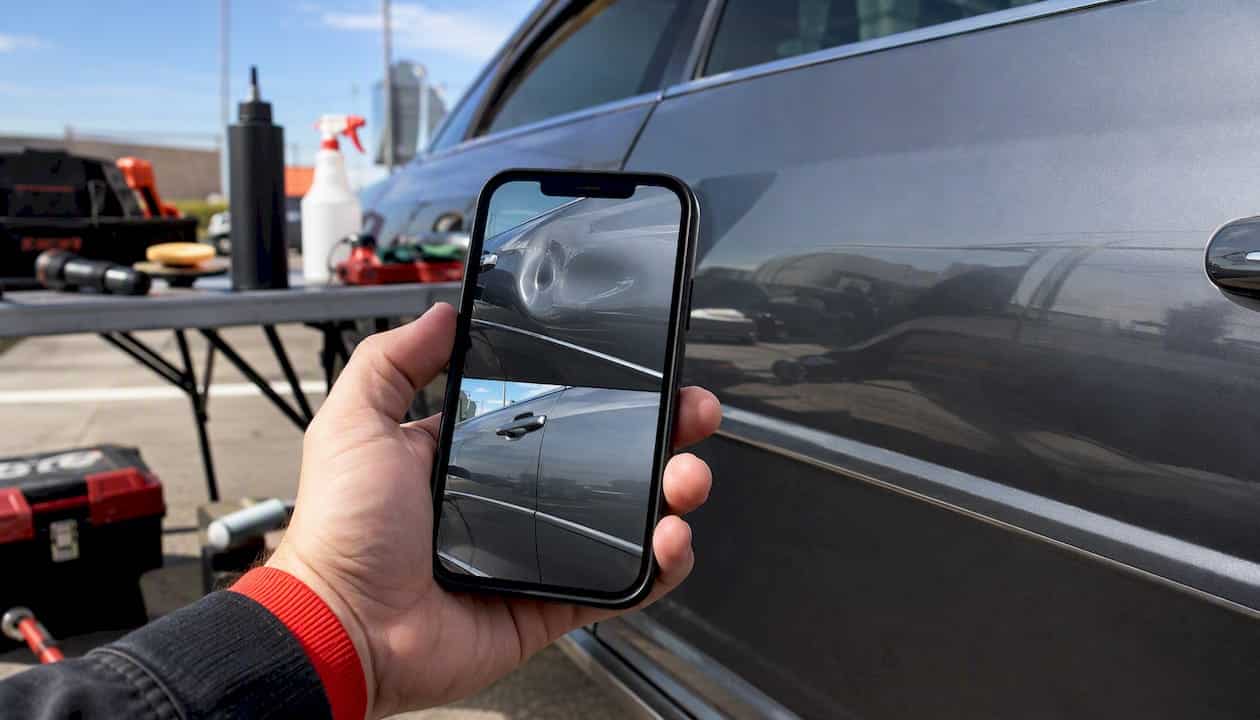
Schedule your pre-return inspection, photograph every panel with a timestamped device, collect all keys and original equipment, and decide which defects to fix before turn-in. Do those four things and you control the outcome. Skip them and the leasing company’s inspector controls it for you.
The single most common chargeable threshold you’ll encounter: dents larger than 1.5 inches in diameter. That’s roughly the width of a quarter. A lot of door dings clear that bar, which is exactly why acting 30–60 days out matters.
Your immediate to-do list:
- Schedule a complimentary pre-return inspection 30–60 days before lease end
- Remove all personal items so every panel and storage area is accessible
- Collect all keys, key fobs, owner’s manual, and original equipment
- Photograph every problem area with a date-stamped smartphone
- Decide which chargeable items to repair — Denterasersllc offers on-site mobile paintless dent repair (PDR) for many common dent issues
Table of Contents
- What does a lease vehicle inspection checklist actually cover?
- Which defects actually trigger excess wear charges?
- How to photograph and document your vehicle’s condition
- Should you fix it before return, or pay the lease charge?
- What do inspections and common repairs typically cost and take?
- A sample inspection form and what to do after you get the report
- Key Takeaways
- Why proactive mobile repairs are the smarter lease-return move
- Denterasersllc makes on-site lease prep repairs simple
- Useful sources
- FAQ
What does a lease vehicle inspection checklist actually cover?
Run this checklist 2–6 weeks before your lease end date. The goal is to find chargeable items before the inspector does.
Exterior
| Area | What to check | Chargeable threshold |
|---|---|---|
| Body panels | Dents, dings, creases | Larger than 1.5" diameter |
| Paint/scratches | Depth and length | Catches a fingernail; longer than 3" |
| Bumpers | Cracks, gouges, misalignment | Any crack or deep gouge |
| Glass | Chips, cracks, stars | Larger than a dime; any crack |
| Wheels/rims | Curb rash, gouges | Gouges greater than 1" |
Tires
Measure tread depth at the shallowest point. Less than 4/32" is chargeable on most leases. Check for sidewall damage and confirm the wheels match the originals from lease inception.
Interior
Look for cuts, tears, or burns in upholstery. A single cut or stain larger than a credit card is typically chargeable. Test every electronic feature: A/C, audio, navigation, power windows, power seats, and all warning lights. Non-working equipment is a straightforward charge.
Paperwork and original equipment
Per Ford’s vehicle return checklist, you must bring all keys and key fobs, the owner’s manual, cargo cover, floor mats, spare tire, navigation media, and any other items present at lease inception. Missing accessories generate simple, avoidable fees.
Pro Tip: GM Financial and Toyota Financial both offer complimentary pre-return inspections you can schedule at your home, workplace, or dealership. Use them — they produce an itemized Vehicle Condition Report so you know exactly what you’re facing before turn-in.
Which defects actually trigger excess wear charges?
Minor surface scratches are normal wear. Deep dents, cracked glass, and upholstery tears are not. Here’s where most lease charges originate:
- Dents over 1.5" diameter: A 2" door dent on the driver’s panel almost always triggers a charge. Use a credit card or ruler to estimate dent size before the inspector arrives.
- Scratches that catch a fingernail: Run your fingernail across the scratch. If it catches, the paint layer is broken and it’s chargeable. Scratches longer than 3" are explicitly listed as chargeable in Honda/AHFC guidelines.
- Windshield chips and cracks: Damage larger than a dime — a star-shaped chip, a bull’s-eye, or any crack — is typically charged. A full crack across the windshield means replacement, not a chip repair.
- Tire tread below 4/32": Measured at the lowest point. Exposed cords or sidewall damage are automatic charges.
- Upholstery tears vs. surface stains: A light surface stain may fall under normal wear. A cut or burn larger than a credit card will not.
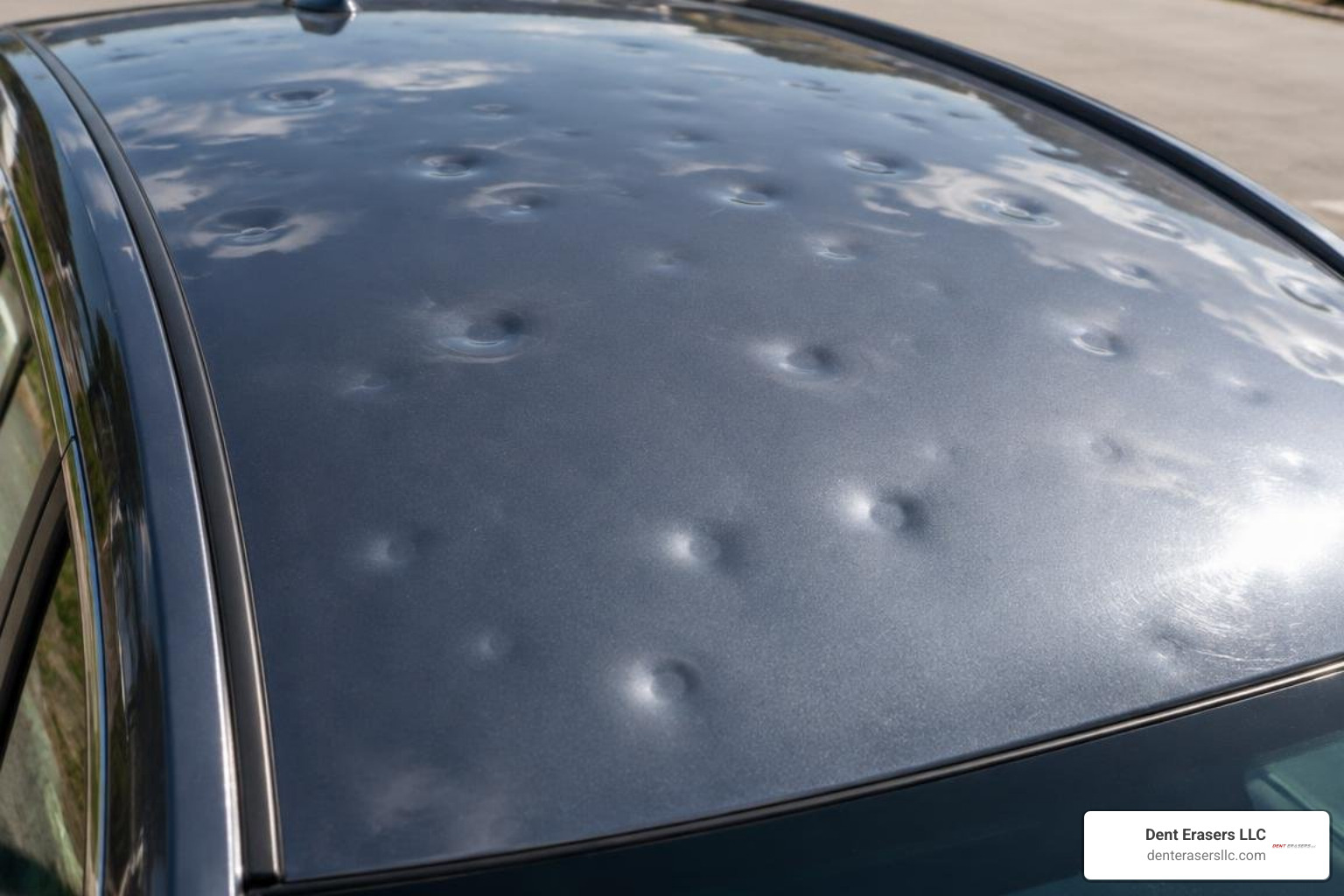
- Multiple dings per panel: Some lender guides flag panels with four or more dings as escalated damage, even if each individual ding is under the 1.5" threshold.
Pro Tip: Use a standard credit card as a quick gauge. If a dent is wider than the card’s short edge, it likely exceeds common thresholds. For scratches, the fingernail test is faster and more reliable than eyeballing depth.
How to photograph and document your vehicle’s condition
Good documentation is your only real leverage if an inspector’s report lists something you dispute. Here’s a repeatable workflow.
| Documentation step | Details |
|---|---|
| Full-vehicle shots | Four sides plus front and rear, taken in daylight |
| Close-ups with scale | Each dent/scratch photographed with a ruler or credit card for size reference |
| Tires and tread | Close-up of each tire sidewall and tread depth |
| Interior | Seats, door panels, headliner, and cargo area |
| Odometer | Clear photo of the current reading |
| Dashboard | Any warning lights illuminated |
Use your smartphone’s native camera — it embeds GPS and timestamp data automatically. Upload originals to cloud storage or email them to yourself immediately for an independent time-stamped record. Do not edit the originals.
Per Ford’s inspection checklist, inspectors will identify themselves with company ID and request the vehicle keys. They will not remove personal items, so clear the car completely before they arrive. Also clear personal data and reset infotainment systems to factory settings, as GM Financial’s lease-end guide specifically instructs.
Paperwork to bring and retain: All keys and key fobs, owner’s manual, receipts for any prior repairs, your pre-return inspection report (signed copy), and the odometer statement. Always request a signed Check-in Receipt and Odometer Statement at turn-in.
If the inspector’s report lists something unexpected, photograph that area immediately, request the inspector’s written notes, and keep your copy of the Vehicle Condition Report.
Should you fix it before return, or pay the lease charge?
The decision comes down to one comparison: estimated lease-end charge versus repair cost. Here’s how to think through each option.
- DIY repairs work only for very minor issues — a light interior cleaning, a small paint touch-up on a surface scratch. Poor DIY paint matching can create a bigger charge than the original scratch, so be careful. If the color isn’t exact, skip it.
- Shop repairs are necessary for cracked glass, extensive paint damage, or any structural body repair. They cost more and take longer (several days for paint curing), but some damage types leave no other option.
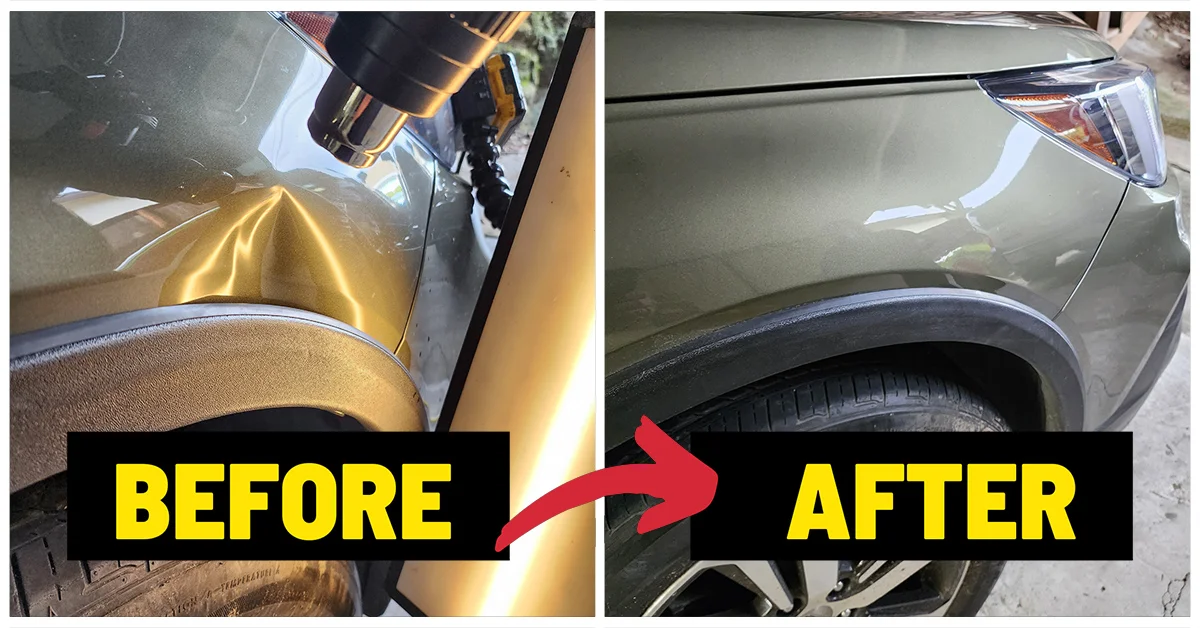
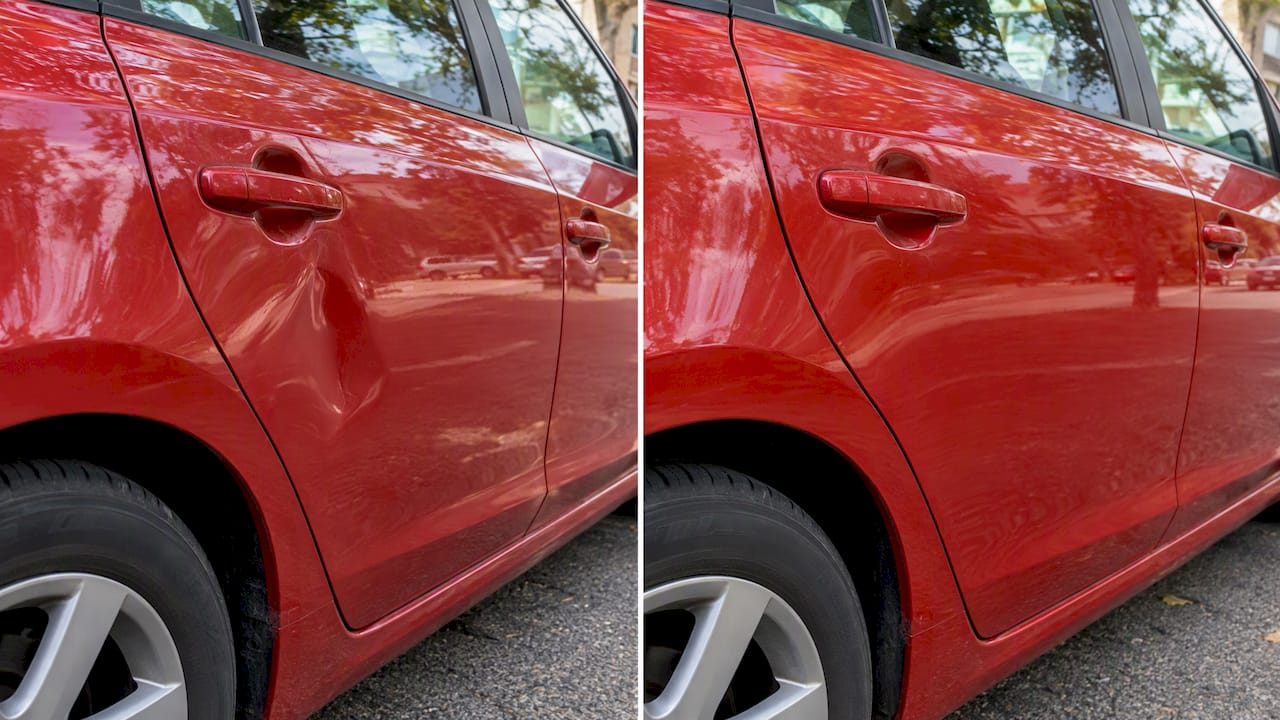
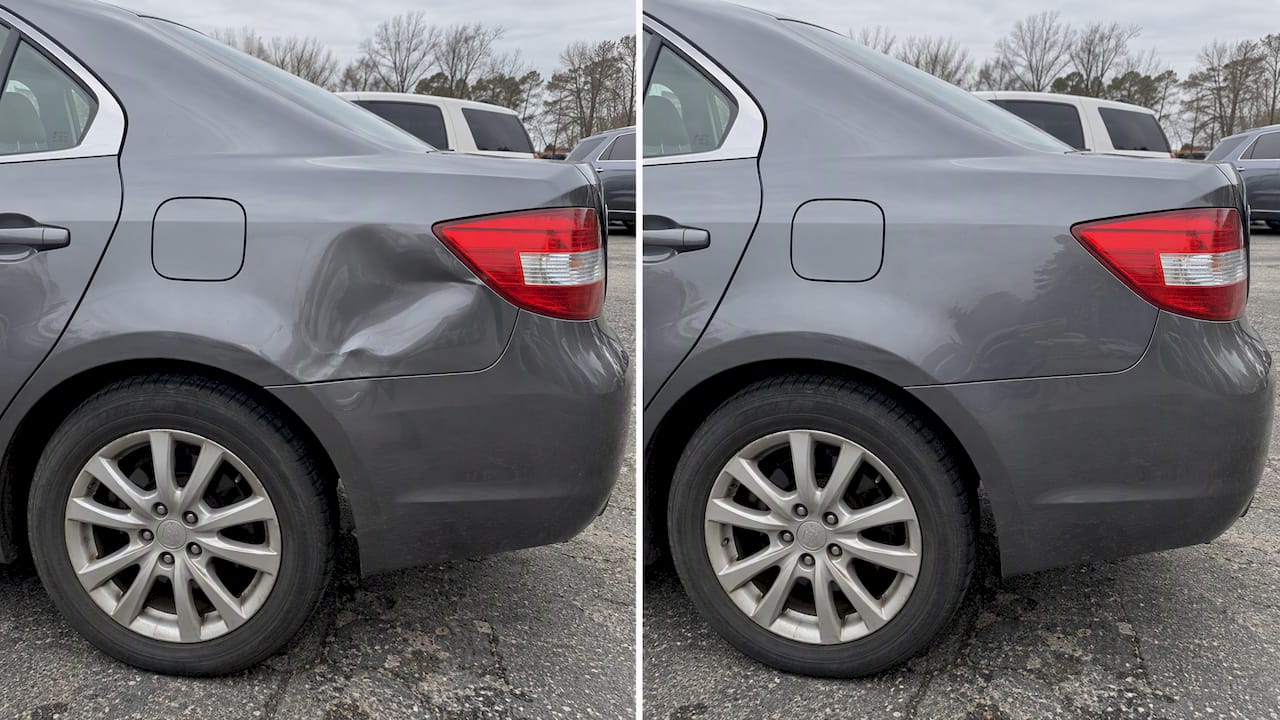
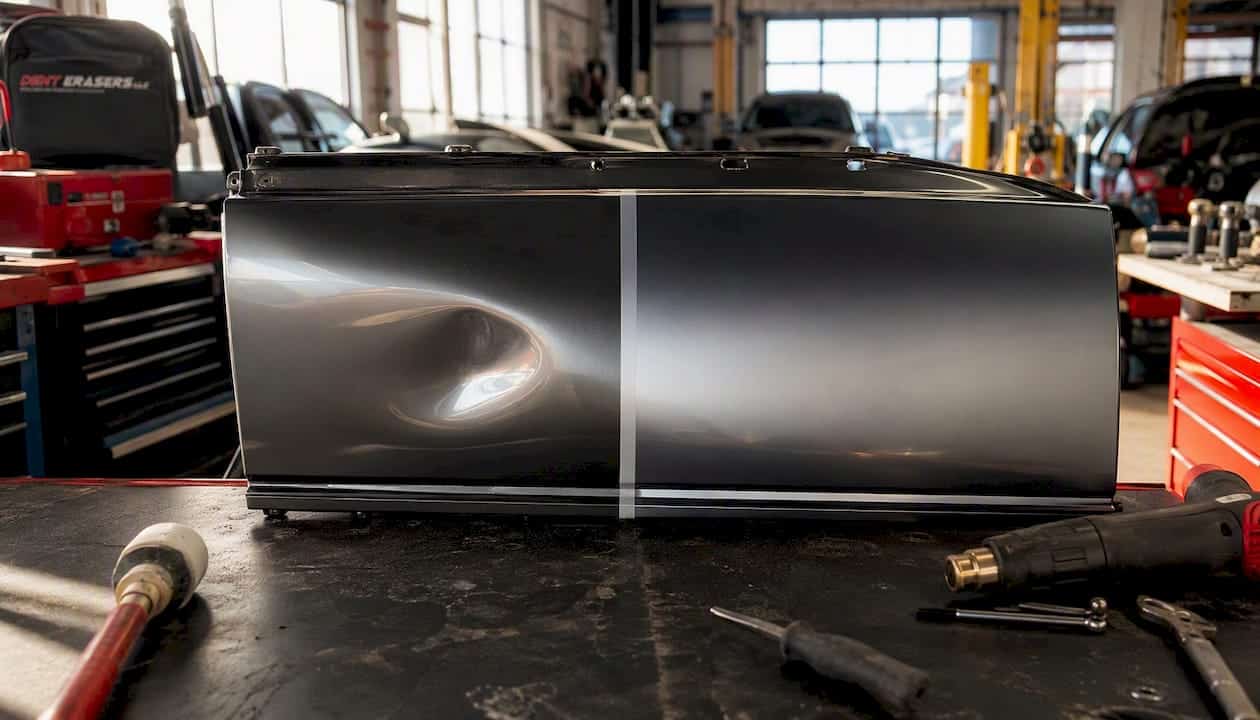
- Mobile paintless dent repair (PDR) is the best fit for shallow dents without paint damage — door dings, small panel dents, minor creases. PDR works by massaging the metal back from behind the panel, preserving the factory finish entirely. No filler, no repainting, no color-match risk. On-site service means no transport, no shop drop-off, and turnaround that fits lease timelines. Fixing small issues ahead of the inspection often costs less than what the leasing company charges at lease end.
For a deeper look at what PDR can handle versus what needs a shop, the mobile dent removal guide on the Denterasersllc site walks through it in detail.
Pro Tip: PDR saves the most money when the dent is 1.5"–3" in diameter, the paint is unbroken, and the panel hasn’t been previously repaired with body filler. If you’re unsure, get a mobile estimate before committing to either option.
What do inspections and common repairs typically cost and take?
| Repair type | Typical timeline | Notes |
|---|---|---|
| Pre-return inspection | 30 min on-site | Complimentary through most lenders; schedule 30–60 days out |
| Mobile PDR (small ding) | Same day | Often less than the lease-end charge for the same dent |
| Bumper/paint repair | 3 days | Depends on parts availability and paint curing time |
| Windshield chip repair | Same day | Significantly less than full windshield replacement |
| Windshield replacement | 1–3 days | Depends on parts and insurer approval |
| Tire replacement | Same day | Needed if tread is below 4/32" at the shallowest point |
The math is straightforward: get a repair estimate first, then compare it to the lease-end charge your contract specifies for that damage type. Receipts from completed repairs also give you documentation at turn-in, which can support a dispute if the inspector flags the same area.
A sample inspection form and what to do after you get the report
Use this form during your own walk-around or when reviewing the inspector’s findings.
Sample vehicle condition report items:
- Inspector name, company, date, and time
- Odometer reading at inspection
- Exterior defects: panel location, defect type, measurement (use credit card or ruler)
- Interior defects: seat/trim location, defect type, approximate size
- Tire condition: tread depth at each corner, sidewall notes
- Glass: chips, cracks, location
- Accessories and missing items: keys, manuals, cargo cover, spare tire, floor mats
Next steps after receiving the report:
- Photograph every listed item immediately
- Get written repair estimates or book mobile PDR for dents within the repairable range
- Decide: repair before turn-in, or budget for the charge
- Retain all receipts and your signed inspection report for the dealership appointment
Keep a digital folder in cloud storage and a printed packet for the turn-in appointment. The paintless dent removal checklist from Denterasersllc can help you confirm which dents are good PDR candidates before you book.
Key Takeaways
Fixing chargeable defects before turn-in almost always costs less than paying lease-end charges, especially when mobile PDR handles the most common damage type: dents over 1.5" in diameter.
| Point | Details |
|---|---|
| Schedule early | Book a complimentary pre-return inspection well before lease end. |
| Know the thresholds | Dents over 1.5", scratches that catch a fingernail, and tread below 4/32" are the most common charge triggers. |
| Document everything | Timestamped photos of every panel, the odometer, and all warning lights protect you during disputes. |
| Bring original equipment | All keys, manuals, cargo cover, floor mats, and spare tire must come back with the vehicle. |
| Denterasersllc for on-site PDR | Book mobile paintless dent repair for dents in the 1.5"–3" range before turn-in to preserve factory finish and avoid lease charges. |
Why proactive mobile repairs are the smarter lease-return move
Most lessees don’t realize how many of the dents that trigger lease charges are actually ideal candidates for paintless dent repair. A 2" door ding on a door panel, a small crease from a parking lot, a minor dent on a quarter panel — these are the bread and butter of PDR work. The metal still has memory. You can massage it back without touching the paint, and the factory finish stays intact.
What I see repeatedly at Denterasersllc is that owners wait until the final week, then scramble. By then, there’s no time to compare options or get multiple estimates. Booking 3–4 weeks out gives you the flexibility to address door dings, small panel dents, and minor bumper scuffs on-site, at your location, without dropping the car at a shop.
The other thing worth saying plainly: a repair receipt matters. When you hand the inspector a dated receipt showing the dent was professionally repaired, it removes the ambiguity. Denterasersllc serves Contra Costa County and surrounding areas, and scheduling is straightforward enough to fit into a lease-return timeline without stress.
Denterasersllc makes on-site lease prep repairs simple
When your lease-return checklist turns up dents, door dings, or bumper scuffs, the fastest path to protecting your wallet is a mobile repair at your location — no shop drop-off, no rental car, no waiting.
Denterasersllc specializes in mobile paintless dent repair, plastic bumper repair, and on-site minor bodywork across Contra Costa County and surrounding areas. The service preserves your factory finish, which means no color-match risk and no bondo. You get clear pricing estimates upfront, before/after photos, and a receipt you can hand to the dealer at turn-in. Same-day and next-day appointments are available, so even a 2–3 week pre-return window is enough time to address the dents that would otherwise become charges. Book your on-site repair estimate at denterasersllc.com and arrive at turn-in with documentation in hand.
Useful sources
- Ford Lease Vehicle Inspection Checklist — Ford’s official PDF lists inspection procedures, inspector access rules, and what items to bring. Use it to understand exactly what a Ford Credit inspector will evaluate.
- GM Financial Lease-End Resource — Covers complimentary pre-return inspections via OPENLANE Inspections, excess wear guidelines, and the turn-in checklist. Useful for GM-brand lessees.
- Honda/AHFC Vehicle Inspection Guide — Provides specific chargeable thresholds: scratches over 3", dents over 1.5", and tread below 4/32". A reliable measurement reference regardless of your vehicle brand.
- Ally Auto Lease-End Return Guide — Includes the Dings and Dents table and Wear Square tool for self-inspection. Ally finances leases across multiple brands, so this guide applies broadly.
- Toyota Financial Lease End Guide — Covers interior and exterior wear examples with photos, the credit card measurement technique, and the full turn-in checklist including the Odometer Statement.
FAQ
What dent size triggers a lease charge?
Most lenders charge for dents larger than 1.5 inches in diameter. Use a credit card or ruler to measure before your inspection.
When should I schedule a pre-return inspection?
Schedule it approximately 30–60 days before lease end so you have time to repair identified issues before turn-in.
Can I dispute charges on the Vehicle Condition Report?
Yes. Photograph the flagged area immediately, request the inspector’s written notes, and keep your signed copy of the report. Dated repair receipts from prior work also support a dispute.
Is mobile paintless dent repair accepted for lease returns?
PDR is widely accepted because it restores the panel without altering the factory finish. Denterasersllc provides before/after photos and a dated receipt, both of which serve as documentation at turn-in.
What original equipment must I return with the vehicle?
Per Ford and Toyota Financial guidelines, you must return all keys and key fobs, the owner’s manual, cargo cover, floor mats, spare tire, and any other equipment present at lease inception. Missing items result in straightforward, avoidable fees.