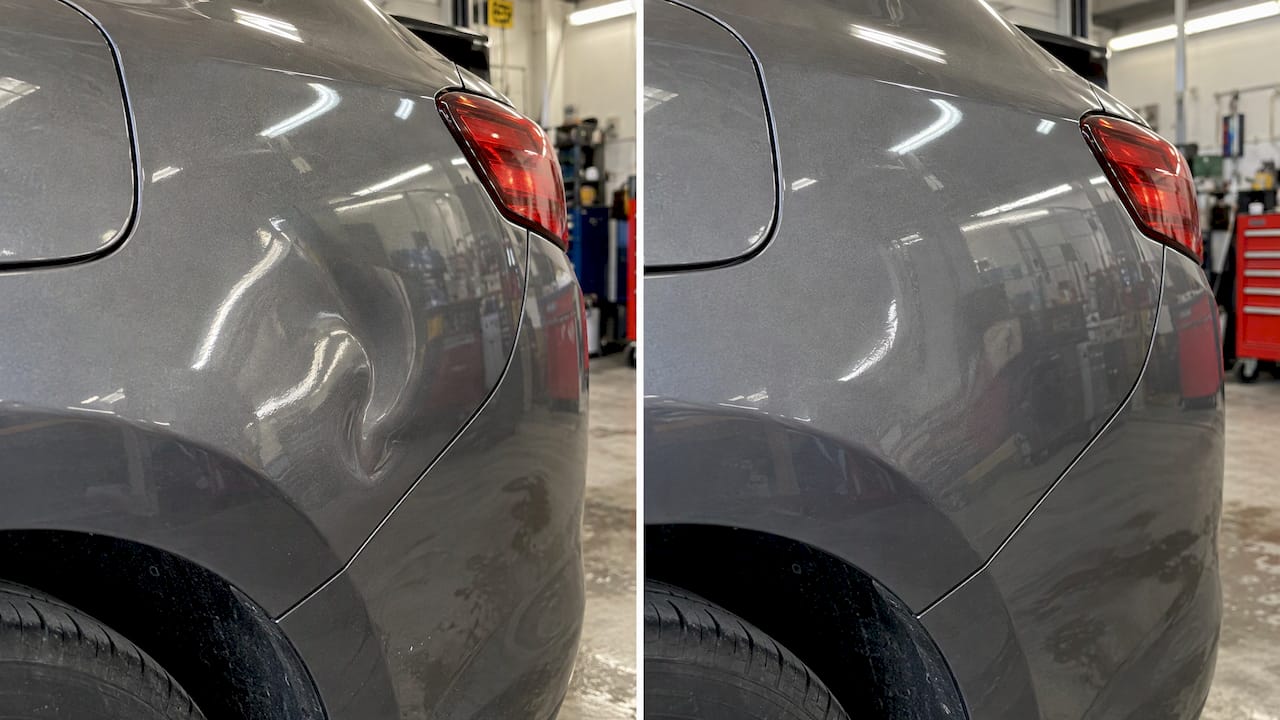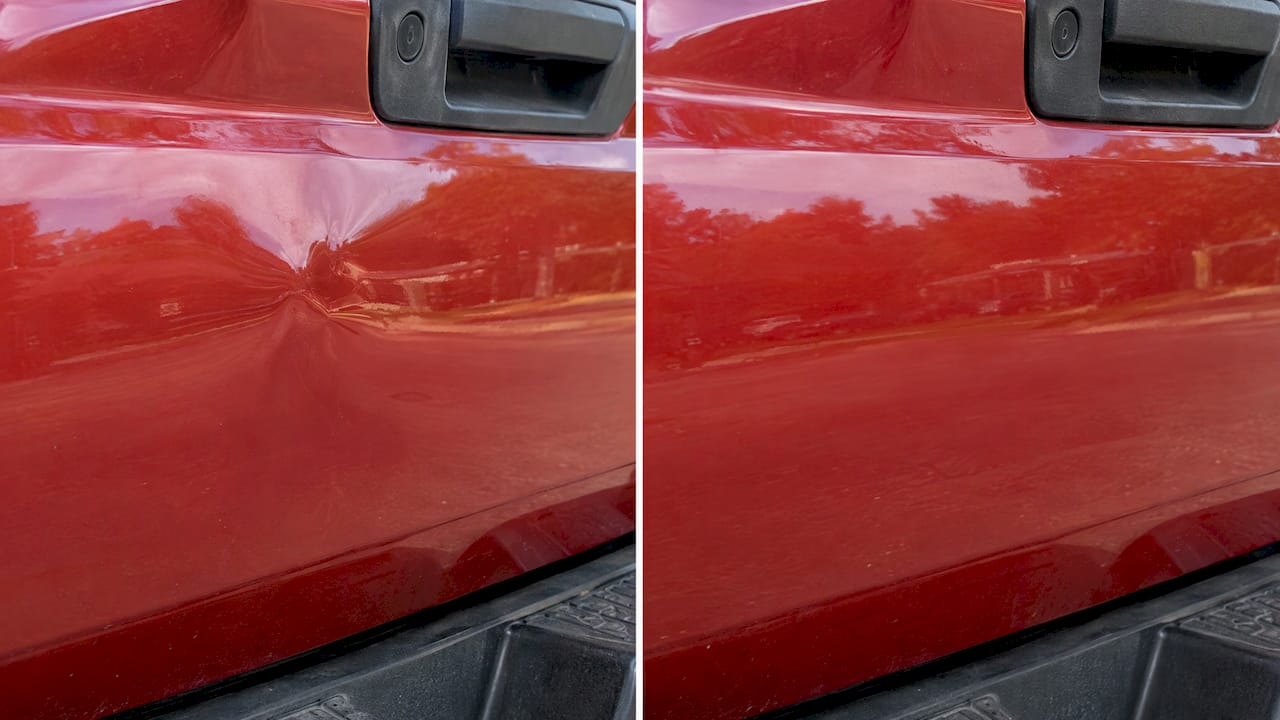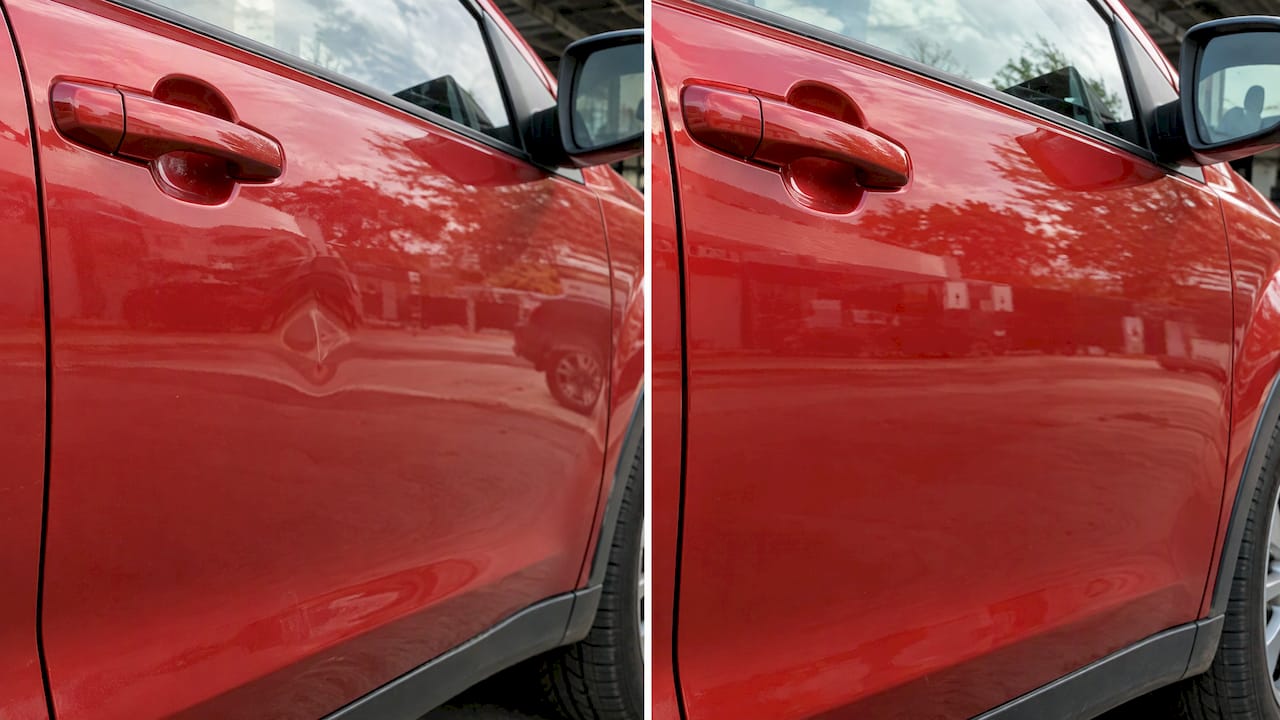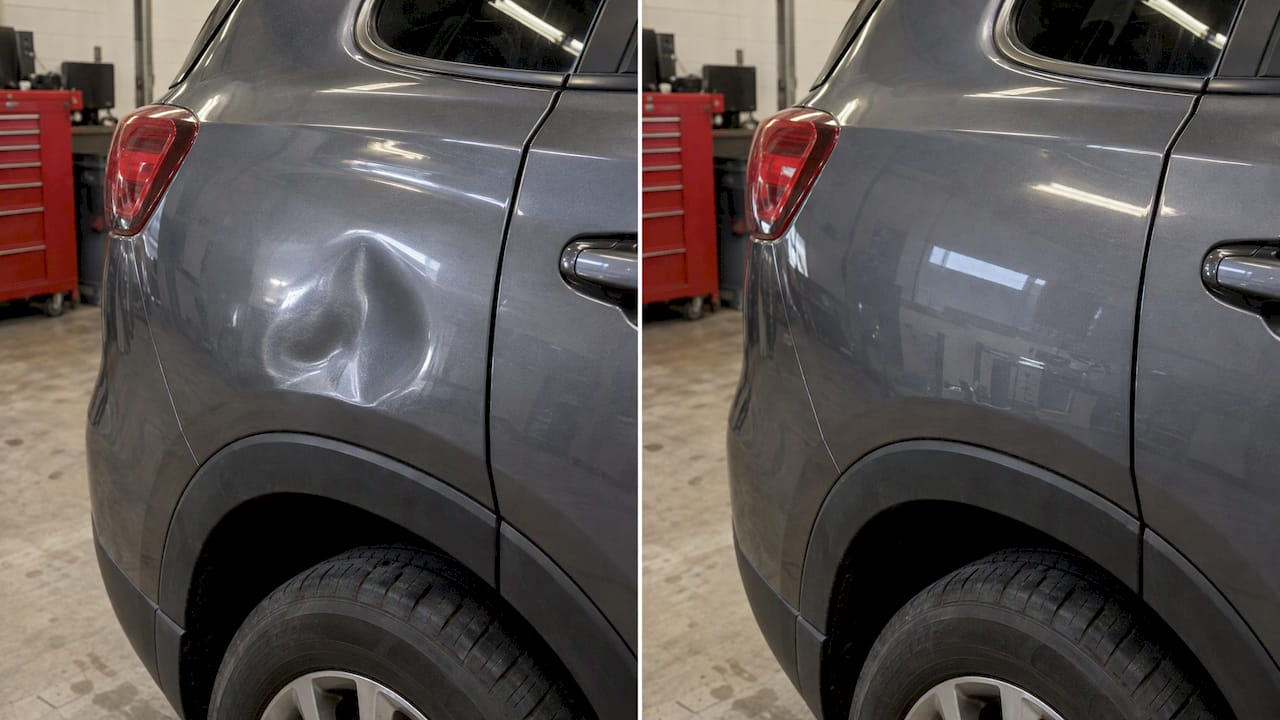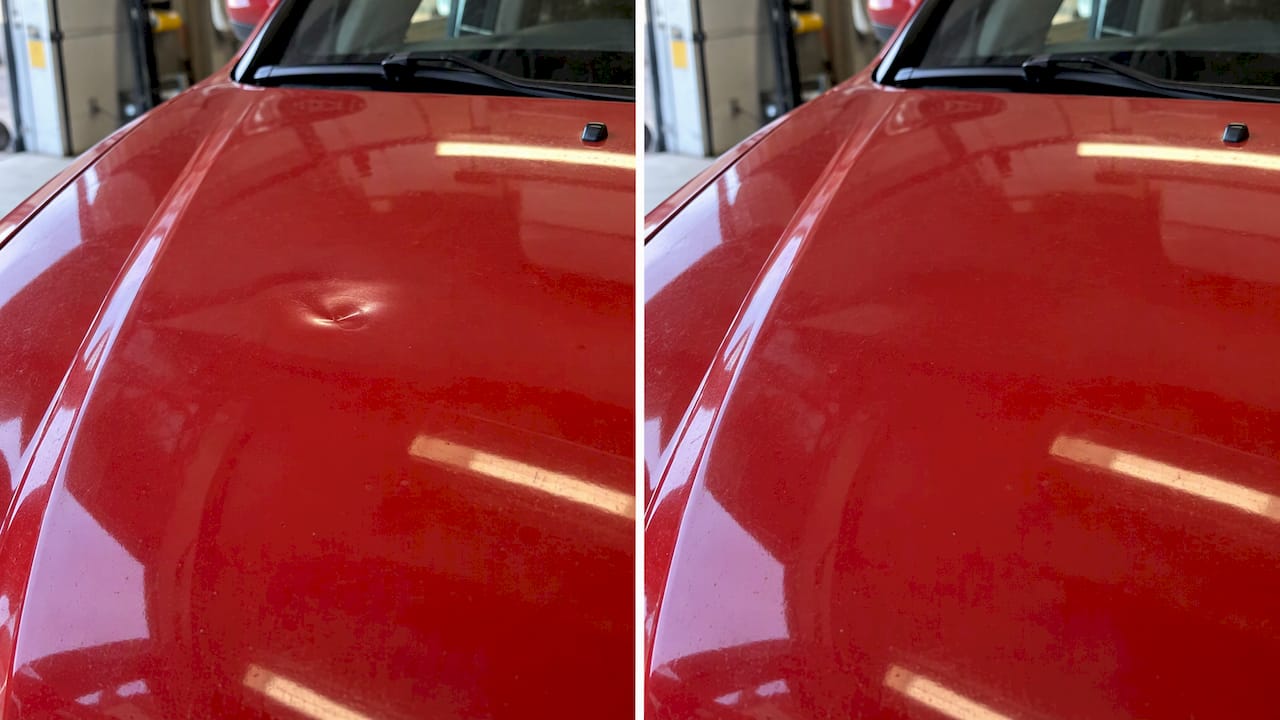
A photo dent estimate is most accurate for small, clean, surface-level dents, and least accurate when damage runs deeper than the camera can see. Think of it as a close starting number. The final price is confirmed when a technician looks at the panel in person. Good photos narrow the gap a lot, and this guide shows you how.
TL;DR
- Photos work best for minor dents with no cracked paint, where the whole damaged area is visible.
- Larger or collision-type damage can hide problems behind the panel, so expect a quick in-person check to confirm the price.
- Take wide shots, medium shots and close-ups in good light, on a clean car.
- Treat a photo number as a range and a starting point, not a locked-in quote.
- Our published ranges: minor dent repair $100 to $500, large dent repair $150 to $1,500.
Table of Contents
- What a photo estimate can and can’t tell you
- How often does the number change?
- Which dents photos predict well
- How to take photos that tighten the estimate
- Why the final price can differ from the photo number
- Our perspective
- Get a dent quote from your own photos
- FAQ
- Sources
What a photo estimate can and can’t tell you
A photo shows size, location, and whether the paint looks intact. Those three things drive most paintless dent repair (PDR) pricing. For a door ding or a shallow crease on an open panel, a clear set of photos can tell a technician a great deal.
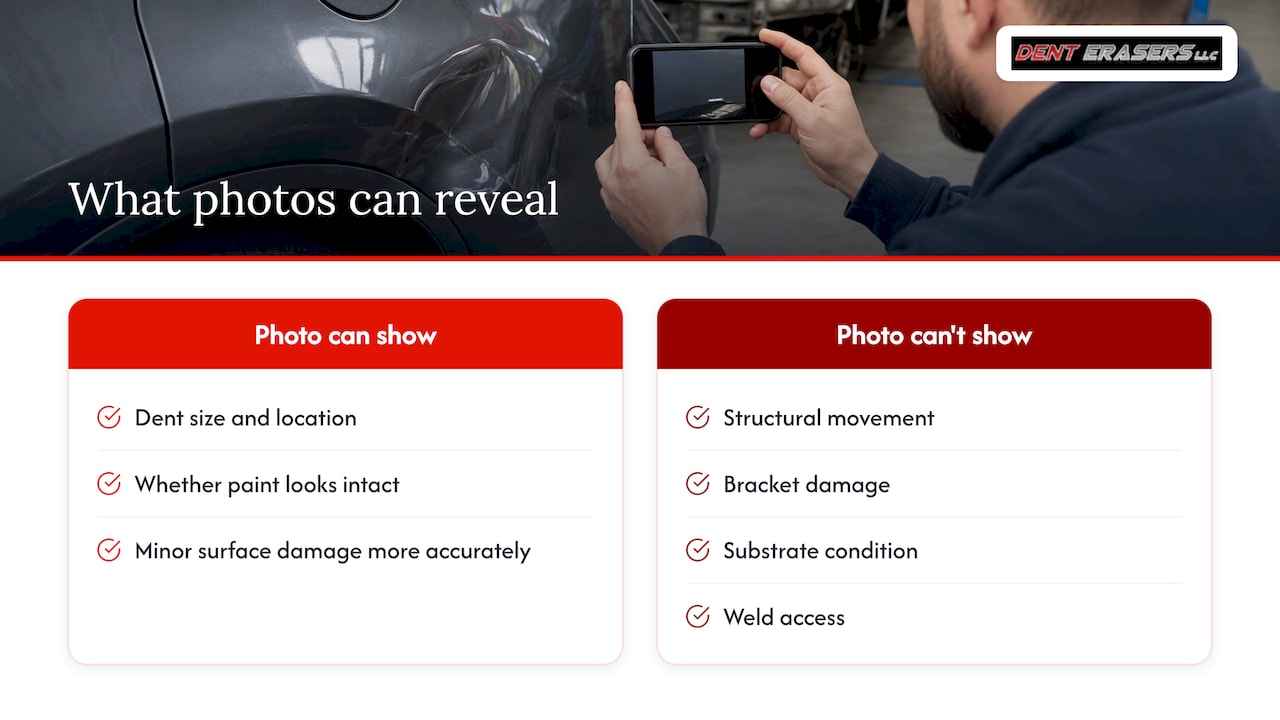
What a photo can’t show is what sits behind the surface. Trade coverage of virtual estimating notes that photos can’t fully assess structural movement, bracket damage, substrate condition or weld access, and that a virtual estimate is an initial assessment built on limited information. Insurance-focused guidance says the same thing from another angle: photo estimates tend to be more accurate for minor surface damage, while more severe damage is harder to capture.
In plain terms: the smaller and simpler the dent, the closer the photo number lands.
How often does the number change?
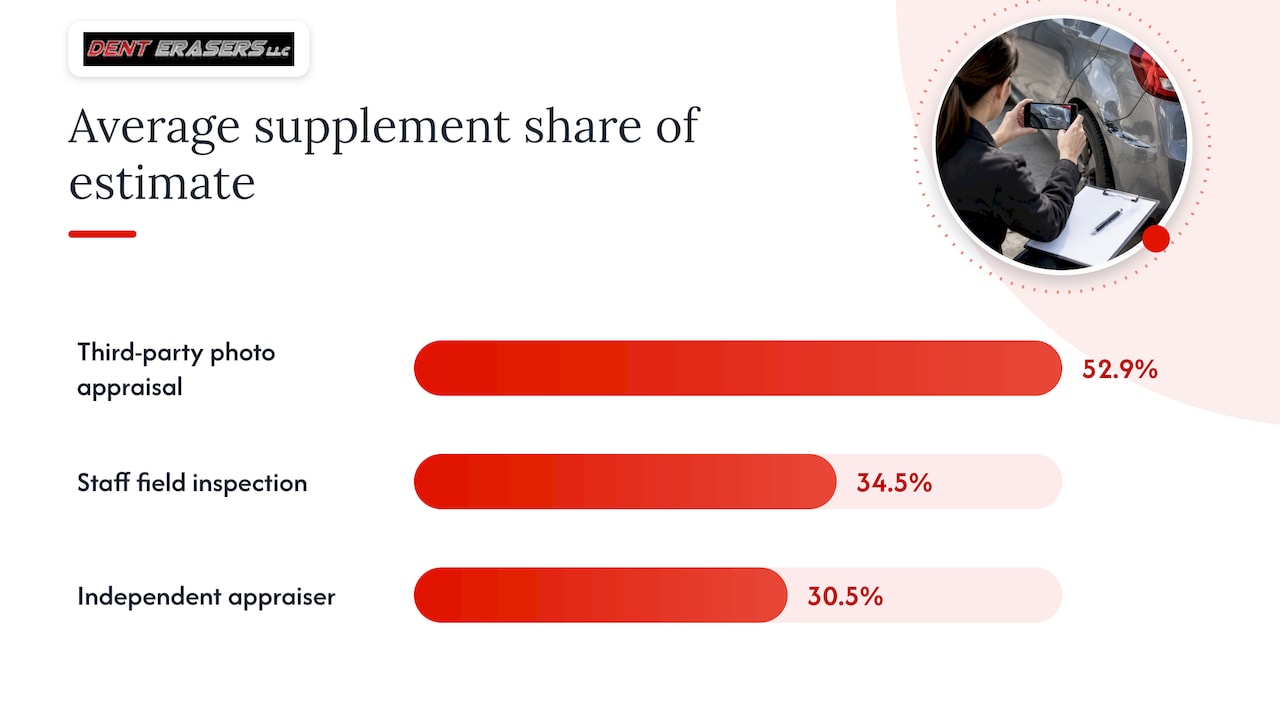
The best public numbers come from insurance claims, not dent shops, so read them as industry context. Reporting on Mitchell data from 2013 to 2017 found that third-party photo appraisals produced supplements averaging 52.9% of the original estimate, compared with 34.5% for staff field inspections and 30.5% for independent appraisers. A later report said 82% of repairs carried at least one supplement in the year ending September 30, 2019.
A supplement is an addendum to an estimate when further damage is discovered once repairs begin. Those figures involve full collision repair, where panels get taken apart. A simple paintless repair on an accessible panel has far less hidden to find, which is why the type of damage matters more than the camera.
Which dents photos predict well
The same features that make a dent a good PDR candidate are the ones you can usually see in a photo. General Motors’ 2023 service bulletin says PDR suits dents with no broken paint, soft dents in body lines and contoured areas with reasonable access to the back side. It is not appropriate for cracked paint, dents that need holes drilled, or dents that need structural part removal.
| What your photo shows | How reliable the estimate is | Why |
|---|---|---|
| Round ding on a door, paint intact | High | Size and access are easy to judge |
| Shallow crease on a hood or roof | Good | Length and depth visible with raking light |
| Dent on a body line or panel edge | Moderate | Metal tension is hard to judge from an image |
| Cracked or chipped paint | Moderate | May need body work beyond PDR |
| Bumper damage | Moderate | Plastic cracks and mounting damage can sit out of view |
| Collision damage near sensors or structure | Lower | Hidden distortion needs an in-person look |
The last row is where the research is clearest. Photos can’t capture hidden structural distortion, sensor alignment, calibration needs or suspension damage. If your car took a real hit, plan on a hands-on inspection. Our guide to minor collision damage explains where that line falls.
How to take photos that tighten the estimate
Photo quality directly drives accuracy. Industry experts quoted in Autobody News describe it as “garbage in, garbage out”: better resolution and lighting help, while shots taken a couple of inches from the damage turn it into an unreadable blob. Professional imaging guidelines agree, calling for clear, well-lit photos from multiple angles plus overall context images.
Here is a simple routine:
- Clean the area. Dirt, film and streaks look like dents or hide them. If the surface is spotted, remove water spots first so reflections show the true shape of the dent.
- Shoot in soft, even light. Overcast daylight or a shaded driveway works. Avoid harsh midday sun and flash.
- Take a wide shot. Stand back far enough to show the whole side of the car so the panel is identifiable.
- Take a medium shot. Frame the full panel with the dent in it.
- Take close-ups. Hold the camera about arm’s length away, not touching distance. Add one from a slight angle so the reflection line bends across the dent.
- Add a size reference. Lay a coin or a ruler next to the dent.
- Photograph paint edges. Show any chips, scratches or cracks clearly.
- Note the details. Send year, make, model, color, and whether the dent is on a body line or panel edge.
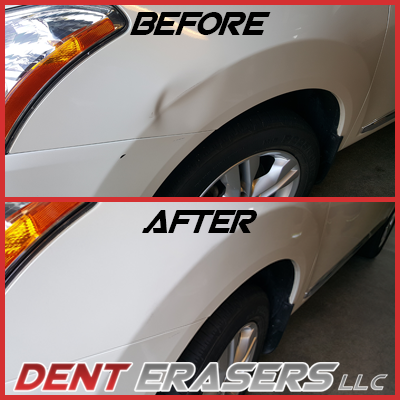
If you also want to document the finished repair, see how to request dent repair before and after photos.
Why the final price can differ from the photo number
PDR pricing generally follows dent size, depth, location, panel material and access. A photo captures size and location well. It captures depth, metal stretch and access less well. That is the usual source of a price shift in either direction.
On our site, we publish ranges rather than single figures:
- Minor dent repair: $100 to $500
- Paintless dent repair: $150 to $500
- Large dent repair: $150 to $1,500
Other services, including plastic bumper repair and auto body and collision repair, have no published price, so those are quoted for the specific vehicle. For a wider look at what drives cost, read our auto body repair cost guide and our mobile auto body repair estimate walkthrough.
If an insurer is involved, remember that photo-based insurance estimates are treated as preliminary and can be adjusted during the repair. Our comparison of insurance versus out-of-pocket repair helps you decide which route fits a small dent.
Our perspective
Photos are a great way to start. Most of our customers are busy people who want to know roughly what a dent will cost before anyone drives over, and a few clear pictures do that job well for door dings, hail dimples and shallow creases.
What we have learned from 27+ years in this work is that the metal tells the final story. A technician can see how light runs across a panel, feel how tight a crease is and judge access to the back side. That is why we treat a photo number as a smart first range, then confirm it onsite before any work starts.
Because our repairs happen at your home or workplace, that confirmation costs you no extra trip. It is part of how we aim for a high first-time fix rate while keeping the factory finish intact.
Brian Blanc
Get a dent quote from your own photos
We repair dents onsite across Contra Costa County and surrounding areas. Send your photos through our free dent quote form and we will come back with a range, then confirm the details at your location. Our mobile dent repair service covers everyday owners, and our specialty services cover lease returns, fleets, motorcycles, and luxury and classic cars.
Hail damage? Our hail damage checklist shows what to photograph before you send anything. To see how your damage may be classified for insurance, read about mobile PDR for comprehensive versus collision damage.
FAQ
How accurate is a photo estimate for a small dent?
For a small dent with intact paint on an accessible panel, a photo estimate is usually a close guide, because size and location are visible. Final pricing is confirmed when the technician checks depth and access in person. Clear photos from several distances make the range tighter.
What kinds of dents can be repaired paintless?
PDR generally suits dents with no broken paint, soft dents in body lines and contoured areas, and dents where the back side is reachable. GM’s service bulletin lists cracked paint and dents needing structural part removal as unsuitable. Photos of the paint surface help sort this out quickly.
Can photos show everything wrong with my car after a collision?
No. Photos can miss structural distortion, sensor alignment and hidden bracket damage. After anything beyond a minor impact, an in-person inspection gives the full picture, and our auto body and collision repair team can handle it onsite.
How should I use the photo number?
Treat it as a starting range for budgeting and planning. Then let the technician confirm the figure at your location before authorizing the repair. That keeps surprises off the invoice.
Sources
- What To Know About Photo Estimates for Car Insurance Claims
- Mitchell: Photo estimating supplements average more than 50% of original appraisal
- New York Times highlights inaccuracy of human photo estimating
- Are Car Insurance Photo Estimates Accurate?
- What Is a Car Insurance Repair Estimate?
- Why AI Estimating Still Depends on Good Photos and Human Eyes
- From Virtual Estimating to Reality
- Appraisals by Algorithm
- Best Practices Guidelines for digital imaging
- General Motors service bulletin on PDR