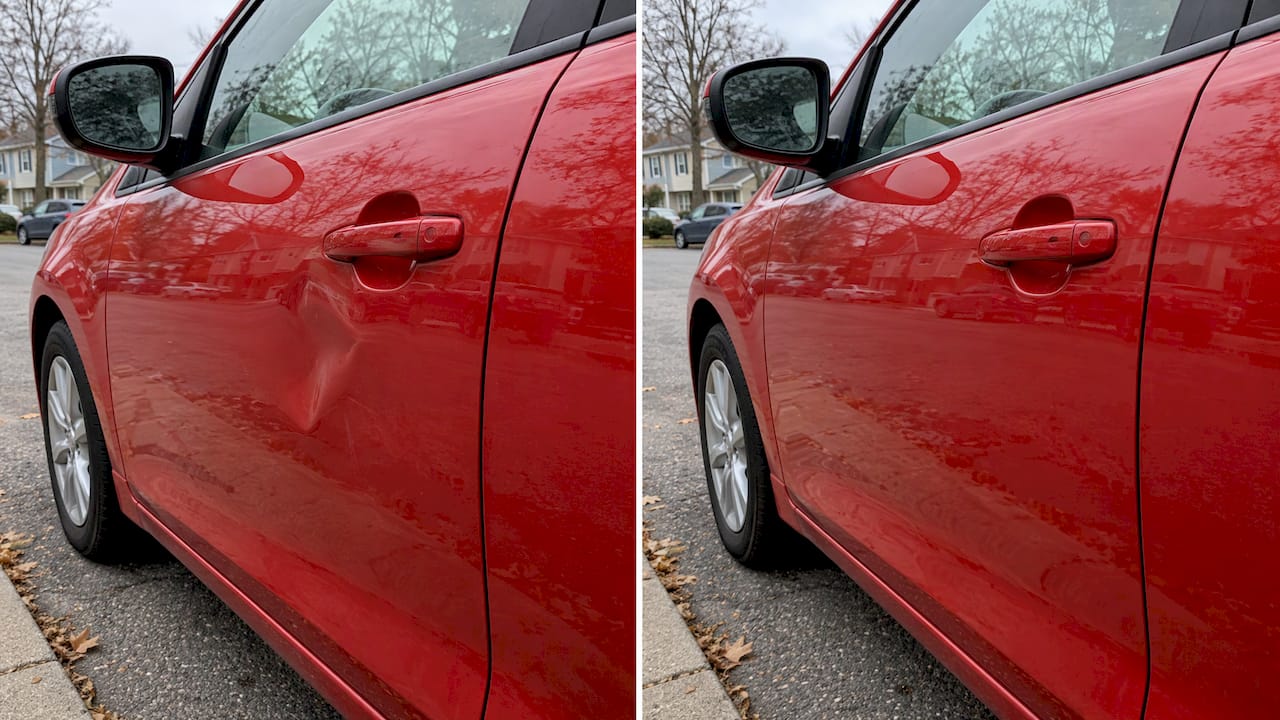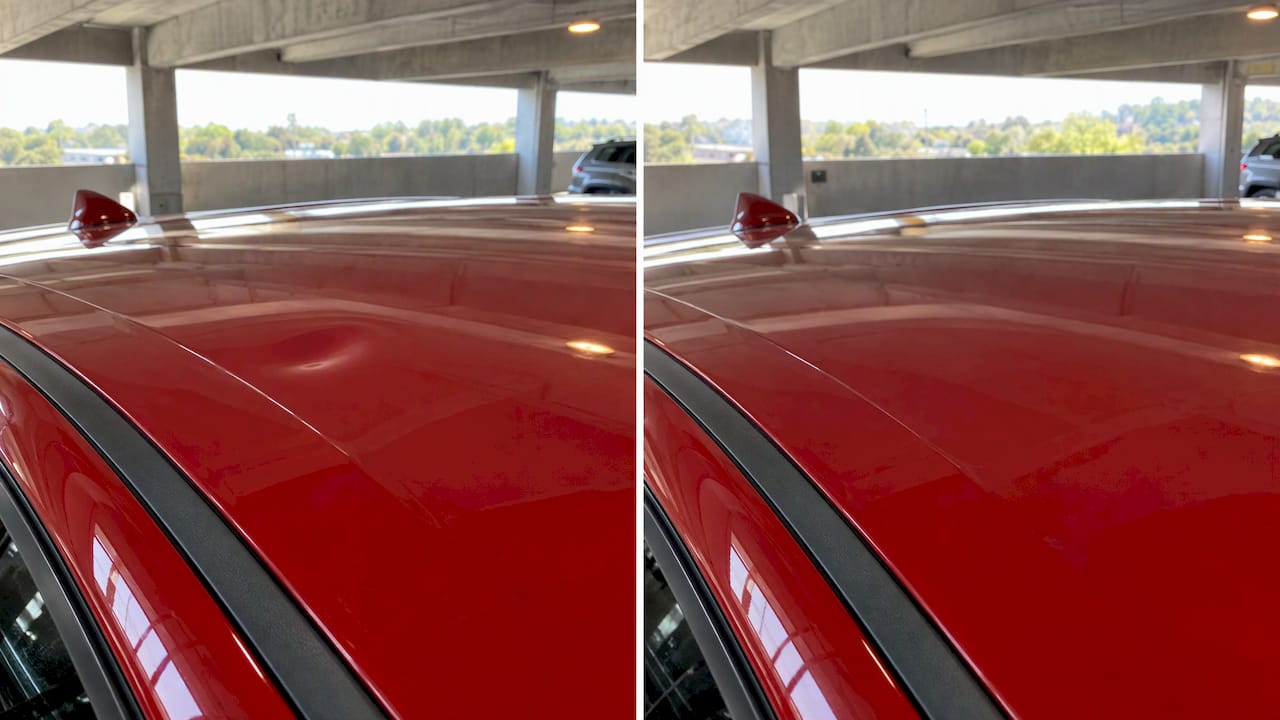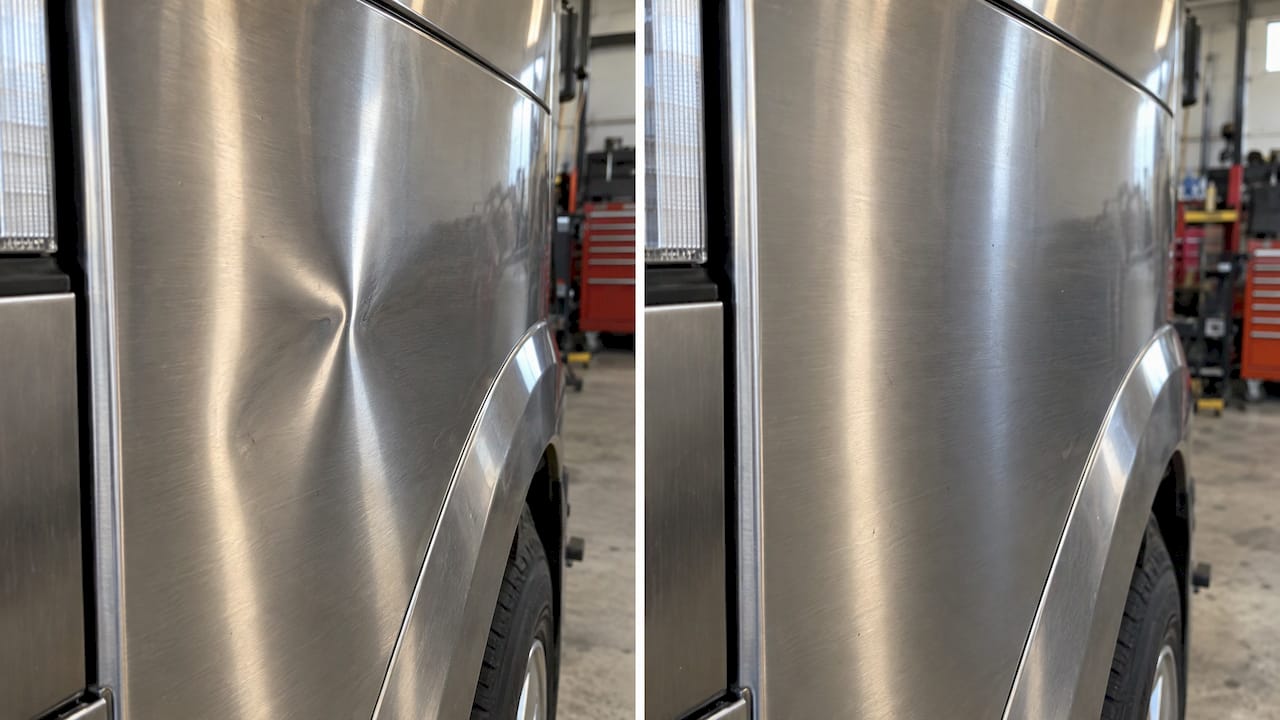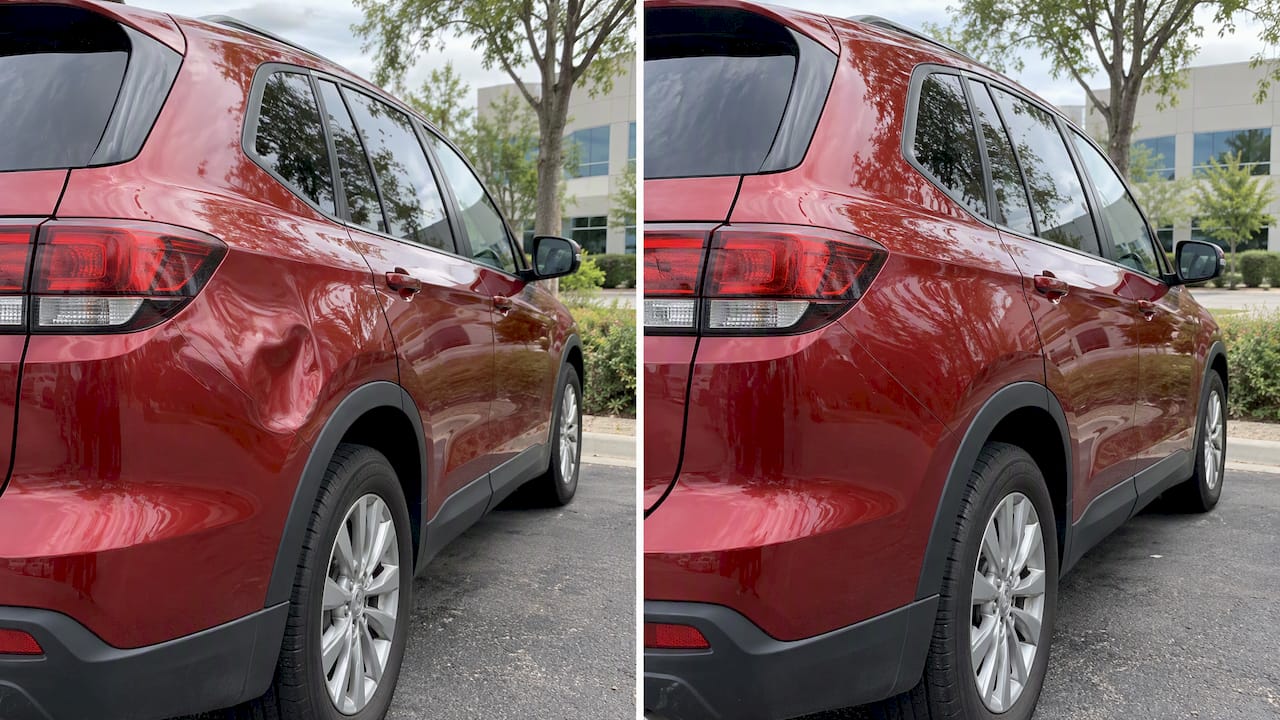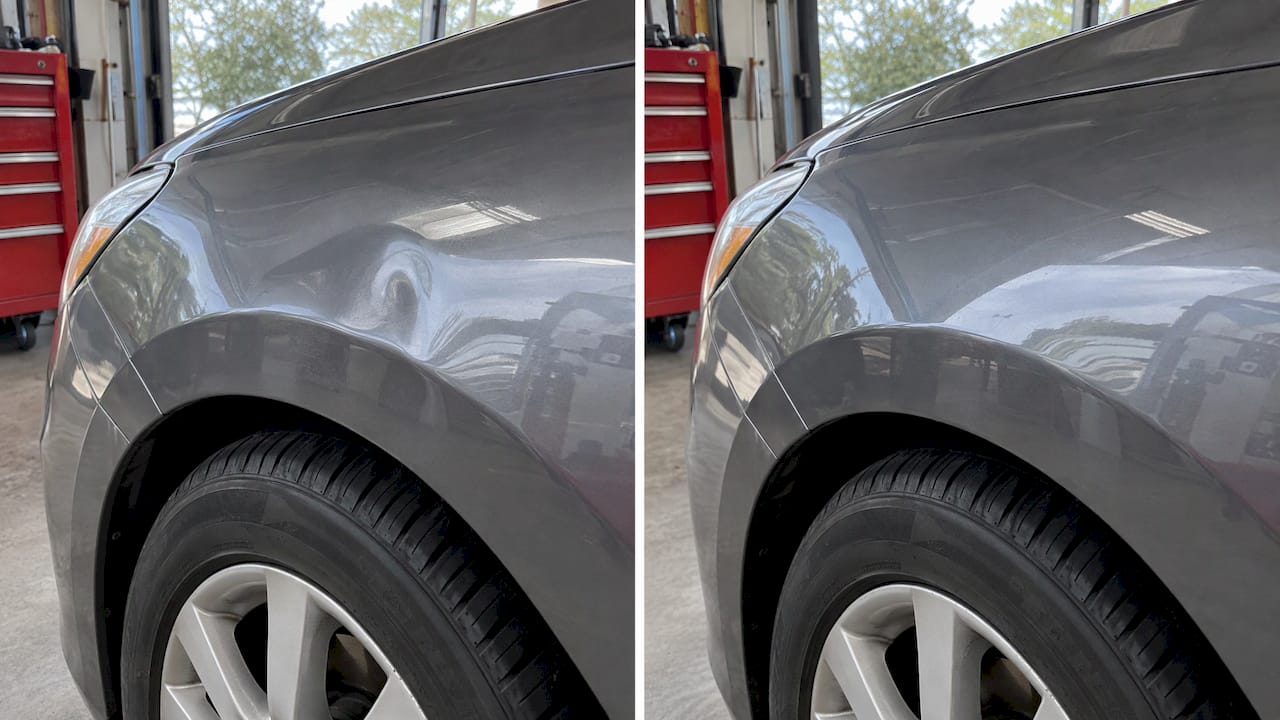
Paintless dent repair (PDR) keeps your factory paint, usually costs far less than a body shop, and often takes hours instead of weeks. Most myths about it come from two places: a bad experience with an unskilled repair, or the assumption that every dent is the same. Here are the seven we hear most, and what is true.
TL;DR
- PDR does not harm modern factory paint, and it does not weaken the panel.
- It fits most minor dents. Cracked paint, very deep dents and a few hard-to-reach spots call for a different repair.
- Dent depth and sharpness matter more than size, so a big shallow dent can be a good PDR job.
- Technician skill varies widely, so the lowest quote is not always the best choice.
- Aluminum panels can be repaired, but they take more skill and more care than steel.
Table of Contents
- Myth 1: PDR can fix any dent
- Myth 2: PDR damages the paint
- Myth 3: PDR only works on tiny door dings
- Myth 4: PDR is the slow, expensive option
- Myth 5: Every PDR technician delivers the same result
- Myth 6: PDR doesn’t work on aluminum
- Myth 7: Hail damage always means a trip to the body shop
- When PDR is the right call, and when it isn’t
- Our perspective on PDR
- Get your dent assessed at your location
- FAQ
- Sources
Myth 1: PDR can fix any dent
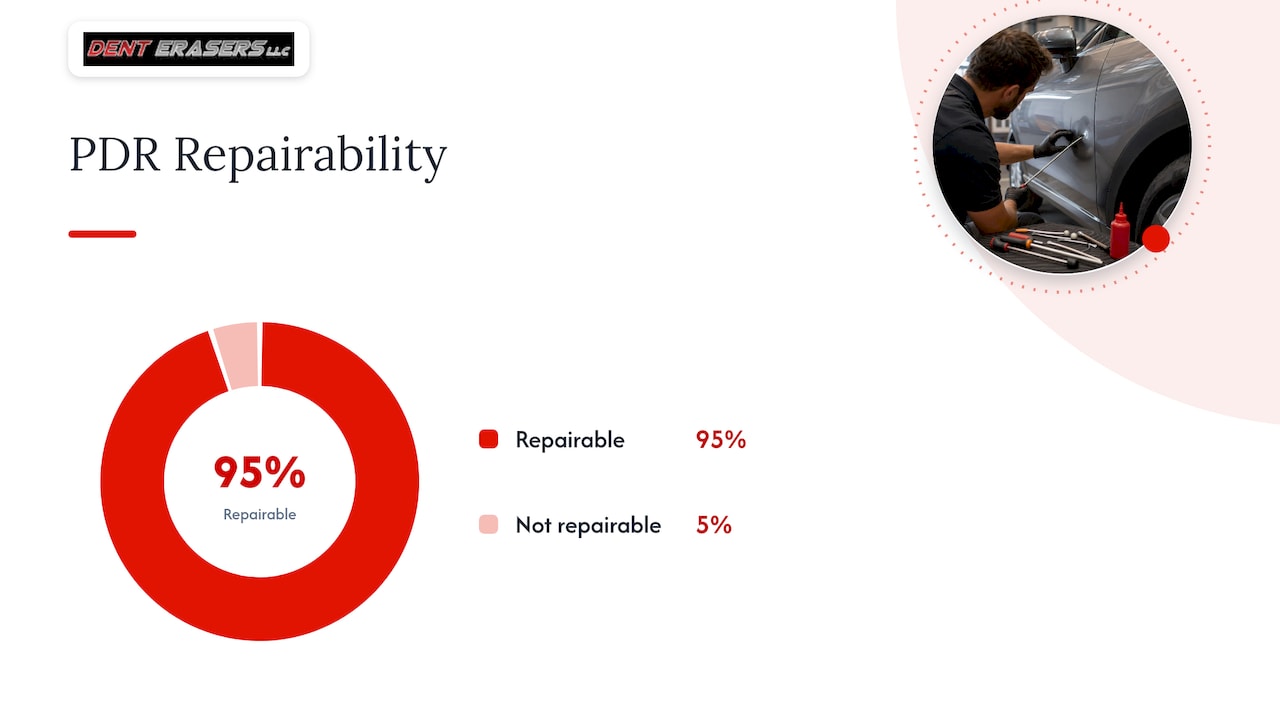
PDR is not a cure-all, and it does not need to be. The National Association of Paintless Dent Repair Technicians (NAPDRT) reports that about 95% of minor dents can be repaired with PDR. The other 5% can’t be fixed because of depth or location.
The tricky locations include the lips of quarter panel openings, the forward areas of heavily braced hoods and the very edges of some panels. Cracked or chipped paint over a dent usually means the repair needs paint work as well.
A technician can tell you in minutes which side of that line your dent falls on. For a clear answer, send us photos for a free dent quote.
Myth 2: PDR damages the paint
The opposite is closer to the truth. NAPDRT notes that today’s factory paints are very flexible and are not damaged by PDR. The technician works the dent out from behind the panel, so the original finish is never sanded, filled or sprayed.
That is why PDR avoids the problems that come with repainting: no color matching, no overspray and no primer layers. NAPDRT describes the result as the closest thing to the dent never having happened.
Where paint damage does happen is when someone without training pushes on a panel. Glue-pull kits and improvised tools can crack paint or leave high spots. If you want to protect your finish, leave the tools to a trained technician.
Myth 3: PDR only works on tiny door dings
Size is the wrong test. Depth and sharpness decide whether a dent responds. NAPDRT says that most minor dents can be repaired, including some dinner-plate-sized dents as long as they are not too deep.
A wide, shallow dent can come out beautifully. A small, sharp crease can be harder because the metal has been stretched along its ridge. This is why we repair dents at every scale, from door dings to hail damage and larger collision dents. See our minor dent repair and large dent repair pages for the range we handle.
Myth 4: PDR is the slow, expensive option
PDR is usually the faster and cheaper path. NAPDRT states that PDR typically costs one-quarter to one-third as much as conventional dent repair. Many dents take less than an hour. Hail damage typically takes one day with PDR, against two to three weeks at a body shop.
Our published price ranges, which depend on the dent’s size, depth and location:
| Service | Published range |
|---|---|
| Minor dent repair | $100 to $500 |
| Paintless dent repair | $150 to $500 |
| Large dent repair | $150 to $1,500 |
We come to you, so you don’t lose a day sitting in a waiting room or arrange a ride home. Businesses comparing repair methods and downtime for work vehicles can also read about fleet collision repair planning. For the full comparison on your own car, see our post on the benefits of PDR over traditional methods.
Myth 5: Every PDR technician delivers the same result
The skill gap is real. NAPDRT points out that the PDR industry has no licensing or performance standards, that skill levels vary widely, and that choosing on the cheapest price can often be a mistake.
So choose on experience. Ask how long the technician has been doing this, look at before-and-after galleries and read recent reviews. We have more than 27 years of experience, and our customers have left many five-star reviews. Our guide to choosing a paintless dent repair service lists the questions worth asking any provider.
Myth 6: PDR doesn’t work on aluminum
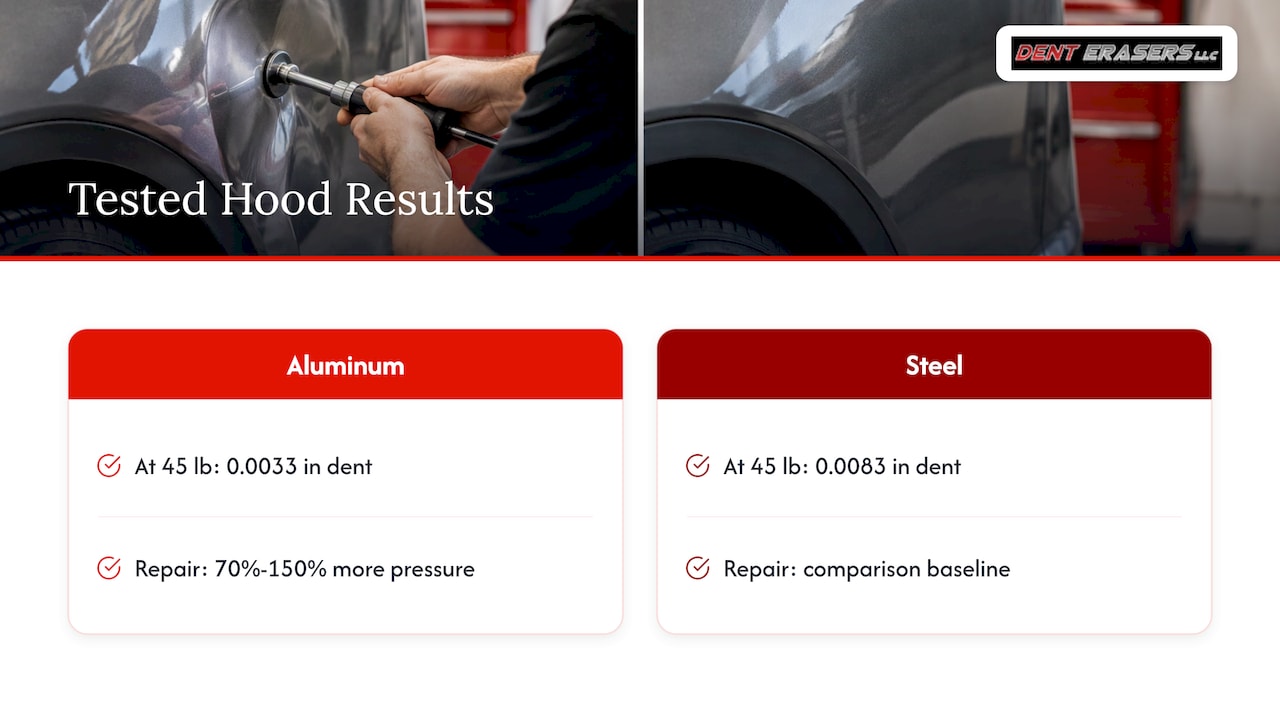
It does work, but it is harder. A study by the Alliance of Automotive Service Providers and NAPDRT found that repairing the tested aluminum hoods took an estimated 70% to 150% more pressure than the steel hoods. At 45 pounds of pressure, the average dent depth was .0033 inches for aluminum and .0083 inches for steel. The report concluded that PDR is more difficult on aluminum panels.
In practice, that means aluminum needs a technician with specific experience on it, and not every dent will be a fit. If your truck or luxury car has aluminum panels, read our guide to repair paths for hail dents on aluminum panels before you decide.

Myth 7: Hail damage always means a trip to the body shop
Hail is one of the best cases for PDR, since it leaves many shallow dents with intact paint. Because hail damage typically takes one day with PDR, according to NAPDRT, it can get you back on the road much sooner than a panel-by-panel repaint. Our guides on removing hail dents with paintless methods and fixing hail dents on your car cover what to expect.
If the paint has cracked, or a panel is creased beyond what the metal can recover from, it needs body work. We offer that too. Our auto body and collision repair service covers dents PDR can’t reach, and our plastic bumper repair covers bumpers.
When PDR is the right call, and when it isn’t
Use this quick check before you book:
- Is the paint intact? No cracks, chips or deep scrapes is a good sign.
- Is the dent shallow or smooth-edged? Gentle contours respond best.
- Can a tool reach behind the panel? Heavy bracing and panel edges can limit access.
- Has the panel been repainted before? Prior bodywork can change the outcome.
If you answer yes to the first three, there is a good chance PDR will work. Our post on PDR tradeoffs and what to check beyond the paint goes deeper on the decision.
Our perspective on PDR
Most PDR myths disappear once a dent is in front of a technician. People expect a yes or no from a photo, and the honest answer depends on the metal, the paint and where the dent sits.
After 27+ years in this work, we see PDR as the first option to consider for most dents. It protects the factory finish, it is quick, and it keeps cost down. That matters most for luxury and classic cars, lease returns and fleet vehicles, where original paint and fast turnaround carry real value.
We also come to you. Mobile service means the repair fits around your workday, and an on-site look lets us tell you plainly what we can fix and how.
Brian Blanc
Get your dent assessed at your location
We repair dents on site, from door dings to hail damage, plus luxury, classic and motorcycle work, lease returns, fleets and insurance claim assistance. Tell us what happened to your vehicle and we will tell you what the repair involves.
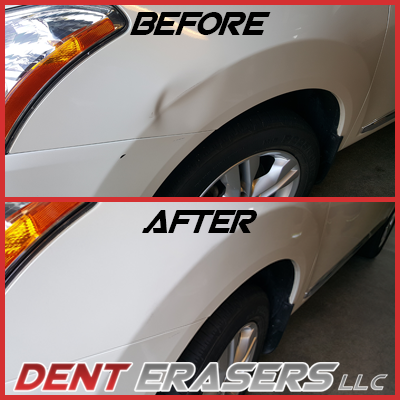
Ready to find out whether PDR fits your dent? Get a free dent quote or see our mobile dent repair service.
FAQ
Does PDR hurt my resale value?
No. PDR keeps the original factory paint, so there is no repainted panel to disclose or match. NAPDRT describes the process as leaving the factory finish untouched. That helps when you sell or turn in a lease.
How long does PDR take?
Many dents take less than an hour, according to NAPDRT. Hail damage typically takes about a day. Heavier damage takes longer, and we confirm timing when we see the vehicle.
Can a dent with cracked paint still be fixed with PDR?
Usually not on its own. Cracked or chipped paint over a dent generally means the repair needs paint work too. We can assess it and, if needed, handle it through our auto body and collision repair service.
Can I fix a dent myself with a kit?
Kits may look easy, but the metal and paint are unforgiving, and a mistake can turn a simple PDR job into a bigger repair. We recommend having a trained technician look at the dent first.
Sources
- About Paintless Dent Repair, NAPDRT
- Frequently Asked Questions About Paintless Dent Repair, NAPDRT
- ASA/NAPDRT Aluminum Study
- Fleet collision repair guide