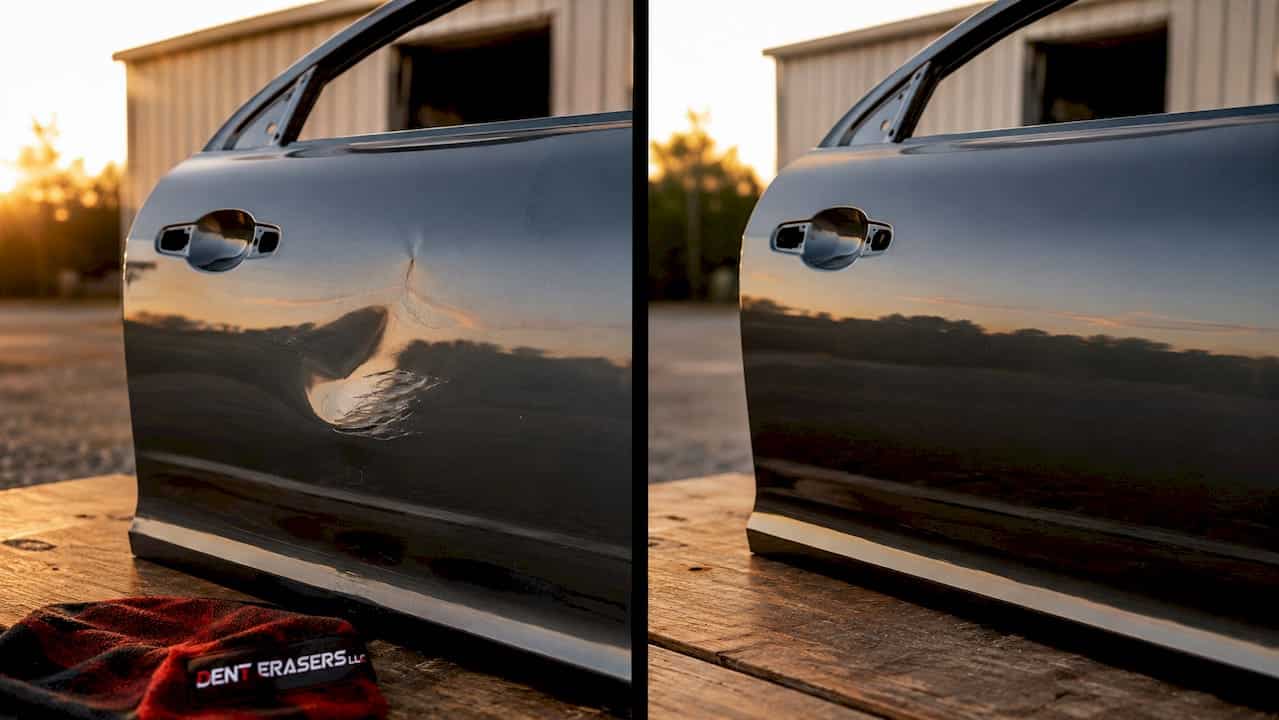
Repainting dents is defined as applying new paint to a vehicle panel after dent repair, and it is one of the most damaging choices a car owner can make for long-term value. The factory finish on your car is an engineered system, not just a coat of color. Repainting damages that system in ways that show up immediately under light and cost you money at resale. Paintless dent repair (PDR) exists precisely to avoid these consequences, and understanding why repainting dents causes problems will help you make a smarter repair decision.
Why avoid repainting dents: the paint quality problem
Repainting a dented panel almost always produces a visible result that does not match the rest of your car. The reason is straightforward. Factory paint has a unique orange-peel texture that is engineered during the manufacturing process and is nearly impossible to replicate in a body shop environment. That texture difference becomes obvious when light hits the panel at an angle.
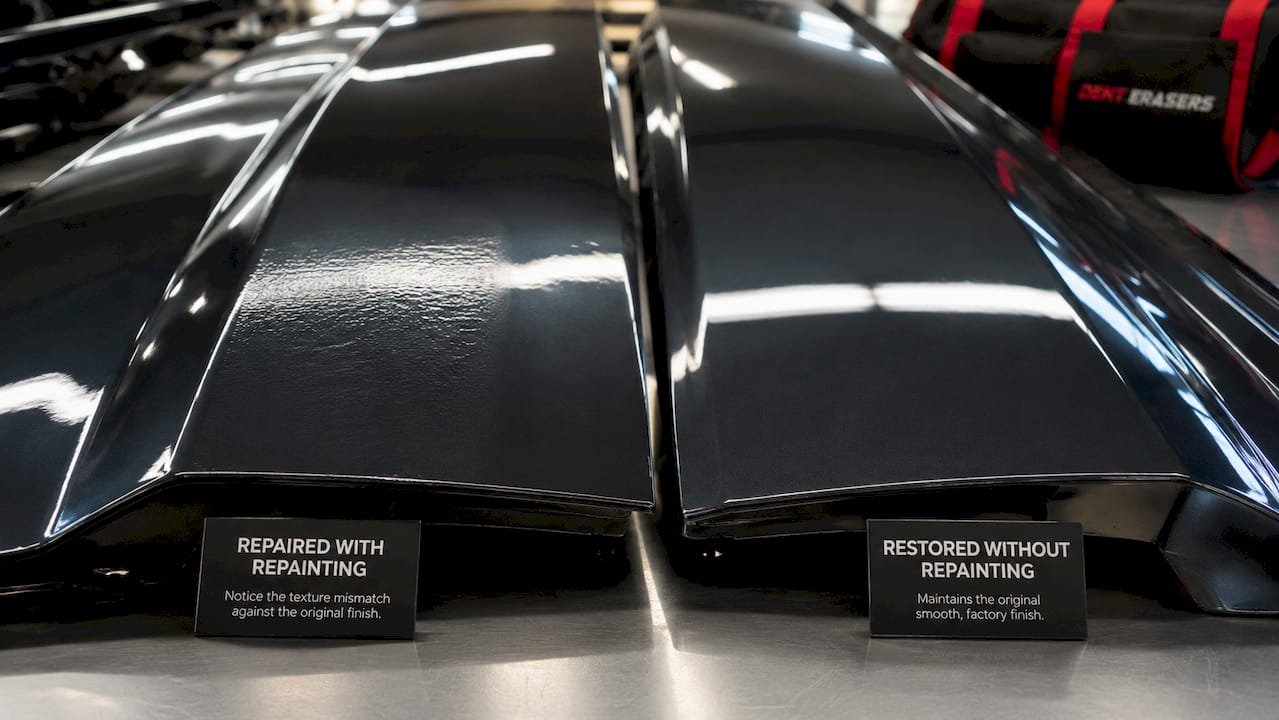
Color matching adds another layer of difficulty. Paint codes cover broad shade categories, not a single exact formula. Multiple suppliers produce paint under the same code, and each batch varies slightly. Your car’s original paint has also faded over years of sun exposure, so fresh paint applied to one panel will read as noticeably brighter or different in tone compared to the surrounding panels.
The problems do not stop at appearance. Poor surface preparation before repainting causes adhesion failures such as peeling, bubbling, or cracking within months of the repair. A job that looks acceptable on day one can deteriorate quickly, leaving you with a worse result than the original dent.
- Factory orange-peel texture cannot be replicated by hand spraying
- Paint codes do not guarantee an exact color match across suppliers
- Sun-faded original paint will not match fresh paint on a repaired panel
- Blending into adjacent panels is required for an invisible repair, adding cost and complexity
- Rushed prep work leads to peeling and bubbling within months
Pro Tip: Ask any body shop to show you a completed repair under natural daylight before you approve the work. Texture and color mismatches that are invisible under shop lighting become obvious in sunlight.
How does repainting affect resale value?
The financial consequences of repainting dents are measurable and significant. Vehicles with non-factory paintwork lose 15–20% of their resale value, and that loss applies even when the repair work is high quality. That is a serious hit on a $25,000 car.
Buyer behavior makes the situation worse. About one-third of buyers reject cars with undisclosed bodywork even for minor cosmetic repairs. That rejection rate reflects a simple reality: buyers see repainted panels as a signal that something went wrong with the car, whether or not that is actually true.
Original, well-maintained factory paint signals vehicle care and boosts buyer confidence. Repainting creates uncertainty. Dealers lower their offers when they detect repainted panels, and private buyers often walk away entirely. The perception of hidden damage follows a repainted car even when the underlying repair was minor.
- A repainted panel shows up on vehicle history tools and inspection reports
- Dealer trade-in offers drop when non-factory paint is detected
- Private buyers treat repainting as evidence of a past accident
- Undisclosed bodywork can expose sellers to legal liability in some states
- PDR leaves no paint record because no new paint is applied
PDR versus traditional repainting: which repair method wins?
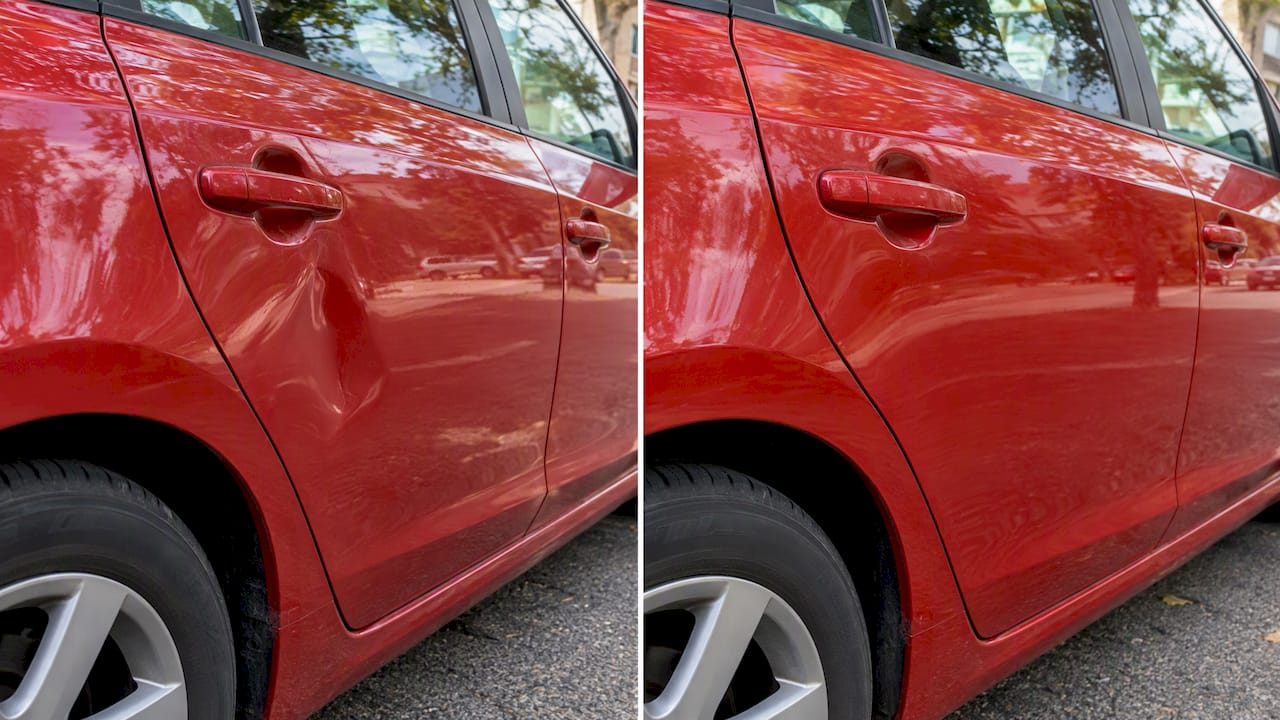
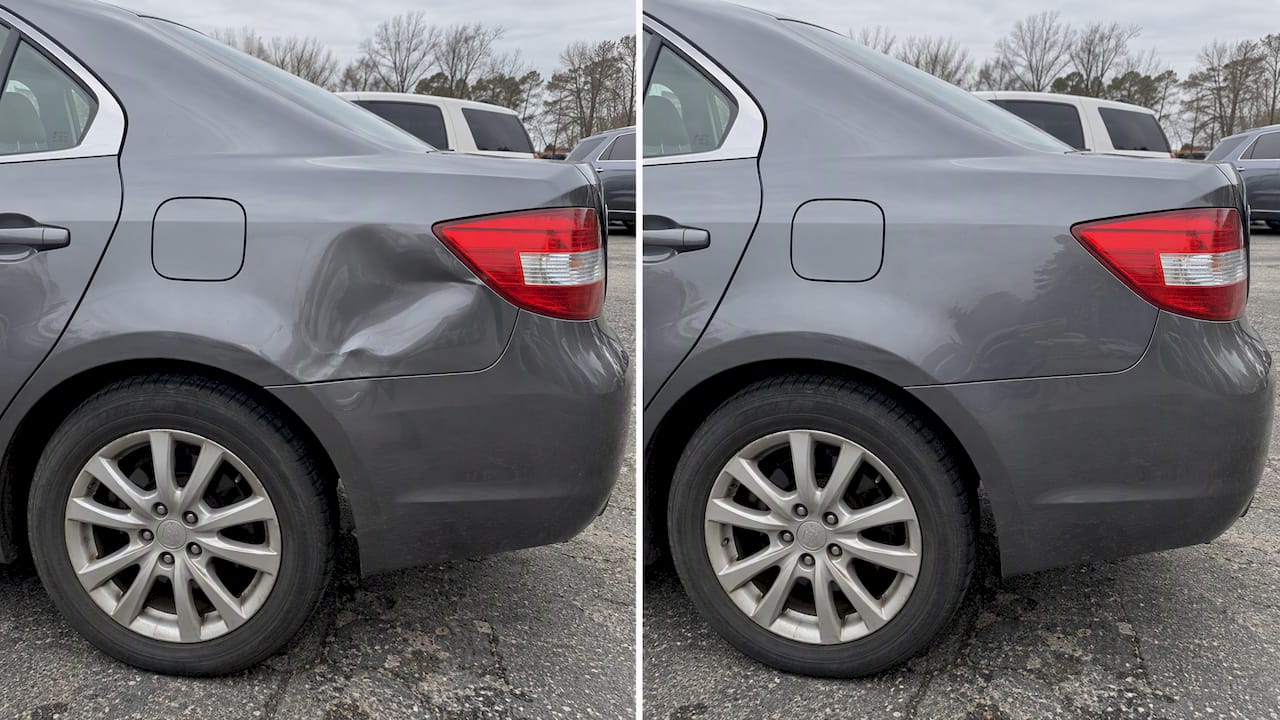
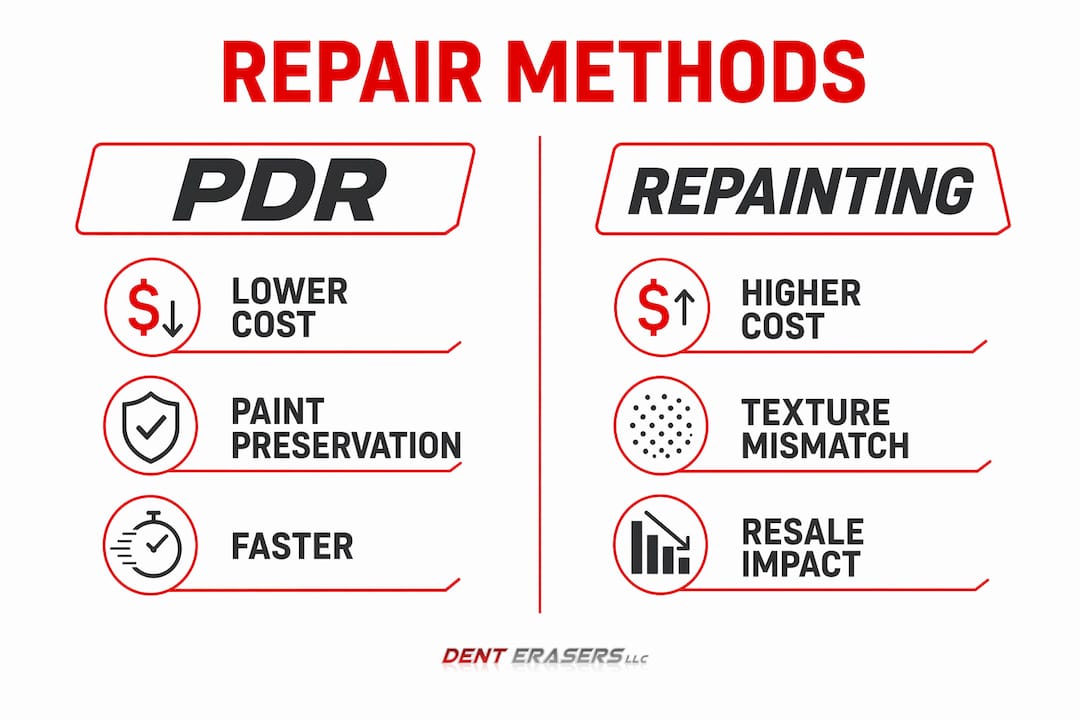
Paintless dent repair is the industry-preferred method for most dent damage, and the numbers support that preference clearly. PDR is suitable for 80–90% of typical dents when the paint is intact. The process works by using specialized tools to massage the metal back to its original shape from behind the panel, preserving the factory finish entirely.
Traditional body shop repairs cost 2–3 times more than PDR and carry higher long-term failure risks. PDR also completes faster, meaning less time without your vehicle. The benefits of paintless dent repair extend beyond cost savings to include paint preservation and resale protection.
| Factor | PDR | Traditional repainting |
|---|---|---|
| Cost | Lower | 2–3x higher |
| Paint preservation | Full factory finish retained | New paint applied, match not guaranteed |
| Completion time | Faster, often same day | Longer, multi-day process |
| Resale impact | No paint record, value preserved | Resale value reduced 15–20% |
| Failure risk | Low when paint is intact | Higher due to prep and matching challenges |
PDR does have limits. Dents with paint failure or sharp creases are not good candidates for PDR. Applying PDR to cracked or chipped paint risks further paint failure. In those cases, traditional repair is necessary, but it should be the last resort rather than the default choice.
Pro Tip: Before agreeing to any repair, ask the technician to assess whether the paint is fully intact. That single question determines whether PDR is an option and can save you hundreds of dollars.
How to choose the right dent repair method
Choosing the right repair starts with an honest assessment of the damage. Work through these steps before committing to any shop or method.
- Assess the paint condition first. Run your finger across the dent. If the paint is intact with no chips or cracks, PDR is likely an option. If the paint is broken, traditional repair may be unavoidable.
- Measure the dent depth and shape. Shallow, round dents respond well to PDR. Deep creases or sharp edges are harder to massage back without risking paint stress.
- Get a professional evaluation. A qualified PDR technician can tell you within minutes whether your dent qualifies. Denterasersllc offers mobile evaluations, so you do not need to drive to a shop.
- Avoid rushed repaint jobs. A quick, cheap repaint is almost always a bad repaint. If traditional repair is necessary, choose a shop that uses multi-light inspection and proper blending techniques.
- Check your insurance coverage. Some policies cover PDR directly. Knowing your coverage before you choose a method can affect both your out-of-pocket cost and your claims record.
Understanding the cost difference between repair methods before you commit helps you avoid overpaying for a result that also hurts your resale value.
Key Takeaways
Repainting dents causes measurable harm to your vehicle’s finish, resale value, and buyer perception, while PDR preserves all three when the paint is intact.
| Point | Details |
|---|---|
| Factory finish is irreplaceable | Repainting cannot replicate the engineered texture and exact color of original factory paint. |
| Resale value drops significantly | Non-factory paintwork reduces resale value by 15–20% and triggers buyer rejection. |
| PDR covers most dents | PDR is suitable for 80–90% of typical dents and costs 2–3x less than traditional repair. |
| Buyer perception matters | Repainted panels signal past damage to buyers, lowering offers and killing deals. |
| Assess before you repair | Checking paint condition before choosing a method prevents costly and unnecessary repainting. |
My honest take on factory paint and why I fight to keep it
I have been doing paintless dent repair long enough to know that the biggest mistake car owners make is treating repainting as the easy answer. It is not. Every time a panel gets repainted, you are trading a perfect factory finish for something that is, at best, a very good approximation. Under the right light, the difference is always visible.
What surprises most of my customers is how quickly a repaint job can fail. I have seen peeling start within six months on work that looked fine at delivery. The prep was rushed, the blending was skipped, and the result was a car that looked worse than the original dent. That is a real cost, not just an aesthetic one.
The owners who come to me after a bad repaint job are always frustrated, and I understand why. They paid more money for a result that hurt their car’s value. PDR is not magic, and it does not work on every dent. But when the paint is intact, it is the right call almost every time. Preserving what the factory built is always better than trying to recreate it.
— Brian Blanc
Denterasersllc: expert dent repair that protects your factory finish
Choosing the wrong repair method costs you money twice: once at the shop and again at resale. Denterasersllc specializes in mobile paintless dent repair across Contra Costa County and surrounding areas, bringing professional evaluation and repair directly to you.

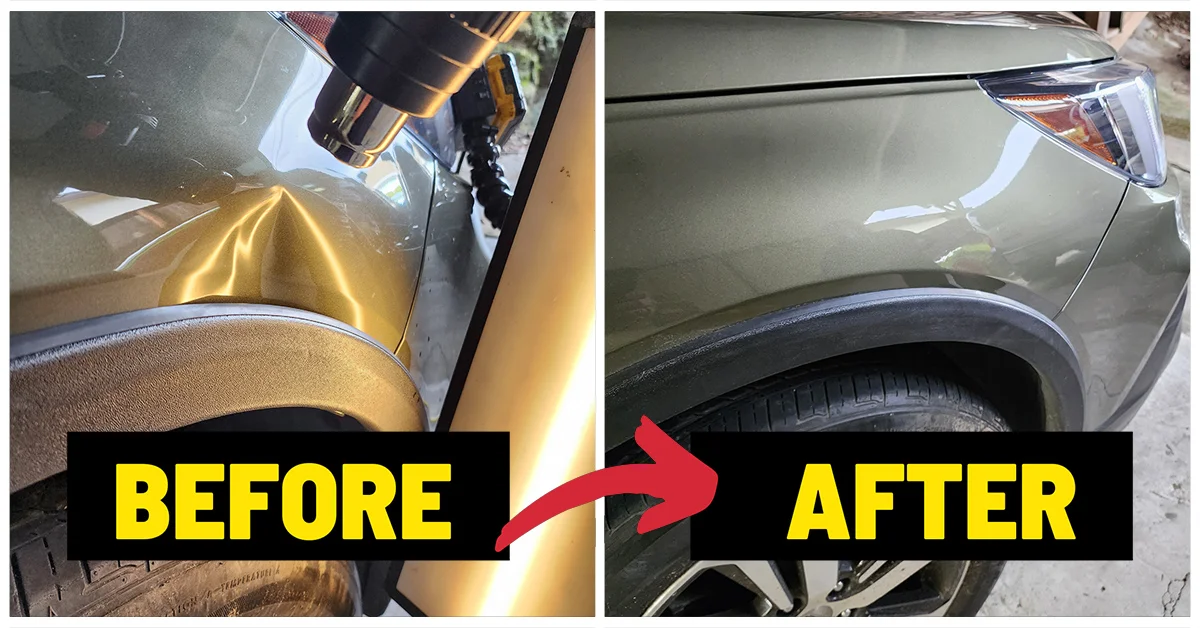
The team at Denterasersllc works to preserve your vehicle’s original paint on every job, avoiding the color mismatches, adhesion failures, and resale penalties that come with unnecessary repainting. See a real example of what expert technique looks like in this seamless fender repair from a recent job. Request a mobile evaluation and find out whether PDR can protect your car’s finish and value without a single drop of new paint.
FAQ
Why avoid repainting dents when the damage looks minor?
Repainting even minor dents introduces color and texture mismatches that are visible under natural light, and it reduces resale value by 15–20% compared to vehicles with intact factory paint.
What happens when you repaint a car panel?
New paint cannot perfectly match faded original paint, and blending into adjacent panels is required to hide the repair. Poor preparation leads to peeling and bubbling within months.
Is repainting dents necessary in every case?
No. PDR is suitable for 80–90% of typical dents when the paint is intact, making repainting unnecessary for the majority of common dent damage.
Does repainting a car affect its resale value?
Yes. Non-factory paintwork reduces resale value by 15–20%, and about one-third of buyers reject cars with undisclosed bodywork regardless of repair quality.
What is the best alternative to repainting dents?
Paintless dent repair is the preferred alternative. It preserves the factory finish, costs significantly less than traditional repair, and leaves no paint record that affects resale value.