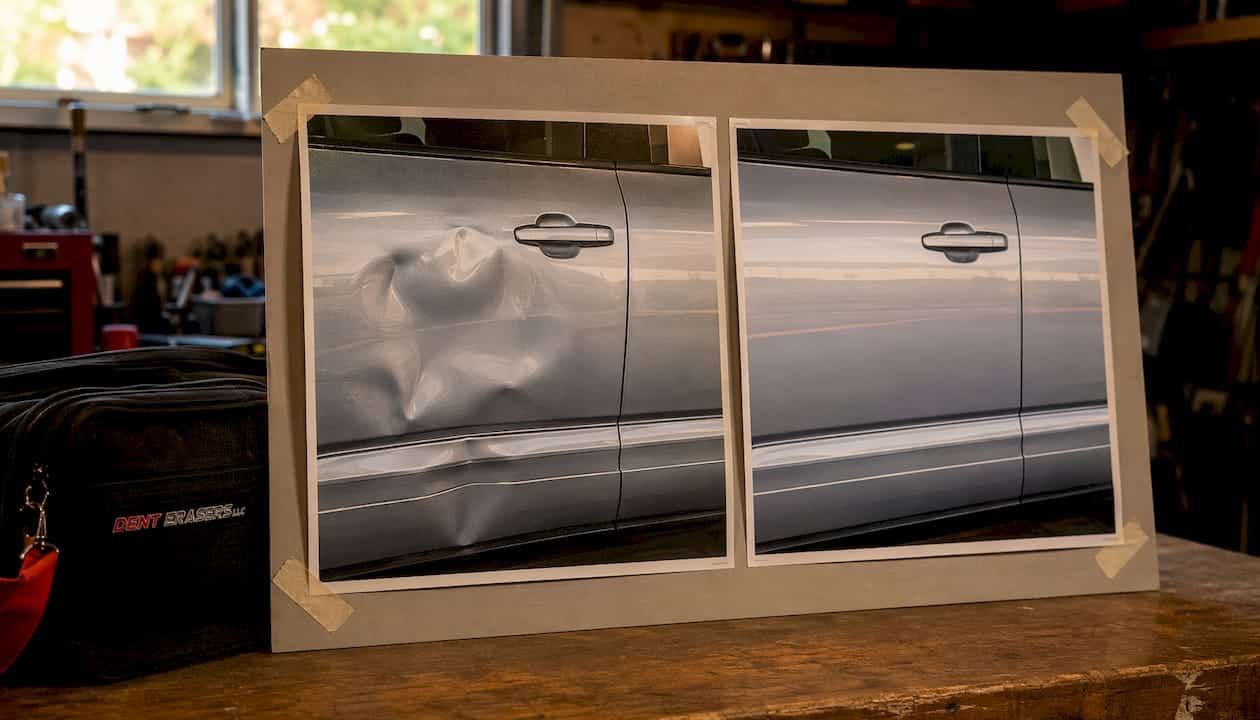
Mobile service for professionals is the fastest, least disruptive way to address cosmetic and minor collision damage while keeping your factory paint intact. No drop-offs. No rental cars. No half-day lost to a waiting room. A certified technician comes to your home, office, or fleet yard, and many mobile PDR jobs wrap up quickly. For busy vehicle owners, that is not a convenience upgrade — it is a fundamentally better way to maintain a car.
The short version: mobile repair saves time, avoids hidden costs like rentals and towing, preserves resale value by skipping paint and filler, and lets you stay productive while the work happens. Denterasersllc delivers all of this onsite across Contra Costa County and surrounding areas.
Table of Contents
- 1. Why mobile service for professionals saves real time
- 2. Mobile repair quality matches shop standards
- 3. What happens during a mobile appointment
- 4. What drives the price for mobile work
- 5. When mobile repair is not the right call
- 6. How to prepare your vehicle and what to ask
- 7. Why Denterasersllc is the right mobile repair choice
- Key Takeaways
- What I’ve seen working with mobile repair professionals
- Book your Denterasersllc mobile appointment
- Useful sources and further reading
- FAQ
1. Why mobile service for professionals saves real time
The single biggest reason busy professionals choose mobile repair is time. A conventional shop visit means scheduling a drop-off, arranging a ride or rental, waiting, and making a second trip for pickup. Mobile service collapses that entire sequence into one appointment at a location you already need to be.
- Many door dings and small creases resolve quickly with paintless dent repair, no drying or curing time required.
- Service at your home, office, dealership lot, or fleet yard means zero commute for the vehicle.
- Same-day scheduling is common for single-panel work, so a Monday morning parking lot incident can be fixed by Monday afternoon.
- Fleet managers can batch multiple vehicles in one visit, cutting administrative overhead dramatically.
- Mobile auto body repair eliminates the rental car entirely for jobs that qualify for PDR.
Pro Tip: Schedule your mobile appointment for a time when the vehicle is already parked and idle, like during a morning meeting block or a lunch hour. You lose nothing from your workday.
On-site cosmetic repair prevents escalation of damage complexity and cost over time, making immediate maintenance the smarter financial call. — DentWizard
2. Mobile repair quality matches shop standards
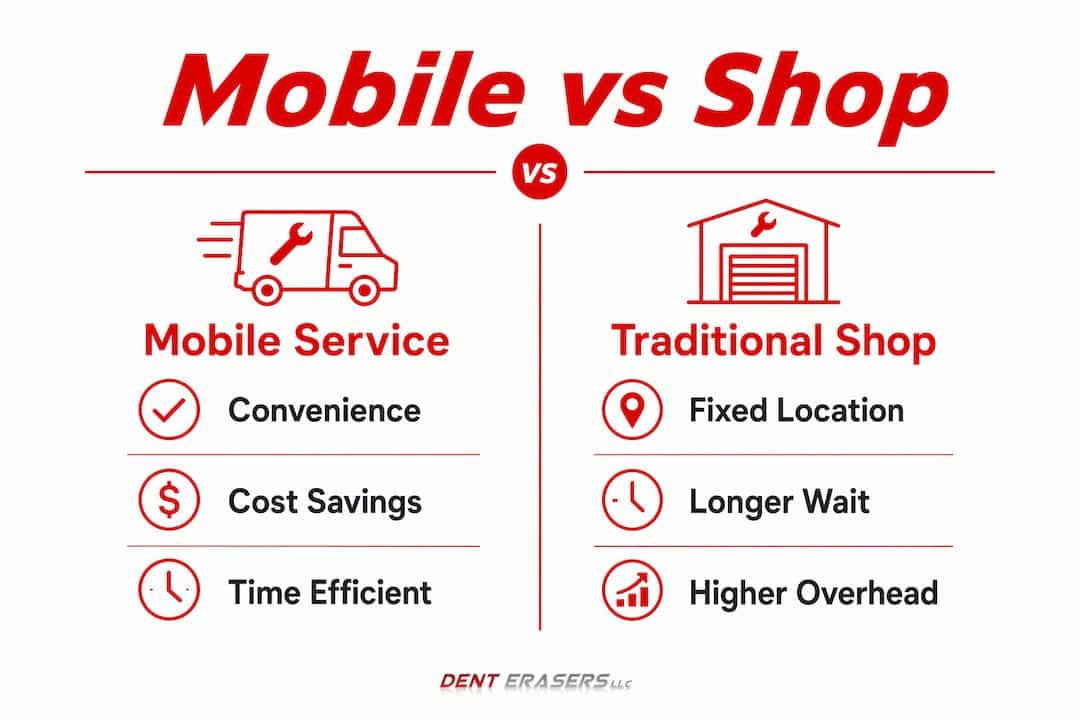
The most persistent myth about mobile repair is that it is a stop-gap. It is not. Industry practitioners confirm that mobile operators match shop-level outcomes when they use modern management tools, disciplined processes, and certified technicians.
“Mobile repairers can deliver the same diagnostic capability and repair standard as fixed-site operations when they use modern tools and disciplined processes.” — CAT Magazine
What actually produces quality is the technician’s skill, the tools they carry, and the process they follow. A mobile tech working one job at a time often gives your vehicle more focused attention than a high-volume shop juggling a dozen cars. Industry reporting notes that smaller caseloads per technician and direct client relationships produce measurably higher satisfaction scores.
Trust signals to verify before booking: written warranty or guarantee, a before/after photo gallery, certifications or documented training, and a written estimate before work begins.
Pro Tip: Ask for photo documentation at both the inspection and completion stages. A reputable mobile tech will offer this without hesitation, and it protects you if an insurance question comes up later.
3. What happens during a mobile appointment
Knowing the process removes the guesswork and makes the appointment go faster.
Booking: Send photos by text or email for an upfront quote. Photo-based estimates increase appointment accuracy and reduce the chance of surprises on arrival. You choose the location and time window.
Arrival and inspection: The technician performs a multi-point check, photographs the damage, and presents a written estimate. You approve before any work starts.
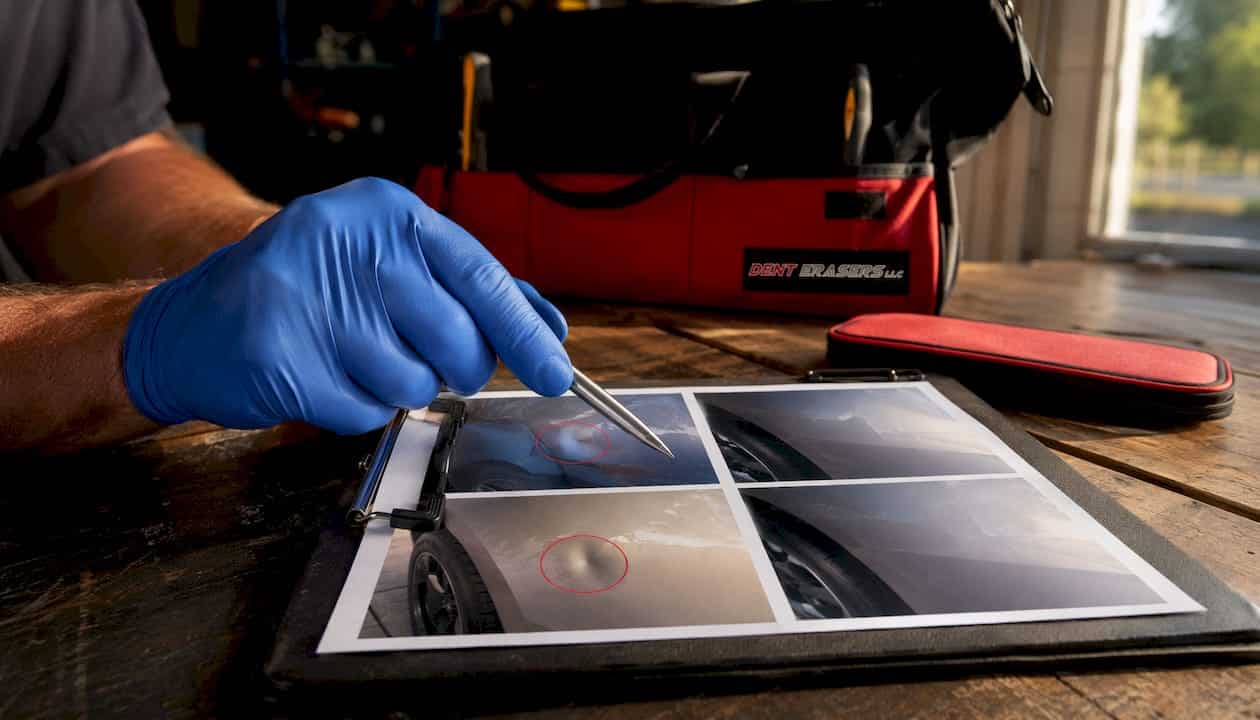
Repair: For paintless dent repair, the tech uses precision lighting, specialized rods, and sometimes glue-pull tools to massage the metal back to its original shape from the backside of the panel. Plastic bumper repair follows a separate process using heat, adhesion, and flexible filler designed for plastic substrates.
| Repair Type | Typical Duration |
|---|---|
| Door ding (single panel) | Many single-panel door dings resolve in under 1–2 hours. |
| Small crease | Small creases typically take a similar or slightly longer time, often within 2 hours. |
| Bumper scuff or crack | Bumper scuff or crack repairs generally require more time than door dings or creases and may take several hours. |
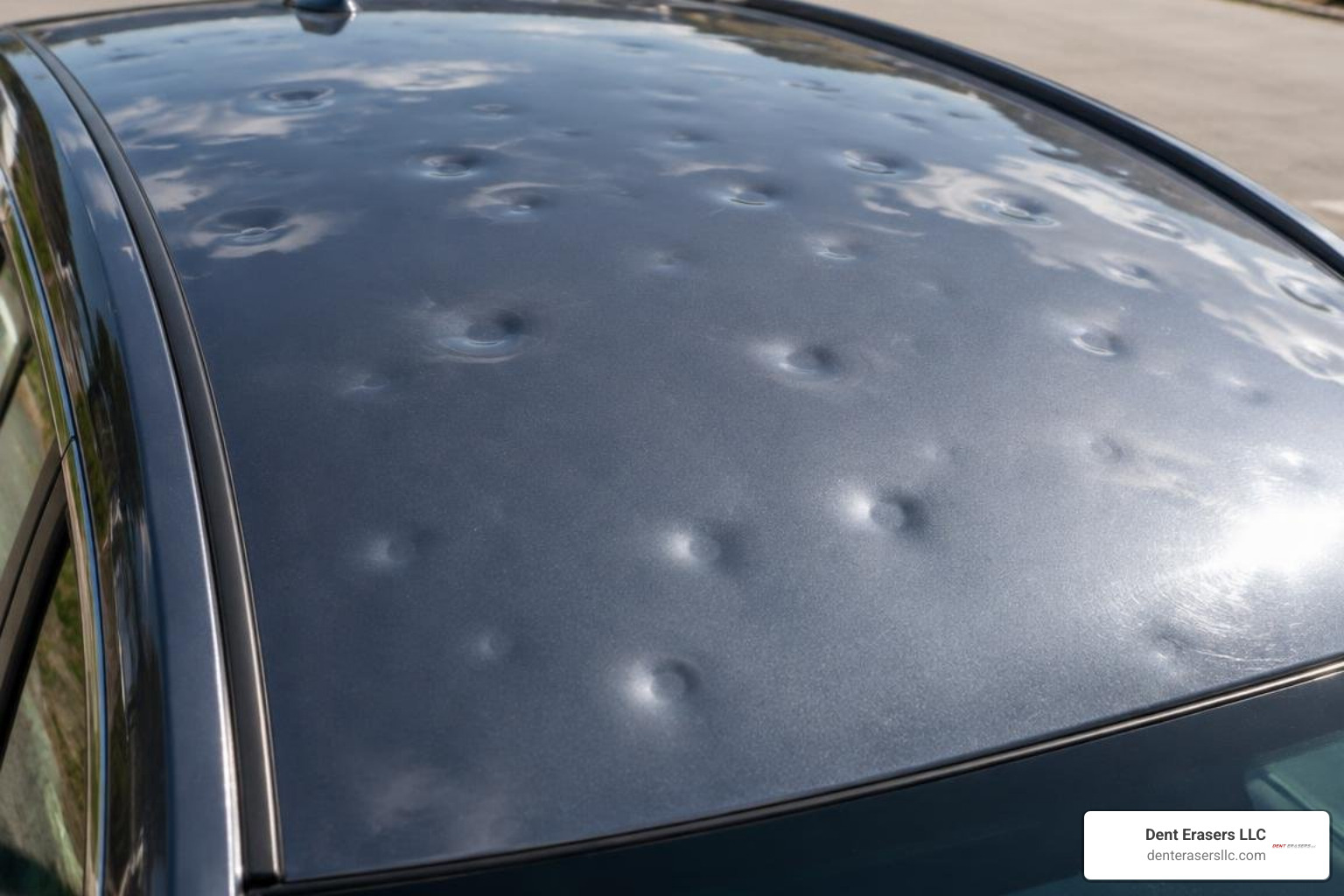
| Compact hail panel | Compact hail panel repairs tend to take the longest duration, often requiring multiple hours or a full day, depending on panel complexity. |
Finish and handoff: Final inspection, customer sign-off, warranty documentation, and a digital receipt. The vehicle is ready to drive immediately after most PDR work.
Sending photos in advance is the single fastest way to get an accurate estimate and a shorter appointment window — it lets the technician arrive prepared with the right tools for your specific damage.
4. What drives the price for mobile work
Mobile repair pricing follows a clear logic once you understand the variables.
- Damage severity: Shallow dents with no paint cracking are the best PDR candidates and carry the lowest cost. Deep creases or stretched metal require more labor time.
- Panel access: Some panels have tight backside clearance, which increases technique complexity and time.
- Material: Aluminum panels (common on trucks and luxury vehicles) require different tools than steel and can take longer.
- Paint condition: If the paint has cracked or chipped, PDR alone cannot restore the finish. A blend or repaint adds cost and may require a shop.
- Part replacement: When a panel is too damaged to repair, replacement plus color matching shifts the job to a conventional body shop workflow.
For minor dents, mobile PDR typically costs less than a traditional shop repair because it skips paint, filler, and the associated labor. It also avoids rental car fees and towing. On the insurance side, single-panel PDR often costs less than your deductible, so paying out of pocket preserves your claims history. When you do file, a reputable mobile tech coordinates directly with your adjuster and keeps documentation clean.
5. When mobile repair is not the right call
Mobile service is not the answer for every situation, and a trustworthy technician will tell you that upfront.
When paint has cracked, metal is structurally bent, or sensors and airbags are involved, a fixed-shop workflow with calibrated equipment is the appropriate choice — not a mobile visit.
Specific situations that require a body shop:
- Paint cracking or peeling at the damage site (PDR cannot restore compromised paint)
- Bent or stretched metal that has lost its “metal memory” and cannot be massaged back
- Structural damage to frame rails, pillars, or crumple zones
- Airbag, radar, or camera sensor recalibration after a collision
- Panel replacement with welding or color-matched blending across multiple panels
A good mobile tech handles the handoff professionally. Rather than forcing a mobile fix on damage that needs a shop, they document the situation, explain the limitation clearly, and can often recommend the appropriate next step. That honesty is itself a quality signal. For more on when to avoid a traditional body shop versus when you genuinely need one, Denterasersllc covers the decision framework in detail.
6. How to prepare your vehicle and what to ask
A little preparation on your end makes the appointment faster and the estimate more accurate.
- Clear a 6–8 foot perimeter around the vehicle so the technician has room to work and set up lighting.
- Remove valuables from the interior and note your VIN if insurance documentation is likely.
- Identify a covered or shaded area when possible; direct sunlight makes precision lighting harder to read.
- For fleet or dealership visits, designate a contact person, confirm key access, and set up centralized billing in advance.
Questions worth asking before you book:
- What is the estimated repair time for my specific damage?
- Does this qualify for PDR, or will paint work be needed?
- What warranty do you offer, and what does it cover?
- Can you coordinate with my insurance adjuster if I decide to file?
- Will I receive before/after photos and a written receipt?
Pro Tip: Send clear photos in good lighting before the appointment. A photo taken from a low angle in shade shows dent depth far better than a straight-on shot in bright sun, and it lets the technician arrive with the right tools already loaded.
7. Why Denterasersllc is the right mobile repair choice
Denterasersllc offers the full range of mobile dent and collision services that busy professionals actually need: paintless dent repair, plastic bumper repair, small and large dent repair, and onsite collision work for standard, luxury, vintage, and motorcycle vehicles across Contra Costa County and surrounding areas.
Mobile programs that combine routing logic, trained technicians, and documented processes turn mobile repair from a convenience into a reliable, scalable service — the standard Denterasersllc is built around. — BizzyCar
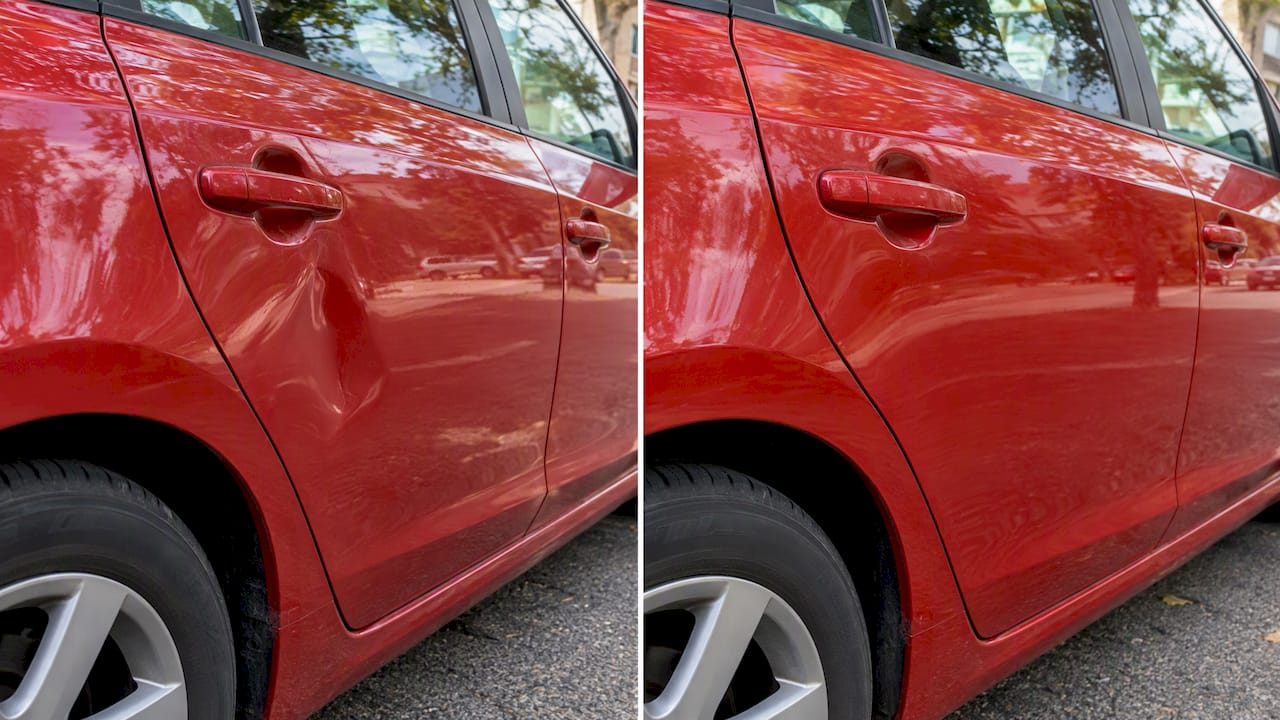
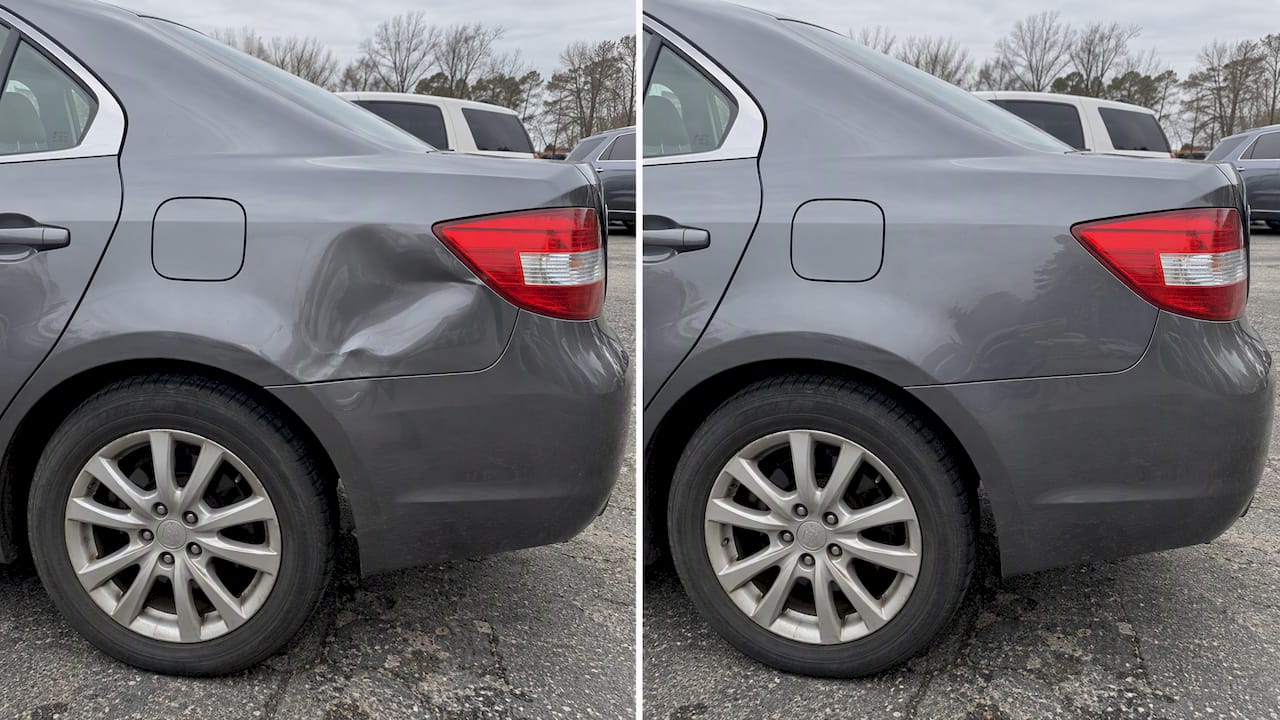
Every Denterasersllc visit includes photo documentation at inspection and completion, a written estimate before work begins, and warranty coverage on completed repairs. The before/after gallery, including work like the fender restoration on a new truck, gives you a concrete look at what factory-finish preservation actually means in practice. Addressing damage immediately rather than letting it sit also prevents the kind of escalation, rust creep, paint lifting, deeper cracking, that turns a $200 PDR job into a $1,200 shop repair.
Key Takeaways
Mobile service for professionals is the most time-efficient, cost-effective way to handle cosmetic and minor collision damage while preserving your vehicle’s factory finish.
| Point | Details |
|---|---|
| Time savings are real | Many mobile PDR jobs complete quickly with no drop-off or rental required. |
| Quality matches shop standards | Certified mobile technicians using modern tools and documented processes deliver shop-level outcomes. |
| Know the limits | Paint cracking, structural damage, and sensor recalibration require a fixed-shop workflow, not a mobile visit. |
| Pricing follows damage severity | Shallow dents without paint damage are the strongest PDR candidates and typically cost less than a shop repair. |
| Denterasersllc delivers onsite | Mobile PDR, bumper repair, and collision services with warranty, photo documentation, and factory-finish preservation. |
What I’ve seen working with mobile repair professionals
Mobile repair gets underestimated because people associate “mobile” with “makeshift.” That framing is outdated. The technicians doing this work full-time carry the same precision lighting rigs, the same glue-pull systems, and the same PDR rods you’d find in a well-equipped shop. What they do not carry is the overhead, the waiting room, or the three-day turnaround.
What strikes me most is the escalation problem that mobile repair quietly solves. A door ding left untreated for six months is not the same repair it was on day one. Moisture works under the paint edge, the metal fatigues slightly, and what was a clean PDR candidate becomes a blend job. Treating cosmetic damage as immediate maintenance, not a “someday” errand, is the mindset shift that saves money over a vehicle’s lifetime.
For professionals who track their time carefully, the math is straightforward. An hour of mobile repair at your office costs you nothing in lost productivity. A half-day at a body shop costs you the appointment, the commute, the rental, and the mental overhead of coordinating all of it. That gap is where mobile service earns its place.
Book your Denterasersllc mobile appointment
Skip the shop logistics entirely. Denterasersllc comes to your location in Contra Costa County and surrounding areas with everything needed to handle your dent, bumper damage, or minor collision work onsite.
Getting started takes three steps: send photos of the damage, pick your preferred location and time window, and confirm the appointment. Denterasersllc handles the rest, including written estimates, photo documentation, and warranty paperwork. Whether you need plastic bumper repair or a full PDR session on hail-damaged panels, the process is transparent from first contact to final sign-off. Check the vehicle brand service page to confirm coverage for your specific make, then reach out to schedule.
Useful sources and further reading
Mobile service programs backed by routing logic, technician training, and digital tools consistently outperform ad-hoc mobile offerings on both quality and customer retention. — BizzyCar
- Mobile PDR benefits for busy drivers — EZ Tech PDR
- On-site cosmetic repair: less downtime, more revenue — DentWizard
- Mobile repairers blazing new trails — CAT Magazine
- Guide to scheduling auto repairs — CarJourney Blog
- Auto maintenance tracker — CarJourney Blog
- Mobile dent removal articles — Denterasersllc
- Why mobile collision services beat the shop — Denterasersllc
FAQ
How long does a typical mobile PDR appointment take?
Many single-panel door dings typically resolve in under 1–2 hours with paintless dent repair, while bumper scuff or crack repairs and compact hail panels take longer, often requiring several hours.
Is mobile dent repair the same quality as a body shop?
Yes, when the technician uses certified methods, modern tools, and documented processes. Industry practitioners confirm mobile operators match shop-level outcomes under those conditions.
When should I choose a body shop over mobile repair?
Choose a body shop when paint has cracked, metal is structurally bent, or the repair requires sensor recalibration, welding, or panel replacement with color blending.
Can I use insurance for mobile dent repair?
Yes. Many mobile techs coordinate directly with adjusters. For minor single-panel damage, the repair often costs less than your deductible, so paying out of pocket may preserve your claims history.
Does Denterasersllc offer a warranty on mobile repairs?
Denterasersllc provides warranty coverage on completed repairs and delivers written documentation and before/after photos at every appointment.