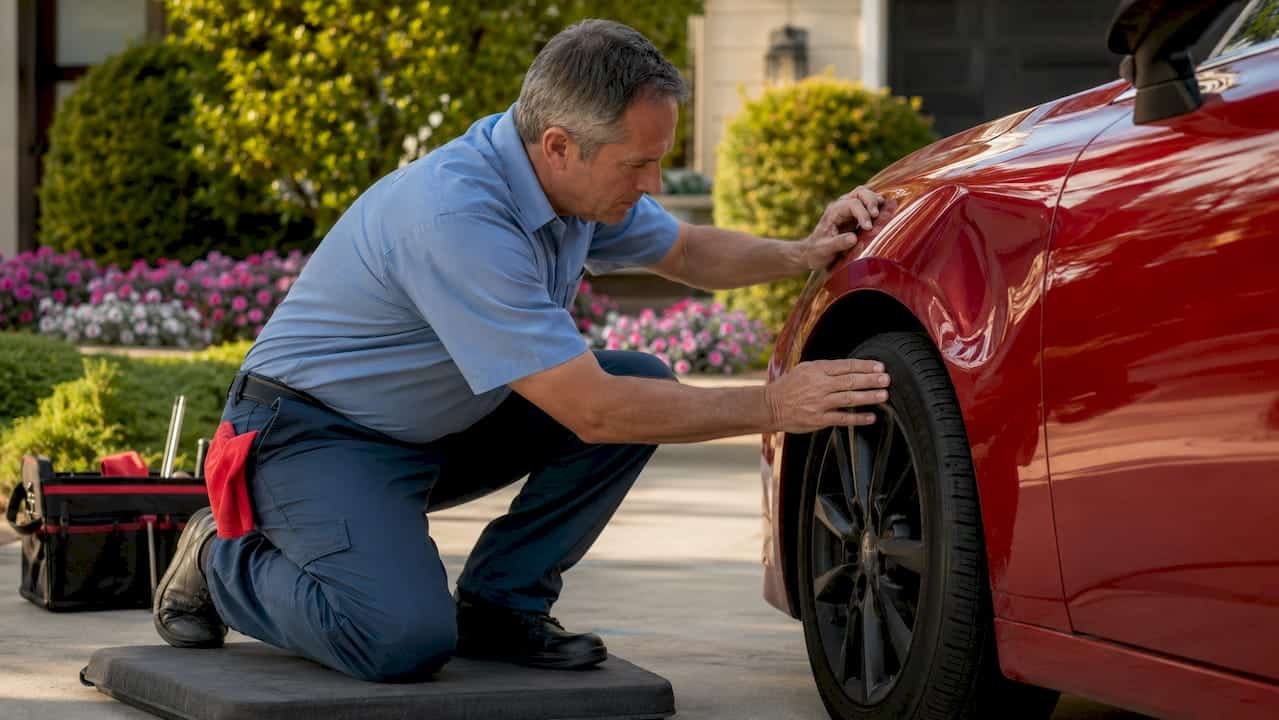
Auto body repair terms are the specialized vocabulary used to describe vehicle damage, repair procedures, parts, and finishing processes in the collision and cosmetic repair industry. If you have ever stared at a repair estimate and felt lost, you are not alone. Knowing what are auto body repair terms and what they mean puts you in control of the conversation with your shop. Terms like OEM parts, clear coat, sectioning, and dent removal show up on nearly every estimate. Understanding them helps you ask better questions, spot errors, and protect your wallet.
What are the most common auto body repair terms?
Auto body repair focuses on restoring a vehicle’s exterior appearance after non-structural damage, covering cosmetic issues like dents, scratches, and paint damage. These are the core terms you will see most often.
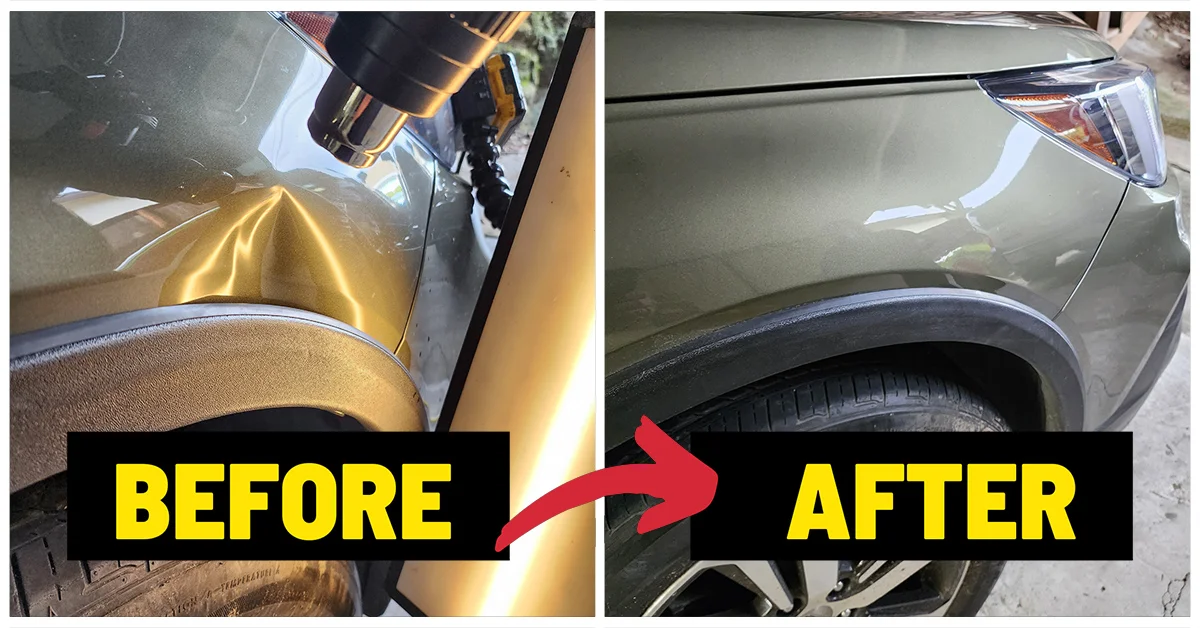
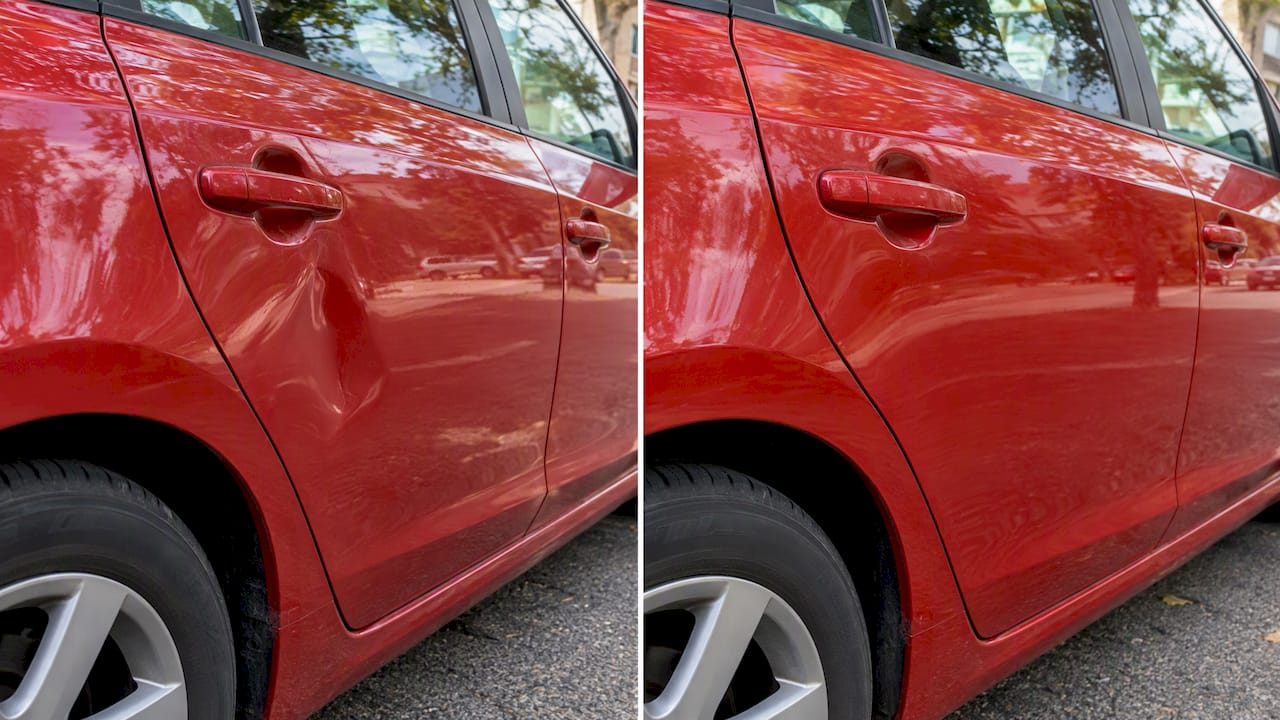
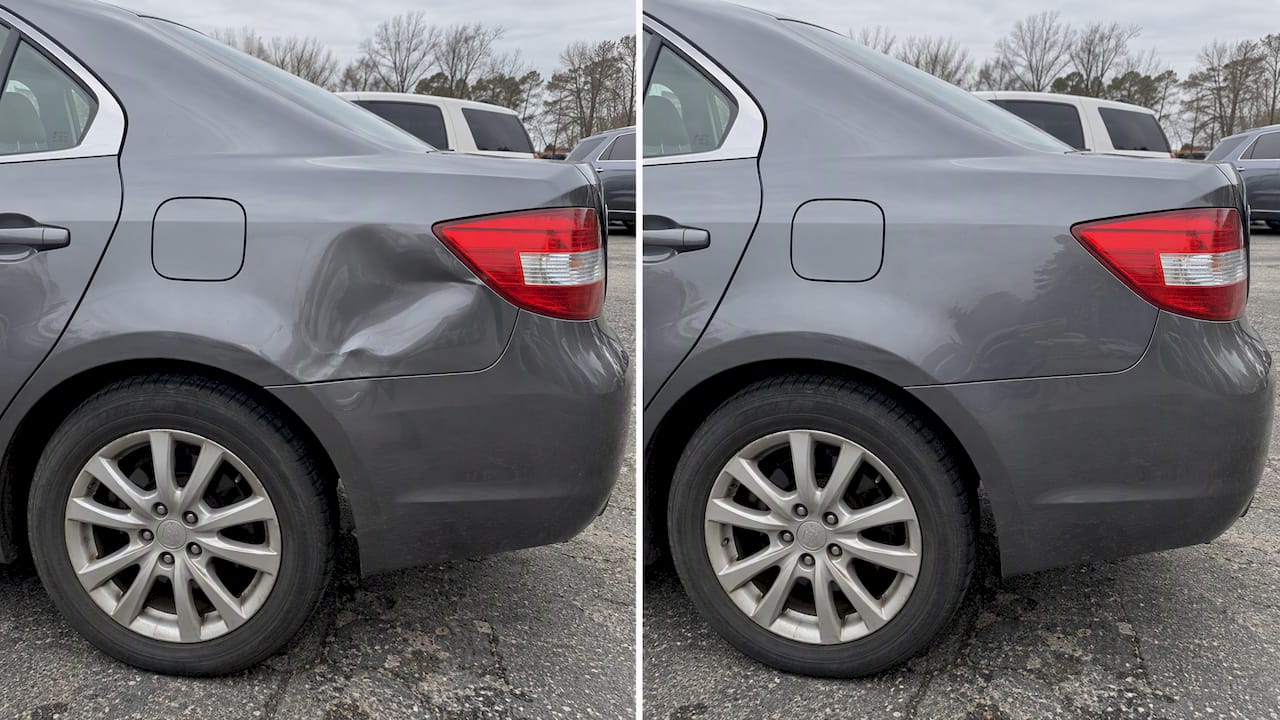
- Dent removal: The process of pushing or massaging a dented panel back to its original shape. Paintless dent repair (PDR) does this without disturbing the factory paint.
- Clear coat: The protective top paint layer that guards against scratches and UV damage. When a shop says your clear coat is failing, they mean this outer shield is peeling or oxidizing.
- Blending: Feathering new paint into the surrounding panels so the repair is invisible. Without blending, a fresh paint patch looks like a mismatched patch on a quilt.
- Sectioning: A technique where only the damaged portion of a panel is replaced rather than the entire panel. This maintains structural integrity and reduces cost.
- OEM parts: Original Equipment Manufacturer parts made by the vehicle’s original maker, such as Ford or Toyota. These match factory specifications exactly.
- Aftermarket parts: Parts made by third-party manufacturers. They are typically less expensive than OEM but may vary in fit and finish.
- Disassembly/teardown: The careful removal of panels and trim to expose hidden damage. This is not destructive. It is a diagnostic step.
Pro Tip: Ask your shop to walk you through the estimate line by line. If you see “blend adjacent panel” on the invoice, that means they are painting a neighboring panel to match, which is standard practice and a sign of quality work.
How do auto body repair terms differ from collision repair terms?
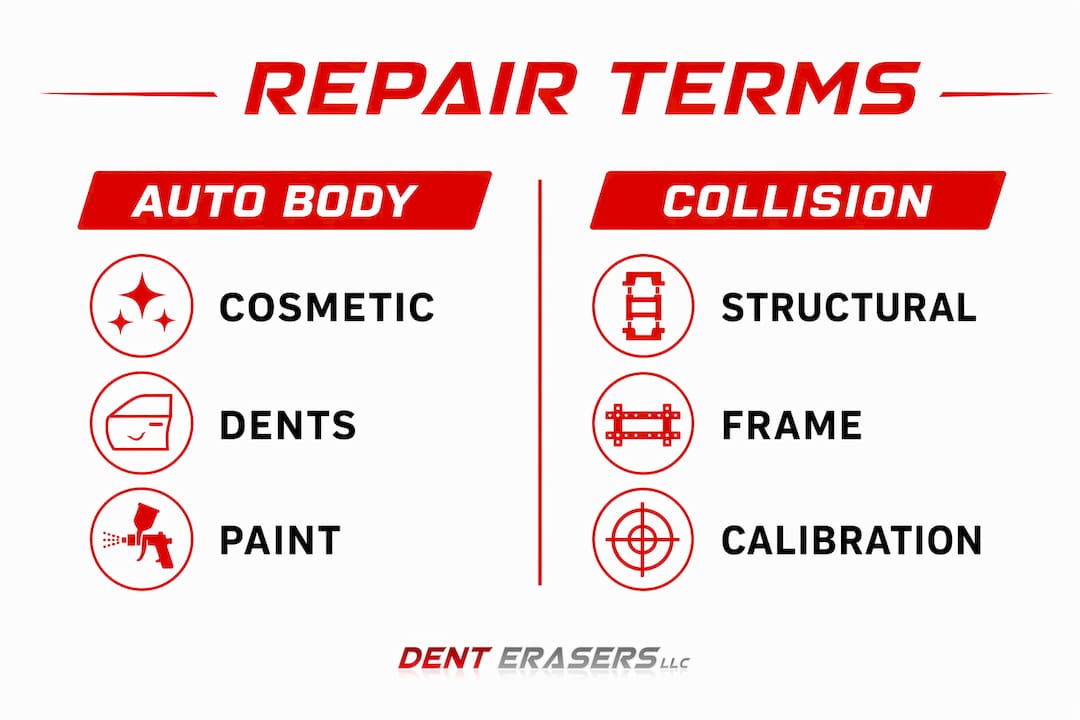
The distinction between auto body and collision repair is one of the most misunderstood points in auto repair jargon. Auto body repair addresses cosmetic damage, while collision repair addresses structural and safety-related damage. Knowing which category your vehicle falls into changes everything about the repair process and cost.
Cosmetic damage includes shallow scratches, minor dents, and scuffed bumpers. This type of damage usually does not threaten your safety. Structural damage, by contrast, requires precise calibration of crash management systems, including airbag sensors and crumple zones. A car that looks fine on the outside can still have compromised safety systems after a hard impact.
| Term | Auto body repair | Collision repair |
|---|---|---|
| Scope | Cosmetic, exterior appearance | Structural, safety systems |
| Common terms | Dent removal, blending, clear coat | Frame work, sectioning, mechanical calibration |
| Safety impact | Low (cosmetic only) | High (crash protection systems) |
| Typical cause | Parking lot dings, minor scrapes | Accidents, significant impacts |
| Parts involved | Body panels, paint, trim | Frame rails, unibody, sensors |
Collision repair introduces terms like frame work (straightening bent structural components), mechanical calibration (resetting sensors after structural repairs), and crash management systems (the network of sensors and crumple zones that protect occupants). These terms rarely appear on a cosmetic repair estimate but are standard language after a serious accident.
Pro Tip: If your vehicle was in a collision, ask specifically whether the shop performs mechanical calibration after structural repairs. Skipping this step can leave safety systems like lane assist and automatic braking operating incorrectly.
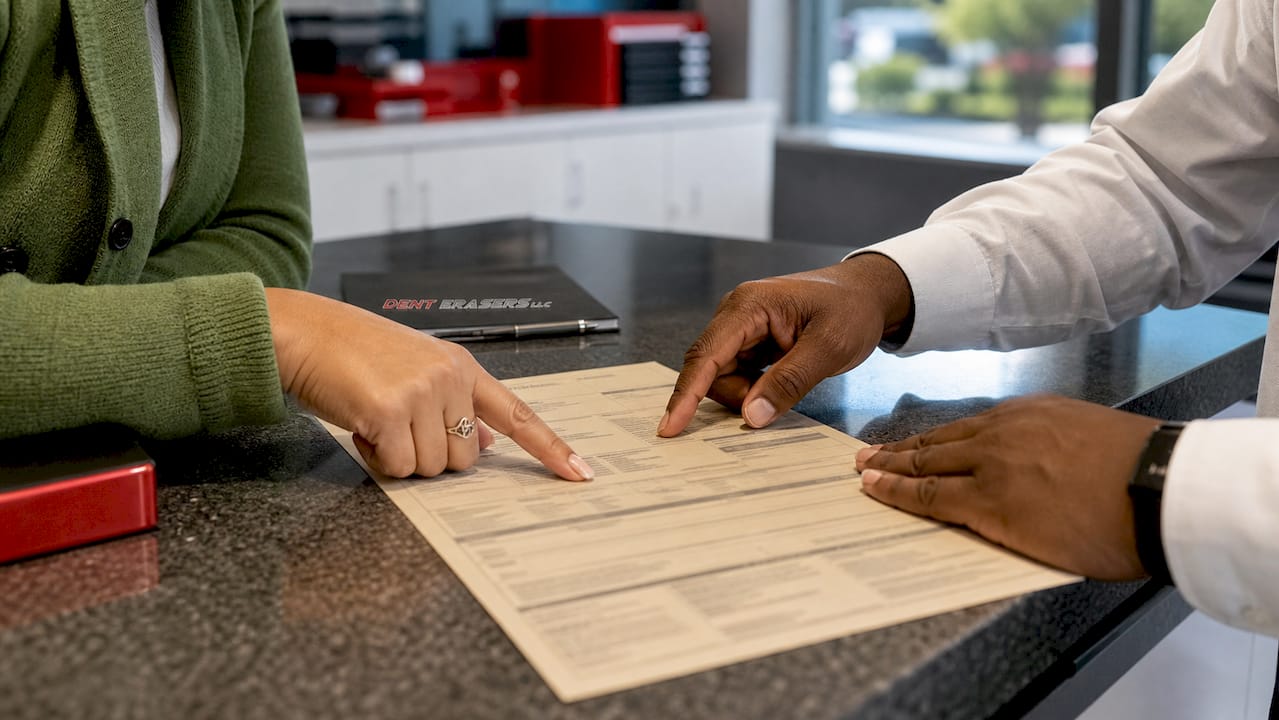
What insurance and parts terms should car owners know?
Insurance vocabulary is its own layer of auto body repair definitions, and it trips up even experienced car owners. Here are the terms you need to understand before signing anything.
- Total loss (totaled): A vehicle is declared a total loss when its pre-accident value is less than the cost to repair it. This does not always mean the car is destroyed. It means the math does not favor fixing it.
- Betterment: A charge applied when new parts improve a vehicle beyond its pre-accident condition. If your worn tires are replaced with new ones after an accident, the insurer may charge you for the improvement.
- OEM vs. aftermarket vs. recycled parts: Insurers often mandate aftermarket or recycled parts to control costs. You have the right to request OEM parts, but you may need to pay the price difference out of pocket.
- Supplement: An additional estimate submitted after teardown reveals damage not visible in the original inspection. Supplements are normal and expected on most repairs.
- DRP (Direct Repair Program): A network of shops approved by an insurance company. Using a DRP shop speeds up the claims process, but you are never required to use one.
Car owners have the right to request specific parts, including OEM, but must understand their policy constraints and the cost differences involved. Staying involved in this conversation protects both your vehicle’s quality and your budget. For a deeper look at how insurance decisions affect your repair, the role of insurance in dent repair is worth reading before your next claim.
How do repair shops use these terms during the repair process?
Understanding the repair workflow helps you follow along when your shop calls with updates. Here is how common auto body shop vocabulary maps to each phase of the job.
- Teardown/disassembly: The shop removes panels and trim to expose hidden damage without harming undamaged parts. This is where supplements are often generated.
- Frame inspection: Technicians check whether the vehicle’s structural components are bent or misaligned. Frame damage found here triggers collision repair procedures.
- R&I (Remove and Install): A part is removed and reinstalled after the repair is complete. For example, a bumper cover is removed so the shop can paint the fender behind it, then put back on.
- R&R (Remove and Replace): The part is removed and discarded because it cannot be repaired. A new or recycled part goes in its place.
- Refinishing: The full paint process, including primer, base coat, and clear coat application. This is the final step before reassembly.
- Blending: Applied during refinishing to match new paint to existing panels. A skilled technician blends the color so the repair disappears into the surrounding surface.
Knowing these terms lets you ask specific questions. Instead of asking “Is it done yet?”, you can ask “Has the teardown been completed and has the supplement been submitted?” That one question signals to the shop that you understand the process, and it tends to get faster, more detailed answers.
Empowering Car Owners with Repair Knowledge
Understanding auto body repair terms gives car owners the vocabulary to communicate clearly, avoid surprises on estimates, and make confident decisions about parts and repairs.
| Point | Details |
|---|---|
| Auto body vs. collision repair | Auto body covers cosmetic fixes; collision repair addresses structural and safety systems. |
| Core repair terms | Dent removal, clear coat, blending, sectioning, and teardown appear on most estimates. |
| Insurance vocabulary | Know total loss, betterment, OEM, and supplement before approving any repair authorization. |
| Labor abbreviations | R&I means reinstall; R&R means replace. Both appear on labor line items in estimates. |
| Your rights on parts | You can request OEM parts even when insurers prefer aftermarket, but expect a cost difference. |
Why I think most car owners are at a disadvantage before they even walk in
I have been doing this work for years, and the pattern I see most often is this: a car owner walks into a shop, gets handed a two-page estimate full of industry terms, nods along, and signs without understanding half of what they agreed to. That is not the shop taking advantage of anyone. It is just a vocabulary gap that nobody bothered to close.
The terms in this article are not obscure. They are the bread and butter of every repair conversation happening in shops across Contra Costa County and beyond. When you know what sectioning means, you can ask whether it is appropriate for your repair or whether a full panel replacement is actually the better call. When you understand the difference between R&I and R&R, you can verify that the labor charges on your invoice match the actual work performed.
Clear communication also improves safety outcomes. Structural damage that gets misclassified as cosmetic because a customer did not know to push back is a real risk. Knowing the right questions to ask, using the right terms, is how you protect yourself. I always encourage the people I work with to stay curious and stay involved. The more you understand, the better your repair will be.
— Brian Blanc
See these terms in action with Denterasersllc
Reading about repair terms is one thing. Seeing them applied to real vehicles is another. Denterasersllc brings this vocabulary to life through transparent, high-quality mobile auto body work across Contra Costa County.
Whether you are dealing with a parking lot ding or a more involved panel repair, Denterasersllc explains every step in plain language before any work begins. You can see exactly what quality blending, refinishing, and panel restoration look like in the seamless fender repair gallery. If you want to understand what your repair involves before committing, reach out to Denterasersllc for a straightforward consultation. No jargon without explanation, no surprises on the estimate.
FAQ
What does “auto body repair” actually cover?
Auto body repair covers cosmetic damage to a vehicle’s exterior, including dents, scratches, and paint issues that do not affect structural safety. It is distinct from collision repair, which addresses frame and safety system damage.
What is the difference between OEM and aftermarket parts?
OEM parts are made by the vehicle’s original manufacturer and match factory specifications exactly. Aftermarket parts come from third-party suppliers and are typically less expensive but may vary in fit and quality.
What does “totaled” mean on an insurance claim?
A vehicle is declared a total loss when the cost to repair it exceeds its pre-accident market value. The insurer pays out the vehicle’s value rather than covering repair costs.
What is sectioning in auto body repair?
Sectioning replaces only the damaged portion of a panel instead of the entire panel. This approach preserves structural integrity and typically costs less than a full panel replacement.
What do R&I and R&R mean on a repair estimate?
R&I stands for Remove and Install, meaning a part is taken off and put back after the repair. R&R stands for Remove and Replace, meaning the old part is discarded and a new one is installed.