Car dent location types refer to the specific areas on a vehicle where dents occur, and that placement directly determines how difficult and costly the repair will be. A small ding on a flat door panel is a very different problem from a crease near a body line or a dent on a structural pillar. Understanding the six main types of car dents by shape and location gives you real leverage when talking to a repair professional. Paintless dent repair (PDR) is the most common method used today, but its suitability depends almost entirely on where the dent sits on your vehicle.
1. What are the main car dent location types?
Car dents fall into six recognized categories based on shape and where they appear on the vehicle. Each type carries its own repair challenges.
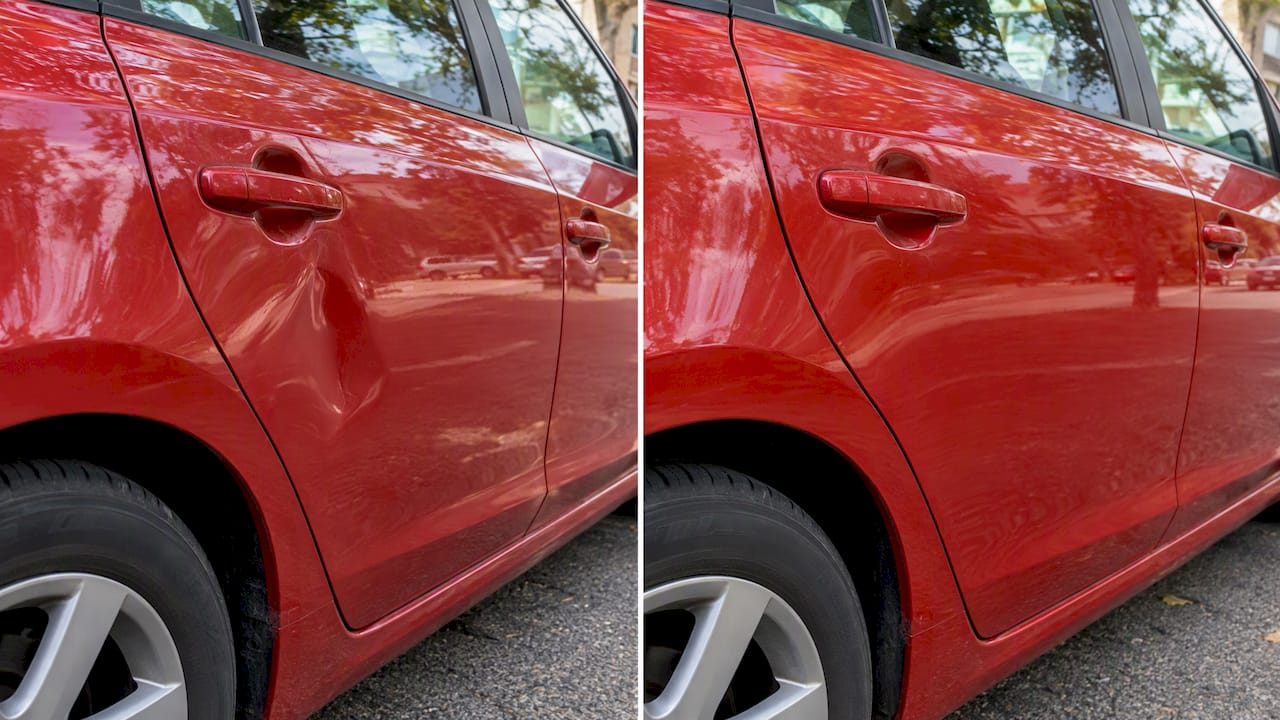
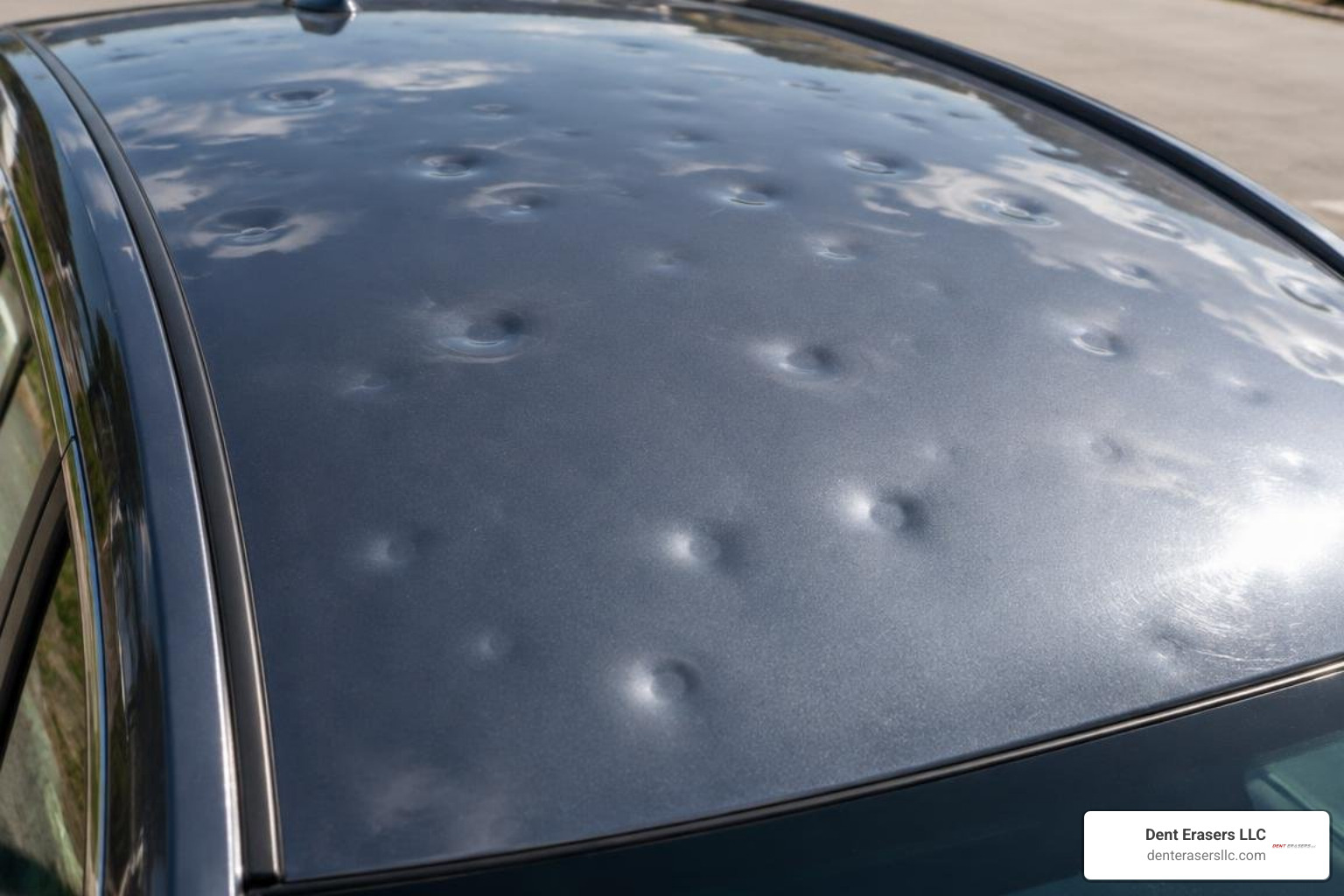
- Round dents (dings): Shallow, circular depressions most common on doors and fenders. These are the bread and butter of PDR technicians. Hail damage produces dozens of these on horizontal surfaces like roofs, hoods, and trunks, and they are ideal PDR candidates because the paint stays intact.
- Flat panel dents: Larger, shallow depressions across open panel surfaces. They lack a sharp edge, which makes them more forgiving to repair.
- Crease dents: Linear or folded damage that runs along a panel. Creased dents involve metal stretching and ridges, making them significantly harder to fix than round dents.
- Body line dents: These hit the character line pressed into your vehicle’s panels. That raised ridge is what gives a car its visual shape, and restoring it precisely is one of the harder tasks in dent repair.
- Deep impact dents: Caused by strong force, these often crack or chip the paint. Once paint is broken, PDR is no longer an option.
- Edge and corner dents: Found on panel edges, door corners, and bumper ends. Tool access is severely limited here, and the metal is already under stress from the panel’s geometry.
2. How does dent location affect repair cost and approach?
The location of a dent on your vehicle’s panels is the single biggest cost driver in any repair estimate. Dent size matters less than location when it comes to what you will pay. Panel construction and access are what push prices up or down.
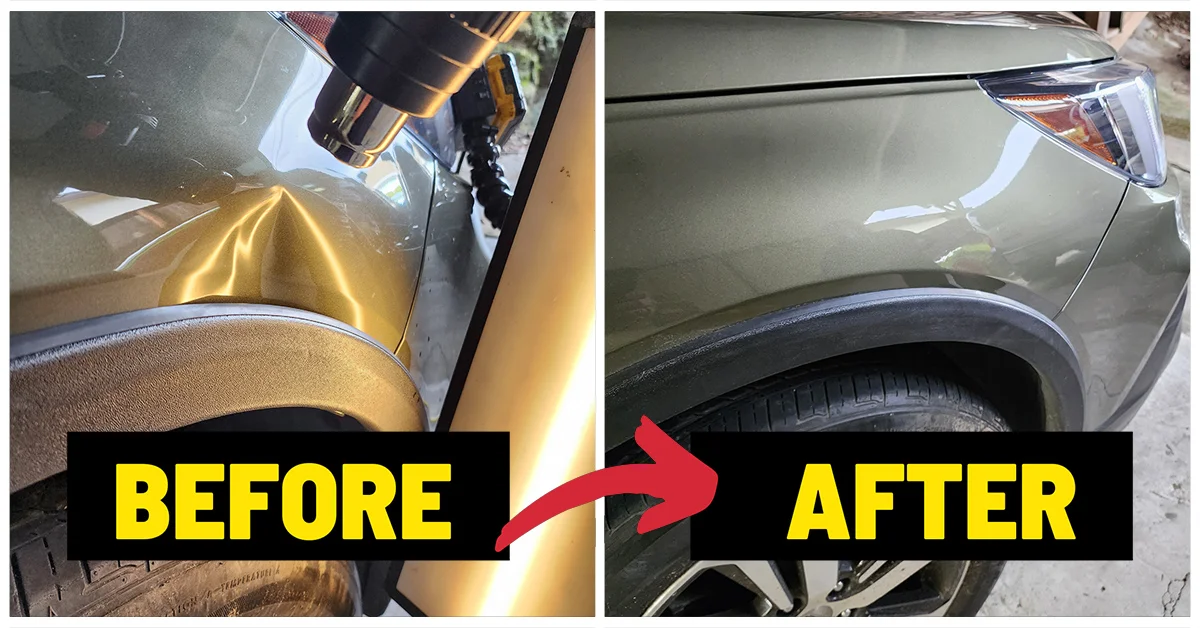
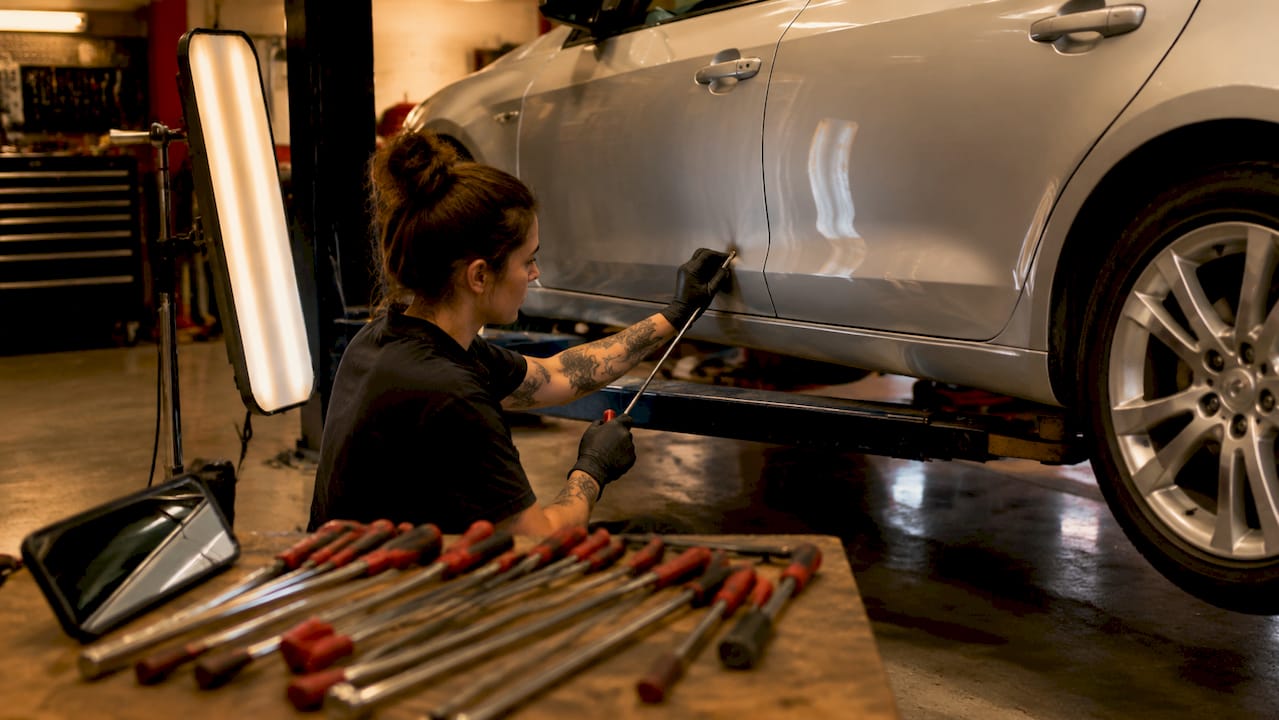
Flat door panels are the easiest and least expensive to repair. A technician can reach behind the panel with PDR tools and massage the metal back without removing much hardware. A typical small door ding runs $195–$295 for PDR, while medium dents land in the $250–$450 range.
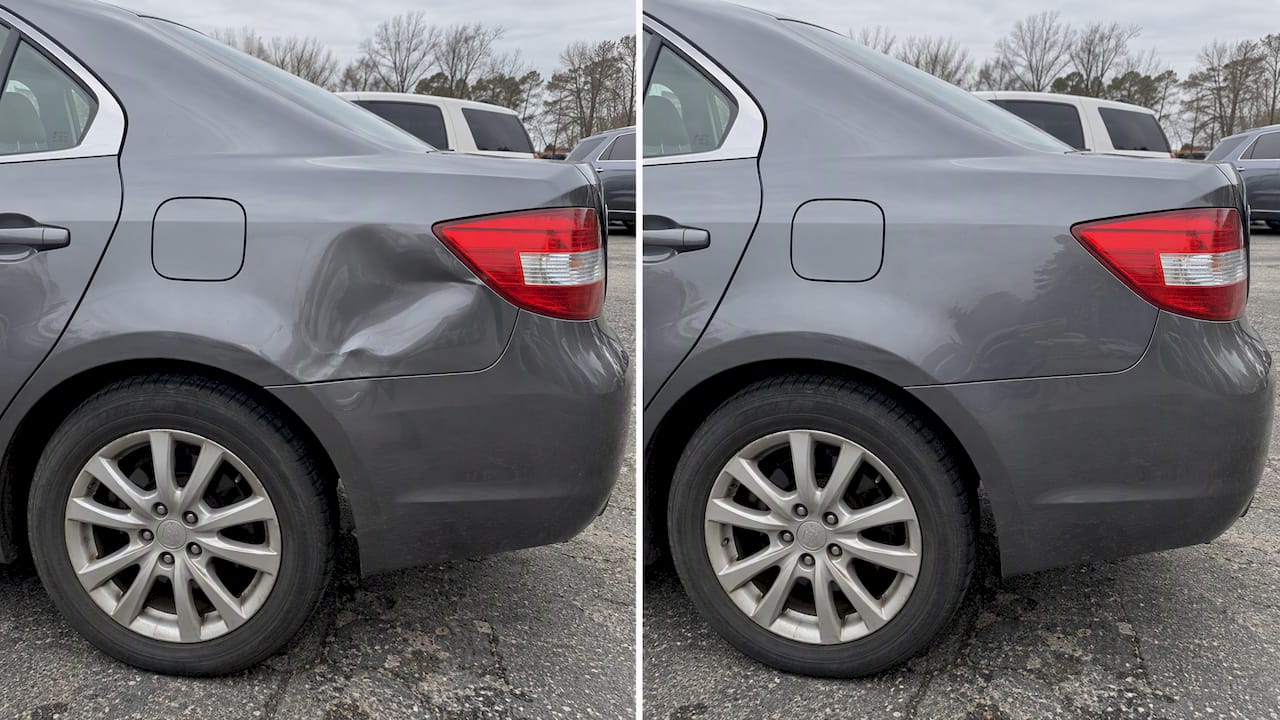
Quarter panels and rear areas are more complex. Accessing a dent on a rear quarter panel often requires disassembling tail lights or interior trims. That hidden labor adds cost well beyond what the dent size alone would suggest.
Pillars (A, B, and C pillars) are double-layered structural components. There is no rear access for PDR tools, which means pillar dents typically require bodywork or panel replacement. These repairs are among the most expensive on any vehicle.
Pro Tip: Before accepting any repair estimate, ask the technician specifically whether the dent location requires disassembly. That one question can reveal hidden labor costs that double the price of a seemingly simple fix.
3. How do repair techniques vary by dent location?
The repair method a technician chooses is dictated by where the dent sits and whether the paint is still intact. PDR works by using specialized rods and picks to gently push metal back from behind, preserving the factory finish. It is the preferred method when the dent is accessible and the paint is undamaged.
Here is how technique selection breaks down by location:
- Open panel dents with intact paint: PDR is the clear choice. Fast, affordable, and leaves the original finish untouched. This is why PDR beats traditional methods for accessible dents.
- Body line and crease dents: These require higher skill and more time. The metal near a body line is work-hardened from the manufacturing press, meaning it resists being moved. Technicians risk creating a “crowning” effect, where the repaired area sits higher than the surrounding panel.
- Edge and corner dents with paint damage: Traditional bodywork is required. This means filler, sanding, priming, and repainting. Costs climb significantly.
- Pillar dents: PDR is not viable. Expect full body shop work, which may include panel replacement.
- Hail damage on roofs and hoods: Multiple shallow round dents across flat surfaces are well-suited for PDR, often repaired in a single session.
“Repair method viability depends on paint condition and access. Paint-intact, accessible dents are ideal candidates for PDR. Edge and crease dents with damaged paint usually need traditional methods.” — rightfender.com
DIY suction-cup tools are ineffective on crease or edge dents. They often worsen the damage and push the repair into full traditional bodywork territory.
4. What are the hardest car dent locations to repair?
Some dent locations consistently challenge even experienced technicians. Knowing which areas are most difficult helps you set realistic expectations before you get a quote.
| Dent Location | Why It’s Difficult | Typical Repair Method |
|---|---|---|
| Structural pillars (A, B, C) | Double-layered metal, no rear access | Bodywork or panel replacement |
| Body lines and character lines | Work-hardened metal, crowning risk | Skilled PDR or traditional repair |
| Rear quarter panels | Requires trim and light disassembly | PDR with added labor cost |
| Edge and corner dents | Restricted tool access, paint damage risk | Traditional bodywork |
| Deep impact dents | Paint cracked or chipped | Body filler, paint, and blend |
Dents near body lines require more precision and longer repair time because the metal is stiffer and the margin for error is smaller. A technician who overcorrects on a body line dent creates a high spot that is often more visible than the original dent. Rear quarter panel repairs carry hidden costs because accessing the dent location means removing tail lights and interior panels before any actual dent work begins.
Key takeaways
Dent location is the primary factor in repair complexity and cost, outweighing dent size in almost every scenario.
| Point | Details |
|---|---|
| Location drives cost | Panel access and construction matter more than dent size when pricing repairs. |
| PDR has clear limits | Paintless dent repair works best on accessible, paint-intact dents on open panels. |
| Pillars are the hardest | Double-layered structural pillars cannot be reached with PDR tools and need bodywork. |
| Hidden labor adds up | Rear quarter panel and bumper repairs often require disassembly that inflates the final bill. |
| DIY worsens complex dents | Suction tools and DIY kits damage crease and edge dents, raising repair costs further. |
What I’ve learned after years of reading dent locations
After working on vehicles across Contra Costa County, the pattern I see most often is car owners surprised that a small dent costs more than they expected. The reason is almost always location, not size. A dent the size of a quarter on a door panel is a quick fix. That same dent sitting on a body line or near a pillar is a completely different job.
The other misconception I run into regularly is that bigger means harder. That is not always true. A large, shallow dent on a flat hood can be one of the easiest repairs we do. A tiny crease near a door seam can take twice as long because the metal has no memory left to work with. It has been stretched and folded, and getting it back without crowning takes real patience and skill.
My honest advice: never attempt to pop a crease or edge dent yourself. DIY dent removal attempts on complex locations routinely stretch the metal or chip the paint, turning a $300 PDR job into a $900 body shop visit. Get a professional assessment first. A good technician will tell you exactly what the location means for your repair options and give you a straight answer on whether PDR is viable. That conversation costs you nothing and saves you from making an expensive mistake.
— Brian Blanc
Dent repair services built around your vehicle’s specific needs
Every dent location presents a different challenge, and Denterasersllc has the experience to handle them all across Contra Costa County and surrounding areas. Whether you are dealing with a round door ding or a stubborn crease near a body line, the right approach starts with an honest assessment.

Denterasersllc specializes in mobile paintless dent repair for accessible panel dents, preserving your factory finish without the cost of a traditional body shop. For more complex locations, the team brings the same precision to conventional repairs. Check out this fender repair example to see the quality of work firsthand, or browse repairs by vehicle brand to find solutions matched to your specific car. Contact Denterasersllc for a free mobile assessment and get a clear answer on what your dent location actually requires.
FAQ
What are the six types of car dents?
Car dents are classified as round dings, flat panel dents, crease dents, body line dents, deep impact dents, and edge or corner dents. Each type differs in shape, location, and repair difficulty.
Does dent location affect repair cost more than dent size?
Yes. Dent location impacts cost more than size because panel access, metal thickness, and structural complexity drive labor time and method selection.
Can paintless dent repair fix dents on pillars?
No. Structural pillars are double-layered with no rear access, making PDR impossible. These dents require traditional bodywork or panel replacement.
Which car panels are easiest to repair?
Flat door panels and open hood or trunk surfaces are the easiest. They offer good tool access and are common candidates for affordable PDR repairs.
Why do DIY dent tools fail on crease dents?
Suction-cup tools cannot address the metal stretching and ridges in crease dents. Using them on complex dent locations typically worsens the damage and increases the final repair cost.