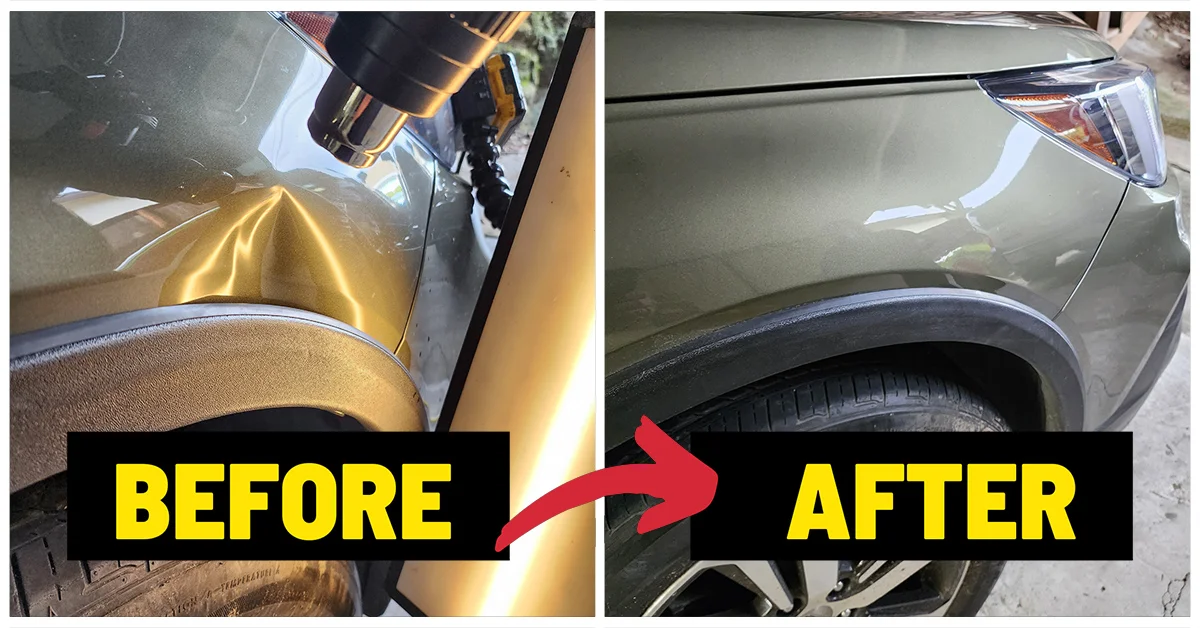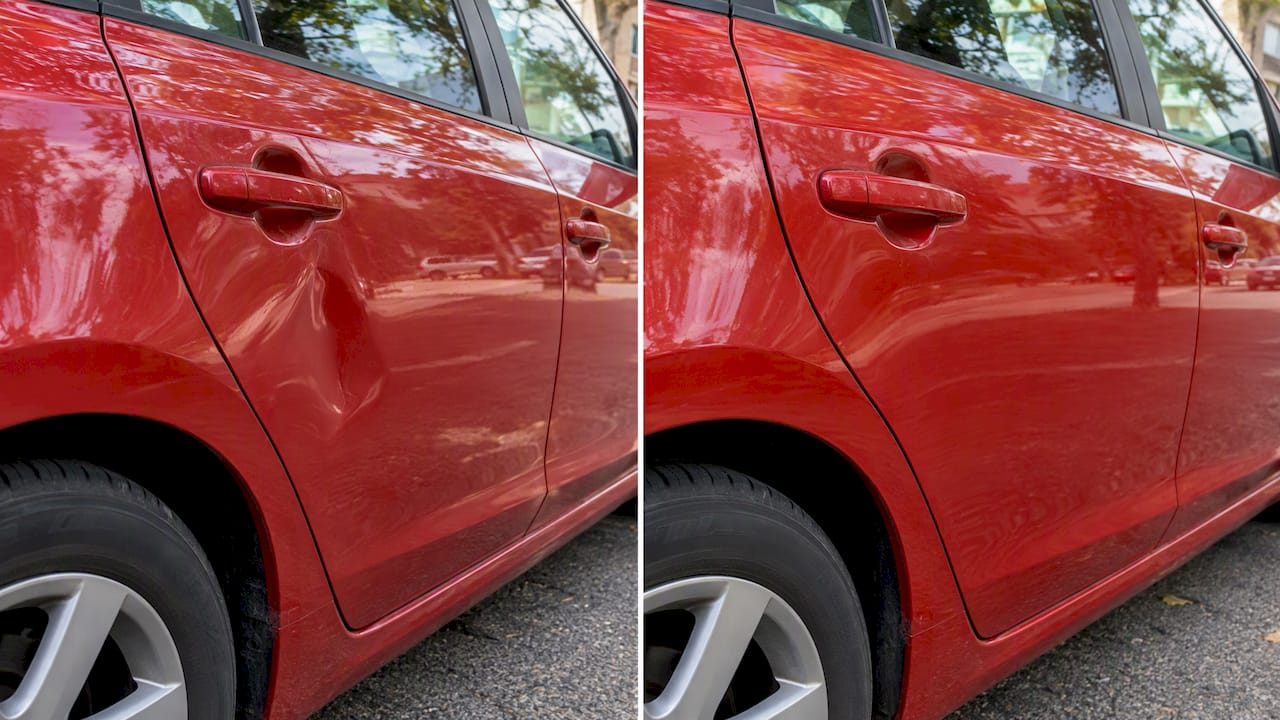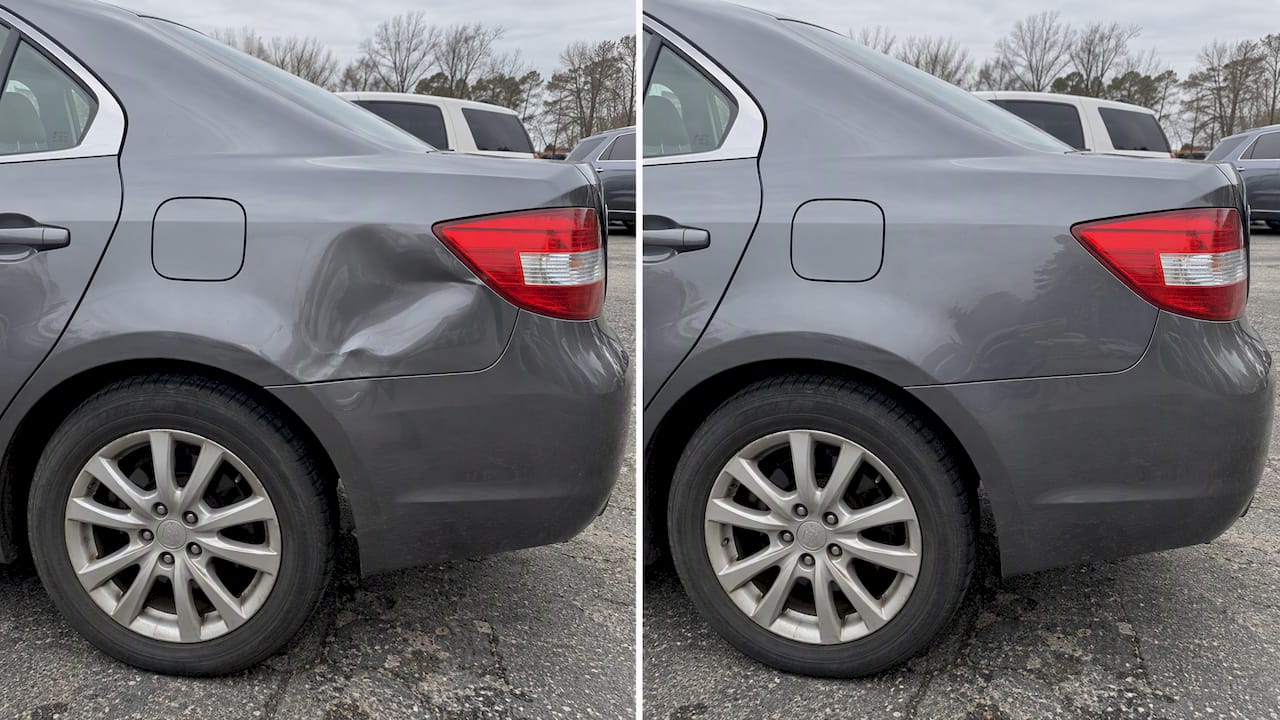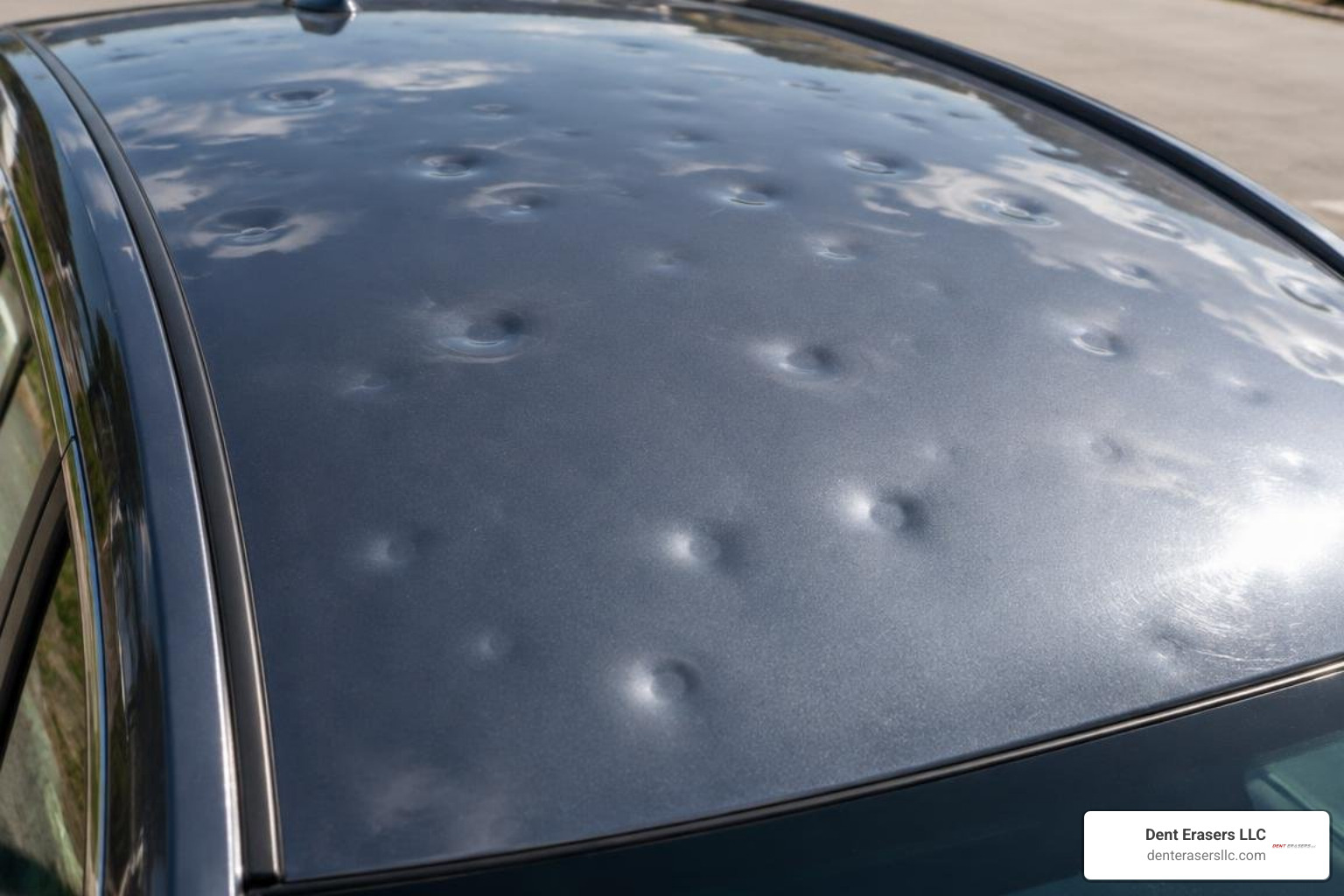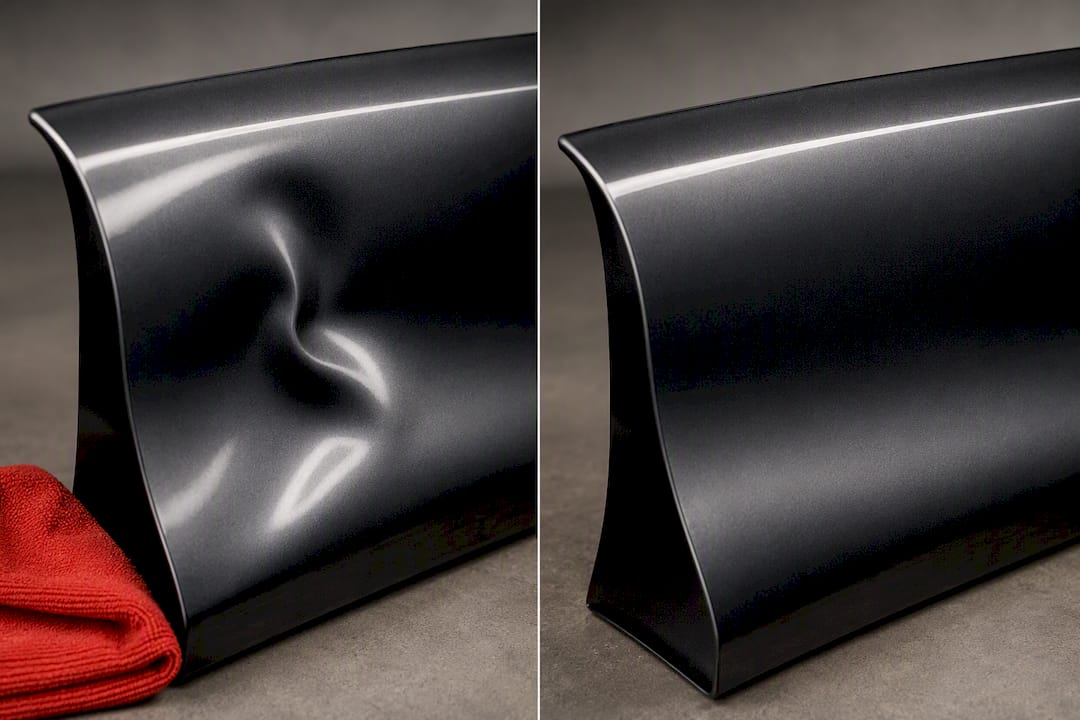
When a dent shows up, the fix depends on what kind of damage you’re looking at, not what insurance category it falls under. Collision damage comes from an impact, a fender bender, a parking lot mishap, and it often creases metal or breaks paint. Comprehensive, or non-collision, damage comes from hail, a runaway shopping cart, a curious deer, and it frequently leaves the paint untouched. If your paint is intact, paintless dent repair is usually the right call. If the paint is cracked or the metal is badly creased, you’re looking at conventional body work. An experienced dent repair service can assess either scenario onsite.
TL;DR:
- Paintless dent repair is generally suitable only for small, shallow dents with intact paint and no sharp creases or edge involvement.
- Conventional collision repair becomes necessary when paint is cracked, chipped, or missing, or when deep creases and structural damage are present.
- ADAS sensors near the repair area can significantly increase costs, often by $900 to $3,000, and require calibration to ensure safety.
- A mobile repair provider should offer a clear assessment of damage, including the impact on corrosion protection, and provide a written estimate before starting work.
- For large or complex damage, conventional repairs or shop-based collision work are the most reliable options, often requiring multiple stages and parts replacement.
Table of Contents
- Comparing paintless dent repair and conventional body repair
- When PDR is likely to work on your vehicle
- Signs your damage needs conventional collision repair
- How ADAS sensors change the repair plan
- Choosing a mobile provider you can trust
- How Denterasers LLC handles comprehensive and collision repairs
- What I’d tell a friend with a fresh dent
- Ready for an onsite estimate
- Sources
- FAQ
Comparing paintless dent repair and conventional body repair
Paintless dent repair, or PDR, is exactly what it sounds like: technicians use push rods, glue-pulling tabs, and specialized lighting to massage the metal back into shape from behind the panel or through careful surface pulling. No sanding, no filler, no repainting. It works because the original paint and clear coat flex without cracking, which means the factory finish survives untouched. State Farm’s description of PDR confirms this: refinishing usually isn’t necessary when paint stays intact, and many insurers work with PDR providers who perform the repair right at the vehicle’s location.
Conventional collision repair enters the picture once paint is broken, metal is sharply creased, or panels need replacing. That means body filler, sanding, primer, paint matching, and clear coat, plus curing time between each stage.
- PDR preserves the factory finish and typically costs less because it skips paint and materials.
- Conventional repair handles damage that PDR physically cannot fix: broken paint, deep creases, or structural misalignment.
- PDR is faster in most cases, often same day, while conventional repair can take several days once parts and paint matching are involved.
The trade-off is straightforward: PDR is limited by what the metal and paint can tolerate, while conventional repair costs more and takes longer but handles damage PDR can’t touch.
When PDR is likely to work on your vehicle
Before you book anything, a few checks will tell you whether PDR is realistic for your dent.
- Paint condition first. Run your fingers over the dent and look closely under good light. Chipped, cracked, or flaking paint rules out PDR, since the technique relies on flexible, undamaged finish.
- Size and shape matter. Shallow, rounded dents without sharp creases respond well. A crease, a sharp fold, or a dent near a panel edge is harder or sometimes impossible to pull back cleanly.
- Access determines technique. Some dents are reachable with push rods from behind the panel. Others, especially on doors with limited interior access, need glue-pulling from the front instead.
- Corrosion protection needs attention afterward. Pulling metal from behind a panel can disturb the factory coating that prevents rust, so a careful shop restores that coating or checks for micro-cracking under magnification once the pull is done, a practice backed by I-CAR’s corrosion protection guidance.
Pro Tip: Snap a photo of the dent in direct sunlight before calling anyone. A clear image of paint condition helps a technician give you a more accurate phone estimate.
Signs your damage needs conventional collision repair
Some damage simply crosses the line past what PDR can fix, and it helps to know the signals before you schedule anything.
- Paint is cracked, chipped, or missing around the dent, which means the flex that PDR depends on already failed.
- The crease is sharp or the metal has folded, not just dished, since work-hardened metal in a tight fold resists gentle reshaping.
- Trim, plastic bumper covers, or structural components are involved, which usually require replacement rather than reshaping.
Once you’re in conventional repair territory, the process runs longer: panel removal and inspection, filler application, sanding between coats, color matching, painting, clear coat, and curing time before reassembly. State Farm’s guidance on hail damage notes that this kind of multi-stage work is standard once paint or metal integrity is compromised. Costs and timelines vary widely depending on the panel, the paint color’s complexity, and whether parts need ordering, so treat any number you hear as a starting point rather than a final figure.
How ADAS sensors change the repair plan
Modern vehicles pack sensors into bumpers, windshields, mirrors, and grille areas as part of advanced driver assistance systems, and a dent or crack near one of those zones can turn a simple repair into a bigger job.
AAA has found that ADAS-related repairs can add roughly $900 to $3,000 to a repair bill, depending on which sensor is affected and what calibration it requires. That’s a meaningful swing, and it’s why any damage near a sensor housing deserves a direct question before work begins.
- Ask whether calibration is included in the estimate or billed separately.
- Ask whether the shop performs calibration onsite or subcontracts it, and how long that adds to the timeline.
- Request written documentation confirming the calibration was completed and verified.
Skipping this step isn’t just a cost risk, it’s a safety risk, since a miscalibrated sensor can misjudge distance or fail to trigger a warning when it should.
Choosing a mobile provider you can trust
A good provider walks you through their reasoning instead of just quoting a price. Use this checklist when you call for an estimate.
- Ask about PDR experience specifically, not just general body work, since the skill sets differ.
- Ask if they handle ADAS-equipped vehicles and whether they coordinate calibration when a repair is near a sensor.
- Ask how they handle corrosion protection after a pull, since this step is easy to skip and hard to notice until rust shows up later.
- Ask about warranty coverage on the repair and get it in writing.
- Ask how they document hidden damage if they find more once they start, a practice State Farm’s shop-selection guidance also recommends.
Red flags include vague answers about hidden damage, no written warranty, or reluctance to explain their process. A legitimate mobile visit typically starts with a walkaround inspection, a verbal explanation of the plan, and a written estimate before any tool touches your panel.
Pro Tip: Keep your car’s clear coat healthy between repairs. A resource like Diamond Brite’s guide to swirl mark removal is a useful reference for maintaining the finish PDR works so hard to preserve.
How Denterasers LLC handles comprehensive and collision repairs
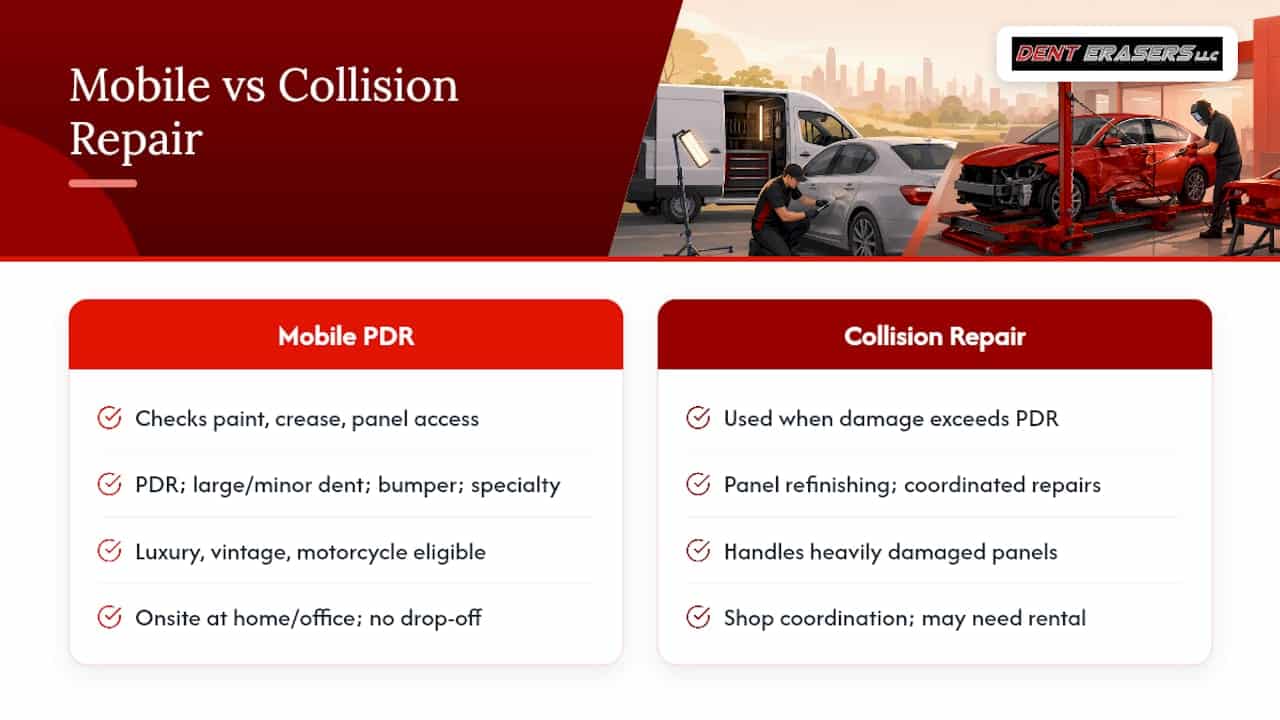
Denterasers LLC assesses each dent onsite before recommending a method, checking paint condition, crease depth, and panel access the same way outlined above. Services span paintless dent repair, large dent repair, minor dent repair, plastic bumper repair, and specialty work for luxury, vintage, and motorcycle vehicles. Because the work happens at your home or office, there’s no drop-off and no rental car gap while you wait.
For damage that crosses into conventional territory, the auto body and collision repair service covers panel refinishing and coordination for more involved jobs. Every estimate outlines the plan before work starts.
What I’d tell a friend with a fresh dent
If the paint is intact, try mobile PDR first. It’s faster, it costs less, and it keeps your factory finish exactly as it left the factory. Once paint is broken, metal is creased, or a sensor is involved, don’t fight it. Escalate to conventional repair or calibration, and always get a written plan before anyone starts working. Documentation protects you either way.
— Brian Blanc
Ready for an onsite estimate
If your dent fits the paint-intact profile we covered above, mobile PDR is usually your fastest and most affordable path back to a clean panel. If it doesn’t, collision-capable repair and bumper work can be scheduled at your location instead of a shop’s.
- Mobile dent repair comes to your driveway or office parking lot, no appointment at a shop required.
- Large and minor dent repair cover everything from a shopping cart ding to a hail-battered hood.
- Plastic bumper repair and auto body collision service handle the damage that PDR can’t touch.
Every visit starts with an onsite assessment and a written plan, so you know the method and the cost before anything begins. You can book an estimate through Denterasers LLC or go straight to the mobile dent repair page to check availability near you.
Sources
- Car Hail Damage: How To Spot It and What To Do – State Farm®
- AAA: New Vehicle Technologies Double Repair Bills for Minor Collisions | AAA Oregon/Idaho
- CAR Collision Repair News: Corrosion Protection Guidelines (I-CAR)
FAQ
What counts as comprehensive damage versus collision damage?
Collision damage comes from an impact, like a fender bender or a backed-into pole, and often creases metal or breaks paint. Comprehensive, or non-collision, damage comes from hail, animal strikes, or vandalism, and frequently leaves paint intact, which is why it’s often a better candidate for paintless dent repair.
Can paintless dent repair fix a large dent?
It depends on the crease and paint condition rather than the size alone. Denterasers LLC’s large dent repair service handles bigger dents when the paint stays intact and the metal hasn’t sharply folded.
Why does ADAS calibration add cost to a repair?
Sensors for cameras, radar, and parking assist sit inside bumpers, mirrors, and windshields, and a dent or crack nearby can knock them out of alignment. AAA found these calibrations can add roughly $900 to $3,000 depending on the sensor, so it’s worth asking upfront whether your provider includes it.
Does PDR damage the corrosion protection on my panel?
It can, since push rods and glue-pull tools work against the backside coating that prevents rust. I-CAR’s guidance recommends technicians check for micro-cracking and restore that coating after the pull when needed.
How do I know if my dent needs a mobile visit or a shop?
If the paint is intact and the dent is a clean dish rather than a sharp crease, a mobile visit for paintless dent repair usually works. Denterasers LLC can assess this onsite and refer more involved damage to auto body and collision repair when needed.