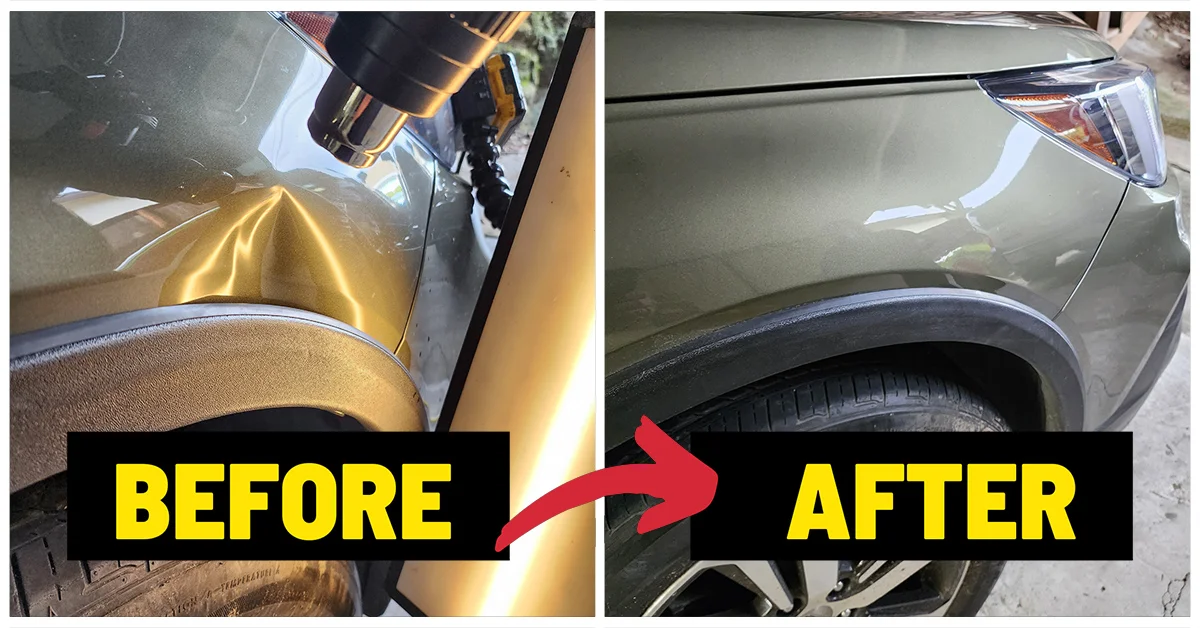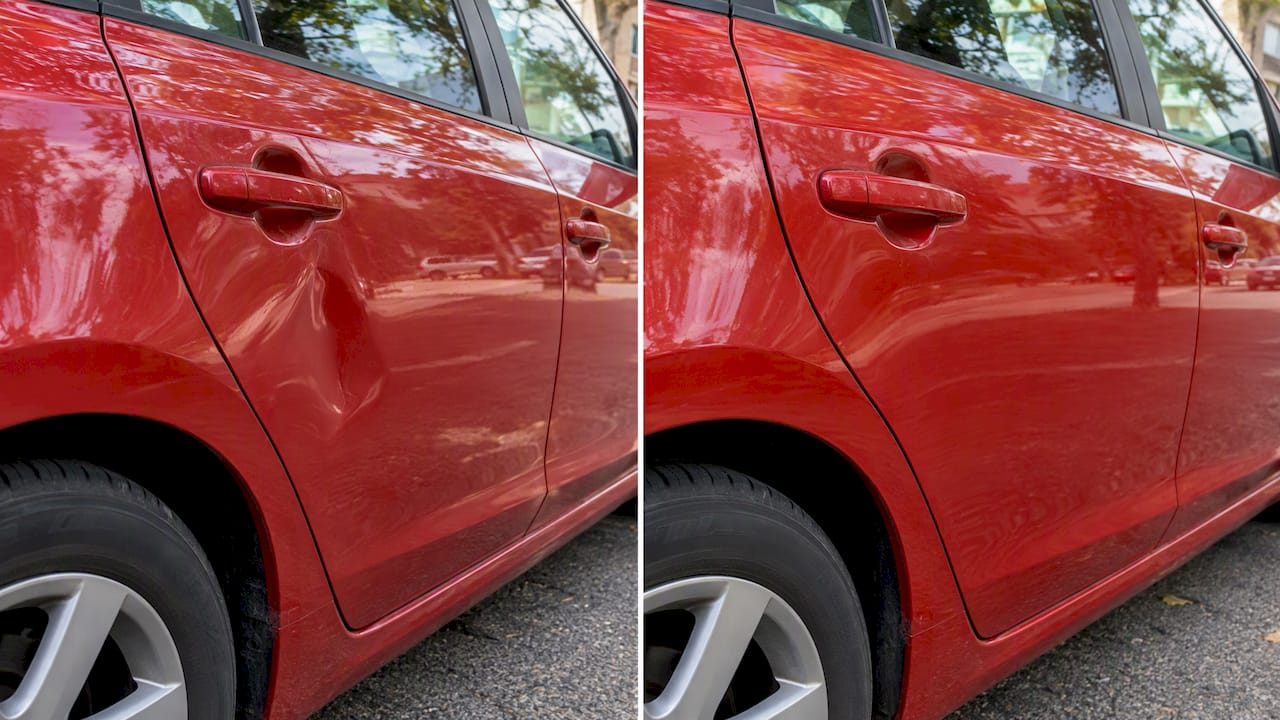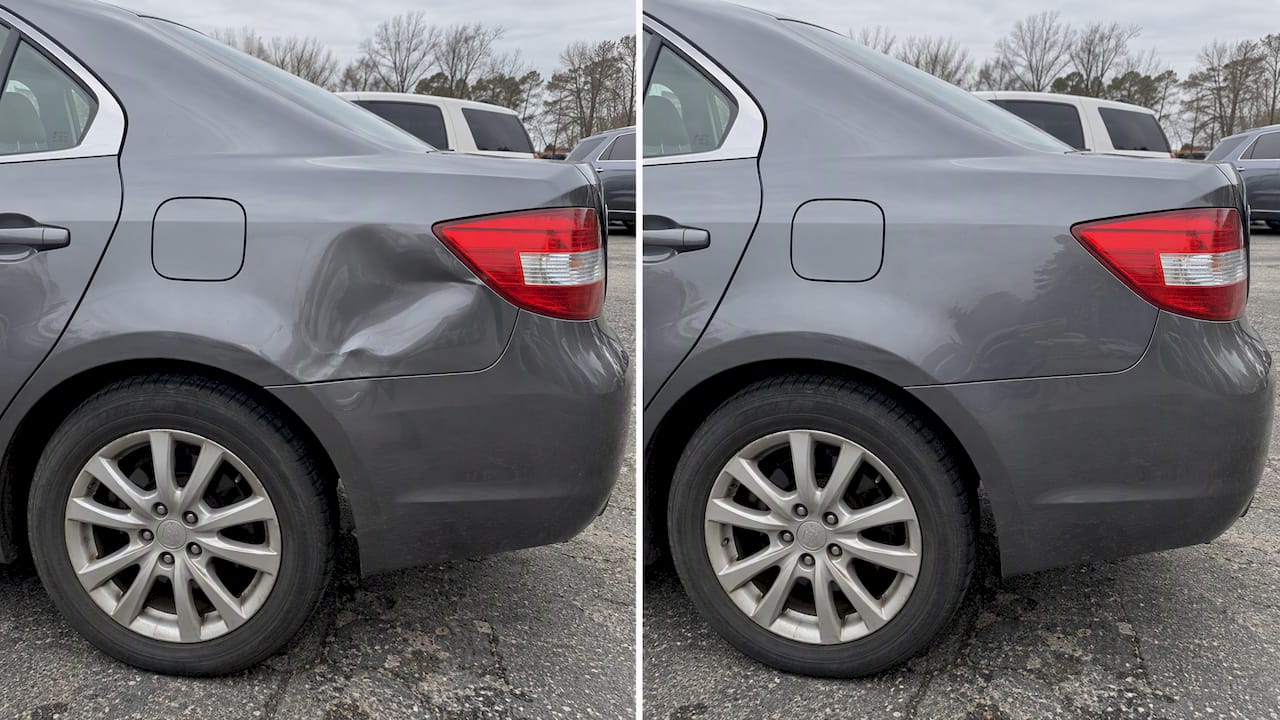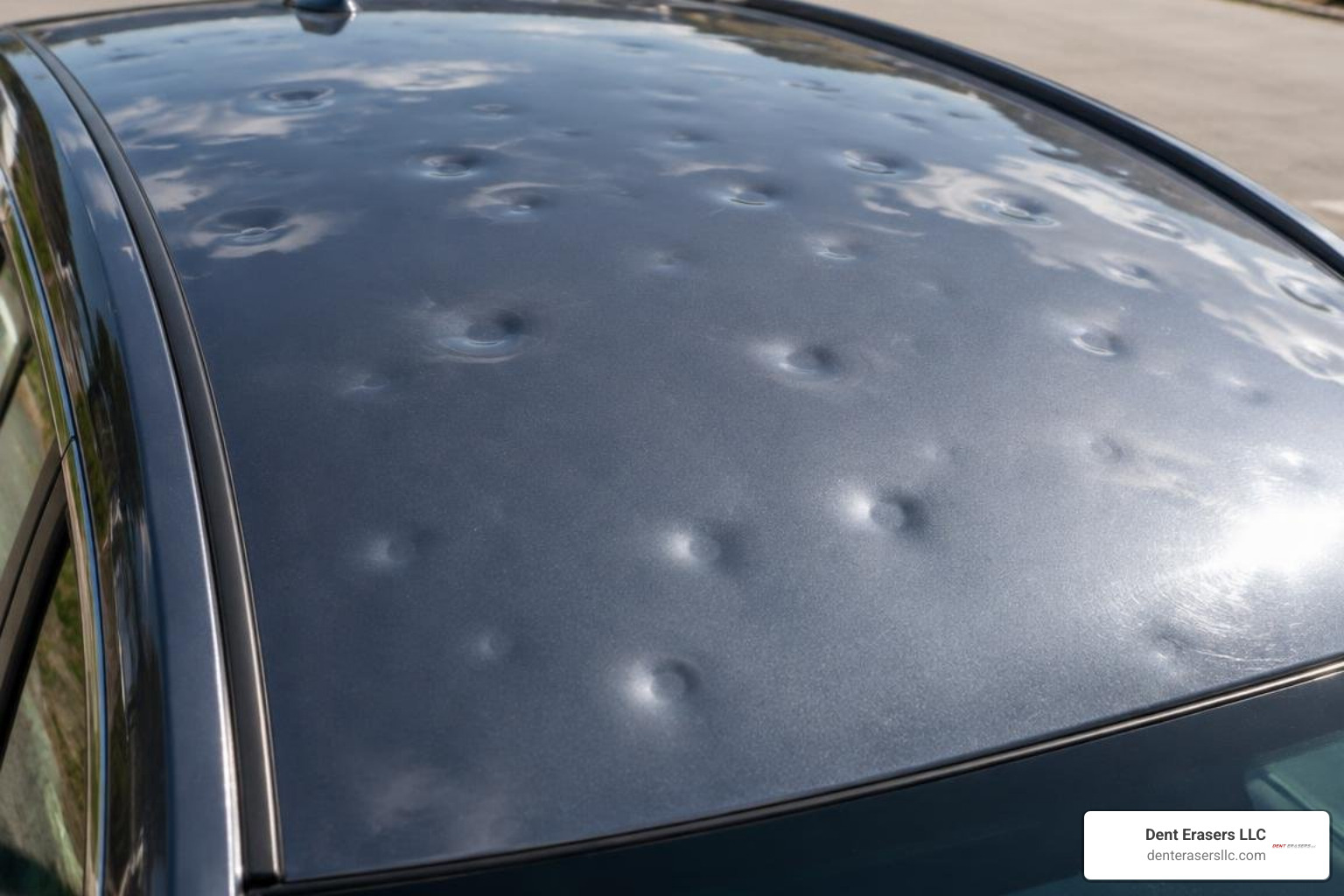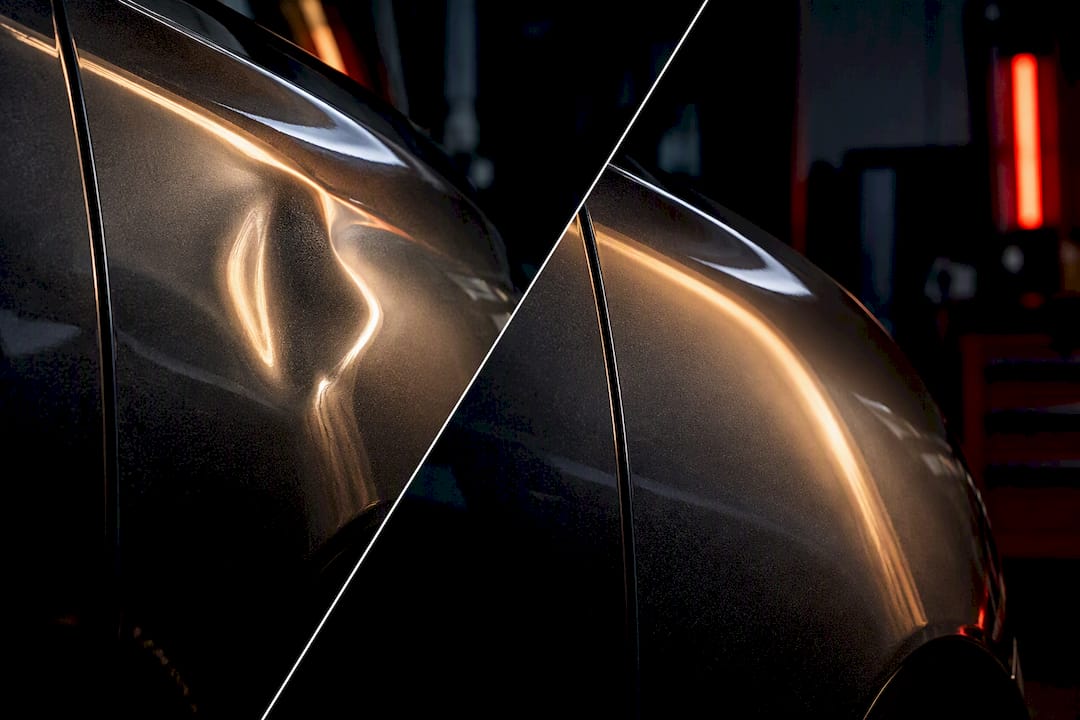
Paintless dent repair does not normally damage factory paint when the coating is sound and the technician doing the work knows what they are doing. Where things go wrong is fairly predictable: paint that is already cracked, chipped, or previously repainted, or a technician who rushes a glue pull without checking the finish first. A short inspection before any tool touches the panel is what decides whether PDR stays safe for your car.
TL;DR:
- PDR is safest on panels with sound, factory-applied paint and clear coat, and it can cause damage if applied to cracked, chipped, or previously painted surfaces.
- Unsuitable damage types like sharp creases, stretched metal, or panels with prior filler work significantly increase the risk of paint cracking or distortion during repair.
- Proper inspection with raking light, adhesion tests, and knowledge of the panel’s finish history are essential to prevent paint failure, especially with glue-pull methods.
- Using the correct adhesive and temperature control during glue pull repairs reduces the chances of clear coat stress marks, lifted edges, or uneven metal settling.
- For unpredictable or unstable paint conditions, a technician will recommend conventional repair instead of PDR to safeguard the finish.
Table of Contents
- How PDR works and why it usually preserves the factory finish
- When PDR can damage paint: specific risk factors and failure modes
- How pros inspect and mitigate paint risk
- Checklist for vehicle owners before approving PDR
- Realistic trade-offs and what owners should expect
- Denterasers LLC: inspection-first mobile PDR and how to request an estimate
- Sources
- FAQ
How PDR works and why it usually preserves the factory finish
Paintless dent repair reshapes metal from behind the panel using specialized rods and levers, or by attaching a glue tab to the front of the dent and pulling it back into position. Neither approach involves sanding, body filler, or repainting, which is exactly why the technique can leave a factory finish untouched when it is done right. That matters more than it might seem: Car-O-Liner’s PDR resources note that the process is built to preserve the original finish because it reshapes the metal instead of removing and rebuilding the coating system on top of it. Factory paint and clear coat are baked on at the assembly plant under conditions a repair shop cannot fully replicate, so keeping that original layer intact protects both the look of the car and its resistance to corrosion underneath.
The technique a technician chooses depends on where the dent sits and how it can be reached.
- Push-rod access: works from behind the panel through wheel wells, trunk openings, or door interiors without touching the paint at all.
- Glue-pull repair: used when there’s no access from behind, pulling the dent out from the front with a temporary adhesive tab.
- Bridge and puller systems: combine leverage tools with tabs for medium-sized dents on flatter panels like doors and quarter panels.
Each method is a tool for a specific job, not a one-size-fits-all fix, which is part of why the inspection that happens before the work starts carries so much weight.
When PDR can damage paint: specific risk factors and failure modes
PDR is a metal-shaping technique, not a paint restoration process, so it can only be as safe as the surface it’s working on. According to Denterasers LLC’s own guidance on PDR limitations, attempting PDR on unsuitable damage, or having an untrained person attempt it at all, can cause paint cracking or surface distortion.
A handful of conditions consistently raise the risk of paint problems.
- Compromised existing paint. Cracked, chipped, peeling, or oxidized paint has already lost some of its flexibility, and metal movement during PDR can widen those weak points.
- Prior repainting or filler. Aftermarket coatings and body filler don’t flex or bond the same way factory paint does, which changes how the panel responds to pushing or pulling.
- Dent geometry. Sharp creases, stretched metal, and damage near an edge or seam are harder to massage back into shape without stressing the paint on top.
- Limited access. Dents in spots a rod can’t reach often force a glue pull where push-rod work would have been the gentler option.
- Glue-pull missteps. The wrong adhesive, a mismatched tab, incorrect panel temperature, or too much force applied too quickly all raise the odds of a bad outcome.
One documented risk area is glue-pull adhesive selection. BodyShop Business’s guidance on glue-pull repair points out that success depends on balancing pulling force against surface protection, and that the right adhesive and controlled process are what keep the finish undisturbed. Get that balance wrong and the visible result can be clear-coat stress marks, a lifted edge where the tab was pulled, or a high spot where the metal didn’t settle evenly.
How pros inspect and mitigate paint risk
A technician who knows what they’re doing spends real time looking at the panel before touching it, because that inspection is what determines whether PDR is even the right call.
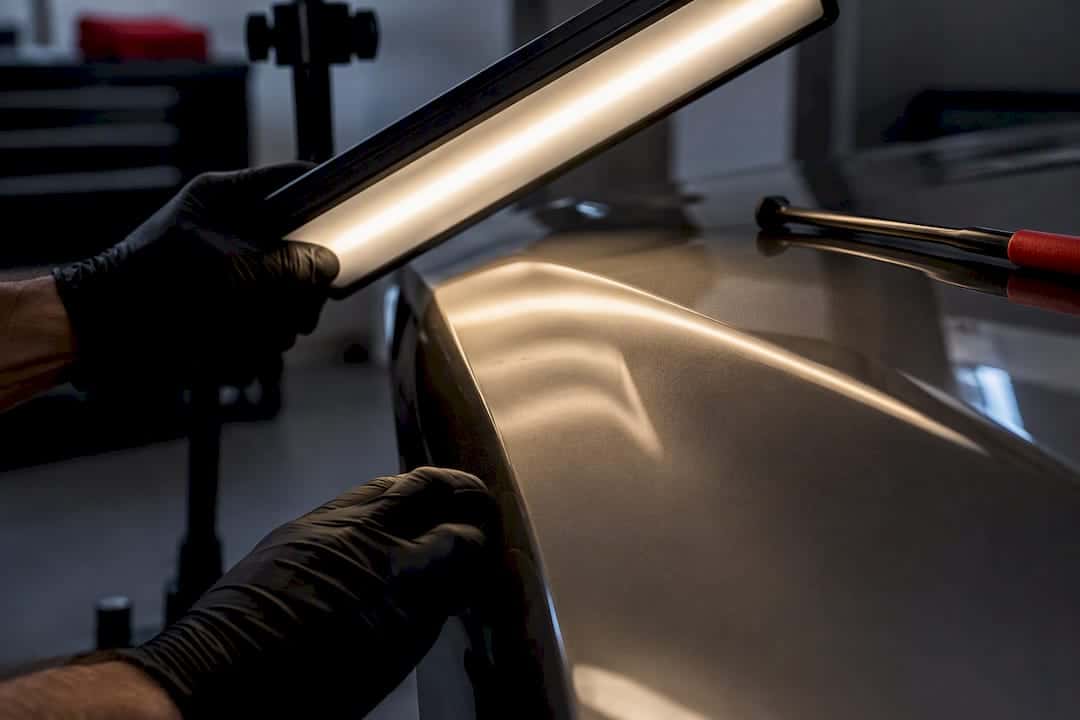
- Close, angled lighting. Raking light across the surface, sometimes with a magnified 30x lens, reveals hairline cracks or thin spots invisible under normal shop light.
- Adhesion checks. A quick tape or touch test can flag paint that’s lifting or poorly bonded before any pulling begins.
- Refinish history. Running a hand and eye over the panel edges often reveals a prior repaint or filler, both of which change how the surface will respond.
On the glue-pull side, FenderBender’s shop-floor reporting describes how panel and adhesive temperature ranges materially affect the outcome. Glue that’s too cold turns brittle and can chip paint on release, while glue that’s too warm gets gummy and won’t hold. Careful technicians check temperature, use gradual multiple pulls instead of one aggressive yank, and reach for the tab and adhesive matched to that specific panel. Formal training programs, including PDR courses listed in college trade catalogs like Pikes Peak’s course catalog, cover this kind of lighting and access work as core curriculum, not an afterthought.
When the paint fails an adhesion check or the crease is too sharp to move safely, a competent technician will say so and recommend conventional repair or refinishing instead of forcing PDR to work.
Pro Tip: Ask to see the panel under raking light before work starts. A technician confident in the finish will show you what they’re checking for, not just tell you it looks fine.
Checklist for vehicle owners before approving PDR
You don’t need trade training to ask the right questions. A few minutes of conversation before the work starts can tell you a lot about whether PDR is the right call for your dent.
- Ask if they’ll inspect the panel first. Any qualified technician should look at the paint under good light before quoting a fix, not after.
- Ask which technique they plan to use. Push-rod access is usually gentler than a glue pull, and a good tech can explain why they chose one over the other.
- Ask about experience with similar panels. Curved panels, bumpers, and creased areas each demand different handling.
- Ask what happens if the paint looks unstable. A straight answer here matters more than a confident sales pitch.
- Request photos. Close-up shots before and after give you a record, and a written note if PDR isn’t recommended protects you for warranty or resale purposes down the road.
- Disclose any prior repainting. Aftermarket coatings behave differently under a glue pull, so the technician needs to know before they start, not after.
If a technician recommends conventional bodywork instead of PDR, that’s usually the finish talking, not a sales tactic. For a deeper look at how these two paths compare, see our checklist for paintless dent removal and this breakdown of when conventional repair beats PDR.
Realistic trade-offs and what owners should expect
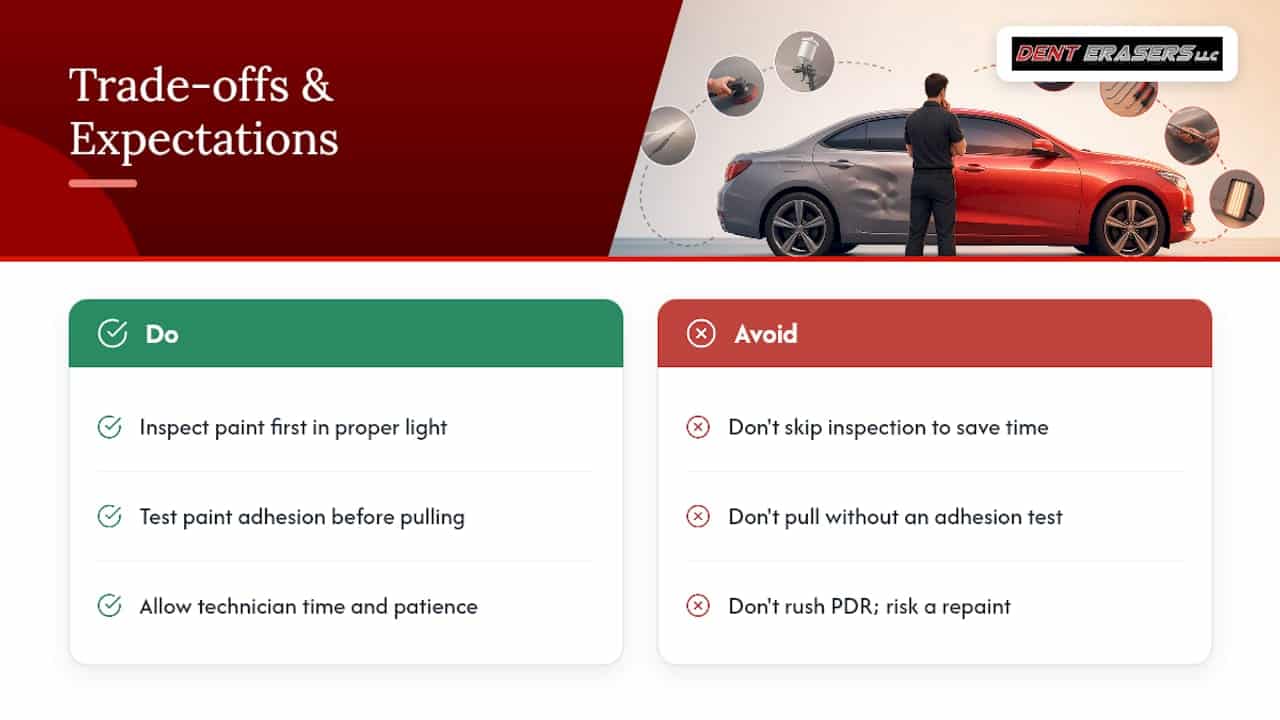
I’ve spent enough time under shop lights to know that PDR earns its reputation honestly: it’s faster, cheaper, and gentler on a factory finish than sanding a panel down and repainting it. But the process only holds up when someone actually checks the paint first. Skipping that step to save ten minutes is how a routine dent turns into a repaint job.
The real trade-off isn’t cost versus quality, it’s patience versus risk. A technician who takes the time to inspect under proper light and test adhesion before pulling anything is protecting your car’s finish, not slowing down the job for no reason. That inspection is the difference between a clean repair and a paint problem you didn’t have before.
— Brian Blanc
Denterasers LLC: inspection-first mobile PDR and how to request an estimate
We built our process around the inspection, not around getting a tool onto the panel as fast as possible. Every job starts with a close look at the paint and metal before we decide whether PDR is the right fix, and we’ll tell you plainly if a panel needs conventional repair instead.
- Mobile convenience: the service comes to your location, so you can skip a shop visit.
- Range of dent sizes: from minor dent repair to large dent repair, the technique is matched to the damage.
- Specialty experience: luxury, vintage, and motorcycle panels each get handled with the finish in mind, not a generic approach.
If you’ve got a dent and you’re not sure whether PDR will keep your paint intact, the fastest way to find out is a real look at the panel. Request an inspection or estimate through our service page and we’ll tell you straight what your car needs.
Sources
- Your shop’s least invasive repair method: what is glue pull repair? — BodyShop Business
- Why glue pulling doesn’t work for you (and how to fix it) — Fender Bender
FAQ
What are the downsides of paintless dent repair?
PDR can’t fix damage where the paint is already cracked, chipped, or peeling, and it isn’t suited to sharp creases, stretched metal, or panels with prior filler work. It also won’t correct color mismatches from an earlier repaint, since it doesn’t involve any refinishing at all.
Does PDR show up on Carfax?
PDR is a cosmetic repair rather than a reported collision claim in most cases, so it typically does not generate a Carfax entry on its own. If the repair is tied to an insurance claim, that claim, not the PDR work itself, is what could appear in a vehicle history report.
What can PDR not fix?
PDR cannot repair torn metal, sharp creases where the paint has already cracked, or damage on panels with prior body filler, since those conditions need conventional bodywork or refinishing. It also isn’t the right tool for dents in areas with no tool access from either side of the panel.
Will a bumper sticker ruin paint?
A bumper sticker itself usually won’t damage sound factory paint, but removing one improperly, especially after long exposure to sun and heat, can pull at a clear coat that’s already weakened. Peeling it slowly and using gentle heat lowers that risk considerably.
Is PDR safe for a car with previous repainting?
PDR can sometimes work on a repainted panel, but the adhesive and pull plan usually need adjusting, since aftermarket coatings don’t bond the same way factory paint does. Disclosing any prior refinishing to the technician before work starts is the key step that keeps the process safe.