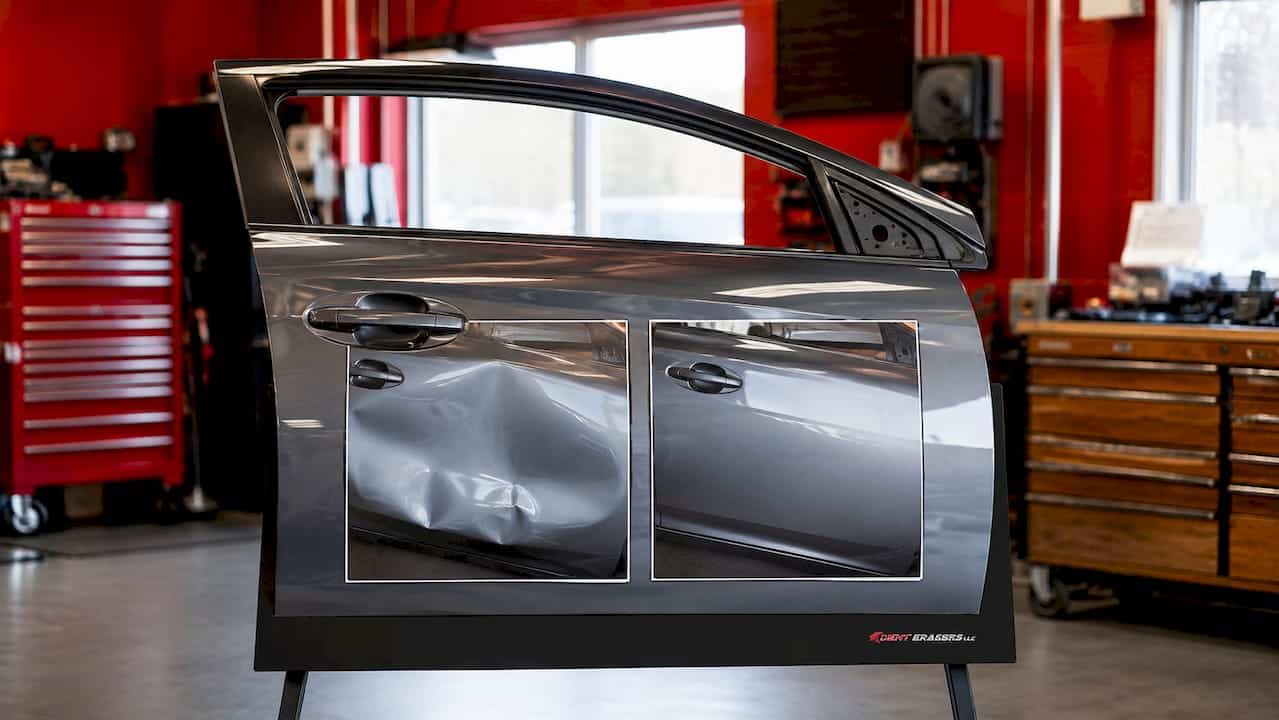
A door ding repair checklist is a step-by-step evaluation guide that helps car owners assess minor dent damage and choose the right repair method before spending a dollar. Without one, you risk paying for a full body shop job when a quick paintless dent repair (PDR) would have done the work in two hours. The right checklist covers five core factors: dent size, paint condition, dent location, panel material, and repair cost. Use it correctly, and you protect both your wallet and your vehicle’s factory finish.
1. What to inspect first on your door ding repair checklist
The first step in any car door dent guide is a clean, systematic look at the damage. Wash the area with soap and water, then wipe it down with isopropyl alcohol. Cleaning with isopropyl alcohol reveals hidden paint cracks and prevents flaking after repair. That one prep step has saved many car owners from a failed DIY fix.
Check these five criteria before deciding anything:
- Paint condition: Look for chips, cracks, or scratches in the clear coat. Intact paint is the single biggest factor in PDR eligibility.
- Dent size and depth: A ding smaller than a quarter is typically a strong PDR candidate. Deeper depressions that distort the panel shape are more complex.
- Dent location: Flat panels are easiest to repair. Dents on body lines or edges are harder due to metal thickness and rigidity, which raises labor costs regardless of dent size.
- Panel material: Steel panels have more “metal memory” and respond well to PDR. Aluminum panels are lighter but more prone to tearing if pushed incorrectly.
- Technician access: Can a tool reach the back of the panel? Doors with internal bracing or reinforced sections limit access and affect repair options.
Pro Tip: Shine a flashlight at a low angle across the dent in a dark garage. This raking light technique reveals the true depth and any paint stress lines invisible in daylight.
2. Repair methods matched to your damage type
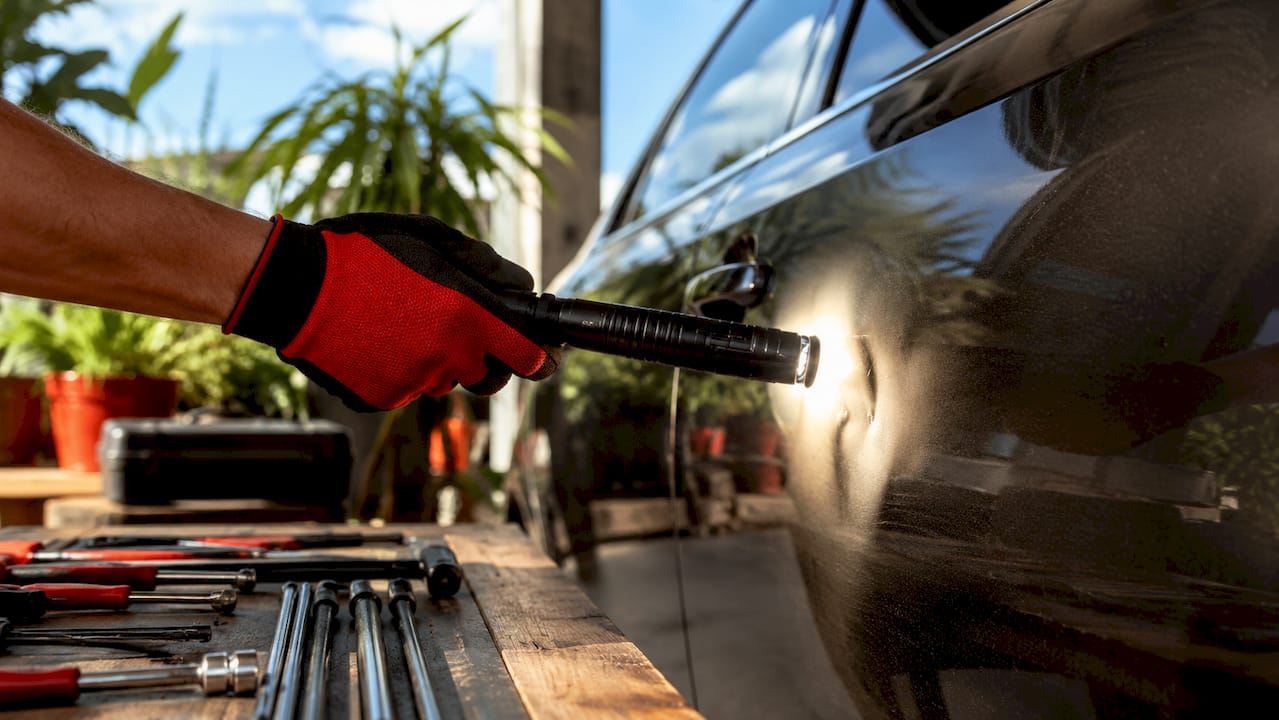
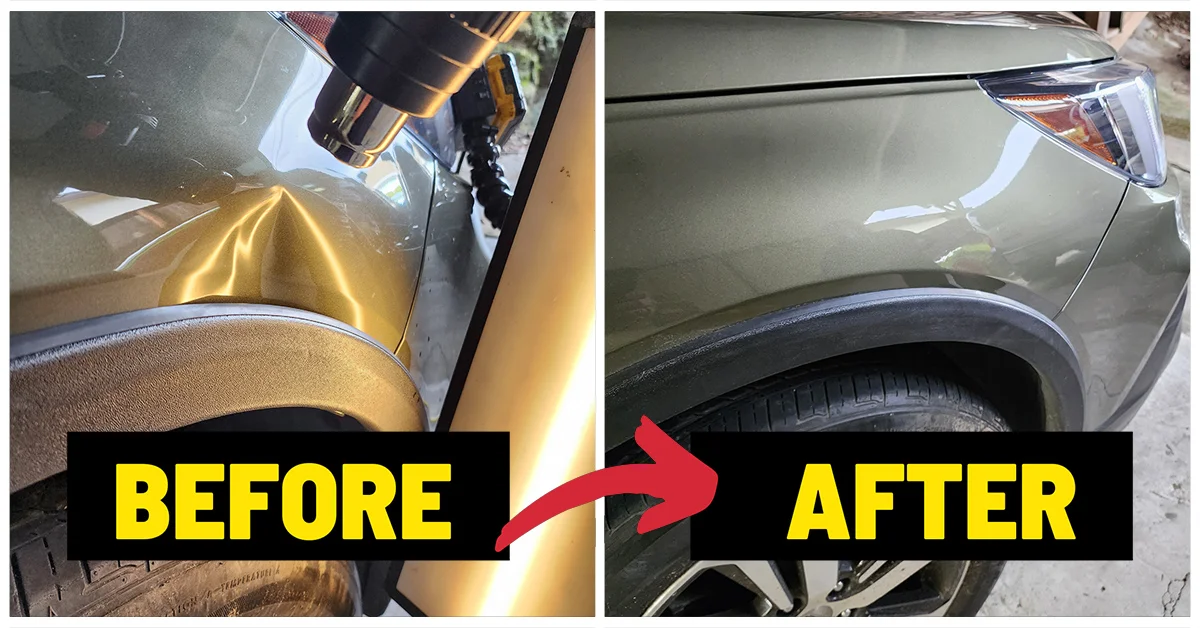
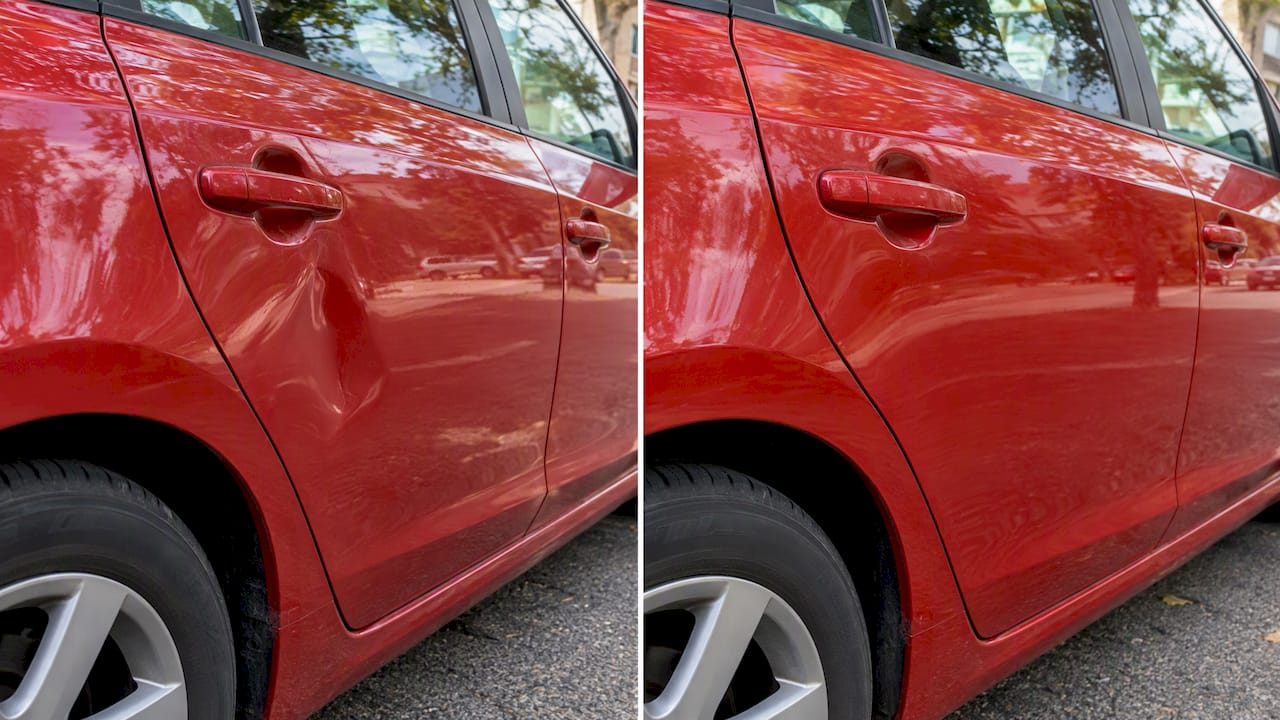
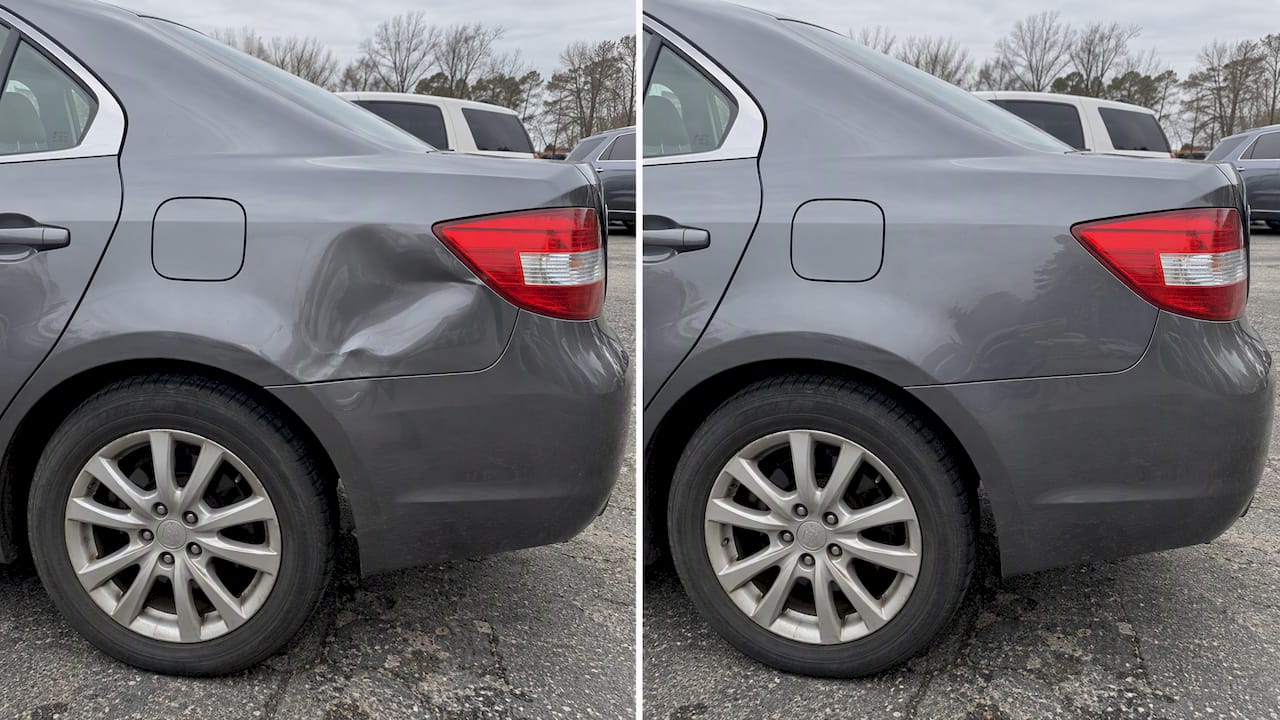
Paintless dent repair is the bread-and-butter solution for repairing door dings when the paint is intact. A trained technician uses metal rods and picks to massage the metal back to its original shape from behind the panel. PDR costs $75–$350 and finishes in 1–4 hours. Traditional body shop repair, by contrast, runs $500–$1,000 or more and takes 3–5 days minimum, often requiring a rental car.
| Method | Best for | Cost range | Turnaround |
|---|---|---|---|
| PDR | Intact paint, minor dents | $75–$350 | 1–4 hours |
| Traditional body shop | Paint damage, sharp creases | $500–$1,000+ | 3–5 days |
| DIY glue pull kit | Very shallow dings, intact paint | $20–$80 | 30–60 minutes |
| Hybrid PDR + paint repair | Mixed damage, partial paint loss | Varies | 1–2 days |
Approximately 60–90% of minor dents qualify for PDR when the paint is undamaged and the metal is not stretched or creased. That is a wide window, which means most parking lot dings you encounter are PDR candidates.
DIY glue pull kits work well on very shallow, round dings on flat panels. They avoid the thermal shock risk that comes with heat guns. DIY heat methods risk paint damage through thermal shock to the clear coat, and the cost savings disappear fast if you damage the finish.
Pro Tip: For dents with partial paint loss, ask about a hybrid repair. A staged PDR-plus-paint approach fixes the metal first, then targets only the damaged paint area. This costs far less than a full respray.
3. Step-by-step door ding assessment checklist
Walk through these seven steps every time you find a new ding. Skipping steps leads to misdiagnosis and wasted money.
- Clean and inspect paint condition. Wash the area and wipe with isopropyl alcohol. Look for any chips, cracks, or peeling under good lighting.
- Measure dent size and depth. Use a coin for reference. A ding smaller than a quarter with no sharp edges is a strong PDR candidate.
- Determine location complexity. Flat door panels are straightforward. Body lines, wheel arches, and door edges add difficulty and cost.
- Identify panel material and access. Steel or aluminum? Can a technician reach the back of the panel? Check for internal bracing by pressing gently near the dent.
- Match damage to the right repair method. Use the table above. Intact paint plus shallow depth equals PDR. Paint damage or sharp creases point to body shop or hybrid repair.
- Gather quotes and ask about warranties. Get at least two quotes. Ask each provider whether they offer a written warranty on their work. Reputable shops do. You can also review tips for choosing a PDR service before you call.
- Factor in convenience. PDR finishes same day. A body shop repair means days without your car. Add rental car costs to your total when comparing options.
4. Common misconceptions and expert tips for smarter repairs
Dent size is not the main factor in choosing a repair method. Paint integrity and metal condition determine PDR eligibility far more than the diameter of the dent. A large, shallow ding on a flat panel with perfect paint is easier to fix than a small but creased dent near a body line.
Professionals use reflection boards and line boards to spot hidden high points and stretched metal that the naked eye misses. Reflection boards reveal hidden damage that looks smooth under normal light but would cause a visible ripple after repair. This is why a trained eye catches problems a DIY kit cannot.
“Metal stretching beyond its elastic limit requires filler and repainting. Pushing PDR on a stretched or work-hardened dent often causes the repair to fail and creates a worse result than the original ding.” — industry repair standard
Watch out for these common traps:
- Assuming a small dent is always cheap to fix. Location and metal condition matter more than size.
- Using a heat gun or hair dryer on a ding. Thermal shock cracks the clear coat and turns a $150 PDR job into a $600 repaint.
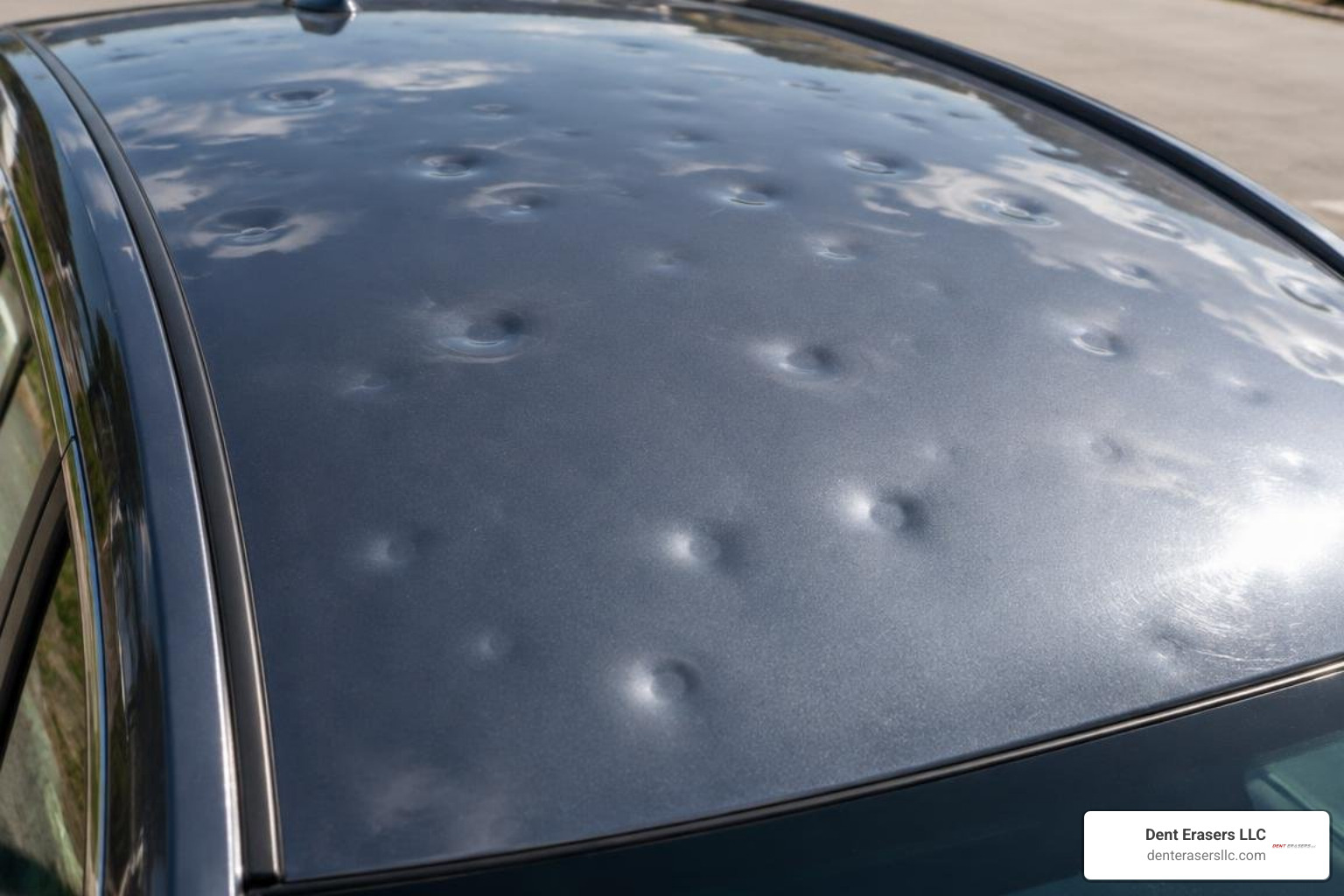
- Waiting too long. Sun exposure and temperature cycles work-harden the metal over time, making PDR harder and sometimes impossible.
- Choosing a shop based on price alone. The lowest quote often skips the line board inspection that catches hidden damage. Learn how to spot repair scams before you commit.
Pro Tip: Ask any PDR technician if they use a line board or reflection board during their inspection. If they say no, that is a red flag. Proper diagnosis requires it.
Key takeaways
A thorough door ding assessment checklist, covering paint condition, dent depth, location, panel material, and repair method, is the fastest way to protect your vehicle’s value and avoid overpaying for repairs.
| Point | Details |
|---|---|
| Paint condition decides the method | Intact paint opens the door to PDR; any chip or crack shifts the repair toward body shop work. |
| PDR saves significant time and money | PDR costs $75–$350 and finishes in hours; traditional repair runs $500–$1,000+ and takes days. |
| Location raises complexity and cost | Body lines and edges increase labor costs regardless of how small the dent appears. |
| Dent size is not the main factor | Metal stretch and paint integrity matter more than diameter when choosing a repair path. |
| Act before the metal work-hardens | Delaying repair makes PDR harder and can eliminate it as an option entirely. |
What I’ve learned from years of door ding repairs
Car owners consistently make the same mistake: they look at a ding, assume it is minor, and either ignore it or grab a cheap suction cup from a hardware store. I have seen both choices turn a $150 fix into a $700 respray. The checklist approach is not about being overly cautious. It is about spending two minutes on a proper assessment before spending real money.
The most valuable thing I tell customers is this: paint condition is the gatekeeper. If the paint is perfect, you almost certainly have a PDR candidate. If it is not, you need a different conversation. I have also found that car owners who bring their vehicles in early, before sun and heat cycles set in, get better results at lower cost. Metal that has been baked through a summer is harder to massage back, plain and simple.
Choosing a repair provider deserves the same care as the repair itself. Ask about their inspection process, their warranty, and whether they use a reflection board. A provider who walks you through their assessment is one who stands behind their work. Denterasersllc uses exactly this approach on every job, and it shows in the results. You can also review the complete PDR removal checklist to go deeper on what a professional inspection covers.
— Brian Blanc
Denterasersllc: mobile dent repair when you need it
Denterasersllc specializes in mobile paintless dent repair and plastic bumper repair across Contra Costa County and surrounding areas. The team comes to you, which means no rental car, no waiting room, and no disruption to your day.
Every repair starts with a proper line board inspection to catch hidden damage before work begins. PDR jobs typically finish the same day, and all work comes with a satisfaction guarantee. Whether you have a fresh parking lot ding or a bumper scuff that has been bothering you for months, Denterasersllc delivers fast, affordable repairs that preserve your factory finish. Reach out for a free quote and see how much you can save compared to a traditional body shop.
FAQ
What is a door ding repair checklist?
A door ding repair checklist is a structured evaluation process covering paint condition, dent size, location, panel material, and repair options. It helps car owners choose the right repair method and avoid unnecessary costs.
Does dent size determine whether PDR is possible?
Dent size is less important than paint integrity and metal condition. Sharp creases or chipped paint typically require traditional repair even on small dents.
How much does paintless dent repair cost compared to a body shop?
PDR costs $75–$350 and finishes in 1–4 hours. Traditional body shop repair runs $500–$1,000 or more and takes 3–5 days, often adding rental car expenses.
Can I fix a door ding myself?
DIY glue pull kits work on very shallow, round dings with intact paint. Heat gun methods risk cracking the clear coat and should be avoided, as the damage they cause typically costs more to fix than the original ding.
When should I call a professional instead of using a DIY method?
Call a professional when the paint is chipped, the dent is near a body line or edge, or the metal feels stiff or creased. These conditions require a trained technician and proper inspection tools to repair correctly.