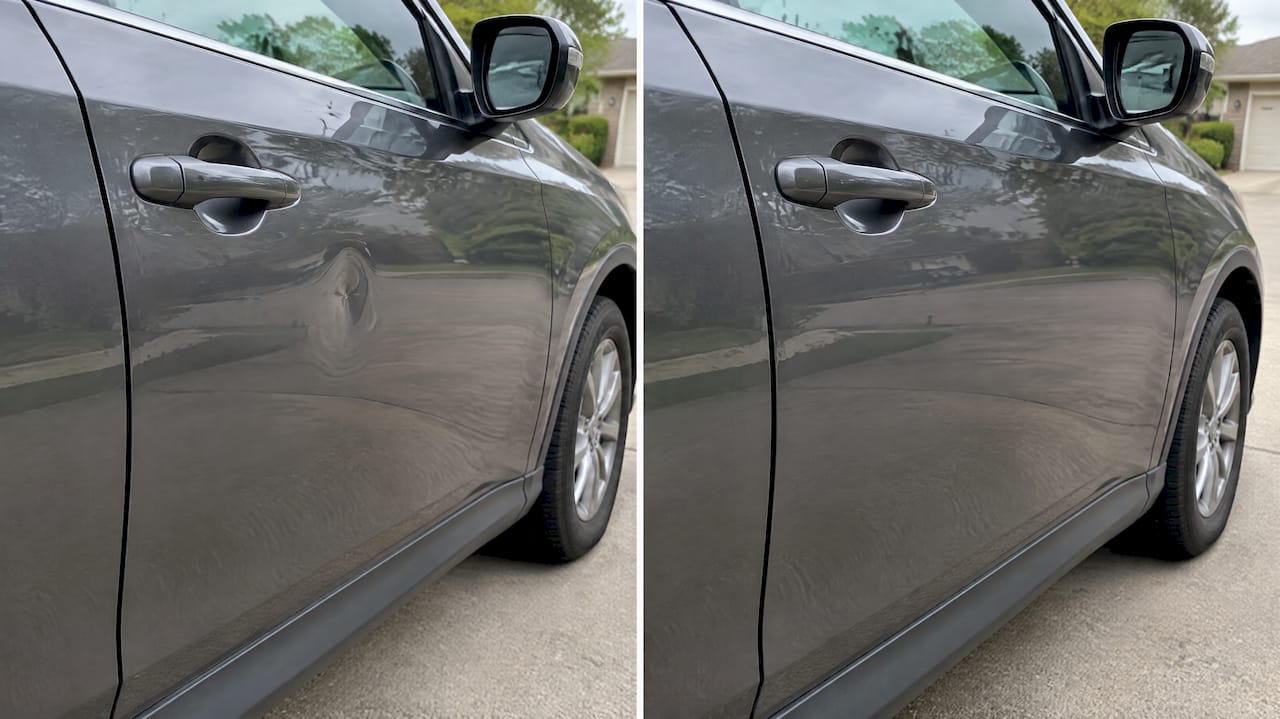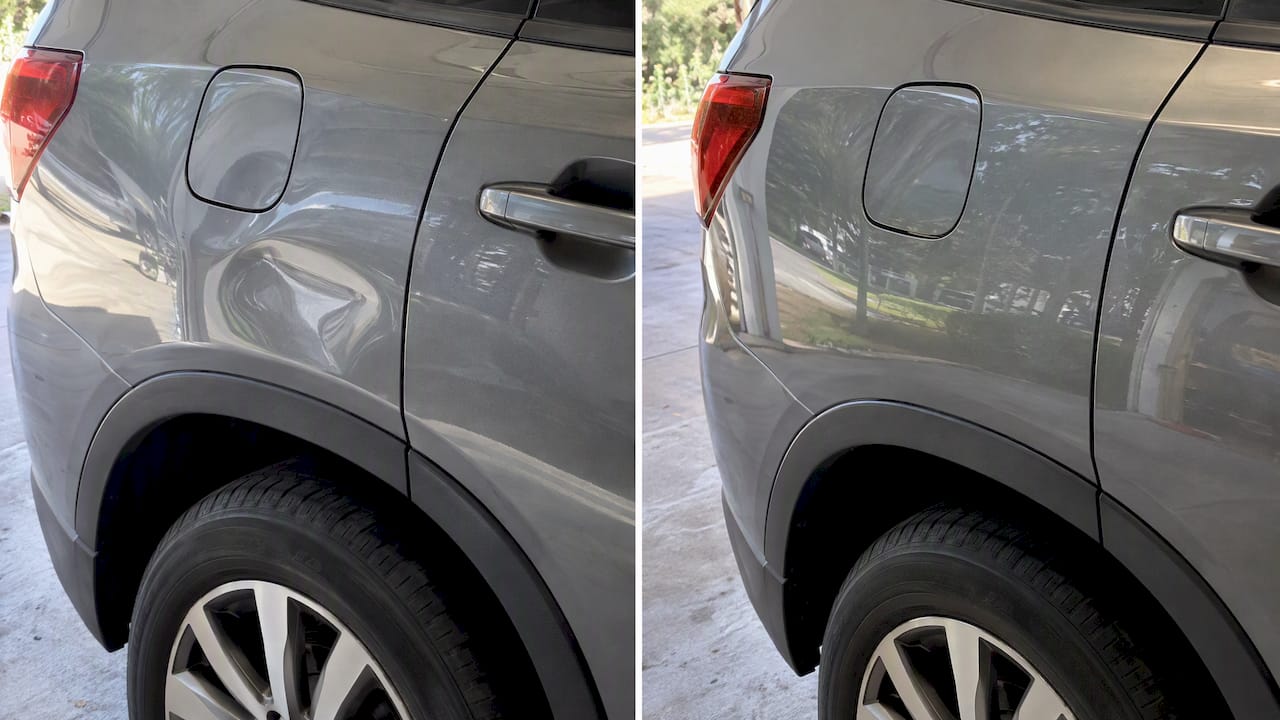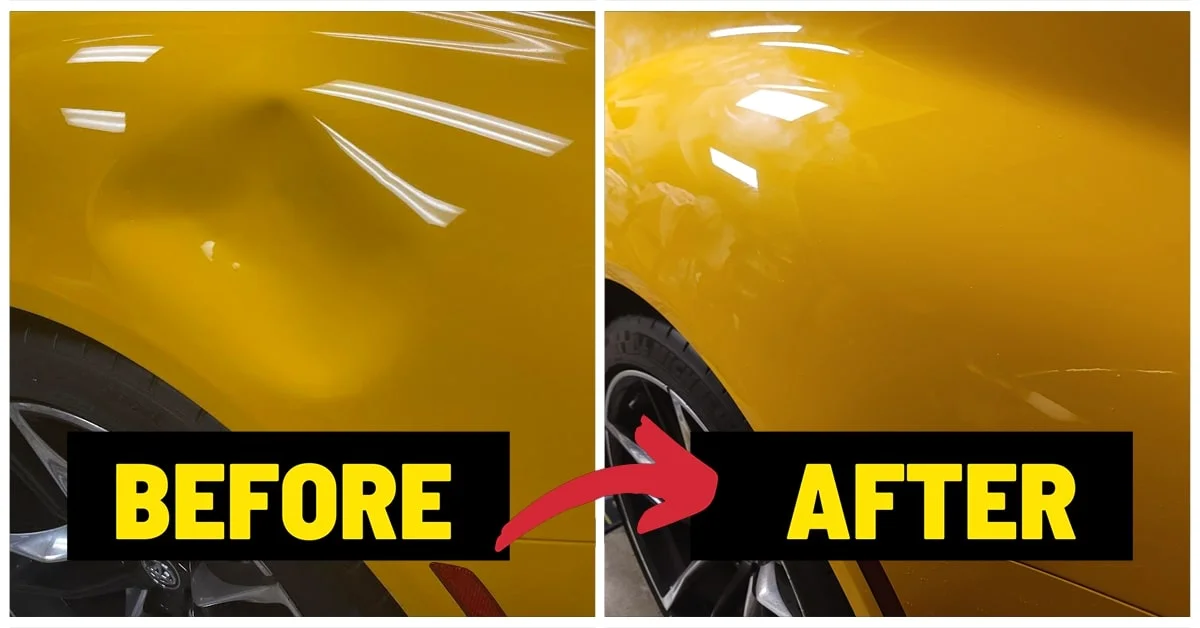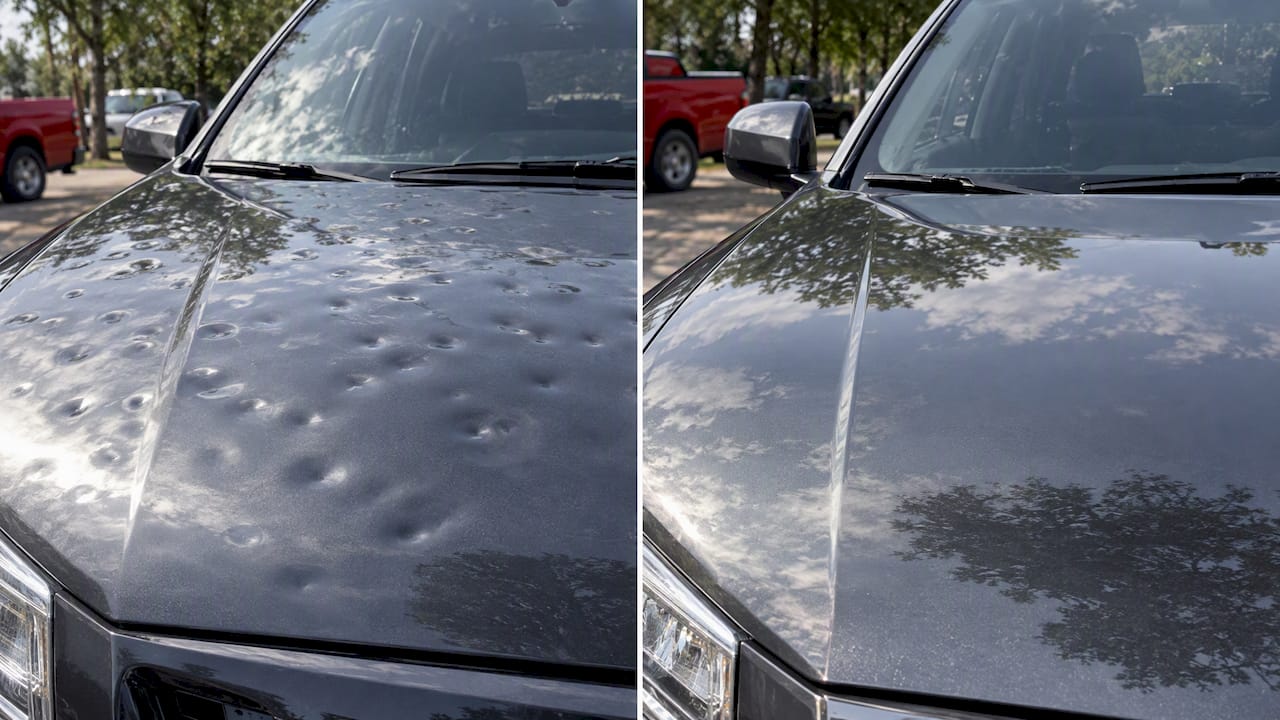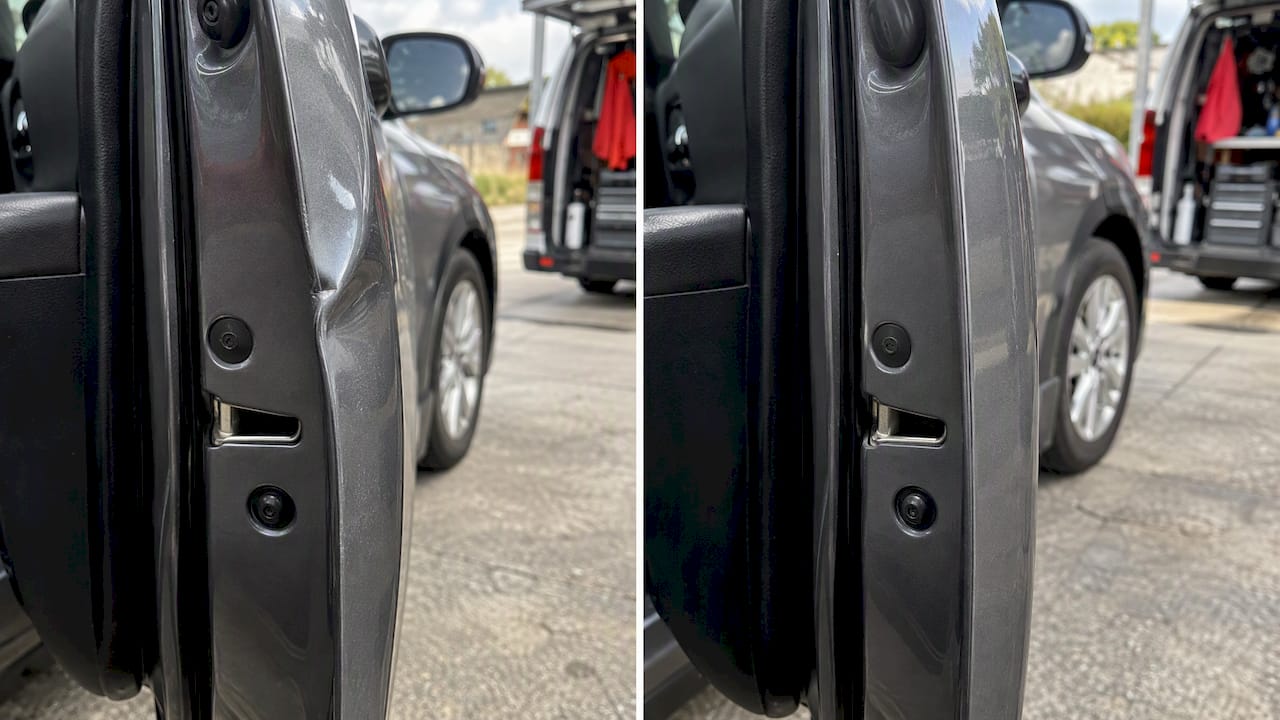
For a shallow door-edge dent with no paint damage, paintless dent repair is usually your best first move, and it tends to cost less and finish faster than a trip to a body shop. If the paint has cracked, the metal shows a sharp crease, or the dent sits right on a seam, traditional bodywork is the safer bet. Either way, a careful look before you touch anything saves you money and frustration.
TL;DR:
- Paintless dent repair is ideal for shallow, paint-intact door-edge dents, usually costing between $100 and $400, and often completed in a single visit.
- Repairing dents on door edges is complex due to limited backside access, tighter curves, and the risk of metal cracking or stretching if not handled carefully.
- DIY fixes such as glue pulls or heat/cold methods are risky near edges, especially if paint cracks or the metal feels stiff, requiring professional help to avoid worsening the damage.
- Signs indicating the need for professional repair include paint cracking, sharp creases, or inaccessible areas, while minor, accessible dents can often be addressed with careful DIY checks.
- Insurance claims may be unnecessary for small, paintless repairs, but larger or creased dents requiring repainting often involve higher costs and longer timelines, including recalibration for sensor damage.
Table of Contents
- What Makes Door-Edge Dents Different From Other Dents
- Comparing Your Repair Options: PDR, DIY, and Full Bodywork
- Safe DIY Checks You Can Try Before Calling Anyone
- When to Call a Pro and What a Mobile PDR Visit Looks Like
- What Door-Edge Dent Repair Costs and How Long It Takes
- How Insurance Claims Affect Your Repair Choice
- How We Approach Door-Edge Dents at Dent Erasers LLC
- A Simple Decision Flow for Busy Car Owners
- Ready to Fix Your Door-Edge Dent the Easy Way?
- FAQ
- Sources
What Makes Door-Edge Dents Different From Other Dents
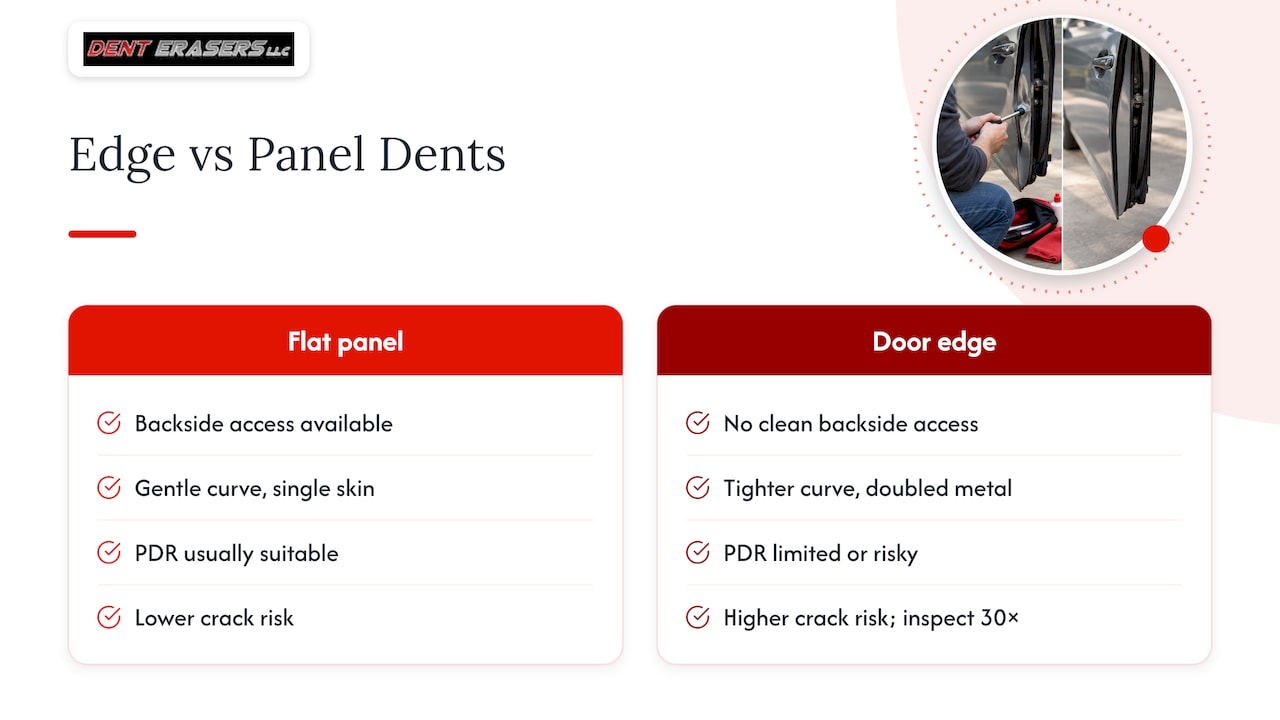
Door edges are some of the trickiest spots on a vehicle to repair, and that comes down to geometry. A dent in the middle of a flat door panel gives a technician room to work from behind the metal, pushing and massaging it back into shape. A dent right on the edge, where the panel folds over and meets the inner door skin, often has no clean backside access. The curve is tighter, the metal is doubled over, and there’s frequently a seam or weld nearby that limits how far the metal can move without cracking.
Paintless dent repair, commonly called PDR, is a technique where a technician accesses the backside of the dent through existing openings, like removing an interior door panel, and gradually massages the metal back to its original contour using specialized rods and tools. Done correctly, it preserves the vehicle’s factory finish because there’s no filler, sanding, or repainting involved. Traditional repair takes a different route: a technician fills the dent with body filler, sands it smooth, primes it, and repaints the area to match the surrounding panel.
Door edges push PDR to its limits, which is why industry guidance urges caution here. OEM repair guidance for one automaker, for example, warns technicians to inspect for micro-cracking using 30X magnification before and after PDR work, and to avoid panel modifications that could compromise the metal’s corrosion protection. That caution matters more at a folded edge than on a flat panel, since the metal there has already been worked once during manufacturing and has less flex left in it.
Comparing Your Repair Options: PDR, DIY, and Full Bodywork
Once you know what kind of dent you’re dealing with, the real decision is how to fix it. Each method has a distinct process, a different cost profile, and its own failure points.
Professional PDR starts with access. A technician removes trim or an interior panel to reach the backside of the dent, then uses rods, picks, and sometimes a glue-pulling kit to gradually massage the metal back into its original shape from the inside out. For shallow door-edge dents with intact paint, this approach can restore the panel without disturbing the clear coat at all, which is why it holds up as the preferred method when the damage qualifies. The process is slow and deliberate by design: small, even pressure applied repeatedly beats one aggressive pull.
DIY methods generally fall into two camps: glue-pull kits sold for home use, and the hot-and-cold trick using a hair dryer and compressed air or dry ice. Both can work on simple, accessible dents in the middle of a flat panel. On a door edge, though, they run into trouble fast:
- Glue-pull kits applied at the wrong angle tend to stretch the metal instead of reshaping it, leaving a dent that looks worse or spreads into a crease.
- The hot-cold method relies on rapid temperature change to contract the metal, but repeated or aggressive cycles can cause paint to crack or lift at the edge where it’s already thinner.
- Pulling too hard, too fast, or in the wrong spot risks “over-pulling,” which creates a high spot that’s often harder to fix than the original dent.
Pro Tip: If a dent has any paint damage at all, stop before you reach for a glue-pull kit. Filling and repainting a chip is cheap; fixing a stretched panel is not.
Traditional bodywork becomes unavoidable once the paint is compromised, the metal has a defined crease, or the panel has stretched past the point where massaging can restore its shape. At that point, you’re looking at filler, sanding, primer, and a color-matched repaint, and the cost climbs accordingly because you’re now paying for paint materials, booth time, and blending work in addition to labor.
Safe DIY Checks You Can Try Before Calling Anyone
If your dent looks minor, a short, careful inspection tells you whether it’s worth attempting yourself. Walk through these checks in order and stop the moment you hit a warning sign.
- Clean the area first. Dirt and road grime can hide small cracks, so wash and dry the section around the dent before inspecting it.
- Inspect under bright, angled light. Natural daylight or a work lamp held at a low angle reveals texture that overhead light misses, including hairline paint cracks.
- Check for micro-cracking. Look closely at the dent’s edges and the deepest point; any white or dull lines in the clear coat mean the paint has already failed, even if it isn’t fully chipped.
- Confirm accessibility. Door edges with interior panels that come off easily are far more workable than sealed sections near wiring harnesses, door sensors, or side-impact beams.
- Try a gentle inward push only if you can reach the backside safely. Light, steady pressure with a gloved hand or a soft dent tool can sometimes reduce a very shallow dent without any pulling at all.
- Test a glue-pull tab on the lowest-risk spot first. Apply it to a small section, pull gently, and assess the result before committing to the rest of the dent.
- Stop before you over-pull. If the dent isn’t fully resolved after one or two gentle attempts, stop. Repeated aggressive pulling is how a simple dent turns into a crease.
Three signs mean it’s time to put the tools down: visible paint cracking, a sharp crease rather than a smooth round dent, and any area where the metal feels stiff or “stretched” rather than springy. These indicate the metal has moved past its elastic limit, what body techs sometimes call being work-hardened, and further DIY pressure usually makes things worse, not better.
Pro Tip: Avoid cheap dent-puller kits with suction cups rated for shallow, perfectly round dents only. On a folded door edge, they rarely seat well enough to pull evenly, and uneven pulling is exactly what causes creasing.
Heavy heat sources or dry ice applied aggressively can also lift or delaminate paint at an edge, since the clear coat there is thinner and the metal cools unevenly compared to a flat panel. Treat both with far more caution on a door edge than you would in the center of a hood or fender.
When to Call a Pro and What a Mobile PDR Visit Looks Like
Certain signs point clearly toward professional help rather than a weekend project:
- Visible paint chips or cracking anywhere on or near the dent.
- A crease, ridge, or any shape that isn’t a smooth, round depression.
- Damage close to a door handle, mirror mount, or trim piece where access is tight.
- A dent you can’t reach from behind, even after removing interior trim.
A mobile PDR technician approaches a door edge differently than a DIY attempt would. After confirming the paint is intact, they map out access points, often through the same interior panel removal a confident DIYer might attempt, but with tools sized and shaped specifically for edge work. They apply controlled push-and-pull pressure in small increments, checking the panel’s reflection under a PDR light board after each pass to track progress without overworking the metal. For larger repairs on newer vehicles, it’s worth asking whether the repair could affect any sensors mounted near the door, since Consumer Reports recommends getting an estimate that accounts for recalibration whenever a repair touches sensor-adjacent areas.
What Door-Edge Dent Repair Costs and How Long It Takes
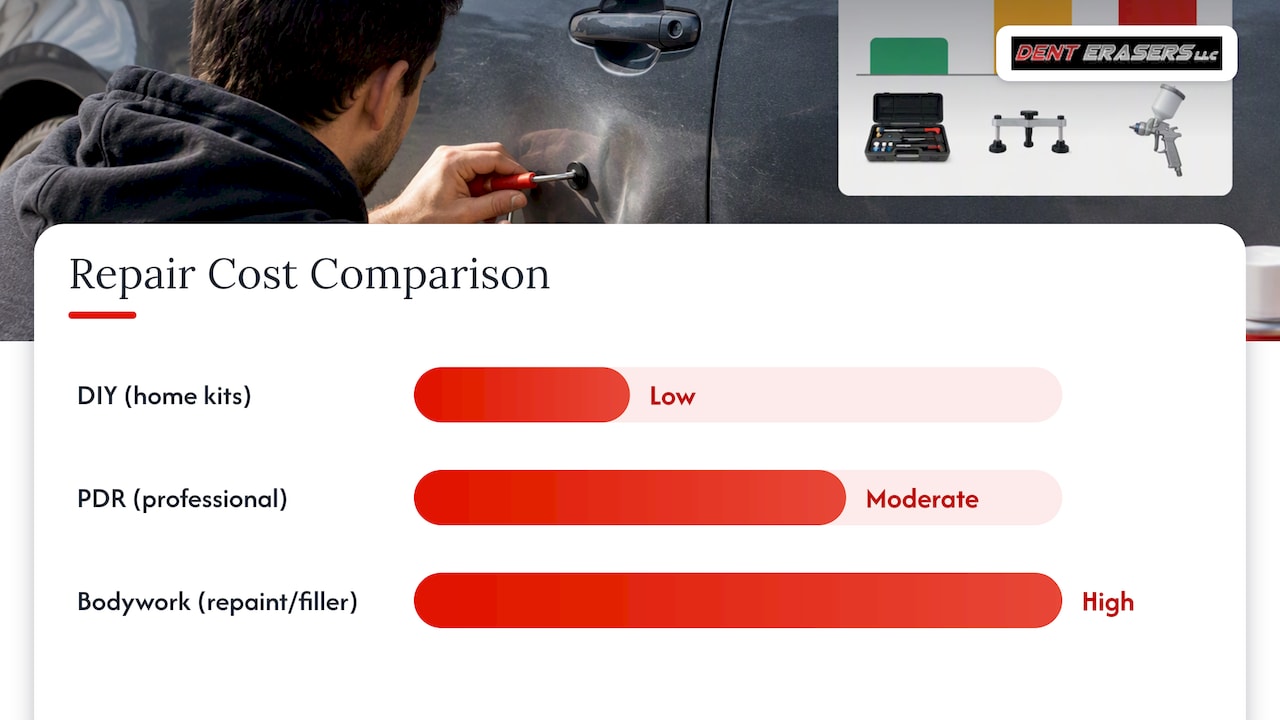
Cost depends heavily on how much the metal has moved. Shallow, paint-intact dents that qualify for PDR typically run $100 to $400, and a small, accessible door-edge dent often lands in that range if the paint hasn’t cracked. Once a dent creases, stretches, or requires any repainting, the price climbs well beyond that baseline because you’re adding materials, color matching, and extra labor hours.
Where you live affects the bill too. Mechanic labor rates vary widely by ZIP code, with close to half of shops charging between about one hundred twenty and one hundred sixty dollars per hour as of 2026. A PDR quote in a higher cost-of-living area will naturally run higher than the same repair in a lower-rate region, even when the dent itself is identical.
Timeline follows a similar split. A straightforward, accessible door-edge dent handled by mobile PDR often wraps up the same day, sometimes in under an hour once the technician arrives. Dents requiring panel removal, deeper access work, or any repaint take longer, typically a few days, since repainted panels need proper cure time before the vehicle can be driven in all weather conditions. If you’re weighing whether to wait on a small chip, don’t wait too long: exposed metal invites rust, which turns a cheap touch-up into a far costlier repair down the road. If the chip or scrape is near the door jamb, a gentle, coating-safe cleaning routine can help you keep the area free of grit while you decide on repair.
How Insurance Claims Affect Your Repair Choice
Whether to file a claim or pay out of pocket usually comes down to repair cost versus your deductible, plus how a claim might affect your premium. For a $150 to $400 PDR job, many owners find it’s cheaper to pay directly rather than trigger a claim that could raise future rates.
If you do file, know your rights. State insurance guidance confirms you’re not required to use a shop your insurer suggests, though if your chosen shop charges more, you may need to cover the difference yourself. The same guidance notes that failing to protect a damaged vehicle from further harm, leaving a paint chip exposed to the elements, for instance, can limit coverage for related damage that develops afterward.
Larger repairs change the calculation. If a dent is severe enough to need panel work or could affect a sensor near the door, Consumer Reports suggests requesting an estimate that explicitly includes recalibration, and getting a second opinion before committing. Document everything regardless of your path: clear photos from multiple angles, a dated estimate, and, when relevant, written confirmation that any required calibration was performed. That paper trail protects you if a dispute comes up later.
How We Approach Door-Edge Dents at Dent Erasers LLC
Door-edge dents are a regular part of what we handle through mobile paintless dent repair, alongside minor dent repair and large dent repair for damage that’s moved past the shallow-and-simple stage. When a dent sits close to a handle or trim piece and needs bumper work too, our plastic bumper repair service covers that in the same visit. We’ve written more on how PDR compares to traditional methods and what to look for in a provider if you want to read further before deciding how to proceed.
A Simple Decision Flow for Busy Car Owners
If you want the short version, here’s how I’d walk through it myself. Inspect the dent in good light first, and take a few photos from different angles so you have a record either way. If it’s genuinely shallow, round, and the paint is flawless, a gentle, careful DIY attempt is reasonable. The moment you see a crease, a crack, or metal that feels stiff instead of springy, stop and get a quote. That one habit, inspect and photograph before you act, saves most owners from turning a $150 fix into a much bigger bill.
— Brian Blanc
Ready to Fix Your Door-Edge Dent the Easy Way?
We come to you, which means no dropping the car off and no juggling a rental for a dent that could be fixed in an hour. Because mobile PDR preserves factory paint and skips the fill-and-repaint process, qualifying door-edge dents are often resolved faster and for less than a traditional shop visit.

- Book an onsite estimate through our main service page and get a straight answer on whether PDR will work for your dent.
- Ask about large dent repair if the damage includes a crease or spans a wider area.
- Check our specialty services for fleet vehicles, lease returns, or insurance claim assistance.
Reach out for a quote and we’ll tell you honestly whether your door edge is a quick PDR fix or something that needs a closer look.
FAQ
How do I remove a dent from my car door?
For a shallow, paint-intact dent, paintless dent repair massages the metal back into shape from behind the panel without filler or paint. If the paint is cracked or the dent has a crease, traditional filler-and-repaint work is the safer route.
How much would it cost to fix a dent in a car door?
Most dents that qualify for PDR cost between $100 and $400, though local labor rates can push that range higher or lower. Creased dents or those needing repaint cost substantially more because of added materials and labor.
How can I fix a dent in my door?
Start by inspecting the dent in bright light for paint cracks or creasing, since either one rules out a simple DIY fix. If it’s shallow and accessible, a gentle inward push or a careful glue-pull test on a low-risk spot is reasonable; otherwise, book a mobile PDR visit.
Can small dents be popped out?
Small, shallow dents on an accessible, flat section of a door can sometimes be pushed out by hand or with a basic glue-pull kit, but door edges are less forgiving due to their folded, double-layer metal. If the dent doesn’t release easily after a gentle attempt, stop and get a professional opinion rather than risk stretching the panel.
Sources
- How Much Does it Cost to Repair a Car Dent? – Lemonade
- Average Mechanic Labor Rate: Repair Costs in Your State 2026 | AAA Automotive
- RCI-98-23-002-4: Rivian Repair Guidelines
- How to Handle Repairs From a Car Crash – Consumer Reports
- Filing a Claim with Your Own Insurance Company – Illinois DOI