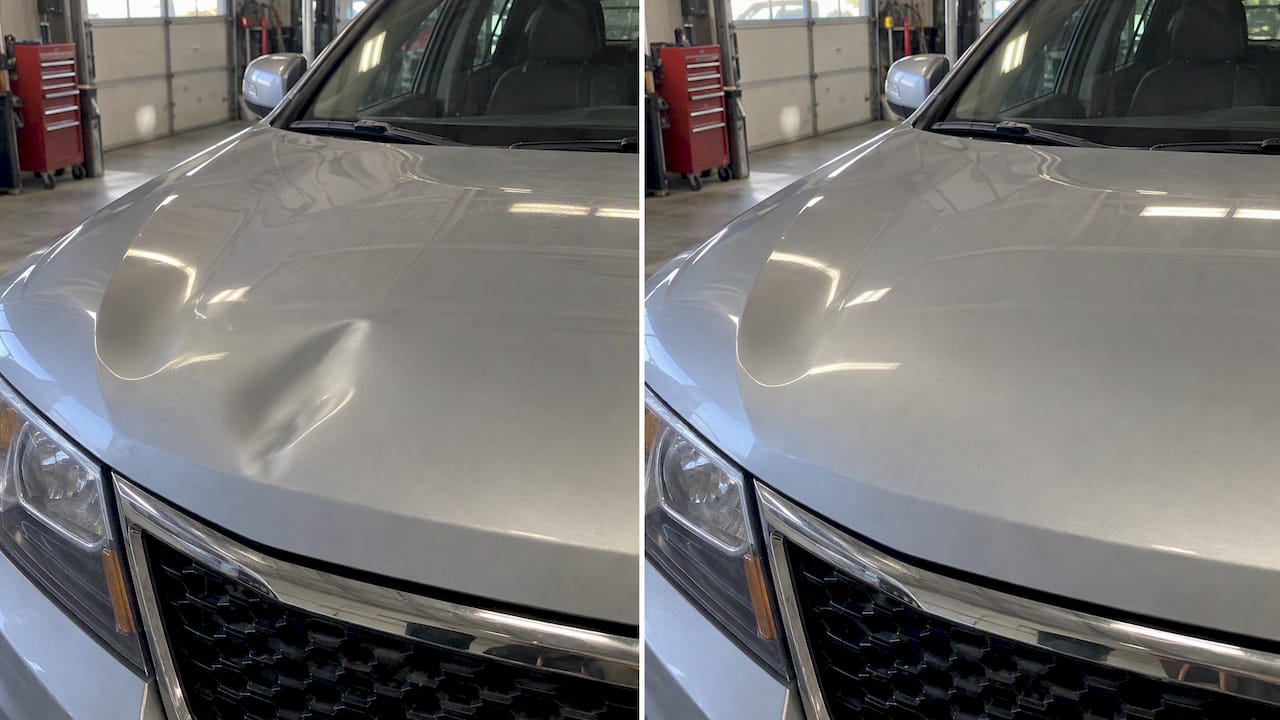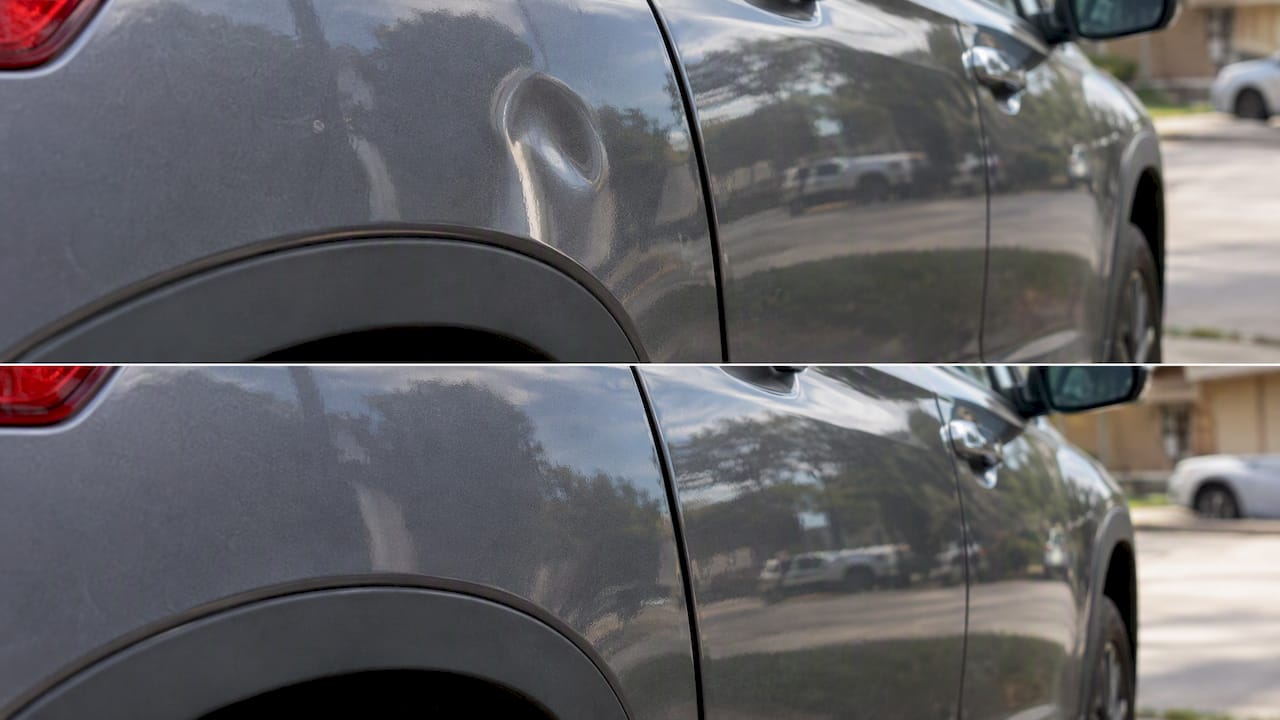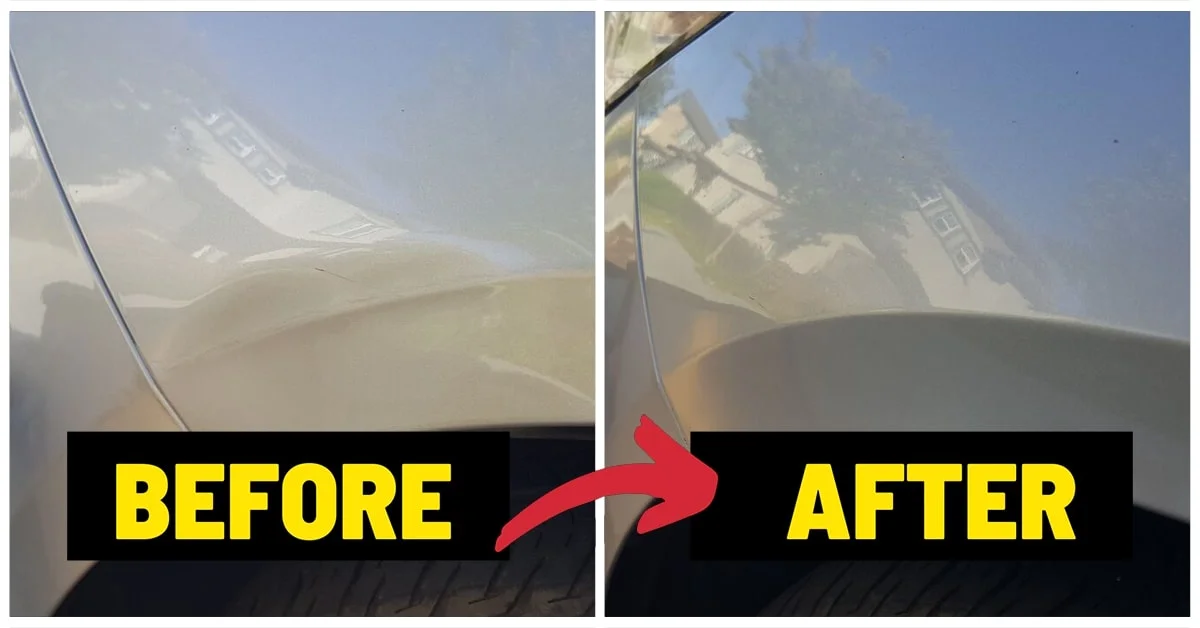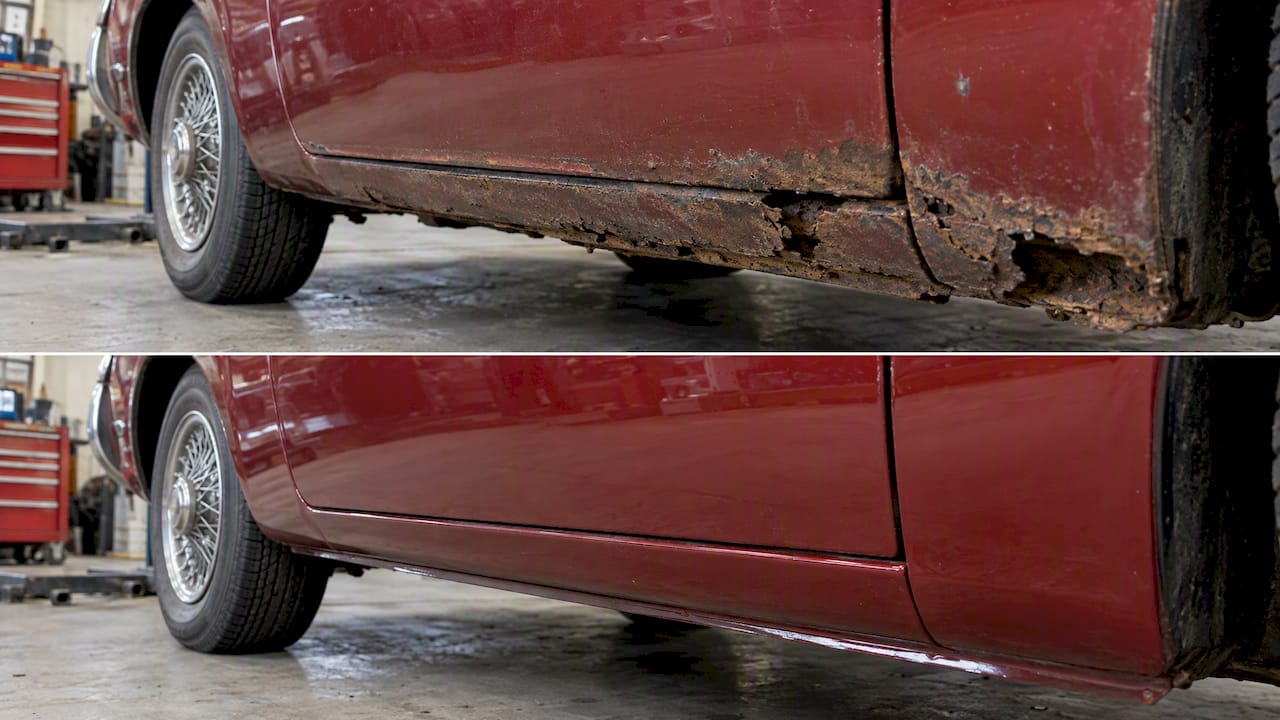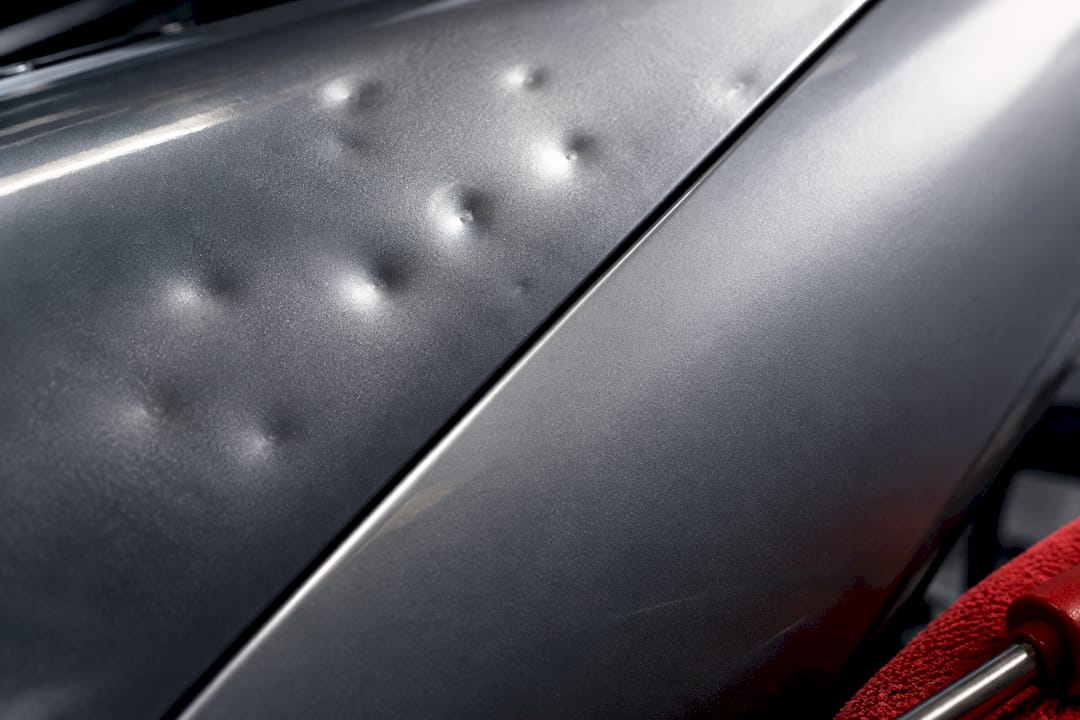
Yes, hail dents on aluminum panels can often be repaired with paintless dent repair when the paint is intact and a technician can reach the backside of the panel without forcing it. The catch is aluminum’s unforgiving nature: it work-hardens fast and cracks quietly. Your next move should be a technician inspection, including a magnified micro-crack check, not just a quick glance in a parking lot.
TL;DR:
- Aluminum hail dents are suitable for paintless dent repair only if the paint remains intact and there is clear backside access.
- Repairs on aluminum panels often take longer and are less predictable because the metal work-hardens quickly and resists straightening.
- A thorough inspection using a magnifying lens and a film-thickness gauge is essential to detect micro-cracking and hidden damage that could lead to corrosion.
- When repairs involve extensive dent saturation or damage on bodylines, conventional bodywork or panel replacement may be necessary instead of PDR.
- Always verify that backside corrosion protection is restored and that no drilling or cutting was used, to ensure a lasting, factory-quality repair.
Table of Contents
- How Do You Know if Your Aluminum Hail Dents Qualify for PDR?
- Why Aluminum Behaves Differently Than Steel Under a Dent Tool
- PDR, Glue Pulling, Bodywork, or Replacement: Which Fits Your Dent?
- What Should Happen After Your Aluminum Panel Gets PDR Work?
- How Long Will It Take, What Will It Cost, and What Does Your Insurer Need to Know?
- Why Mobile PDR Specialists Matter for Aluminum Hail Repair
- How Denterasers LLC Handles Aluminum Hail Damage
- Sources
- FAQ
How Do You Know if Your Aluminum Hail Dents Qualify for PDR?
Not every ding on your hood or roof is a good candidate, and aluminum is pickier than steel about which repairs actually stick. Before you book anything, walk around your vehicle and check a few things yourself, because it’ll help you have a smarter conversation with whoever inspects it.
Paint condition is the first gate. If the paint over a dent is chipped, cracked, or missing, PDR is usually off the table because pushing or pulling metal under damaged paint just spreads the flaw. Intact paint is what makes the whole technique possible in the first place.
Size, depth, and location matter almost as much. A shallow dent on a flat door panel behaves completely differently than one sitting on a bodyline, crown, or panel edge, where the metal was already stressed during manufacturing. Dent saturation counts too. A hood with 40 small dimples clustered together behaves differently than the same panel with six scattered ones, since overlapping stress areas are harder to coax back into shape.
Then there’s backside access, which is the part most owners never think about until a technician explains it. Braces, wiring harnesses, sound-deadening material, and bonded structural panels can all block the tool path a technician needs to work the dent from behind.
A proper pre-repair check usually includes:
- Visual paint inspection under good light, looking for hairline cracks around dent edges
- A 30x magnifying loupe pass over the damaged area
- A film-thickness gauge check to spot prior refinishing that might hide older repair work
- Physical confirmation that the panel back is reachable without removing major components
Pro Tip: Take photos of your hail damage in direct sunlight right after the storm. Sunlight raking across the panel shows dent boundaries and saturation far better than shade, and it gives your technician a baseline before any repair work starts.
Why Aluminum Behaves Differently Than Steel Under a Dent Tool
Aluminum simply doesn’t want to bounce back the way steel does. It has less shape memory, meaning a dent tends to stay put rather than spring partway toward its original contour. I-CAR guidance on aluminum panels notes that damage sitting on bodylines or crowns can resist straightening because those zones were already work-hardened during the stamping process.
Work-hardening also happens during repair itself. Every pass with a tool stiffens the metal a bit more, and a spot that felt workable ten minutes ago can suddenly resist movement entirely. That’s the aluminum trap: technicians get fewer clean attempts than they would on steel before the metal fights back.
Heat complicates things further. Some aluminum repairs allow controlled heating to help metal relax, but only within narrow OEM-specified ranges. Volkswagen’s guidance requires thermo-strip verification during any heat application, because aluminum doesn’t show visible tempering colors the way steel does. Overheat it, and you’ve weakened the panel invisibly with no obvious sign anything went wrong.
Practical fallout for you as an owner:
- Aluminum repairs generally take longer than the equivalent steel job
- Technicians often need more physical effort per dent because of faster work-hardening
- Partial removal is more common. A dent might improve 90% but never fully disappear
- Escalation to conventional bodywork happens more frequently than with steel panels
PDR, Glue Pulling, Bodywork, or Replacement: Which Fits Your Dent?
Four repair paths exist for aluminum hail damage, and the right one depends entirely on what your inspection turns up.
- Paintless dent repair. Best when paint is fully intact and backside access is open. It preserves the factory finish and avoids repainting entirely, which is why it’s the first option any competent technician tries.
- Glue pulling and tab systems. Useful when backside access is limited or blocked but the dent is shallow. A technician bonds a tab to the painted surface and pulls from the front, no reach-behind required.
- Conventional bodywork. Hammer-and-dolly work, controlled heat shrinking, filler, and refinishing come into play once paint is damaged, metal has stretched, or a tear has opened. This restores the panel but sacrifices the untouched factory finish PDR would have preserved.
- Panel replacement. Structural damage, torn edges, or extremely high dent saturation can make repair less practical than swapping the panel outright, especially on load-bearing sections.
The smart sequence is to try the least invasive option first and only escalate when the evidence demands it. Combining PDR with limited conventional touch-up is common on real jobs. A technician might pull most of a dent with PDR, then use a thin skim of filler on the one spot that won’t fully release, which cuts down on the primer and repainting a full conventional repair would otherwise require.
What pushes a job toward escalation:
- Micro-cracking discovered during inspection
- Metal that feels stretched or “oily” under a gloved hand
- Damage sitting directly on a bodyline or crown
- Dent counts so high that individual PDR work no longer makes financial sense compared to refinishing
What Should Happen After Your Aluminum Panel Gets PDR Work?
A repair isn’t finished just because the dent is gone. What happens next separates a lasting fix from one that causes trouble down the road.
Rivian’s own position statement on aluminum PDR requires technicians to check completed work with a 30× magnifying glass specifically looking for paint micro-cracking that tool pressure can introduce even when the repair looks flawless from three feet away. That same guidance calls for restoring any factory corrosion protection on the panel backside that repair tools disturbed, using approved materials rather than a generic sealant grabbed off a shelf.
This backside step matters more than most owners realize. Corrosion protection sits where you can’t see it, so a technician skipping this restoration leaves the door open for rust to start from the inside out, years after the hail is forgotten.
Before you consider a repair finished, ask your technician to confirm:
- A magnified inspection was performed on every worked panel
- Backside corrosion protection was restored, not just checked
- No drilling or cutting was used to gain tool access, which OEM guidance generally prohibits
- Vehicle-specific repair procedures were followed rather than a one-size-fits-all approach
Pro Tip: Ask for this confirmation in writing, even a simple text or email. It costs the shop nothing to send and gives you a record if a corrosion issue surfaces later.
How Long Will It Take, What Will It Cost, and What Does Your Insurer Need to Know?
After a major hailstorm, demand spikes fast, and wait times can stretch to several weeks at busy shops. Some technicians offer temporary measures to keep a vehicle safe and drivable while it waits its turn in the queue.
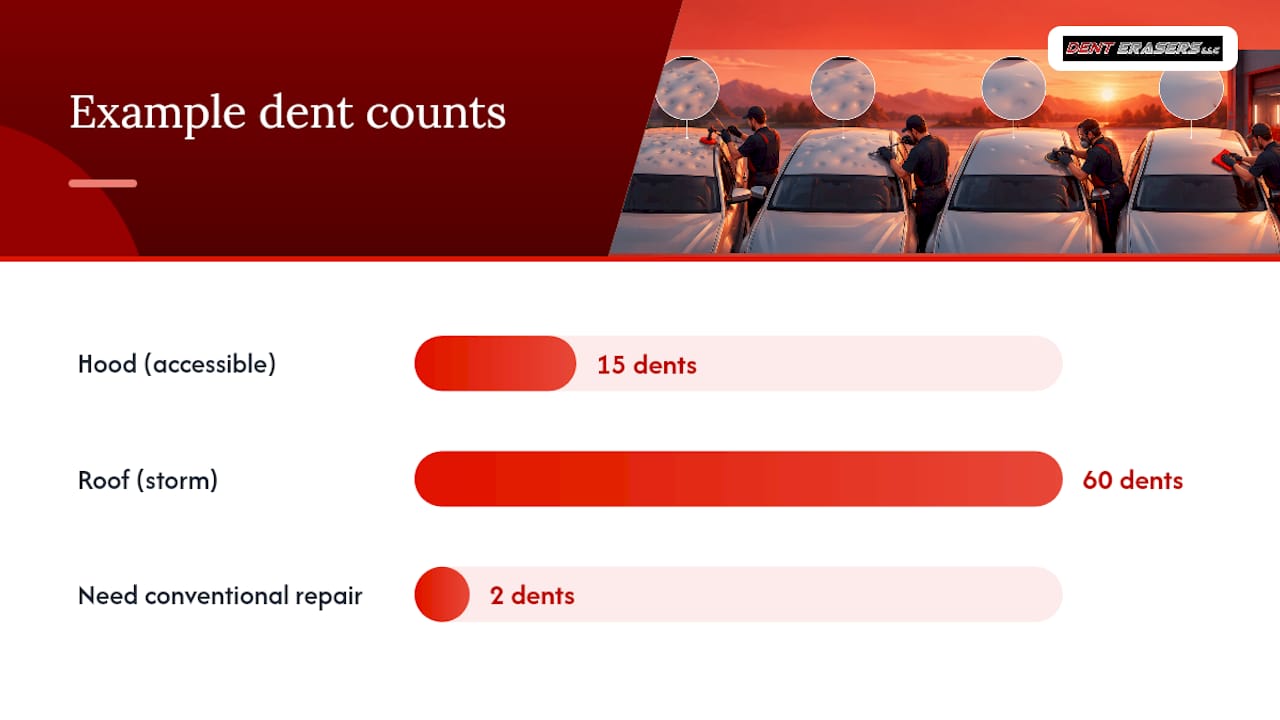
Cost swings mainly on three factors: how many dents you’re dealing with, how accessible those panels are from behind, and whether any of them need refinishing or replacement instead of straight PDR. A hood with 15 accessible dimples costs far less to fix than a roof with 60 dents plus two that turn out to need conventional repair.
For big storm events, many shops now lean on touchless hail scanning systems that count and size dents quickly to speed up estimating across dozens of vehicles at once. That speed helps with paperwork, but it doesn’t replace a hands-on check for micro-cracking, which no scanner catches from the outside.
When you talk to your insurer or estimator, ask directly:
- How would a micro-crack finding change my coverage or approved repair method?
- Are OEM-specific repair procedures actually being enforced on my vehicle, or just general aluminum guidelines?
Why Mobile PDR Specialists Matter for Aluminum Hail Repair
Hail damage on aluminum rewards patience and punishes shortcuts, and that’s exactly the gap mobile PDR specialists are built to close. Working onsite means a technician can inspect your panels in your driveway, under real daylight, without you losing a day sitting in a shop waiting room.
Mobile PDR fits cleanest when paint is intact and access is workable. It’s not the right call once metal has stretched, torn, or lost paint entirely. Those cases genuinely need shop-based conventional bodywork.
Whoever you book, insist on the specifics: a magnified micro-crack check, corrosion protection restoration, and confirmation that vehicle-specific procedures were followed rather than generic aluminum handling.
— Brian Blanc
How Denterasers LLC Handles Aluminum Hail Damage
Denterasers LLC is the alternative to sitting in a body shop waiting room for aluminum hail repair. We come to your driveway, inspect the damage where your car actually sits, and handle everything from a handful of dimples to a hailstorm’s worst work, using Paintless Dent Repair that keeps your factory finish intact instead of sending you through a full repaint.

When you book, tell us whether you’re dealing with scattered small dings or a heavily saturated panel. We’ll walk you through what we’re checking for: paint condition, backside access, and the magnified inspection that catches micro-cracking before it becomes a corrosion problem down the road. If your damage runs deep, our Large Dent Repair service covers heavier hail work, while lighter damage fits our Minor Dent Repair option. We also help with insurance claim documentation so you’re not sorting through adjuster questions alone.
Ready to find out what your aluminum panels actually need? Schedule an onsite estimate through our mobile dent repair page and get a straight answer instead of a guess.
Sources
For readers who want the source documents behind this guidance, or want to hand something concrete to their estimator: Rivian’s PDR position statement, I-CAR’s aluminum cosmetic repair guidance, and our own breakdown of PDR on aluminum panels all cover the technical detail this article summarizes. Share these with your technician if there’s ever a disagreement about what aluminum allows.
- Cosmetic repairs to aluminum exterior panels — I-CAR
- Chief Collision Technology announces touchless hail claim management solution — CollisionWeek
FAQ
Can All Hail Dents on Aluminum Panels Be Fixed With PDR?
No. PDR works best when the paint over the dent is intact and a technician has clear access to the panel’s backside. Chipped paint, torn or stretched metal, and blocked access typically push the repair toward conventional bodywork instead.
How Do Technicians Check for Micro-Cracking After Aluminum PDR?
Technicians use a 30× magnifying glass to examine the repaired paint surface for hairline cracks that tool pressure can introduce even when the dent looks fully removed. This step comes directly from Rivian’s own repair guidance and applies to aluminum PDR broadly, not just that one brand.
Why Does Aluminum Take Longer to Repair Than Steel?
Aluminum has less shape memory and work-hardens faster than steel, so a dent tends to resist movement the more a technician works it. I-CAR notes that damage near bodylines or crowns can be especially stubborn, which often means more time and effort per panel compared to an equivalent steel repair.
How Much Does It Cost to Repair Hail Dents on Aluminum Panels?
Cost depends mainly on how many dents are present, how accessible the panels are from behind, and whether any spots need refinishing rather than straight PDR. Denterasers LLC’s Paintless Dent Repair service prices typical jobs within a defined range, while heavier hail damage may fall under Large Dent Repair with variable pricing depending on scope.
What Should I Ask My Technician Before Approving an Aluminum Dent Repair?
Ask whether they’ll perform a magnified micro-crack check after the repair and whether they’ll restore any backside corrosion protection disturbed during tool work. Both steps are part of proper aluminum repair procedure and should never be skipped just because the dent visually disappears.