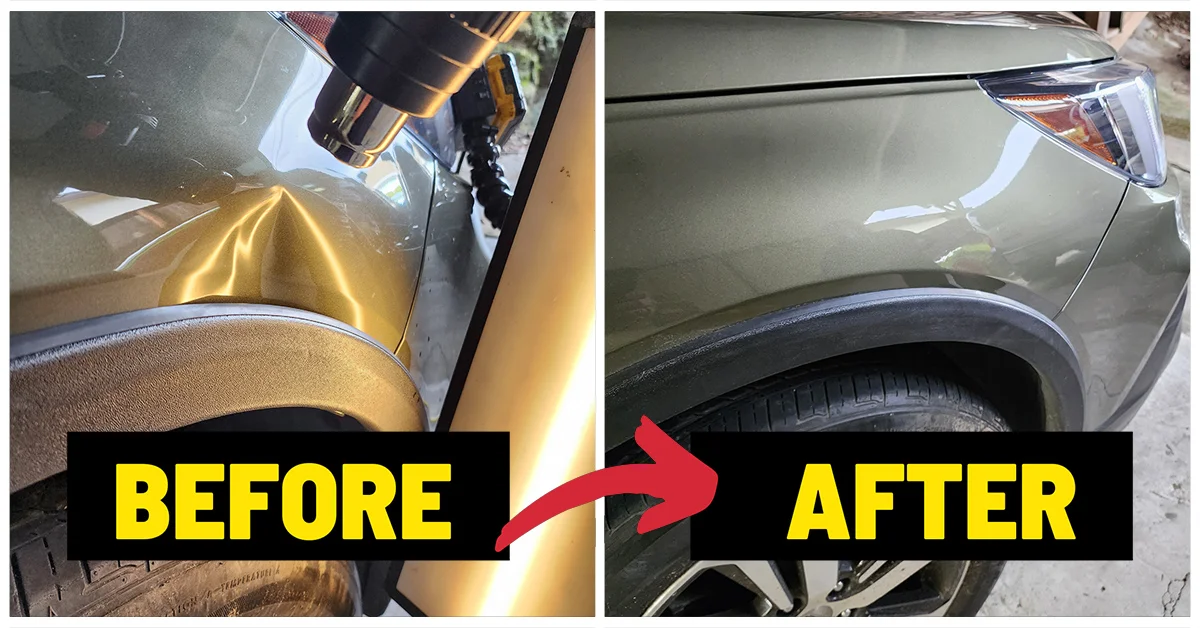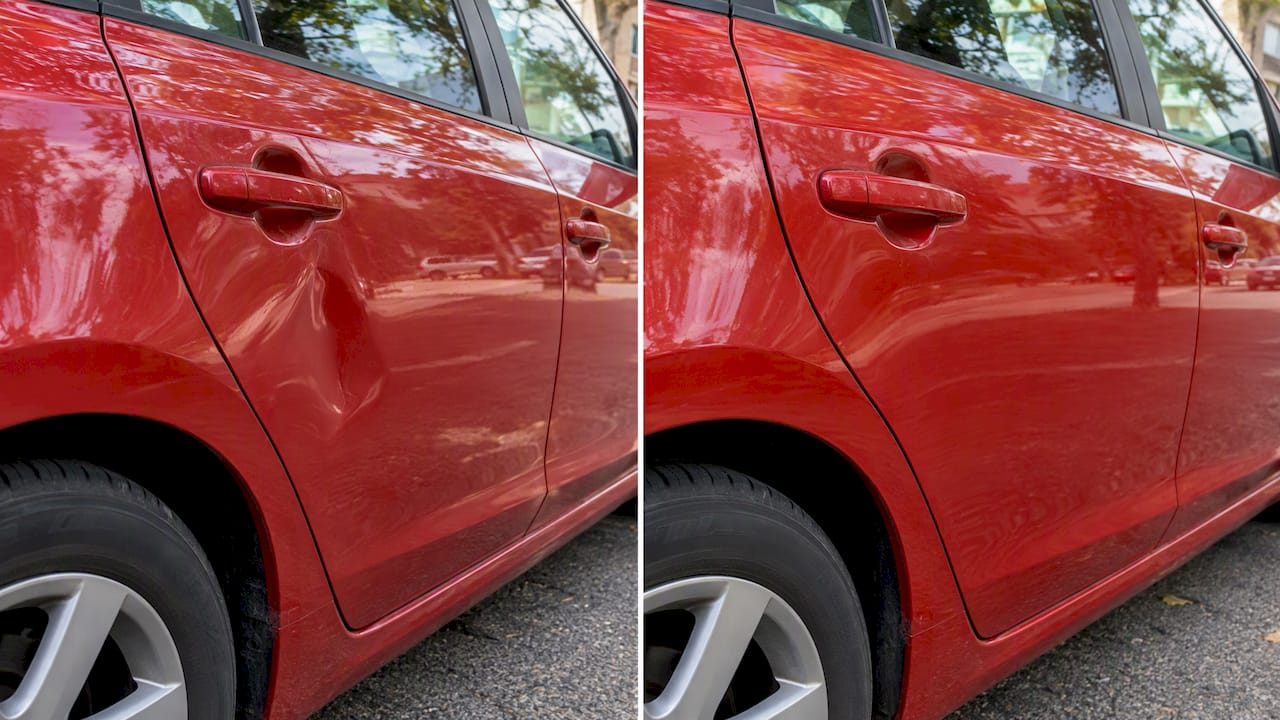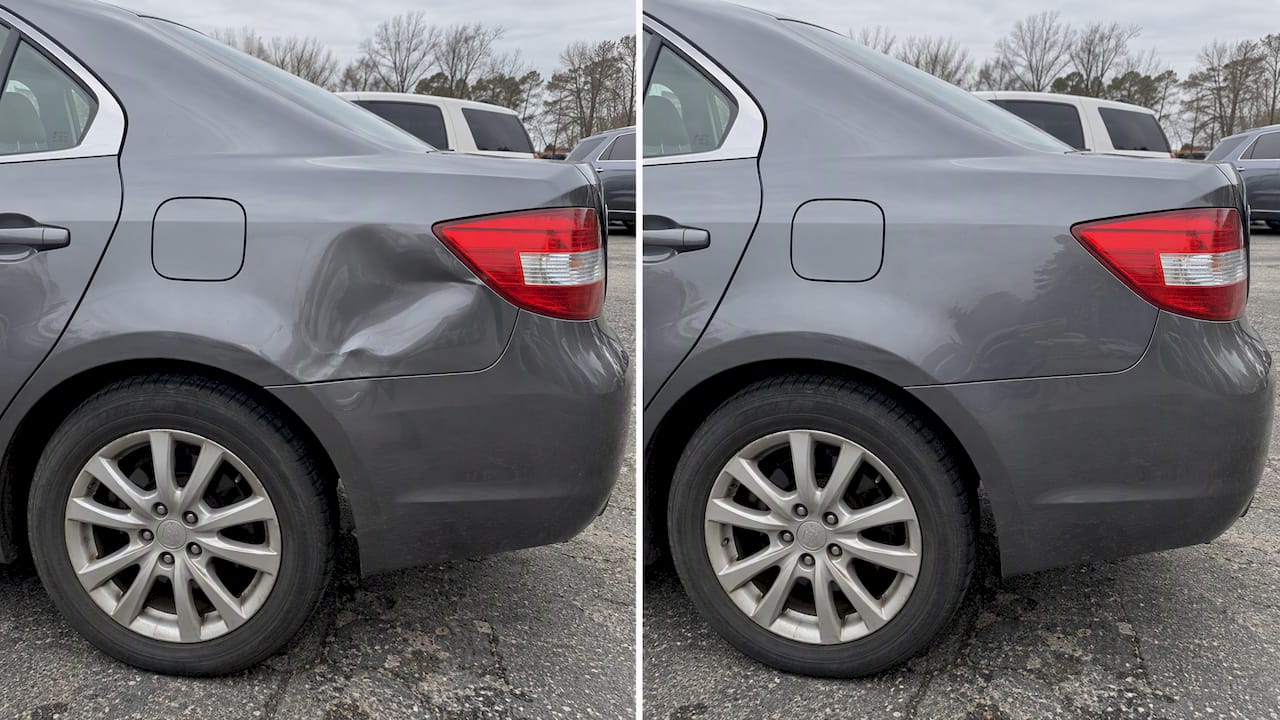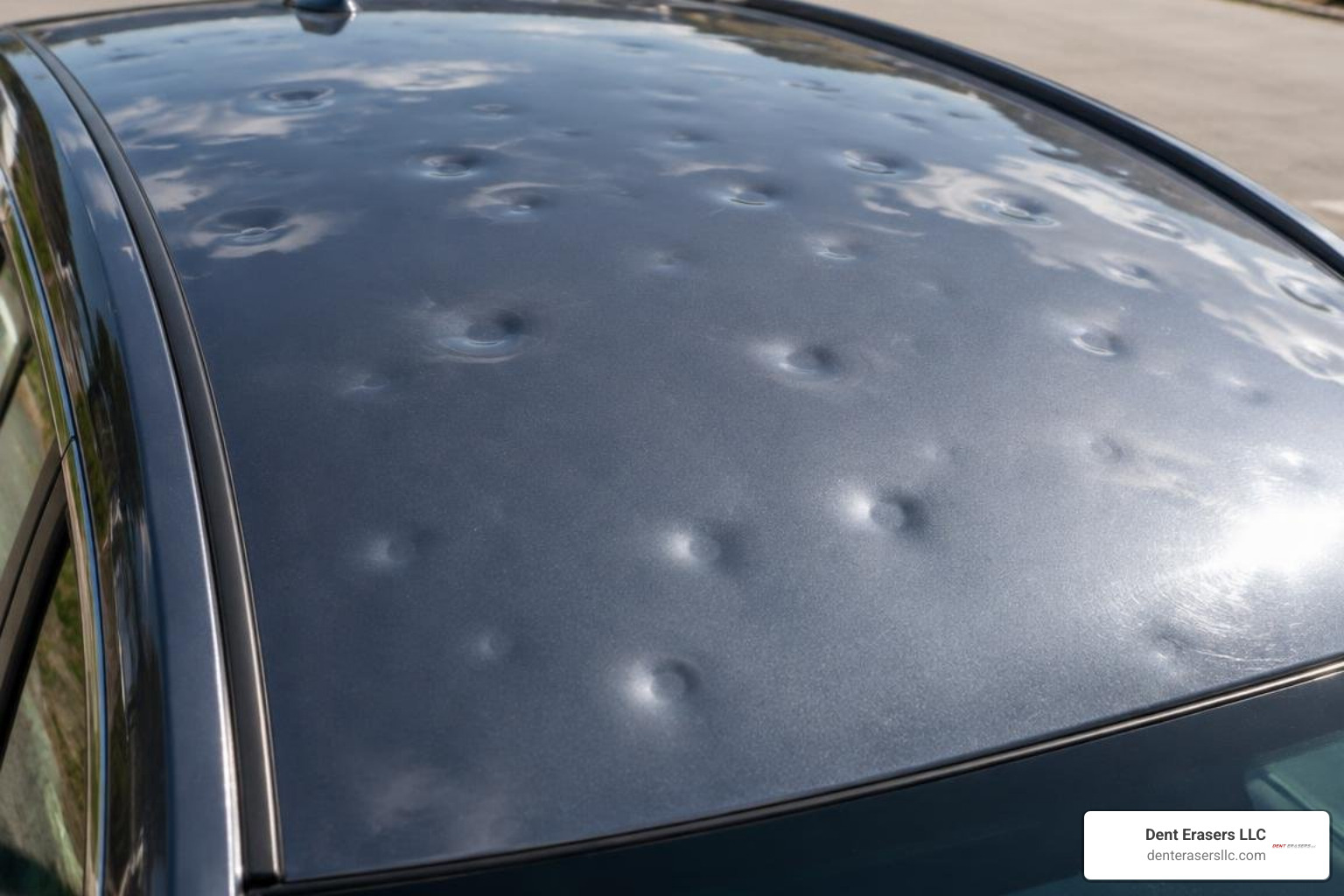
Collision repairs permanently reduce a car’s resale value because the accident record follows the vehicle forever. The industry term for this loss is diminished value, and it applies even when repairs are flawless. Understanding how collision repairs affect value is the first step toward protecting your financial interest, whether you plan to sell privately, trade in at a dealership, or file an insurance claim. The severity of the damage, the quality of the repair, and the vehicle’s history report all determine how much money you stand to lose.
What is diminished value and how does it quantify post-accident depreciation?
Diminished value is the measurable gap between a vehicle’s pre-accident market value and its post-repair market value. The concept breaks into three types: inherent diminished value, repair-related diminished value, and immediate diminished value.
Inherent diminished value is the most common type. It reflects the market stigma attached to any accident record, regardless of how well the car was fixed. Repair-related diminished value occurs when the repair itself falls short, leaving visible flaws, mismatched paint, or structural irregularities. Immediate diminished value is the gap right after the accident, before any repairs happen.
The financial impact varies significantly by damage severity:
| Damage Level | Typical Value Loss |
|---|---|
| Minor (cosmetic only) | 5%–10% |
| Moderate (panel and mechanical) | 10%–20% |
| Structural or severe | 30%–60% |
Value loss by severity is not a rough estimate. It is a documented market reality that buyers, dealers, and lenders apply systematically when pricing accident vehicles.
Vehicle history reports from services like Carfax and AutoCheck make this permanent. These reports log accidents, structural damage, and airbag deployment, creating an irreversible record that buyers consult before making any offer. A clean repair invoice does not erase what the history report shows.
Pro Tip: Request your own Carfax report before listing your car for sale. Knowing exactly what buyers will see lets you price realistically and prepare documentation that supports your asking price.
How do repair quality and parts choice influence resale after collision repairs?
Repair quality directly controls how wide or narrow the diminished value gap becomes. A poor repair makes the loss worse. A high-quality repair using original equipment manufacturer (OEM) parts narrows the gap, but it cannot close it entirely.
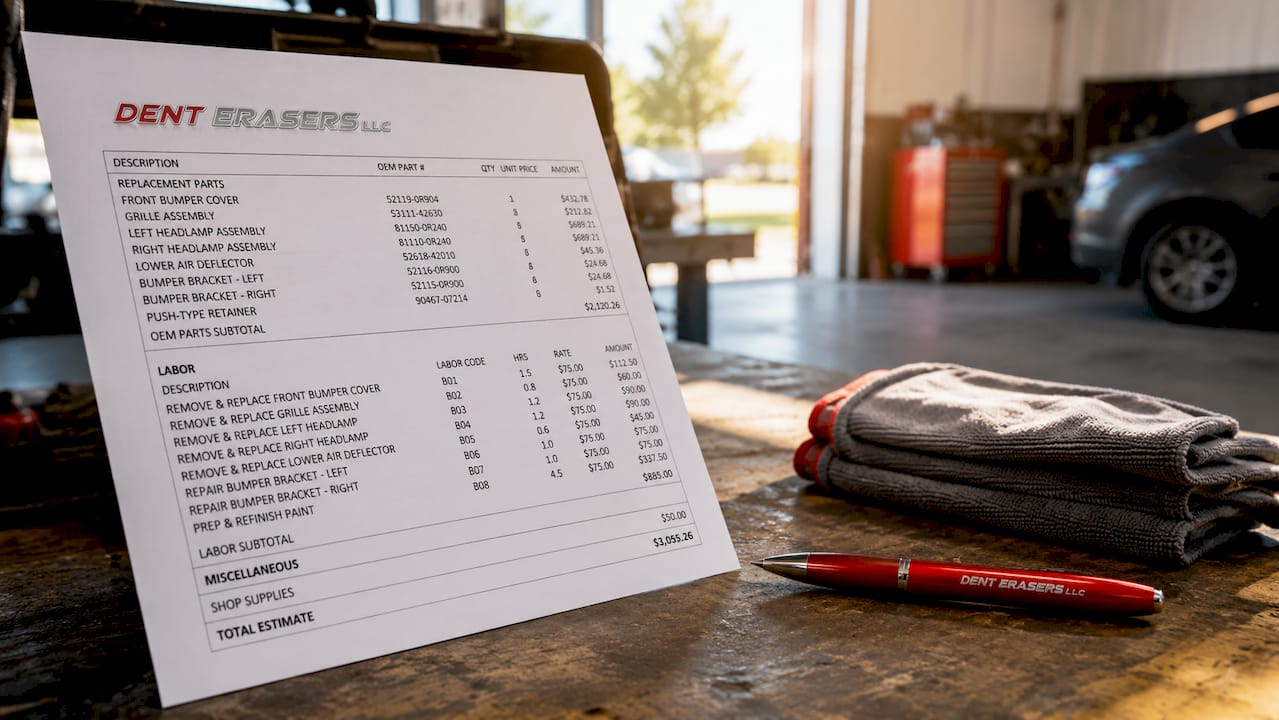
The choice between OEM and aftermarket parts matters more than most owners realize. OEM parts match the original factory specifications for fit, finish, and structural integrity. Aftermarket parts often introduce subtle misalignments that trained buyers and appraisers spot immediately. Repair quality affects diminished value in ways that go beyond cosmetics.
Key repair factors that influence resale value:
- Structural repairs cause the deepest value loss. Frame labor entries on a repair invoice signal to buyers that the car absorbed serious force.
- Aftermarket body panels can affect panel gaps, paint adhesion, and long-term corrosion resistance.
- Advanced Driver Assistance Systems (ADAS) calibration is a hidden risk. Sensors embedded in bumpers, mirrors, and windshields require precise recalibration after any collision. ADAS calibration errors from using non-OEM parts can create latent safety issues that further reduce residual value.
- Repair documentation matters at appraisal. A detailed invoice showing OEM parts, certified labor, and calibration records supports a stronger claim and a higher trade-in offer.
Modern buyers are sophisticated. They search repair invoices for terms like “frame labor” or “setup and measure” as red flags for structural damage. Hiding the severity of a repair is nearly impossible when buyers know what to look for.
Pro Tip: Ask your repair shop for a complete, itemized invoice that lists every part by OEM part number. That document becomes your best evidence when filing a diminished value claim or negotiating a trade-in.
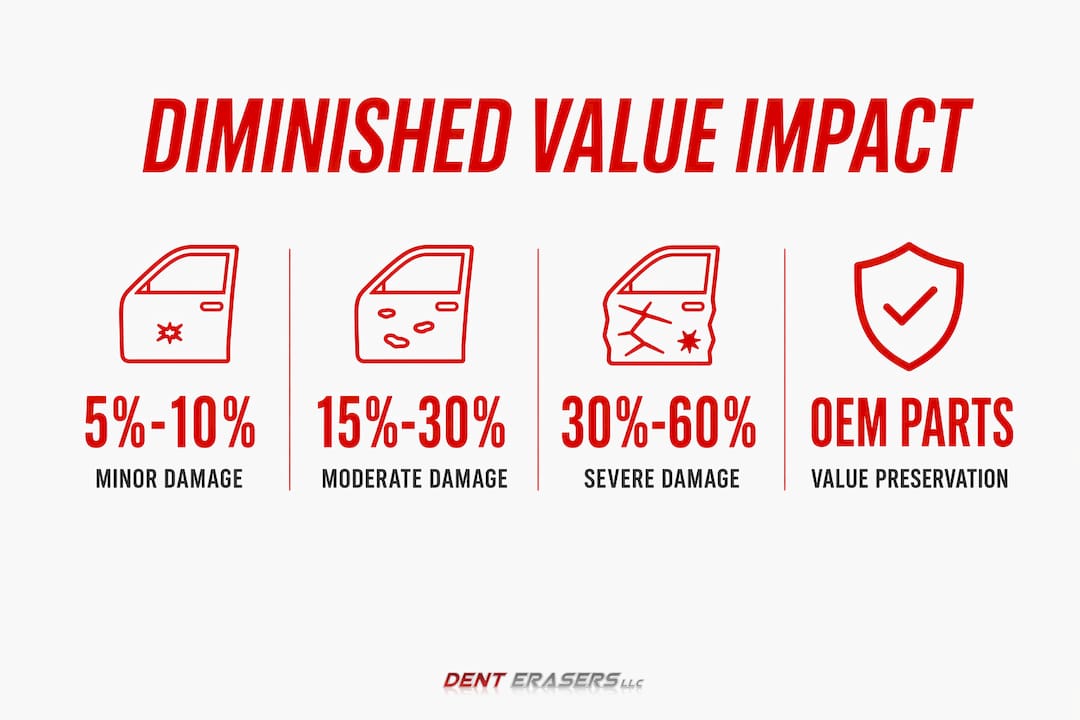
Understanding why professional collision repairs matter goes beyond aesthetics. The quality of the work directly shapes what your car is worth when you sell it.
Which factors amplify or mitigate the value lost from collision repairs?
Several variables determine whether your car loses 5% or 50% of its value after a collision. Knowing them helps you set realistic expectations and make smarter decisions.
- Damage severity classification. Minor cosmetic damage carries the smallest penalty. Moderate damage involving mechanical components sits in the middle range. Severe or structural damage triggers the steepest discounts.
- Airbag deployment. This single event adds a measurable penalty on top of the base loss. Airbag deployment adds 5%–15% to the total value reduction because buyers associate it with high-impact collisions.
- Vehicle class. Luxury vehicles suffer steeper dollar losses. A $45,000 luxury car can lose $9,000–$12,000 in value from a moderate accident, while a $20,000 mainstream sedan loses proportionally less in absolute terms.
- Buyer psychology and market stigma. Buyers discount accident vehicles based on fear of future problems, not just the current repair state. They worry about alignment drift, electrical gremlins, and water intrusion that may not appear for months.
- Dealer and lender practices. Dealers and lenders apply systematic discounts to accident vehicles regardless of repair quality. Trade-in algorithms factor accident history into every offer. Understanding why dealer trade-in offers run low on accident vehicles helps you decide whether to sell privately or accept a trade-in.
Market conditions also play a role. In a tight used-car market, accident vehicles sell closer to their post-repair value. In a buyer’s market, the stigma discount widens because buyers have more choices.
What steps can car owners take to protect or recover value after collision repairs?
Car owners have real options to recover some of the financial loss. Acting quickly and documenting everything makes the difference between a weak claim and a strong one.
- Get an independent appraisal. Insurance companies use a formula called the 17c calculation that systematically underestimates diminished value. An independent appraiser establishes the true market loss with comparable sales data and a formal report.
- File a third-party claim when possible. Diminished value claims are most viable as third-party claims against the at-fault driver’s insurer. First-party claims under your own policy are rarely covered in most states.
- Document pre-accident condition. Gather photos, service records, and any prior appraisals that establish what the car was worth before the accident. Proving diminished value requires linking the accident to a documented market loss.
- Choose a certified shop with OEM parts. The repair quality you select today shapes the appraisal value you receive tomorrow. Refer to a thorough auto repair checklist to confirm every step is covered before signing off on the work.
- Act within your state’s statute of limitations. Diminished value claims have filing deadlines that vary by state. Missing the window forfeits your right to recover.
Pro Tip: Collect two or three dealer trade-in quotes after your repair is complete. Written offers from dealers showing a lower value than pre-accident estimates serve as concrete market evidence in a diminished value claim.
Key Takeaways
Collision repairs reduce resale value permanently because accident records create market stigma that no repair, however flawless, can fully erase.
| Point | Details |
|---|---|
| Diminished value is real and measurable | Accidents reduce resale value 5%–60% depending on damage severity, regardless of repair quality. |
| Repair quality narrows the gap | OEM parts, certified labor, and ADAS calibration limit additional loss beyond inherent diminished value. |
| Airbag deployment amplifies loss | Airbag events add 5%–15% to the base value reduction and signal high-impact collisions to buyers. |
| Independent appraisals outperform insurance formulas | The 17c formula underestimates claims; a third-party appraisal establishes true market loss. |
| Documentation is your strongest asset | Pre-accident records, itemized repair invoices, and dealer trade-in quotes support every claim. |
What I’ve learned about the gap between a perfect repair and full value recovery
After years of working on vehicles across Contra Costa County, I’ve watched owners make the same mistake repeatedly. They invest in a quality repair, the car looks perfect, and they assume the value is fully restored. It is not.
The market does not care how good the repair looks. Even flawless repairs cannot erase the economic stigma of an accident record. Buyers read the history report first and form their opinion before they ever see the car. By the time they’re standing in your driveway, the discount is already calculated in their head.
What I tell every customer is this: the repair protects the car’s function and appearance, but the documentation protects your money. The owners who recover the most value are the ones who treat paperwork with the same seriousness they give the physical repair. They get independent appraisals, they keep every invoice, and they file claims before deadlines pass.
Buyer sophistication is also rising. People researching minor collision damage types before buying a used car know exactly what “frame labor” means on a repair invoice. The days of hiding structural damage behind a fresh paint job are over. Your best move is transparency paired with the strongest possible repair quality.
— Brian Blanc
Denterasersllc repairs that support your vehicle’s value
Choosing the right repair shop is one of the few decisions you control after an accident. Denterasersllc specializes in collision and dent repair services across Contra Costa County, with a focus on preserving your vehicle’s factory finish and structural integrity.
Every repair at Denterasersllc uses techniques that protect original paint and minimize the visible evidence of damage. From seamless fender repairs that maintain factory aesthetics to full collision work across top car brands, the goal is always the same: give you the strongest possible foundation for a diminished value claim and the best shot at retaining resale value. Mobile service means the work comes to you, with no shop delays.
FAQ
Does a repaired car always lose resale value?
Yes. Accident records on vehicle history reports create permanent market stigma that reduces resale value even after a complete, high-quality repair.
What is the average value loss after a collision repair?
Value loss ranges from 5%–10% for minor cosmetic damage up to 30%–60% for structural or severe damage, with moderate repairs falling in the 10%–20% range.
Can I file a diminished value claim with my own insurance?
First-party diminished value claims are excluded from most standard personal auto policies. Your strongest option is a third-party claim against the at-fault driver’s insurer.
Do OEM parts help preserve resale value after a collision?
OEM parts reduce repair-related diminished value by maintaining factory fit, finish, and ADAS calibration accuracy. Aftermarket parts often widen the value gap by introducing alignment and calibration issues.
How long do I have to file a diminished value claim?
Filing deadlines vary by state and are governed by the statute of limitations for property damage claims. Acting within the first year after the accident gives you the most options and the strongest evidence.