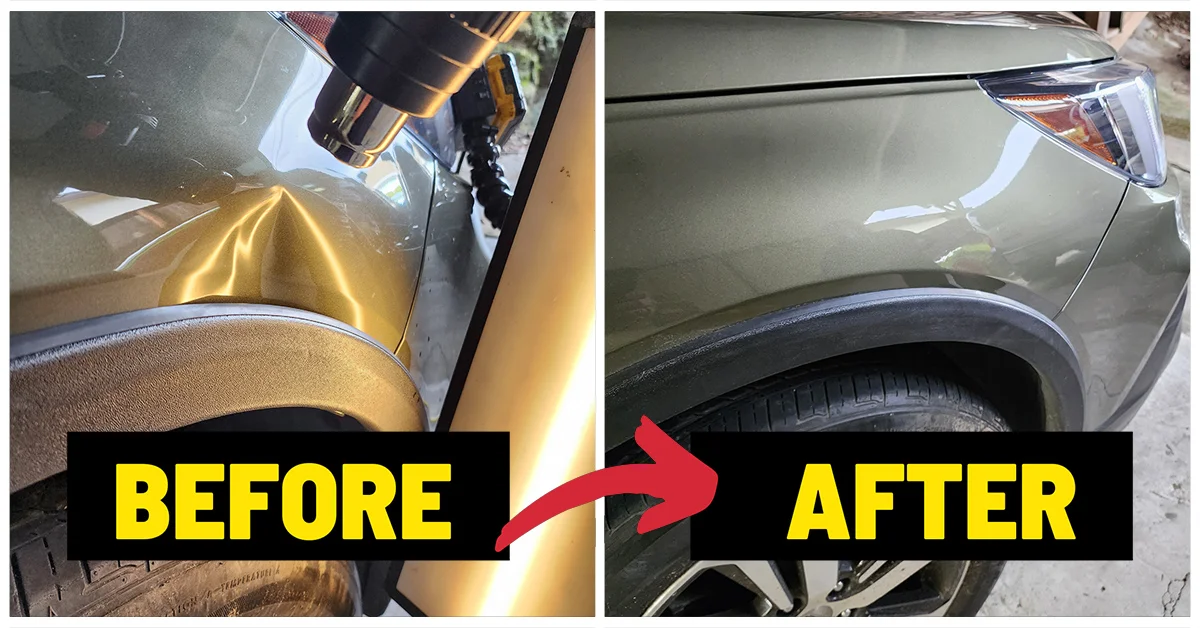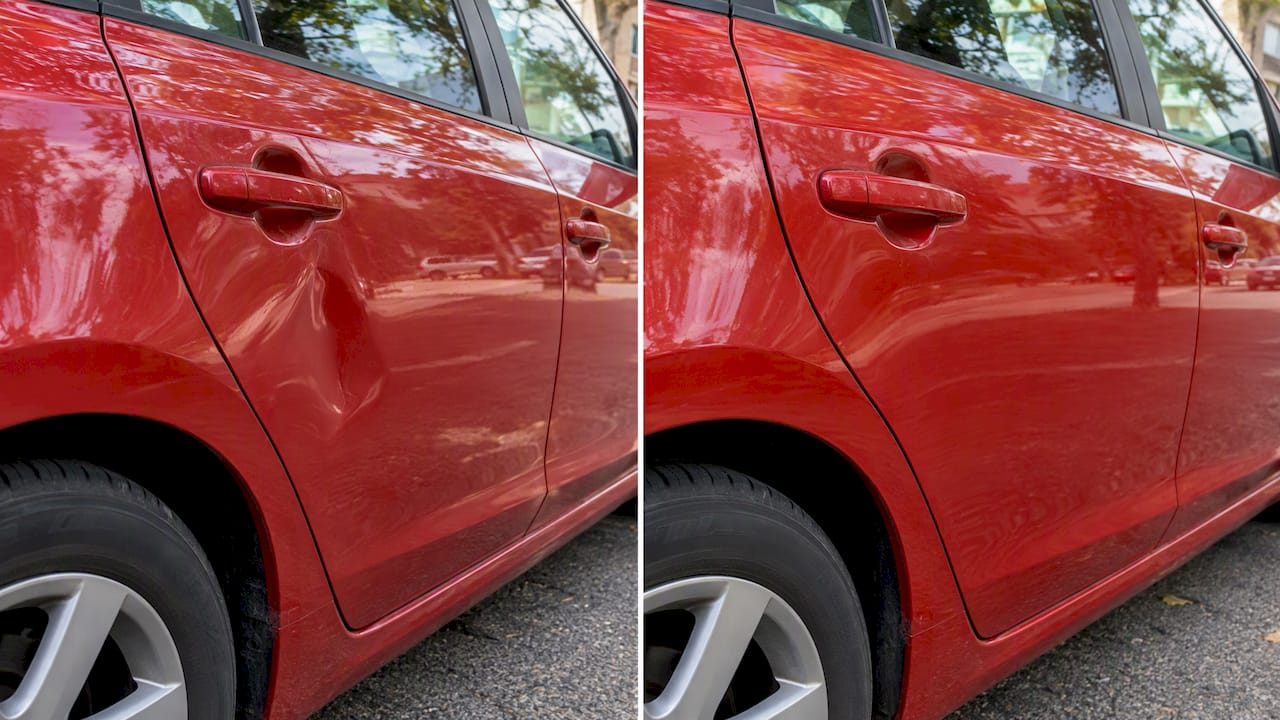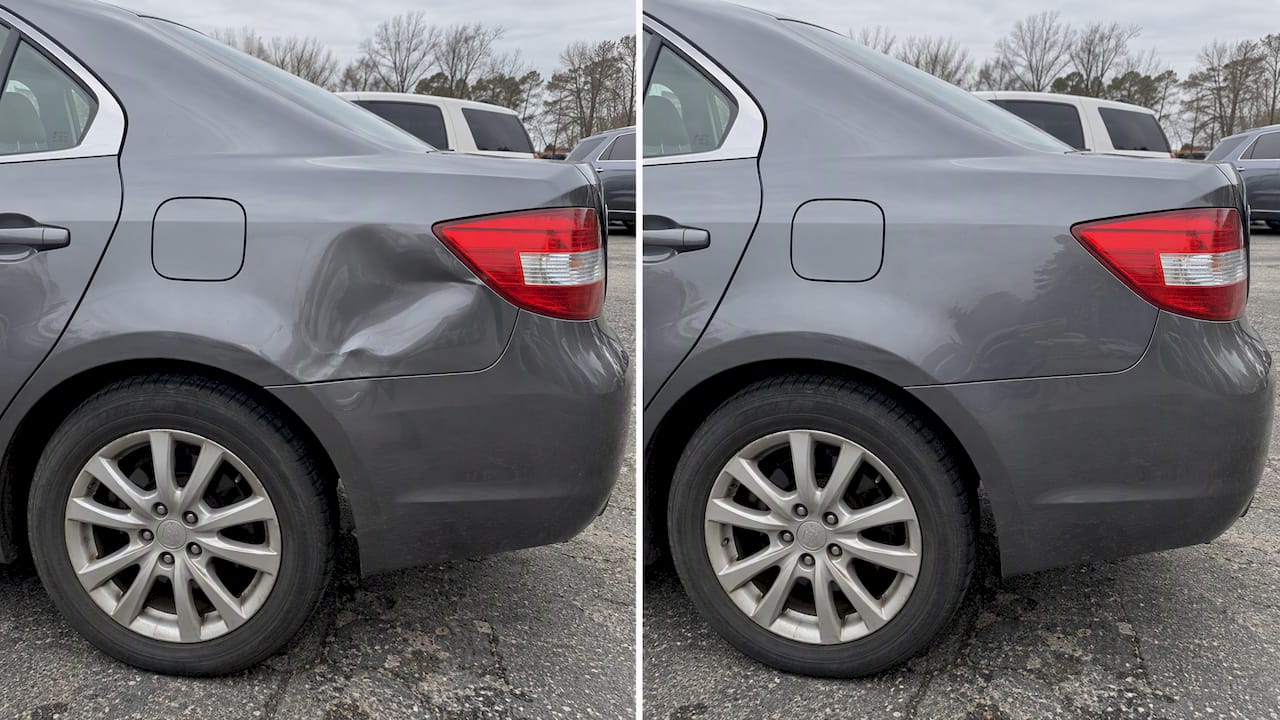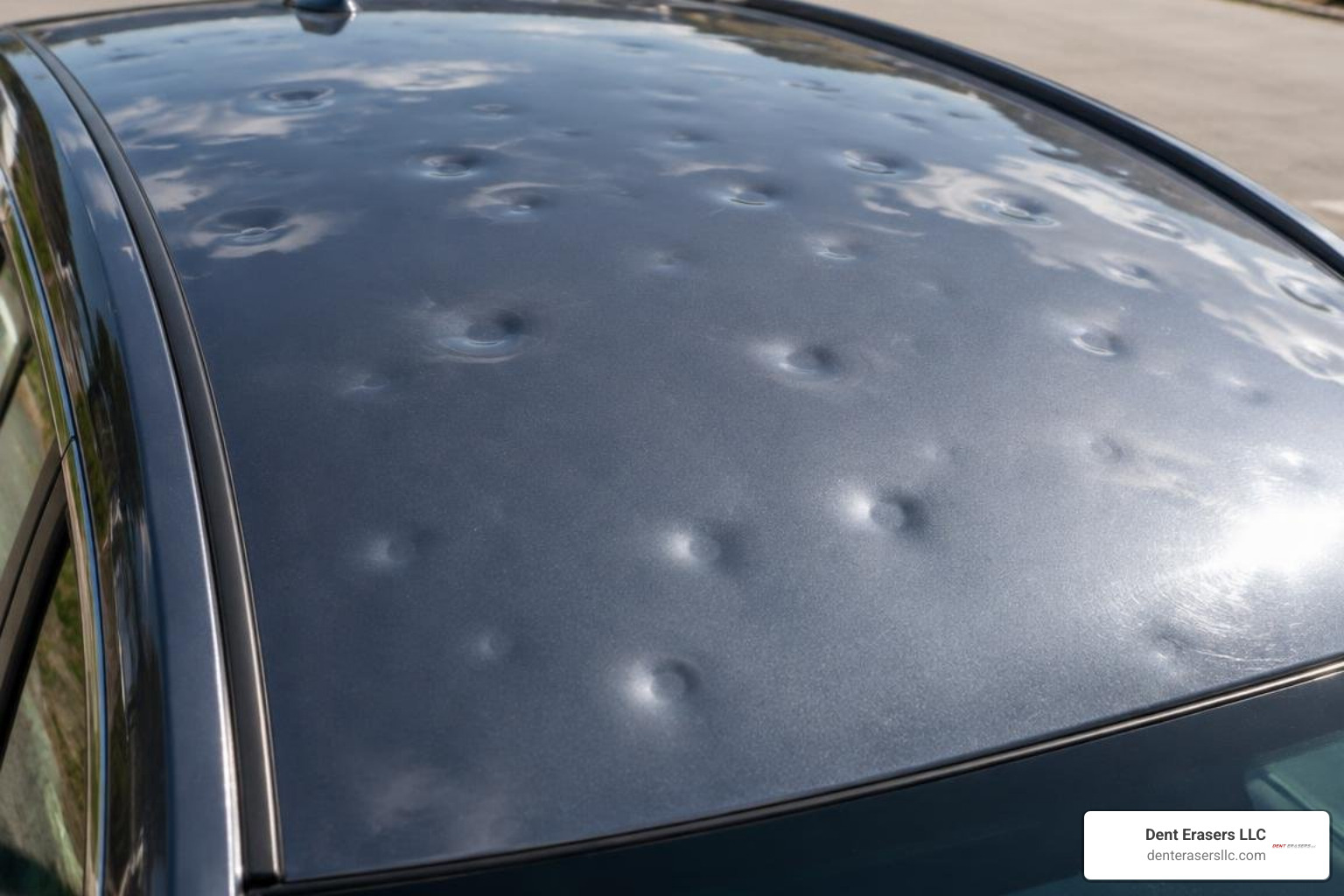
Dent repair fraud is a deliberate scheme in which unqualified operators collect payment for vehicle repairs they either perform poorly or abandon entirely. Car owners who want to avoid dent repair scams need to understand one core truth: the auto body industry has a well-documented problem with transient operators who target people at their most vulnerable, right after a storm, a parking lot scrape, or a fender bender. Paintless dent repair (PDR), the industry’s preferred method for preserving factory paint while massaging metal back into shape, costs between $75 and $500 per dent when performed by a legitimate technician. Scammers exploit that price range by offering suspiciously low quotes, then either disappearing or leaving your vehicle worse than they found it.
What are common dent repair scams and how do they operate?
Fraudulent dent repair follows a predictable playbook. Knowing the script makes it far easier to walk away before any damage is done.
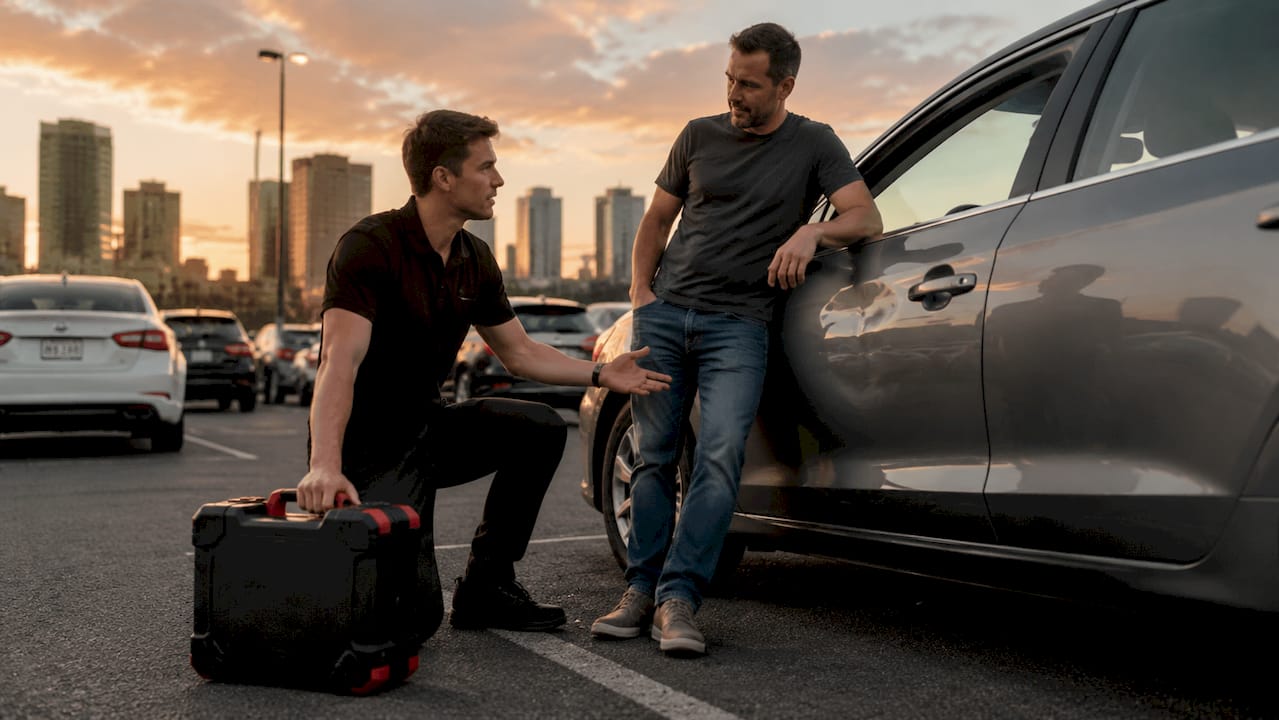
The most common scenario is the parking lot approach. A stranger walks up to your car, points out a dent you may not have noticed, and offers to fix it on the spot for cash. The pitch sounds reasonable. The urgency is manufactured. These operators often use drilling, over-pulling, or colored paste to mask damage rather than repair it, leaving you with distorted panels and compromised paint that costs far more to fix properly.
Storm chaser crews operate on a larger scale. They arrive within 48 hours of a major weather event and set up temporary operations targeting hail-damaged vehicles. Within six months, they are typically gone, which means any warranty they offered is unenforceable. You are left with no recourse and often no record of who performed the work.
Here are the most common tactics scammers use:
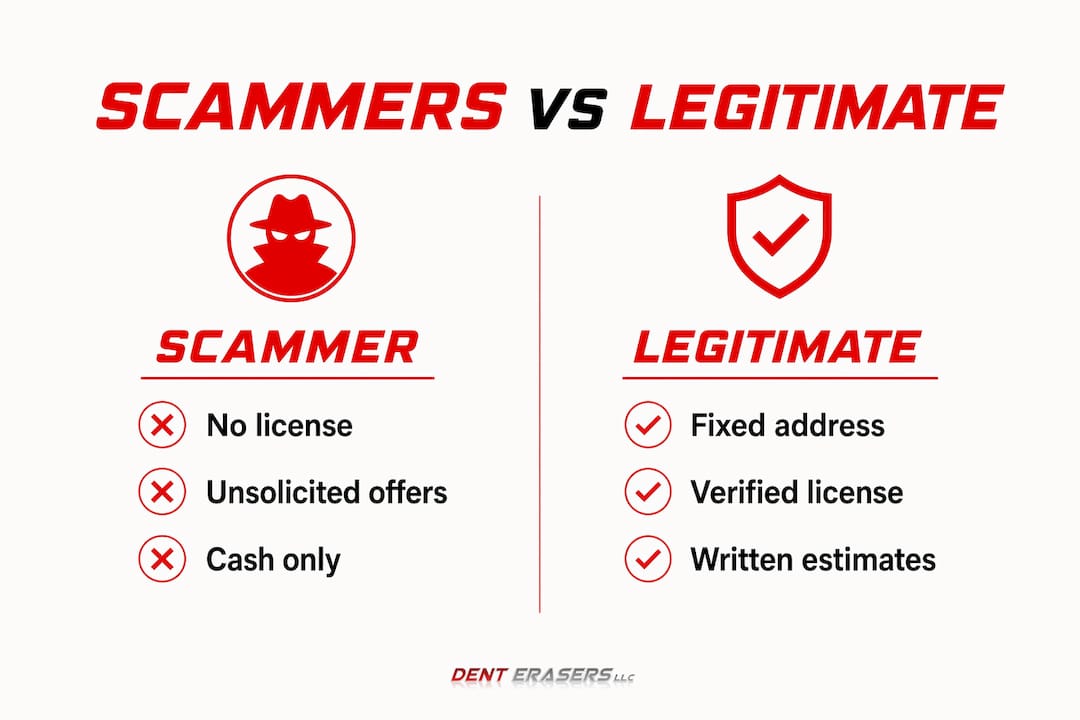
- Cash-only payment demands. Legitimate businesses accept traceable payment methods. Cash-only upfront payments are a reliable indicator of operators who plan to disappear.
- High-pressure closing tactics. Phrases like “this deal is only good today” or “I have one more job after this” are designed to prevent you from thinking clearly or comparing options.
- Sight-unseen quotes. A real PDR technician cannot price a repair without physically examining the dent under proper lighting. Any quote given from a photo or a glance is not a real estimate.
- No business address or verifiable license. Scammers operate from vehicles, not shops. They have no fixed location to return to if something goes wrong.
- Vague or verbal-only guarantees. A warranty that is not written down is not a warranty at all.
Pro Tip: If someone approaches you unsolicited about a dent, your default answer should be “no thank you.” Legitimate repair professionals do not solicit work in parking lots.
How do you identify a legitimate dent repair service?
Separating trustworthy providers from fraudulent ones comes down to verifiable credentials, professional environment, and transparent communication. Here is a step-by-step verification process:
- Confirm a fixed business address. A legitimate shop operates from a physical location you can visit, review online, and return to if there is a problem.
- Request proof of insurance and licensing. Any reputable operator carries liability insurance and holds the appropriate state business license. Ask for both before authorizing any work.
- Demand an in-person assessment. Professional PDR technicians use reflective light boards to assess dents accurately. No responsible technician quotes a price without this step.
- Ask for an itemized written estimate. Transparency about scope and pricing is a defining characteristic of reputable shops. If a provider avoids putting numbers in writing, treat that as a firm warning sign.
- Check multi-year review history. Look at Google, Yelp, and the Better Business Bureau. A business with reviews spanning several years has a track record worth trusting.
- Verify warranty terms in writing. A written warranty backed by a fixed business address is enforceable. A verbal promise from a transient operator is not.
The table below compares what you should expect from a legitimate provider versus a scammer:
| Criteria | Legitimate provider | Scammer |
|---|---|---|
| Business location | Fixed address, verifiable online | Vehicle-based, no permanent address |
| Payment methods | Credit card, check, or invoice | Cash only, upfront payment required |
| Estimate process | In-person assessment with written quote | Verbal quote, sight-unseen or on the spot |
| Warranty | Written, enforceable at a fixed location | Verbal only or no warranty offered |
| Pressure tactics | None. You set the timeline | “Today only” urgency, high-pressure close |
Pro Tip: Cross-reference any repair shop’s name against your state’s contractor licensing board. The search takes two minutes and eliminates a significant portion of fraudulent operators immediately.
Step-by-step actions to protect yourself before authorizing repairs
Taking a methodical approach protects both your vehicle and your wallet. Here is how to handle the process from the moment damage occurs:
- Decline unsolicited offers on the spot. Politely but firmly say no to any approach you did not initiate. You can always find a provider on your own terms.
- Research repair options independently. Search for local PDR specialists with verified reviews. Choosing the right PDR service requires comparing credentials, not just prices.
- Get at least two in-person estimates. Prices for PDR typically range from $75 to $500 per dent, while traditional body shop repairs can run $500 to $2,500 or more. Knowing the range helps you spot outliers on both ends.
- Understand the difference between PDR and traditional bodywork. PDR preserves your factory paint by working the metal from behind the panel. Traditional bodywork involves sanding, filler, and repainting. Knowing which method applies to your damage helps you evaluate whether a quote is realistic.
- Never authorize repairs under time pressure. Legitimate shops never pressure you to sign immediately. If a provider insists on a same-day decision, walk away.
One detail most car owners overlook: repeated amateur attempts to remove a dent destroy the metal’s memory, which is its natural ability to return to shape. Once metal is work-hardened from improper technique, professional repair becomes significantly more expensive. Waiting a day to find the right technician is always cheaper than undoing bad work.
Common mistakes that make car owners vulnerable to fraud
Most people who fall victim to dent repair fraud do so because of one of these avoidable errors:
- Accepting convenience over verification. A parking lot offer feels efficient in the moment. It rarely is. The time you save upfront is nothing compared to the time spent fixing botched work.
- Trying DIY fixes before consulting a professional. Suction cups, boiling water, and dry ice methods can stretch or crack paint. They also compromise the metal in ways that make professional PDR harder to perform correctly.
- Skipping the credential check. Many car owners assume that anyone offering a service is qualified to perform it. In the dent repair industry, that assumption is expensive. Mobile dent repair offers require thorough verification including insurance and licensing before any work begins.
- Treating all warranties as equal. A warranty from a business with a fixed address and five years of Google reviews is fundamentally different from a verbal promise made in a parking lot.
- Failing to get anything in writing. A contract protects you. Without one, you have no legal recourse if the work is substandard or the operator disappears.
Key takeaways
Avoiding dent repair scams requires verifying credentials, demanding written estimates, and refusing any unsolicited or high-pressure repair offer before work begins.
| Point | Details |
|---|---|
| Verify credentials first | Confirm a fixed address, state license, and liability insurance before authorizing any repair. |
| Demand written estimates | Itemized quotes protect you legally and reveal whether a provider is transparent about pricing. |
| Recognize scammer tactics | Cash-only payments, sight-unseen quotes, and same-day pressure are reliable fraud indicators. |
| Understand PDR vs. traditional repair | Knowing the difference helps you evaluate whether a quote is realistic and the method appropriate. |
| Never rush the decision | Waiting one day to compare providers costs nothing. Undoing bad repair work costs significantly more. |
What I’ve learned after years of watching scammers work
I have been in the dent repair business long enough to recognize a scammer’s pitch within the first thirty seconds. The urgency is always artificial. The price is always “just for you.” And the equipment is almost never what a real PDR technician would use.
What bothers me most is that these operators prey on people who are already stressed. You just found a dent on your car. You are worried about cost. Someone walks up and offers a fast, cheap solution. That is not a coincidence. That is a calculated approach designed to bypass your judgment.
The shops I respect most in this industry build their reputation on one thing: doing the job right the first time and standing behind it. That means a fixed location, a written warranty, and a technician who takes the time to assess your vehicle properly under reflective lighting before quoting a single dollar. Reputable shops build business on reputation and transparent communication, not parking lot pitches.
My honest advice: prioritize your vehicle’s integrity over speed. A dent that sits for a week while you find the right provider is not a crisis. A panel drilled through by an unqualified operator is.
— Brian Blanc
Essential Best Practices for Preventing Dent Repair Fraud
Denterasersllc serves vehicle owners across Contra Costa County and surrounding regions with mobile paintless dent repair that is fully licensed, insured, and backed by written warranties. Every repair starts with an in-person assessment using professional lighting equipment, and every estimate is itemized and transparent before any work begins. There are no cash-only demands, no pressure tactics, and no disappearing acts.
Whether you are dealing with a parking lot scrape, hail damage, or a fender mishap, Denterasersllc delivers precision fender repair with the kind of quality you can see and verify. Contact Denterasersllc today for a free, no-obligation estimate and experience what honest dent repair actually looks like.
FAQ
What are the biggest warning signs of a dent repair scam?
Cash-only payment demands, unsolicited parking lot approaches, sight-unseen quotes, and pressure to sign immediately are the clearest indicators of fraudulent operators. Legitimate shops provide written estimates after an in-person assessment and never rush your decision.
Is mobile dent repair always a scam?
Mobile dent repair is not inherently fraudulent, but it requires the same verification as any fixed shop. Confirm the operator’s license, insurance, and business address, and insist on a written estimate before authorizing any work.
How much should legitimate PDR cost?
Paintless dent repair from a qualified technician typically costs between $75 and $500 per dent depending on size and location. Quotes significantly below this range often signal substandard technique or a scam.
What should I do if I already paid a scammer?
Document everything you have, including any texts, receipts, or photos of the damage before and after. File a complaint with your state attorney general’s consumer protection office and the Better Business Bureau, and consult a local auto body professional to assess the actual damage.
How do I verify a dent repair shop’s credentials?
Search the shop’s name on your state’s contractor licensing board website and request proof of liability insurance directly. Cross-reference their business address on Google Maps and check review history across multiple platforms including Google and the Better Business Bureau.