Collision or comprehensive coverage typically pays for dent repair, while liability insurance never covers damage to your own car. Whether it makes sense to file, though, depends on two numbers: your deductible and how much a claim might raise your premium at renewal. Run that math before you call your insurer, not after.
TL;DR:
- Filing a dent claim is generally worthwhile only when the repair cost exceeds your deductible by a significant margin, typically over $2,700 with a $500 deductible.
- Small claims for dents below your deductible or those unlikely to raise premiums are better paid out of pocket to avoid negative CLUE record impacts.
- Insurance claims for weather-related damage like hail or vandalism usually have lower surcharge risks than at-fault collision claims, but multiple small claims quickly increase your overall risk.
- Paintless dent repair offers a quick, cost-effective fix when the paint is intact and the dent lacks creasing, especially with mobile services that provide adjuster-friendly estimates.
- Always get an independent repair estimate before filing and ask your insurer how a specific claim might impact your renewal to make an informed decision.
Table of Contents
- Insurance for Dent Repair: Which Policy Sections Actually Pay
- Deductible Math: Run the Numbers Before You File
- How a Dent Claim Follows You: CLUE Records and Premium Risk
- Paintless Dent Repair and Insurance: What Adjusters Look For
- Filing a Dent Claim: The Documentation Checklist
- Should You File or Pay Out of Pocket?
- What Years of Dent Repair Work Teaches You About Insurance Claims
- Book a Mobile PDR Estimate That Insurers Recognize
- Sources
- FAQ
Insurance for Dent Repair: Which Policy Sections Actually Pay
Three sections of a standard U.S. auto policy govern dent repair, and each one covers a completely different kind of incident. Knowing which one applies to your dent saves you a frustrating call to your agent.
Collision coverage pays for damage from hitting another vehicle or object, regardless of who caused it. If you back into a pole or clip a curb, this is your section.
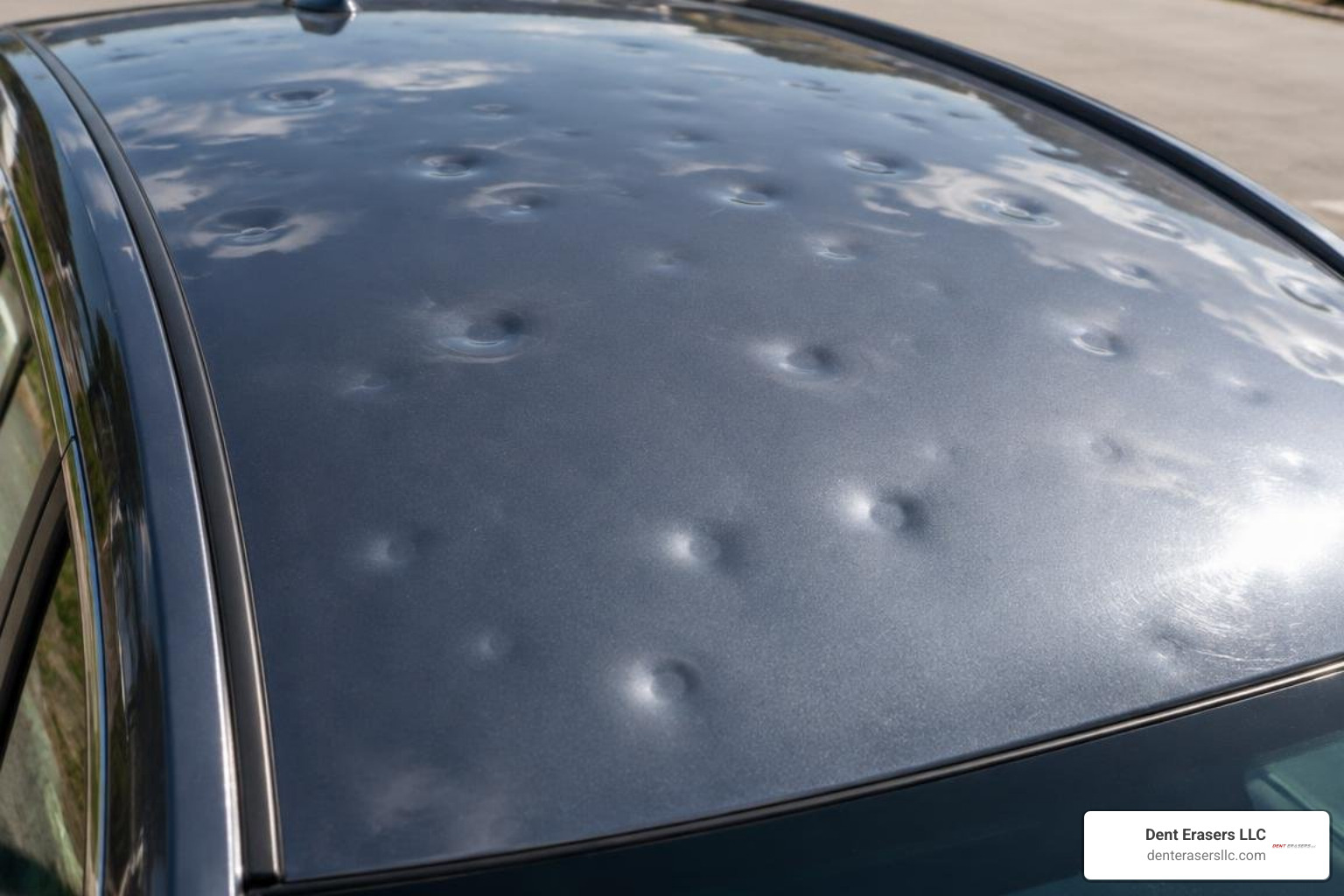
Comprehensive coverage pays for damage from something other than a collision with another car: hail, a falling tree branch, vandalism, or an unidentified object in the road. Most dent claims that don’t involve another vehicle fall here.
Liability coverage only pays for damage you cause to someone else’s property. It never pays to fix your own car, no matter how the dent got there. If liability is the only coverage on your policy, collision and comprehensive coverage are simply not part of it, so your own dents come out of your pocket.
Here’s how that plays out in real situations:
- Parking lot door ding: Usually collision, since another vehicle (or its door) caused the contact.
- Hit-and-run: Often filed under collision, sometimes with uninsured motorist property damage (UMPD) if your state offers it and the other driver can’t be identified.
- Hailstorm: Comprehensive, since weather isn’t a collision.
- Falling tree branch: Comprehensive as well.
If another driver is clearly at fault and identifiable, their liability coverage should pay instead of yours, which keeps your own claims record clean. One state-specific wrinkle worth knowing: some states waive the deductible for windshield chip repairs under comprehensive coverage, but that carve-out usually doesn’t extend to body dents, so don’t assume the same discount applies.
Deductible Math: Run the Numbers Before You File
Your deductible is the amount you pay before insurance covers the rest, and it’s the single biggest factor in whether filing makes financial sense. You’ll find it on your declarations page or in your insurer’s app, usually listed separately for collision and comprehensive.
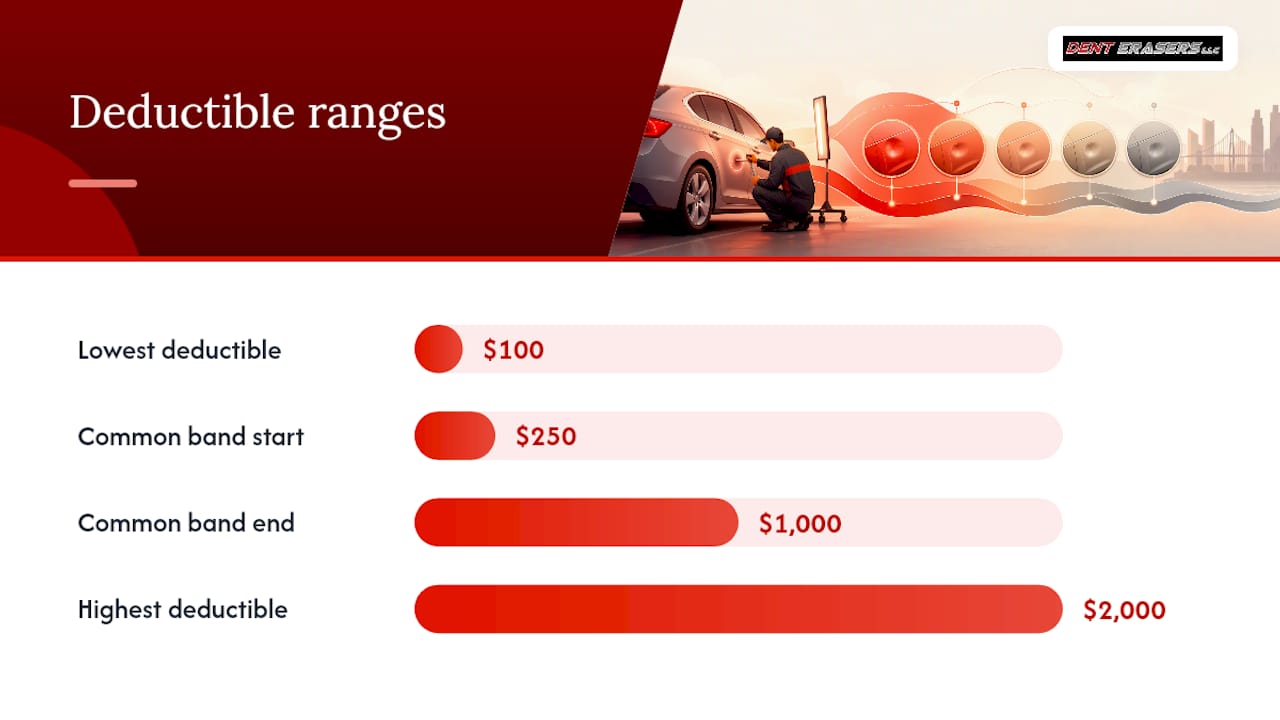
Deductibles for private passenger vehicles typically range from $100 to $2,000, though $250 to $1,000 is the most common band. That range changes the entire equation.
Pro Tip: Get an independent repair estimate before you even open a claim. Adjusters use estimates as a starting point, not gospel, and having your own number keeps you from accepting a lowball offer.
Here’s the math with three real-world repair estimates:
- $300 repair, $500 deductible: You’d pay nothing toward the deductible and insurance pays nothing either, since the repair cost is below the deductible. Pay it yourself.
- $800 repair, $500 deductible: Insurance covers $300 after your $500 deductible. That’s a real payout, but it also creates a claim record for a fairly small net benefit.
- $3,200 repair, $500 deductible: Insurance covers $2,700. This is the kind of damage worth filing for regardless of premium concerns.
Notice the pattern: as the gap between repair cost and deductible narrows, the case for filing weakens. A $200 net payout rarely offsets a multi-year premium bump.
How a Dent Claim Follows You: CLUE Records and Premium Risk
Every claim you file gets logged in the Comprehensive Loss Underwriting Exchange, or CLUE, a database maintained by LexisNexis. Insurers pull your CLUE report when quoting or renewing a policy, and these records can stay visible for up to seven years.
Not all claims carry equal weight. An at-fault collision claim tends to raise premiums more sharply than a comprehensive claim for weather or vandalism, since insurers treat at-fault incidents as a stronger predictor of future risk.
A few things worth checking before you file:
- Ask your agent directly whether this specific type of claim is likely to trigger a surcharge at your next renewal.
- Comprehensive claims for hail or vandalism often carry a lower or no surcharge risk compared to at-fault collision claims.
- Filing two or three small claims in a short window raises your risk profile far more than one larger claim, even if the total dollar amount is similar.
As a rule of thumb: if the payout barely clears your deductible, the CLUE entry probably costs you more over time than it saves you now.
Paintless Dent Repair and Insurance: What Adjusters Look For
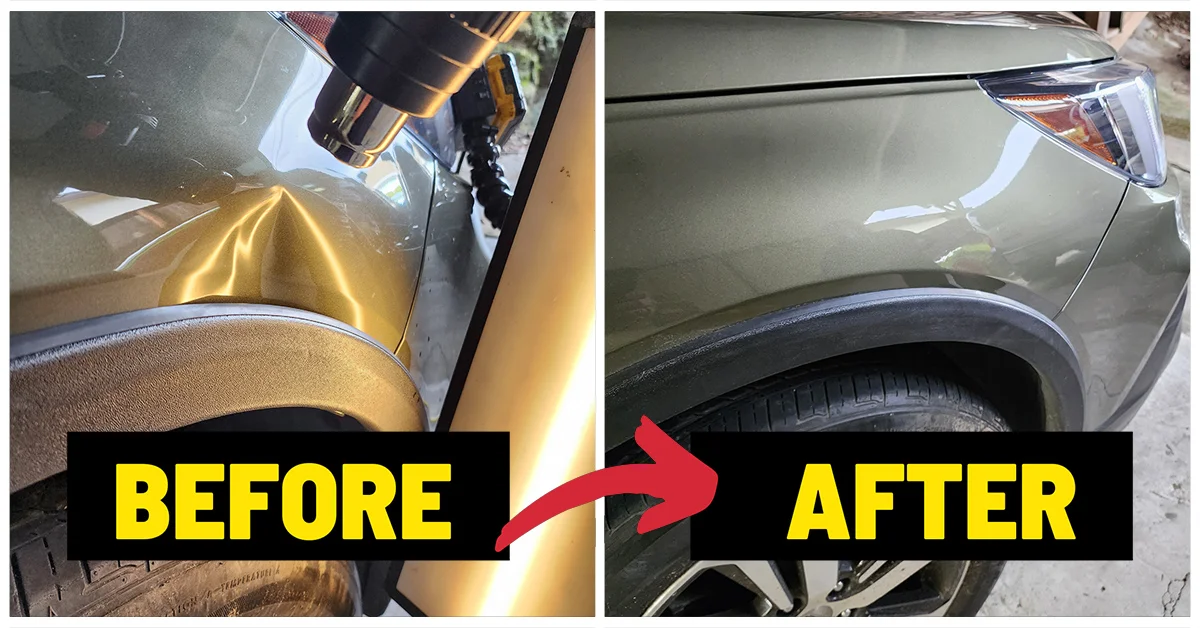
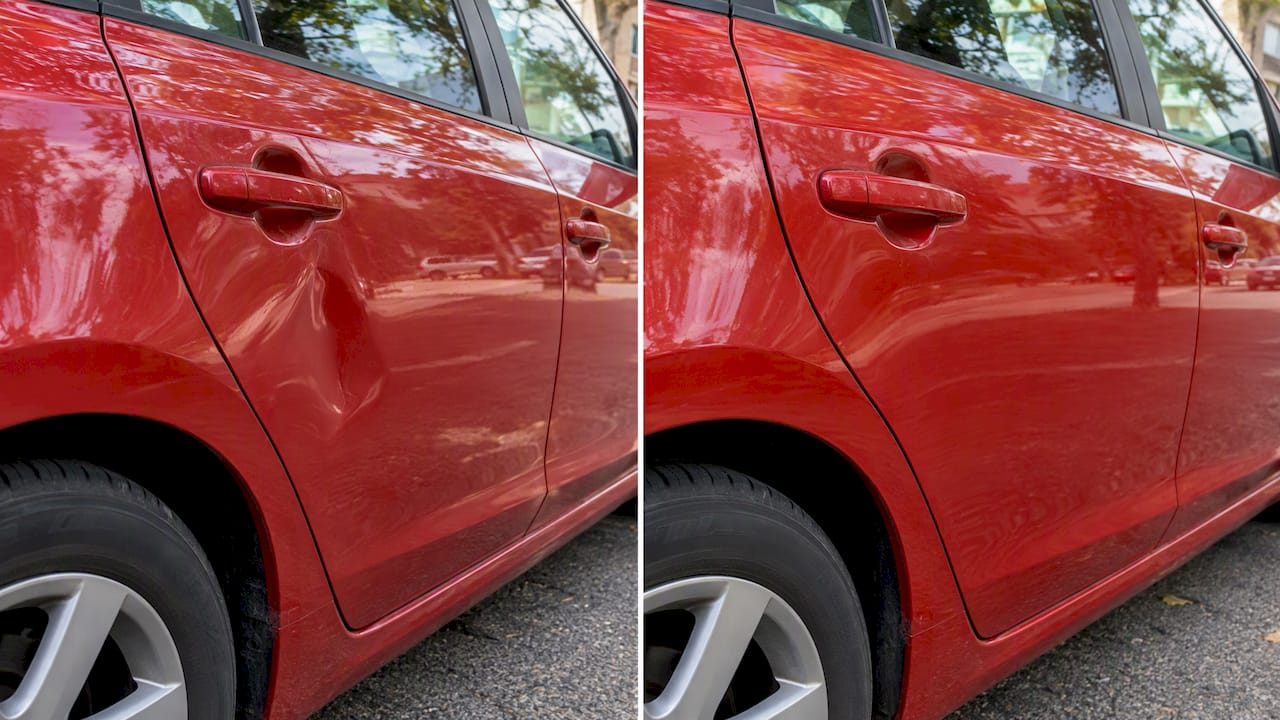
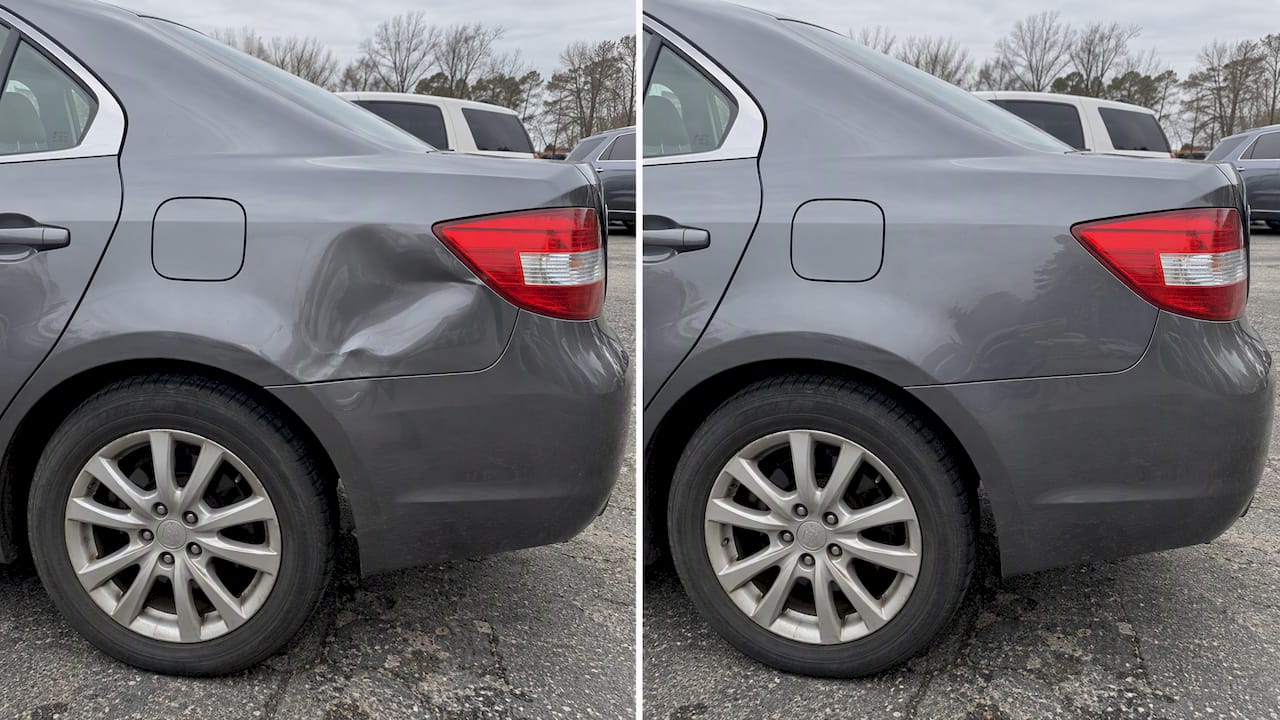
Paintless dent repair, or PDR, is a technique where a technician massages the metal back into shape from behind the panel, without cutting, filling, or repainting. Adjusters like it because it’s fast, it preserves the factory finish, and it’s usually the cheapest fix on the table, running roughly $50 to $500 per dent depending on size and location.
There’s a catch: adjusters will only specify PDR when the paint is fully intact and there’s no creasing or edge damage along the dent. If the metal has stretched past that point, you’re looking at traditional bodywork, which costs more and often eats through the deductible fast.
Mobile PDR has a practical edge in claims handling:
- It fits naturally with photo-based virtual appraisals that many insurers now accept for minor damage.
- It preserves the OEM paint, which matters for resale value and avoids paint-match issues.
- It skips the shop visit entirely, since the technician comes to your driveway or office lot.
At Denterasersllc, we build our estimates and invoices to be adjuster-friendly from the start, with itemized write-ups and before-and-after photos that make PDR approval straightforward.
Filing a Dent Claim: The Documentation Checklist
Getting the paperwork right the first time is what separates a smooth claim from a weeks-long back-and-forth. Follow these steps in order:
- Photograph the damage immediately, with time stamps, from multiple angles, and include a wide shot showing the panel in context.
- Write down the details while they’re fresh: date, location, weather conditions, and whether another vehicle or object was involved.
- Get at least one independent repair estimate before you file, and get two or three if the damage looks significant enough to justify comparing quotes.
- Submit the claim through your insurer’s app or by phone, and save the claim number the moment you receive it.
- Expect a virtual or in-person adjuster review. Minor dent claims often move through photo-based appraisal in one to three weeks.
- If the estimate feels low, request an itemized breakdown, submit your independent estimate for comparison, and put your appeal in writing rather than relying on a phone call alone.
Should You File or Pay Out of Pocket?
Not every dent belongs on a claim, and the decision usually comes down to four factors working together.
- If the repair cost sits at or below your deductible, pay out of pocket. Filing accomplishes nothing except adding a CLUE entry.
- If the payout after your deductible is small, weigh it against the likelihood of a premium increase before filing.
- If the damage affects safety (a wheel well dent rubbing a tire, a door that won’t latch) or resale value, file the claim regardless of the math.
- Factor in your car’s age and depreciation. A ten-year-old commuter car rarely justifies the same claim decision as a two-year-old lease.
| Situation | Recommended action |
|---|---|
| Repair cost is below your deductible | Pay out of pocket |
| Small payout after deductible, recent claims on file | Pay out of pocket |
| Large hail or vandalism damage across multiple panels | File comprehensive claim |
| Damage affects safety or drivability | File claim regardless of cost |
What Years of Dent Repair Work Teaches You About Insurance Claims
Most of the PDR jobs we handle split cleanly into two buckets: hail damage that clearly justifies going through insurance, and single door dings that customers choose to pay for directly once they see the repair estimate next to their deductible. The pattern holds up consistently.
My honest advice: get the estimate first, always. Then ask your insurer one direct question: how will this specific claim affect my renewal? That answer tells you more than any online calculator.
— Brian Blanc
Book a Mobile PDR Estimate That Insurers Recognize
Denterasersllc is the practical alternative to hauling your car into a shop and losing it for days: we come to you, whether that’s your driveway, your office lot, or wherever the dent happened. Our mobile paintless dent repair preserves your factory finish and produces the kind of itemized, photo-backed estimate that adjusters can approve without a second look.

Whether you’re filing through insurance or paying out of pocket after running the deductible math above, getting a real number first is the smart move. Denterasersllc handles everything from small parking-lot dings to large hail damage and specialty work on luxury, vintage, and motorcycle vehicles, all onsite. Check out our breakdown of insurance versus paying out of pocket for more scenarios, then request a mobile estimate and get a repair scheduled around your day instead of the shop’s.
Sources
- Does car insurance cover scratches and dents? | Progressive
- How to Claim Car Insurance for a Car Dent | LegalClarity
- Does it cover damage to my own vehicle? | MoneyGeek
FAQ
Is It Worth Filing Insurance for a Small Dent?
Usually not if the repair cost is close to your deductible, since the net payout is small and the claim still gets logged in your CLUE record for up to seven years.
What Should You Avoid Telling Your Insurance Company?
Stick to verified facts about when, where, and how the damage happened, and avoid speculating about fault or admitting blame before an adjuster reviews the incident.
Will Insurance Pay for Dent Repair?
Yes, if you have collision or comprehensive coverage and the damage matches that coverage type; liability-only policies never pay for repairs to your own vehicle.
Is It Better to Have a $500 Deductible or a $1,000 Deductible?
A $500 deductible means higher premiums but lower out-of-pocket costs when you file, while a $1,000 deductible lowers your premium but means you’ll cover more minor repairs, like most single-panel dents, yourself.
Does Paintless Dent Repair Work With Insurance Claims?
Yes, adjusters commonly approve PDR when the paint is intact and there’s no creasing, and mobile providers like Denterasersllc supply the itemized, photo-based estimates insurers need to process it quickly.