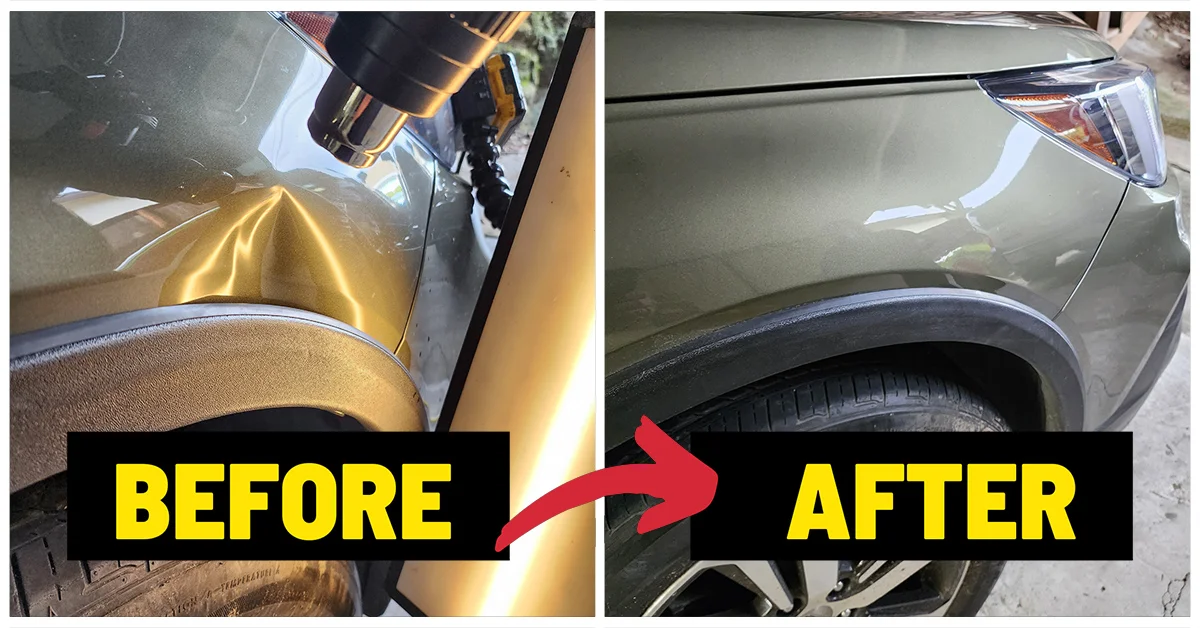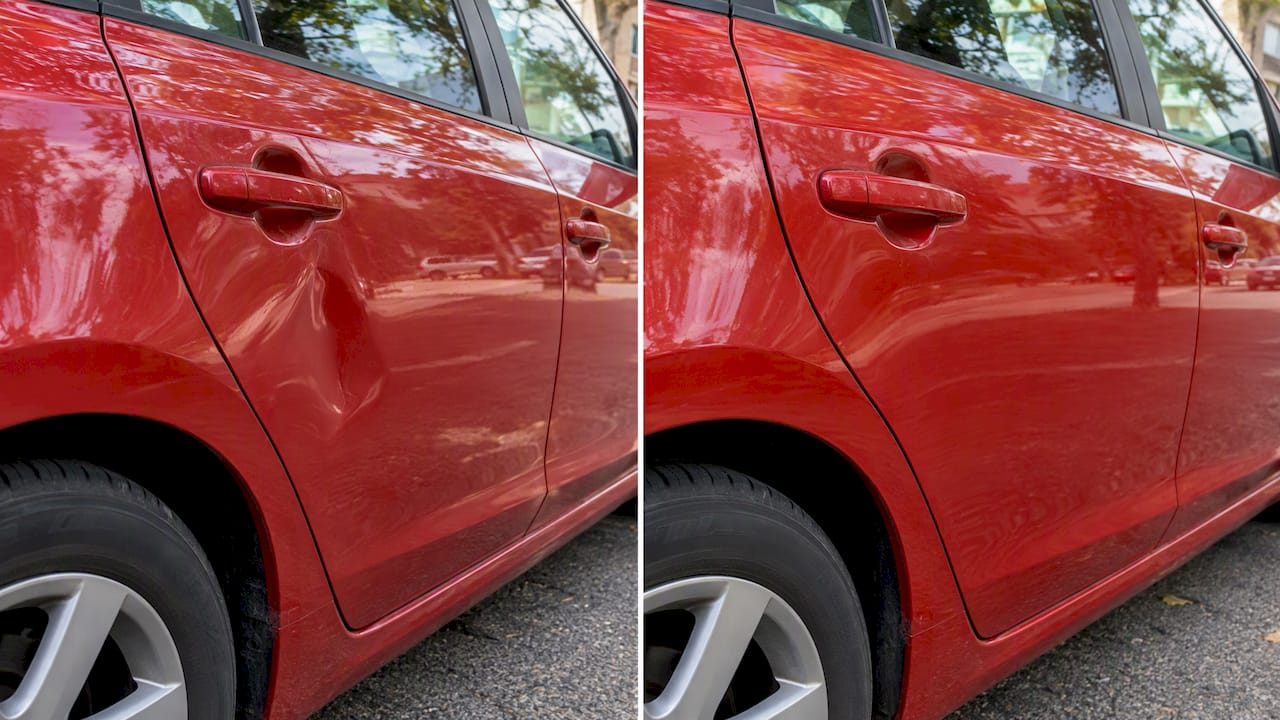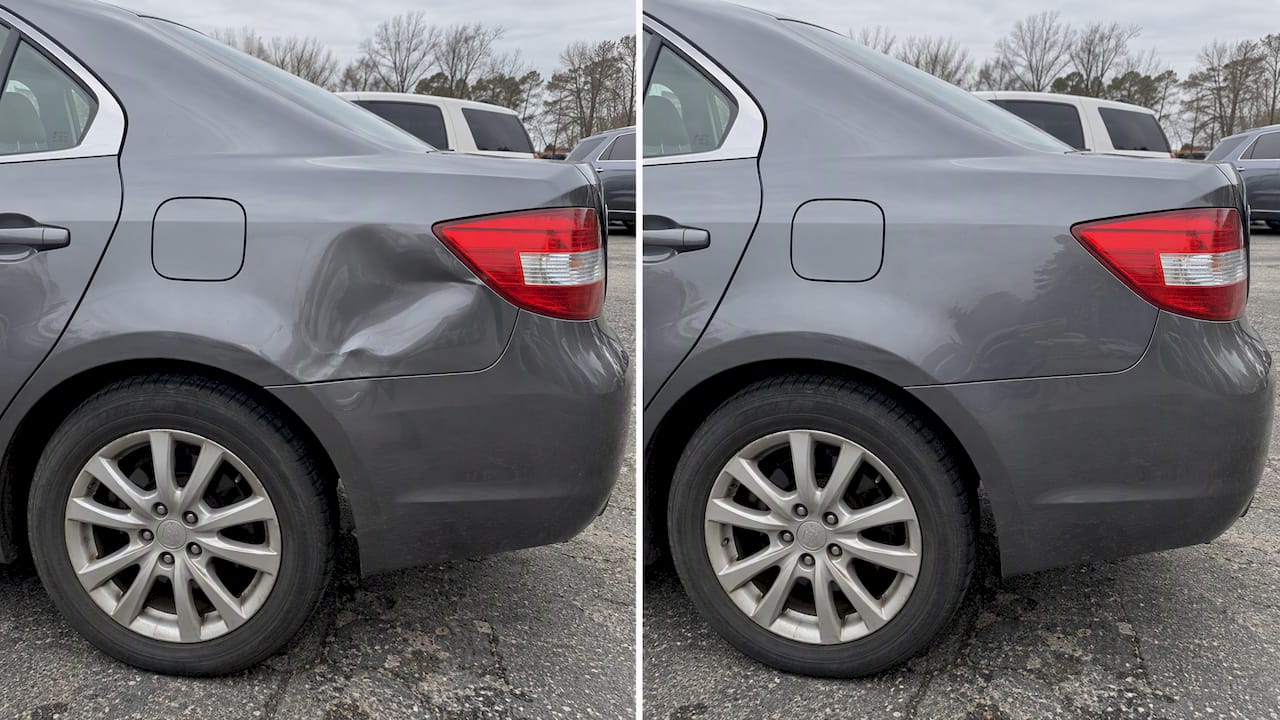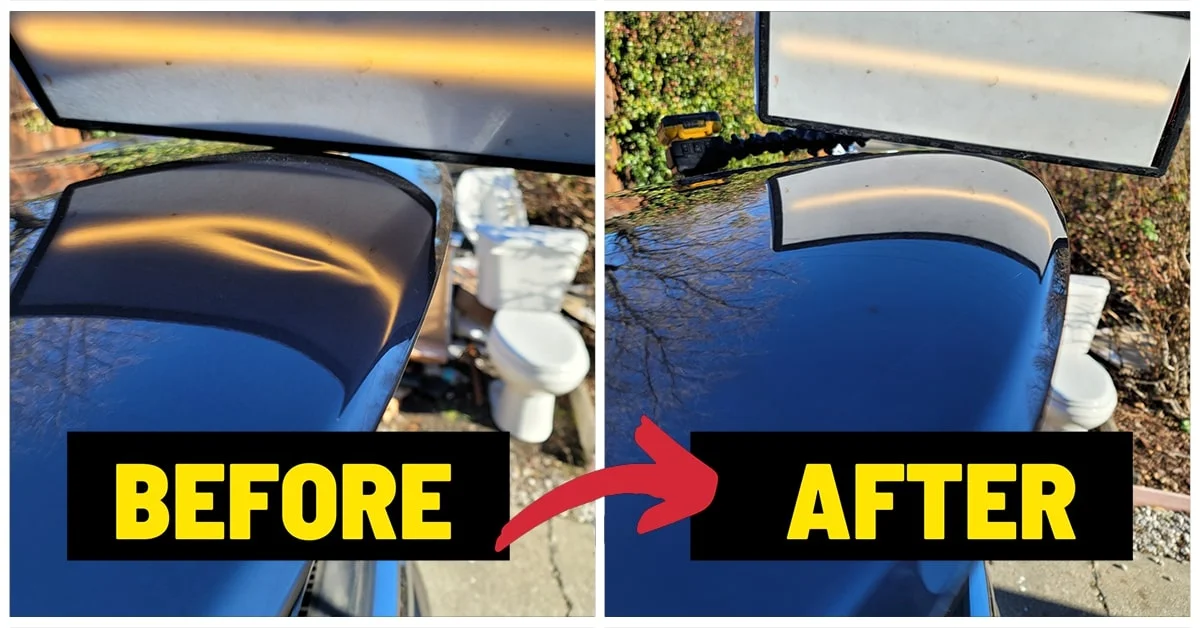
That Parking Lot Ding Is Less Permanent Than You Think
Learning to fix a dent in your car is more achievable than most people expect — and in many cases, you can do it at home with tools you already own.
Here’s how to fix a small car dent at home:
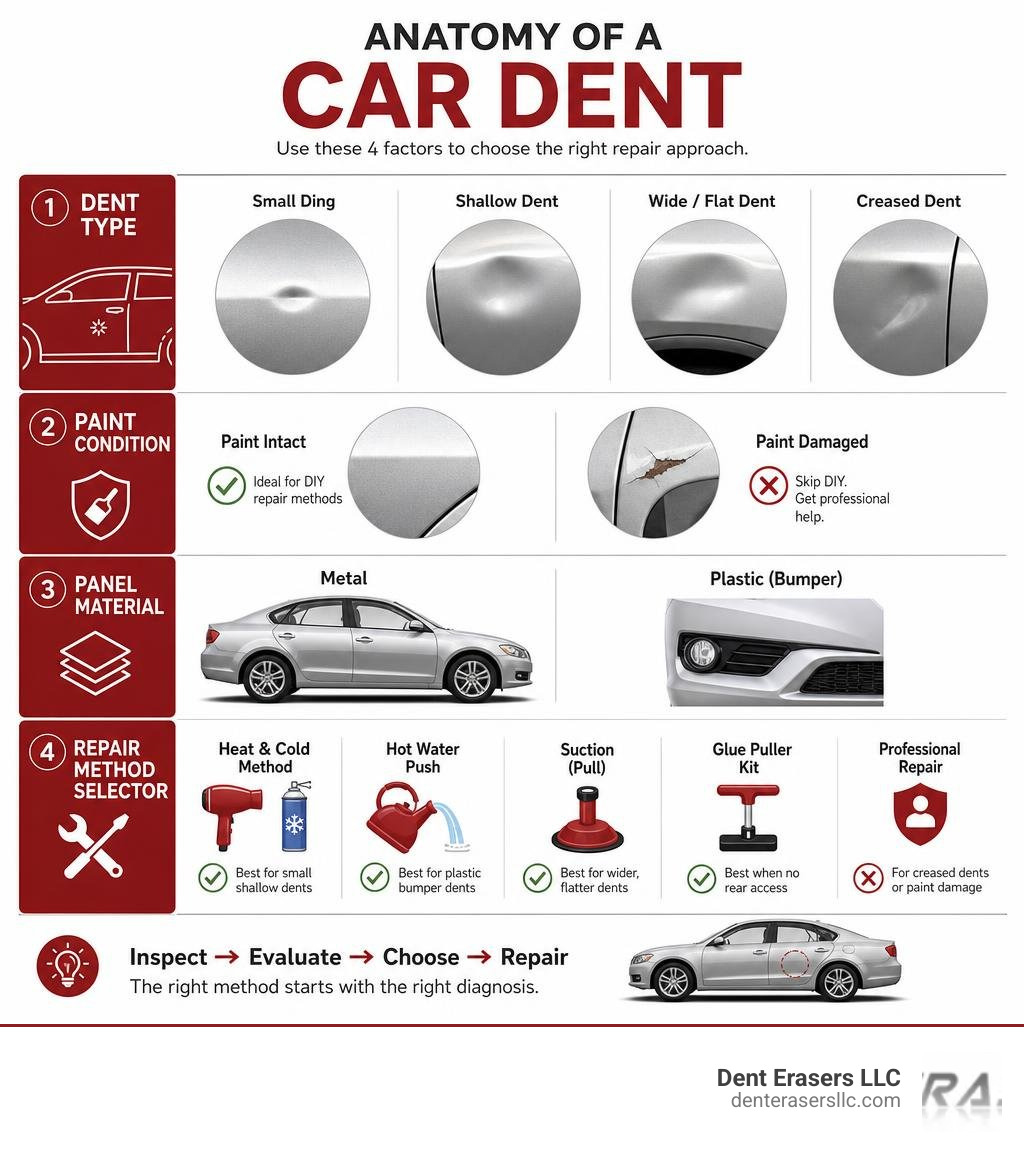
- Inspect the dent — check if the paint is intact and whether you can access the back of the panel
- Choose your method based on dent size and panel material (metal vs. plastic)
- For shallow metal dents — heat with a hair dryer for 30–60 seconds, then spray upside-down compressed air to contract the metal
- For plastic bumper dents — pour boiling water over the area to soften it, then push from behind
- For wider, flatter dents — use a wet suction cup or plunger with slow, steady pulling pressure
- For dents without rear access — use a glue puller kit ($50 or less) to pull the dent outward
- If paint is chipped or cracked — skip DIY and call a professional to prevent rust
It happens to everyone. You walk back to your car in a parking lot and spot a fresh ding on your door — left behind by a shopping cart, a careless neighbor, or a stray piece of gravel. It’s frustrating, and the instinct is to assume it means an expensive trip to a body shop. But the reality is that many minor dents can be fixed at home, often for little to nothing, using the right approach and a bit of patience.
This guide walks you through the most effective DIY methods, explains when they work — and when they don’t — so you can make a confident, informed decision before touching your car.
My name is Brian Blanc, and I’ve spent nearly three decades perfecting the craft of paintless dent repair (PDR) as the founder of Dent Erasers LLC, a mobile dent repair service in the East Bay. Over that time, I’ve seen which DIY methods genuinely help people fix a dent in their car and which ones turn a simple ding into a much costlier problem — and I’ll share all of that with you here.
Easy fix a dent in your car word list:
The Ultimate Guide to Fix a Dent in Your Car at Home
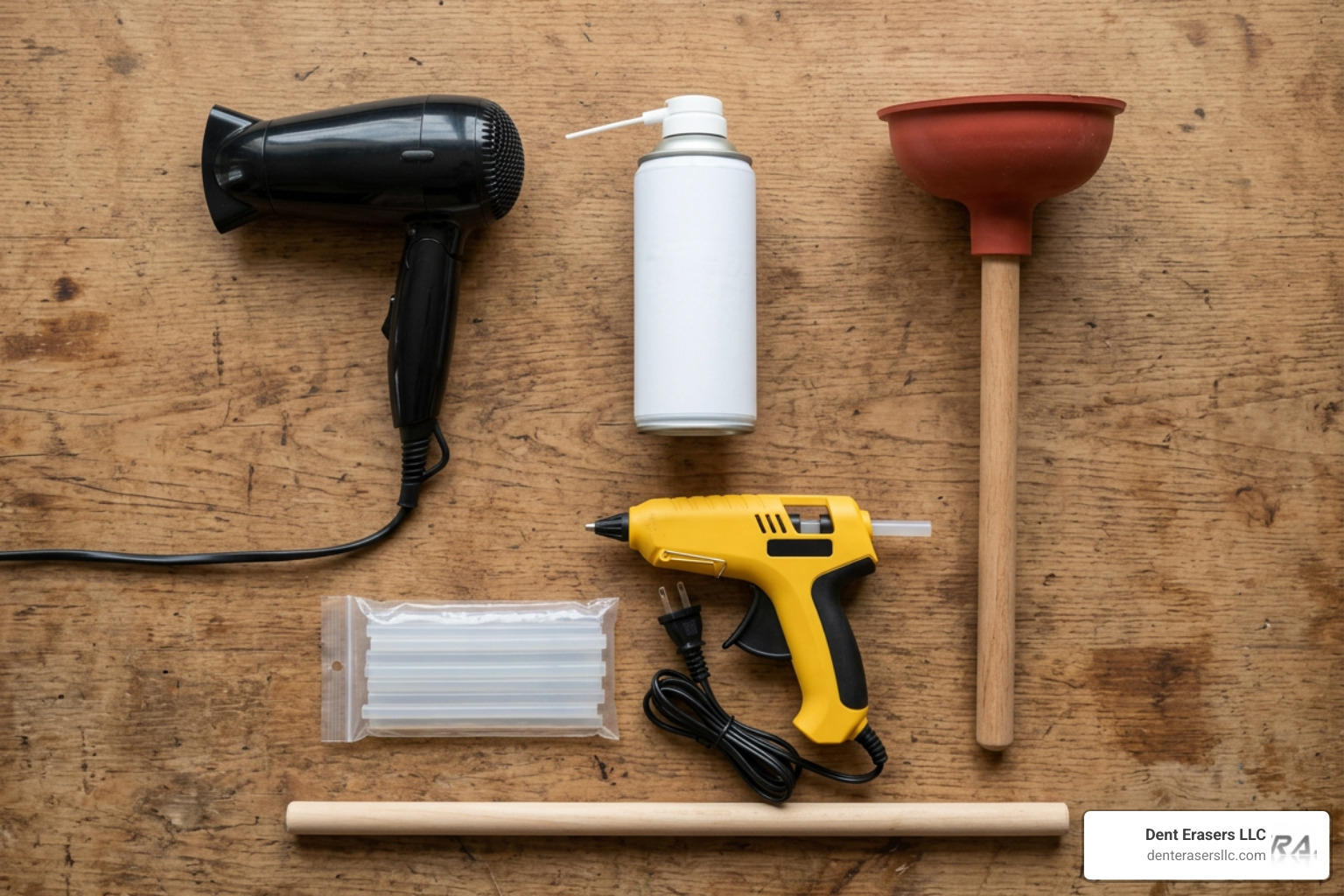
Before you roll up your sleeves and grab the nearest plunger, we need to talk about the physical reality of automotive sheet metal. Modern cars are designed with lightweight, flexible panels. When a minor impact occurs, the metal is pushed out of its original shape, but it still retains its “memory” — a physical tendency to return to its original, molded form if the right forces are applied.
To safely exploit this memory and fix a dent in your car without ruining your paint, you need to understand which tools are appropriate for which job. If you are looking for a complete breakdown of the household approach, check out this How to remove dents from your car: a detailed DIY guide to see how standard garage items can be utilized.
DIY dent repair using basic household items like a hair dryer, boiling water, or a simple toilet plunger can cost essentially nothing. If you decide to upgrade to a specialized suction cup or a hot-glue-based dent puller kit, you can easily find highly rated options online for under $50. However, the secret to success does not lie in how much money you spend on the tools; it lies in your ability to accurately diagnose the damage before you start.
Identifying Your Damage: Types of Car Dents
Not all dents are created equal. Before attempting any repair, you must inspect the damage from multiple angles. We highly recommend setting up a light source — like an LED work light or even your smartphone’s flashlight — at an oblique angle to the panel. This highlights the shadows and contours of the dent, giving you a clear picture of its depth, boundaries, and whether the metal has been stretched.
Here are the primary types of dents you will encounter:
- Dings: These are small, shallow depressions, typically less than an inch in diameter, often caused by shopping carts or soft door-to-door contact in parking lots. They are the easiest candidates for DIY repair.
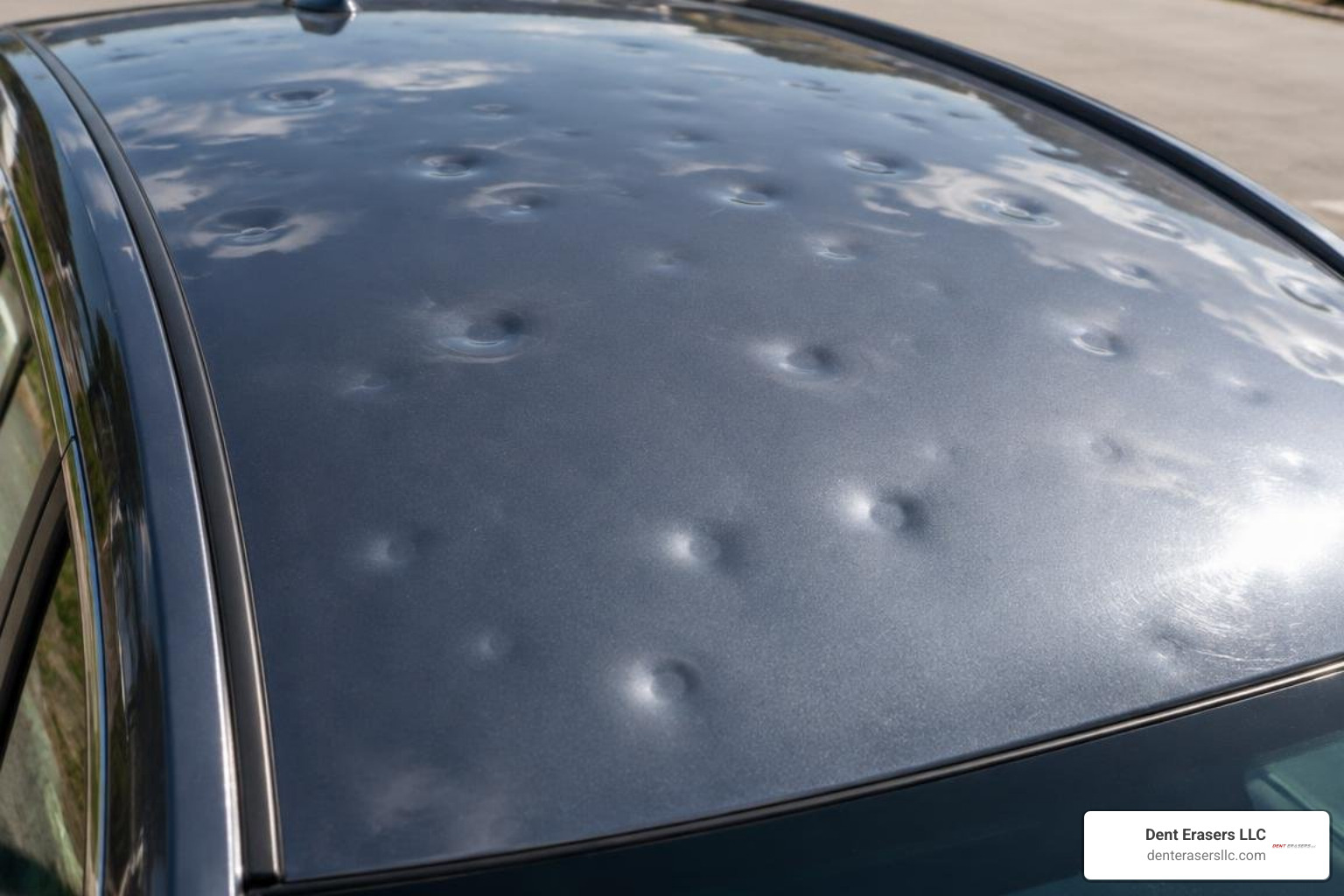
- Round Dents: These are smooth, shallow, bowl-shaped depressions, often caused by hail, basketballs, or large acorns. They usually have no sharp creases, making them ideal for suction or thermal shock methods.
- Sharp Dents: These feature a deep, concentrated point of impact. They are common when a sharp object, like a bicycle handlebar or a stone, strikes the panel. The metal at the center is often stretched, making these very difficult to pop out at home.
- Crease Dents: These are elongated dents that run along a straight line, often stretching the metal along a structural body line. Because the metal is folded, crease dents are incredibly rigid and usually require professional massage techniques to resolve.
- Multipoint Damage: This is complex, irregular damage consisting of multiple overlapping dents, often seen in minor fender benders.
As we emphasize in our guide on Small Dents Big Problems and How to Fix Them, your very first step must be a paint inspection. Run your fingernail gently across the dent. If you feel any chips, deep scratches, or spiderweb cracks in the clear coat, stop immediately. Attempting to pull or massage a dent with compromised paint will cause the paint to peel or flake off entirely, leaving your panel vulnerable to rust.
Step-by-Step: How to Use a Puller to Fix a Dent in Your Car
If your paint is completely intact and the dent is relatively shallow, a DIY glue puller or suction cup kit is an excellent option. This method is particularly useful when you cannot access the backside of the panel (such as inside a double-walled door frame or a rear quarter panel).
For a deep dive into the nuances of this technique, refer to this guide on DIY Car Dent Removal At Home Without Repainting .
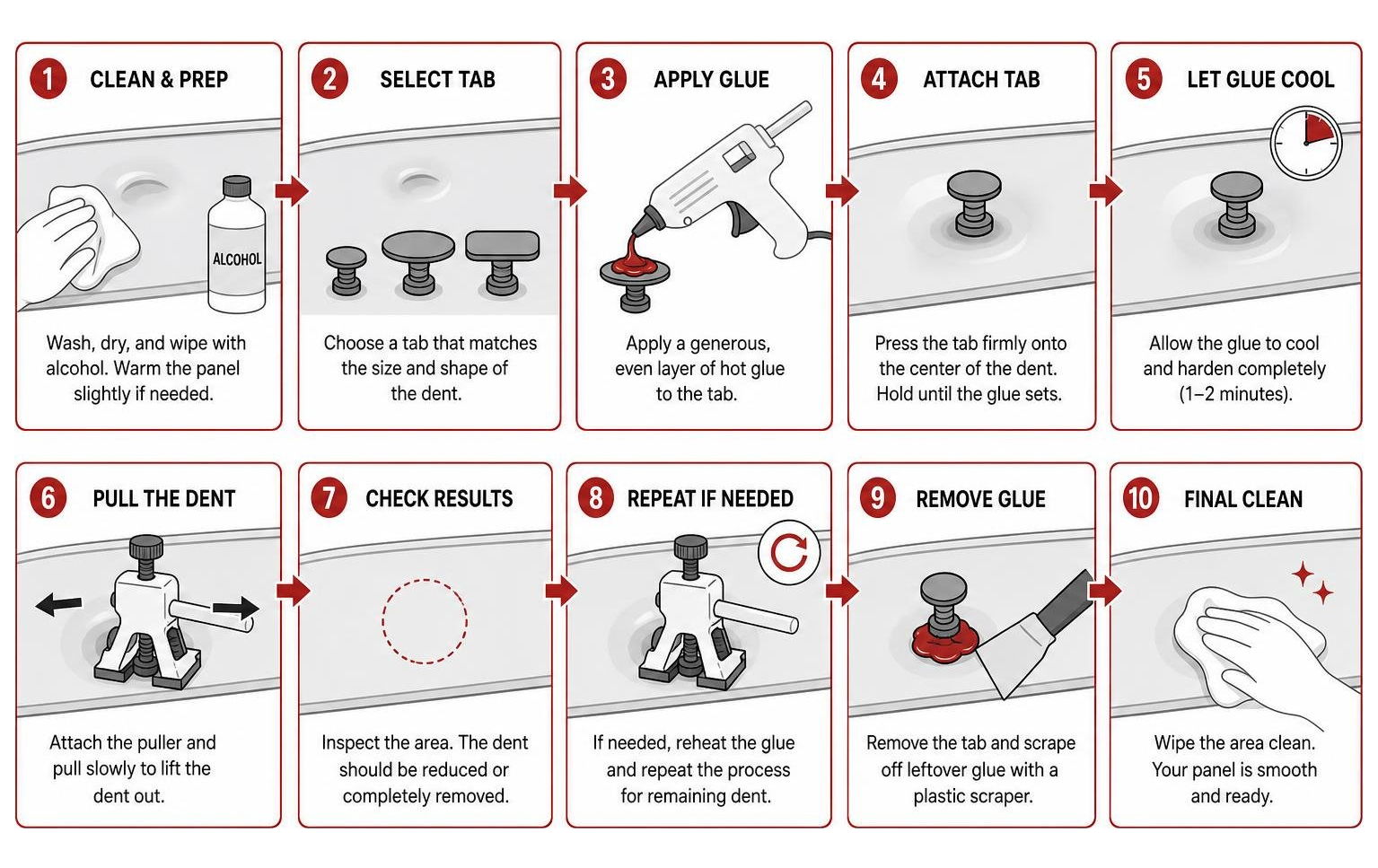
Here is the proper step-by-step process to execute a glue pull:
- Prep the Surface: Wash the area thoroughly with car soap and water to remove dirt and road grime. Dry it completely with a clean microfiber towel. Finish by wiping the dented area with isopropyl alcohol (rubbing alcohol) to strip away any remaining wax or grease. If the panel is cold, work in a shaded garage but warm the metal slightly with a hair dryer; hot glue will not adhere well to freezing metal.
- Select the Right Tab: Choose a glue tab from your kit that matches the shape and size of the dent. The tab should be slightly smaller than the dent itself.
- Apply the Glue: Using a standard hot glue gun (usually included in the kit), apply a generous, even layer of hot glue to the face of the pulling tab.
- Place the Tab: Quickly press the tab directly into the dead center of the dent. Do not push too hard — you want a thin cushion of glue (about 1–2mm) to remain between the tab and the metal.
- Let It Cool: Wait 3 to 5 minutes. The glue should be firm to the touch but still slightly pliable. If you wait too long and the glue becomes brittle, it may snap off prematurely.
- Attach the Pulling Tool: Slide the bridge puller or slide hammer onto the tab.
- Execute the Pull: If using a bridge puller, slowly tighten the knob to apply steady, upward tension. If using a slide hammer, use gentle, controlled slide motions. Avoid violent, jerking pulls, which can shock the paint and pull it right off the metal.
- Release the Glue: Once the dent pops or the tab releases, spray a generous amount of isopropyl alcohol around the remaining glue residue. Let it sit for 30 seconds, then use a plastic scraper or your fingers to peel the softened glue cleanly off the clear coat.
Restoring Plastic Bumpers vs Metal Panels
The physical properties of a plastic bumper cover are completely different from those of a steel or aluminum door panel. While metal panels must be massaged or pulled, plastic bumpers have an incredible “material memory.” When heated, plastic naturally wants to return to the shape of the original mold in which it was cast.
For a thorough look at how simple suction can work on various panels, read our Plunger Power the Ultimate Guide to DIY Car Dent Removal.
To fix a dent in a plastic bumper, you do not need expensive pullers. Instead, you need thermal expansion and softening:
- Boiling Water Method: Boil a kettle of water. Slowly pour the boiling water directly over the dented plastic. The intense heat will instantly soften the plastic, making it incredibly pliable.
- Push from Behind: Reach behind the bumper cover (you may need to remove a few plastic splash guard clips to gain access) and gently press the dent outward with your hand wearing a thick glove, or use a smooth wooden block. In many cases, the plastic will simply “pop” back into its original shape with minimal effort.
- Cooling Shock: Once the bumper is back in place, spray it with cold water or apply a cold, wet towel to lock the plastic back into its rigid state.
If the dent is on a metal panel, however, pouring boiling water is rarely enough. Metal requires a much more controlled application of heat (using a hair dryer or heat gun) combined with physical manipulation from behind using specialized PDR rods, or from the front using a high-quality suction cup.
Why Deep Dents and Chipped Paint Are Not Safe for DIY Repair
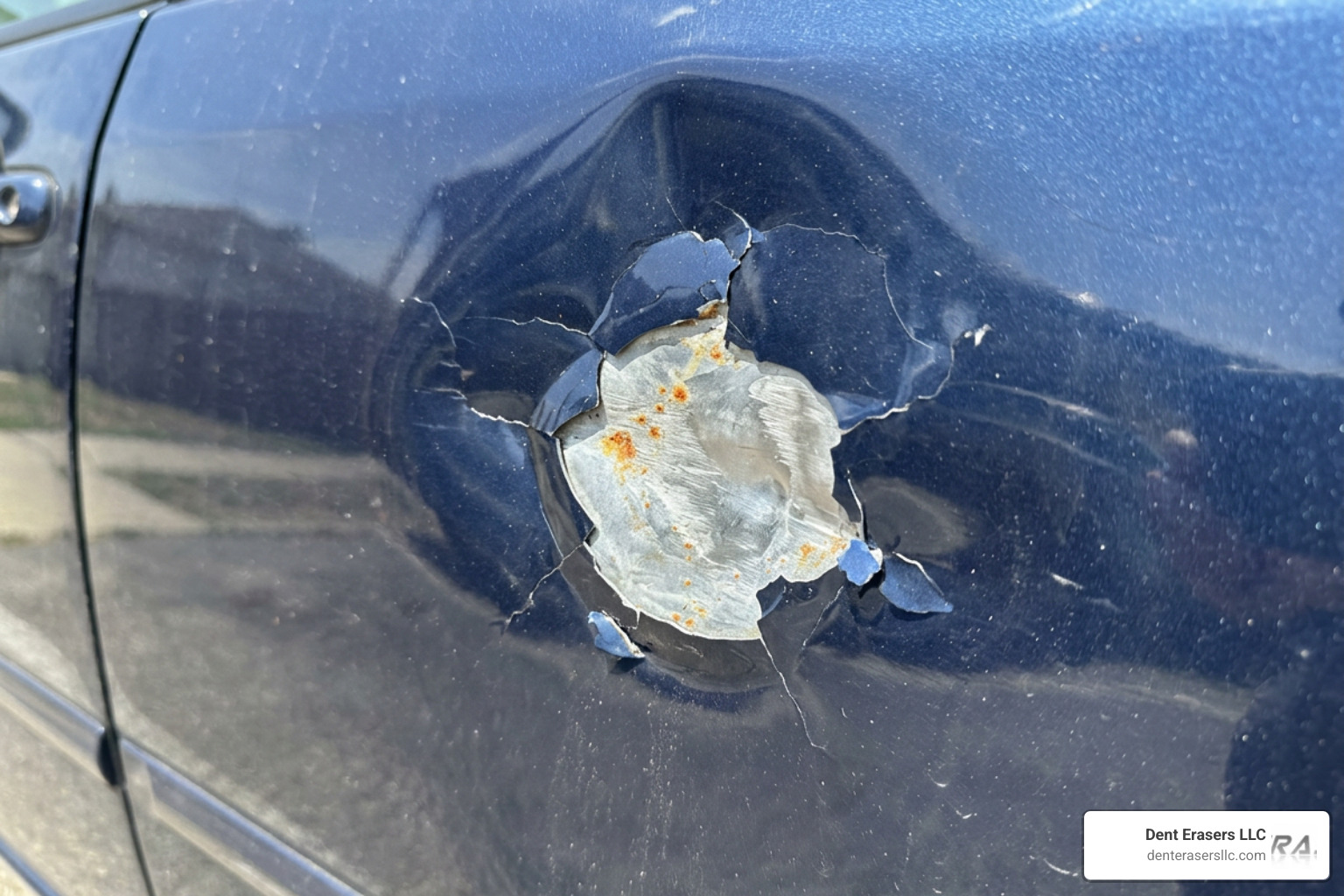
While popping out a minor door ding in your driveway in Concord or Antioch can be an incredibly satisfying Saturday project, there is a very fine line between a safe DIY fix and a cosmetic disaster.
If a dent is deep, has sharp creased edges, or has chipped, scratched, or cracked the paint, attempting to pull it yourself is highly risky. When the paint’s clear coat and color layers are fractured, the structural integrity of the paint is gone. Applying hot glue or heavy suction to this area will almost certainly lift the remaining paint off the metal, turning a small chip into a massive, peeling eyesore.
Furthermore, deep dents often stretch the metal itself. When metal is stretched past its elastic limit, it cannot simply “pop” back into place because there is now excess surface area. Attempting to force stretched metal back with DIY tools will result in ugly “high spots” or warped, wavy panels.
If your paint is damaged, you will need to sand, fill, and repaint the area to protect your vehicle from rust. To understand how traditional body shops handle these deep, paint-damaged craters using body filler, you can read the step-by-step guide on How to Fix Dents with Bondo® – AutoZone . However, keep in mind that once you start sanding and applying filler, you are permanently destroying your car’s original factory paint finish.
Common DIY Mistakes to Avoid
Before you attempt to fix a dent in your car yourself, let’s look at the most common blunders we see DIYers make in our shop:
- Creating “Volcano” High Spots: This happens when you apply too much force with a glue puller or slide hammer. Instead of pulling the dent flat, you pull the metal too far outward, creating a sharp, raised nipple (a “volcano”) that is incredibly difficult to flatten back down.
- Pulling Paint Off Previously Repainted Panels: If your car has ever been in an accident and had a panel repainted at a traditional body shop, the bond between the aftermarket paint and the metal is significantly weaker than the original factory seal. Glue pulling on an aftermarket paint job will almost always rip the paint right off.
- Using Harsh Chemicals: Never use acetone, lacquer thinner, or harsh nail polish removers to clean off hot glue. These chemicals will dull, melt, or permanently damage your clear coat. Always use 91% or higher isopropyl alcohol, which is completely safe for automotive paint.
- Working Near Airbag Sensors: Modern vehicles are packed with sensitive electronics. If you are removing interior door panels or bumper covers to push a dent from behind, you must be extremely careful not to disturb side-impact airbag sensors or blind-spot monitoring radar systems.
- Drilling Holes: Some old-school DIY guides suggest drilling a hole in the door frame, inserting a wire hook to pull the dent, and plugging the hole with a plastic cap. Never do this. Drilling holes destroys your car’s corrosion protection, voids manufacturer warranties, and invites rust.
Why Professional Paintless Dent Repair (PDR) is the Best Choice
If you want a flawless, showroom-quality finish without the risk of DIY mistakes, professional Paintless Dent Repair (PDR) is the gold standard. Unlike traditional auto body shops that rely on sanding down your panel, filling the dent with plastic body filler (Bondo), and spraying aftermarket paint, PDR is a highly specialized craft.
We use custom-designed carbon fiber and spring-steel rods to access the backside of the dented panel. By using specialized LED line boards to read the reflections of the metal, we meticulously massage the dent back to its exact original shape, millimeter by millimeter, preserving your factory paint.
To understand why keeping your original paint is so important, let’s look at how DIY repair, traditional body shops, and professional PDR compare:
| Feature | DIY Repair | Traditional Auto Body Shop | Professional PDR (Dent Erasers LLC) |
|---|---|---|---|
| Factory Paint Preserved? | Yes (if successful) | No (sanded, filled, and repainted) | Yes (100% preserved) |
| Carfax Accident Report? | No | Yes (typically reported) | No (no parts replaced or painted) |
| Repair Time | 1 to 2 hours | 3 to 7 days | 1 to 3 hours (on-site mobile service) |
| Average Cost | Under $50 | $300 to $1,500 | $150 to $500 |
| Environmental Impact | Low | High (chemical paints, solvents, fillers) | Zero (no chemicals or waste) |
As we explore in our article on The Cheapest Ways to Fix a Car Dent, professional PDR is often the most cost-effective long-term solution because it prevents your vehicle from losing resale value due to mismatched aftermarket paint or a negative Carfax history report.
When to Avoid DIY and Let Professionals Fix a Dent in Your Car
There are certain scenarios where you should never attempt a DIY repair, as doing so will almost certainly result in permanent damage:
- Aluminum Panels: Many modern vehicles (such as newer Ford F-150s, Teslas, and high-end European imports) use aluminum body panels instead of steel. Aluminum is much lighter than steel, but it has almost no “metal memory.” It is incredibly rigid, work-hardens quickly, and requires specialized heat-monitoring tools and immense experience to manipulate without cracking.
- Structural A-Pillars and Roof Rails: The structural pillars surrounding your windshield and roof are made of ultra-high-strength steel. There is no access to the backside of these panels, and the metal is too thick for standard DIY suction cups or glue pullers to budge.
- Luxury and Classic Vehicles: If you own a luxury vehicle or a classic car in Walnut Creek or Danville, preserving the original factory paint is paramount. Amateur DIY attempts can instantly shave thousands of dollars off the vehicle’s market value.
- Stretched Metal: If the dent is deep and has a sharp, reflective “shiny” spot at the bottom, the metal has been physically stretched. Reshaping stretched metal requires a master technician who understands how to release “trapped pressure” by blending high spots and crowns around the dent.
To see how master technicians manipulate metal at a microscopic level to achieve a perfect finish, take a look at our guide on Small Dent Removal from Car a Step-by-Step Guide to Metal Morphing.
Cost Comparison: DIY vs. Professional Repair
When deciding whether to tackle a dent yourself or hire a professional, it helps to look at the real-world numbers:
- DIY Route: A basic suction cup or glue puller kit from an auto parts store in Pittsburg or Richmond will cost you between $20 and $50. If the dent is simple and you have the patience, this is a very low-cost experiment.
- Professional PDR: For a typical door ding or small dent, a mobile PDR specialist will charge between $100 and $150. For larger, more complex dents, the price typically ranges from $150 to $500. Because mobile PDR technicians often charge by the hour (typically $75 to $125 per hour), the repair is incredibly affordable compared to traditional body shops.
- Traditional Body Shop: If you take your car to a traditional body shop for a dent repair involving paint work, you can expect estimates to range from $300 to $1,500+, depending on the need for blending paint across adjacent panels. If a plastic bumper needs to be fully replaced, the cost can easily exceed $1,000.
If you are looking for local body repair alternatives in Contra Costa County, traditional body shops can be found throughout the area. However, if your paint is not damaged, choosing a mobile PDR specialist who comes to your home or office is almost always the fastest and most affordable route. Learn how to budget for these repairs in our guide on How to Find Affordable Dent Removal for Your Car.
Frequently Asked Questions about Car Dent Repair
Does the plunger method actually work on car dents?
Yes, but only under very specific circumstances. A standard household cup plunger (the flat-bottomed kind used for sinks, not a flanged toilet plunger) can successfully pop out wide, shallow, bowl-shaped dents on flat panels like doors, hoods, or roofs.
To make it work, both the plunger cup and the car panel must be wet to create a tight vacuum seal. However, the plunger method will not work on sharp dings, creases, dents located near the edges of panels, or highly curved surfaces, as you will not be able to establish a proper vacuum seal.
Can boiling water fix a dented plastic bumper?
Absolutely! This is one of the most effective and safest DIY car hacks available. Because modern bumper covers are made of thermoplastic olefin (TPO) or similar flexible plastics, they possess a strong “mold memory.”
When you pour boiling water over the dent, the intense heat softens the plastic, allowing it to relax. If you can reach behind the bumper and apply gentle pressure, the dent will often snap back into its original factory shape instantly.
How much does professional paintless dent repair cost?
For small, single door dings (under an inch), professional PDR typically costs between $100 and $150. For larger dents, multiple dings, or complex crease dents, the price generally ranges from $150 to $500.
Because PDR does not require expensive paints, primer, or replacement parts, it is a fraction of the cost of a traditional body shop repair. To get a better understanding of how professional PDR can restore your vehicle’s value, check out our guide on how to Get Your Car Looking New Again with Expert Dent Removal.
Conclusion
Taking care of your car’s exterior doesn’t have to mean spending a fortune or losing your vehicle to a body shop for a week. Now that you know how to safely evaluate, prepare, and attempt to fix a dent in your car, you can tackle those minor garage dings with confidence.
But remember: the key to a great DIY repair is knowing when to put the tools down. If a dent is located on a sharp body line, involves rigid aluminum, or has chipped your paint, trying to force a fix at home can easily lead to a much larger repair bill.
If you live in Concord, Walnut Creek, Antioch, San Ramon, Brentwood, or anywhere else in Contra Costa County, you don’t have to tackle this alone. At Dent Erasers LLC, we provide expert, certified mobile paintless dent repair that comes directly to your home or office. We specialize in cars, motorcycles, luxury, and classic vehicles, restoring your panels to flawless, factory condition in just a couple of hours — all while preserving your original paint.
Ready to make those annoying dings disappear? Contact us today for a fast, free estimate and experience the convenience of professional mobile Paintless Dent Repair.