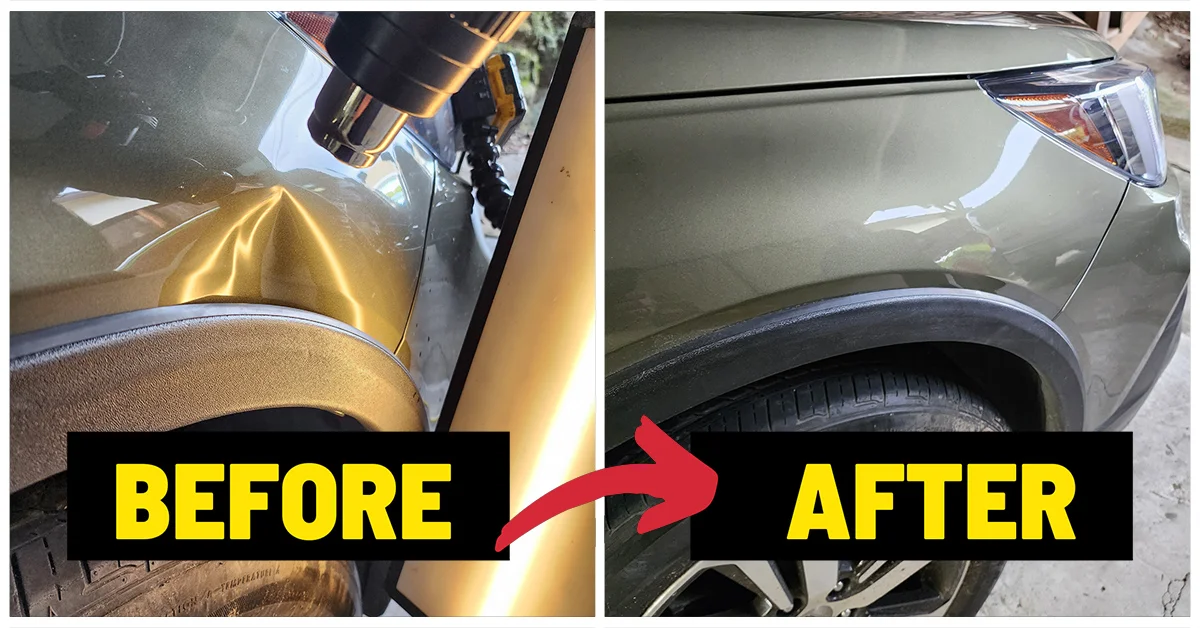
How to Start Car Fender Repair
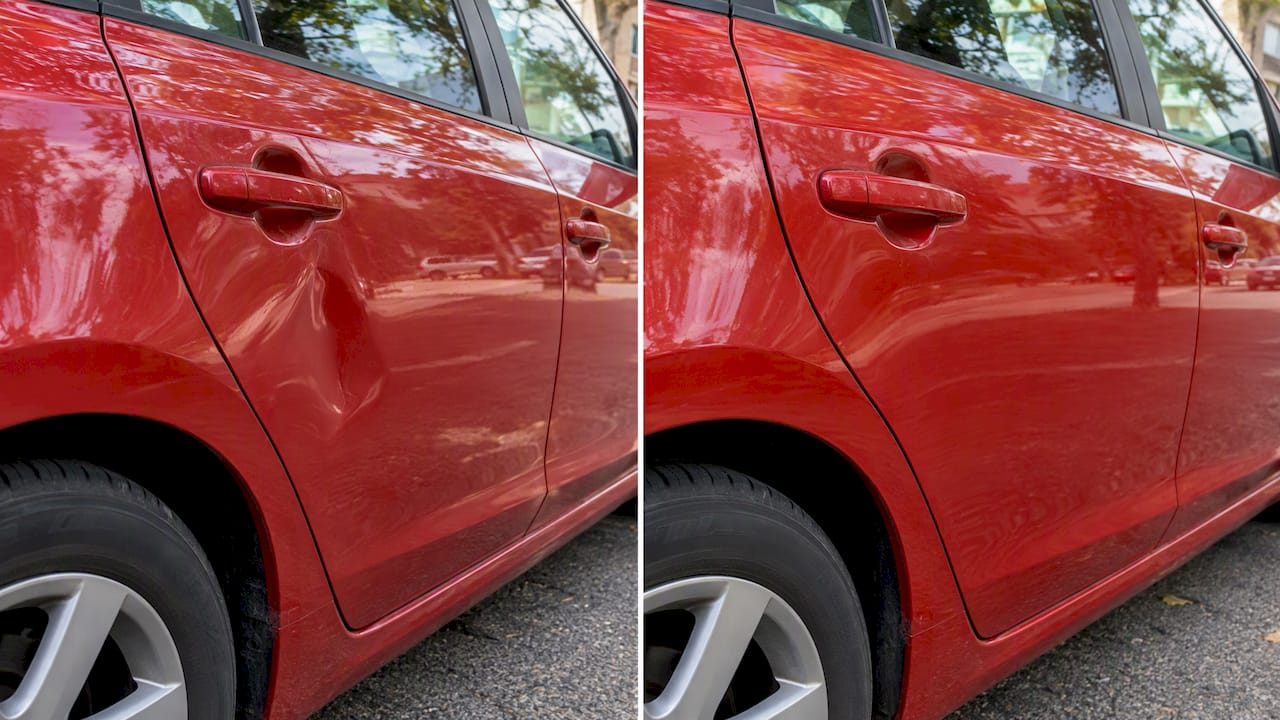
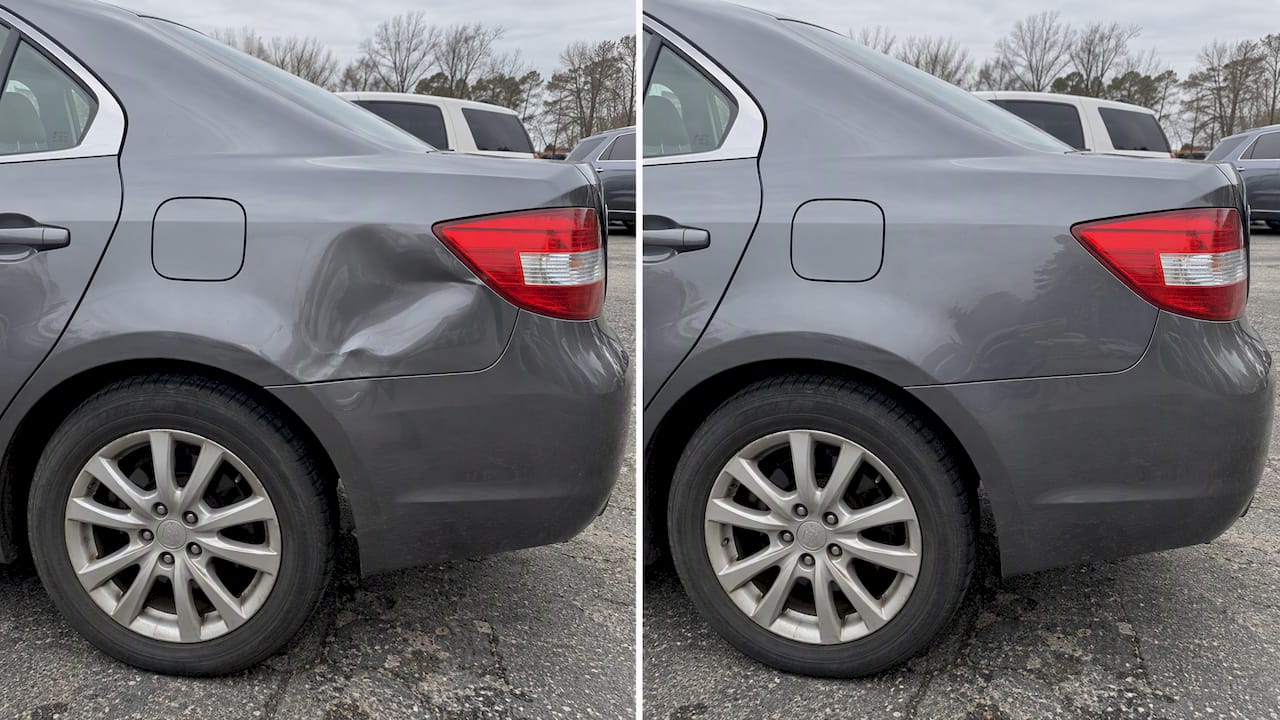
Start by checking the paint, panel gaps, and space around the tire. If the paint is intact and the dent is shallow, paintless dent repair may restore the fender without repainting it. If the paint is cracked, the metal is sharply creased, or the fender sits out of line, have a technician check whether it needs repair or replacement. Avoid trying to push out a dent near damaged mounts or sensors.
I’m Brian Blanc, and I’ve spent nearly three decades working in paintless dent repair, including car fender repair. At Dent Erasers LLC, I bring mobile dent repair to East Bay drivers, with a focus on protecting the factory finish when the damage allows it.
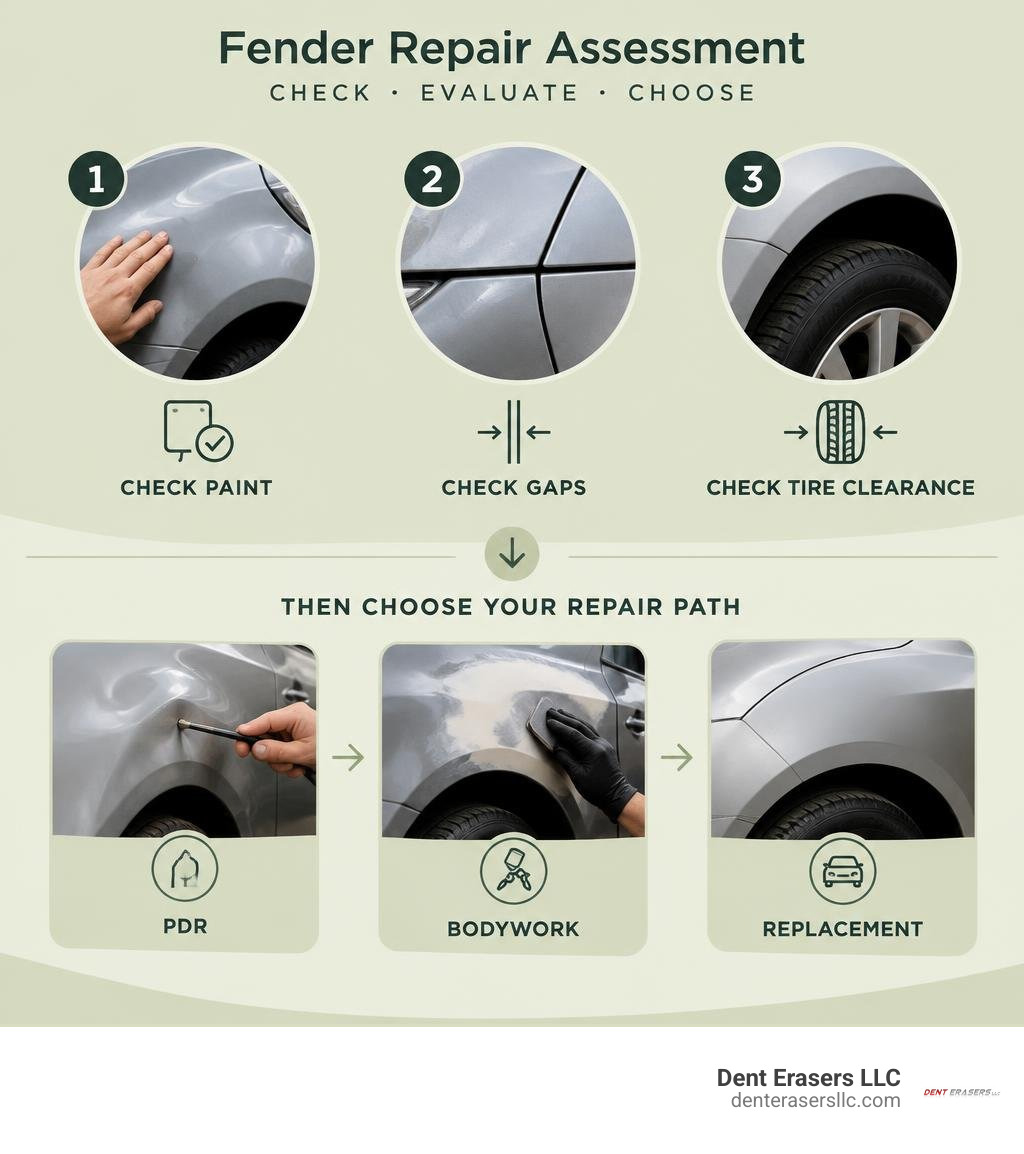
Assessing Fender Damage: Repair vs. Panel Replacement
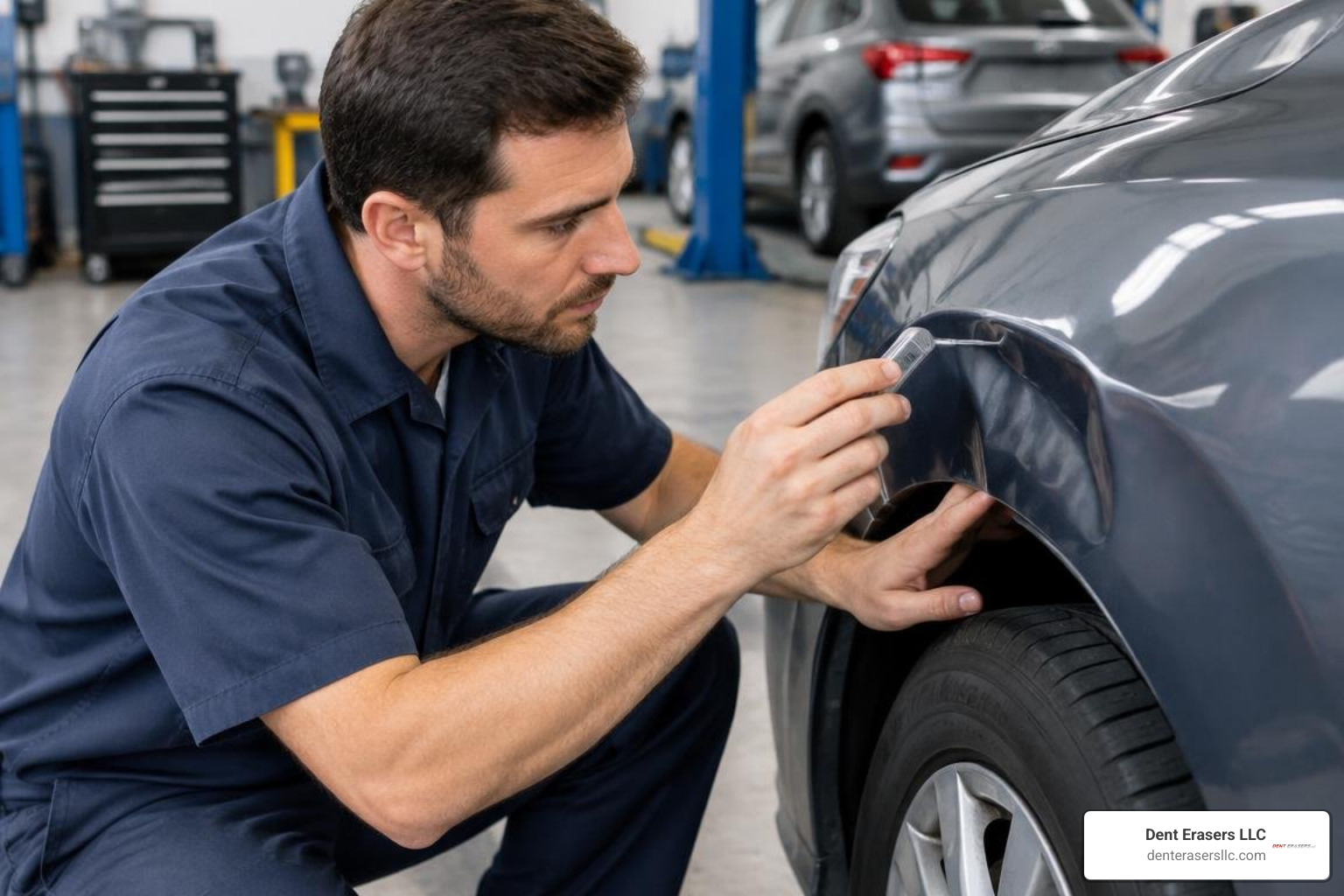
When assessing front or rear quarter damage, the first question is whether to save the original panel or replace it entirely. Modern vehicles use lightweight, high-strength sheet steel or aluminum. These metals have natural elasticity, but once pushed beyond their structural yield point, reshaping them becomes significantly more complex.
We evaluate several physical factors during an inspection:
- Dent Depth and Sharpness: Broad, soft impressions allow the metal to return to its original form easily. Sharp gouges stretch the sheet metal, making full recovery without filler unlikely.
- Location on the Panel: Dents located along the body lines or near the wheel opening require extra precision. You can explore techniques for fixing dents in your fender and wheel arch to see how contour curves alter repair strategies.
- Mounting and Alignment: If the panel has shifted inward, rubbing against the door frame or headlight housing, structural clips or brackets may be broken underneath.
- Sensor Clearance: Modern fenders frequently house driver-assist sensors, radar units, or side cameras. Any misalignment can compromise vehicle calibration.
| Repair Method | Best For | Preserves Factory Paint? | Typical Turnaround | Relative Cost |
|---|---|---|---|---|
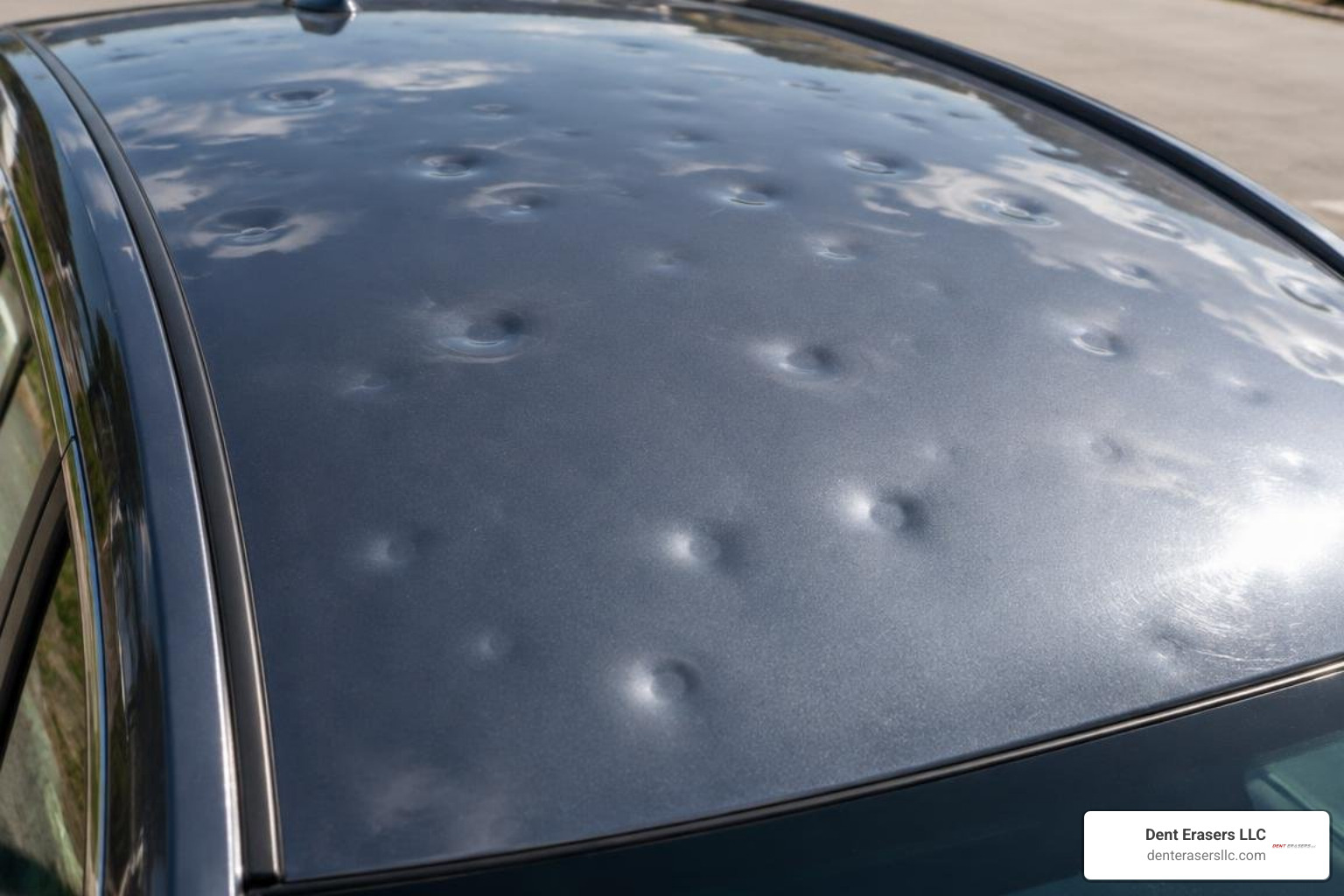
| Paintless Dent Repair (PDR) | Dents with intact paint, shallow creases, hail damage | Yes | Same-day (1–3 hours) | Lowest ($150–$500) |
| Traditional Bodywork | Scratched paint, torn sheet metal, deep gouges | No (requires blending) | 3–6 days | Moderate to High |
| Panel Replacement | Crushed frame supports, sheared bolt tabs, severe tearing | No (new panel painted) | 1–2 weeks | Highest |
Paint Damage and Metal Crease Evaluation
Vehicle clear coats protect base paint from ultraviolet degradation and moisture. When an impact occurs, examine the perimeter of the dent closely under focused light. Look for micro-fractures, webbing, or spider-web cracking in the clear coat.
If the paint surface shows no breaks, the protective e-coat and primer remain sealed underneath. However, when a sharp object creases the panel, the metal folds tightly. Addressing these sharp deformities requires specialized methods; understanding car dent crease repair techniques helps clarify how metal tension must be systematically relieved from the outer edges inward.
Structural Mounts and OEM Alignment Checks
A fender does not simply float on the vehicle; it bolts directly to structural aprons, cowl screen brackets, and radiator supports. During any collision, kinetic energy transfers directly through these mounting points.
Before beginning repairs:
- Inspect the headlight mounting tabs to confirm they have not fractured.
- Check the cowl screen carrier brackets along the upper engine bay.
- Loosen inner fender liners to inspect the inner wheel arch lip for buckling.
- Follow strict manufacturer tolerances—such as official OEM fender removal specifications—which detail specific low-torque values (typically around 4 Nm for fascia fasteners and 9.8 Nm for structural bracket bolts) to keep safety systems aligned.

The Step-by-Step Process for Car Fender Repair

Restoring automotive sheet metal requires patience and controlled force. Whether dealing with minor parking-lot dings or wide body-line impressions, the goal is always to relieve built-up surface tension before manipulating the low center of the dent.
For motorists looking into popping out large dents at home, safety and panel accessibility must come first. Rushing into the center of a dent with heavy tools can easily stretch the sheet metal, creating an unsightly high spot that is impossible to tap down cleanly.
Non-Invasive Paintless Car Fender Repair Techniques
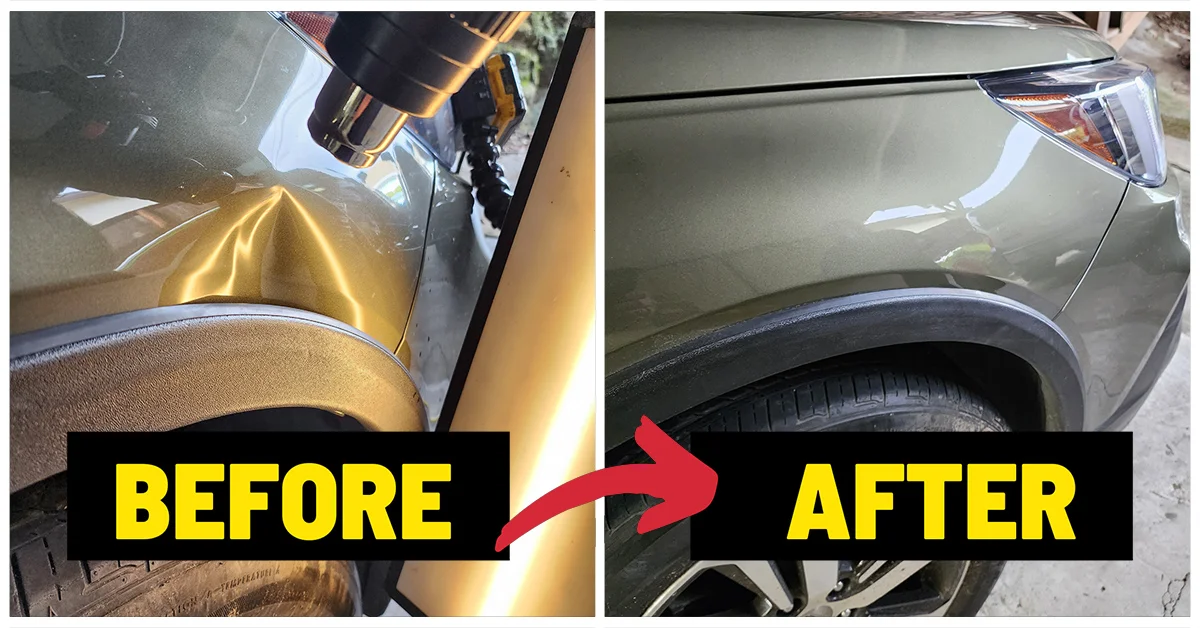
Paintless Dent Repair (PDR) is the preferred method whenever the vehicle’s original finish remains intact. Because fenders feature open wheel wells, technicians can often gain direct access behind the panel by removing a few plastic liner clips.
Here is how our on-site paintless repair process works:
- Board Setup and Illumination: We position a specialized high-contrast LED reflection board against the fender. The line or fog reflections cast onto the clear coat reveal microscopic distortions in the metal curvature.
- Thermal Preparation: If the panel is cold or the dent is located over a sharp body line, we warm the clear coat gently using a heat gun. This softens the clear coat, ensuring it flexes without cracking.
- Crown and Pressure Relief: Dents store kinetic energy in raised ridges around their edges, called crowns. Using polished knockdown punches made of soft composite material, we tap down these crowns to release trapped panel tension.
- Micro-Pushes from the Rear: We guide specialized stainless steel rods and picks behind the fender liner. With leverage, we execute hundreds of gentle, micro-pushes, massaging the low spots back up to factory level.
- Final Blending: A light cross-checking pass ensures the panel’s orange peel texture matches the surrounding original finish perfectly.
DIY Car Fender Repair vs. Professional Panel Realignment
DIY enthusiasts often turn to slide hammers, suction cups, or stud welders to tackle dented panels in their home garages. While these tools have their place in heavy collision restoration, they come with substantial risks on modern panels.
Modern cars use thinner steel than older vehicles. If a DIY slide hammer or stud welder is applied with too much pulling force, it will overstretch the metal, causing an irreversible “oil-can” effect where the panel snaps back and forth loosely. When accidents involve scraping multiple panels, reviewing strategies for restoring side-swiped car body panels can help determine if the frame lines require professional measurement.
Traditional Body Filler, Priming, and Paint Blending
When a dent is accompanied by paint gouges, torn metal, or deep creases that exceed PDR tolerances, traditional bodywork is necessary. The standard industry rule is to pull the metal back within 1/8 inch (3 mm) of its original contour before applying any body filler. Body filler is designed for surface leveling—not for rebuilding structural strength.
Mixing and Sculpting Body Filler
Achieving a flat surface requires proper mixing ratios and disciplined sanding techniques:
- Clean the Substrate: Strip the dented area down to bare metal using 80-grit abrasive paper on a dual-action (DA) sander. Blow away dust and clean thoroughly with a wax and grease remover.
- Mix the Resin and Hardener: On a non-porous mixing board, mix automotive polyester filler with cream hardener (typically a 50:1 ratio, or roughly a golf-ball-sized dollop of filler to a thin ribbon of hardener). Mix using a spreading blade in a pressing, sweeping motion to avoid trapping air bubbles.
- Avoid Over-Hardening: Adding too much hardener makes the filler brittle, causes pinholing, and can lead to peroxide bleeding through the topcoat months later.
- Featheredge the Margins: Spread the filler across the repair area, pressing firmly into sanding scratches to ensure mechanical adhesion. Feather the edges outward past the metal transition.
- Block Sanding: Once the filler is tack-free (around 20 to 30 minutes at 70°F), sand using a firm sanding block with P80 grit, stepping up progressively to P180 and P320 in a crisscross pattern.
Corrosion Protection, Priming, and Clear Coat Application
Bare metal exposed to air quickly oxidizes. To prevent bubbling rust from forming under your new paint:
- Self-Etching Primer: Apply a light coat of self-etching or epoxy primer directly over bare steel spots to create a chemical corrosion barrier.
- High-Build Urethane Primer: Spray two to three medium wet coats of high-build primer over the filled area to seal microscopic pinholes and scratches.
- Dry Guide Coat and Wet Sanding: Dust the cured primer with a dry powder guide coat. Block sand with P600 to P800 grit wet sandpaper. The guide coat will reveal any remaining low spots or sanding waves.
- Basecoat and Clear Coat: Retrieve your vehicle’s paint code from the driver door jamb placard. Spray matching basecoat over the primed area, blending into the undamaged section of the fender. Finish with two coats of 2K urethane clear coat to seal the repair and match the factory gloss.
Fender Repair Costs and Service Options
Understanding repair pricing helps vehicle owners make informed decisions when balancing insurance deductibles against out-of-pocket costs. Reviewing our auto body repair costs guide provides a comprehensive look at how labor, paint blending, and parts pricing are structured across the industry.
For minor dents and dings where the factory paint remains intact, mobile paintless dent repair (PDR) typically ranges from $150 to $500. This service is completed on-site without repainting, preserving your original factory panels and vehicle history report. When damage is more severe—such as torn metal, cracked paint, or structural misalignment—a vehicle may require more extensive restoration beyond what paintless methods can address, and a qualified body shop may be the better option in those cases.
For busy drivers across Contra Costa County—from Concord, Walnut Creek, and Danville to San Ramon and Richmond—choosing on-site mobile dent and paint repair eliminates the hassle of leaving your vehicle at a shop for days. We bring specialized tools straight to your driveway or workplace, completing most paintless repairs in just a few hours.
Frequently Asked Questions About Car Fender Repair
How long does body filler take to cure before sanding?
At standard room temperature (70°F / 21°C), standard polyester body filler cures and becomes sandable in 20 to 30 minutes. Before touching it with sandpaper, perform a thumbnail test: press your nail firmly into the edge of the repair. If it leaves a sticky impression, the filler is still off-gassing. Sanding uncured filler will clog your abrasive paper and tear the filler away from the bare sheet metal. In colder conditions, cure times take longer unless accelerated with an infrared heat lamp.
Can plastic fenders be repaired using the same metal techniques?
No. While some modern front fenders and almost all bumper covers are made of thermoplastic polymers (such as polypropylene or ABS), they do not respond to steel-working tools like slide hammers, stud welders, or standard body dollies. Repairing plastic panels requires heat reshaping, specialized plastic welding rods, and flexible epoxy fillers formulated to bend without cracking under vehicle vibration. Metal hammers will simply deform or crack plastic components.
What happens if I ignore a minor fender dent?
Ignoring a fender dent can create long-term problems that extend beyond cosmetics:
- Corrosion Creep: Even if paint damage looks like a faint hairline scratch, moisture penetrates through to the bare steel. Road salts and rainwater cause rust to spread beneath the surrounding paint, causing clear coat peeling and bubbling.
- Wheel Arch Rust: Front fenders capture road spray inside the wheel wells. Dents along the inner arch compromise seam sealers, leading to structural rot that is difficult to repair.
- Decreased Resale Value: Appraisers deduct heavily for exterior body imperfections. A single visible dent can reduce trade-in value by far more than the cost of a mobile paintless repair.
Conclusion
A damaged fender doesn’t have to disrupt your schedule or devalue your vehicle. Addressing dents early protects the metal from rust, maintains safety alignments, and preserves your car’s appearance.
Whenever the factory paint remains unbroken, paintless dent repair offers the fastest, most cost-effective way to restore your vehicle to pre-damage condition. At Dent Erasers LLC, we provide dependable, high-precision mobile repairs throughout Concord, Antioch, Martinez, Pittsburg, Brentwood, and surrounding communities.
Ready to remove that dent from your fender? Explore our professional auto body repair solutions or reach out to us today for a free on-site estimate. We’ll have your car looking like new again in no time.