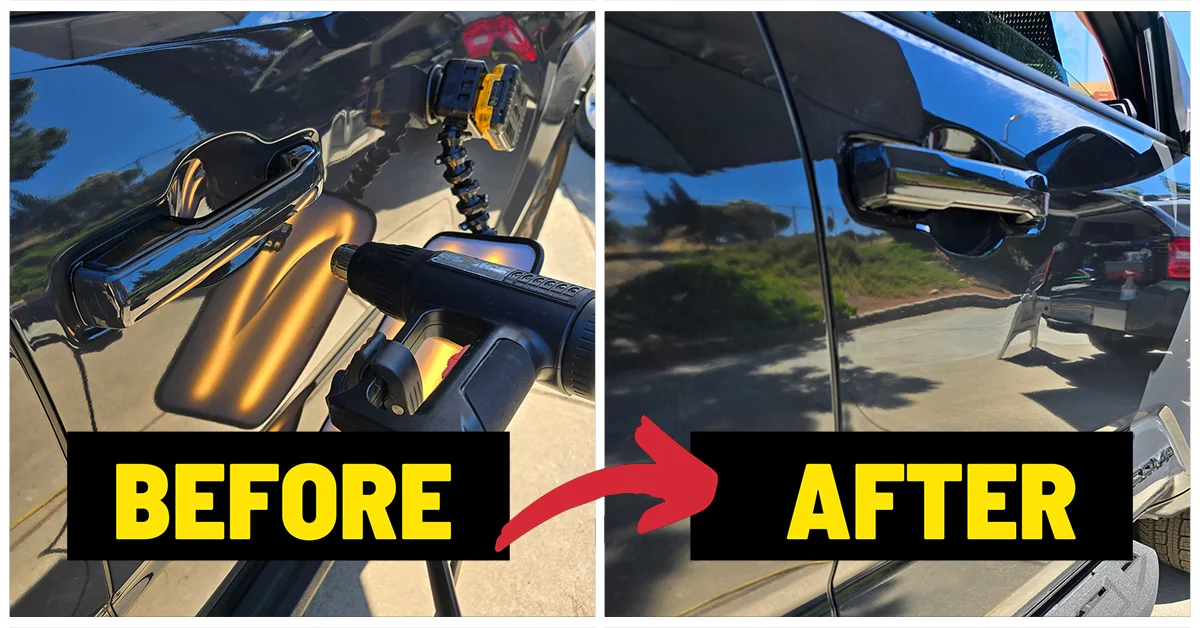
Understanding Crease Dents vs. Round Dings
Car dent crease repair is one of the most common — and most misunderstood — fixes a vehicle owner will ever need.
Here’s the quick answer most people are looking for:
Can a crease dent be fixed without repainting?
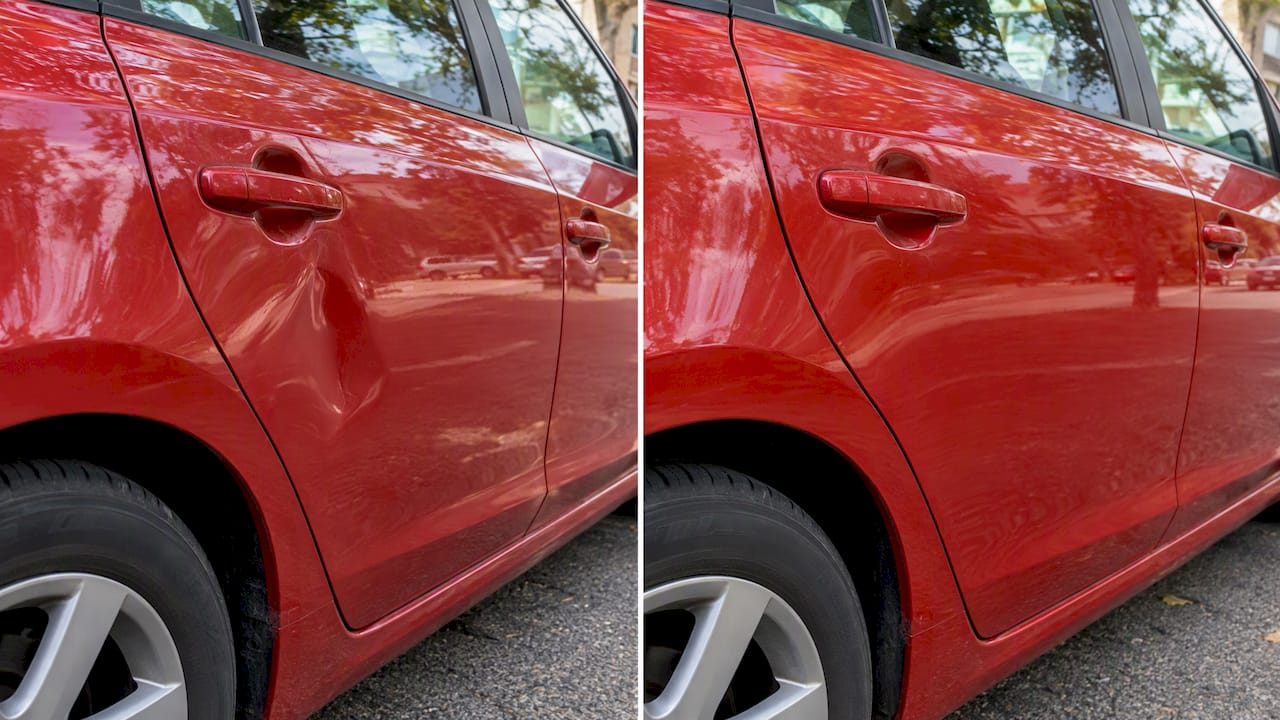
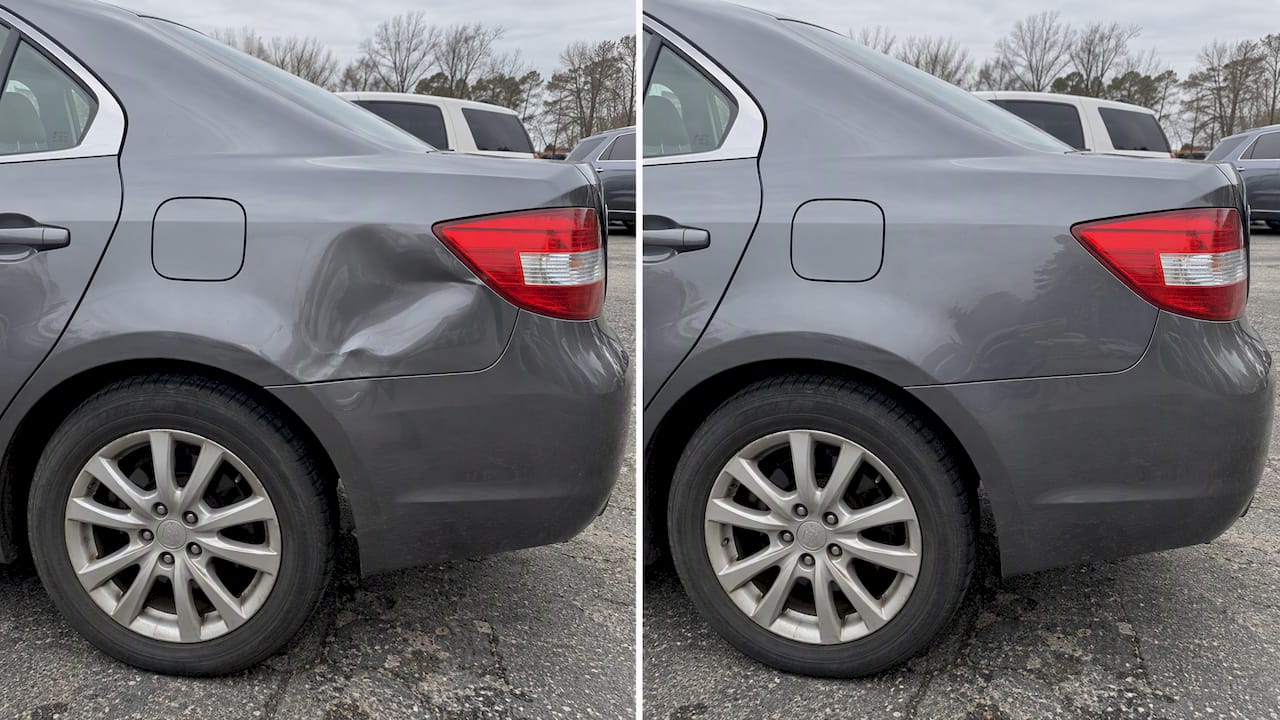
- Yes — in most cases, a professional can remove a crease using Paintless Dent Repair (PDR), without filler, sanding, or repainting
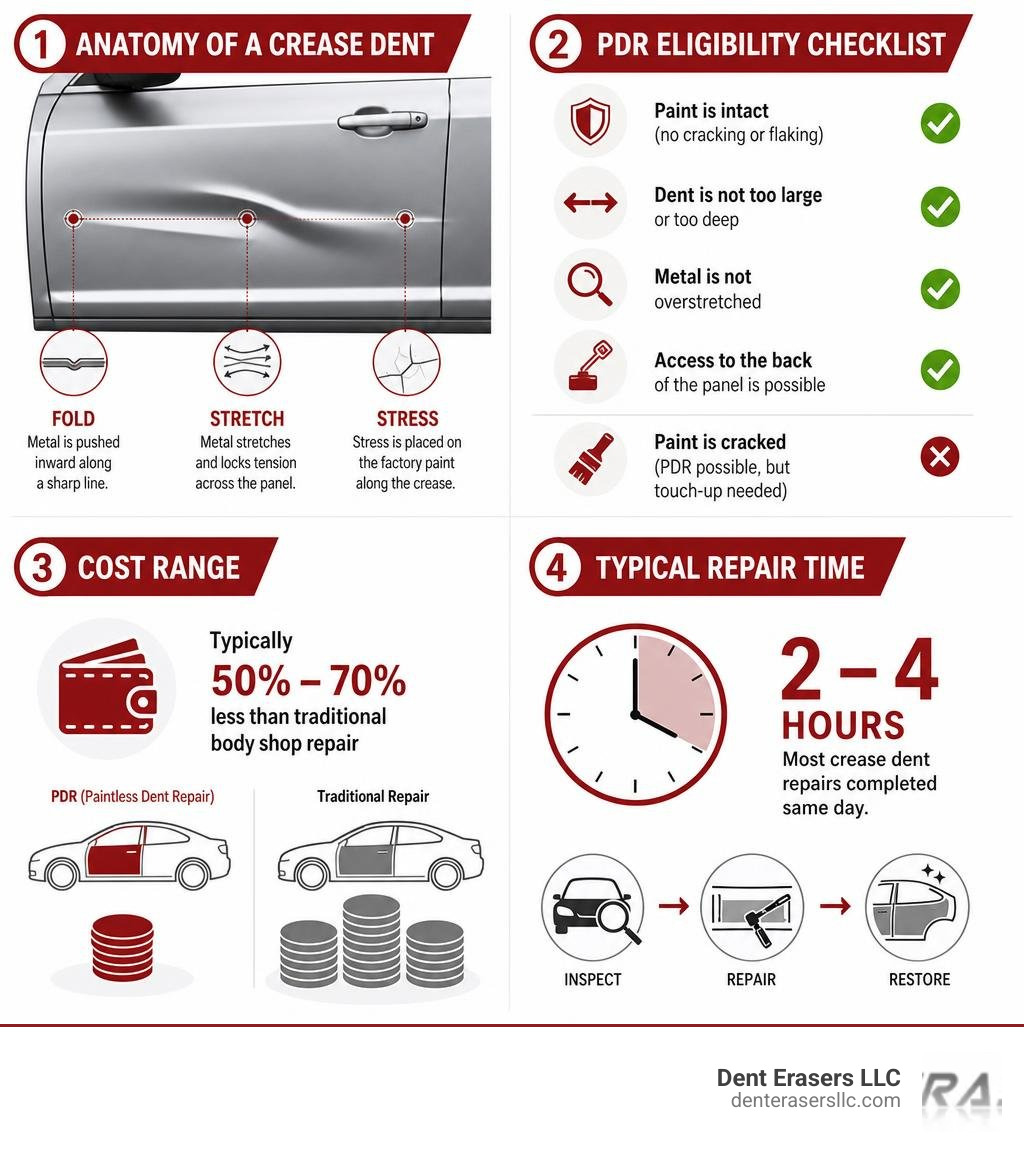
- PDR works when the paint is still intact, the metal isn’t overstretched, and a technician can access the back of the panel
- Repairs typically take 2 to 4 hours and cost 50% to 70% less than a traditional body shop
- If the paint is cracked, PDR can still restore the metal shape, but a targeted touch-up will also be needed
- When PDR isn’t possible, traditional body filler and repaint is the fallback — but it comes with real trade-offs for resale value
That crease running across your door or fender looks serious. And unlike a simple round ding, it is more complex. A crease doesn’t just push the metal inward — it folds and stretches it along a line, locking tension into the panel and putting stress on the factory paint along its entire length.
The good news? With the right technician and the right tools, most creases can be reversed — cleanly and permanently — without touching the original finish.
I’m Brian Blanc, founder of Dent Erasers LLC, and I’ve spent nearly three decades specializing in car dent crease repair across the East Bay, working on everything from daily drivers to high-end luxury vehicles. In this guide, I’ll walk you through exactly how crease repairs work, what makes them different from standard dents, and how to know if your vehicle qualifies for PDR.
Car dent crease repair helpful reading:
- paintless dent removal estimate
- cost of repairing small dent in car door
- automotive paintless dent removal
Before we dive into the mechanics of car dent crease repair, it helps to understand what we are actually fighting. Dents are not all created equal, and their structural behavior dictates how they must be repaired.
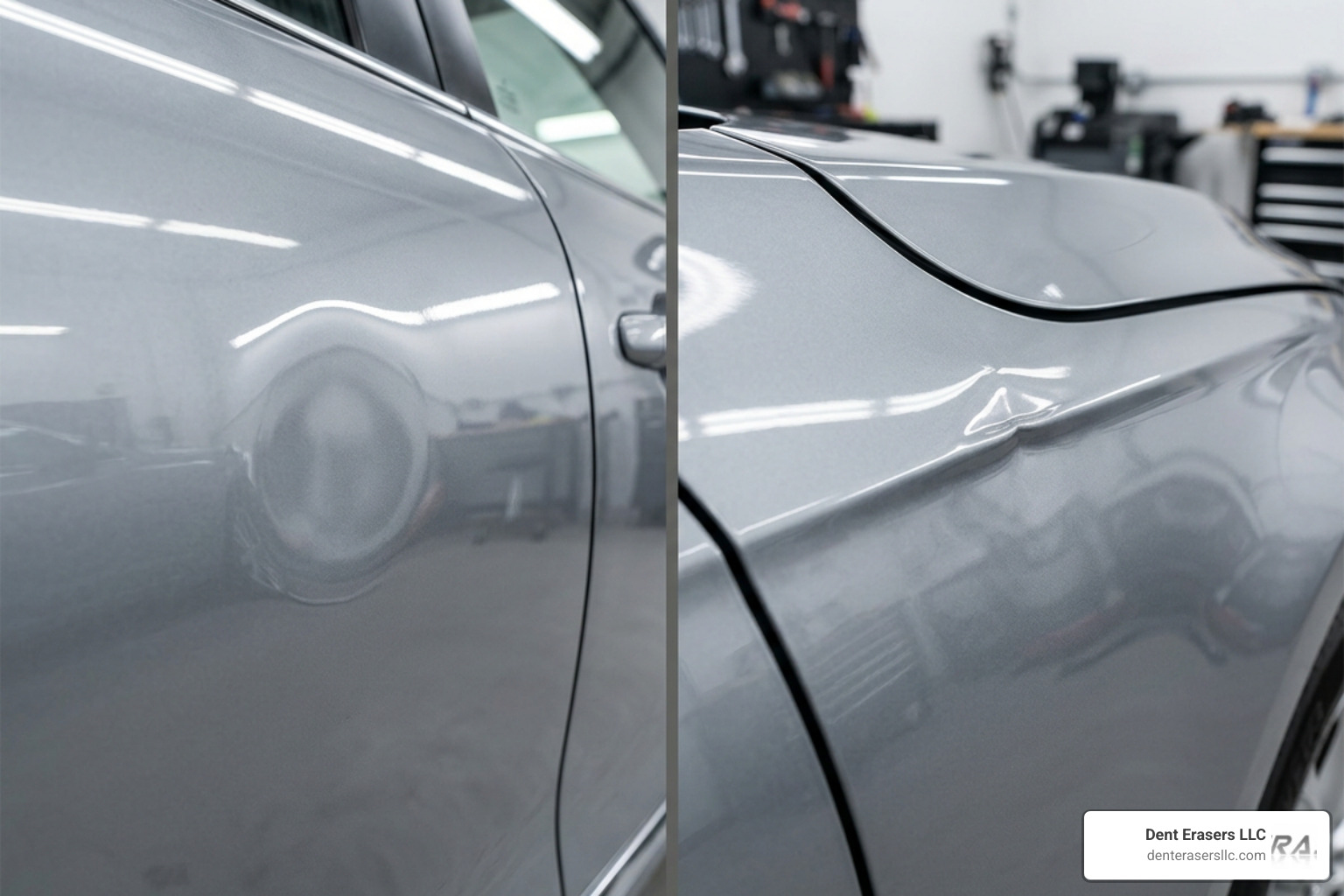
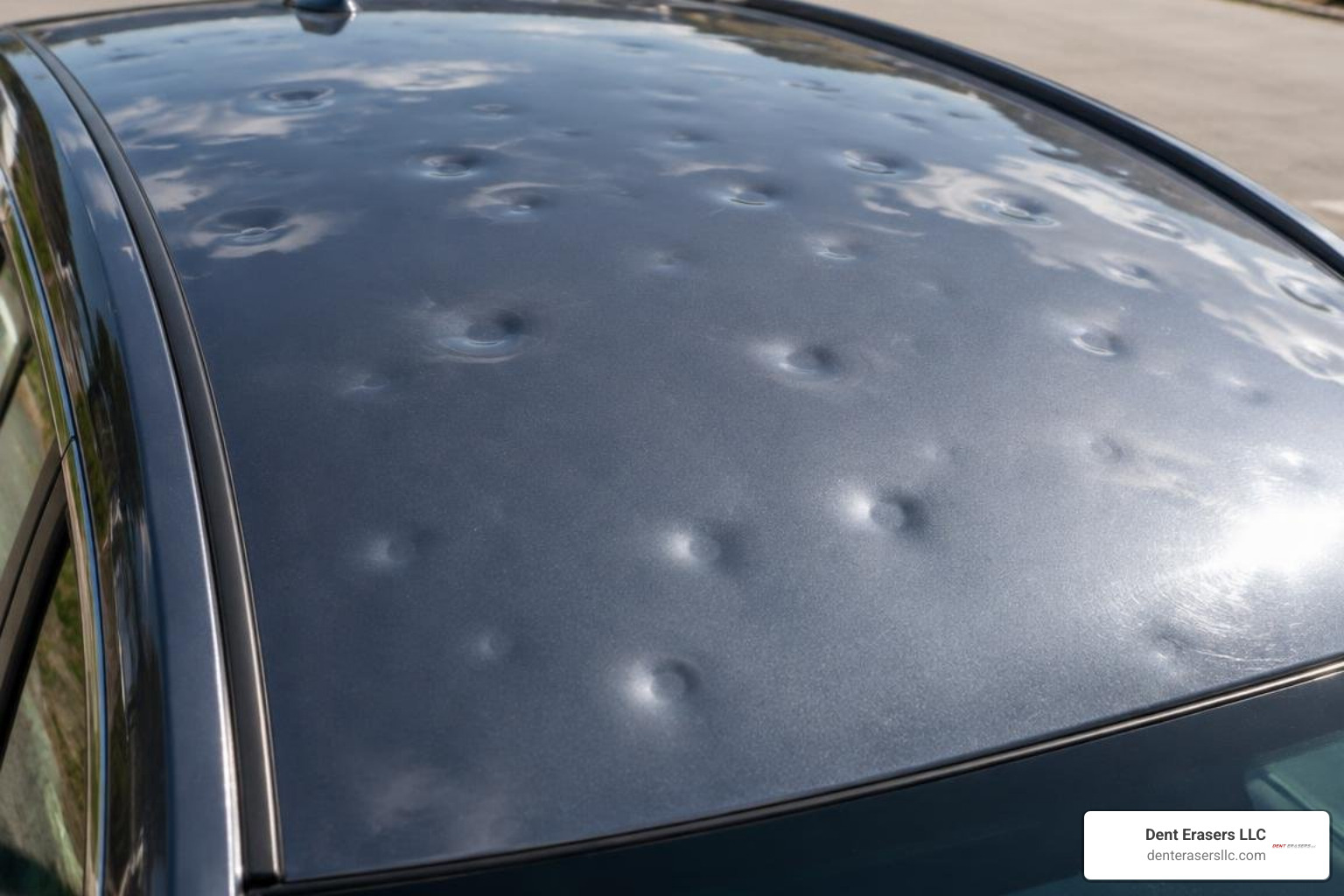
A standard round ding is like a shallow bowl. When a soft object (like a stray basketball) strikes a flat door panel, the metal displaces evenly from a single center point. The metal retains its natural elasticity and “memory” — a scientific concept where the panel inherently wants to pop back into its factory-molded shape once the initial resistance is broken.
A crease dent, however, is a completely different animal.
Creases are linear dents characterized by their length and direction. They are typically caused by a moving, narrow object dragging or scraping along the panel — think of a runaway shopping cart, a bicycle handlebar, a low concrete parking barrier, or a garage door catching the edge of a trunk lid.
Instead of displacing the metal uniformly, a crease folds the metal along a sharp axis. This folding action creates high-tension ridges on either side of the low channel, known in the PDR industry as crowns or shoulders.
These crowns act as a structural lock. The metal on one side of the fold is under extreme tension, while the other side is compressed. Because the force is concentrated along a narrow line, the metal’s molecular structure is bent and “trapped.” If you try to simply push the bottom of a crease back up without addressing the surrounding crowns, the metal will fight you, and you risk cracking the paint or creating ugly, irreversible high spots.
Why Body Line Creases Are Highly Complex
The complexity of a crease skyrockets when it runs directly through or across a vehicle’s body lines (also known as swage lines).
Body lines are the strongest parts of a vehicle’s panels. They are stamped into the sheet metal during manufacturing to provide structural rigidity, define the car’s aesthetic, and control how light reflects off the body. When an impact creases a body line, it doesn’t just dent the metal; it collapses the panel’s built-in support system.
Repairing a crease on a body line requires master-level skill because the technician must physically re-fold the metal to recreate a perfectly crisp, razor-sharp factory edge. If the metal has stretched too far during the impact, it can become structurally compromised. To understand the risks of ignoring these complex distortions, you can read more about how Small Dents Big Problems and How to Fix Them can impact your vehicle’s structural integrity over time.
Why PDR is the Superior Method for Car Dent Crease Repair
When you discover a long, ugly crease on your vehicle, your first instinct might be to call a traditional collision shop. However, for most eligible crease damage, Paintless Dent Repair (PDR) is the superior, non-invasive alternative.
First and foremost, PDR preserves your vehicle’s original factory paint. This is incredibly important for maintaining your car’s long-term resale value. High-end luxury dealerships and experienced appraisers routinely use digital paint-depth gauges during trade-in inspections. If they detect aftermarket paint, body fillers (like Bondo), or resprayed panels, your vehicle’s trade-in value can instantly plummet by thousands of dollars.
By using specialized tools to gently massage the metal back into place from the inside out, we ensure that your factory finish remains completely untouched.
There is also a significant environmental benefit. Traditional auto body shops rely on sanding, polyester body fillers, primers, and chemical paints that release harmful volatile organic compounds (VOCs) into the atmosphere. PDR is recognized by environmental standards as a green, low-emission repair method because it uses absolutely zero chemicals, solvents, or fillers.
Additionally, choosing PDR means you can Stop the Dents from Driving You Crazy with PDR without losing your car to a body shop for a week or more. Most crease repairs can be completed at your home or office in just a few hours.
Assessing If Your Vehicle is a Candidate for Car Dent Crease Repair
Not every crease can be repaired using paintless methods. Before we pick up a tool, we conduct a rigorous assessment based on four critical factors:
- Paint Integrity: The factory clear coat must be fully intact. If the paint is cracked, chipped, or showing white stress marks along the bottom of the crease, PDR cannot restore the paint itself. (However, we can still structurally repair the metal to prevent heavy body filler use, preparing the surface for a clean touch-up).
- Metal Stretch: Metal has an elastic limit. If a crease is incredibly deep and sharp, the metal may have overstretched or “dead-spotted.” Once metal is stretched beyond its elastic threshold, it cannot return to its original shape without specialized shrinking techniques or, in extreme cases, panel replacement.
- Backside Access: To massage the metal from behind, we must be able to reach it. We gain access by utilizing factory access points (such as removing tail lights, inner door card liners, or rubber wiring harnesses). If access is completely blocked by structural bracing, we must rely on professional glue pulling systems from the exterior.
- Panel Material (Steel vs. Aluminum): Aluminum panels, which are common on modern European luxury sedans and light-duty trucks, behave very differently than steel. Aluminum is less flexible, has less “metal memory,” and work-hardens rapidly when manipulated. This means aluminum creases require extreme patience and specialized heat management to prevent the metal from cracking or tearing.
For a deeper dive into how we analyze metal behavior and structural limits, check out our guide on Small Dent Removal from Car: A Step-by-Step Guide to Metal Morphing.
The Step-by-Step Process of Professional Car Dent Crease Repair
Repairing a crease is a highly strategic, staged process. You cannot simply start pushing the deepest part of the dent. Instead, a technician must work systematically, almost like unzipping a zipper, to release the locked tension.

Step 1: Setup and Lighting
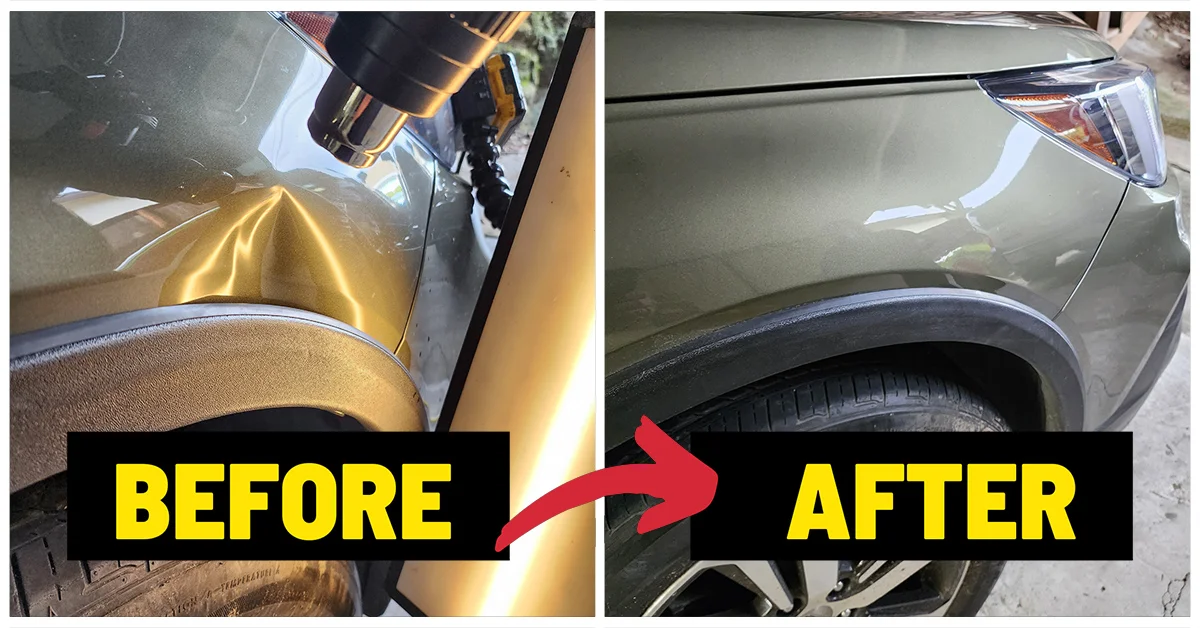
We begin by placing a specialized LED reflection board (or line board) next to the panel. This board projects a series of perfectly parallel lines across the damaged area, creating a highly detailed topographical map of the metal. By reading how these lines bend, pinch, or spread, we can identify micro-highs and lows that are completely invisible to the naked eye.
Step 2: Temperature Control
Before we touch the metal, we use a professional heat gun to warm the panel and the paint. Keeping the clear coat warm makes it highly pliable, drastically reducing the risk of paint cracking as the metal flexes and shifts.
Step 3: Releasing the Crowns (Tension Relief)
Instead of pushing from behind immediately, we start on the outside. Using a blending hammer and a soft-tipped knockdown tool, we gently tap along the high-pressure ridges (the crowns or shoulders) surrounding the crease. This disperses the trapped energy and allows the metal to flow back toward the center of the valley.
Step 4: Staged Metal Lifting
Once the tension is unlocked, we gain backside access. Using a double-bend bar or a specialized blade tool with a hard plastic tip, we begin massaging the bottom of the crease. We work from the outer ends of the crease inward toward the center, lifting in tiny, precise increments.
If backside access is completely blocked, we use a method known as Glue Pull Repair (GPR). We apply specialized, long, thin crease tabs to the exterior of the dent using high-strength hot glue, allowing it to cure for about 10 seconds before using a slide hammer or mini-lifter to pull the valley upward. For more details on how glue pulling works on complex damage, see The Ultimate Guide to Using a Dent Puller for Hail Damage.
Step 5: Micro-Finishing and Blending
As the crease shrinks, we downsize our tools. We tilt our line board to a 45-degree angle to get a fresh perspective and cross-check the reflections. Using fine metal-tipped knockdowns, we tap down tiny high spots and lift micro-lows until the repaired panel perfectly matches the manufacturer’s original “orange peel” paint texture.
PDR vs. Traditional Body Shop Repairs
If you are trying to decide between professional PDR and a conventional auto body shop, it helps to see how the two methods stack up side-by-side.
| Feature / Metric | Professional PDR (Dent Erasers LLC) | Traditional Body Shop |
|---|---|---|
| Primary Method | Reshapes original metal from behind or via glue pulling | Sands paint, applies polyester body filler, repaints |
| Preserves Factory Paint | Yes (100% intact) | No (sanded and replaced with aftermarket finish) |
| Average Cost | $150 to $500 for most repairs | $600 to $1,500+ (includes labor, paint, and materials) |
| Turnaround Time | 2 to 4 hours (completed same-day) | 5 to 7+ days (vehicle downtime) |
| Carfax Impact | None (non-invasive cosmetic repair) | Often reported as collision repair, lowering resale value |
| Long-Term Risks | None (metal is permanently restored) | Filler shrinkage, cracking, “ghost lines,” color mismatching |
Traditional body shop repairs often rely heavily on body fillers (like Bondo). While filler looks fine initially, it expands and contracts at a different rate than the underlying metal when exposed to California’s intense summer heat. Over time, this temperature-induced movement can cause the filler to shrink, crack, or create a visible “ghost line” where the patch meets the original panel.
Furthermore, matching factory paint is incredibly difficult. Even the best body shops struggle to achieve a 100% perfect color match, especially on metallic or pearl finishes.
Some vehicle owners attempt to save money by purchasing cheap DIY dent puller kits online. These “cheap fixes” almost always fall short because they lack the precision control required for complex linear creases. Without professional training, DIY attempts often lead to over-pulled metal, stretched panels, and cracked paint. To understand why these budget shortcuts usually end up costing more in the long run, read our article on The Cheapest Ways to Fix a Car Dent.
Key Factors That Influence Repair Costs and Timelines
When estimating a car dent crease repair, we look at several key variables to determine the price and time required:
- Crease Length: Shorter creases (under 4 inches) are faster to resolve, while long, running creases that span across multiple panels require extensive, staged tension management.
- Crease Depth and Sharpness: A shallow crease is much easier to massage out than a sharp, folded crease that has heavily compressed the metal.
- Panel Material: Aluminum panels require extra time, specialized heat monitoring, and high-leverage tools, which increases the labor complexity.
- Damage Location: Creases located on flat, wide-open panels are highly accessible. Creases that run directly through stamped body lines, double-walled brace areas, or near edge lips require significantly more precision and time.
- Vehicle Technology: Dents located near advanced safety sensors, blind-spot cameras, or structural radar components may require ADAS (Advanced Driver Assistance Systems) recalibration after the repair is complete.
For a comprehensive breakdown of how we price our services and what to expect, check out The Complete Guide to PDR Pricing and Estimates.
How to Take Photos for an Accurate Remote Estimate
Because we offer highly convenient mobile services throughout Contra Costa County, we can often provide an accurate preliminary estimate right over the phone if you send us high-quality photos. Here is how to capture the perfect shots:
- Don’t Shoot Head-On: Taking a photo directly in front of the dent makes it look flat and hides the depth of the crease.
- Use a 45-Degree Angle: Stand to the side of the dent and angle your camera at about 45 degrees. This allows us to see the depth, length, and shape of the crease.
- Capture Reflections: Position the vehicle so that a straight line (like a fence, a garage door frame, or a brick wall) reflects across the dent. The distortion in the reflected lines acts like our professional line boards, showing us exactly how the metal is bent.
- Use Raking Light: Take photos in the morning or late afternoon when the sun is low. This natural “raking light” highlights the shadows and crowns surrounding the crease.
Frequently Asked Questions About Crease Repair
Can PDR fix a crease if the paint is cracked or chipped?
If the paint is cracked, PDR cannot restore the paint itself, but it can still be used to structurally restore the shape of the metal. This is highly beneficial because it eliminates the need for thick layers of body filler, allowing for a much cleaner, thinner touch-up paint application.
For vehicles in coastal East Bay areas like Richmond or El Sobrante, addressing even minor paint chips along a crease is critical. The salty coastal air can rapidly accelerate corrosion, leading to rust forming underneath the surrounding clear coat if left exposed. If you’re in the East Bay, we recommend getting a professional assessment from a local specialist to explore your options and prevent long-term damage.
How long does a typical crease repair take?
Unlike traditional body shops that keep your car for days, a typical paintless crease repair is completed same-day. A shallow to moderate crease on an accessible panel usually takes just 2 to 4 hours to restore back to showroom condition.
Is mobile crease dent repair as effective as in-shop repair?
Absolutely. Our mobile service brings the exact same master-level tools, high-leverage rods, LED line boards, and heat management systems directly to your home or office. You get the same flawless, factory-quality finish without the hassle of driving to a shop or arranging a rental car.
Conclusion
At Dent Erasers LLC, we believe in keeping things simple, honest, and high-quality. A sharp crease on your door or fender doesn’t mean you have to sacrifice your vehicle’s original factory paint, suffer through days of downtime, or deal with the long-term headache of cracking body fillers.
Serving Concord, CA, and the surrounding East Bay communities — including Walnut Creek, Pittsburg, Antioch, San Ramon, and Brentwood — we bring nearly 30 years of certified master-technician experience directly to your driveway. Whether you drive a daily commuter, a luxury sedan, a classic car, or a motorcycle, we can safely iron out the damage and Get Your Car Looking New Again with Expert Dent Removal.
Ready to get that crease permanently erased? Visit our Dent Erasers LLC Paintless Dent Repair Service page to learn more, or send us a few photos today for a fast, free mobile estimate!