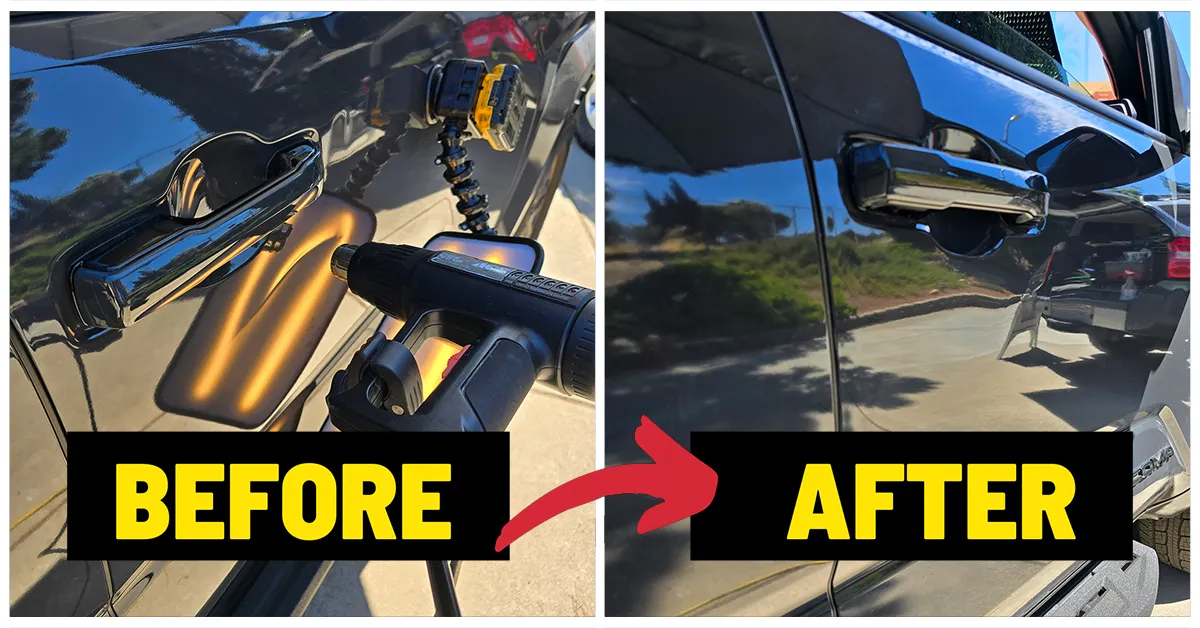
Expert Large Dent Repair Using Paintless Techniques
By Brian Blanc, Dent Erasers LLC
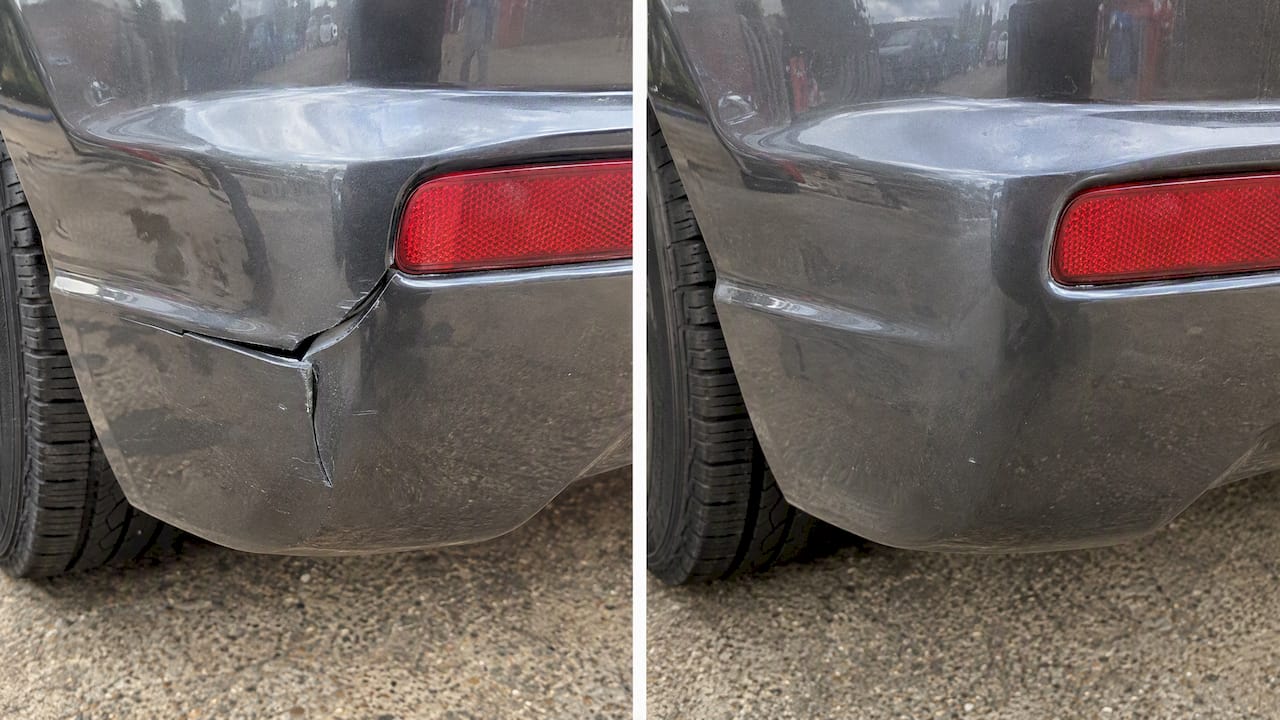
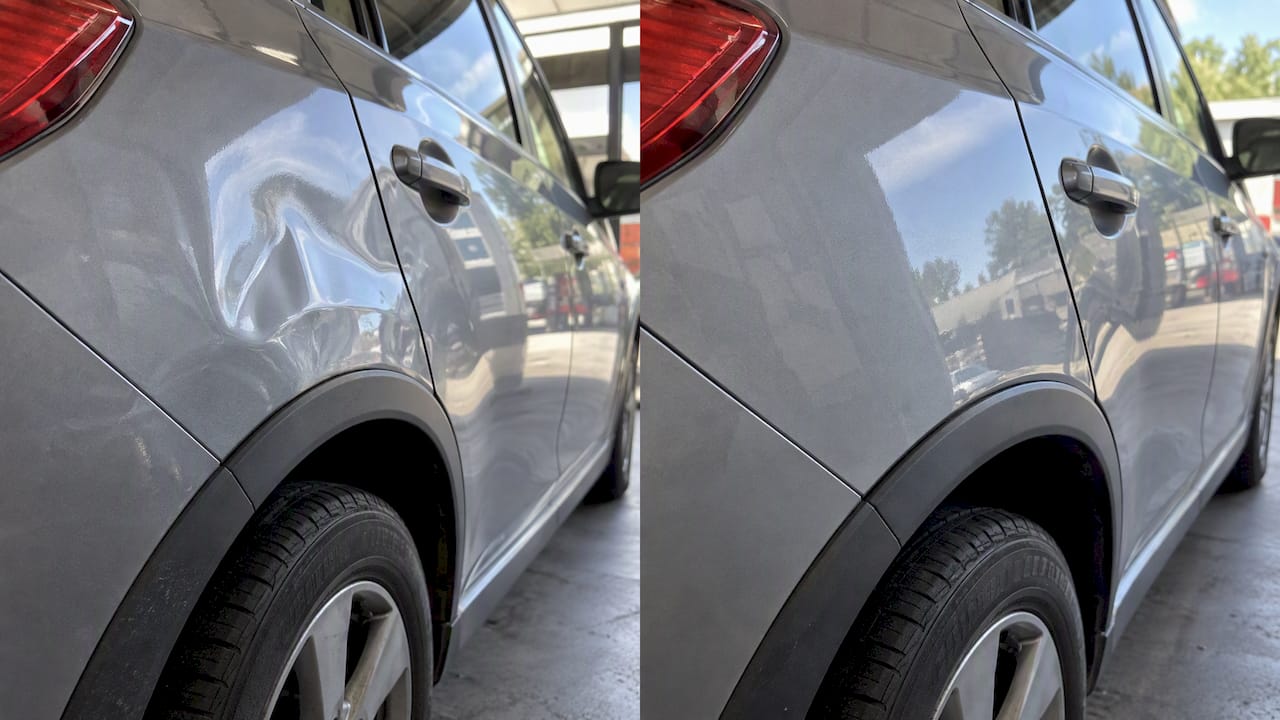
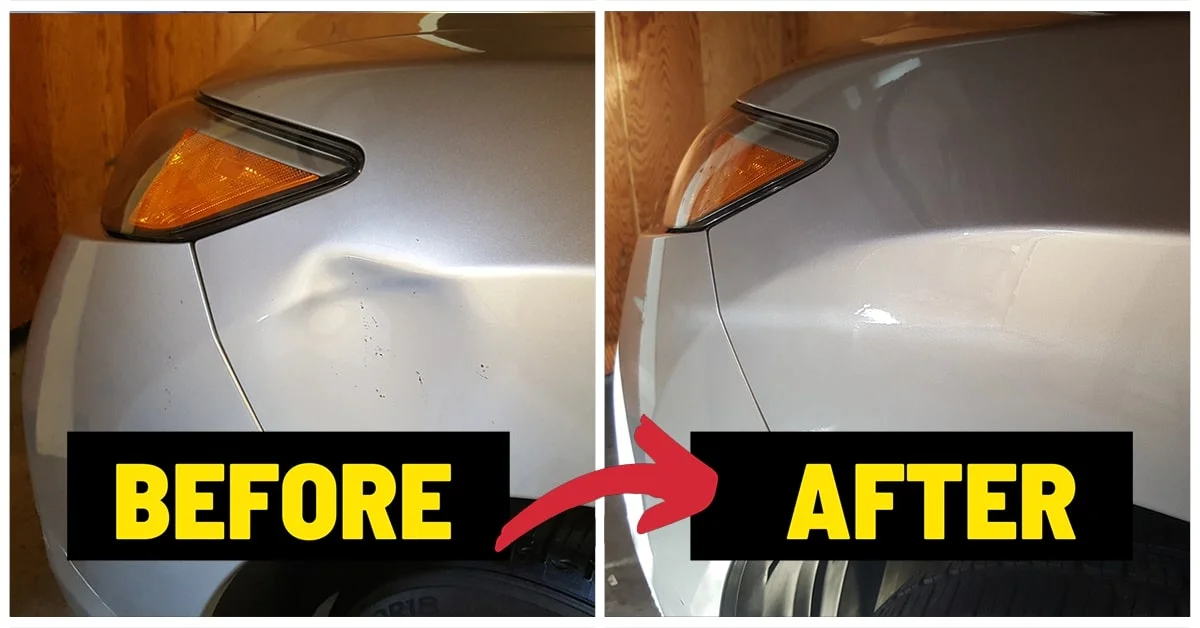
Paintless dent repair (PDR) is a specialised method that removes significant dents while keeping the vehicle’s factory paint intact. It preserves appearance and resale value without sanding or repainting. This guide summarises PDR techniques, essential tools, benefits, practical best practices, and the convenience of mobile service so you can decide on the right repair route.
Key Takeaways
- PDR removes large dents while preserving original paint.
- Common techniques: leverage-based PDR, glue pulling, and tap‑down.
- Key tools: dent rods, glue puller kits, knockdown hammers, reflection boards.
- PDR is typically faster, less costly, and eco‑friendlier than conventional bodywork.
- Mobile PDR offers on‑site repairs and transparent pricing for busy owners.
- Costs depend on dent size, material, location, accessibility, and paint condition.
- Dent Erasers LLC assists with insurance claims and offers warranties.
- Follow a clear assessment, use quality tools, and monitor progress for best results.
Overview of Paintless Dent Repair (PDR)
Paintless dent repair restores metal panels without affecting factory paint, making it ideal for creases, large dents, and dings where the finish is intact. Technicians access the back of the panel or use glue pulling where access is limited, manipulating the metal back to shape for a quicker, cost‑effective result.
Further research highlights the innovative design and versatile functionality of these specialised paintless dent removers.
Paintless Dent Remover Design & Functionality
A paintless dent remover is designed to extract dents without removing the vehicle’s paint. It is engineered to work at a range of angles, enabling repairs in positions where other tools may have limited access.
Design & Development of Dent Remover without Removal of Paint, MZ Khan, 2025
Techniques Used in PDR
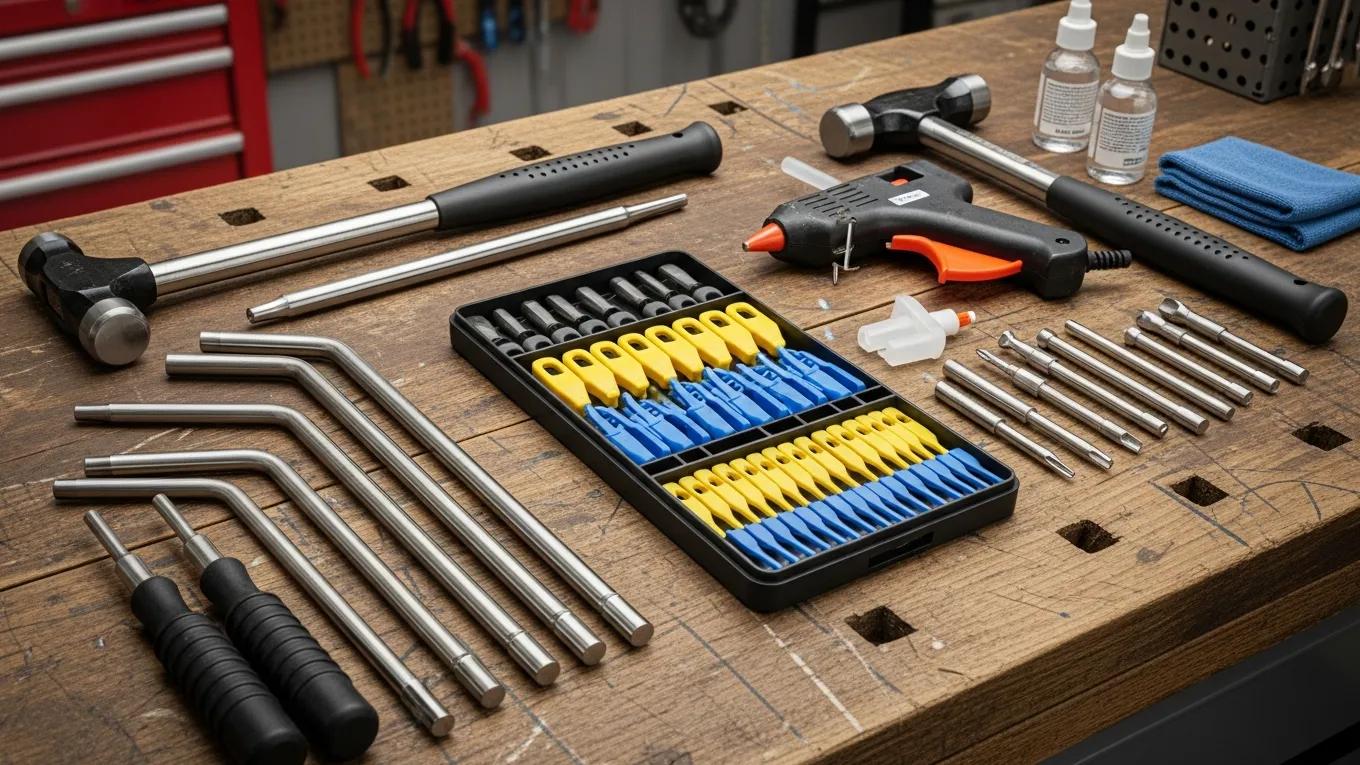
PDR uses a small set of proven approaches adapted to dent type and access. Choosing the right technique depends on dent depth, crease presence, and whether the panel can be reached from behind.
- Leverage-Based PDR: Pushes the metal from behind using rods and leverage for gradual restoration.
- Glue Pulling Method: Adhesive tabs and a puller lift dents when rear access is restricted.
- Tap-Down Technique: Knocks down high spots and evens the surface after reshaping.
These methods require trained technicians who protect the paint and use reflection boards or lights to guide micro adjustments.
Tools Required for PDR
Accurate results depend on purpose-built tools. Proper selection and technique reduce the risk of paint damage and speed repairs.
- Dent Rods: Various lengths and tips to push metal from behind.
- Glue Puller Kits: Tabs, glue, and pulling devices for surface pulls.
- Knockdown Hammers: Controlled taps to level high spots.
- Reflection Boards: Visual aids to locate and judge progress on dents.
Using the correct tools and calibrated pressure produces consistent, high‑quality PDR outcomes.
Benefits of PDR
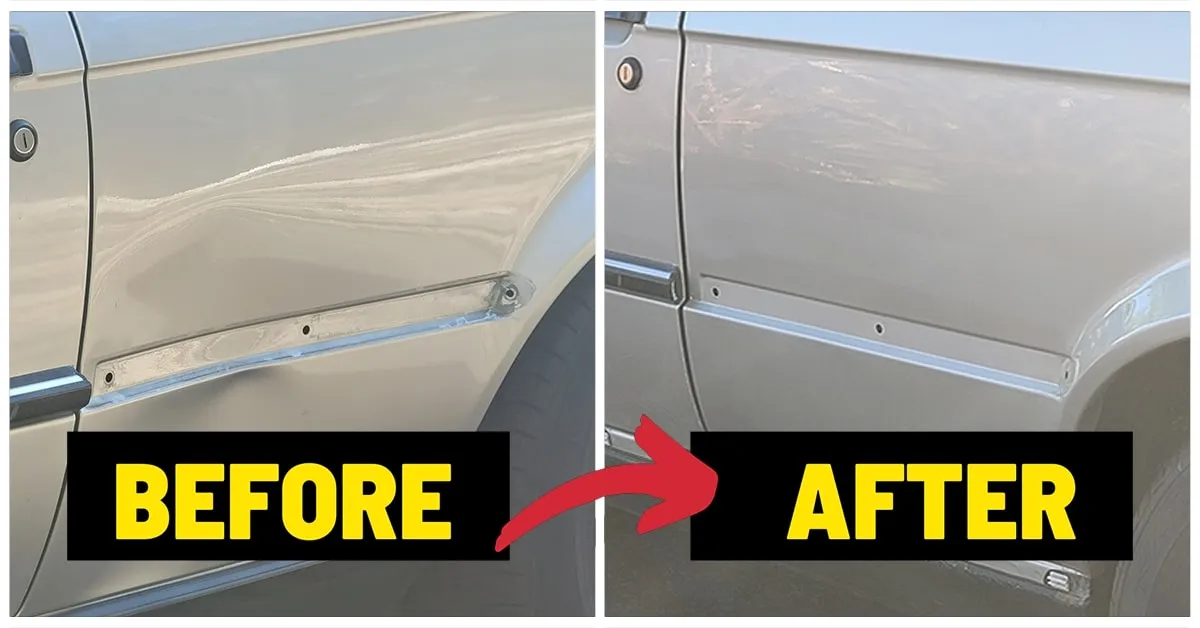
PDR provides a faster, less invasive option than traditional bodywork and paint. It reduces costs, shortens turnaround, and avoids paints and solvents.
- Cost-Effective: Often cheaper than repainting and body filler jobs.
- Time Efficient: Many repairs finish in hours rather than days.
- Eco-Friendly: No paint, primers, or heavy chemicals required.
- Preserves Resale Value: Maintains the original factory finish.
Dent Erasers LLC specialises in large dent and crease removal and offers mobile visits across Contra Costa County for convenient on‑site repairs.
Best Practices for Effective Auto Restoration
Consistent PDR quality follows a straightforward workflow: assess, choose the right method, use quality tools, monitor progress, and finish with post‑repair detailing.
- Initial Assessment: Confirm suitability for PDR and identify access points.
- Choose the Right Technique: Match method to dent type and panel material.
- Use Quality Tools: Proper tips, glue, and hammers reduce rework.
- Monitor Progress: Use reflection boards and take frequent checks.
- Post-Repair Detailing: Clean and protect the finish after repairs.
What Is Paintless Dent Removal and How Does It Preserve Your Vehicle’s Original Paint?
Paintless dent removal reshapes the metal without sanding or repainting, preserving the factory coating. Technicians gently manipulate the panel from behind or pull from the outside, retaining the original paint and avoiding colour‑match issues.
Keeping factory paint intact helps maintain appearance and resale value, making PDR the preferred choice when paint remains undamaged.
Understanding the Paintless Dent Repair Technique and Its Benefits
PDR addresses creases, large dents, and minor dings where the paint is undamaged. Benefits include lower cost, faster turnaround, and reduced environmental impact compared with full body repair and repainting.
How Large Dent Repair Differs from Minor Dent Removal
Large dents require more planning, time, and sometimes glue pulling or leverage methods. Minor dents are quicker and often simpler to correct. For larger damage, an experienced technician improves the chance of a seamless repair.
How Does Mobile Dent Repair Service Enhance Convenience for Contra Costa County Car Owners?
Mobile PDR brings trained technicians to your location, removing the need to visit a shop. Mobile service saves travel time, reduces downtime, and often provides transparent, competitive pricing.
Scheduling and On-Site Repair Process Explained
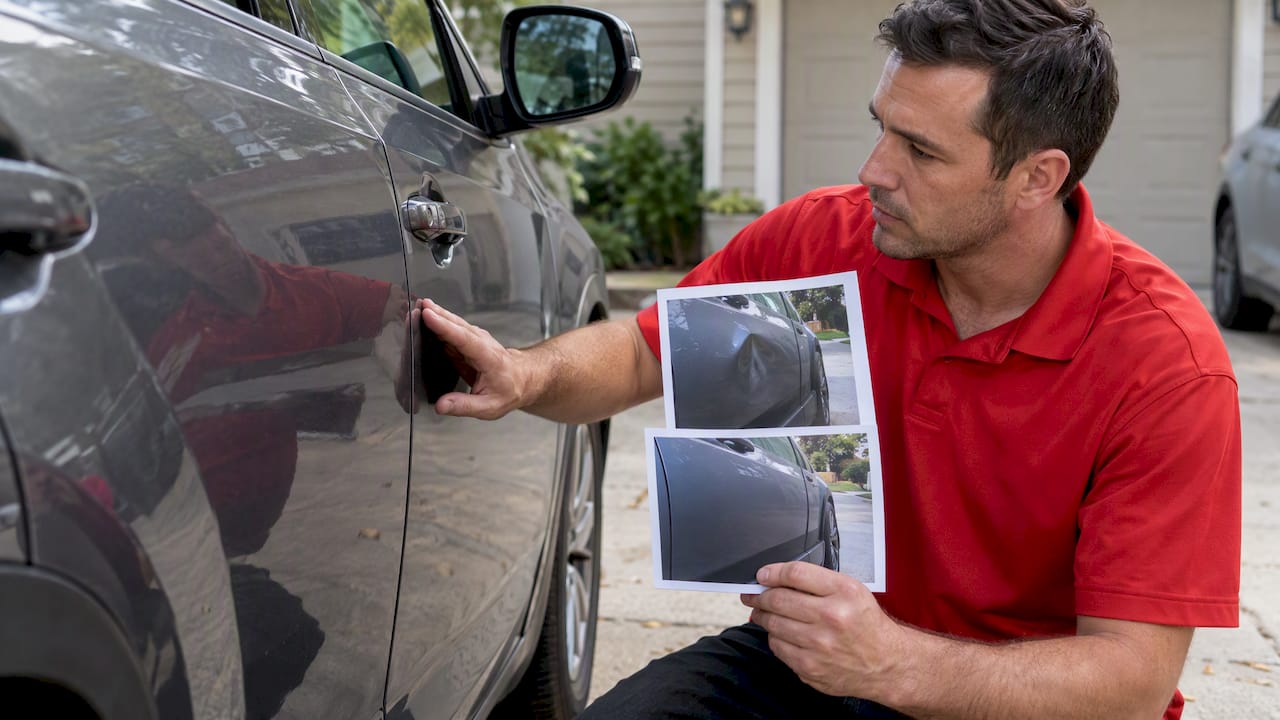
Booking is straightforward: request a quote, choose the repair type, and set a convenient time. Technicians arrive with tools and perform the repair on‑site where possible.
The on-site process typically follows a few clear steps:
- Request a Quote: Receive an estimate based on photos or an in‑person check.
- Choose Repair Type: Technician recommends glue pull, rod work, or a hybrid approach.
- Schedule an Appointment: Pick a time and location for the mobile visit.
- On-Site Repair: Technician performs the repair with minimal disruption.
- Completion and Follow-Up: Final checks and any follow-up guidance are provided.
This streamlined approach keeps repairs accessible and efficient for busy customers.
Advantages of Mobile Service Over Traditional Auto Body Shops
Mobile PDR often lowers overhead and turnaround time while delivering the repair at your location.
- Convenience: On‑site repairs save time and logistics.
- Cost: Lower overhead can reduce prices compared with in‑shop work.
- Time Efficiency: Many jobs are completed sooner than traditional repairs.
What Are the Typical Costs and Pricing Factors for Large Dent Repair with Paintless Methods?
Price depends on dent size, depth, panel material, number of dents, accessibility, and paint condition. Hard‑to‑reach areas and compromised paint increase complexity and cost.
- Dent Size and Depth: Larger dents need more labour and tools.
- Vehicle Material: Aluminum and high‑strength steel require different handling.
- Number of Dents: Multiple dents add time and expense.
- Location and Accessibility: Tight areas may need alternate methods or extra time.
- Condition of the Paint: Damaged paint may require conventional repair rather than PDR.
This table lists typical PDR service prices to provide clear, transparent cost expectations for customers.
How Free Estimates and Transparent Pricing Build Customer Trust
Free estimates let customers compare options and avoid surprises. Clear pricing and upfront communication reduce disputes and improve satisfaction, encouraging referrals.
Comparing Auto Dent Repair Costs: Mobile Service vs. In-Shop Repairs
Compare overhead, convenience, and turnaround when choosing between mobile and in‑shop repairs. Mobile services often pass overhead savings to customers and require less time away from daily activities, while in‑shop work may be necessary for complex repainting or structural repairs.
How Does Dent Erasers Support Customers with Insurance Claims for Large Dent Repairs?
Dent Erasers LLC assists customers through the claims process to improve accuracy and speed. Their staff helps gather documentation and submit what insurers require to support a claim.
- Claims Process: Guidance through filing and communication with insurers.
- Required Documentation: Help locating photos, estimates, and repair records.
- Customer Assistance Services: Ongoing support to answer questions during claims handling.
This support increases the likelihood that eligible repairs are fairly considered by insurers.
Navigating Insurance Processes with Expert Assistance
Insurance can be confusing; expert guidance clarifies coverage and next steps. Dent Erasers begins with a consultation and damage assessment, then helps compile insurer documentation to pursue coverage confidently.
Warranty and Service Guarantees for Peace of Mind
Dent Erasers LLC offers warranties and guarantees to ensure repair quality and provide recourse if standards aren’t met. Clear pricing and skilled technicians reinforce customer confidence.
- Warranty on Repairs: Coverage for workmanship if issues arise.
- Transparency in Pricing: Upfront cost communication to avoid surprises.
- Expert Technicians: Trained professionals using current PDR techniques.
These assurances support a positive ownership experience after repair.
Frequently Asked Questions
What types of vehicles are suitable for paintless dent repair?
PDR suits many cars, trucks, and SUVs when the paint is intact. Panel material and dent type affect suitability; a technician should confirm suitability after inspection.
How long does a typical paintless dent repair take?
Minor dents can take around 30 minutes; most jobs finish within a few hours. Larger or complex repairs take longer. Mobile services generally offer faster turnarounds.
Can paintless dent repair be performed on all types of dents?
PDR works best for shallow dents and creases with undamaged paint. Deep dents, severe paint damage, or panels with no rear access may need traditional repair.
Is paintless dent repair covered by insurance?
Many policies cover PDR for accidents or hail, but coverage varies. Dent Erasers can help submit required documentation for potential coverage.
What should I do if my vehicle has multiple dents?
Arrange an assessment. Many multiple‑dent jobs can be handled with PDR, which can be more efficient and cost‑effective than repainting.
How can I maintain my vehicle after a paintless dent repair?
Avoid washing for 24 hours to let repairs settle. Apply wax or sealant and continue regular washing and detailing to protect the finish.
Conclusion
Paintless dent repair is an efficient, cost‑effective option for restoring large dents while preserving factory paint and resale value. With proper assessment, skilled technicians, and the right tools, PDR delivers reliable results. For on‑site convenience and insurance assistance, contact Dent Erasers LLC to discuss your dent repair needs.