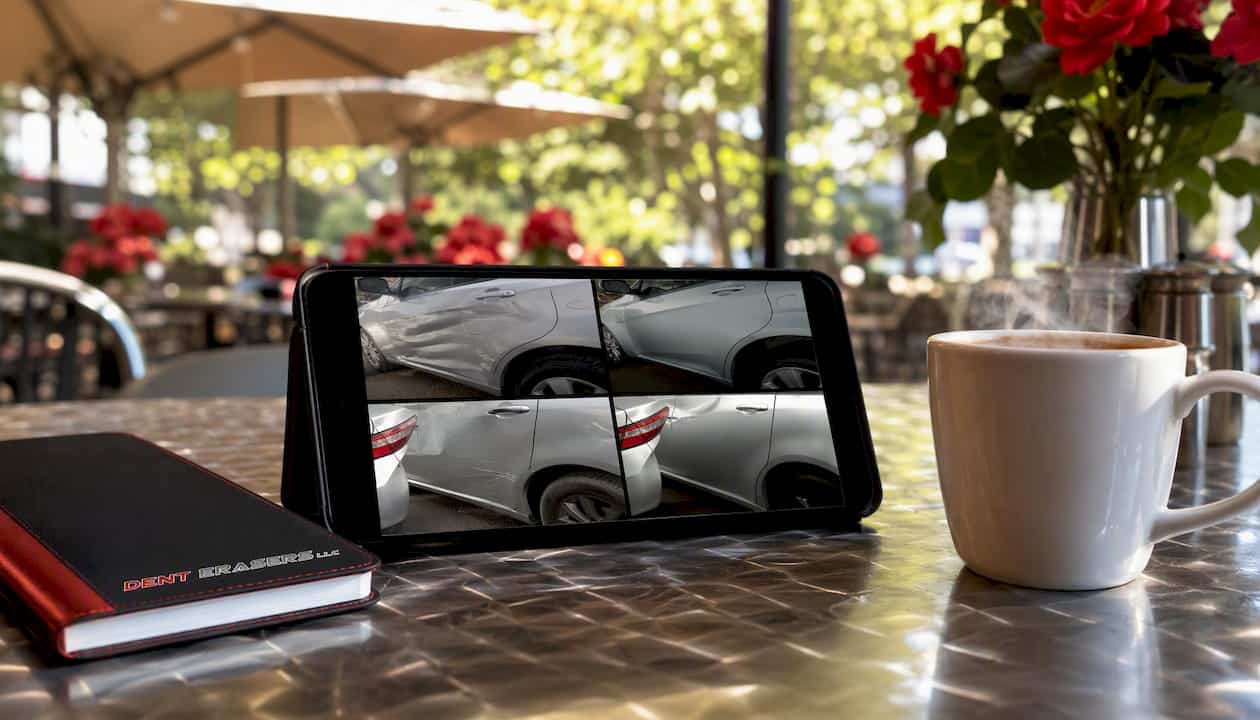
The most common parking lot damage examples are door dings, backing collisions, shopping-cart strikes, hit-and-run impacts, bumper scuffs, paint transfer, pothole-caused undercarriage damage, fallen tree limbs, broken glass, and vandalism. Drivers are the usual at-fault party for collisions and door-opening incidents. Property owners can be liable when unsafe lot conditions, such as poor lighting, faded lane markings, or large potholes, created a foreseeable risk they knew about and failed to fix, a standard tested under premises-liability law.
Here is a quick scan of the top damage types and the evidence that matters most for each:
- Door dings: Small, round impressions from an adjacent car door; paint transfer is the key evidence.
- Backing collisions: Driver exiting a space strikes a passing vehicle or pedestrian; surveillance video and witness statements are critical.
- Shopping-cart strikes: Irregular, larger dents, often on doors or quarter panels; tight spaces and busy loading zones increase exposure.
- Hit-and-run while parked: No driver present; rely on cameras, paint shards, and witnesses.
- Bumper scuffs and paint transfer: Common in crowded lots; photos of both vehicles’ positions matter.
- Pothole or pavement failure: Undercarriage or tire damage; document the defect with timestamped photos before it is repaired.
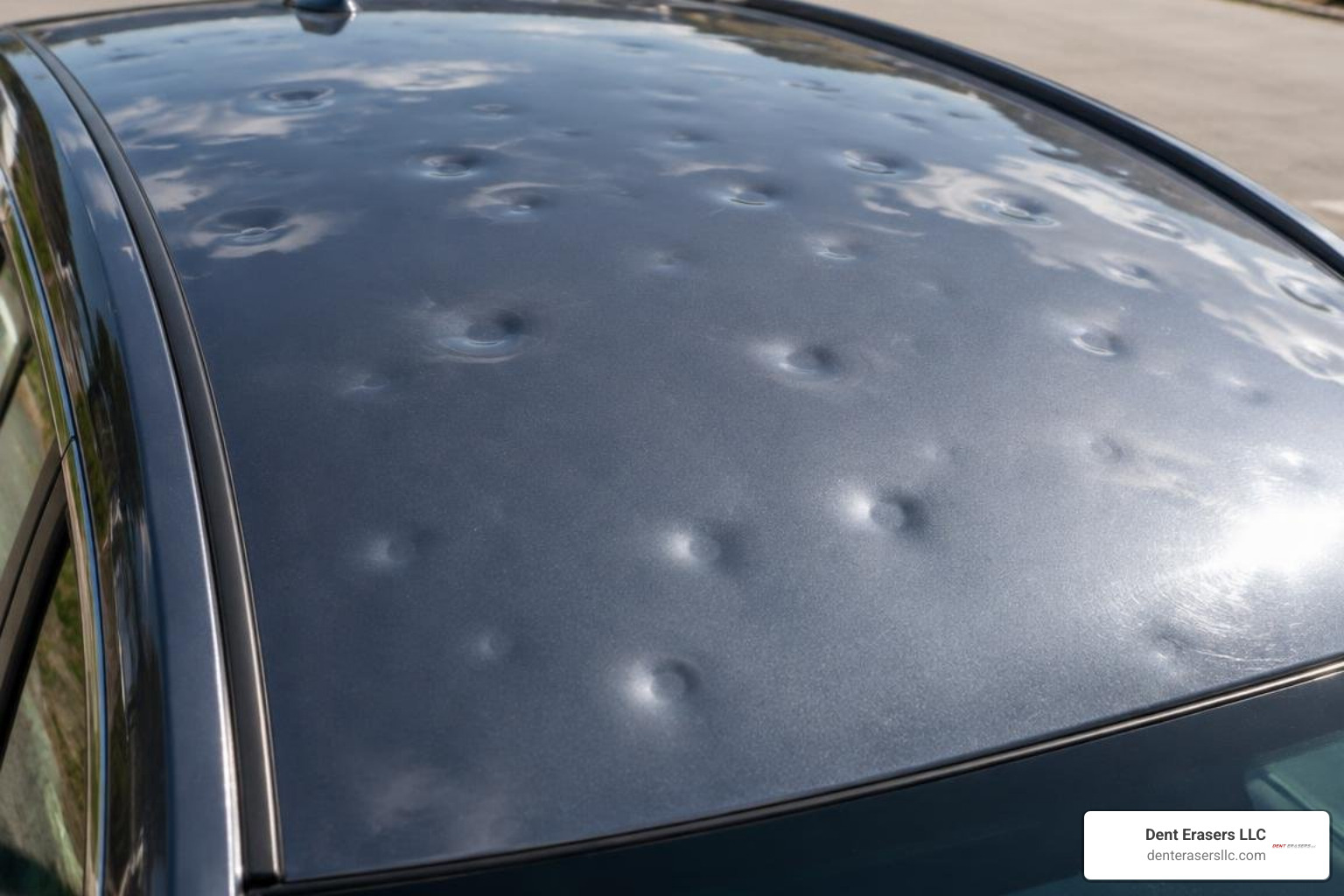
- Fallen tree limb or debris: Roof or hood damage; weather records and property maintenance logs support a premises claim.
- Vandalism or intentional keying: Long, linear scratches; a police report is the primary evidence anchor.
- Broken glass from a projectile: Side or rear window; check for nearby construction or mowing activity.
- Pedestrian backover: NHTSA data shows backovers cause numerous deaths and injuries annually, even at low speeds.
When you can identify the at-fault driver, their liability coverage should pay for repairs. When you cannot, your collision coverage or uninsured motorist property damage (UMPD) coverage may apply, depending on your state and policy.
Table of Contents
- What do the most common parking lot damage examples actually look like?
- Who can actually be held liable for parking lot damage?
- How do insurers and courts actually determine fault?
- [What should you do right after discovering parking lot damage?](#what-should-you-do-right-after-discovering-parking-lot-damagehttpsblogsouthsidecashforjunkcarscablogwhat-to-do-with-damaged-car)
- How does filing a claim affect your insurance premiums and repair costs?
- How long does a parking lot claim and repair actually take?
- When does a property owner become legally responsible for lot damage?
- What are your legal rights after a hit-and-run in a parking lot?
- What makes some liability claims succeed and others fail?
- How do liability rules and procedures differ by state?
- What can property owners and drivers do to prevent parking lot damage?
- Key Takeaways
- What repair and claims experience actually teaches you
- Denterasersllc brings the repair shop to you
- FAQ
What do the most common parking lot damage examples actually look like?
Understanding the scenario behind each damage type helps you know who to call and what evidence to gather. Below are the most frequent incidents, with a short vignette and the typical legal outcome for each.
Door ding from an adjacent car
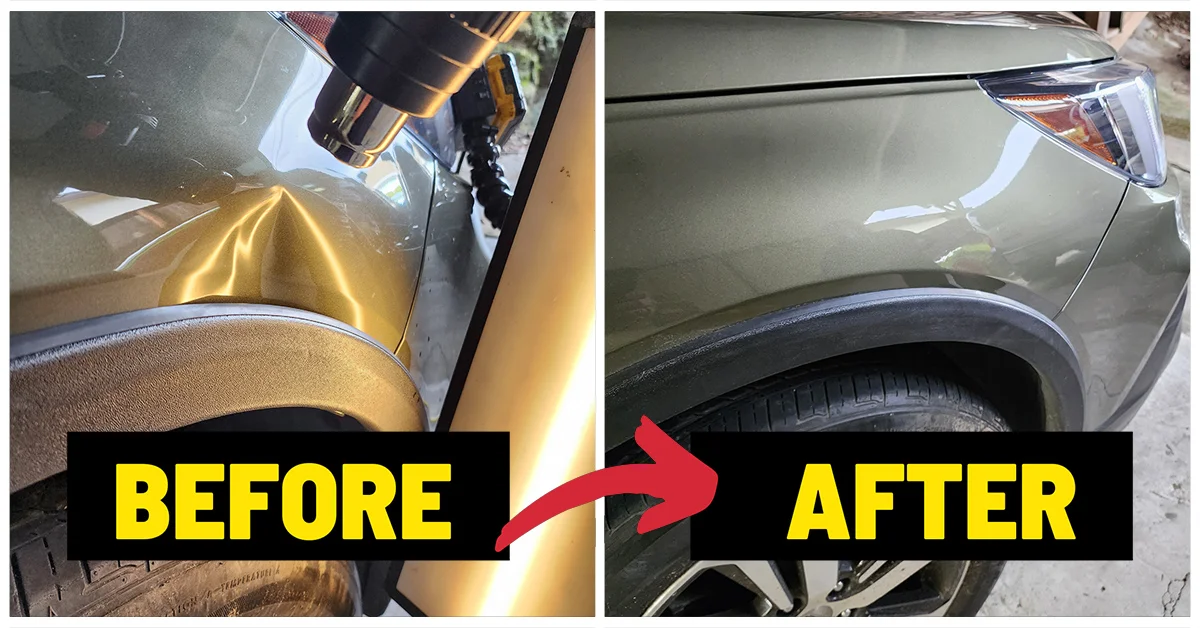
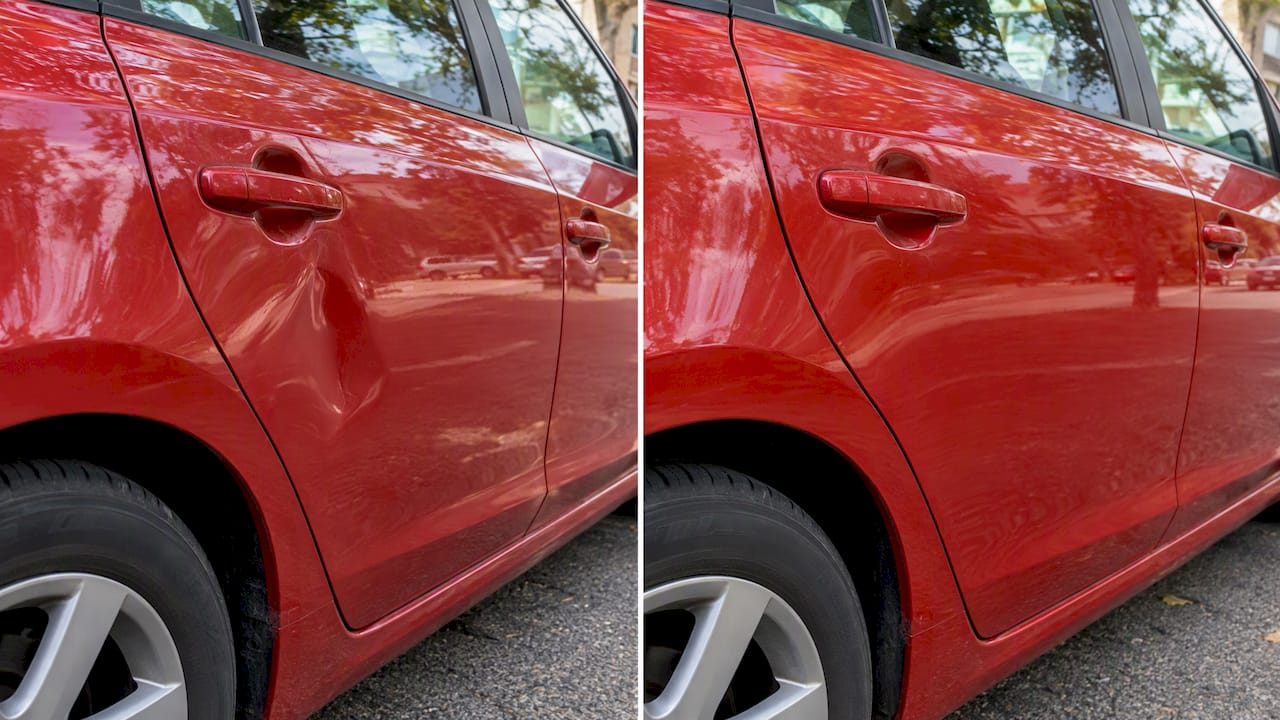
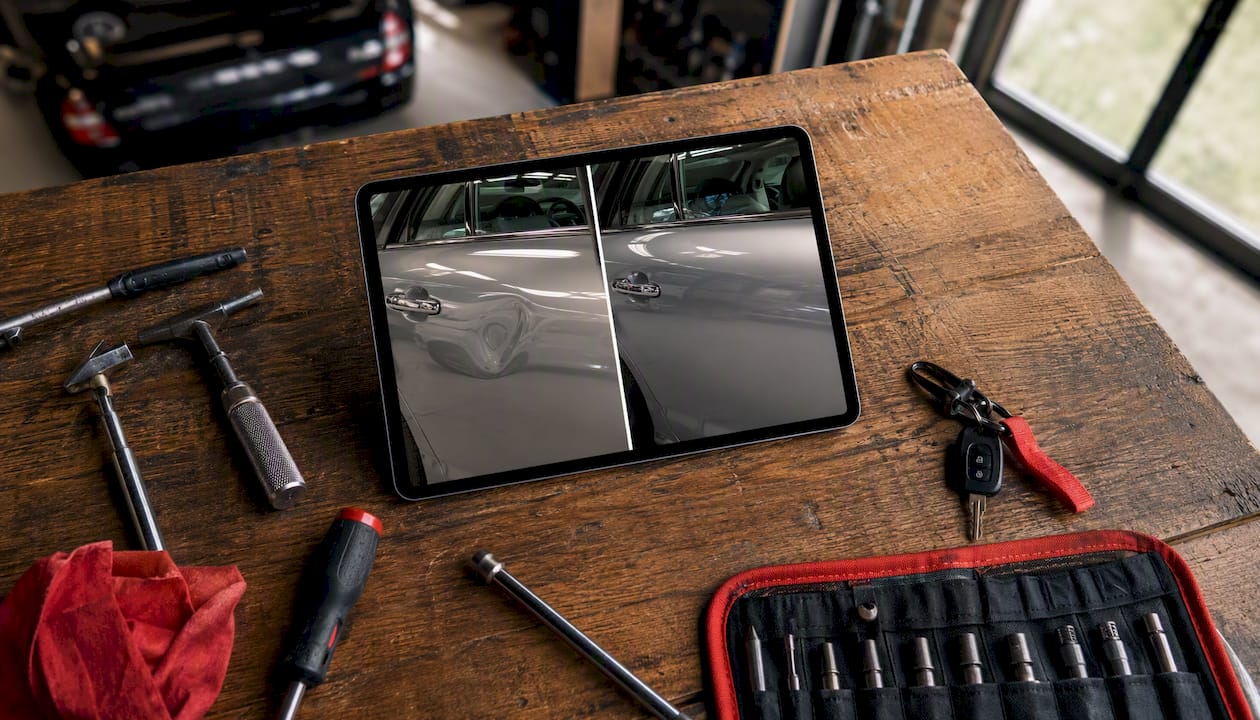
You return to a parked car and find a small, round dent on the driver’s door. The neighboring vehicle is still there, and a faint smear of its paint color sits inside the dent. The door-opener is typically at fault. Door dings are the most frequent parking-lot damage seen at body shops and are strong candidates for paintless dent repair (PDR) when the paint is intact and the metal is not stretched.
Backing collision while exiting a space
A driver reverses out of a space and clips a vehicle traveling through the aisle. The exiting driver is almost always at fault because vehicles in through-aisles generally have the right of way over cars pulling out of spaces. The exception: the through-aisle driver was ignoring posted signage or driving recklessly. Surveillance video showing vehicle positions at the moment of impact is the most persuasive evidence here.
Pedestrian backover
A pedestrian, often a child, is struck by a reversing vehicle in a lot or driveway. These incidents are more serious than they sound. NHTSA estimates indicate that backovers cause significant injuries and deaths annually, even at the low speeds typical of parking areas. The reversing driver bears primary responsibility, though a property owner with obstructed sightlines or missing pedestrian crosswalk markings may share liability.
Shopping-cart strike
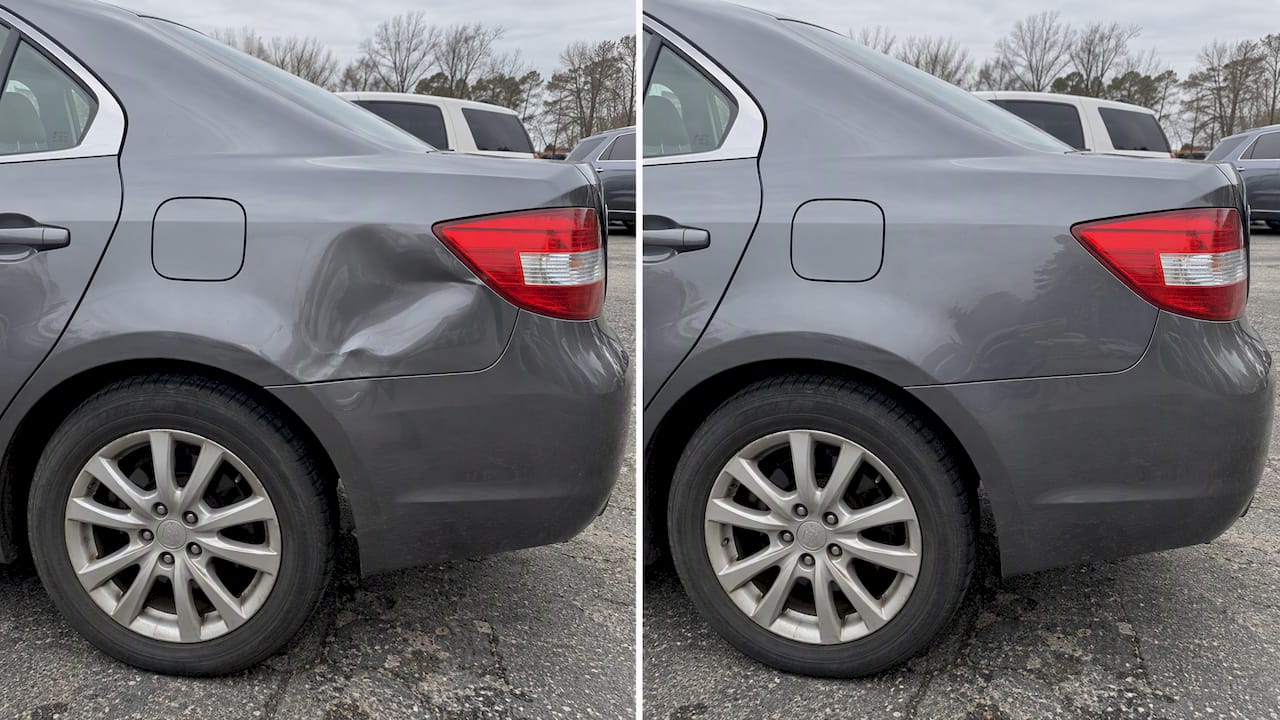
A cart rolls across a sloped lot and dents a parked car’s door or quarter panel. Liability here is genuinely murky. If a customer left the cart in a travel lane, that customer may be responsible. If the store failed to provide adequate corrals or the lot is poorly graded, the property owner’s negligence may be a factor. Tight spaces and crowded loading zones are the most common settings for this type of damage.
Hit-and-run while parked
You find fresh damage and no note. Without a witness or camera, identifying the at-fault driver is difficult. Collect any paint transfer, photograph the surrounding area for cameras, and ask nearby businesses for footage before it is overwritten, usually within 24–72 hours.
Collision with a concrete pillar or curb in a garage
Structural damage to a bumper or wheel well from clipping a pillar is almost always the driver’s fault. The exception arises when the garage’s design is genuinely defective, such as pillars placed inside the minimum turning radius required by code, which can support a premises claim against the garage operator.
Pothole or failed pavement causing undercarriage damage
A deep pothole damages a tire, rim, or undercarriage component. If the pothole is on private property, the owner may be liable if they had notice of the defect and failed to repair it. On a public street or municipal lot, the city or county may be responsible, though notice requirements and claim deadlines for government entities are often shorter than standard statutes of limitation.
Vandalism or intentional keying
Long, linear scratches across a panel are a telltale sign of intentional damage. File a police report immediately; it is the primary evidence anchor for an insurance claim under your comprehensive coverage.
Pro Tip: Timestamped photos taken before you move your vehicle, combined with wider shots showing surrounding lane markings and nearby obstacles, give adjusters the scene context they need to reconstruct what happened.
Who can actually be held liable for parking lot damage?
Liability does not always fall on the most obvious party. Here are the potential defendants and the insurance path for each.
- Individual drivers: Personal auto liability policy covers damage they cause to other vehicles or property.
- Delivery or employee drivers on the job: Commercial auto liability applies, and the employer may face vicarious liability. Commercial policies and employer liability can mean higher available coverage limits than a personal policy.
- Property owners and lessors: General liability or premises liability coverage applies when the lot’s condition contributed to the damage. The legal test requires duty of care, actual or constructive notice of the hazard, and failure to remedy it within a reasonable time.
- Parking-lot operators and management companies: Separate from the property owner, these entities may carry their own general liability policies and can be named defendants when management decisions (staffing, lighting, maintenance scheduling) contributed to the incident.
- Maintenance contractors: A paving company that left an unmarked trench, or a lighting contractor who failed to replace burned-out fixtures, may carry contractor insurance that covers resulting damage.
- Municipalities: For curbside or municipal lots, a government entity may be liable, but sovereign immunity rules, shorter notice deadlines, and damage caps apply in most states.
For low-dollar disputes, small-claims court is a practical route. Filing fees typically range from roughly $15 to $300 depending on jurisdiction and the amount sought, and most jurisdictions allow straightforward filings without an attorney.
Pro Tip: Before pursuing a property owner, gather prior incident reports, photos of faded markings or broken lighting, and any documented complaints from other tenants. That paper trail is what converts a “bad luck” argument into a viable premises claim.
How do insurers and courts actually determine fault?
Fault is assigned based on evidence and the applicable state negligence rules, then expanded from there.
Most states use comparative negligence, which reduces your recovery by your own share of fault. A handful of states still apply contributory negligence, where any fault on your part can bar recovery entirely. Checking your state’s specific rules before filing or negotiating matters because the same facts can produce very different outcomes depending on where the incident occurred.
The evidence that moves the needle most:
- Timestamped photos showing vehicle positions relative to space lines
- Surveillance video from the lot, adjacent businesses, or dashcams
- Witness statements with contact information
- Paint transfer analysis matching colors between vehicles
- Police or incident reports, even informal ones
On private property, a formal traffic collision report is not guaranteed. Police often respond differently to private-property incidents and may only file an incident report, or none at all, depending on dollar thresholds and whether injuries are reported. That makes your own documentation the primary record for adjusters and attorneys. Secure it before either vehicle moves.
Pro Tip: Even when police won’t file a full crash report for a private-property incident, ask for an incident or case number. That number gives your insurer a reference point and signals that the event was officially logged.
Adjusters frequently rely on private evidence, particularly timestamped photos and surveillance footage, more than police reports for parking-lot incidents. Getting that evidence immediately is the single most important thing you can do.
What should you do right after discovering parking lot damage?
Follow these steps in order. The first hour matters most.
- Ensure safety first. If anyone is injured, call 911 before anything else.
- Photograph everything before moving your vehicle. Take close-up shots of the damage and wide shots showing your vehicle’s position within the space, nearby lane markings, signage, curbs, and any adjacent vehicles. Timestamped photos are your primary evidence.
- Document the scene context. Note the time, lighting conditions, weather, and any nearby surveillance cameras. Write it down or record a voice memo.
- Look for witnesses. Collect names and contact information from anyone who saw the incident or the vehicle that caused it.
- Check for surveillance cameras. Identify cameras on the building, light poles, or neighboring businesses. Request footage in writing as soon as possible; most systems overwrite within 24–72 hours.
- File a police report or get a case number. Even on private property, contact the non-emergency line. An incident number gives your insurer a reference point.
- Exchange information if another driver is present. Get their name, contact details, license plate, and insurance information.
- Notify your insurer promptly. Upload your photos and documentation when you report the claim. Delays can complicate coverage.
For a thorough pre-repair checklist, the auto repair checklist from Denterasersllc walks through what to prepare before your vehicle goes into the shop.
Additional items to capture or request in any police or incident report:
- Exact location (lot name, address, space number if visible)
- Date and time of the incident
- Officer name and badge number
- Report or case number
- Whether the department will retain any video evidence
How does filing a claim affect your insurance premiums and repair costs?
Whether your premiums increase after a parking-lot incident depends on your insurer, your state’s rules, and who is found at fault. Filing through the at-fault driver’s liability insurer normally will not raise your rate. However, some insurers reserve the right to raise rates for any filed claim, regardless of fault, depending on state law and company policy.
The deductible versus third-party claim dynamic works like this: if you use your own collision coverage, you pay your deductible upfront and may be reimbursed if the other insurer accepts fault. UMPD coverage may apply for hit-and-run situations, though availability and limits vary by state and policy.
Typical repair cost ranges for common parking-lot damage:
| Damage Type | Typical Repair Approach | General Cost Range |
|---|---|---|
| Small door ding (paint intact) | Paintless dent repair (PDR) | Lower end; often $75–$150 per dent |
| Bumper scuff or paint transfer | Bumper repair or repaint | Moderate; varies by extent |
| Panel replacement or structural | Body shop repair, possible parts order | Higher end; can exceed $1,000+ |
| Broken glass | Window replacement | Moderate; varies by glass type |
| Vandalism/keying (long scratches) | Paint repair or panel repaint | Moderate to high depending on depth |
Local labor rates and parts availability affect every figure in that table. For a broader breakdown of common auto body repair costs, Denterasersllc’s cost guide covers the most frequent repair types with realistic ranges.
One practical note: PDR is the most cost-effective route for door dings when the paint is unbroken and the metal has not been stretched or work-hardened. Once paint is cracked or the dent is sharp-edged, traditional body repair is usually required.
How long does a parking lot claim and repair actually take?
Most simple parking-lot claims resolve in a matter of weeks. Premises-liability or commercial claims involving property owners or contractors can stretch to months or longer.
Repair time by damage type gives a clearer picture:
- Bumper repairs: — Several days to two weeks, depending on whether the bumper needs repainting or replacement.
For context on what qualifies as minor versus more significant collision damage, the minor collision damage guide from Denterasersllc helps set realistic expectations before you talk to an adjuster.
When does a property owner become legally responsible for lot damage?
Property owners can be liable when the lot’s condition created a foreseeable risk and the owner knew, or reasonably should have known, about it. The three-part legal test is duty, notice, and causation.
- Duty of care to invitees: A business that invites customers onto its property owes them a reasonable duty to maintain safe conditions. This includes adequate lighting, legible lane markings, and a surface free of hazards like large potholes.
- Actual or constructive notice: The owner either knew about the hazard (a tenant complained in writing about a broken light) or should have known (the pothole was large enough that a reasonable inspection would have caught it).
- Failure to take reasonable remedial steps: The owner had enough time to fix the problem and did not.
Evidence that shifts liability toward the property owner includes prior incident logs, written tenant or customer complaints, maintenance records showing deferred repairs, photos of faded markings or failed lighting, and surveillance footage timestamps showing how long a hazard existed before the incident.
State statutes and thresholds vary significantly. Notice rules, disclaimer enforceability, and statutes of limitation for premises claims differ from state to state. In some states, a government entity’s notice deadline can be as short as 60–90 days from the incident. Early documentation and a consultation with a local attorney are worth the time for any complex premises claim.
Pro Tip: Request surveillance footage in writing the same day as the incident. A written request creates a paper trail that can support a spoliation argument if the owner later claims the footage was unavailable.
Small-claims court is a realistic option for lower-dollar premises disputes. With filing fees typically ranging from roughly $15 to $300, many property-damage claims can be pursued without hiring an attorney.
What are your legal rights after a hit-and-run in a parking lot?
A hit-and-run in a parking lot, where another driver damages your vehicle and leaves without leaving contact information, is frustrating but not a dead end legally.
As the victim, you have the right to file a police report even on private property. That report, combined with any surveillance footage, witness statements, or paint transfer evidence, gives law enforcement and your insurer a basis to investigate. If the at-fault driver is identified, their liability coverage pays for your repairs. If they are never found, your collision coverage or UMPD coverage steps in, subject to your deductible and state rules.
Drivers who leave the scene of a parking-lot accident without leaving a note or contacting the other owner may face hit-and-run charges under state law, even in a private lot, depending on the jurisdiction. The obligation to stop, exchange information, or leave contact details is not limited to public roads in most states.
Practically speaking, gather everything you can within the first hour: photos of the damage, the surrounding area, any visible paint transfer, and the positions of nearby vehicles. Ask businesses within line of sight whether their cameras cover the lot. That footage window closes fast.
What makes some liability claims succeed and others fail?
The difference between a successful and unsuccessful parking-lot liability claim usually comes down to evidence quality and whether the legal elements are actually met.
Successful claim examples:
- A driver with dashcam footage showing a reversing vehicle striking their stationary car wins a straightforward liability claim against the at-fault driver’s insurer. The video eliminates any dispute about vehicle positions.
- A property owner is found liable after a tenant produces three prior written complaints about a burned-out light in the lot, and a slip-and-fall or vehicle damage incident occurs in that exact area. The written complaints establish constructive notice.
- A delivery driver’s employer is held vicariously liable after the driver causes a backover injury while making a work-related delivery. The commercial policy’s higher limits cover the claim.
Unsuccessful claim examples:
- A driver claims a pothole caused tire damage but cannot show the pothole existed before the incident or that the property owner had notice of it. Without maintenance records or prior complaints, the claim fails on the notice element.
- A vehicle owner files a premises claim after a shopping-cart strike but cannot establish that the store’s cart-management practices were unreasonable or that the lot’s grade was defective. The claim is dismissed because the incident was foreseeable only in a general sense, not because of a specific, known hazard.
- A hit-and-run victim files a UMPD claim but discovers their policy excludes UMPD for incidents where physical contact cannot be proven. Reading your policy before an incident occurs prevents this surprise.
The pattern is consistent: claims succeed when evidence is specific, timely, and tied directly to a legal element. They fail when the evidence is thin, late, or addresses the wrong question.
How do liability rules and procedures differ by state?
Parking-lot liability is not uniform across the United States. Three areas vary most significantly.
Negligence standard: Most states use comparative negligence, meaning your recovery is reduced by your percentage of fault. A few states, including Alabama, Maryland, North Carolina, and Virginia, still apply contributory negligence, where any fault on your part can bar recovery entirely. Comparative negligence rules are the majority standard, but knowing which system your state uses before you negotiate matters.
Government entity claims: If the damage occurred in a municipal lot or on a public road, you are filing against a government entity. Most states require a formal notice of claim within a short window, often 60–180 days from the incident, before you can sue. Missing that deadline typically bars the claim regardless of merit.
Statute of limitations: For private premises claims, the window to file suit varies from one to six years depending on the state. Property damage claims often carry a shorter limitation period than personal injury claims in the same jurisdiction.
State-specific rules also affect whether your insurer can raise your premium after a not-at-fault claim, what UMPD coverage must include, and whether parking-lot incidents on private property require a police report for a valid insurance claim. Consulting a local attorney for any complex or high-dollar claim is the clearest path to understanding which rules apply to your specific situation.
What can property owners and drivers do to prevent parking lot damage?
Prevention is cheaper than repair, and the steps are straightforward for both sides.
For property owners and managers:
- Resurface or patch potholes and cracked pavement before they grow. A small crack costs far less to seal than a full panel replacement claim.
- Repaint lane markings and directional arrows on a regular schedule. Faded markings are one of the most common evidence items in premises-liability claims.
- Maintain adequate lighting throughout the lot, including near entrances, exits, and pedestrian crossings.
- Install and maintain shopping-cart corrals at regular intervals, especially in sloped areas.
- Keep maintenance logs. Documented inspections and repairs are the best defense against a notice argument.
For drivers:
- Park away from high-traffic areas when possible. The extra walk is worth fewer door dings.
- Use a dashcam. Footage from a dashcam is often the single most persuasive piece of evidence in a parking-lot dispute.
- Leave extra space when opening doors, especially in tight spaces.
- Check your surroundings before reversing. Backovers are among the most preventable incidents in any lot.
For drivers who want to go further, car dent prevention strategies from Denterasersllc cover practical habits that protect your vehicle’s finish and resale value over time.
Key Takeaways
Parking-lot damage claims succeed or fail based on the quality of evidence gathered in the first hour after an incident, combined with which state’s negligence rules apply.
| Point | Details |
|---|---|
| Most common damage types | Door dings, backing collisions, shopping-cart strikes, hit-and-run, and pothole damage account for the majority of parking-lot incidents. |
| Evidence is everything | Timestamped photos, surveillance footage, and witness contacts are the primary record when police reports are limited or absent on private property. |
| Fault follows the facts | Drivers exiting spaces are usually at fault for backing collisions; property owners face liability when a known, unrepaired hazard caused the damage. |
| State rules change outcomes | Comparative vs. contributory negligence, government notice deadlines, and UMPD requirements vary by state and directly affect recovery. |
| Denterasersllc for fast repair | Denterasersllc provides mobile PDR, plastic bumper repair, and collision repair onsite in Contra Costa County, a practical first step after documenting damage. |
What repair and claims experience actually teaches you
Most articles about parking-lot damage focus on the legal framework. What they understate is how much the outcome depends on what happens in the first 30 minutes after you discover the damage, not in the courtroom.
From a repair and claims perspective, the vehicles that come through with the smoothest insurer negotiations share one thing: the owner documented everything before moving the car. Wide shots, close-ups, surrounding context, a note about the lighting, a photo of the nearest camera. That package gives an adjuster everything needed to write an accurate estimate and assign fault without a back-and-forth that drags on for weeks.
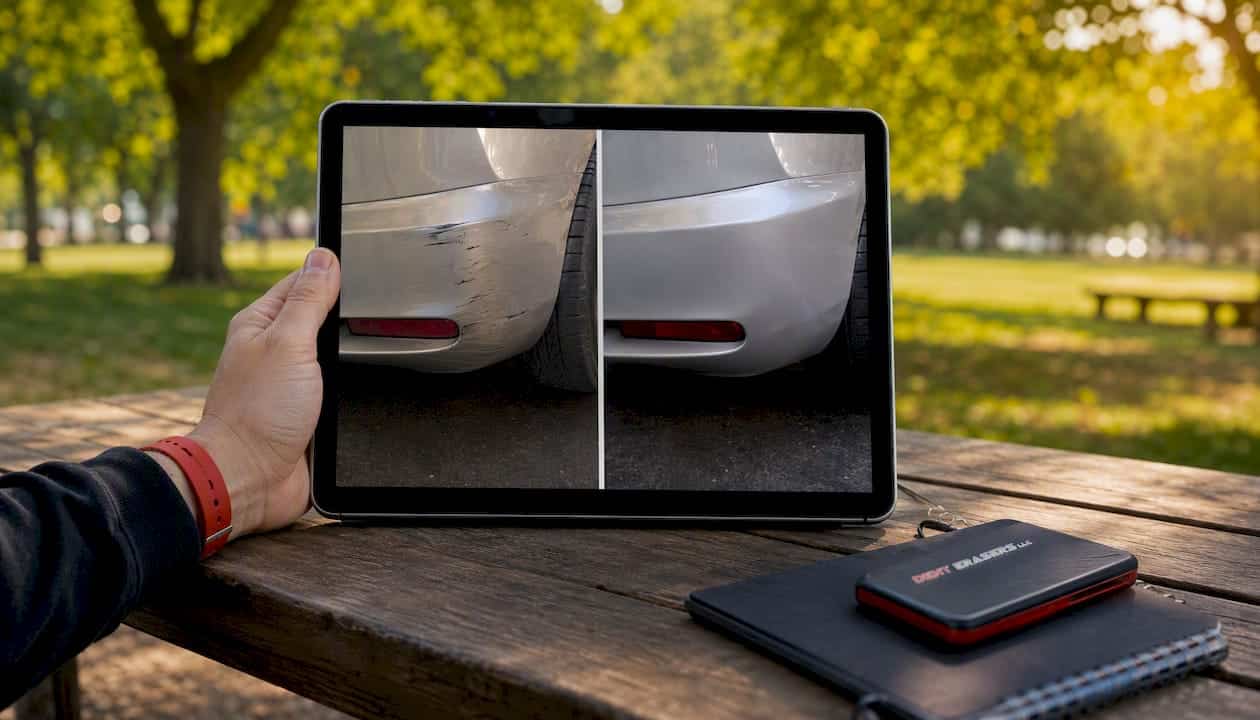
Door dings and bumper scuffs are the bread and butter of what mobile PDR techs handle daily. They are also the damage types most likely to be underestimated. A small door ding that looks cosmetic can hide a crease that has work-hardened the metal, making PDR no longer viable and pushing the repair into traditional body work. Getting a professional assessment early, before the claim is closed, prevents the unpleasant surprise of a repair cost that exceeds the insurer’s initial estimate.
The other thing worth saying plainly: premises-liability claims against property owners are genuinely viable when the evidence is there, but they require more patience and documentation than a straightforward driver-to-driver claim. If you suspect the lot’s condition contributed to your damage, start gathering that evidence immediately. Maintenance records, prior complaints, and lighting inspection logs are not things you can reconstruct after the fact.
Denterasersllc brings the repair shop to you
After a parking-lot incident, the last thing you want is to spend days arranging a shop drop-off. Denterasersllc’s mobile service means a technician comes to your location in Contra Costa County and surrounding areas to assess and repair the damage onsite, whether that is a door ding from a careless neighbor, a bumper scuff from a tight garage, or more significant collision damage.
To book or get an estimate, have the following ready: photos of the damage (the more angles, the better), your vehicle’s make, model, and year, your location for mobile service, your availability, and your insurance information if you plan to file a claim. Denterasersllc can provide a written estimate you submit to your insurer or work directly with the claims process depending on your situation.
For plastic bumper repair specifically, which is one of the most common parking-lot repair requests, Denterasersllc’s technicians restore the bumper’s structure and finish without the cost of a full replacement when conditions allow. Contact Denterasersllc to schedule an onsite assessment and get your vehicle back to pre-incident condition without the shop wait.
Useful sources
The following sources provide authoritative, U.S.-focused information on parking-lot liability, insurance claims, and repair guidance.
Legal questions (negligence, duty of care, comparative negligence):
- Duty of Care — Cornell Law School Legal Information Institute
- Comparative Negligence — Cornell Law School Legal Information Institute
- Justia — Legal Resource for State-Specific Rules
Insurance and claims guidance:
- What to Do When Someone Hits Your Parked Car — Progressive
- What to Do After a Parking Lot Accident — American Family Insurance
- Parking Lot Questions: Fault, Insurance & Damage Claims — LegalClarity
Repair and technical context:
Pedestrian and backover safety:
FAQ
What happens if your car is damaged in a parking lot?
Document the damage with timestamped photos before moving your vehicle, look for witnesses and surveillance cameras, and notify your insurer promptly. If another driver is identified, their liability coverage should pay for repairs; if not, your collision or UMPD coverage may apply depending on your policy and state.
Whose fault is it in a parking lot accident?
The driver who caused the impact is typically at fault, with the exiting driver usually responsible in backing collisions since through-aisle traffic generally has the right of way. Property owners can share liability when a known lot defect, such as a large pothole or failed lighting, contributed to the incident.
Does a parking lot accident make your insurance go up?
It depends on your insurer and state rules. Filing through the at-fault driver’s insurer typically will not raise your rate, but some insurers may increase premiums for any filed claim regardless of fault. Check your policy and state regulations before filing.
What should you not tell your insurance company after a parking lot incident?
Avoid speculating about fault or making statements that could be interpreted as admitting responsibility before you have reviewed all the evidence. Stick to the documented facts: what you observed, when, and what evidence you collected.
Can you sue a property owner for parking lot damage?
Yes, when the lot’s condition created a foreseeable hazard the owner knew about and failed to fix. The claim requires proving duty of care, actual or constructive notice of the defect, and that the defect caused your damage. Early documentation of the lot’s condition is the foundation of any successful premises claim.