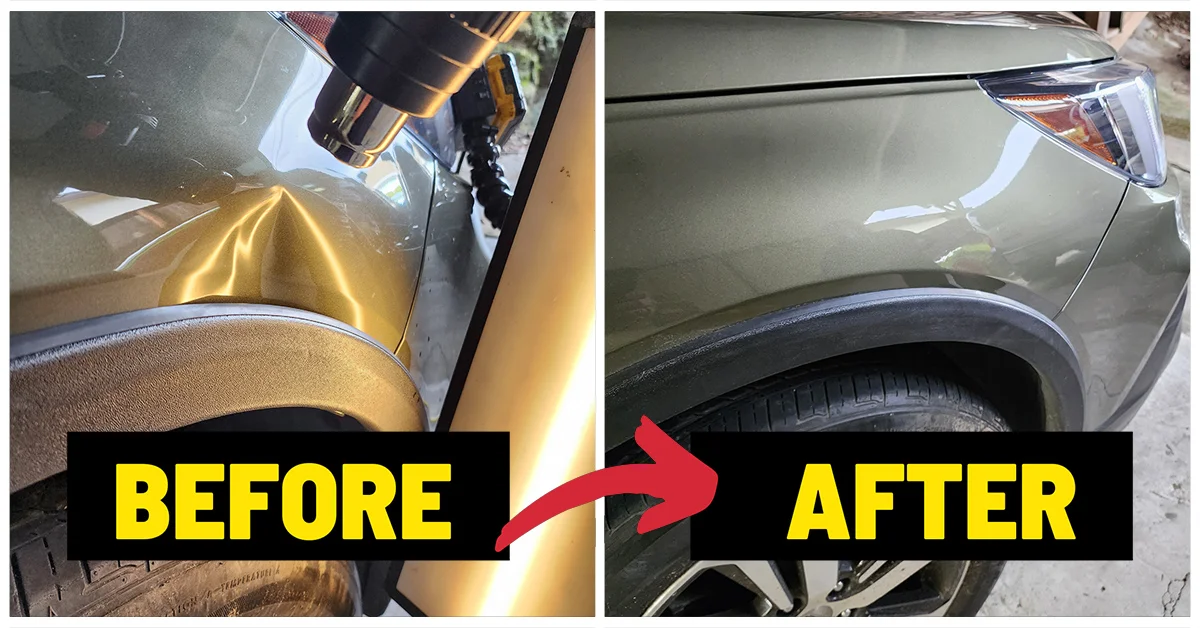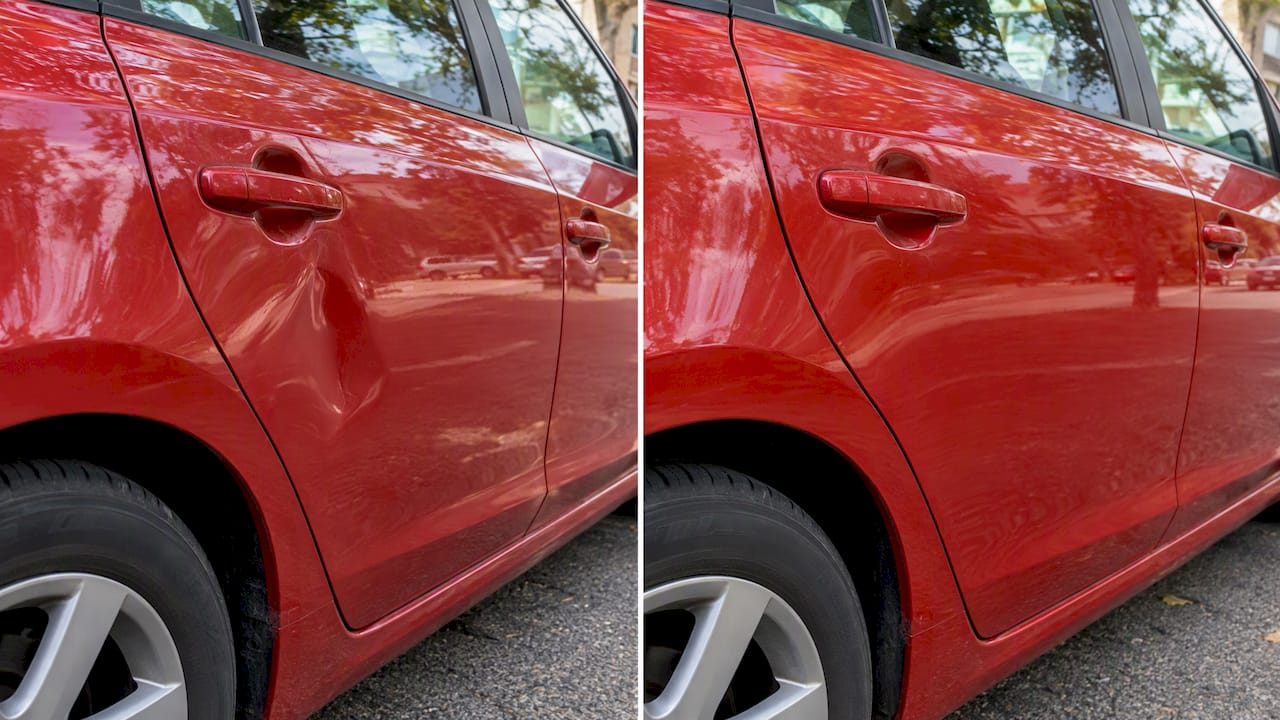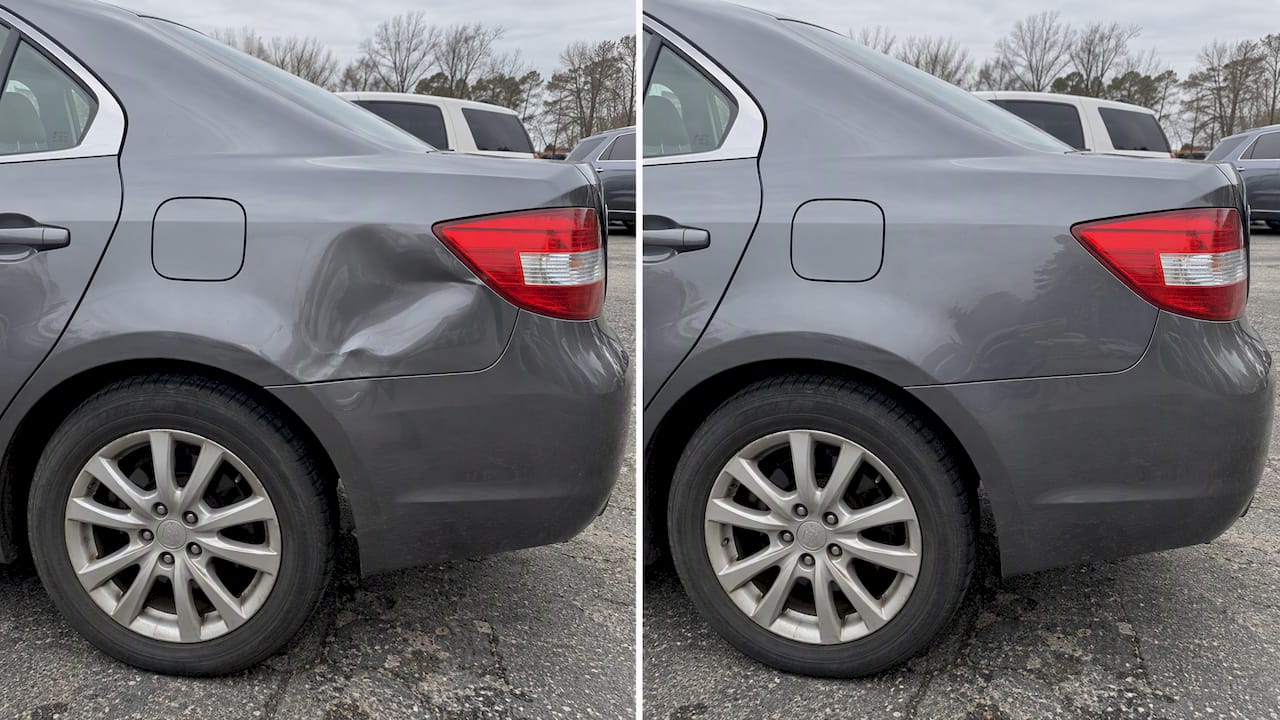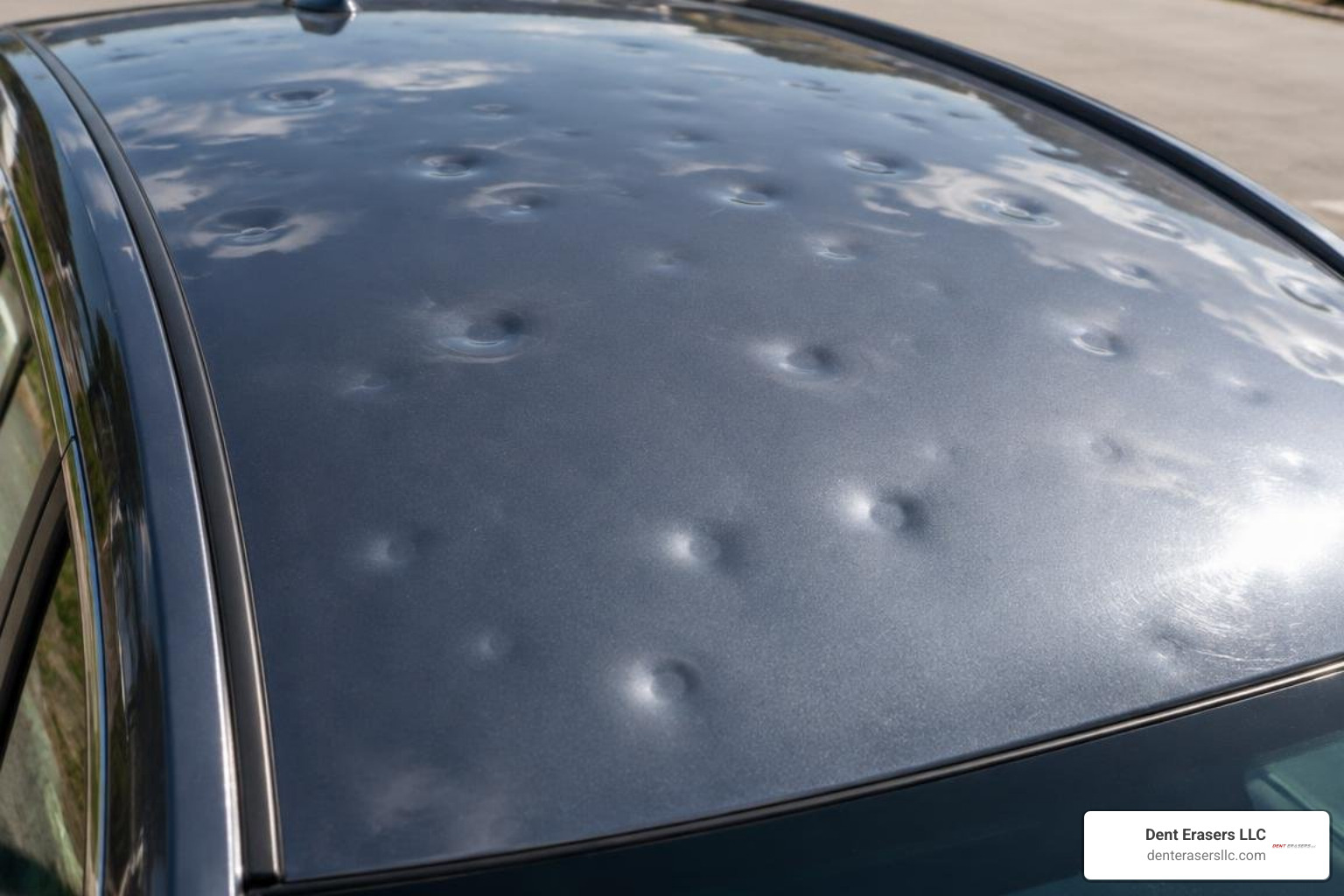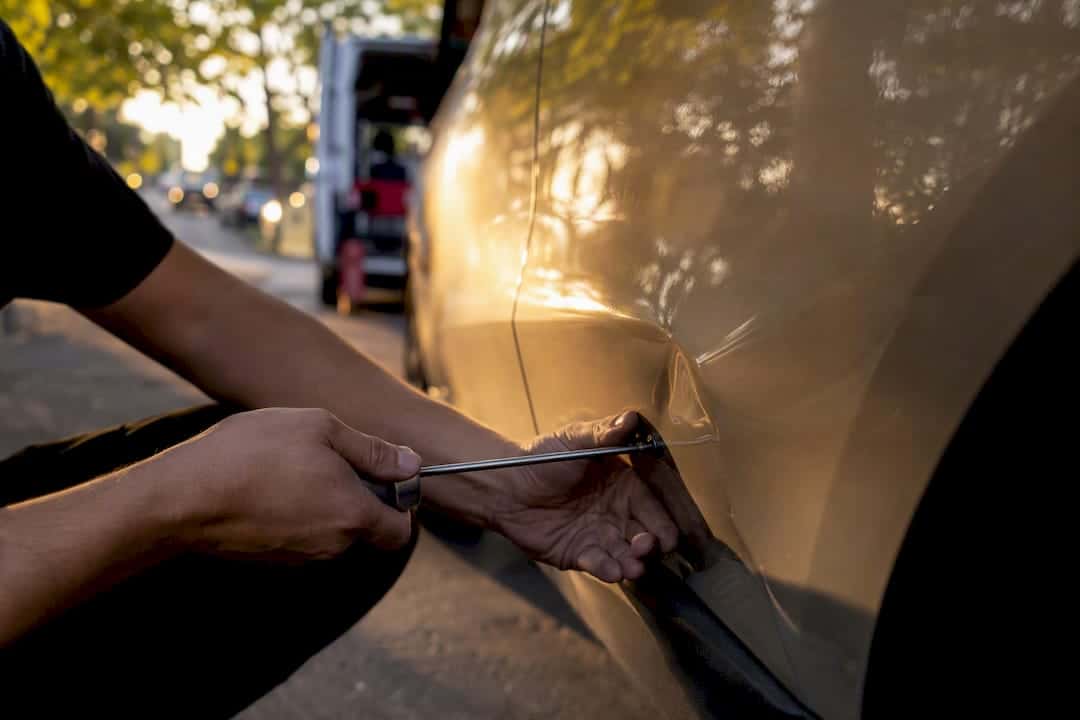
If your paint is intact and the dent is shallow, PDR is very likely your best fix after a minor collision. Paintless dent repair works by accessing the backside of the panel and gently reshaping the metal, so there’s no filler, no sanding, and no repaint. It’s often faster and cheaper than a body shop visit, and it keeps your factory finish exactly as the manufacturer sprayed it.
Before you book anything, run three quick checks:
- Paint condition. No chips, cracks, or scuffed-through spots. If you can see bare metal or primer, PDR is off the table for that section.
- Dent shape and size. Shallow, rounded dents from roughly quarter size up to dinner-plate size respond best. Sharp creases or a dent with a hard edge are tougher candidates.
- Panel access. A technician needs to reach the backside of the metal. Dents near the edge of a door or deep inside a wheel well sometimes can’t be reached.
If those three boxes check out, photograph the damage from a few angles and request a professional assessment. Most PDR providers, including mobile ones, can tell you within minutes whether your dent qualifies.
Key Takeaways
PDR resolves most minor collision dents faster and cheaper than traditional bodywork, provided the paint stays intact and the panel is reachable from behind.
| Point | Details |
|---|---|
| Check paint first | Chips, cracks, or micro-cracking around the dent rule out PDR before anything else matters. |
| Size isn’t everything | A quarter-to-plate-sized dent qualifies only if it avoids hem flanges, UHSS zones, and ADAS sensor areas. |
| Get a PDR-first estimate | Request pricing before filing an insurance claim since small-dent PDR often costs less than a deductible. |
| Expect fast turnaround | Single dents typically finish in 30 minutes to two hours, versus multiple days for traditional repair. |
| Denterasersllc comes to you | Mobile assessments and warrantied repairs mean no body shop drop-off for straightforward collision dents. |
Table of Contents
- What Is PDR and Why Is It Often the Best First Move?
- Is Your Dent a Good Candidate for PDR?
- What Will PDR Cost, and How Long Will It Take?
- What Happens During a PDR Appointment?
- When PDR Won’t Work, and What to Do Instead
- How Denterasers LLC Handles Minor Collision Dents
- PDR After a Minor Collision: When It Works
- Ready to Get Your Dent Assessed?
- Sources
- FAQ
What Is PDR and Why Is It Often the Best First Move?
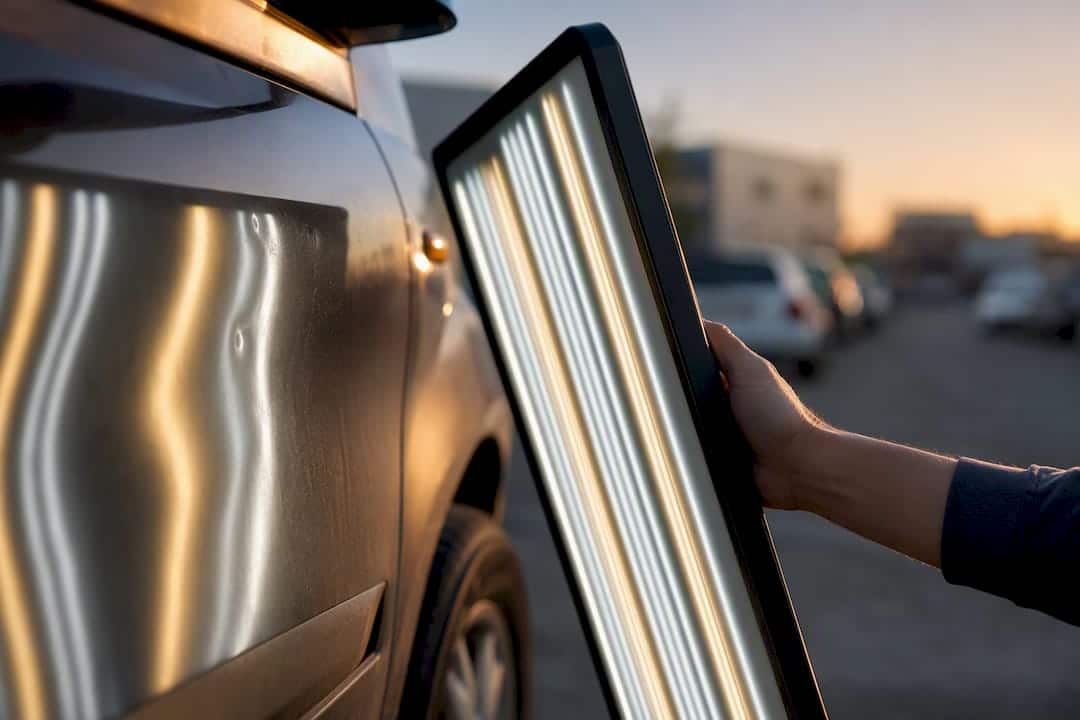
Paintless dent repair is a hands-on metalworking technique, not a chemical fix or a filler job. A trained technician accesses the backside of the damaged panel and uses specialized rods to push the metal back toward its original shape, or applies glue tabs to the front of the dent and gently pulls it out. Precision taps finish the job, and technicians work under carefully angled LED reflection boards that reveal every ripple invisible to the naked eye. The whole process leans on a simple idea: metal has memory, and if it hasn’t been stretched or creased too far, it wants to return to its original form.
PDR works on both steel and aluminum panels, the two materials most passenger vehicle bodies are built from. Because nothing gets sanded, filled, or repainted, your factory clear coat and color match stay untouched. That matters more than most drivers realize. A repainted panel can subtly mismatch the surrounding factory paint under certain light, and it shows up on a vehicle history report during resale.
Pro Tip: Ask whether the panel behind your dent is steel or aluminum before your appointment. Aluminum responds differently to pressure and often needs more finesse, which experienced techs will mention upfront.
Beyond preserving paint, PDR typically costs less, finishes faster, and skips the chemicals and materials that traditional bodywork requires. For a lower-impact repair method, that’s a genuine advantage worth weighing against a full body shop visit.
Is Your Dent a Good Candidate for PDR?
Run through this checklist before you call anyone. It won’t replace a hands-on inspection, but it’ll tell you whether you’re likely wasting your time chasing a PDR quote versus heading straight to a body shop.
- Inspect the paint closely, not just at a glance. Look for chips, cracks, or a dull, crazed texture around the dent’s edges. Micro-cracking, tiny fractures invisible from three feet away, can disqualify a panel even when the paint looks fine on a quick walk-around.
- Gauge the dent’s depth and shape. Shallow, rounded dents from quarter size to dinner-plate size are the sweet spot. A crease with a sharp fold, or a spot where the metal feels stretched thin, usually needs traditional repair instead.
- Consider where the dent sits. Panel edges near hem flanges (where two pieces of metal are folded together) often can’t be reached from behind. Bumpers with ADAS sensors, radar units, or parking cameras behind the plastic need extra care so calibration isn’t disrupted.
- Watch for ultra-high-strength steel zones. Many manufacturers mark specific structural areas as no-repair zones for reshaping. A tech familiar with your make will know these before touching a rod to the metal.
- Rule out structural damage. If a door doesn’t close flush, if you notice new panel gaps, or if anything underneath looks bent, stop and get a full collision inspection first.
Quick stat: Manufacturer guidelines increasingly restrict PDR around ADAS sensor zones and UHSS components, which means a dent that looks minor can still fall outside safe repair limits depending on where it lands on the panel.
What Will PDR Cost, and How Long Will It Take?
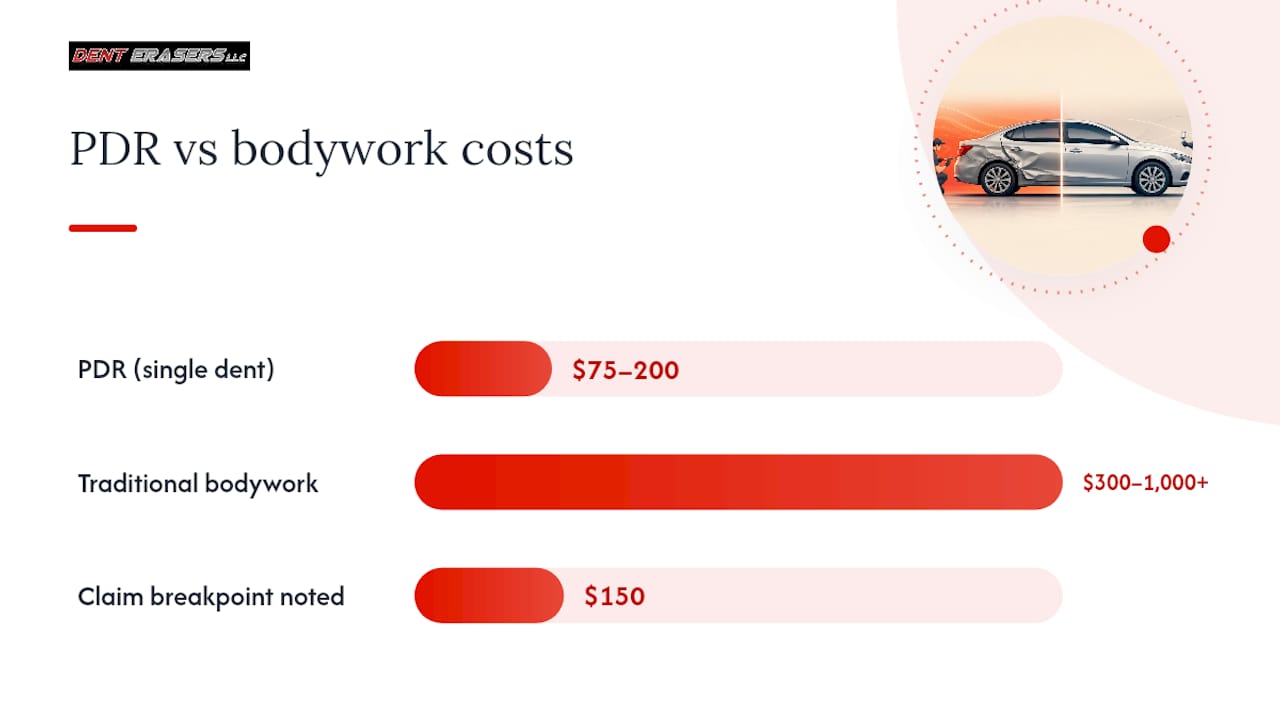
For a single, straightforward dent, expect to pay somewhere between $75 and $200, compared to $300 to $1,000 or more for traditional bodywork on the same kind of damage. That gap widens fast once paint or bumper replacement gets added to a shop estimate.
A few things move the price within that range:
- Access difficulty. A dent buried behind interior trim or wiring takes longer to reach than one on an open door panel.
- Crease severity. A soft, rounded dent is quicker to correct than one with a defined line running through it.
- Paint condition. Borderline cases sometimes need extra inspection time before a technician commits to the job.
Time-wise, a single small dent often takes 30 minutes to two hours. Moderate door or fender damage from a minor fender bender usually runs two to four hours. Multi-panel jobs, like a string of dents from a parking lot mishap, can stretch across a full day or more.
On insurance: request a PDR-first estimate before you file anything. Because PDR costs so much less than traditional repair, filing a claim for a $150 dent often isn’t worth the deductible or the potential premium bump. If you do file, document the damage with photos immediately and keep the technician’s written assessment. Insurers vary widely in how they process PDR claims, so paperwork upfront saves back-and-forth later.
What Happens During a PDR Appointment?
Whether a technician comes to you or you drive to a shop, the process follows a predictable rhythm. Here’s what to expect and how to set yourself up for a smooth visit.
- Before the visit: Photograph the damage in daylight, have your VIN handy, and clear a few feet of space around the affected panel if a mobile tech is coming to your driveway or office lot.
- Inspection: The technician checks paint integrity, confirms backside access, and does a test push or light glue-pull to see how the metal responds before quoting a final price.
- The repair itself: Using rods, glue tabs, or both, the tech works the metal back into shape under reflective lighting, checking progress constantly rather than rushing to a single big push.
- Final finish and warranty: Once the panel reads clean under the light board, most reputable technicians walk you through a written warranty before you drive off.
Pro Tip: Wait a few hours before parking under direct sun or running your vehicle through a car wash. Freshly worked metal and any glue residue need time to fully settle.
Afterward, run your hand over the panel and check it under different lighting outside. A quality repair should be invisible from every angle, not just the one the tech showed you.
When PDR Won’t Work, and What to Do Instead
Some damage simply isn’t a PDR job, and a reputable technician will tell you that upfront rather than force a repair that won’t hold up.
- Cracked, chipped, or peeling paint anywhere near the dent
- Sharp creases or visibly stretched metal
- Rust starting to form around the damaged area
- Panels with no backside access, like certain quarter panels or roof edges
- Ultra-high-strength steel zones the manufacturer flags as no-repair
- Bumper areas housing ADAS sensors, cameras, or radar units
A dent that looks minor on the surface can still involve hidden structural stress or sensor misalignment. When paint is compromised or a panel sits in a manufacturer’s restricted zone, pushing forward with a cosmetic fix instead of a proper inspection isn’t a shortcut. It’s a liability waiting to surface later.
If your damage falls into any of those categories, get a full collision inspection, ask for an OEM-recommended repair estimate, and confirm whether ADAS calibration will be needed once bodywork is finished. Don’t let anyone attempt PDR on a panel showing signs of structural or hidden damage. Insist on documentation and a real warranty before work begins.
How Denterasers LLC Handles Minor Collision Dents
Denterasersllc specializes in mobile paintless dent repair, plastic bumper repair, and both large and small dent jobs, including specialty work for luxury, vintage, and motorcycle vehicles, all performed onsite. That means a technician comes to your home or office instead of you losing a day at a body shop.
- Mobile assessments that start with photos or an onsite look at the damage
- Repair warranties backed by trained technicians who explain their process before starting
- Before-and-after galleries showing real completed repairs
- Blog resources covering everything from choosing a qualified PDR provider to what makes PDR worth choosing over traditional methods
| Approach | Typical Turnaround | Paint Impact |
|---|---|---|
| PDR (Denterasersllc) | Same day for single dents | Factory paint preserved |
| Traditional body shop repair | Multiple days | Repaint required |
Quick stat: Single-dent PDR jobs typically finish in 30 minutes to two hours, a fraction of the multi-day turnaround traditional bodywork usually demands.
Getting an honest answer about whether your dent qualifies, before any money changes hands, is what separates a trustworthy repair process from a guessing game.
Pro Tip: Send clear photos from two or three angles when requesting a mobile estimate. It speeds up the quote and helps the technician arrive with the right tools already loaded.
PDR After a Minor Collision: When It Works
Most of the “PDR versus body shop” debate online treats the two as interchangeable options you weigh on price alone. That’s backward. The real question isn’t which one is cheaper. It’s which one your specific panel actually qualifies for, and too many drivers skip the eligibility check entirely because they assume any small dent is fair game.
Here’s where I’d push back on conventional advice: the size of a dent matters less than people think. A quarter-sized dent sitting on a hem flange or over an ADAS sensor bracket can be harder to fix than a dinner-plate dent on an open door skin. Location and metal condition beat raw size every time. If there’s one habit I’d want every vehicle owner to build, it’s this: photograph the damage the same day it happens, before dirt and grime obscure whether the paint is truly intact.
The other overlooked piece is speed. Waiting weeks to get a dent looked at gives micro-cracks time to worsen and moisture time to work into any hairline break in the clear coat. A same-week assessment often means the difference between a same-day PDR fix and a repaint.
Ready to Get Your Dent Assessed?
If you’ve read this far, you already know PDR is usually the smarter first call after a minor collision, not the fallback option. Denterasersllc brings that first call directly to your driveway or office parking lot instead of asking you to carve out a day for a body shop drop-off. That’s the real advantage here: no appointment window lost to sitting in a waiting room, no loaner car juggling, and no repaint bill for damage that never needed one.
We handle mobile paintless dent repair, plastic bumper repair, and both large and small dent jobs, including specialty vehicles like luxury, vintage, and motorcycle models. If your bumper took the hit, our plastic bumper repair service covers exactly the kind of minor-collision damage this article walks through. Send us a few photos of your dent today and we’ll tell you honestly whether it’s a PDR job, no pressure, no guessing on your end.
Sources
- Paintless dent repair – Wikipedia
- Paintless Dent Repair vs. Traditional: Which is Best? | Forsyth Collision
- PDR Limitations: Technical Analysis of When Paintless Dent Repair Won’t Work | DentAdvisor
- Paintless Dent Repair vs Traditional Repair: Which One Is Right for You? – Boxy’s Paint & Body Inc.
FAQ
Is a Car Still “Clean Title” After Minor Damage?
Yes. Minor collision damage repaired through PDR or standard bodywork doesn’t trigger a salvage or rebuilt title designation, since those titles apply to damage severe enough that an insurer declares the vehicle a total loss.
Can a Dent Come Back After PDR?
A properly repaired PDR job doesn’t pop back out under normal driving conditions, since the metal has been worked back into its original shape rather than masked. Reappearance usually signals the repair was attempted on a panel with sharper creases or stretched metal than PDR could fully correct.
Will Insurance Pay for PDR After a Minor Collision?
Many policies cover PDR as part of collision repair, but treatment varies by insurer, so request a PDR-first estimate and document the damage with photos before deciding whether filing a claim makes financial sense.
What Should I Do Right After Someone Hits My Car With Minor Damage?
Photograph the damage from multiple angles immediately, exchange insurance information with the other driver, and request a PDR assessment before agreeing to any repair estimate. Denterasersllc offers mobile evaluations that can confirm PDR eligibility from your photos within minutes.
How Do I Know If My Panel Has Access for PDR?
A technician checks whether the backside of the panel is reachable through door cavities, trunk openings, or trim removal. Panels near hem flanges or buried wiring harnesses sometimes can’t be accessed, which is why a hands-on or photo-based assessment matters more than guessing from the outside.