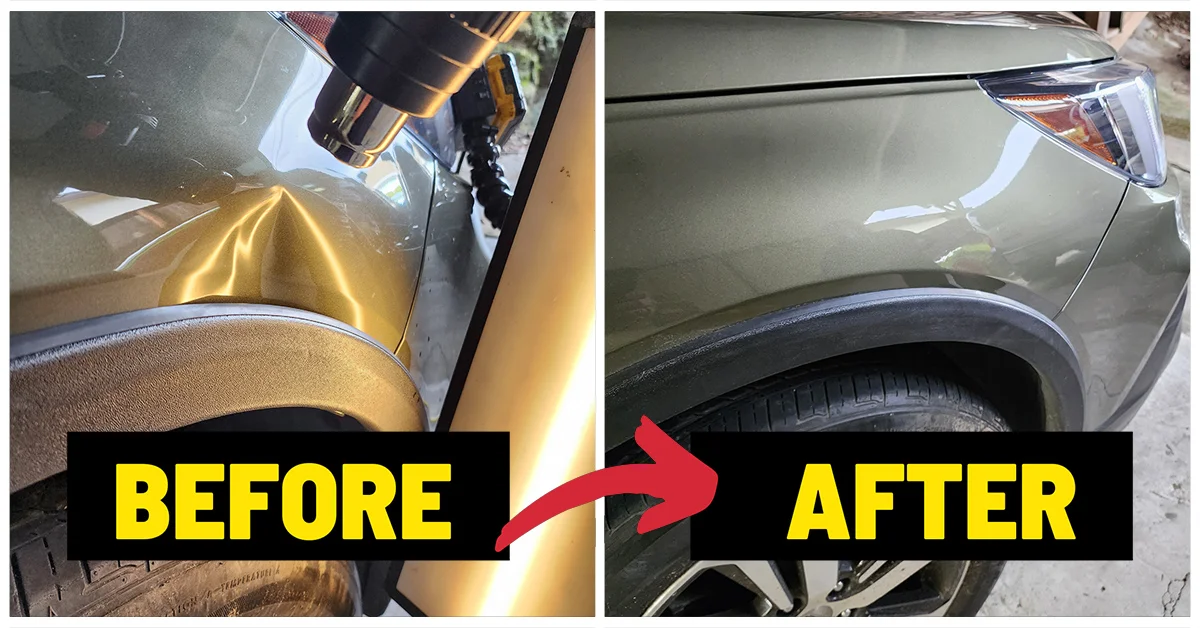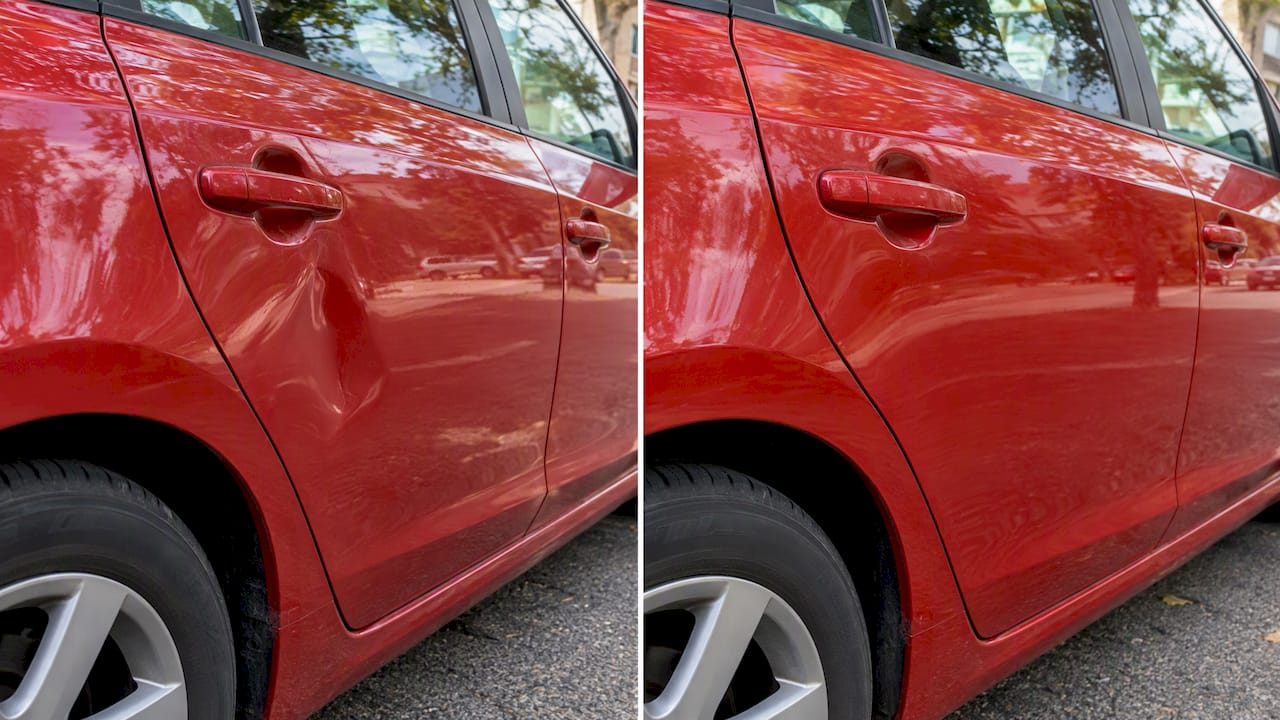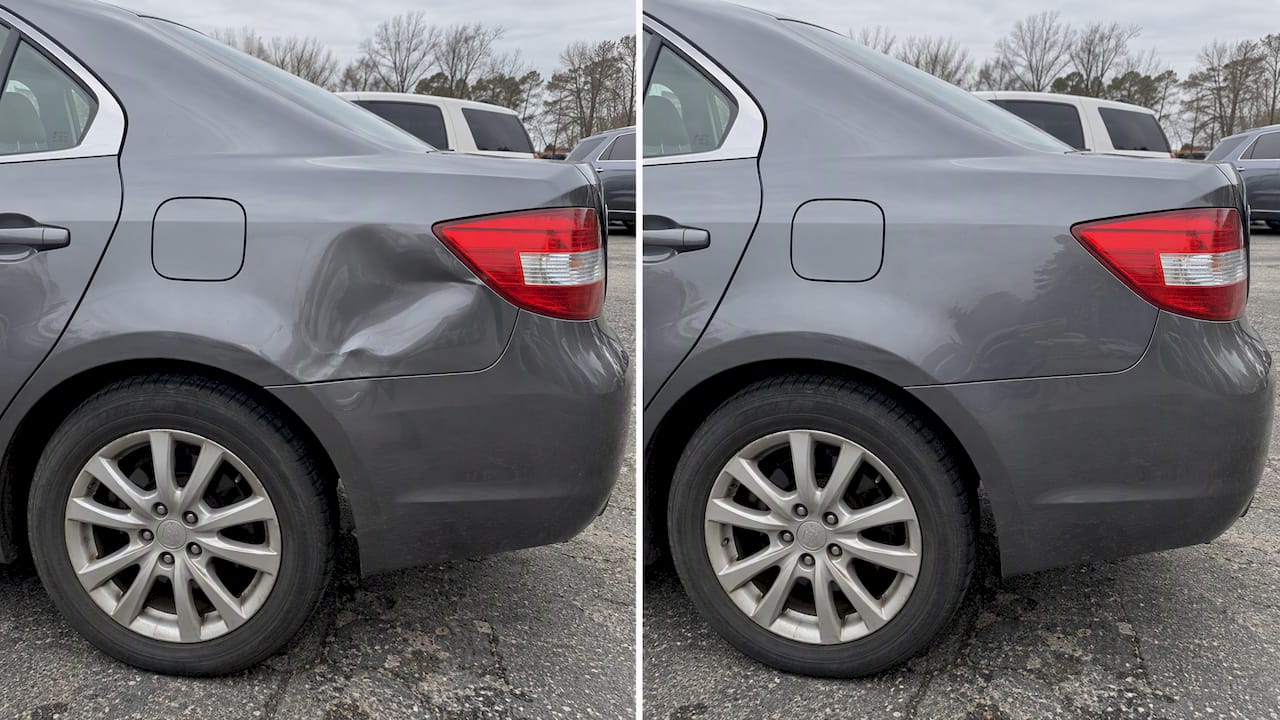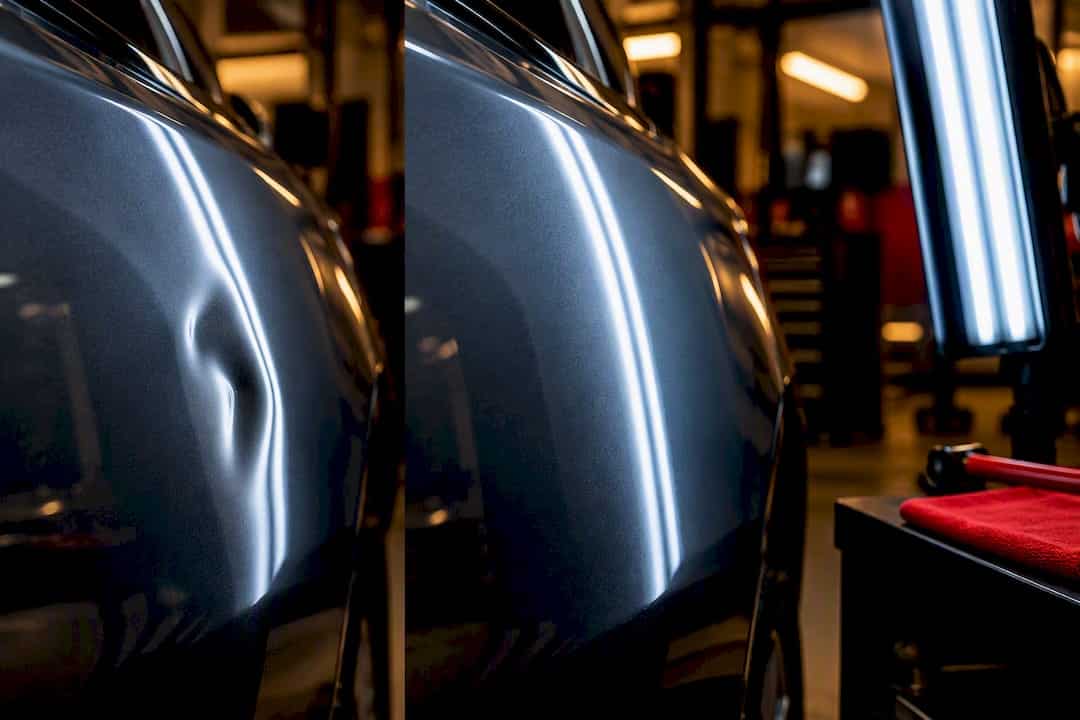
Yes, paintless dent repair works after paint correction or a fresh respray, but only when the paint or coating is fully intact and the metal underneath hasn’t been stretched. If either condition fails, PDR gets ruled out and conventional bodywork takes over. A technician inspection is the only way to know for sure, and the goal driving that decision is always the same: protecting the factory finish you just paid to correct or restore.
TL;DR:
- PDR remains effective only if the paint is fully intact, with no chips, cracks, or delamination, and the underlying metal hasn’t been stretched or work-hardened.
- Coat removal is necessary before PDR if the ceramic coating or PPF prevents proper glue bonding, which can be done with buffing or solvents followed by reapplication.
- Attempts to perform PDR on compromised paint or metal can result in micro-cracks, filler lifts, or surface scuffing, increasing the risk of further damage or repainting.
- Inspection focuses on paint condition, prior filler use, access points, and coating type, with documented results helping to guide the repair process.
- Preparing documentation and photos of recent paintwork, asking about repair methods, and understanding coating removal implications streamline the process and protect your finish.
Table of Contents
- When PDR Is Safe and Effective After Paint Correction
- How Ceramic Coatings and PPF Affect PDR and Glue Pulling
- What Can Go Wrong When PDR Follows Paint Work
- What a Technician Actually Inspects Before Saying Yes
- How to Prepare Before Scheduling PDR
- Why an Inspection-First Policy Protects Your Paint
- Book a PDR Inspection With Denterasers LLC
- Sources
- FAQ
When PDR Is Safe and Effective After Paint Correction
The paint itself is what makes or breaks the decision, not how the dent looks. If the clear coat and color layer are intact, with no chips, cracks, or delamination, PDR remains one of the most reliable repair paths available, even on a panel that just went through a full correction. The metal underneath doesn’t know whether the paint above it is factory-original or freshly polished. It only responds to how much it’s been stretched or work-hardened.
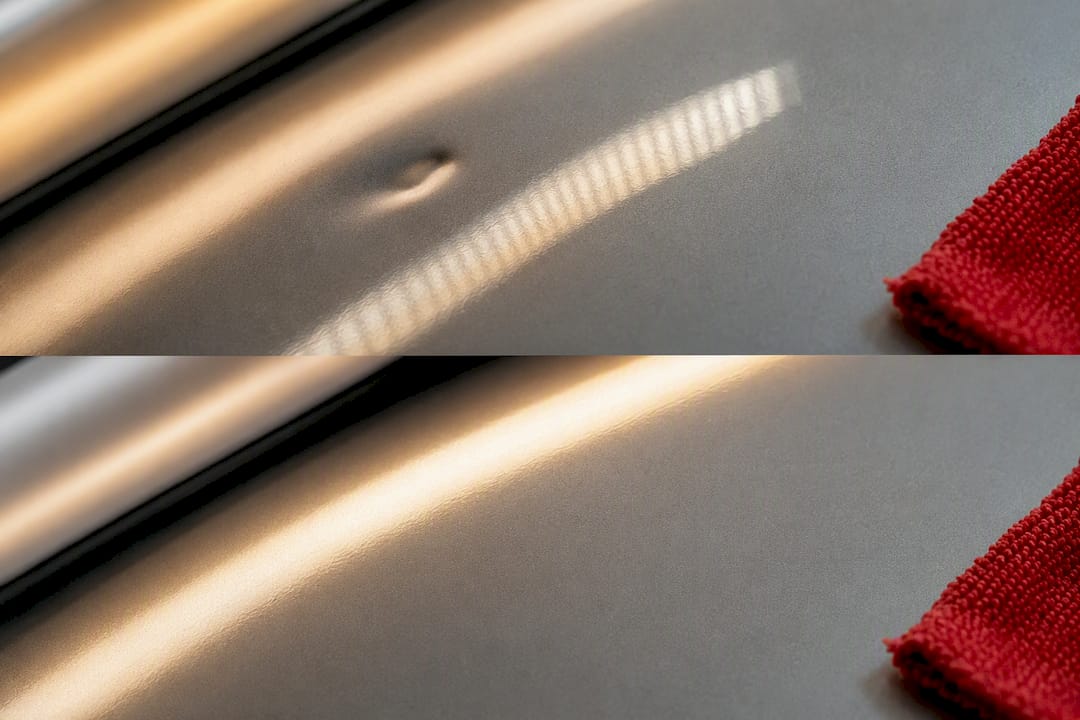
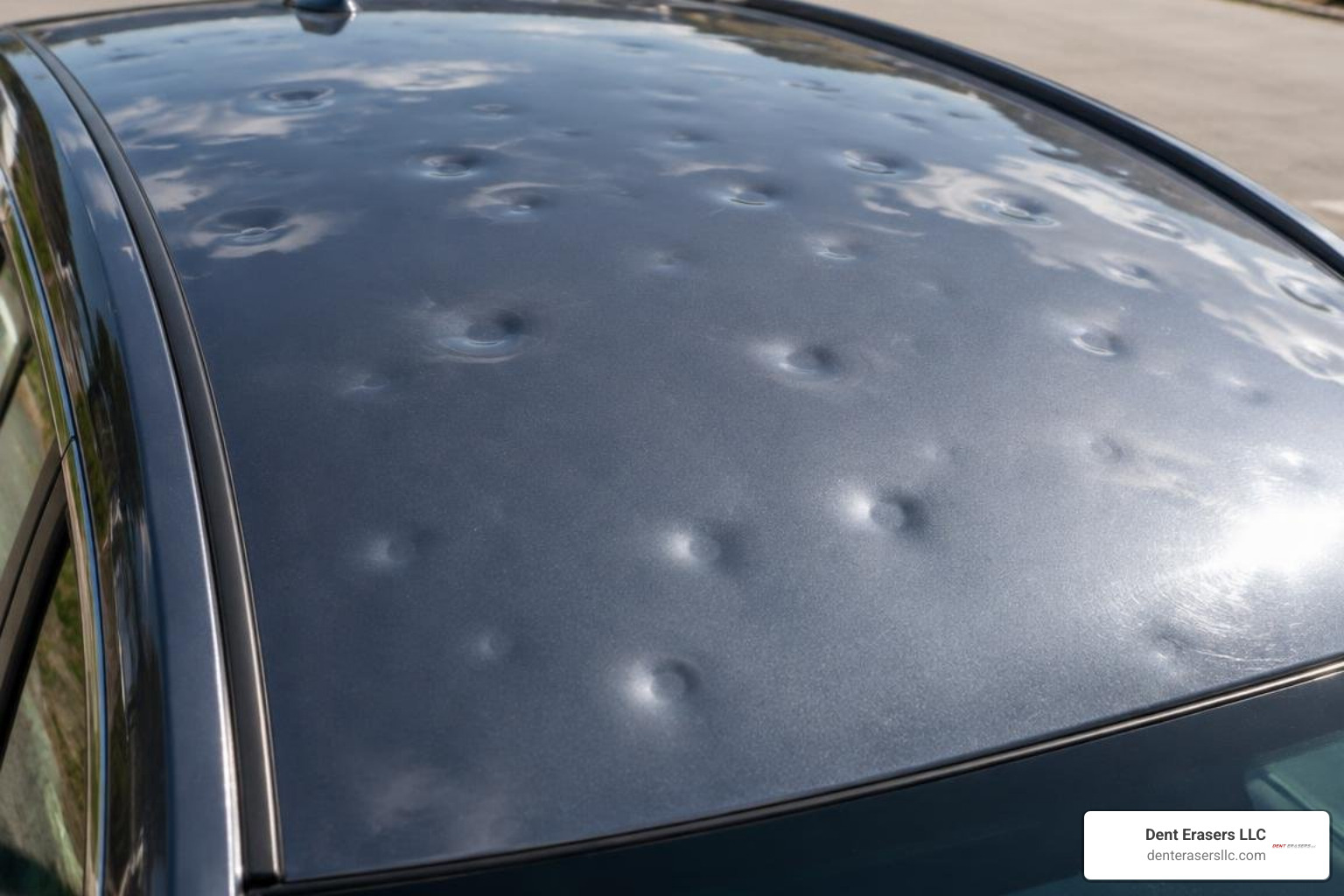
Most shallow dents, door dings, and hail damage stay PDR-eligible after correction because the paint layer never actually broke during the original ding. That’s the deciding factor Dent Hero’s analysis points to repeatedly: dent diameter matters less than whether the coating survived intact. A large, shallow dent with sound paint can be an easier PDR job than a small dent sitting on cracked or previously repaired paint.
Panels with a history of body filler are a different story. Once a shop has laid filler or exposed primer or bare metal on a section, that area usually needs conventional refinishing instead.
- Intact clear coat with no visible chips or hairline cracks
- Shallow to moderate dents, including most door dings and hail damage
- No prior bodywork involving filler, primer exposure, or bare metal patches
- Rear panel access for rod or glue-tab tooling
How Ceramic Coatings and PPF Affect PDR and Glue Pulling
Ceramic coatings and paint protection film generally coexist fine with paintless dent repair. The complication shows up specifically with glue-pull tooling, which relies on an adhesive tab bonding to the surface. Hydrophobic ceramic layers are engineered to resist exactly that kind of adhesion, and glue tabs can fail to bond properly on coated panels, which stalls the pull before it starts.
When that happens, a technician has two paths: switch to rod access from behind the panel, or remove the coating in the immediate work area through machine buffing or a solvent, complete the glue pull, then reapply the coating afterward. Removal adds a clear trade-off:
- Rod access first: faster, no coating disruption, but only possible with clear rear panel access
- Coating removal for glue pulling: works on any panel, but adds buffing or solvent work plus recoat time
- Reapplication timing: cure schedules vary by product, so ask your technician for a specific window rather than assuming same-day turnaround
Pro Tip: If you had ceramic coating applied within the last few weeks, mention it before the inspection starts. A coating still curing behaves differently under solvent removal than one that’s fully cross-linked.
What Can Go Wrong When PDR Follows Paint Work
Skipping the inspection step, or rushing past a marginal call, creates specific failure modes rather than vague “risk.” Here’s what actually happens when PDR gets attempted on paint or metal that isn’t ready for it:
- Micro-cracks propagate. Hairline fractures invisible under normal light can spread once tooling pressure is applied, especially near a recent correction where the clear coat may be thinner than factory spec.
- Filler or paint lifts. Panels with prior body filler risk separation or cracking under PDR pressure, because filler doesn’t flex the way sheet metal does.
- Glue-pull tabs fail against coatings. A tab that won’t bond means wasted setup time, and repeated attempts can leave surface scuffing on the coating itself.
- Metal stays stretched. Work-hardened or creased metal sometimes won’t return to its original contour no matter how much technique is applied, which forces a switch to conventional repair mid-job.
What a Technician Actually Inspects Before Saying Yes
A proper inspection follows a consistent sequence, and it’s worth knowing what that sequence looks like before you schedule anything. Technicians start with visual inspection under controlled, angled light, since normal ambient lighting hides the kind of micro-cracking that turns into a bigger problem mid-repair.
Beyond the visual pass, the checklist typically covers:
- Signs of prior filler use, uneven sanding lines, or substrate adhesion problems
- Rear panel access, which determines whether rod tooling or glue-pull tabs are the right call
- Coating type and condition, since hydrophobic layers change the glue-pull calculation
- Whether coating removal is needed, and if so, the added recoat timeline and cost
Documented, upfront inspections that record paint condition and the chosen repair method cut down on disputes later and keep expectations realistic from the first estimate. A reliable mobile inspection process follows this same logic: look first, decide second, and never force a glue pull or rod technique onto paint that can’t handle it.
How to Prepare Before Scheduling PDR
Walking into an estimate with the right information speeds up the whole process and gets you a more accurate number. A few things to have ready:
- Document the paint correction or repaint. Note which shop did the work, roughly when, and what products they used if you know them. This tells the technician what they’re actually inspecting.
- Photograph the dent in natural light from a couple of angles before the appointment.
- Ask direct questions: will this be glue-pull or rod access, does the coating need to come off, and what warranty applies to the finished repair?
- Get coating work spelled out separately on the estimate, since removing and reapplying a coating adds real time and cost beyond the base PDR price.
Pro Tip: Keep a copy of your correction invoice on your phone. Technicians move faster when they know exactly which products and process touched the panel last.
Simple PDR jobs on intact paint often wrap up same-day. Anything requiring coating removal and recoat time can stretch to a few days, so build that into your schedule before you commit to a repair date.
Why an Inspection-First Policy Protects Your Paint
Turning down a job that isn’t right for PDR is harder than saying yes, but it’s the only honest call. A technician who pushes glue-pull tooling onto cracked paint or work-hardened metal isn’t saving you money. They’re trading a small problem for a bigger one. At Denterasers LLC, that inspection-first approach exists because a preserved factory finish holds resale value and looks right for years, while a rushed repair rarely does either.
— Brian Blanc
Book a PDR Inspection With Denterasers LLC
Mobile dent repair services offer an alternative to taking your car into a body shop and waiting days for a diagnosis. Technicians come to you, inspect the panel on-site, and determine whether glue-pull, rod access, or a coating removal step is the right call for your specific paint condition.

Every on-site estimate spells out the chosen method, whether coating work is involved, and the expected timeline and cost before we touch your panel. Paintless Dent Repair runs $150 to $500 per job, and Large Dent Repair covers bigger jobs at $150 to $1,500. If the dent turns out small, Minor Dent Repair runs $100 to $500. Schedule a mobile inspection and get a straight answer on your panel before you decide anything.
FAQ
What Can PDR Not Fix?
PDR can’t repair paint that’s already cracked, chipped, or flaking, since the technique reshapes metal without touching the paint layer itself. It also struggles with stretched or work-hardened metal and panels carrying prior body filler, both of which usually need conventional refinishing instead.
Can Dents Come Back After PDR?
A properly repaired dent on sound metal and intact paint doesn’t return, since the metal is reshaped rather than filled. The exception is metal that was already stretched or creased beyond its memory, which can retain a faint trace no matter how skilled the technician is.
How Many Times Can You Do Paint Correction?
There’s no fixed number, but each correction removes a thin layer of clear coat, and repeated aggressive polishing eventually thins it enough to affect PDR eligibility. A thorough inspection before any repair tells you exactly how much clear coat margin you’re working with.