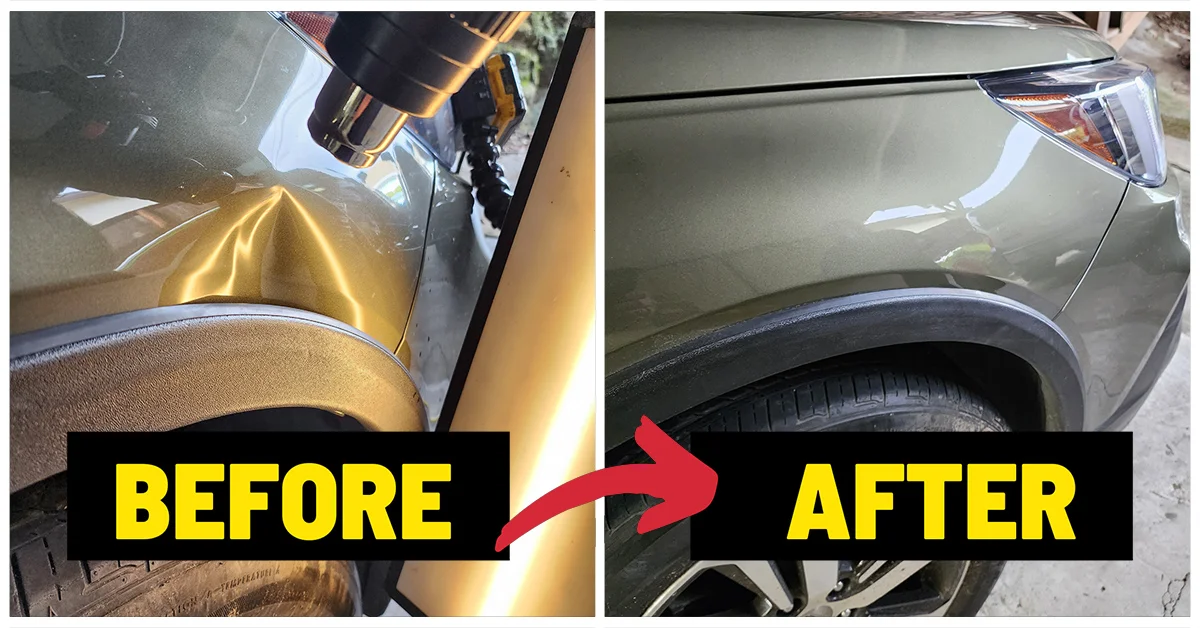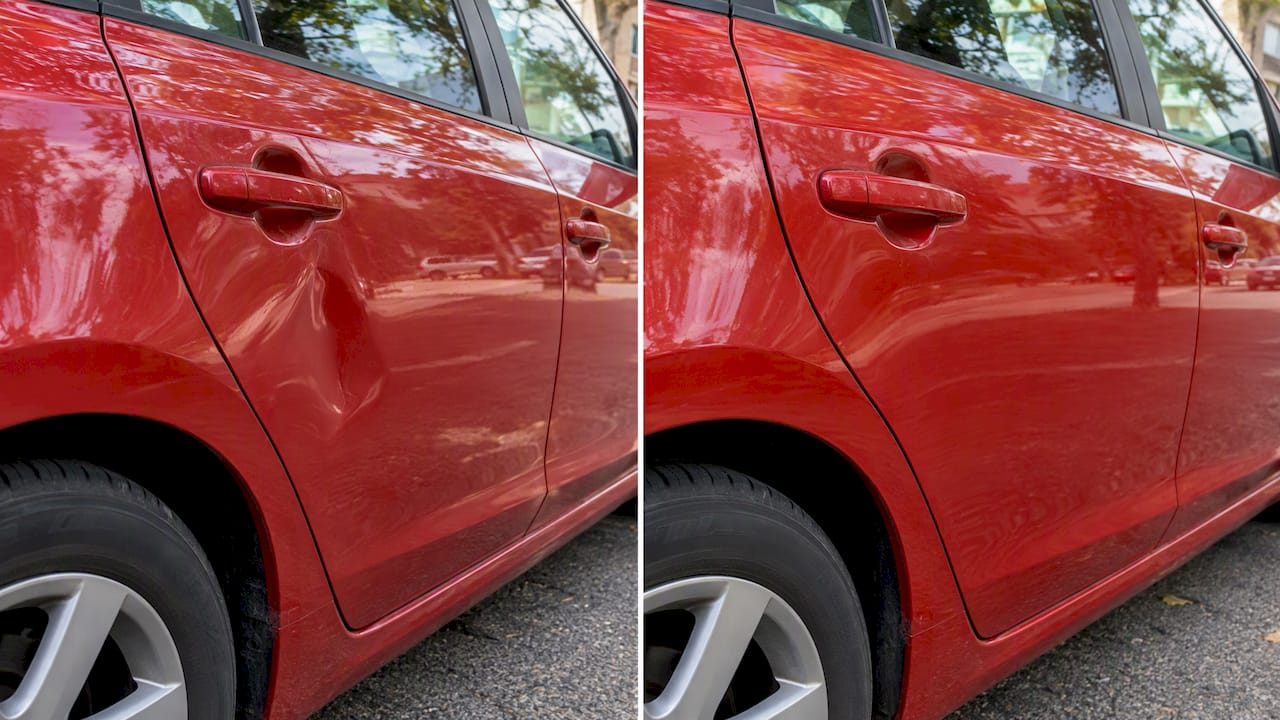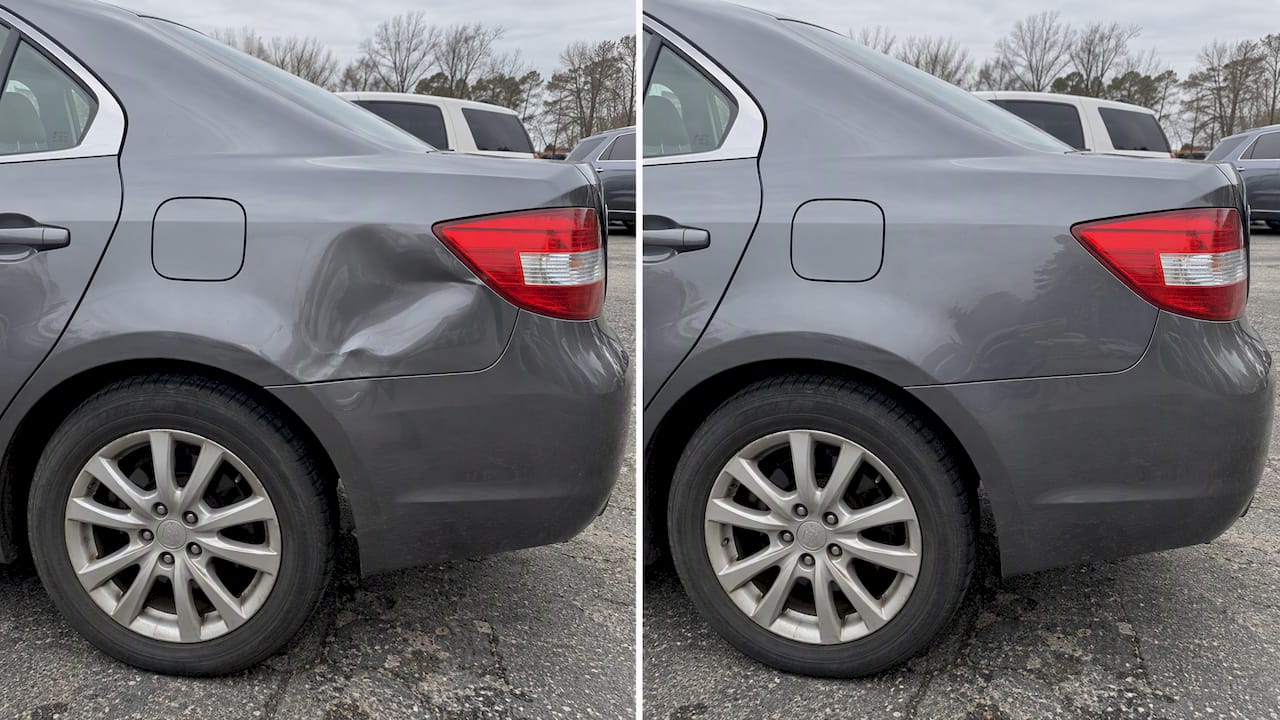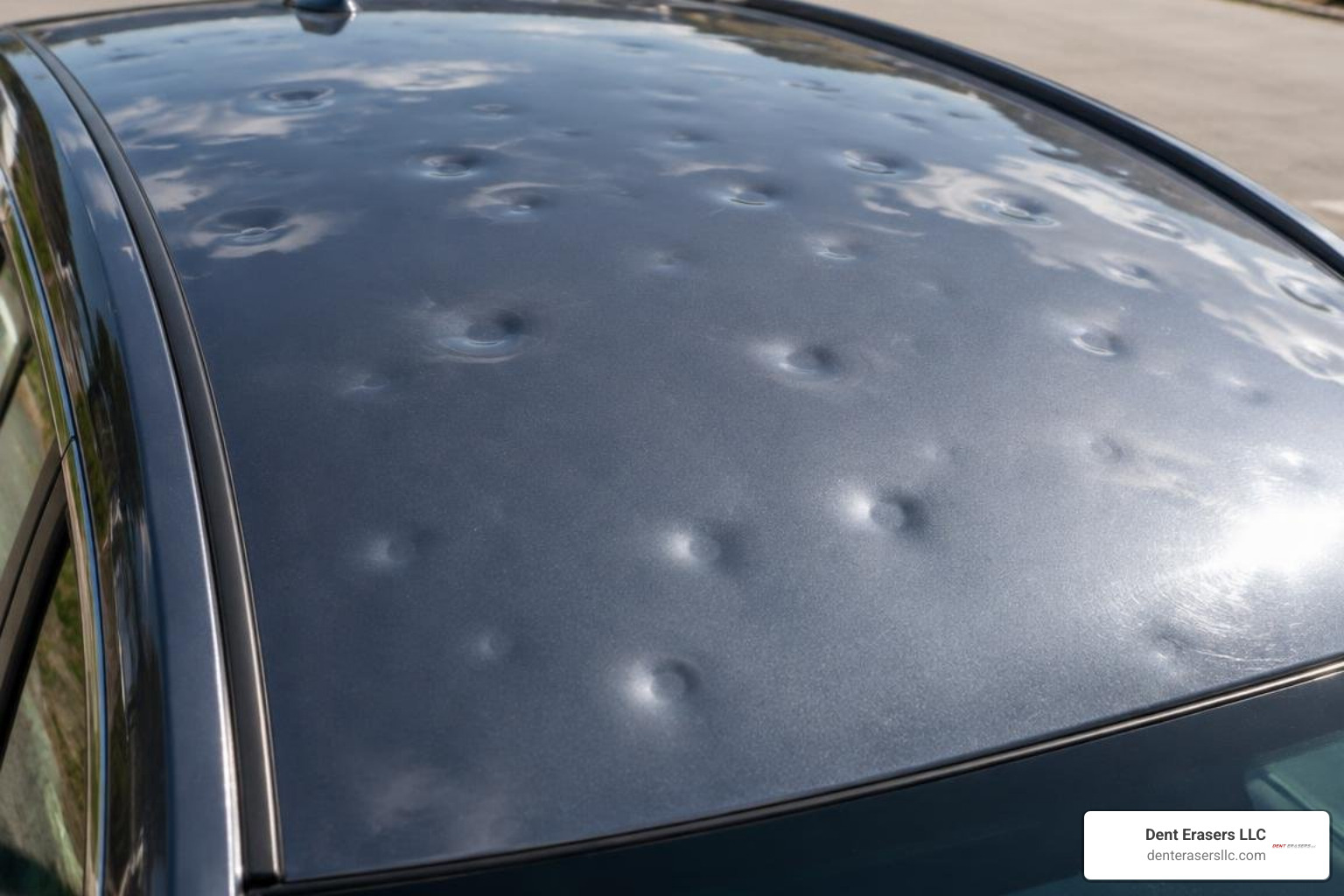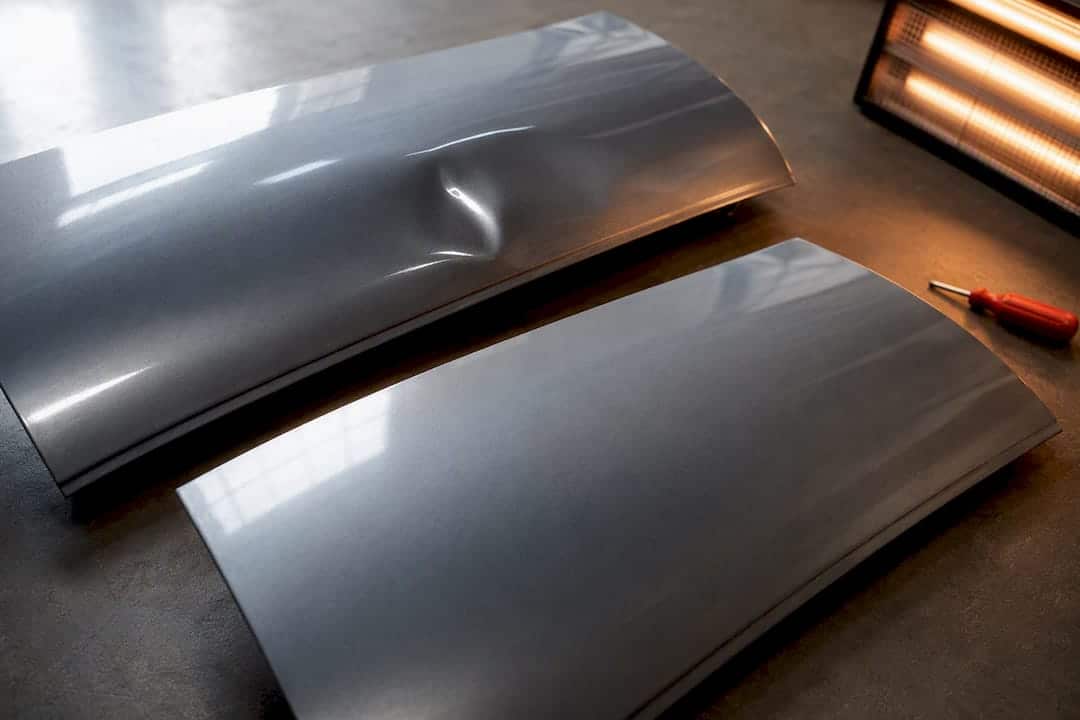
Yes, paintless dent repair works in cold weather, but the outcome depends entirely on temperature control and technique adjustments. A climate-controlled shop between 65°F and 75°F gives technicians the flexibility metal needs, while mobile jobs demand extra warm-up time and patience. Denterasers LLC and federal guidance from the National Highway Traffic Safety Administration both point to the same lesson: cold doesn’t stop PDR, it just changes the playbook.
TL;DR:
- Cold temperatures decrease metal ductility and increase paint cracking risk, requiring slower, more gentle repair techniques and careful temperature management.
- Aluminum panels work-harden faster when cold, necessitating frequent reheating and incremental pulls, while steel maintains slightly better flexibility in low temperatures.
- Shop repairs in heated bays offer more predictable results with consistent temperature control, but mobile PDR is possible outdoors if proper warm-up protocols are followed.
- Expect longer cure times for glue-pull repairs and additional warm-up steps when working below 65°F, with estimates adjusting accordingly to avoid surprises.
- Deep creases, sharp edges, rusted areas, and existing paint damage are less suitable for cold-weather PDR, making timing and conditions critical for safe, successful repairs.
Table of Contents
- How Cold Changes Metal and Paint: The Science That Matters for PDR
- Shop vs. Mobile PDR in Cold Weather: When Location Matters
- Cold-Weather PDR Techniques and Tools Technicians Use
- Steel vs. Aluminum Panels in Cold Weather: What Changes
- Timing, Estimates, and Costs: How Cold Weather Changes the Job
- Risks, Limits, and When Waiting Is the Better Choice
- How Denterasers LLC Manages Cold-Weather PDR Jobs
- Seasonal Training and Consistency Across Shops
- Get Cold-Ready Dent Repair Without the Shop Visit
- Sources
- FAQ
How Cold Changes Metal and Paint: The Science That Matters for PDR
Steel and aluminum both lose ductility as temperatures drop. The metal doesn’t become brittle in the way glass does, but it resists the gentle, gradual push-and-pull that PDR depends on. A panel that flexes easily at 70°F can feel almost locked in place at 30°F, and that stiffness forces technicians to slow down and work in smaller increments.
Paint reacts even more dramatically to the cold. Below a certain temperature, factory clear coat and base coat both lose flexibility, and that means a dent that would pop out cleanly in summer can crack or chip its finish in winter if the metal moves too fast underneath it. This is one of the biggest reasons cold weather changes PDR outcomes more than most owners expect.
Aluminum panels bring an added complication: work-hardening. Every time a technician pulls or pushes on aluminum, the metal’s crystalline structure tightens slightly and resists the next pull a little more. In warm conditions, that resistance builds gradually. In the cold, it builds faster, which means a tech has fewer “free” pulls before the panel starts fighting back.
- Steel loses flexibility gradually, but recovers well with proper heat.
- Aluminum work-hardens faster in cold temperatures, requiring gentler, more frequent pulls.
- Paint becomes more prone to cracking and chipping below shop-recommended temperatures.
- Panel edges and seams are the most vulnerable points for cold-related damage.
Cold weather doesn’t just slow PDR work down, it changes the physics of the repair. Technicians who understand how cold affects panel behavior adjust force and pacing instead of pushing through resistance that the metal is telling them to respect.
Shop vs. Mobile PDR in Cold Weather: When Location Matters
A heated shop bay is the gold standard for winter PDR, and the reason comes down to consistency. Indoor, climate-controlled environments keep every part of the panel at the same temperature, which means predictable metal behavior and glue that cures on schedule. Facilities with indoor heated bays tend to produce more consistent results year-round than setups exposed to outdoor swings.
Mobile repairs are still possible in cold weather, but they come with real friction. Wind chills the panel unevenly, sunlight creates hot spots on one side of a car while the shaded side stays frozen, and adhesive used for glue-pull repairs sets more slowly outdoors. A mobile tech has to manage all of that on the fly, which is exactly why winter conditions like ice and frozen debris add complexity to onsite work.
Before booking anyone for cold-weather PDR, ask these questions:
- Do you have access to a heated bay, or will this be done outdoors?
- What’s your warm-up procedure for panels below 50°F?
- Will the estimate include extra time for cold-weather adjustments?
- How do you handle glue-pull repairs when adhesive cure times run long?
A shop that answers these clearly, without hesitation, is one that has actually built winter protocols into its process. Our guide to choosing a dent repair provider covers more questions worth asking before you commit.
Cold-Weather PDR Techniques and Tools Technicians Use
Panel pre-warming is the first line of defense against cold-weather damage. Infrared lamps and heat guns bring a panel back into its normal working range without introducing the uneven stress that a small, concentrated heat source can cause. The trick isn’t warming just the dent, it’s warming a wide area around it and working from the center out, so the metal moves predictably instead of fighting itself.
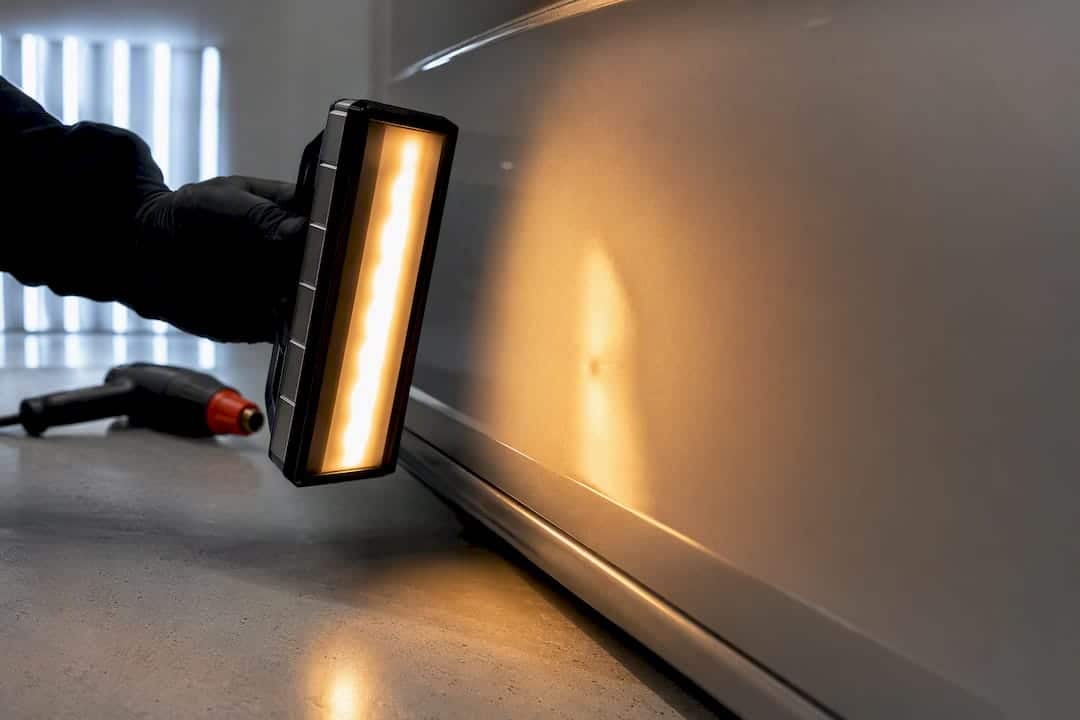
Glue-pull repairs need their own adjustments. Cold adhesive gets thicker and cures more slowly, so tabs often need a gentle warm-up before application, and the tech needs to build extra cure time into the schedule rather than rushing the bond. Skipping this step is how glue tabs pop loose mid-pull.
Hand-tool technique shifts too. Lighter force, more frequent checks, and smaller incremental pulls all help avoid over-tensioning a panel that’s already stiffer than usual. Trim and clips also turn brittle in the cold, so removal and installation around the repair area calls for a slower hand and more patience than a summer job would need.
- Warm a broad area, not just the dent, then work center-out for predictable movement.
- Expect glue-pull cure times to run longer, and don’t force the schedule.
- Use lighter, more frequent pulls instead of aggressive single movements.
- Handle trim, clips, and seams with extra care since cold makes plastic brittle.
Pro Tip: Ask your technician if they’re warming the whole panel or just the dent. A wider warm zone prevents the “hot spot vs. cold zone” mismatch that can cause unpredictable metal movement mid-repair.
Steel vs. Aluminum Panels in Cold Weather: What Changes
Aluminum and steel don’t behave the same way once temperatures drop, and that difference shapes how a technician approaches your repair.
Aluminum work-hardens faster in the cold, meaning each pull tightens the metal’s resistance more quickly than it would in a warm shop. Technicians handling aluminum panels plan their pull sequence carefully, limiting repeated pulls on the same spot and reheating between attempts to keep the metal workable.
Steel holds up a little better against cold-related stiffness, but it isn’t immune. It loses some ductility too, and fatigue can set in faster on high-crease or edge-adjacent dents if a tech pushes past what the metal wants to give.
- Aluminum requires more incremental pulls and more frequent reheating between attempts.
- Steel tolerates cold slightly better but still loses flexibility and needs patience near creases.
- Both materials generally take longer to repair correctly in freezing conditions than in mild weather.
The practical takeaway: if your vehicle has aluminum body panels, cold-weather PDR is not impossible, but it does typically take longer and requires a more careful hand than a comparable steel repair.
Timing, Estimates, and Costs: How Cold Weather Changes the Job
Most shops aim to keep their working bays between 65°F and 75°F, and there’s a reason that range shows up so often in the industry. Below it, panels resist manipulation, paint risks cracking, and adhesive behaves unpredictably. Staying within that band keeps repairs consistent no matter the season outside.
When temperatures drop below that range, expect the clock to run longer. A glue tab that cures in about five minutes in a warm bay can take eight to ten minutes or more in cold conditions, and that’s before accounting for the warm-up time needed just to get the panel workable in the first place.
A reputable shop builds this into the estimate rather than surprising you at pickup. When you request a quote in winter, ask specifically whether the price already accounts for:
- Extra warm-up time before work begins.
- Longer glue cure cycles for glue-pull repairs.
- Slower, more incremental pull sequences on aluminum panels.
If a shop’s winter quote looks identical to what they’d charge in July, that’s worth a follow-up question. You can also check our seasonal dent repair discounts for how timing affects pricing beyond just the weather.
Risks, Limits, and When Waiting Is the Better Choice
Not every dent should be tackled the moment it’s cold outside. Repairs near seams, edges, or areas with pre-existing paint damage carry a higher risk of cracking when the metal has to move in freezing conditions. Rust that’s already started under a chip only gets worse if moisture sits there through another cold snap.
Deep creases and dents with sharp edges are the toughest calls year-round, and cold weather narrows the margin for error even further. If a technician tells you a particular dent isn’t a good candidate for cold-weather PDR, that’s not a sales dodge, it’s an honest read on how the metal will respond. Our post on preventing paint cracking around dents walks through more of these edge cases.
If you do need to wait for warmer conditions or an open shop slot, keep the area dry and covered to slow rust, and skip the DIY tricks. Dry ice and other homemade quick fixes can damage paint and rarely produce a result close to professional PDR.
- Avoid pulling near seams, rust spots, or areas with existing paint chips in freezing temps.
- Deep creases and sharp-edged dents are the least likely to respond safely to cold-weather PDR.
- Keep dents dry and covered while waiting, and steer clear of dry-ice or heat-gun DIY attempts.
How Denterasers LLC Manages Cold-Weather PDR Jobs
Every cold-weather job follows the same core sequence: pre-warm the panel, maintain controlled heat throughout the repair, extend glue cure times as needed, and use cautious, incremental pulls instead of forcing results. That consistency is what keeps a repair from turning into a comeback.
Cold weather doesn’t change what a good repair looks like. It changes how long it takes to get there, and a technician who respects that timeline is protecting your factory paint, not stalling.
On-site, expect to see the warm-up step happen in front of you, not behind closed doors. A straightforward estimate should explain any added time for cold conditions rather than bury it in the total. That transparency, along with careful handling of aluminum and steel panels alike, is the baseline for quality work no matter the season.
Seasonal Training and Consistency Across Shops
Cold-weather protocols only work if they’re trained into muscle memory, not improvised on the spot. Shops that build seasonal adjustments into their standard training avoid the inconsistency that leads to comebacks and cracked paint. Speed matters, but a fast repair that fails in March isn’t actually faster.
If you’re evaluating a provider this winter, ask directly what their cold-weather steps look like. A technician who can answer specifically, warm-up time, glue cure adjustments, pull technique, is one who has actually thought this through rather than treating winter as a minor inconvenience.
— Brian Blanc
Get Cold-Ready Dent Repair Without the Shop Visit
Waiting for a heated bay to open up shouldn’t mean living with a dent all winter. Mobile paintless dent repair can be brought directly to your driveway or office parking lot, using warm-up discipline and cautious pull techniques adjusted for whatever the thermometer says outside.

Mobile crews can handle everything from minor door dings to large panel damage, plus specialty work for luxury, vintage, and motorcycle vehicles that require a gentler hand. Before booking, ask about expected warm-up time and how the estimate accounts for cold-weather adjustments, we’d rather explain that upfront than surprise you later. If your vehicle is parked outside through freezing weather, pairing PDR with routine seam and door jamb care, like the maintenance steps covered by Diamondbrite’s door jamb cleaning guide, helps keep moisture and road salt from making a small dent into a bigger paint problem.
Ready to get a dent looked at before spring? Visit our paintless dent repair services page to see what we cover, or head straight to our mobile dent repair page to check availability in your area.
Sources
- Cold Weather PDR: Adjusting Technique as Temps Drop – Vehicle Hub
- How Cold Weather Affects Paintless Dent Repair – Kirk’s Collision
- NHTSA winter driving tips
- Paintless Dent Repair for Winter Dings: Quick Fixes for Cold-Weather Damage in Little Rock, AR
FAQ
How cold is too cold for automotive paint?
Most factory paint starts losing flexibility as temperatures drop toward freezing, which raises the risk of cracking or chipping during a repair. That’s a major reason shops aim to keep working bays between 65°F and 75°F rather than working on cold panels directly.
Can dry ice be used to fix car dents?
Dry ice is a popular DIY myth, but it isn’t a reliable fix and can damage your paint in the process. Professional guidance advises against DIY quick fixes like dry ice, since proper PDR relies on controlled warming and technique, not a temperature shock.
What dents cannot be removed with PDR?
Deep creases, sharp-edged damage, and dents near existing rust or paint chips are the toughest candidates for PDR, especially in cold weather when the metal has less give. If a technician says a dent isn’t a good fit for paintless repair, that’s usually an honest assessment rather than a sales tactic.
How cold is too cold to detail a car?
Detailing isn’t the same process as PDR, but the same principle applies: extreme cold makes products and materials behave unpredictably, from wax curing improperly to plastic trim becoming brittle. Keeping a vehicle in a heated space, even briefly, produces more consistent results for both detailing and dent repair alike.
Does Denterasers LLC handle cold-weather dent repairs?
Mobile paintless dent repair can be performed year-round using pre-warming, adjusted glue cure times, and cautious pull techniques for cold conditions. Current pricing for services like minor and large dent repair is available on the site.