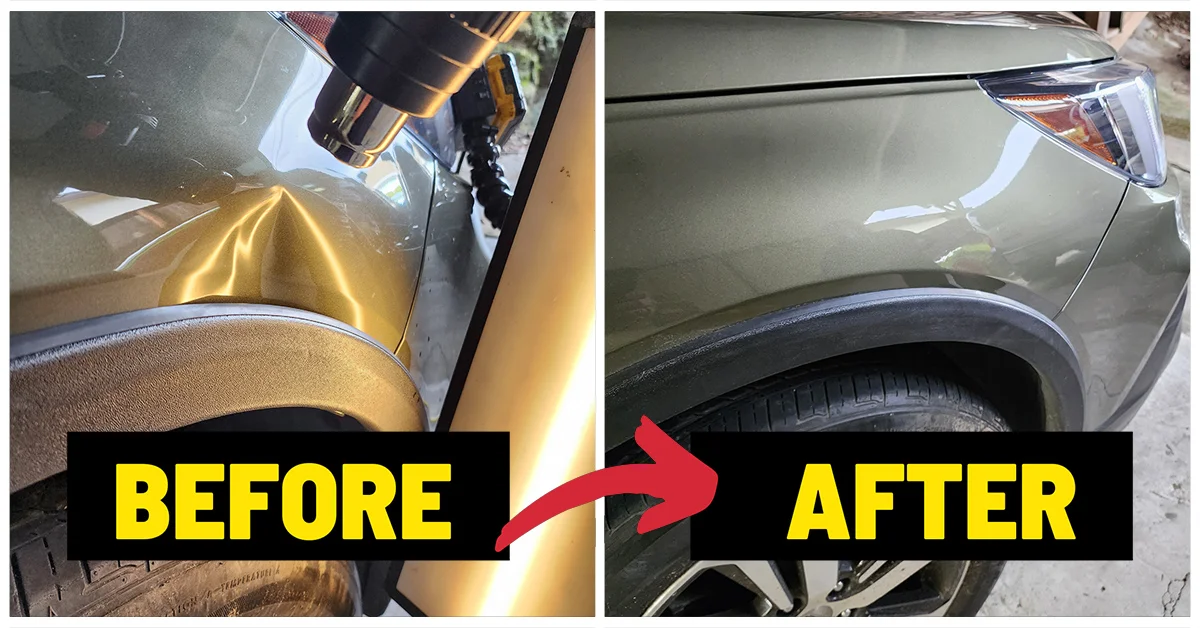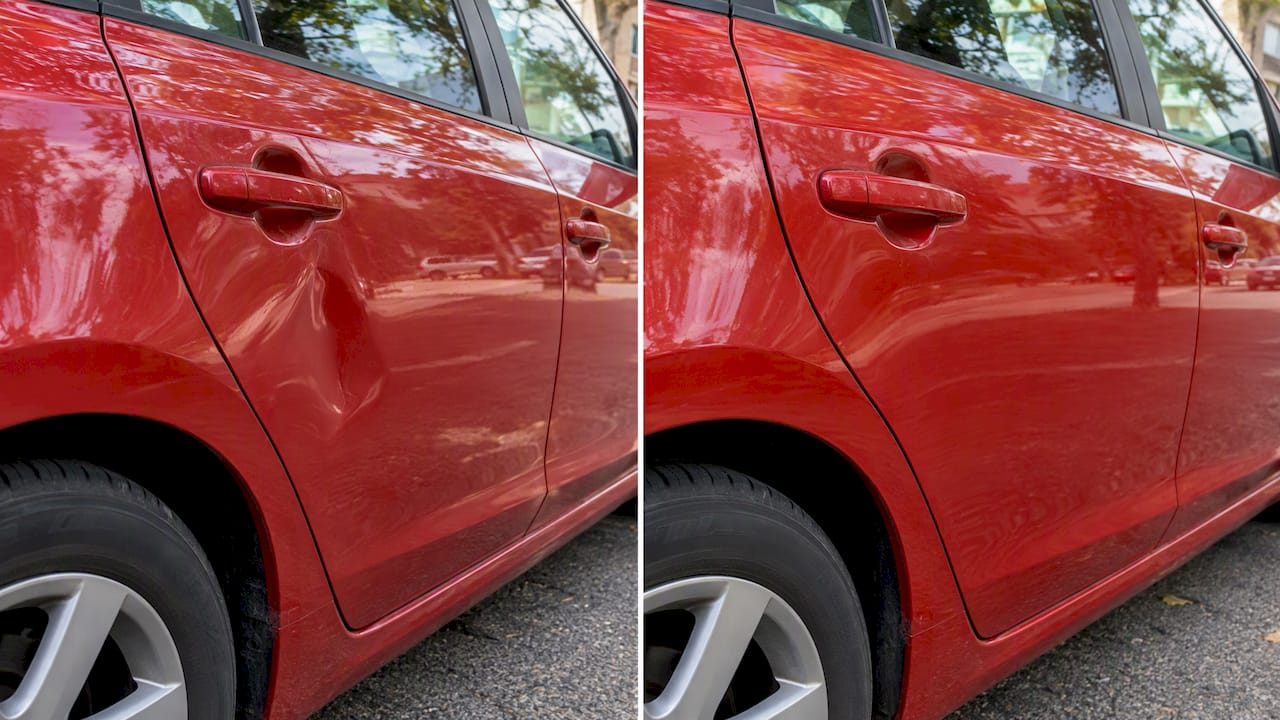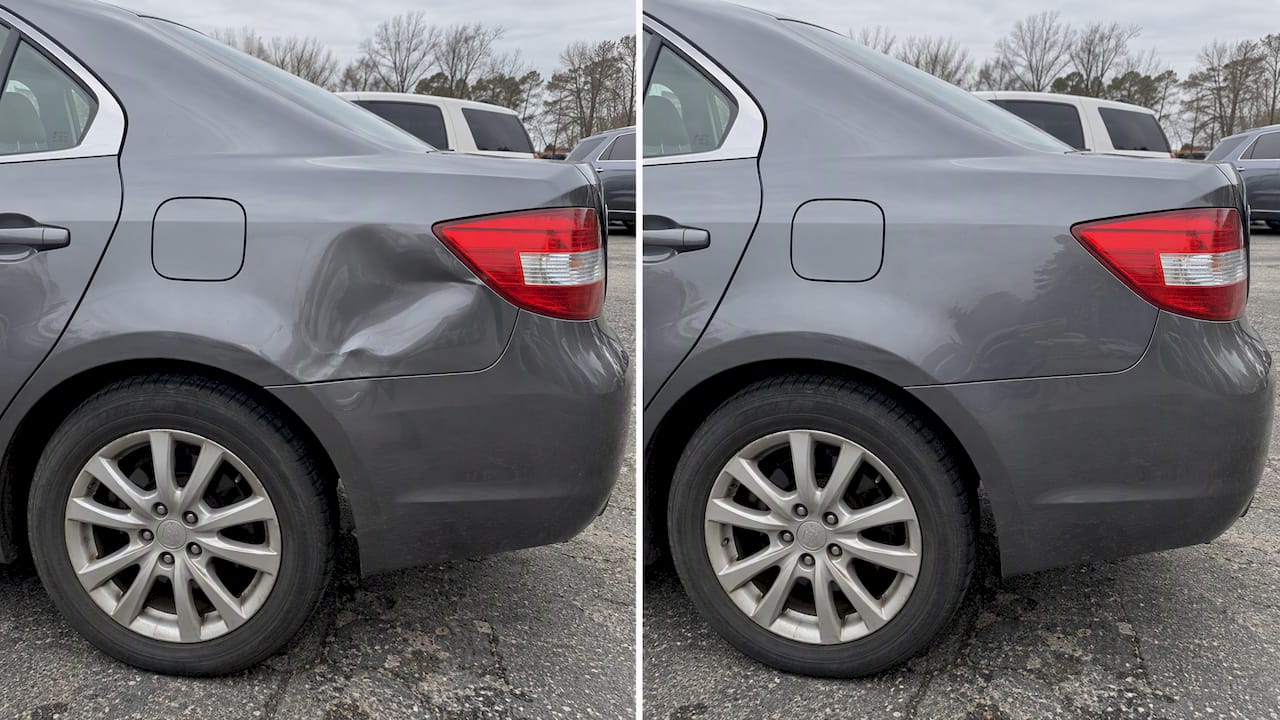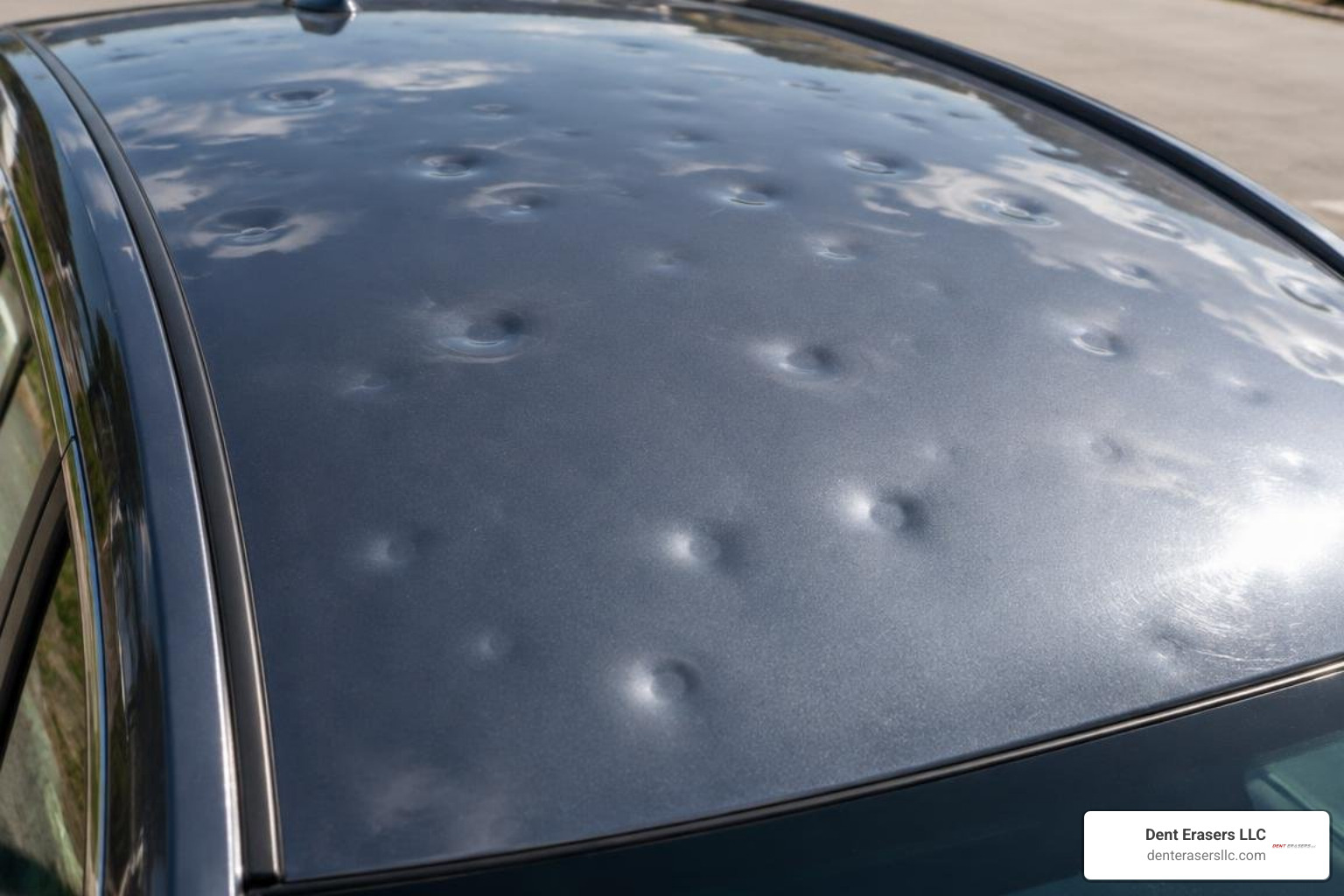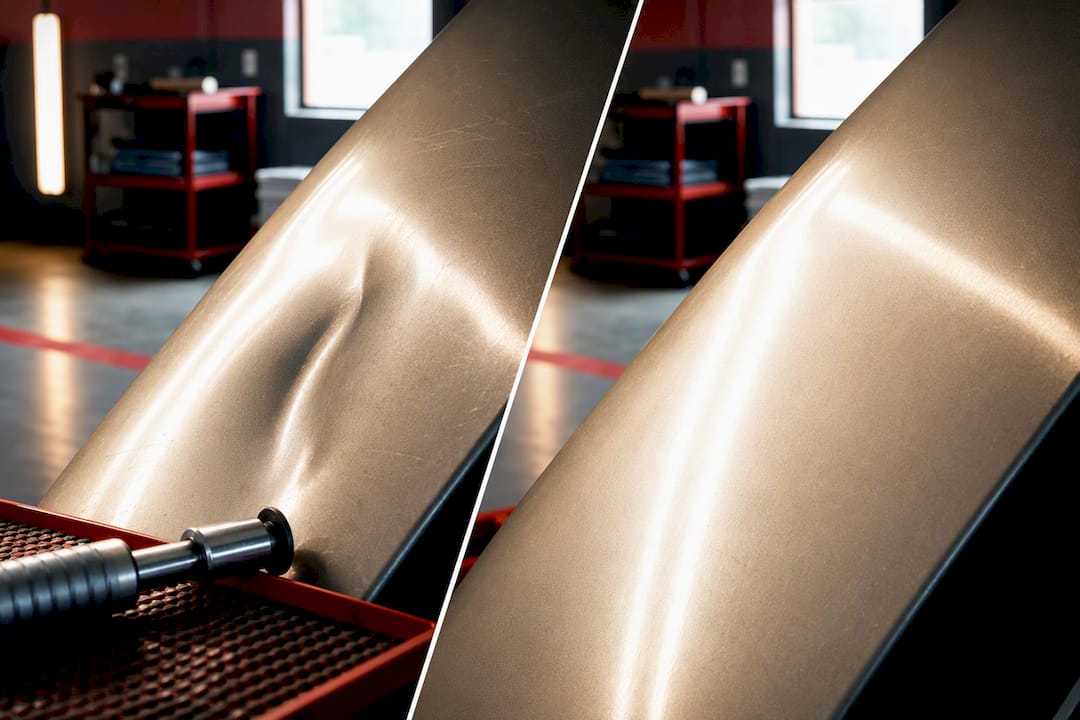
Yes, paintless dent repair works on aluminum, and it works well for the right kind of damage. Aluminum resists the process more than steel does, and it punishes sloppy technique fast, so creases, stretched metal, and deep sharp dents often fail or crack the panel if you push them anyway. The main thing to check before you book anything is whether your technician has actual aluminum experience, not just steel habits applied to a different metal.
TL;DR:
- Aluminum dent repair requires 70% to 150% more force than steel, demanding different tools, techniques, and a careful approach from technicians.
- Small, shallow, and rounded dents on flat panels are typically repairable with paintless dent removal, while creases, tears, or metal stretching usually require replacement.
- Proper repair depends on experience with aluminum, dedicated tools, and a slow, controlled process to avoid cracking or work hardening the metal.
- Success rates for aluminum PDR range from 60% to 70%, lower than steel, because aluminum is more prone to cracking if overworked.
- Confirm your technician has specific aluminum training, uses isolated tools, and provides a written repair assessment before proceeding.
Table of Contents
- Why PDR On Aluminum Behaves Differently Than On Steel
- Which Aluminum Dents Are Actually Fixable?
- How Technicians Actually Perform Aluminum PDR
- Where Aluminum PDR Can Go Wrong
- What Aluminum PDR Costs, and How Insurance Handles It
- How To Vet A Technician Before You Book
- An Honest Take On Aluminum PDR From The Shop Floor
- Get An Honest Aluminum PDR Assessment At Your Location
- Sources
- FAQ
Why PDR On Aluminum Behaves Differently Than On Steel
Aluminum doesn’t spring back the way steel does. Steel has “memory,” a tendency to want to return to its original shape once you relieve the stress on it. Aluminum has far less of that forgiveness, which means a technician has to physically massage the metal back into place rather than coax it.
It also work-hardens faster. Every time you push, tap, or flex an aluminum panel, the metal at that spot gets a little stiffer and a little more brittle. Steel tolerates a dozen careful passes in the same area, but aluminum might only tolerate a few before the risk of cracking climbs.
A joint study from the NAPDRT and ASA put numbers to what technicians had long suspected: repairing dents in aluminum panels required roughly 70% to 150% more force than equivalent damage in steel panels under controlled test conditions. That’s not a small adjustment. It means the tools, the leverage points, and the pace of the repair all have to change.
Alloy choice adds another layer of variability:
- 5000 series aluminum (common in somebody panels) tends to be more ductile and forgiving.
- 6000 series aluminum (common in hoods and structural panels on vehicles like the Ford F-150) is stronger but less flexible under repeated pressure.
- Mixed-material vehicles, including many EVs, may pair aluminum skin panels with steel or composite substructures, which changes how force travels through the panel during a pull.
None of this means aluminum is untouchable. It means the technician has to read the metal differently, use fewer passes, and know when to stop.
Which Aluminum Dents Are Actually Fixable?
Not every dent deserves the same answer. The shape of the damage tells you almost everything about whether PDR is realistic.
Good candidates:
- Shallow door dings and parking-lot dents with no sharp edge
- Small to medium hail damage without cracked paint
- Rounded dents on flat or gently curved panels like doors, fenders, and truck bed sides
Borderline cases:
- Shallow creases that haven’t fully folded the metal (sometimes fixable with patience and the right glue-pull sequence)
- Dents with limited stretch, where the metal hasn’t thinned enough to lose structural integrity
Poor candidates:
- Sharp creases or folds, where the metal has already been forced past its elastic range
- Stretched or thinned aluminum, tears, or any spot where paint has cracked
- Damage near edges, seams, or reinforced areas with poor access for rod work
Access matters as much as dent shape. A hood or fender with an open backside is far easier to work than a door with limited internal bracing, and panel location alone can turn a “maybe” into a “no” even when the dent itself looks mild. Our guide to fixing aluminum panel dents with precision PDR walks through more real-world examples if you want to compare against your own vehicle.
How Technicians Actually Perform Aluminum PDR
The process looks similar to steel PDR from the outside, but almost every step gets adjusted underneath.
- Assessment and access planning. The technician inspects the dent, checks paint condition, and figures out whether they can reach the backside of the panel through an existing access point.
- Rod work or glue pulling. For panels with rear access, aluminum-specific rods apply steady, controlled pressure from behind. For panels without access, glue tabs pull the dent out from the front.
- Tap-downs and finesse work. Because aluminum has less memory, technicians often push slightly past flush and then finesse high spots down, rather than relying on the metal to settle back naturally.
- Pass counting. Every push or tap is tracked mentally, or even logged, since aluminum’s work-hardening threshold is lower than steel’s.
Tool isolation matters more here than most owners realize. Steel particles left on a tool can embed in aluminum and trigger galvanic corrosion months later, so shops that take aluminum seriously keep a dedicated aluminum tool set, never crossed over with steel work.
Pro Tip: If a technician can’t clearly explain how they avoid mixing steel and aluminum tools, that’s a red flag worth asking about directly before you book.
A mobile aluminum repair typically takes a bit longer than the same dent size on steel, simply because of the extra care in pressure control.
Where Aluminum PDR Can Go Wrong
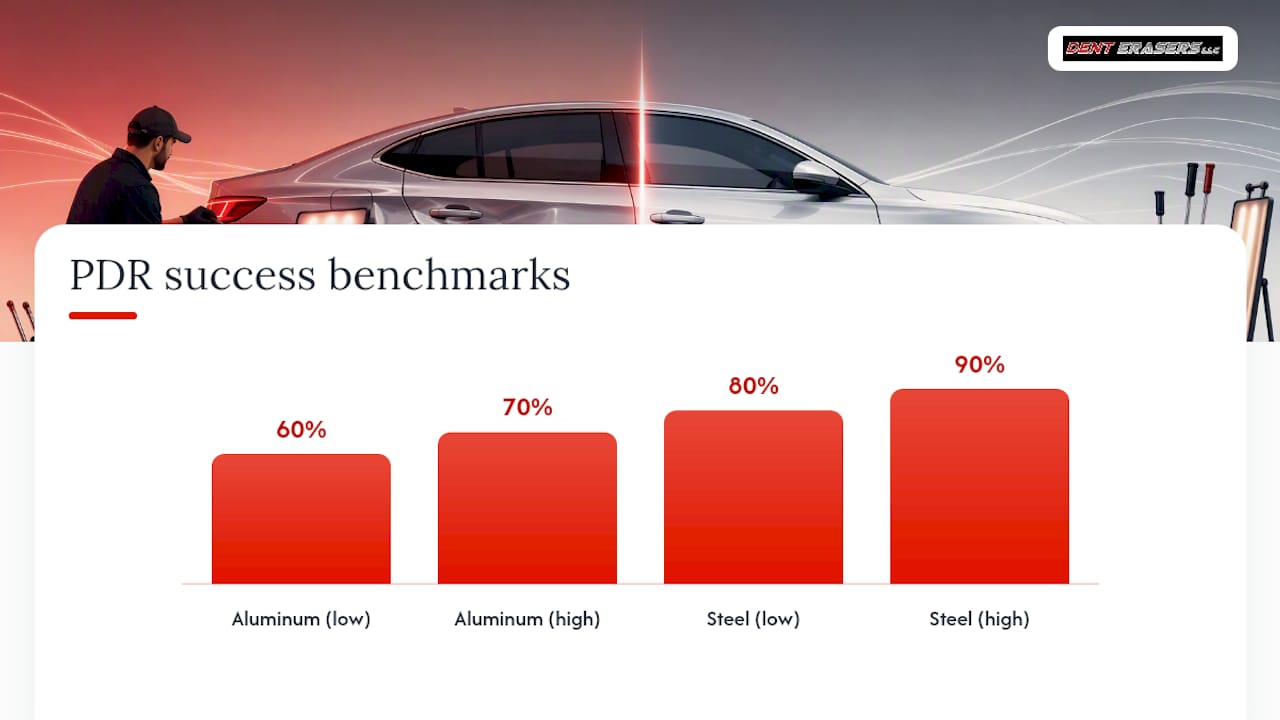
Work hardening is the core risk. Push an aluminum panel too many times in the same spot and the metal can crack or deform permanently instead of flattening. The ASA/NAPDRT study measured this directly, showing that aluminum’s altered response to force under repeated pressure is why success rates trail steel. Industry benchmarks put aluminum PDR success around 60% to 70% for certain dent types, compared to 80% to 90% for equivalent steel repairs.
Some damage simply isn’t a PDR candidate. Manufacturer guidance often prohibits straightening certain structural cast aluminum components altogether, requiring replacement instead of repair.
Watch for these warning signs during a repair:
- New high spots appearing where there weren’t any before
- Paint beginning to crack or craze under pressure
- A pass count that keeps climbing without visible progress
Any of those should stop the process immediately, not push through it.
What Aluminum PDR Costs, and How Insurance Handles It
The extra time, specialized tooling, and lower margin for error all add up, and that premium reflects real added labor, not padding. Our pricing guide breaks down how panel size and dent depth affect the final number.
If you’re filing a claim, a few things help:
- Most insurers cover PDR regardless of panel material, but confirm whether your policy restricts you to preferred-network shops before assuming an aluminum-capable technician outside that network qualifies.
- Ask for a written repairability assessment before approving work, not a verbal estimate.
- Get the scope of the repair in writing, including which panels are included and what happens if PDR proves unsuccessful mid-repair.
How To Vet A Technician Before You Book
A five-minute conversation before booking saves you from a panel that gets worse instead of better.
- Ask about aluminum-specific training. Certifications through I-CAR or the National PDR Alliance, or documented manufacturer-specific instruction, separate technicians who’ve adapted their technique from those still applying steel habits.
- Confirm experience with your exact make and model. A tech who’s worked on Ford F-150 hoods knows different alloy behavior than one who’s mostly handled Tesla panels, and mixed-material EVs raise their own access questions.
- Verify dedicated aluminum tools. Ask directly whether their aluminum tool set is isolated from steel tools to prevent galvanic contamination.
- Request photo documentation and a written repairability assessment. A technician confident in the outcome will document the dent before touching it, not just describe it verbally.
Our paintless dent removal checklist and our tips for choosing a PDR service both expand on these questions if you want a printable version before your appointment.
An Honest Take On Aluminum PDR From The Shop Floor
Most of the skepticism about aluminum PDR comes from technicians who learned on steel and never fully adjusted, then blamed the metal when their technique didn’t transfer. Aluminum isn’t harder to fix, it’s harder to fix carelessly. The margin for error is smaller, and that punishes shortcuts a lot faster than steel ever did.
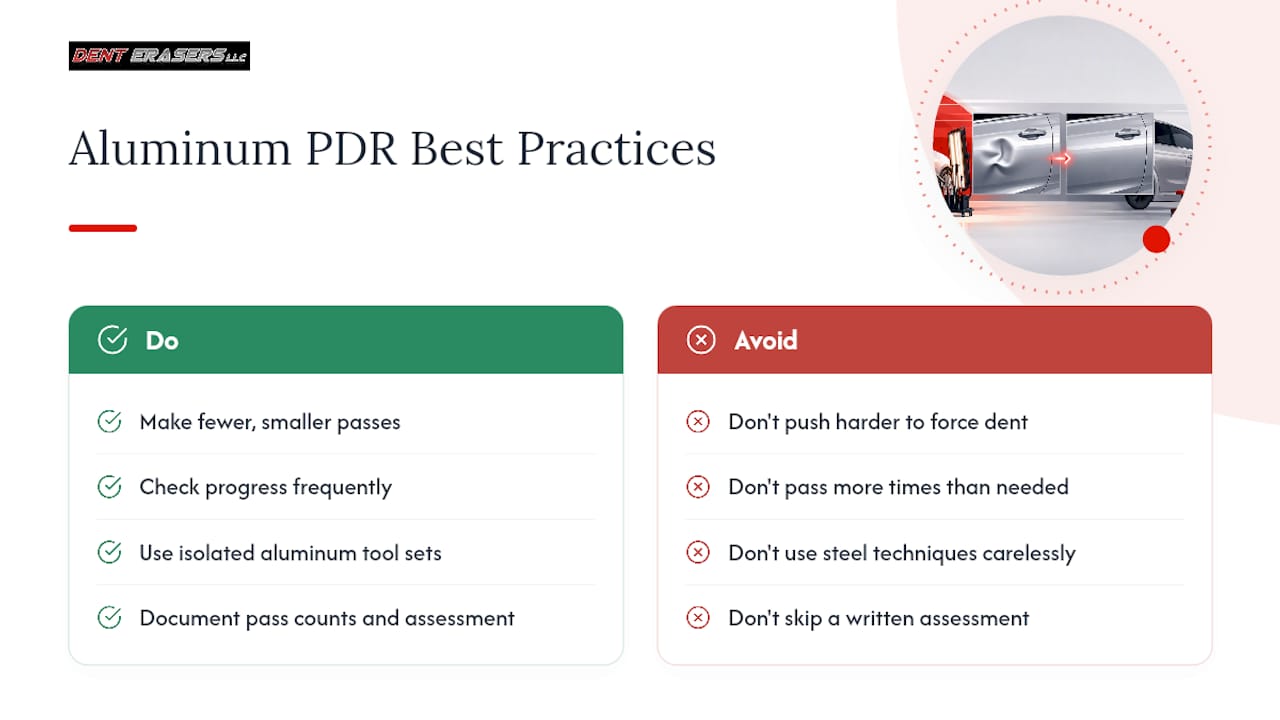
What gets underestimated is how much of this is really about restraint, not force. The instinct with a stubborn dent is to push harder and pass more times. On aluminum, that instinct is exactly what causes cracking and permanent deformation. The better technicians I’ve seen work this material do less per pass and check their progress more often, which looks slower from the outside but produces a cleaner result.
At Denterasersllc, our mobile technicians keep isolated aluminum tool sets, document pass counts, and give a written assessment before any pressure gets applied to a panel. That conservative approach costs a little more time up front. It’s the difference between a repair that holds and one that comes back worse in six months.
— Brian Blanc
Get An Honest Aluminum PDR Assessment At Your Location
If your hood, fender, or door has a dent you’re not sure about, the fastest way to know for certain beats guessing from a photo online. Denterasersllc sends aluminum-aware technicians directly to your location with isolated tool sets and no shop drop-off required, so your car never sits in a lot waiting its turn.

Booking starts with a straightforward inspection. Your technician examines the dent, tells you honestly whether it’s a strong PDR candidate or a poor one, and gives you transparent pricing before any work begins, no vague estimates and no pressure to commit on the spot. If the metal has already stretched or creased past what’s safely repairable, we’ll tell you that too, rather than attempting a fix that risks the panel. For preserving that factory finish after any repair, proper paint care matters just as much as the repair itself. Ready to find out what your aluminum panel actually needs? Book a mobile assessment with Denterasersllc and get a real answer at your driveway or office lot.
Sources
- The NAPDRT and ASA Aluminum Study… The Final Report! – NAPDRT
- PDR on Aluminum Vehicles: What Tesla and Ford Owners Need to Know | DentAdvisor
FAQ
Can PDR be done on aluminum?
Yes. Paintless dent repair works on many aluminum dents, particularly shallow dings and hail damage without sharp creases, though success depends heavily on dent type and technician skill.
What is the best dent puller for aluminum?
There’s no single “best” tool. Aluminum-specific glue-pulling kits and dedicated rod sets, kept isolated from steel tools, are standard for professional aluminum work, and the right choice depends on panel access and dent shape.
How do you get dents out of aluminum?
Technicians use behind-the-panel rod work when access allows, or glue pulling from the front when it doesn’t, followed by careful tap-downs. The key difference from steel is fewer passes and more controlled pressure to avoid work hardening.
What is the best thing to repair aluminum with?
For dents without creases or stretched metal, paintless dent repair using aluminum-specific tools is generally the best option, since it preserves the factory finish and avoids the added cost of bumper or panel replacement. Deeper or creased damage may require traditional bodywork instead.