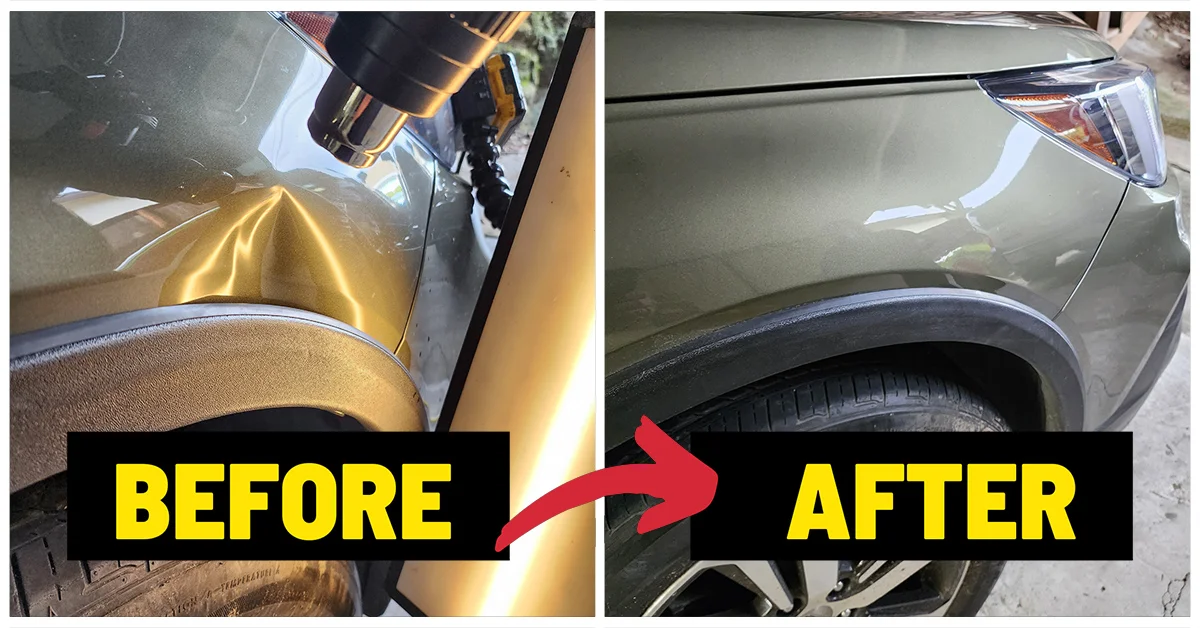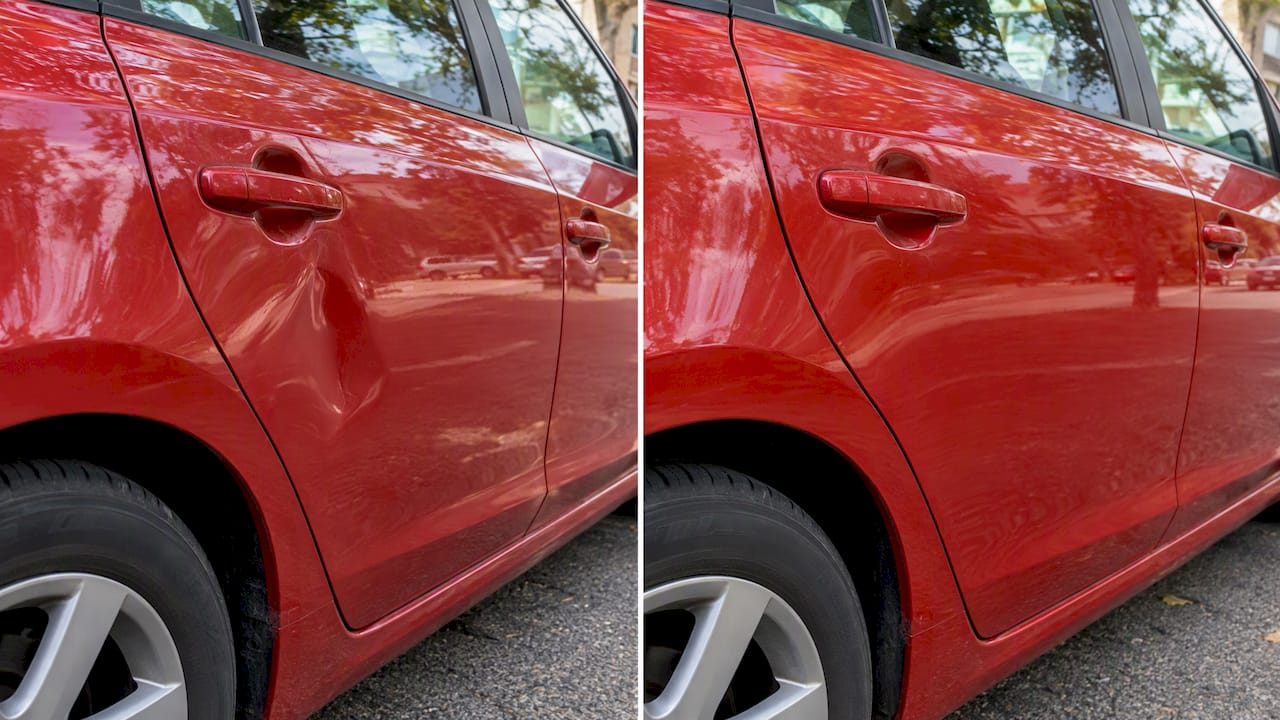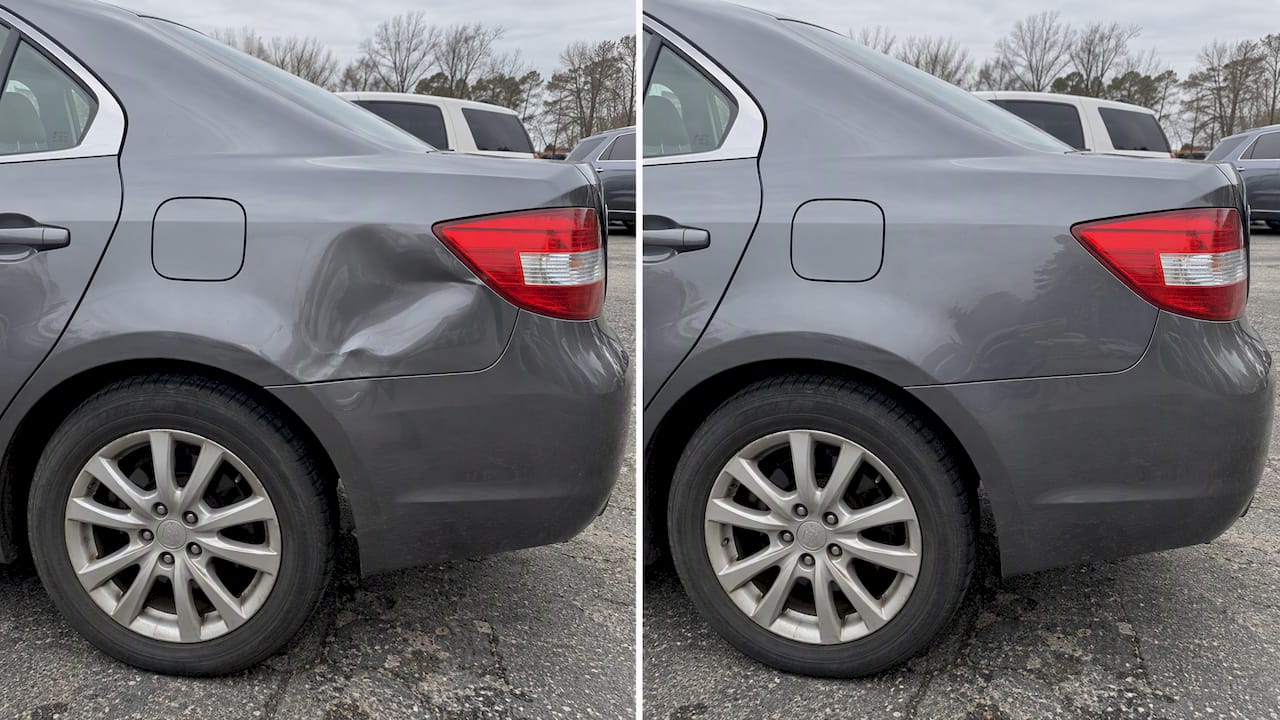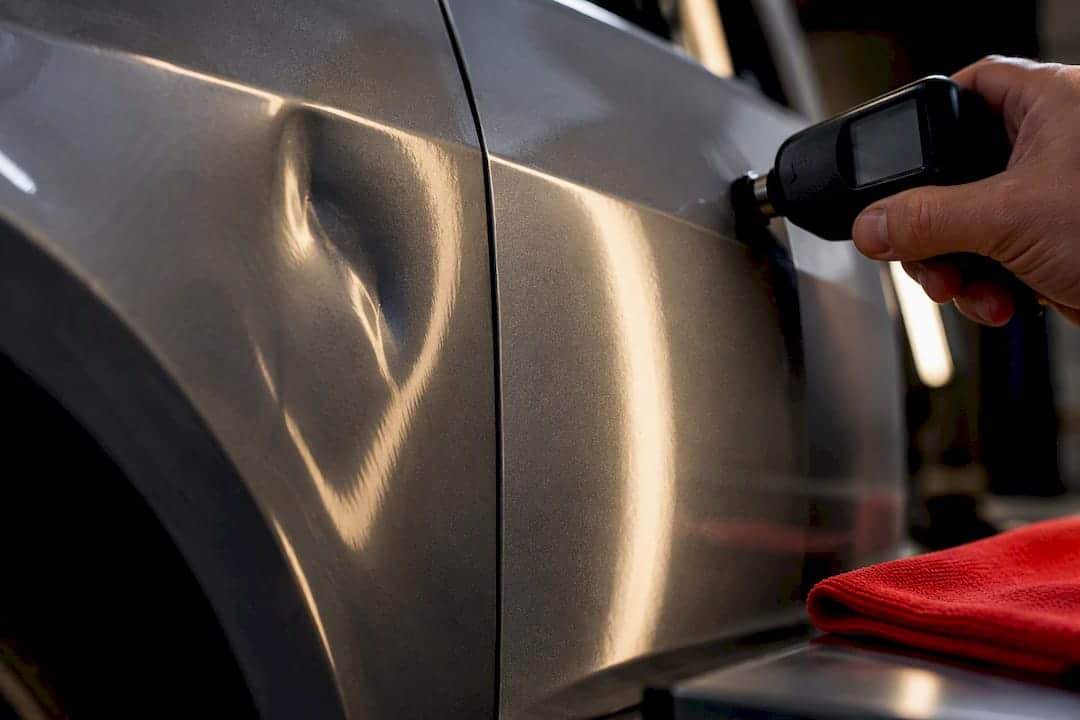
In most cases, no. Paintless dent repair needs flexible factory metal to move, and body filler is rigid and brittle, so pushing on a filled panel usually cracks the filler instead of smoothing the dent. Shallow filler and hybrid “push-to-prep” methods can sometimes salvage part of the repair, but that call needs a technician on-site with a paint-thickness gauge, not a guess.
TL;DR:
- Using a mil gauge before repair helps determine whether the panel has underlying filler or repaint, guiding whether paintless dent repair is feasible.
- A reading above 10 mils usually indicates prior filler or repaint, making PDR unlikely to succeed without risking damage.
- Push-to-prep combines traditional PDR with thin filler layers, reducing filler use and improving long-term finish durability on damage too severe for pure PDR.
- Damaged areas on body lines, edges, or aluminum panels with signs of prior repair typically require conventional or hybrid methods, not pure PDR.
- Attempting PDR on panels with filler often causes cracks, separation, or paint chipping, necessitating more costly full-body repairs later.
Table of Contents
- Why Body Filler Changes the Rules for PDR
- How Technicians Spot Prior Filler or Repaint
- What Goes Wrong When PDR Is Forced Over Filler
- The Hybrid Push-to-Prep Method
- What to Photograph and Ask Before Your Inspection
- How a Mobile Technician Actually Reads a Panel
- Get an On-Site Read Before You Decide
- Primary Sources and Technical Reads
- Sources
- FAQ
Why Body Filler Changes the Rules for PDR
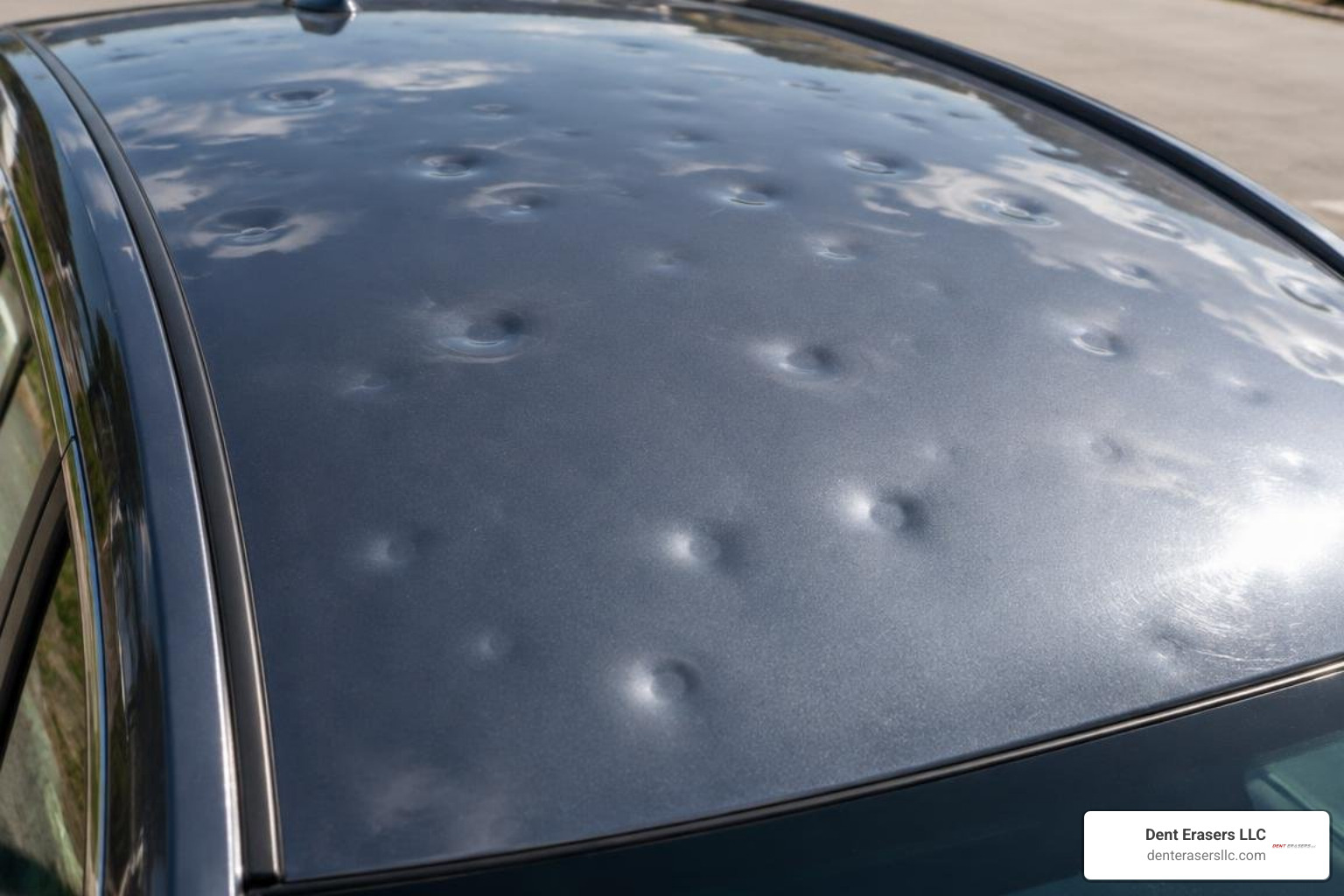
Paintless dent repair relies on reaching the back of a panel with rods, or pulling from the front with glue tabs, to gently reshape factory steel or aluminum back to its original contour. The process depends on intact factory paint and metal that hasn’t been stretched, which is why it works so well on hail damage and parking-lot dings.
Body filler breaks that chain. It’s a polyester compound sanded smooth and painted over, and it doesn’t stretch or compress the way metal does. Push on a panel with filler underneath, and the metal wants to flex while the filler above it stays rigid. The result is separation, cracking, or a paint bubble that wasn’t there before.
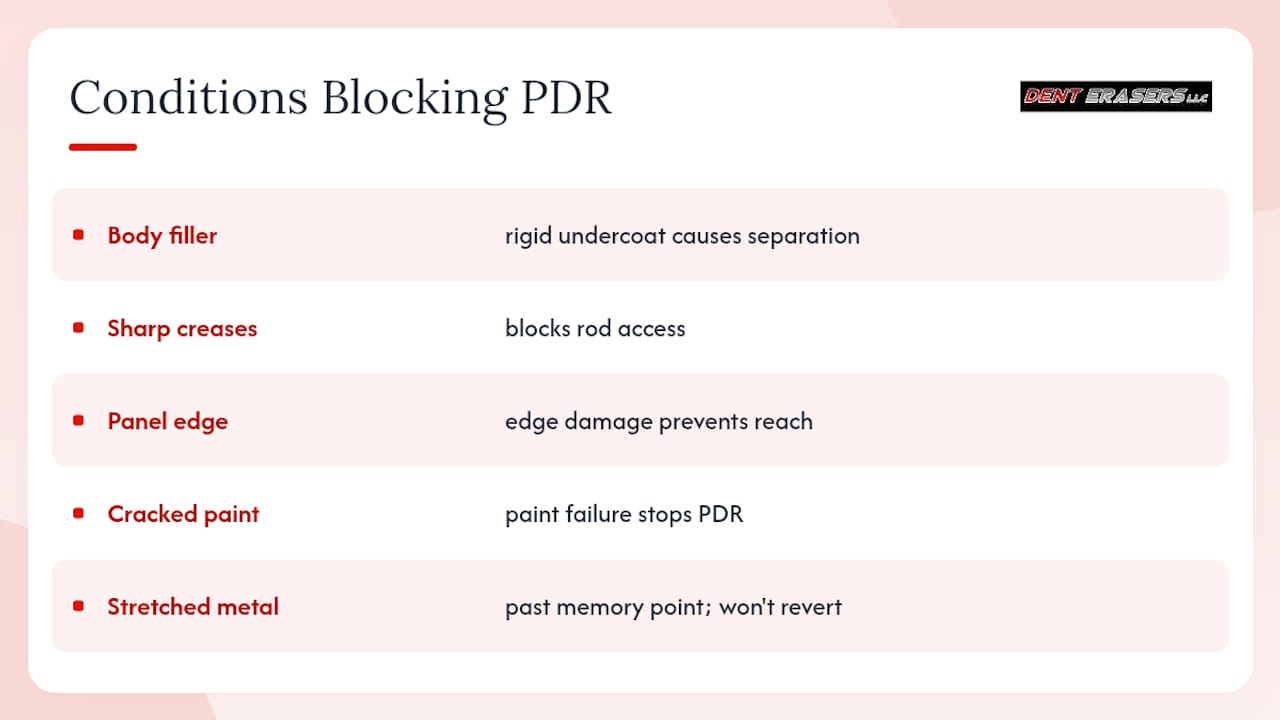
Filler isn’t the only wall a technician hits. Sharp creases, damage right at a panel edge, cracked paint, and metal that’s already been stretched past its “memory point” all block PDR the same way. Any one of these on its own can end a PDR attempt before it starts.
How Technicians Spot Prior Filler or Repaint
A trained eye starts before a single tool touches the panel. Overspray on trim, orange peel texture that doesn’t match the rest of the car, faint sanding marks, or a panel that feels slightly different under your palm than its neighbor are all giveaways that someone has been there before.
The paint-thickness gauge, sometimes called a mil gauge, takes the guesswork out. Factory paint runs in a fairly narrow band, and anything meaningfully thicker points to filler or a repaint hiding underneath.
| Reading | What it usually means |
|---|---|
| 8.0 to 10.0 mils | Original factory finish |
| 8.0 to 10.0 mils | Possible light touch-up or clear coat variance |
| Above 10.0 mils | Likely body filler or a prior repaint |
Objective mil-gauge readings remove the ambiguity that comes with eyeballing a panel alone, which is why the gauge goes on the car before any decision gets made. A technician who skips this step is guessing, not diagnosing.
Beyond the gauge, a firmness test tells its own story. Tapping a factory panel produces a certain resonance; tapping over filler sounds duller and feels stiffer under light pressure. Removing a piece of trim or a wheel liner near the damage often exposes backside access and confirms what the gauge already suggested.
A few situations send a tech straight to conventional repair without attempting PDR at all:
- Mil readings consistently above 8.0 to 10.0 across the damaged area
- Visible cracking or bubbling in the existing clear coat
- Damage sitting on a body line, edge, or crease
- Aluminum panels showing signs of prior repair, since aluminum tolerates far less stretching than steel
What Goes Wrong When PDR Is Forced Over Filler
Pushing on a filled panel without knowing it’s filled is how a simple dent turns into an expensive one. The filler doesn’t bend with the metal beneath it, so it separates from the surface, cracks in a spiderweb pattern, or pops off the panel in small chunks, taking the paint with it.
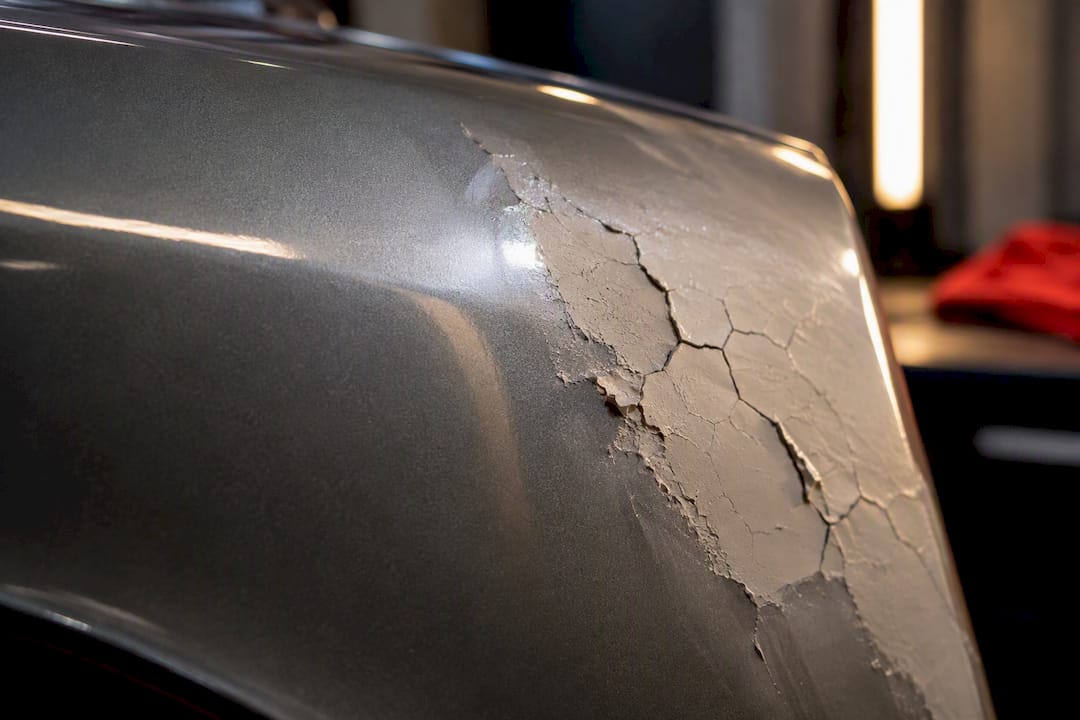
The panel usually ends up worse than when it arrived. An undetected filler layer that fails during a PDR attempt typically forces a full sand, fill, and paint repair, which costs more and takes longer than if the vehicle had gone straight to conventional bodywork.
The damage isn’t always visible from the outside, either. A few things worth knowing before anyone reaches for a rod:
- Cracked filler can hide micro-fractures that show up as paint imperfections weeks later
- Access points and trim clips removed during a failed attempt add labor to the eventual conventional repair
- A rushed PDR attempt can stretch the metal further, narrowing future repair options
Pro Tip: If a technician skips the mil gauge and goes straight for the tools, that’s your cue to ask why. A five-minute reading up front saves hours of rework later.
The Hybrid Push-to-Prep Method
Push-to-prep splits the difference between full PDR and starting over with a blank panel. A technician uses standard PDR tools, rods or glue-pull, to pull out most of the deformation first, then applies a thin layer of filler only where the metal can’t be brought back flush, and finishes with paint on that section.
This matters because reducing the amount of filler used tends to improve how long the finish holds up, since a thin skim coat shrinks and cracks less over time than a thick one packed into an unworked dent. Filling an entire dent from scratch means more material fighting against panel flex for years to come. Pulling the bulk of the damage out first and skimming a small area gives the repair a better shot at aging like factory metal.
Push-to-prep tends to make sense for damage that’s too deep or creased for pure PDR but not severe enough to justify a full conventional repair. Expect it to run longer than a straightforward PDR job, since paint needs curing time, but usually faster than a complete refinish. For a broader look at where each method fits, our guide to body panel repair options breaks down the full range of choices.
What to Photograph and Ask Before Your Inspection
A little prep before the technician arrives saves everyone time and gets you a more accurate quote on the spot.
- Photograph the dent itself from three angles, including one with a coin or ruler in frame for scale.
- Get close-up shots of the panel edges and door jambs near the damage, where prior repairs often show first.
- Photograph any area where the paint texture, sheen, or color looks slightly different from the rest of the panel.
- Note whether the vehicle has ever been in a collision or had bodywork done, even minor.
When the technician arrives, ask for the mil-gauge reading on the affected panel and a nearby unaffected one for comparison. Ask whether push-to-prep is available if pure PDR isn’t an option, and ask what warranty applies to the finished work.
If a quote includes both a PDR line and a conventional repair line, that usually means the damage spans more than one condition. Part of the panel might qualify for paintless work while a creased section or a spot with detected filler needs paint. Budget-wise, expect straightforward PDR to land on the lower end and any hybrid or paint work to add both cost and a day or more of turnaround.
Pro Tip: Ask to see the mil-gauge reading yourself. A tech confident in the diagnosis will show you the number, not just tell you the verdict.
How a Mobile Technician Actually Reads a Panel
On-site, the process runs the same sequence every time: look, measure, test access, then decide. A visual pass for overspray and orange peel comes first, followed by mil-gauge readings across the damaged area and a clean section for comparison. If readings suggest filler, we’ll try to remove a nearby trim piece or liner to check backside access before ruling PDR in or out entirely.
Where a mil gauge alone doesn’t settle it, sounding tests and a careful look at panel texture fill the gap, though a gauge reading is always the more reliable call. Once a decision is made, mobile techs typically document it with photos and a short written note explaining why a hybrid or conventional path was chosen, which matters if an insurer is involved. That paper trail protects the owner as much as it protects the shop.
— Brian Blanc
Get an On-Site Read Before You Decide
Some dent repair providers use this kind of judgment call, bringing a mil gauge to the customer’s location to provide a real answer before any tool touches the panel.

An on-site inspection covers a mil-gauge reading, a visual and firmness check, and photos of anything that points to prior filler or repaint. If the panel qualifies for standard paintless work, our Minor Dent Repair or Large Dent Repair service handles it on the spot. If the damage calls for push-to-prep or a section needs paint, our Auto Body & Collision Repair team picks up where PDR leaves off, so you’re not bouncing between two shops for one dent. Bumper damage gets its own path through our Plastic Bumper Repair service when glue-pull work alone won’t cut it.
Schedule a mobile inspection through Denterasers LLC and get a straight answer on your panel, backed by a gauge reading instead of a guess.
Primary Sources and Technical Reads
For readers who want to dig further into the technical side: PDR limitations and mil-gauge thresholds, how paintless dent repair works mechanically, and hybrid repair methods and filler reduction all back the guidance above. Detailing pros covering surface prep, like this pre-wash and swirl-mark guide, offer a useful companion look at paint condition assessment.
Sources
- Hybrid approach reduces use of filler and improves finish durability (PMC article)
- PDR Limitations: Technical Analysis of When Paintless Dent Repair Won’t Work | DentAdvisor
- What Is Paintless Dent Repair (PDR)? Process, Benefits & … | Car-O-Liner
FAQ
Can PDR Be Done on a Body Line?
Body line damage is one of the harder cases for PDR because the crease changes how the metal wants to move. Some body-line dents respond to PDR when the metal hasn’t stretched and paint is intact, but sharp creases or stretched aluminum along the line often require conventional repair instead.
Can PDR Be Done on Plastic?
Yes, in limited cases. Glue-pull techniques and controlled heat can work on plastic bumpers when the paint isn’t cracked, but torn or cracked plastic needs conventional bumper repair or replacement.
What Can PDR Not Fix?
PDR generally can’t fix panels with prior body filler, sharp creases, damage at a panel edge, or paint that’s already cracked or peeling. Stretched metal that’s lost its “memory” to spring back into shape is another common limit, regardless of panel type.
What Does PDR Mean in Auto Body Repair?
PDR stands for paintless dent repair, a technique that reshapes dented metal from behind or with glue-pull tools without sanding, filling, or repainting. It works best on shallow, unfilled dents with intact factory paint, which is why a mil-gauge check matters before booking one.