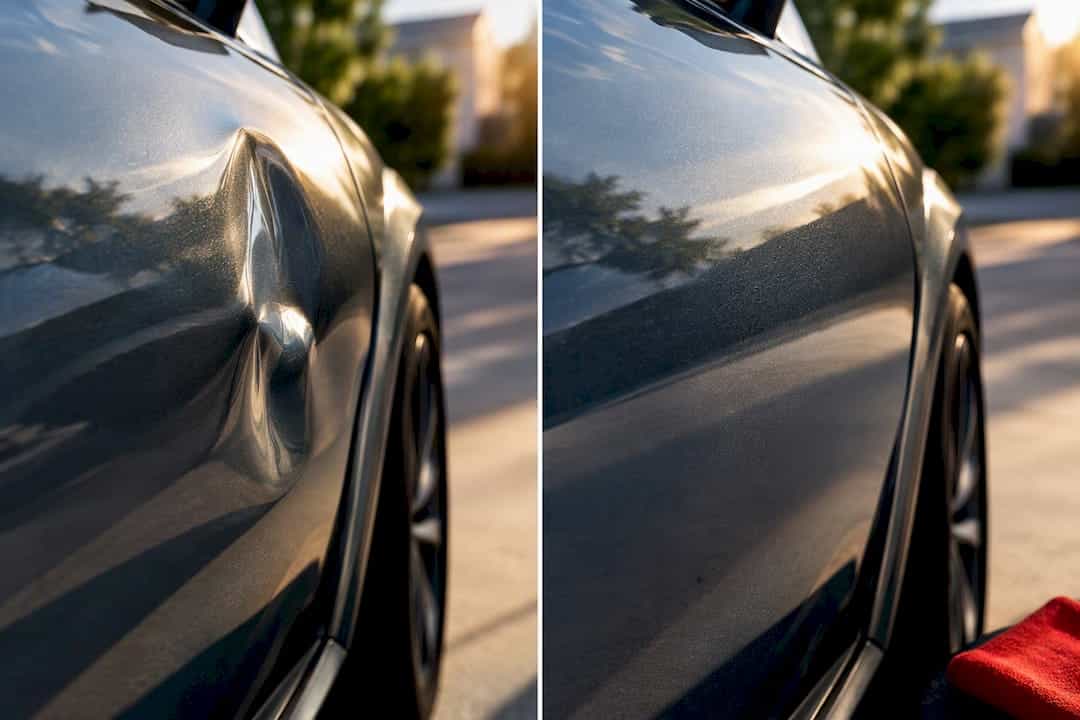
Yes, paintless dent repair works safely on custom and specialty finishes when the paint and clear coat are intact. The main exception is a panel that has cracked paint, chips, flaking, or a prior repaint job hiding beneath the surface. Technique choice and any ceramic coating on top also change the risk level, which is why the right assessment matters more than the paint color itself.
TL;DR:
- Push-from-behind techniques are safest for custom finishes since they avoid surface contact and risk less damage to intact paint coats.
- Glue-pull methods carry higher risks on aged, repainted, or specialty finishes due to stress on the paint bond and potential for lifting or cracking.
- Inspection of the paint surface prior to repair is crucial; visible cracks, prior repaint signs, or coatings like matte and ceramic increase the likelihood of needing a body shop instead.
- Metal stretching, sharp creases, or damaged coatings suggest that traditional repainting is the safer option over PDR.
- Proper documentation and close communication about the finish condition can help preserve the value and integrity of custom and specialty-painted vehicles.
Table of Contents
- What PDR on Custom Paint Actually Requires
- How Technicians Decide If PDR Is Safe for Your Finish
- Where PDR Can Go Wrong on Specialty Finishes
- Getting Your Car Ready Before and After PDR
- Field Perspective: What Mobile PDR Looks Like on High-End Finishes
- The Practical Rule of Thumb
- How Our Mobile PDR Service Handles Custom Paint
- Sources
- FAQ
What PDR on Custom Paint Actually Requires
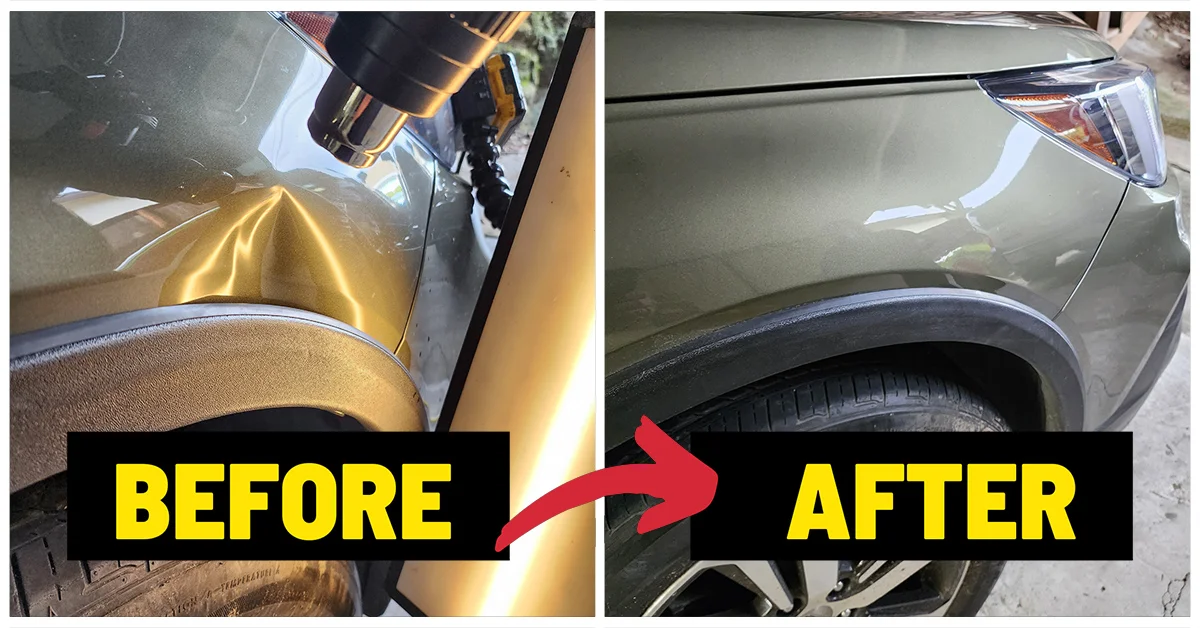
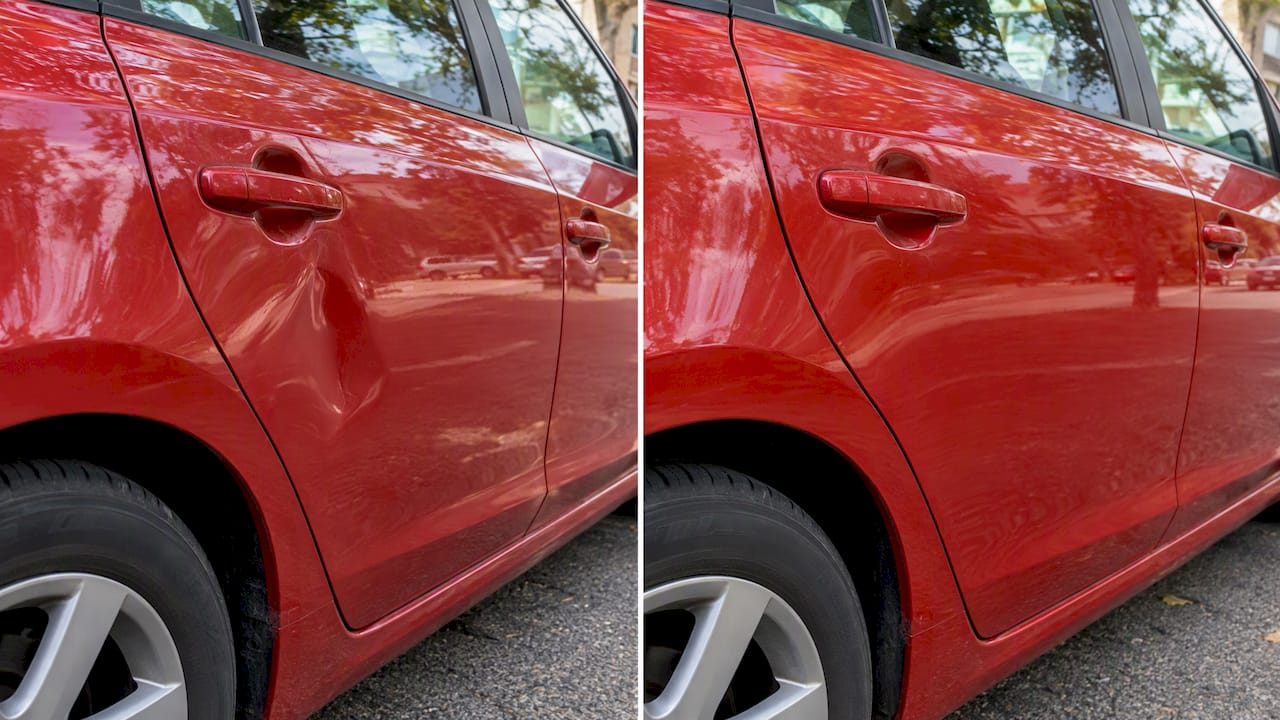
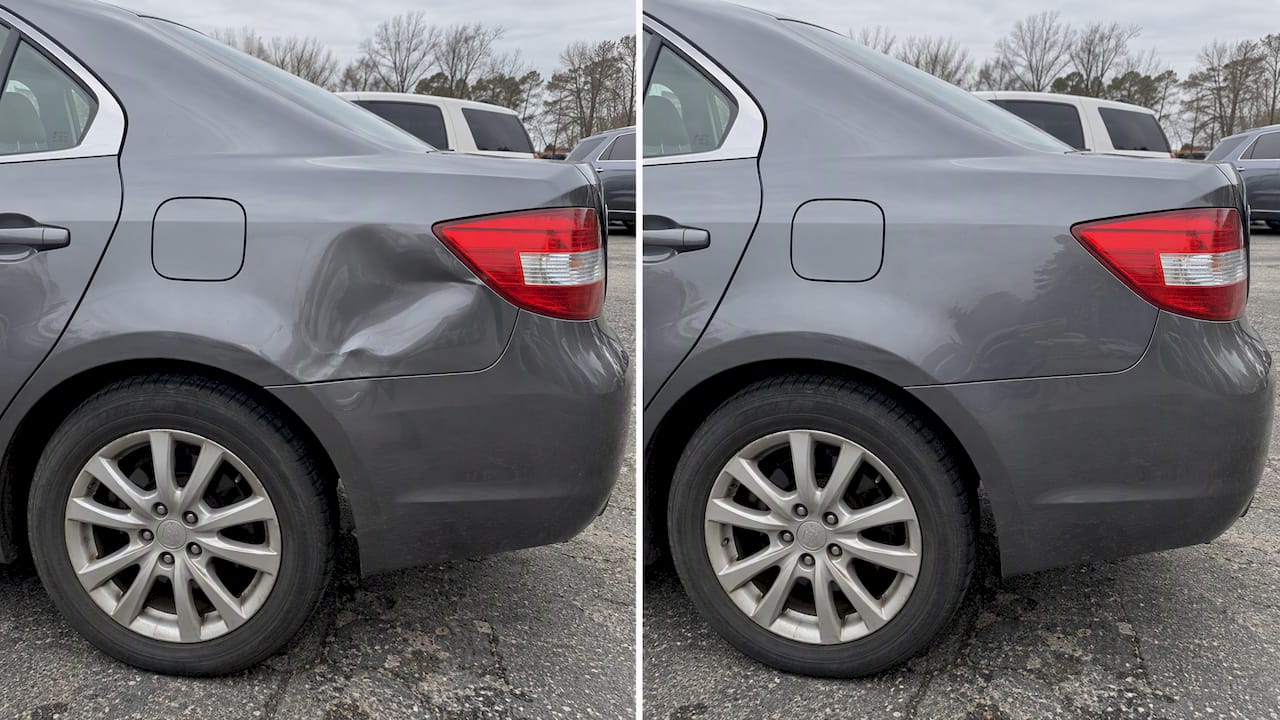
PDR works because it manipulates metal from behind or with gentle external tension, never sanding, filling, or respraying the surface. As long as the paint stays intact on the panel, technicians can massage the metal back to its original shape and leave the factory finish untouched, whether that panel is steel or aluminum. That distinction matters more for custom paint than for factory white or black, because a respray on a candy red or three-stage pearl finish rarely matches the original coat, no matter how skilled the shop.
Two techniques dominate the trade, and each carries a different relationship with your paint.
- Push-from-behind: Technicians access the backside of the panel through wheel wells, trunk gaps, or headliner removal, then use specialized rods to push the low point back to shape. This method touches nothing on the paint side and carries the lowest risk to any finish, custom or factory.
- Glue-pull repair: When there’s no access from behind, technicians glue a tab to the paint surface and pull the dent out from the front. This works well on hard-to-reach crowns and body lines, but it puts direct stress on the paint bond, and non-factory or aged finishes are more prone to lifting during the pull.
Factory paint gets baked on in a climate-controlled booth at high temperatures, which creates a harder, more elastic bond than most shop repaints achieve at lower cure temperatures. That’s part of why glue-pull methods carry more risk on a car that’s already had bodywork. Some technicians use a “push to paint” approach, getting the metal as close to true as possible with rodwork, then leaving only a thin skim coat for a body shop to finish, which reduces how much repainting is needed later.
How Technicians Decide If PDR Is Safe for Your Finish
A good technician doesn’t guess. Before touching your panel, they run through a short mental checklist that separates a safe PDR candidate from one that needs a body shop instead.
- Inspect the paint surface closely. Any cracking, chipping, flaking, or spider-webbing around the dent site signals the paint has already lost flexibility, and pushing or pulling metal underneath it risks making that damage worse.
- Check for signs of prior repaint. Overspray on trim, a slightly different texture, or paint thickness readings that don’t match the rest of the panel all suggest aftermarket paintwork that may not hold up the same way factory paint does.
- Evaluate the dent shape and access. Shallow, rounded dents on accessible panels are ideal. Sharp creases, dents near edges, or damage requiring glue-pull on a delicate finish need more caution.
- Identify any coatings or wraps. Ceramic coatings, vinyl wraps, and matte finishes all change how the surface handles the pressure and heat of a repair, so the technician needs to know what’s actually on the car before starting.
- Weigh the vehicle’s value and finish rarity. A one-off custom paint job on a low-mileage classic deserves a more conservative approach than a daily driver with a common factory color.
Pro Tip: Ask your technician to test a small, hidden area first, like inside a door jamb or under a trim piece, if you’re worried about how your specific coating will respond to heat or pressure.
Where PDR Can Go Wrong on Specialty Finishes
Most PDR repairs finish without incident, but a few failure modes show up more often on custom paint than on stock finishes.
- Paint pull during glue-tab removal. Aged clear coat or aftermarket repaints can separate from the base layer when the glue tab comes off, especially if the bond was already weakened by sun exposure or a lower-quality respray.
- Heat and overworking causing cracking. Techs sometimes use heat guns to make metal more workable, but matte and metallic finishes with heavier pigment loads can craze or discolor if the heat runs too high or too long.
- Stretched metal and hemmed edges resisting repair. Sharp creases where the metal has actually stretched, or dents along a hemmed panel edge, often can’t return to their original contour no matter how skilled the push, and forcing it risks paint damage on any finish.
- Coating incompatibility. Matte and specialty coatings rely on a different surface texture than gloss paint, and aggressive tooling near the edges of a matte panel can leave a shine that never fully blends back in.
When a dent shows metal stretch, a sharp crease, or paint that’s already compromised, a conventional body shop with color-matching capability becomes the more reliable route, even though it costs more and takes the car out of your hands longer.
Getting Your Car Ready Before and After PDR
A little prep work goes a long way toward protecting a custom finish and giving your technician the full picture.
- Document the finish before the visit. Take clear, well-lit photos of the damaged panel and the surrounding area, and pull together any receipts for ceramic coating, vinyl work, or past paint jobs.
- Tell the technician everything about the paint. Mention if the car has ever been repainted, wrapped, or coated, even if it looks factory. That single detail changes which technique they’ll choose.
- Skip heavy detailing right before the appointment. A basic wash is fine, but hold off on fresh wax or sealant application until after the repair, since some techs prefer a bare surface for tab adhesion.
- Inspect the repair immediately afterward. Check the panel in direct sunlight for any texture changes, then keep your before-and-after photos on file. That record protects your resale value and gives you documentation if a coating ever needs reapplication.
Pro Tip: Keep your documentation even if the repair goes perfectly. Whether a PDR job shows up on a CARFAX report depends on whether it was filed through insurance, and your own photo record settles any question a future buyer might raise.
Field Perspective: What Mobile PDR Looks Like on High-End Finishes
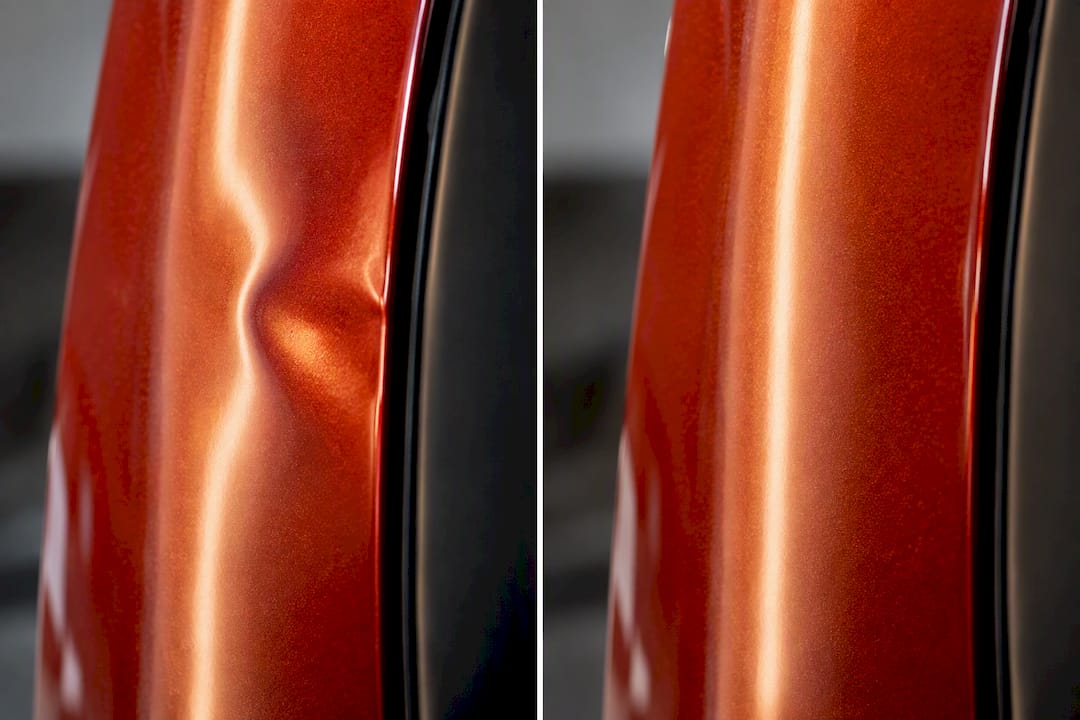
Brian Blanc has spent years working directly on custom-painted and specialty vehicles, from ceramic-coated daily drivers to vintage cars with decades-old paint that needs a careful hand. That hands-on background shapes how Denterasersllc approaches every custom-finish job that comes through the door, or more accurately, the driveway.
A typical mobile visit starts with a close inspection of the panel and the surrounding finish, checking for the same red flags any qualified technician should look for: cracking, prior repaint evidence, coating type, and dent access. Most straightforward dents get resolved in a single onsite visit, often within a couple of hours depending on panel access and dent complexity.
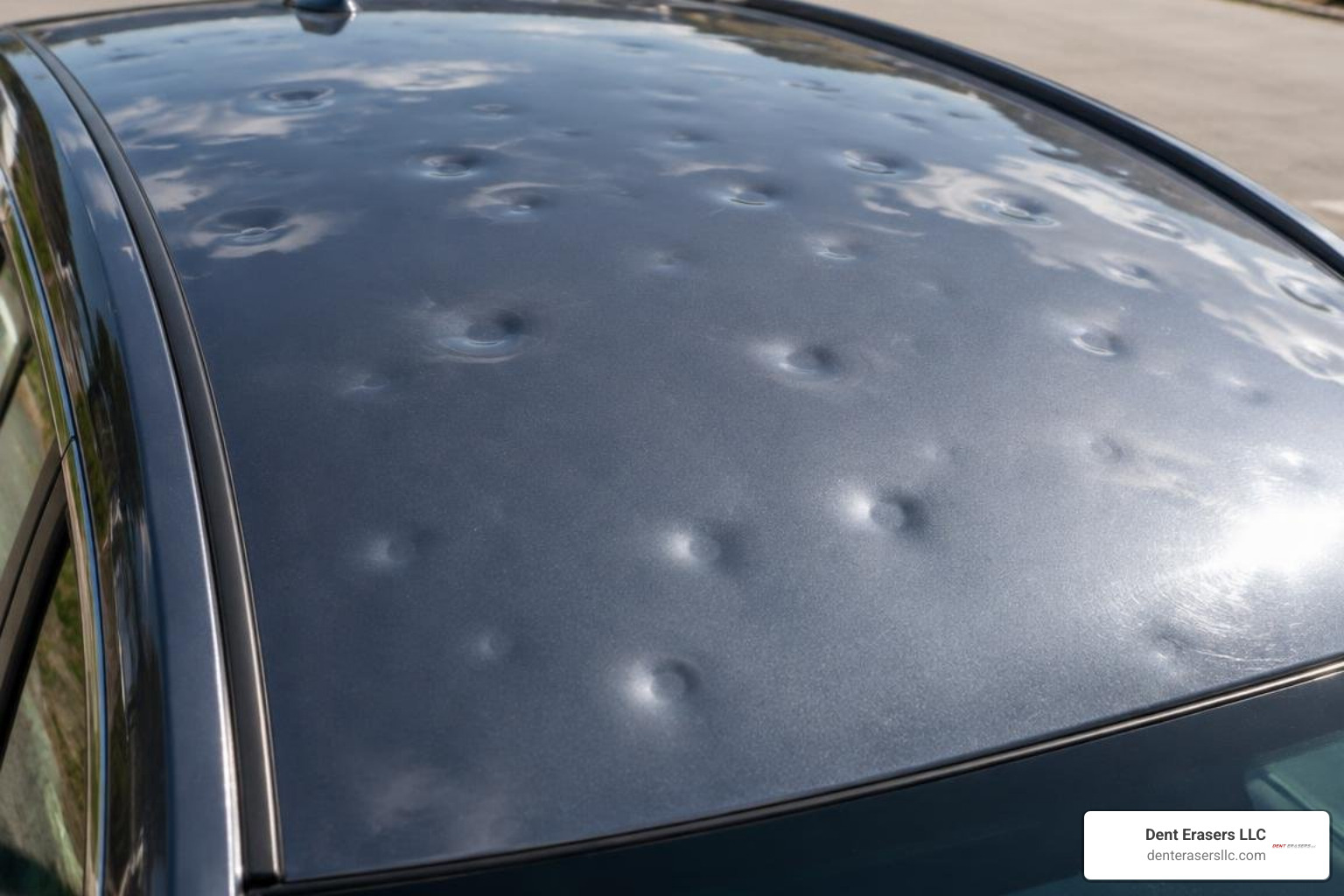
- Shallow door dings and hail damage on ceramic-coated panels typically respond well to push-from-behind work with no coating disruption.
- Sharp creases or dents on previously repaired panels sometimes require a hybrid approach or a referral toward conventional bodywork.
- Documentation, including before and after photos, stays part of the process on every job, giving owners a record for their own files.
The Practical Rule of Thumb
If your paint is intact and the dent is a clean, shallow depression, PDR almost always beats a repaint for preserving a custom finish, since no shop can replicate a factory bake or an original custom paint job exactly. Once the paint has cracked, the panel shows prior repair work, or the metal has genuinely stretched, accept that a body shop repaint is the safer, more honest path. When in doubt, get a hands-on inspection from a PDR specialist before assuming either outcome.
— Brian Blanc
How Our Mobile PDR Service Handles Custom Paint
Mobile paintless dent repair services treat custom paint carefully without requiring shop visits or repainting. Every mobile appointment starts with the same panel inspection described above: checking for cracks, prior repairs, and coating type before a single tool touches your car, and documenting the finish with photos so you have a record either way.
Our paintless dent repair and luxury vehicle services cover everything from a single door ding to larger panel damage, with dedicated options for large dent repair and minor dent repair depending on what you’re dealing with. If your car has ceramic coating, a vinyl wrap, or a custom repaint you want to protect, mention it when you book so the technician can consider it before starting. Ready to get a panel looked at? Head to our mobile dent repair page to check availability and get a quote for your specific vehicle.
Sources
This guide draws on Wikipedia’s overview of paintless dent repair for technique fundamentals, Auto Training’s breakdown of glue-pull methods for paint-risk detail, Dent Press’s cost analysis for value comparisons, and Dingz Happen’s CARFAX explainer for vehicle-history questions.
FAQ
Can I Do PDR on My Own?
Attempting PDR yourself risks pushing metal too far, cracking paint, or creating a crease that a professional can no longer fix without a repaint. The tools and pressure control required take real practice, and a custom finish leaves even less room for trial and error.
Does PDR Show Up on Carfax?
Whether a PDR repair appears on a CARFAX report depends on whether the work went through an insurance claim or was reported by a facility. Cash-paid mobile repairs like the ones Denterasersllc performs often don’t generate a CARFAX entry at all.
What Can PDR Not Fix?
PDR can’t reliably repair cracked paint, panels with stretched metal, sharp creases, or damage along hemmed edges, since the metal itself has lost its original memory in those cases. Once paint has already failed or a panel needed prior bodywork, a conventional shop repaint is usually the safer option.
How Much Does PDR Typically Cost?
Pricing depends on dent size and location, but industry examples show small door dings often starting around $125 to $150, a fraction of typical body-shop repaint costs. Denterasersllc’s paintless dent repair runs $150 to $500 for standard jobs, with minor dent repair priced at $100 to $500 and large dent repair priced at $150 to $1500, both listed on our service pages.