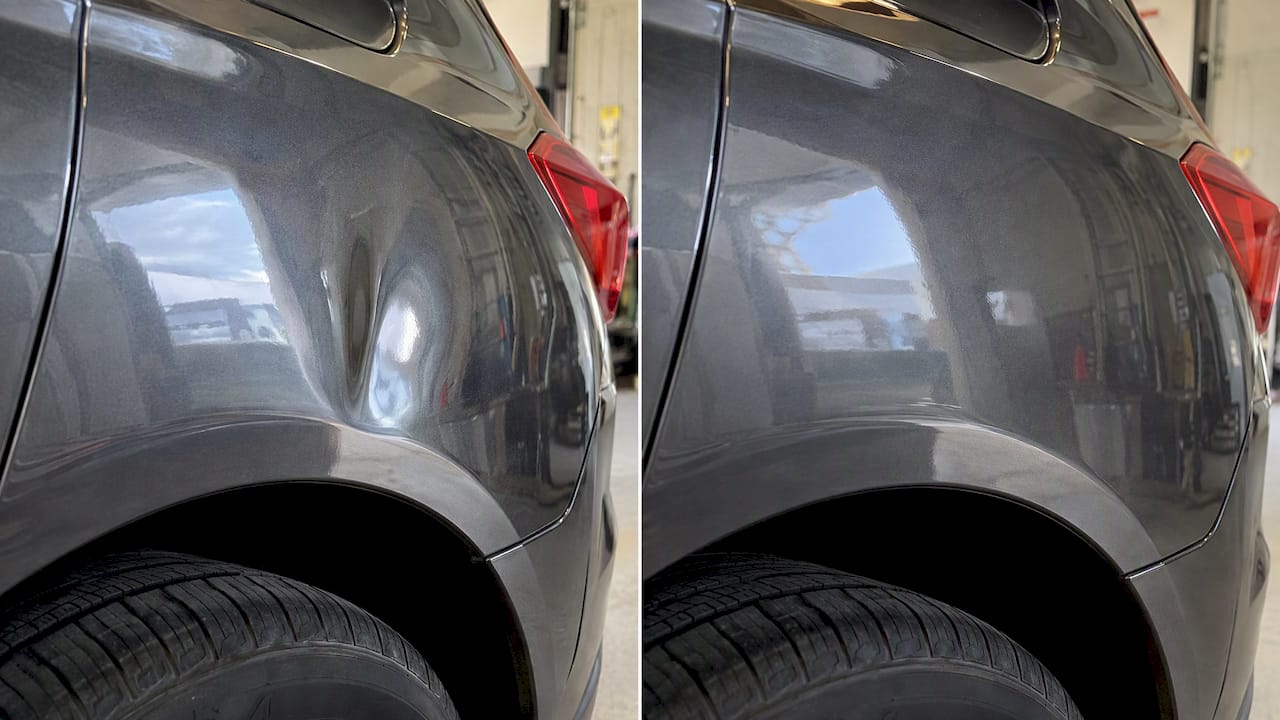
Paintless dent repair works best for shallow dings, door dents, and hail damage where the paint is still intact, saving you time and money while keeping your factory finish. It is not a fix for cracked paint, sharp creases, or deeply stretched metal, which usually need conventional bodywork. The checklist below will help you figure out which category your dent falls into.
TL;DR:
- About 95% of minor dents qualify for PDR, but cracked paint, sharp creases, stretched metal, or blocked access usually call for conventional bodywork.
- Shallow dents under about two inches across, with intact paint and backside access, are strong candidates; tight seams and reinforced panels can block repairs.
- A single minor dent often takes under an hour once the technician can reach the panel, while hail clusters can require a full day.
- Because no universal licensing standard exists, ask technicians for photos of similar repairs, references, a written guarantee, and an explanation of panel access.
Table of Contents
- What paintless dent repair is and how it works
- Pros: clear advantages vehicle owners gain from PDR
- Cons and limitations: where PDR may not be appropriate
- Cost and turnaround: realistic price and time guidance
- Is PDR right for your vehicle? a quick decision checklist
- How to find and evaluate a qualified PDR technician
- Denterasers LLC: relevant experience and service highlights
- Author’s perspective: practical recommendation
- Get a free mobile PDR quote from Denterasers LLC
- FAQ
- Sources
What paintless dent repair is and how it works
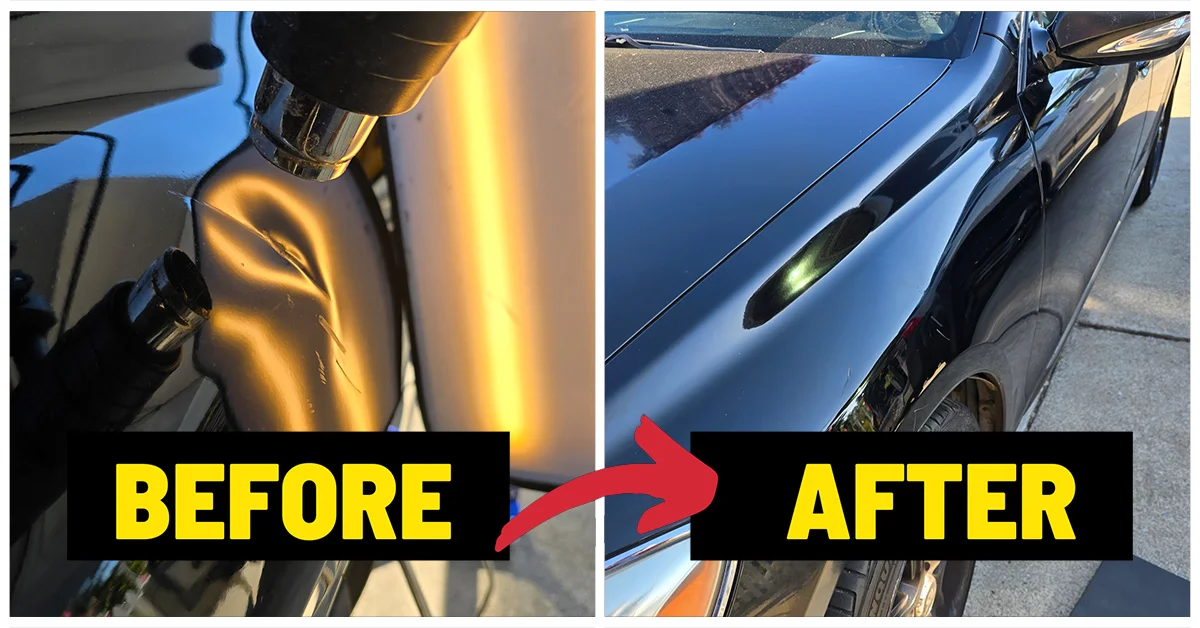
We think of paintless dent repair as a craft more than a shortcut. A trained technician accesses the back of the damaged panel and uses specialized rods, picks, and glue-pull tools to push and massage the metal back toward its original shape. Because the repair works from behind the panel, the factory paint on the outside never gets touched, sanded, or refinished. A technical overview of the process describes this as restructuring the panel from behind, which is why PDR avoids fillers, primer, and repainting for many minor dents.
That access requirement shapes what PDR can and cannot do:
- Technicians need a way to reach the backside of the panel, often through wheel wells, trunk openings, or by removing interior trim.
- Panels with heavy internal bracing, seam welds, or limited clearance can block tool access entirely.
- There is no universal licensing or certification requirement for PDR technicians, which the National Alliance of Paintless Dent Repair Technicians notes as a reason outcomes vary so much between shops.
That last point matters more than most buyers realize. Skill, not equipment, is the real variable in whether a repair looks invisible or leaves a trace.
Pros: clear advantages vehicle owners gain from PDR
The appeal of PDR comes down to five practical wins, and most of them trace back to one fact: nothing gets replaced or repainted.
- You skip the cost of paint, primer, body filler, and replacement parts since the repair reshapes the existing metal.
- A single dent can often be finished in under an hour, while multi-dent or hail jobs are commonly completed within a day.
- Keeping the factory paint intact avoids the mismatch risk that comes with aftermarket resprays, which can matter at resale.
- PDR produces no solvent waste, no paint overspray, and no fillers headed for a landfill.
- Insurers frequently favor PDR when the dent qualifies, since it is typically cheaper and faster to approve than a full bodywork claim.
PDR repairs often cost significantly less than conventional dent repair, according to trade guidance from NAPDRT, which also notes many dents are fixed in less than an hour. That gap is the main reason PDR has become the default first option for dealerships prepping lease returns and for owners who just want a ding gone without a week in a body shop.
The eco angle is a quieter benefit but a real one. Traditional bodywork involves sanding down old paint, applying new layers, and disposing of the chemical byproducts. PDR sidesteps all of it, which is part of why we built our own process around onsite, paint-preserving repairs rather than resprays.
Cons and limitations: where PDR may not be appropriate
PDR is not a universal fix, and knowing where it stops saves you a wasted estimate. The technique depends entirely on the metal still being flexible enough to move and the paint still being intact enough to flex with it.
- Cracked, peeled, or chipped paint over a dent usually rules out PDR, since the metal has likely stretched past its elastic limit.
- Very deep dents, sharp creases, dents on reinforced panels, or dents near body seams often have limited or no backside access.
- Metal that has been stretched beyond its memory will not spring back fully, leaving a shallow remnant even after skilled work.
- Dents close to edges, trim, or complex curves can be harder to blend smoothly without creating a visible low spot.
According to NAPDRT, roughly 95% of minor dents are repairable with PDR, which means a small share, usually the deepest or most awkwardly placed, genuinely need conventional repair instead. The other real risk is workmanship. An inexperienced technician working a dent without the right sequence can leave ripples, high spots, or a slightly uneven surface that catches light differently than the surrounding panel. Because there are no universal licensing standards for PDR, that risk falls on the technician’s actual experience rather than any guaranteed baseline.
Pro Tip: Run your hand flat across a repaired panel at an angle to the light. Waves or high spots are easier to feel than to see.
When paint is compromised or metal has lost its memory, conventional bodywork, which includes filling, sanding, and repainting, becomes the only realistic path to a clean result.
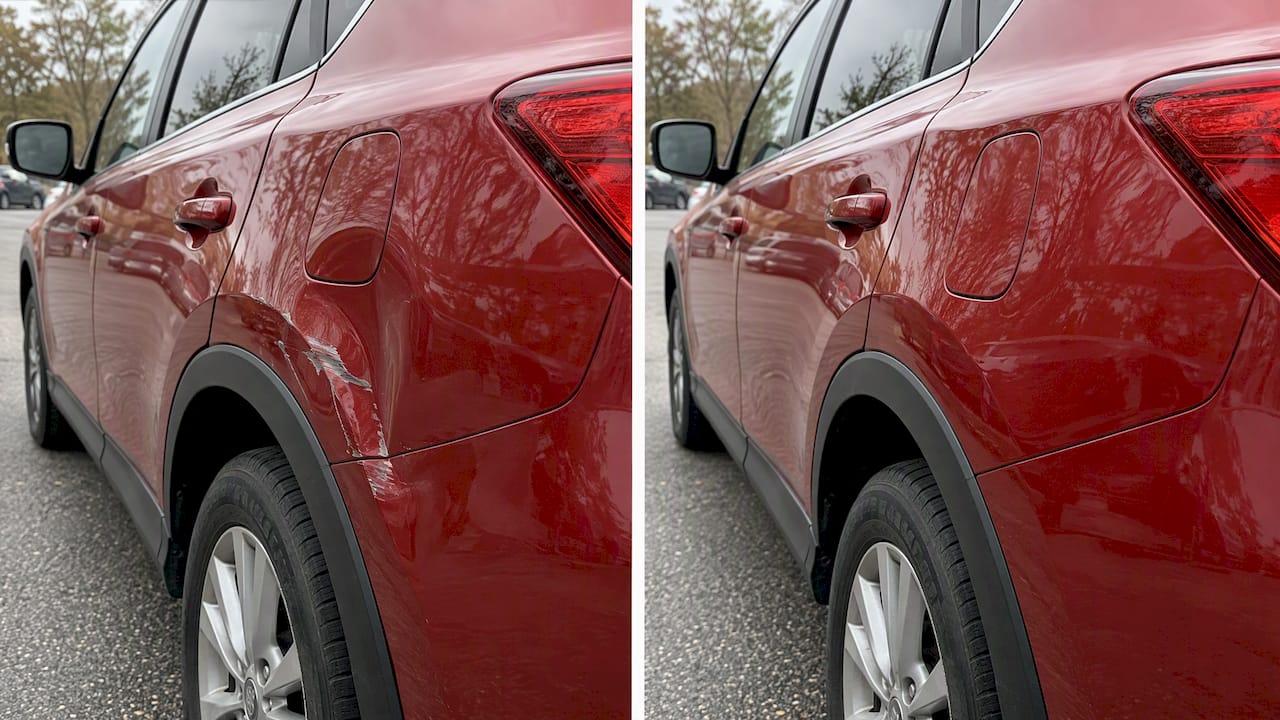
Cost and turnaround: realistic price and time guidance
Costs scale with dent count and complexity rather than dent size alone. A single small ding on a door panel typically clears in well under an hour once a technician has access. Hail damage, by contrast, might involve dozens of shallow dents across a hood or roof, which pushes the job to a full day even though each individual dent is minor. Our guide to hail repair costs and timing breaks down how panel count affects both price and scheduling.
- A single minor dent is often finished in under an hour once the technician reaches the backside of the panel.
- Multiple dents or hail clusters generally take a full day depending on panel count and density.
- Insurers evaluating a PDR-based estimate should disclose that the repair method is paintless, so confirm with your adjuster how the estimate was built.
A survey of 400 car owners found the average willingness to pay for an immediate, superficial bumper repair was estimated at several hundred dollars, according to research from Utah State University. That figure gives a useful anchor for what owners already expect to spend on minor cosmetic fixes, and it sits comfortably within the range most PDR jobs land in.
Is PDR right for your vehicle? a quick decision checklist
Before you book anything, run your dent through these six checks:
- Dent size and depth: shallow dings under about two inches across are strong PDR candidates.
- Paint condition: intact paint with no cracking or chipping is required for PDR to work.
- Location: panels with clear backside access, like doors, fenders, and hoods, repair more easily than tight seams.
- Vehicle age and value: preserving factory paint matters more on newer or higher-value vehicles headed for resale.
- Resale plans: if you plan to sell soon, PDR’s paint-matching advantage becomes a bigger factor.
- Damage pattern: a cluster of hail dents or a single parking-lot ding both fit well, while a sharp crease from a collision usually does not.
A shopping cart ding, a small door dent from a careless neighbor, or a hood full of hail dimples are textbook PDR cases. A dent with a crack through the paint, a deep crease from backing into a post, or damage near a sharp body line is more likely to need traditional bodywork.
How to find and evaluate a qualified PDR technician
Since there is no licensing standard for this trade, the technician’s own track record is the entire quality control system. A few direct questions sort serious professionals from the rest quickly.
- Ask how many years they have spent doing PDR specifically, not general collision work.
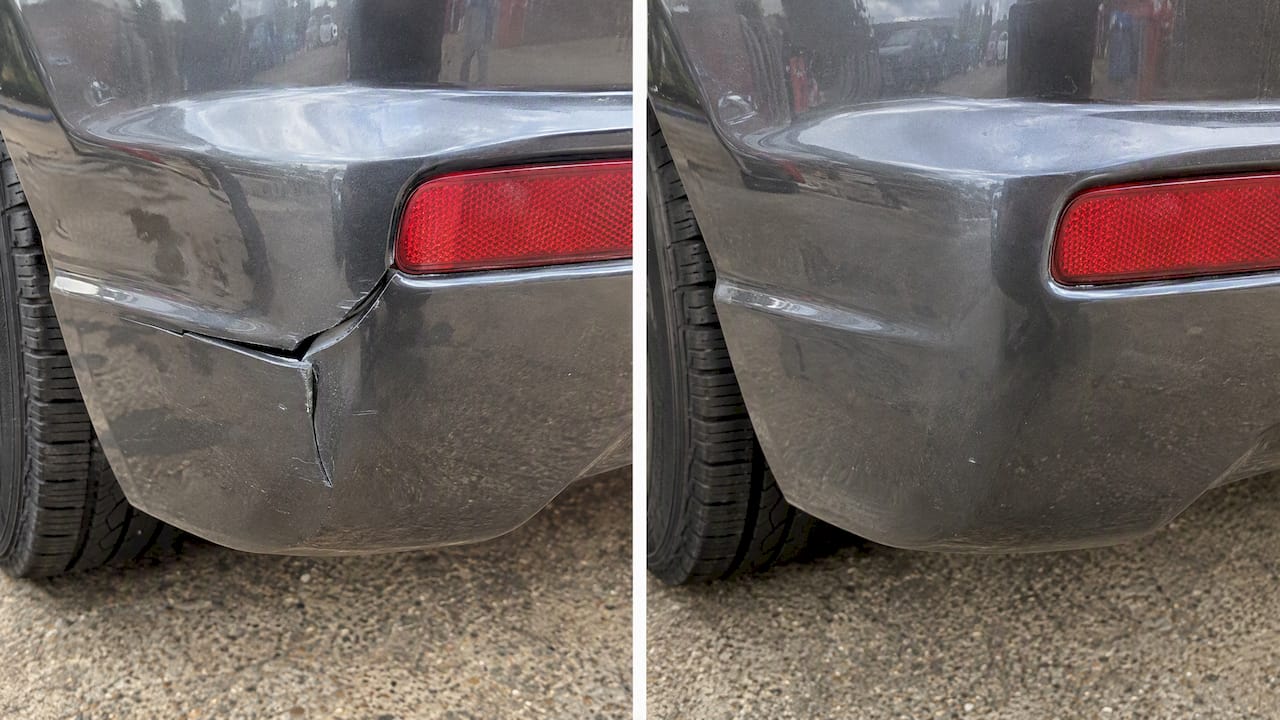
- Request a portfolio of before-and-after photos from jobs similar to yours.
- Ask for references and whether the work comes with a written guarantee.
- Look for independent third-party certifications, such as those referenced by Vale National, along with trade-group involvement.
Pro Tip: A price that looks far below every other quote you’ve gotten is often a sign the technician is skipping steps, not finding efficiencies.
Red flags are consistent across the trade: no photos, no explanation of how they’ll access the panel, and no written guarantee. For mobile service, also confirm the technician can set up proper lighting and a stable workspace, since fine dent work depends on seeing subtle surface reflections clearly. Our own guide to vetting a dent repair service walks through these same questions in more depth.
Denterasers LLC: relevant experience and service highlights
We built our mobile paintless dent repair service around the same priorities this guide covers: speed, paint preservation, and fit for the job in front of us.
Author’s perspective: practical recommendation
We see PDR as the right first call for the majority of dents owners bring us: shallow dings, door dents, and hail clusters where paint is intact. The trade-off is real, though. Once paint is cracked or metal has stretched past its memory, PDR stops being a shortcut and becomes a reason to call a conventional body shop instead. Run your dent through the checklist above, then get a qualified technician to look at it in person before assuming either direction.
— Brian Blanc
Get a free mobile PDR quote from Denterasers LLC
If your dent checks out against the list above, we can usually confirm fit faster than a shop visit would. We handle everything from minor door dings to large panel damage, all onsite at your home or office.

| What you get | Detail |
|---|---|
| Service style | Mobile, onsite paintless dent repair |
| Typical turnaround | Under an hour for a single dent, about a day for hail clusters |
| Specialty coverage | Luxury, classic, and motorcycle vehicles |
Most single-dent appointments wrap up same day. Start with a free dent quote or browse our large dent repair service if your damage is more extensive.
FAQ
What is PDR for dent removal?
Paintless dent repair (PDR) reshapes a dented panel from behind using specialized tools, without sanding, filling, or repainting the surface. It works because the original paint stays flexible enough to move back with the metal, which is why NAPDRT describes it as massaging the metal into place from behind.
How effective is PDR?
PDR successfully repairs most minor dents when the paint is intact and the panel is reachable from behind. Industry guidance puts the repairable share of minor dents at around 95%, with the rest ruled out by depth, cracked paint, or limited access.
Why is PDR so difficult?
PDR takes precision because the technician has to judge how far to push and where, entirely by feel and reflection, without sanding away mistakes afterward. Since there is no universal certification requirement for the trade, skill varies widely, and an inexperienced technician can leave ripples or high spots on a panel.
Is PDR worth getting into?
For owners facing a shallow ding, door dent, or hail damage with intact paint, PDR is usually worth choosing over conventional bodywork because it typically costs a fraction of repainting and finishes much faster. It is not worth pursuing when paint is cracked or the dent is deep enough that the metal has lost its shape memory.
Sources
- Napdrt
- Paintless Dent Removal | What is Paintless Dent Removal?
- Measuring the Surplus of Superficiality: The Case of Dented Bumper Repair